Need support? Call 703-J-CARING (703-522-7464)

The Fund for Women and Girls Enters a New Era

The Fund for Women and Girls Enters a New Era

Despite the vital role women and girls play in building strong, resilient communities, philanthropic funding continues to fall dramatically short. Organizations serving women and girls received only 2.2%^  of total charitable dollars in 2020.

The Fund for Women and Girls exists to help close that critical gap.

Powered by The Jewish Community Foundation of the Jewish Federation of Greater Washington, the Fund channels collective giving into multi-year, trust-based partnerships to transform conditions for women and girls here in Greater Washington and in Israel.

The Fund for Women and Girls is more than a force for change—it’s showing how Jewish philanthropy can come together to make a lasting impact.

Over the last 18 months, the Fund has supported Israeli women and girls through three rounds of grants and multiple learning sessions. Now, we’re entering a new phase of growth—with a goal of raising $1 million this summer, and ultimately $3 million, to ensure we can continue driving change where it’s needed most.

We’re proud to share that momentum is already building.  To date, we’ve secured more than $500,000 in multi-year commitments, with $140,000 already transferred to the Fund. We invite you to join us—at any level—as continue to expand the Fund’s reach.

“Now is the moment to invest in women and girls—because when they thrive, whole communities rise,” explains Dr. Jannah Yutkovitz, Senior Director of Philanthropic Impact at the Jewish Community Foundation. “Supporting a fund of this nature helps fuel solutions that are bold and urgently needed. Through developing long-term partnerships with organizations on the ground, we’re not just supporting solutions—we’re investing in resilience and have the opportunity to make a generational impact.”

To help propel this growth, Carol and Gary Berman have made an exceptional three-year, $300,000 commitment to the Fund to honor the extraordinary leadership of their daughter-in-law Emily Berman, a founding member of the Fund’s steering committee.

“Women and girls are in the forefront of being there to provide what’s necessary and critical for those in need. In the case of Israel, they are also holding the families together through war and the tragic losses as a result of war. As a family, we recognize the importance of women’s voices and actions, as well as the remarkable contributions they make to our world. We feel very grateful to be able to support this fund,” Carol and Gary shared.

Carol and Gary are inviting nine additional individuals to match their commitment and join them in a small minyan of major donors who will seed the Fund with $3 million over the next three years. To learn more, please reach out to sara.brenner@www.shalomdc.org..

The Fund for Women and Girls reflects what’s possible when community comes together with shared purpose and deep commitment. It was created in response to a clear and urgent gap—and it continues to grow as more people recognize the power of long-term, collective investment in women and girls.

As the Fund looks ahead, our focus remains the same: to shift conditions, elevate voices, and invest in meaningful change—locally and in Israel.

^Jewish Funders Network “The Complete Guide to Promote Gender Equity through Strategic Philanthropy” (2025)

Related posts

Turning Gratitude Into Legacy Turning Gratitude Into Legacy
Turning Gratitude Into Legacy
A scholarship for a six-week NFTY trip to Israel at age 17 sparked a lifelong love for Israel and Jewish community work. Today, that experience inspires a commitment to legacy giving and creating opportunities for the next generation to deepen their Jewish identity.
read more

When Every Second Counts: Healing on Israel’s Frontlines

When Every Second Counts: Healing on Israel’s Frontlines

How do you save a life when seconds matter and rockets are falling?

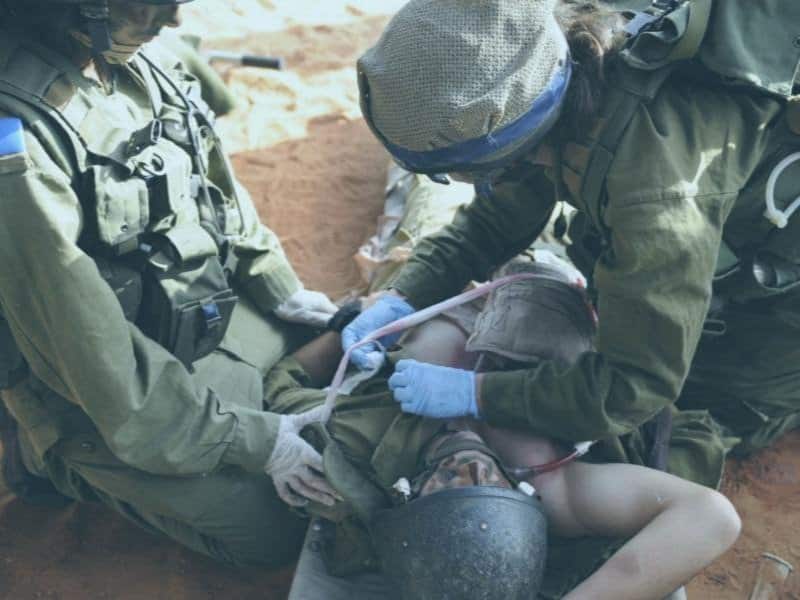
That’s the question Israel’s medical professionals have been answering every day since October 7. In field hospitals, trauma bays, and combat zones, the Israel Defense Forces (IDF) Medical Corps is delivering trauma care under extreme conditions—stabilizing the wounded, treating mass casualties, and innovating in real time.

They’re not just responding to crisis—they’re reshaping what’s possible in battlefield medicine.

Today, the fatality rate for injured Israeli soldiers stands at around 7%—a dramatic drop from past conflicts. That kind of breakthrough doesn’t happen by accident. It takes strategy, speed, and relentless training. It takes care.

Behind the Breakthroughs: A Nationwide Effort

This life-saving work doesn’t stop on the battlefield. Across Israel, hospitals and trauma centers are stepping up in extraordinary ways:

  • At Sheba Medical Center in Ramat Gan, clinicians are pioneering cutting-edge rehabilitation—helping injured civilians and soldiers regain both function and hope.
  • At Soroka Hospital in Be’er Sheva, preparedness proved critical. Even as the hospital sustained damage from rocket fire, its teams saved lives when seconds counted most.
  • In Sderot, the International Resilience Institute is helping survivors navigate the psychological toll of ongoing trauma with holistic, community-rooted care.
  • At Magen David Adom’s underground blood center in Ramla, Israel’s emergency medical services are safeguarding the national blood supply and enabling rapid response—even under threat.
    These aren’t just facilities. They’re lifelines.

Our Community’s Impact

Through The Jewish Federation of Greater Washington’s Israel Crisis Response grants, we’re helping fund this network of healing: trauma recovery, emergency preparedness, and medical innovation that directly supports Israelis facing physical and emotional wounds.

We don’t do this alone. We do it through trusted partners on the ground—and with the strength of our community behind us.

A Conversation That Brings It Home

Now, we’re bringing that story home.

Thanks to the initiative of the American Physicians Fellowship for Medicine in Israel (APF)—and in partnership with Kol Shalom—we’re honored to host Healing on the Frontlines on Wednesday, August 6, 2025: a rare and timely conversation with Brigadier General Dr. Zivon Aviad Beer, Surgeon General of the IDF Medical Corps. Dr. Beer will share firsthand insights into delivering trauma care on and off the battlefield.

Joining him will be Amir Goldshtein, Executive Director of APF, whose organization connects North American medical professionals to Israel’s healthcare system and invests in its long-term resilience.

Also in attendance will be LTC Dr. Roy Nadler, Director of the IDF’s Trauma and Combat Medical Branch, who will be available for conversations before and after the program.

Why It Matters Now

This is a chance to hear what it takes to care for others in the most extreme conditions—and how our collective support helps make that care possible.

This work is far from over. But thanks to the strength of our partners and the generosity of our community, we’re helping Israelis heal, adapt, and move forward. One act of care at a time.

Related posts

Healing Together: Inside SafeHeart’s First Parent–Survivor Retreat

Healing Together: Inside SafeHeart’s First Parent–Survivor Retreat

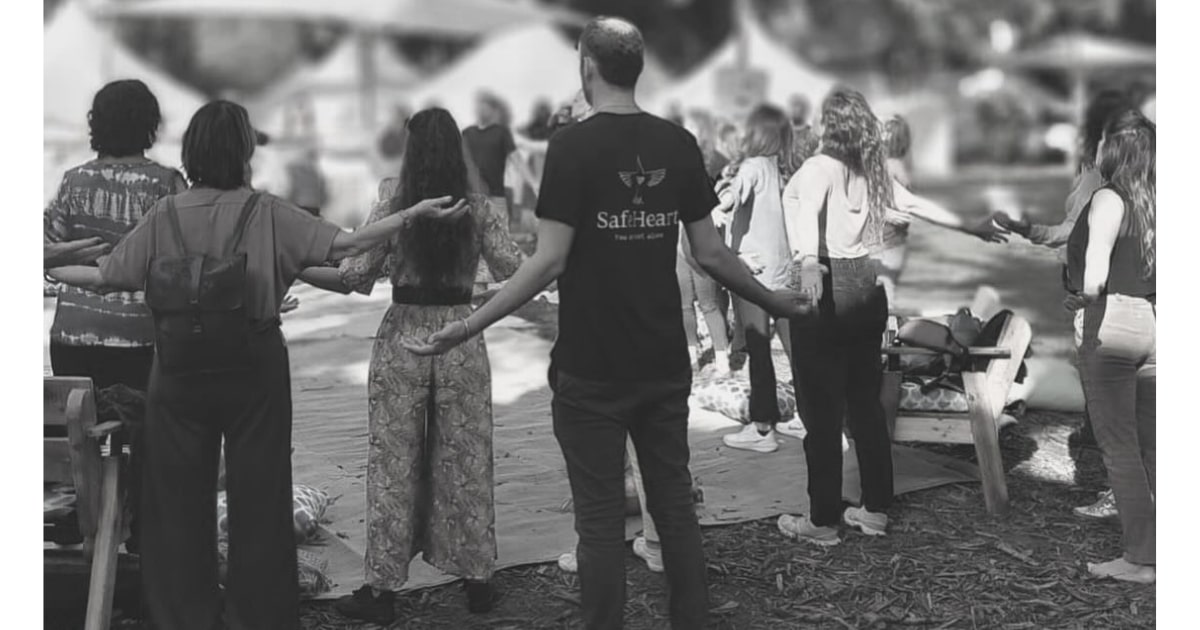
In April 2025, SafeHeart launched a groundbreaking new initiative as part of its Survivors’ Family Support Program: a Parent–Survivor Healing Retreat. Funded in part by The Jewish Federation of Greater Washington’s Israel Crisis Relief Fund, the four-day retreat brought 40 participants—festival survivors and their parents—to a peaceful setting in northern Israel for a shared, transformative healing experience.

This was the first retreat of its kind in Israel to offer therapeutic support to both survivors and their parents at the same time. By placing the family unit—not just the individual—at the center of recovery, SafeHeart created a protected space for families to begin seeing and supporting each other in new, healing ways.

One participant shared, “The retreat helped me understand where I am in my healing journey—and what I need to move forward from here.”

Facing Trauma, Together

Trauma rarely ends with one person. It ripples outward, touching every corner of a family. Survivors returned from unimaginable experiences to homes filled with love—and often, silence. Many parents carried quiet grief, unsure how to help. Words were missing. Connections were strained. Some families lived together but felt worlds apart.

“In just three days, I felt everything—love, grief, joy, fear, hope,” said one survivor, capturing the emotional depth of the experience.

Parents, many of whom put their lives on hold to care for their 20- and 30-something children, became caregivers and emotional anchors while processing their own pain without a roadmap.

One parent shared, “For the first time, I could truly listen to my daughter. I had heard her words before, but when I heard the same things from another survivor, something opened in me. I saw her differently.”

The retreat helped bridge those emotional gaps. Through parallel therapy tracks, guided joint sessions, and body–mind healing practices, both generations found a shared language for their pain—and a space to hold it together.

As another participant put it, “Meeting the young survivors reminded me what strength really looks like. They are my hope.”

Building Resilience Before the Storm

Unintentionally, the retreat also became a source of strength for what came next. In the weeks following the retreat, rising security tensions in Israel forced many survivors to return home once again. This time, families were more prepared. The emotional groundwork they had laid made it possible to sit together, breathe together, and weather the renewed uncertainty as a team.

One young adult reflected, “I gained deeper insight into what my parents are going through and more awareness of the space between us—how we can work on our relationship and how I can meet them with more empathy.”

Another added, “Togetherness and listening were essential. A year and a half of your support, dedication, and care gave me the courage to let go, to surrender to calm and stillness.”

The Parent–Survivor Healing Retreat didn’t just offer support in the moment—it planted seeds of resilience. It turned trauma into dialogue, isolation into connection, and homes into spaces of protection and understanding.

As one participant expressed, “Led by SafeHeart, I felt truly held. After a year and a half of support, I finally found the strength to let go—and feel peace.”

With support from The Jewish Federation’s Israel Crisis Relief Fund, SafeHeart continues to pioneer meaningful pathways to healing—not just for survivors, but for the families who walk alongside them.

Related posts

Finding Light in Poland: A Journey of Remembrance and Renewal

Finding Light in Poland: A Journey of Remembrance and Renewal

It’s hard to describe the emotional whiplash of the past few months. We’ve witnessed horrifying acts of antisemitic violence both here at home—including the attacks in Boulder and at the Capital Jewish Museum—and abroad. The fear and pain reverberating through our community are real and raw.

I’ve found myself thinking often of Sara Milgrim z”l  and Yaron Lischinsky  z”l , and all those still recovering from the Boulder firebombing. May their memories be a blessing.

Just days before the D.C. shooting, I returned from a week-long journey to Poland organized by our partner, the American Joint Distribution Committee (JDC), and 3GNY. The trip brought together third-generation descendants of Holocaust survivors and others with a familial lineage to Poland and the Holocaust, to connect with Jewish life today in Poland.

My great-grandparents were born and raised in Poland. They fled in the late 1920s and early 1930s to escape pogroms, antisemitism, and poverty, eventually landing in Cuba. They left behind their parents, siblings, and entire communities, most of whom perished in the Holocaust.

Our group visited Kraków, Warsaw, and Łódź. We walked through ghettos and cemeteries, and we spent a powerful, heart-wrenching day at Auschwitz. We listened to one another’s family stories—tales of survival and resistance, loss and love. It was heavy. And yet, it was also deeply connective.

Amid the grief, we encountered something remarkable: life. Resilience. A Jewish community in Poland that, while small, is vibrant, proud, and growing.

At JCC Krakow, we saw firsthand how Federation support is making a difference. The center is a hub of Jewish life—hosting Shabbat dinners, running a preschool and day camp, and helping Ukrainian refugees, Jewish and non-Jewish alike. We visited their distribution center, which continues to offer food, clothing, toiletries, and toys to those in need.

We also met young adults from Hillel International Krakow. Many didn’t grow up Jewish; some only recently discovered their Jewish heritage. Yet they’ve chosen to build community, connect with Jewish identity, and take part in Jewish life. Today, more than 200 young people are active in Hillel Krakow. That choice—to embrace a Jewish identity in Poland, of all places—is deeply moving.

In Warsaw, the POLIN Museum blew me away. It traces a thousand years of Jewish life in Poland—from vibrant shtetls to intellectual movements, to the devastation of the Holocaust and the rebirth that followed. It’s one of the most thoughtful and comprehensive museums I’ve ever visited.

This trip was a rollercoaster of emotions—grief, pride, hope, disbelief. But I came home feeling something I never expected: optimism. Against all odds, Jewish life in Poland is not only persisting—it is reemerging.

One person said to our group, “There’s something inherently Jewish about Poland. Polish history wouldn’t be Polish history without Jewish history.” I agree. And I’d add: Jewish history wouldn’t be complete without Poland—the good, the bad, and the unimaginable.

This experience gave me more than memories. It renewed my sense of purpose. At a time when antisemitism is rising, I’m more committed than ever to standing up for our community. But I’m also determined to celebrate us—to lift up the vibrant, diverse, and global Jewish life that continues to thrive.

Together, let’s remember. Let’s rebuild. Let’s keep showing up for one another—in grief, in strength, and in joy.

Related posts

Turning Gratitude Into Legacy Turning Gratitude Into Legacy
Turning Gratitude Into Legacy
A scholarship for a six-week NFTY trip to Israel at age 17 sparked a lifelong love for Israel and Jewish community work. Today, that experience inspires a commitment to legacy giving and creating opportunities for the next generation to deepen their Jewish identity.
read more

From Paris to Tel Aviv: The Crossroads of French Jewish Life

From Paris to Tel Aviv: The Crossroads of French Jewish Life

Friends,

Yesterday, I left Paris and arrived in Tel Aviv on a flight with over 100 new immigrants. Most of their families had only come to France 60-70 years earlier from Morocco, Tunisia, Algeria, and other places in North Africa. They shared with me what a tough decision it was to relocate their lives, but they felt deep down their future was in Israel.

I had the privilege of accompanying Israel’s newest arrivals as part of a seminar organized by the Jewish Agency for Israel (JAFI) for executives from major U.S. Jewish Federations. We spent the week learning about the changing realities facing French Jewry and ended our program with additional discussions in Israel.

The situation in France today is complex. With over 450,000 Jews, France is home to the third largest Jewish population after Israel and the United States. Jewish life there is vibrant. There are many day schools, synagogues, and over 250 Kosher restaurants.

At the same time, antisemitism in France has been growing steadily for over two decades, and October 7th has produced a new, more aggressive strain. There are increasing reports of antisemitic acts at all levels of schooling. The head of the Jewish student union told us that university students are wary of associating with their Jewish peers for fear that they themselves will be called supporters of Israel. In lower grades, kindergarteners, preschoolers even, are being excluded from their classmates’ parties because they’re Jewish. Broadly speaking, incidents are being met with apathy from teachers, staff, and authorities.

The result of all this is widespread uncertainty and unease. The American Jewish Committee’s Paris office found that one in five French Jews have removed their mezuzah from outside their home. One in six have changed their name on delivery apps to obscure their religious identity. Jewish communities are questioning whether they have a future in France, and more and more families are indeed choosing to make Aliyah.

That said, French Jews remain passionate about building their community. Nearly three-quarters of French Jews say the October 7th massacre strengthened both their Zionist convictions (73%) and their Jewish identity (71%). Jewish engagement is up and interest in Jewish day schools has skyrocketed, particularly as families leave public education.

What comes next for French Jewry is hard to predict. Those we spoke with are awaiting the 2027 presidential election for clues about the direction France will take. For my part, I continue to picture the upcoming opening of a new, large synagogue in Sarcelles to serve a community 12,000 strong even as they face threats from those around them. While our history has many instances where we are forced to leave, we have many others cases of building Jewish life and thriving even as others would do us harm. I am confident that one way or another, the French Jews will thrive.

Shabbat Shalom,

—Gil

Photos: Avi Bass, the Jewish Agency for Israel (JAFI)

Related posts

Federation Announces New Emergency Grants to Support Communities in Israel Following Missile Attacks

Federation Announces New Emergency Grants to Support Communities in Israel Following Missile Attacks

In the wake of last month’s missile attacks in Israel, the Jewish Federation of Greater Washington has announced a new round of emergency relief grants totaling over $378,000 to help Israeli communities recover, rebuild infrastructure, and support displaced families.

Though a ceasefire is now in place, the impact of the missile strikes remains widespread. Families have been displaced, and while many schools and businesses have reopened, hundreds remain under repair. Towns previously untouched by conflict are now grappling with destruction and uncertainty. More than 9,700 Israelis have been evacuated from homes that were hit or deemed unsafe, many now living in temporary accommodations with no clear timeline for return.

Municipalities across northern Israel are stretched thin, working to maintain public safety, deliver essential services, and care for vulnerable populations. One of the most urgent issues is the lack of certified, reinforced public shelters, particularly in under-resourced communities. Mobile units—like those previously deployed in Druze towns and the Kinneret Valley Cluster (KVC)—offer limited protection and are not built to withstand the current level of threat.

In response, the Federation is directing these emergency relief funds to trusted partners meeting critical needs on the ground. These grants reflect a community-led approach: guided by lay leaders and professionals, informed by local insight, and grounded in a strategic model designed to meet both immediate and long-term recovery goals.

This effort aligns with the organization’s evolving Israel strategy—one rooted in partnership, not just philanthropy. Several of the funded initiatives emerged from ongoing work with the KVC, a diverse northern region central to its place-based investment in long-term recovery and resilience.

Expanding Civilian Protection and Infrastructure

Residents in towns like Tiberias and Beit Shean are gaining access to safe shelter through a large-scale restoration project led by Osim Shechunah, a grassroots volunteer network transforming neglected public spaces into reinforced community shelters. This project was prioritized through insights from KVC partners and aligns with Federation’s goal of strengthening vulnerable northern communities.

Public shelters are also being equipped with emergency supplies, and homebound seniors are receiving essential care and safety checks through the Joint Distribution Committee (JDC), one of the Federation’s long-standing global humanitarian partners.

Relieving Pressure on Israel’s Healthcare System

Patients recovering from trauma or illness will now receive care at home via Sheba Beyond, the virtual division of Sheba Medical Center. This expansion helps alleviate the strain on hospitals like Sheba, which has taken on patients transferred from missile-damaged facilities such as Soroka Hospital.

Emergency readiness is also being bolstered in northern Israel, where Poriyah Medical Center’s trauma unit—currently operating underground—is receiving upgraded equipment. Serving the Galilee and Golan, Poriyah is a key regional provider and a strategic focus of the Federation’s Israel infrastructure investment.

Supporting Emotional Recovery and Social Stability

Displaced children and families are receiving emotional care and daily structure from teen counselors mobilized by Dror Israel, a national movement focused on education and community resilience.

Meanwhile, more than 500 people—including spouses and children of IDF reservists—will receive emotional, financial, and parenting support from HaBayit BeMiluim, which pairs trained volunteers with families facing prolonged military service and uncertainty.

Together, these emergency grants address both urgent needs and longer-term recovery. They reflect a relationship-driven approach to supporting Israeli communities through trauma, rebuilding, and resilience.

Related posts

What They Carried In. What They Left Behind.

What They Carried In. What They Left Behind.

On July 1, during Federation Day at the Nova Music Festival Exhibition in Gallery Place, Jackson Siegal of In-Rel Properties showed up with purpose.

He didn’t come alone. He brought his team: five maintenance men, straight from the job site, pockets full of screwdrivers and flashlights.

At the security checkpoint, they handed over their tools. A small, routine act. But upstairs, those everyday objects stood in quiet, haunting contrast to what lay on the tables.

Phones. Backpacks. Jewelry. Sandals. Not items people forgot, but belongings of those who were hunted, kidnapped, and murdered on October 7. Artifacts recovered from the site of the massacre.

Jackson’s team moved through the exhibit slowly, together. At the table of artifacts, a volunteer who had helped clean and catalog each item spoke with quiet steadiness, explaining what had happened on October 7. She had washed away the blood so the victims’ families wouldn’t have to see it. But she left the dust on the shoes. Just as they were found.

Dust from the earth where people danced, where thousands fled, where hundreds were murdered.

At one point, Jackson and the volunteer slipped into Hebrew. One of the younger workers leaned in to translate into Spanish for an older teammate. No one asked him to. He just did.

That kind of instinct—across languages, generations, and lived experience—is exactly what Federation Day was made to hold. A moment to show up. To witness. To carry memory together.

Jackson, who recently joined Federation’s Real Estate Network, didn’t say much. But the way he moved through the exhibit—asking questions, staying present—set the tone for his team.

Moments like this have defined the exhibit since it opened here in Greater Washington. Earlier in the run, a survivor spotted something he never expected: his hat.

Not just any hat. The one his friends always borrowed for pictures. The one that made people smile. The one everyone said made him look like Bruno Mars.

He left it there. Because it wasn’t just his anymore. It was part of the story now.

Something shifted for Jackson’s team, too. They didn’t just visit. They paid attention. They stayed with it.

They arrived with the tools of their trade. They left with something harder to name—but just as real. A story to carry. A truth to hold.

This is what it means to show up for one another. This is how memory becomes action.

Bringing the exhibit to Washington made space for moments like this—quiet, human, unforgettable. The kind that help us hold the truth and carry it forward, together.

Related posts

We’re at our Heartbreak Hill. Let’s keep going—together.

We’re at our Heartbreak Hill. Let’s keep going—together.

There’s an infamous stretch of the Boston Marathon route called Heartbreak Hill. It sits between miles 20 and 21, a point at which the race weighs heavy on the runners, and the finish line is not yet in view. This stretch of road has been on my mind this week as our community finds itself rallying to meet another critical moment.

It’s hard to believe that after the horrors of October 7th and the war with Hamas, Israelis would once again be called upon to demonstrate their resilience, but that was the situation over the past two weeks as Israel sought to eliminate Iran’s nuclear program and Iran sought to inflict pain on the Israeli population. In response, Federation is accelerating funds and increasing support to provide Israelis with additional trauma care and mental health support, upgrade shelters for thousands of evacuees—including Jewish, Arab and Druze communities, and ensure specialized support for at-risk teens and displaced families. Learn more and donate.

Here at home, we are focused on security. This week, I joined a delegation of 400 Jewish leaders from around the country to urge Congress to adopt the Jewish Community’s Six-Point Policy on Security. The proposal calls for a comprehensive strategy to increase security for the Jewish community, including increasing Nonprofit Security Grant Program funding to $1 billion, expanding support for security personnel and local law enforcement at Jewish institutions, and enhancing FBI intelligence capabilities to address potential threats. It also emphasizes prosecuting antisemitic hate crimes and holding tech platforms accountable for spreading antisemitic content. Contact your representative.

This work is urgent, important, and deserving of your support. I also want to acknowledge that like those marathon runners rounding mile 20, it’s possible that the challenges over the past five years might be getting to us. Since 2020, we’ve been giving it our all to come together as a community and address immense needs locally, globally and in Israel. Through Covid, Ukraine, October 7, and beyond our collective efforts have been monumental and record breaking—and it’s understandable if we’re feeling more than a little fatigued.

The magic of Heartbreak Hill, however, is that while the marathon runners are exhausted, they are doing it with the largest crowds along the path of the race cheering them on. In our community’s case, we meet this moment by becoming both runner and cheerleader. We need everyone in our collective race. Our success depends not on a few but on all of us. And we need to remind each other we’re not alone on the course. We have one another, our allies, a purpose, and a Jewish story still unfolding.

We recognize that significant challenges remain. Our support for Israel continues to be vital. We must accelerate our investment in ensuring security at all Jewish institutions and events—and rise to meet the surge in interest and engagement we’re seeing across our community: to be together, to experience the richness of learning, celebration, and connection. After all, our goal continues to be to strengthen Jewish life and engage more people in the beauty of Judaism and the Jewish people.

We’ve been through a lot as a community, and there’s a lot more we’ll need to navigate together, but so long as we keep our vision for vibrant Jewish life front and center, there’s no hill we can’t climb.

Shabbat Shalom,

Gil

Related posts

Why I’m Going Back—And Why I Hope You’ll Join Me on July 1

Why I’m Going Back—And Why I Hope You’ll Join Me on July 1

I’ve been to the site of the Nova Music Festival—where Hamas unleashed unthinkable violence—just outside Kibbutz Re’im. I’ve walked the grounds. I thought it couldn’t get harder than that. But then I walked through the Nova Exhibition at Gallery Place in Washington, DC, and heard the stream of raw video: the yelling, the screaming, the gunshots. Footage taken by people who were there—by victims, not reporters. You don’t just hear it. You feel it—in your core, in a completely different way. The exhibit doesn’t just show you what happened. It immerses you in it. It confronts you. It stays with you. Nova survivor Noa Beer shared her story and reminded me: this wasn’t just an attack on a place. It was an attack on joy. An attack on freedom. An attack on community.

Why Federation Day at the Nova Exhibition Matters

That’s why Federation Day at the Nova Exhibition on Tuesday, July 1 matters. It’s not just about viewing an art installation, walking past scorched cars, standing among bullet-riddled bathroom stalls, or staring at piles of personal belongings left behind. It’s about bearing witness—together. Come. Join your community. Bring someone who hasn’t seen it. Someone who needs to understand. That’s how we get through the hardest things: by showing up. By being in community. July 1 is for exactly this. A day to stand with the victims, lift up the survivors, and lean on each other. Because healing begins with presence. And it continues with action.

Federation’s Response: From Witnessing to Action

That’s why The Jewish Federation of Greater Washington is:

  • Supporting trauma recovery programs for survivors of October 7
  • Strengthening local Jewish security through JShield
  • Investing in both immediate relief and long-term healing in Israel

It all matters. And so does this moment—standing together, bearing witness, being there. I hope you’ll meet me there—on Tuesday, July 1.

713 7th Street NW
Open 10:00 AM to 8:00 PM
Reserve your timed-entry tickets at novaexhibition.com

Related posts

Federation in Action: Supporting Emergency Disability Care in Israel

Federation in Action: Supporting Emergency Disability Care in Israel

Doron Kalaf has worked with Beit Noam for more than 30 years. As Director of the Residential Program, he oversees five small apartments across Kiryat Ono, home to 25 adults with severe physical and cognitive disabilities. All use wheelchairs. All require full-time care. And none of the apartments, which are all old, rented, and unprotected, can shield them during emergencies.

So when the first missile sirens sounded in the early hours between Thursday and Friday, Doron acted immediately. He made the decision to evacuate every resident to Beit Noam’s day center, which was closed due to the war, but had one shelter large enough to house everyone.

He’s remained by their side ever since—recruiting emergency staff to provide round-the-clock care, including daytime support that doesn’t exist under normal circumstances. Some even slept on-site in difficult conditions.

“What we used to do in emergencies was just hold hands and pray,” Doron said. “This time, we had to do more. We couldn’t leave them unprotected.”

He made sure residents had everything they needed—not just physically, but emotionally. For people with intellectual disabilities, wartime can heighten anxiety and fear. Doron helped create moments of calm and routine: shared meals, music, and laughter.

His swift, courageous response transformed fear into safety and care for some of Israel’s most vulnerable residents.

How We Show Up

Beit Noam has served adults with severe disabilities for more than 40 years from its original center in a Tel Aviv suburb. When the war began, Federation connected with Beit Noam to help meet urgent needs and ensure uninterrupted care for their residents.

Our relationship with Beit Noam began long before this crisis, and it’s exactly what allowed them to respond when it mattered most. With trusted and long-standing relationships, strategic thinking, and community insight, we mobilize our partners to meet urgent needs and strengthen Jewish life—now and for what’s next.

Support the relationships and response our community depends on—donate today.

Related posts