Three Years Later, We Don’t Have to Carry This Alone
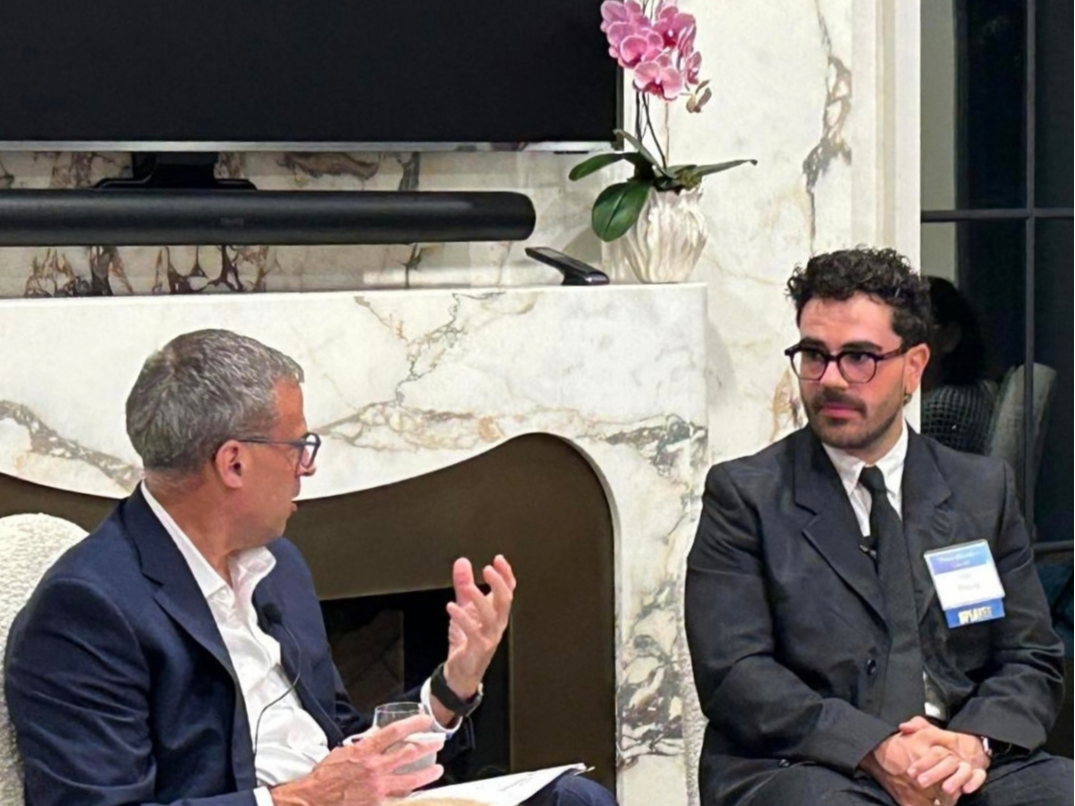
Being part of one people doesn’t mean we all have the same experience, the same politics, or the same response. It does mean we can make room for one another, protect one another, and show up for one another. Three years after October 7, Hen Mazzig speaks with us about the importance of community.
Three years after October 7, we are still trying to figure out how to talk about it. How do we talk about Israel when the conversation can so quickly become political? How do we talk about antisemitism when so many American Jews are encountering it in ways they never expected? How do we talk about Jewish identity when the past three years have changed what it means to feel visibly, publicly Jewish?
And perhaps most difficult of all: How do we talk to one another when we have lived through the same historical moment in such different ways?
Hen Mazzig has spent years having these conversations.
Across Israel, the United States, and Jewish communities around the world, he has listened to people try to make sense of October 7 and everything that has followed. He has heard anger and grief, fear and frustration. He has also heard something he didn’t necessarily expect to encounter so often: exhaustion.
“I hear how hard it is for a lot of people,” Mazzig says. “And that’s really sad.” Three years later, people are looking for a way to understand each other.
What We Misunderstand About Each Other
Part of the challenge, he believes, is that Israelis and diaspora Jews are often looking at one another through the lens of their own experiences.
For Israelis, October 7 was a profound trauma that changed the way many people see their own safety, their country, and the world around them. Mazzig sees that trauma in the defensiveness that can sometimes emerge in conversations about Israel.
But he also wants Israelis to understand what is happening outside of Israel. “American Jews are paying the price,” he points out.
The experience of an American Jew navigating antisemitism is different from that of an Israeli who has experienced October 7 and its aftermath firsthand. American Jews may be dealing with antisemitic incidents in their schools, workplaces, or communities. They may have lost friendships. They may feel increasingly uncertain about how openly to express their Jewish identity.
Meanwhile, Israelis are carrying the experience of a society profoundly shaken by violence and the ongoing consequences of that trauma. The experiences aren’t identical, and they don’t have to be identical for the grief on both sides to be real.
“I just think it’s different sorts of grief,” Mazzig observes, “but it’s grief, and it’s real grief on both parts.”
That, he believes, is something we need to make more room for. Being part of one people doesn’t mean having one experience. We don’t all live in the same place. We don’t have the same politics. We don’t respond to October 7 in the same way.
And we don’t always see what the other person is carrying.
The question, then, isn’t whose grief is more legitimate. It’s whether we can become curious enough about one another to recognize that both are real.
How We Talk to One Another
That curiosity becomes especially important when the conversation gets difficult. Mazzig shares that he is constantly asked for talking points. “I keep getting asked for talking points,” he says. “‘Give us some talking points. What do we say when people say this to us?’”
The question reveals something about where many people are right now. They want to be prepared. They want to have the right facts. They want to know exactly what to say before they enter a conversation they fear they might not be equipped to handle.
But his answer is, in some ways, to stop worrying so much about having the perfect thing to say. “Everyone is an expert in something,” he remarks. “Try and engage in a meaningful way. Remind people that you are a human being.”
You can speak from your own experience. You can listen to someone else’s. You can acknowledge something that is true even when it doesn’t fit neatly into your own worldview. “There’s so many truths to every issue,” Mazzig explains, “and we just need to be able to hold all of them.”
It’s what he describes as a “yes, and” approach. The understanding that recognizing one truth doesn’t require us to erase another.
Yes, this is what I believe, and someone else may experience it differently.
Yes, I can care deeply about Israel, and still have difficult questions.
Yes, I can be hurt by antisemitism, and still recognize that another Jew may be responding to that experience differently than I am.
That doesn’t make the conversation easier, but it can make it more human. He is equally clear about something else: engaging does not have to mean engaging all the time.
After three years of crisis, being part of the conversation does not require constant public engagement. There are moments when showing up means speaking. There are other moments when it means stepping back, protecting your energy, and taking care of yourself.
What Jewish Community Looks Like Now
Perhaps what has surprised Mazzig most over the past three years is not simply how difficult these conversations have become. It’s how tired people are. “To keep hearing it over and over and over again, you know, you’ve been in this work for a long time,” he reflects. “We’re three years past October 7, and yet it’s getting worse, not better.”
But alongside that exhaustion, he has seen something else. People showing up.
He has met “so many Jewish-adjacent” people who, while not Jewish themselves, have shown up for the Jewish community over the last three years. He has watched people build relationships across differences and step toward one another when it would have been easier to retreat.
And when Mazzig talks about what Jewish community means to him, his examples are remarkably ordinary. His husband’s family. People he’s met in Washington, D.C. His spin instructor. Israeli Jews. American Jews. Jews around the world.
The people who become part of your life in unexpected ways.
“What I love most about being Jewish,” he says, “is that no matter where I go, I feel like I have a family and I have a story.”
That may be one of the most tangible expressions of Jewish peoplehood: not that Jews everywhere have the same story, but that wherever you go, you can find people who are part of yours.
Mazzig believes the Jewish community has shown up in extraordinary ways over the past three years. When we’re down, he stresses, “we come and help one another.”
Three Years Later, We Can Still Choose Hope
Three years after October 7, there is no single answer for what Jewish peoplehood should look like. Maybe it doesn’t need one.
Being one people has never meant agreeing on everything. Maybe it has always meant something harder and more meaningful. Making room for one another even when our experiences don’t match. Protecting one another without requiring sameness. Showing up even when we’re tired.
And remembering that we have each other.
“This understanding that, you know, we have each other,” Mazzig notes. It is a simple idea. After three difficult years, it may also be one of the most important. Because the story isn’t finished.
He holds onto that through hope. “I hold on to hope, because that’s all we’ve got.” And then, with the certainty that hope requires: “I have to know that it’s going to get better.”
Not because everything is okay. Not because the grief has ended, the disagreements have been resolved, or the questions have easy answers. But because hope is a commitment to a future we cannot yet see.
And getting there, Mazzig reminds us, is something we don’t have to do alone.
Am Yisrael Chai.
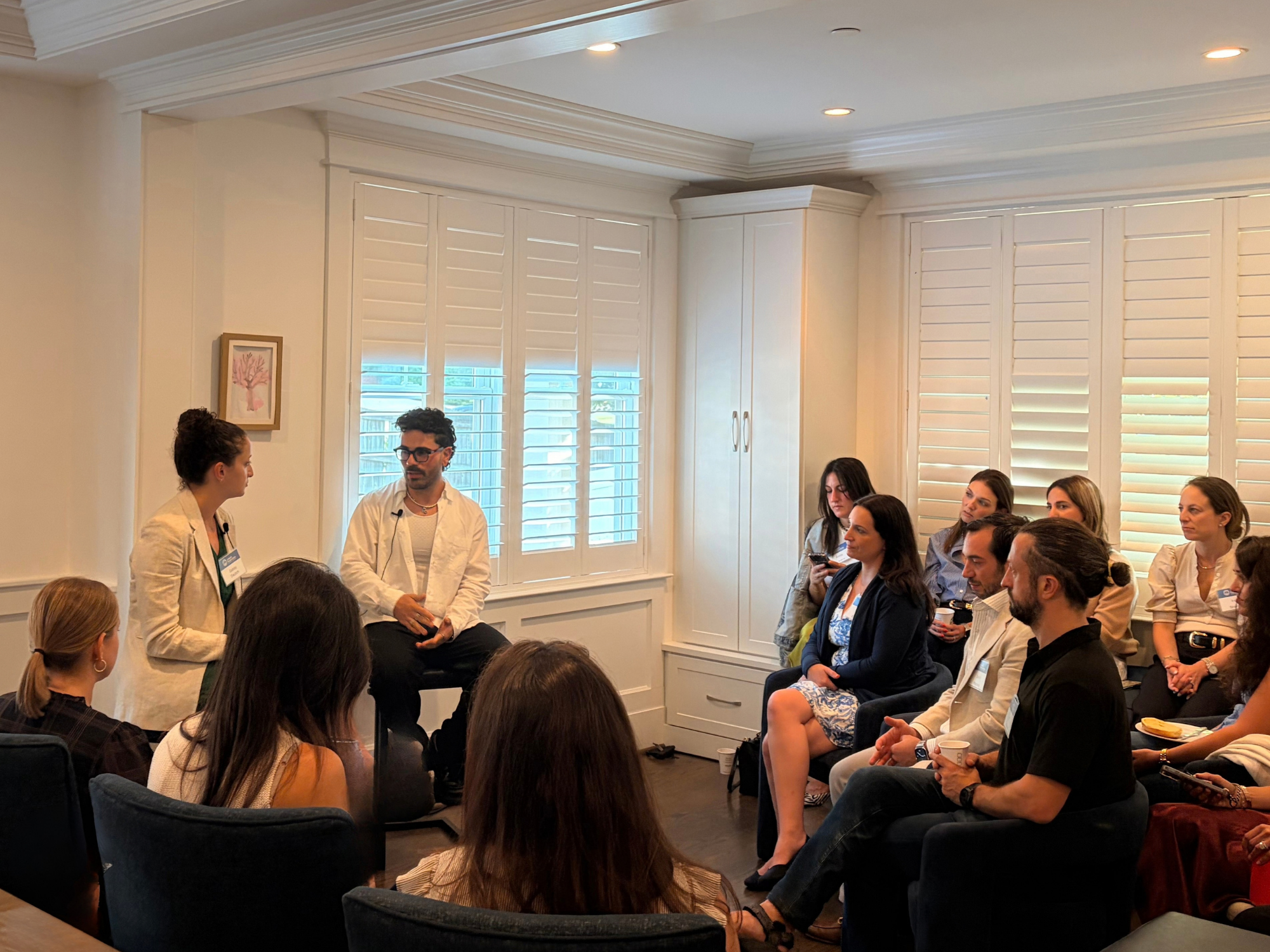
Your support helps Federation bring people together, foster meaningful conversations, and strengthen the relationships that sustain our community.