Open More Possibilities. Join a community of donors shaping the future of Jewish life.

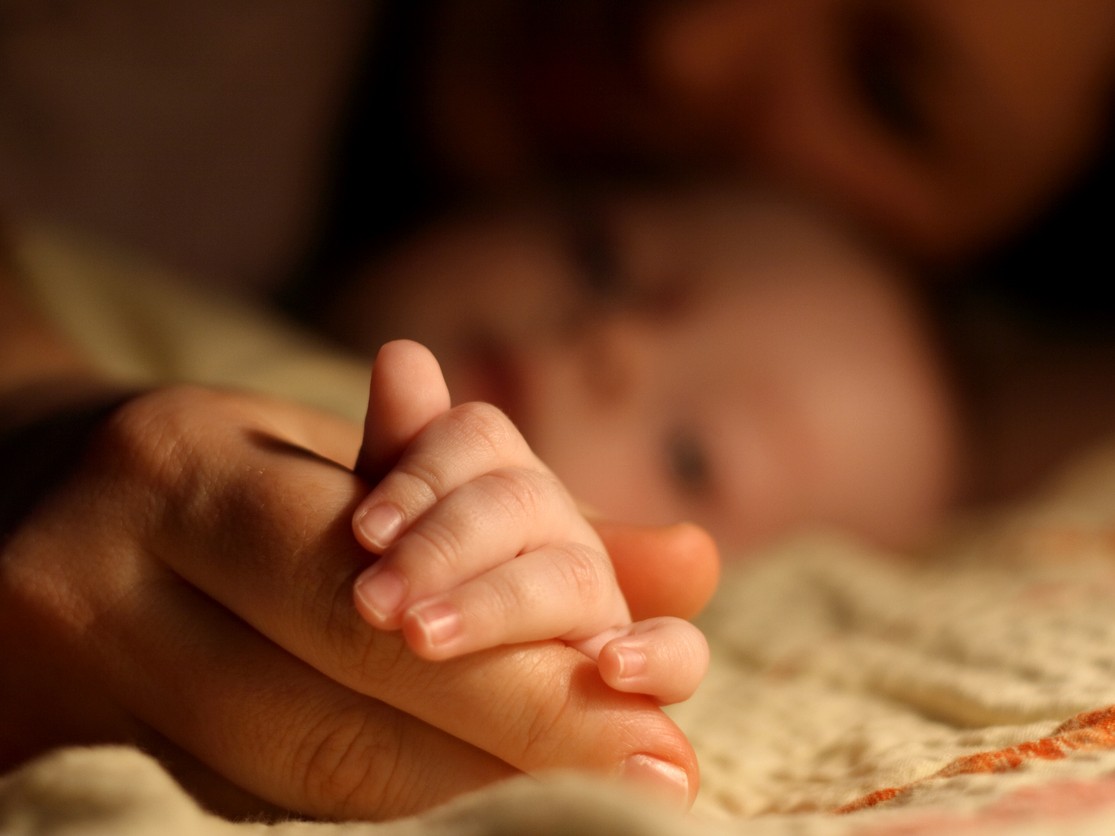
For babies to thrive, the mother must, too
For babies to thrive, the mother must, too

Federation was proud to support Sheba Medical Center through our emergency relief efforts. See what they have accomplished.

For all our attention to babies, we spend remarkably little time talking about mothers.

In recent years, postpartum depression and psychosis have moved from the margins of public conversation into the mainstream. High-profile stories involving women such as Hayden Panettiere and Lindsay Clancy raised a national discussion about maternal mental health.

These two cases are extreme. Postpartum suicide or the unimaginable tragedy of a mother taking the life of her child are rare. They should not define the conversation. What is far more common, and far more often overlooked, is the broader reality of maternal mental health.

One in five women experiences a perinatal mood or anxiety disorder, making these conditions among the most common complications of pregnancy and childbirth. These challenges affect women and families every day, usually far from public view.

Moving these stories into public conversation matters. But the real test is whether that conversation leads us to support women earlier, before distress becomes a crisis.

That broader reality demands a deeper response than headlines alone can provide. Too often, we wait for warning signs to become crises, expecting mothers to recognize their own distress while caring for a newborn, recovering physically, and adjusting to one of life’s most profound transitions.

In a healthcare system increasingly focused on prevention, maternal mental health is still too often addressed too late.

There is a better way.

Since 2007, the Chava Center for Maternal Mental Health at Sheba Medical Center has grown from a program supporting families through stillbirth into what Sheba describes as Israel’s national referral center for perinatal psychiatry, receiving roughly 100 new patient referrals each month.

The center’s premise is straightforward but rarely operationalized elsewhere: maternal mental health is not an adjunct to obstetric care; it is inseparable from it.

That philosophy recently led Sheba to open a dedicated ward for women experiencing severe postpartum psychiatric conditions, including postpartum psychosis. The goal is not simply to treat women after a crisis, but to bring specialized care, early intervention, and family-centered support together when they are needed most.

It reflects a basic but overlooked truth: maternal mental illness is not a personal failing or something to be hidden. It is a medical condition deserving serious, expert, and compassionate care.

The unit was designed deliberately to avoid separating mother from infant during treatment, with rooms built for the mother, a nursery, a therapeutic garden, and dedicated space for group, individual, and family therapy. The design choice reflects a clinical philosophy as much as an architectural one: it is critical to treat the psychiatric crisis without severing the maternal bond.

The importance of this approach extends far beyond any one hospital or healthcare system. A mother’s wellbeing shapes infant development, family stability, workplace participation, and long-term community health. When a woman struggles in silence, the effects ripple through an entire family. When she receives timely support and effective treatment, the benefits ripple outward too.

Measuring health by the mother, too

There is also a broader cultural challenge.

We celebrate motherhood as one of life’s most meaningful roles, but we are far less comfortable acknowledging its difficulties. New mothers are expected to be grateful, resilient, and instinctively capable while recovering physically, sleeping little, managing hormonal changes, and caring for a newborn.

Many hesitate to seek help out of fear, guilt, or the mistaken belief that struggle reflects failure. It does not. The transition to motherhood is profound, and maternal mental health should be treated as a routine and essential part of healthcare, not a response reserved for crisis.

To be sure, healthcare systems differ from country to country. Israel’s universal healthcare system eases continuity of care, allowing providers to follow women through pregnancy, childbirth, and the postpartum period in ways that are harder in America’s more fragmented system.

Advertisement

But the lesson underneath the Chava Center’s model is not about financing structures. It is about priorities.

Every hospital, clinic, and healthcare provider can do more to screen for maternal mental health challenges, reduce stigma, identify women at risk, and make support available before a crisis emerges. Putting mothers at the center of care is not a principle reserved for one country; it can be embraced wherever women are having babies.

For generations, we have measured success in maternal healthcare largely by the baby’s health.

Advertisement

That benchmark remains essential, but it is incomplete. A healthy beginning for a child depends heavily on the mother’s health and well-being.

If the growing public conversation about postpartum mental health has taught us anything, it is that silence and stigma carry a tremendous cost. The answer is not simply greater awareness after tragedy strikes. It is building systems, communities, and cultures that recognize mothers, support them, and care for them before crisis arrives.

We know how to do this. We have the medical expertise, the clinical tools, and, increasingly, the models of care. What is needed now is the collective will to make maternal wellbeing as much a priority as infant welfare.

For babies to thrive, mothers must too.

This story originally appeared in The Jerusalem post.
Related posts

New data shows growing interest in Jewish life

New data shows growing interest in Jewish life

Yesterday, Jewish Federations of North America (JFNA) released new data about the growth of interest in Jewish life that sparked after the October 7 terror attacks. Jewish professionals refer to this phenomenon as “the surge” and responding to it remains a top priority for Jewish institutions, including Federation.

In the weeks and months following October 7, we did not know how it would affect Jewish engagement due to the rise of campus protests and global antisemitism. Would people feel closer to their Jewish identity or increasingly shy away from it?

What we saw, however, was that when it felt difficult to be Jewish—to face the pain of 10/7, to navigate differing perspectives on Israel, to open ourselves up to being seen as different—that Jews stepped in.

In 2024, 43% of the American Jewish community wanted or were seeking more engagement in Jewish life. Everyone from young adults to midlife and older adults, to parents of young kids were eager to learn more about Israel and Jewish life, and participate in Jewish programs. Those who were least engaged before 10/7, were particularly eager to find new venues for learning, and above all, connect with others in the Jewish community.

It’s unclear how long the surge will last. But thus far, it seems to be sustained. The latest survey results show that 38% of Jewish Americans are part of the surge, a seven-point increase from last spring and a hint at a new normal.

Evident in the data is a strong desire for social connection. To me, this reinforces the idea that in a topsy-turvy world, the search for belonging will increasingly shape how people live and the choices they make. One number I’m noting: of those who were not previously engaged in the Jewish community, 41% have attended events but are still trying to find the right fit.

As you can imagine, this has important implications for our work at Federation. To help people find what they seek, we must continue investing in diverse programming that gives everyone access to rich and meaningful Jewish experiences and helps them meet, connect, and learn with other people. Shabbat dinners, deep dives, meetups, family-friendly events, all of it matters.

Whatever responses we pursue, they must be part of a community-wide effort to notice when people show up and help them connect and stay connected. We all know what it feels like to take a chance on something, to be the new person in a room. Which means we also know what a difference it makes to chat with friendly people and feel shepherded into the group. That’s a role every one of us can play.

Statistics—and our own human intuition—prove that demand for belonging is up. Our work now is to provide the supply.

One way we can help meet this moment is by supporting the organizations that make Jewish life thrive. Yesterday was DAF Day, a national day of giving through donor advised funds. If you have a DAF, I hope you’ll consider recommending a grant to Federation. And if you don’t yet have one, I invite you to open a DAF and direct a $1,800 gift to an eligible Jewish or Israeli nonprofit of your choice through our Jewish Community Foundation’s Open More Possibilities initiative.

Related posts

Three Years Later, We Don’t Have to Carry This Alone

Three Years Later, We Don’t Have to Carry This Alone

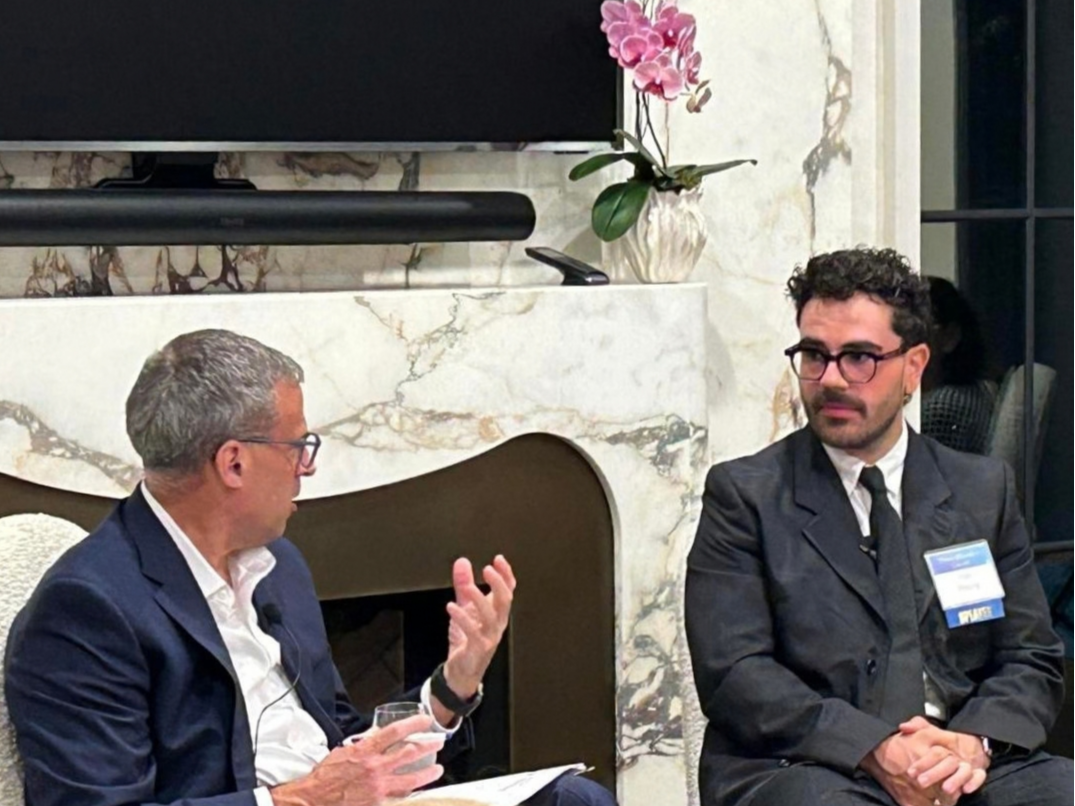
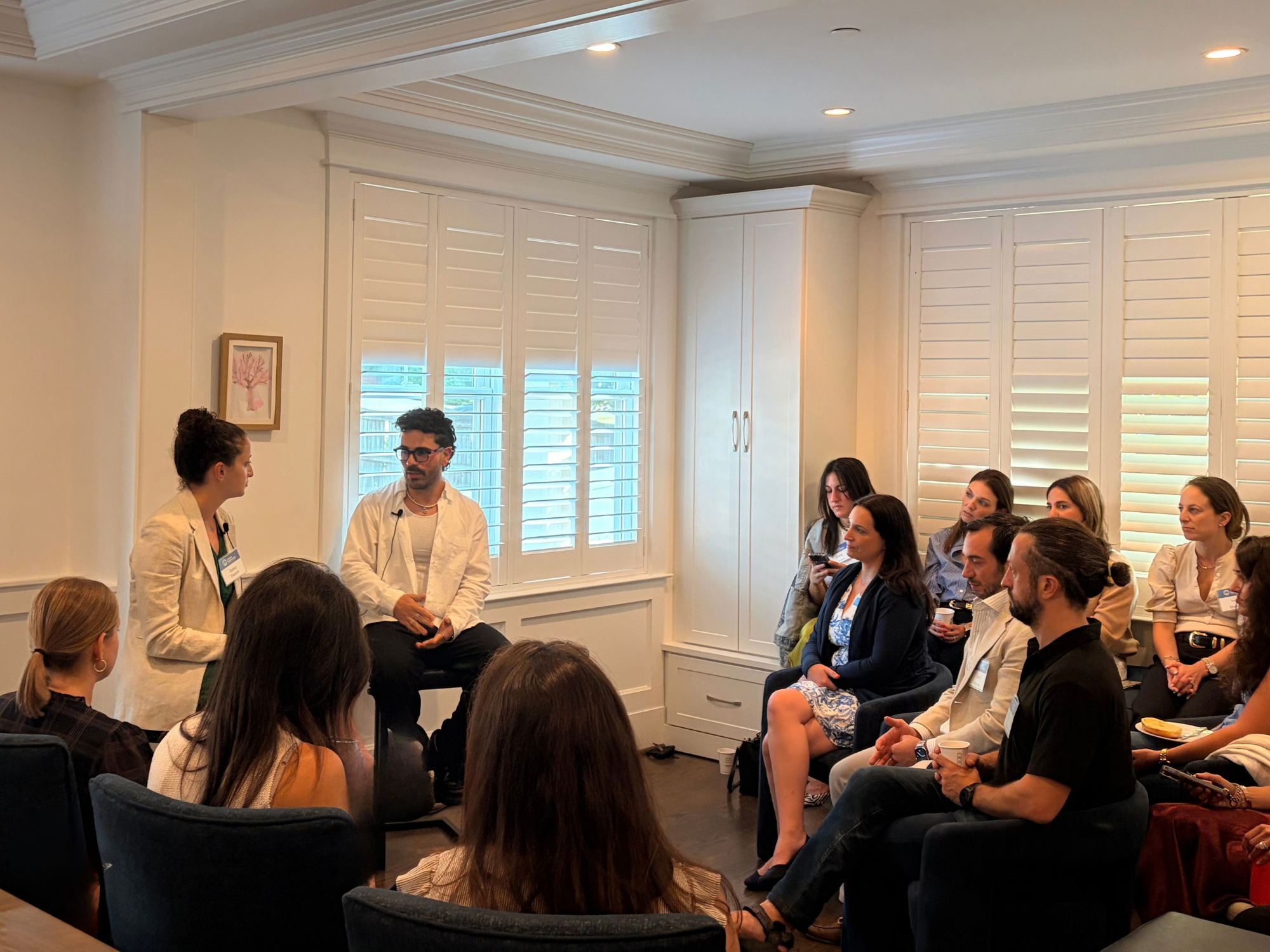
Being part of one people doesn’t mean we all have the same experience, the same politics, or the same response. It does mean we can make room for one another, protect one another, and show up for one another. Three years after October 7, Hen Mazzig speaks with us about the importance of community.

Three years after October 7, we are still trying to figure out how to talk about it. How do we talk about Israel when the conversation can so quickly become political? How do we talk about antisemitism when so many American Jews are encountering it in ways they never expected? How do we talk about Jewish identity when the past three years have changed what it means to feel visibly, publicly Jewish?

And perhaps most difficult of all: How do we talk to one another when we have lived through the same historical moment in such different ways?

Hen Mazzig has spent years having these conversations.

Across Israel, the United States, and Jewish communities around the world, he has listened to people try to make sense of October 7 and everything that has followed. He has heard anger and grief, fear and frustration. He has also heard something he didn’t necessarily expect to encounter so often: exhaustion.

“I hear how hard it is for a lot of people,” Mazzig says. “And that’s really sad.” Three years later, people are looking for a way to understand each other.

What We Misunderstand About Each Other

Part of the challenge, he believes, is that Israelis and diaspora Jews are often looking at one another through the lens of their own experiences.

For Israelis, October 7 was a profound trauma that changed the way many people see their own safety, their country, and the world around them. Mazzig sees that trauma in the defensiveness that can sometimes emerge in conversations about Israel.

But he also wants Israelis to understand what is happening outside of Israel. “American Jews are paying the price,” he points out.

The experience of an American Jew navigating antisemitism is different from that of an Israeli who has experienced October 7 and its aftermath firsthand. American Jews may be dealing with antisemitic incidents in their schools, workplaces, or communities. They may have lost friendships. They may feel increasingly uncertain about how openly to express their Jewish identity.

Meanwhile, Israelis are carrying the experience of a society profoundly shaken by violence and the ongoing consequences of that trauma. The experiences aren’t identical, and they don’t have to be identical for the grief on both sides to be real.

“I just think it’s different sorts of grief,” Mazzig observes, “but it’s grief, and it’s real grief on both parts.”

That, he believes, is something we need to make more room for. Being part of one people doesn’t mean having one experience. We don’t all live in the same place. We don’t have the same politics. We don’t respond to October 7 in the same way.

And we don’t always see what the other person is carrying.

The question, then, isn’t whose grief is more legitimate. It’s whether we can become curious enough about one another to recognize that both are real.

How We Talk to One Another

That curiosity becomes especially important when the conversation gets difficult. Mazzig shares that he is constantly asked for talking points. “I keep getting asked for talking points,” he says. “‘Give us some talking points. What do we say when people say this to us?’”

The question reveals something about where many people are right now. They want to be prepared. They want to have the right facts. They want to know exactly what to say before they enter a conversation they fear they might not be equipped to handle.

But his answer is, in some ways, to stop worrying so much about having the perfect thing to say. “Everyone is an expert in something,” he remarks. “Try and engage in a meaningful way. Remind people that you are a human being.”

You can speak from your own experience. You can listen to someone else’s. You can acknowledge something that is true even when it doesn’t fit neatly into your own worldview. “There’s so many truths to every issue,” Mazzig explains, “and we just need to be able to hold all of them.”

It’s what he describes as a “yes, and” approach. The understanding that recognizing one truth doesn’t require us to erase another.

Yes, this is what I believe, and someone else may experience it differently.

Yes, I can care deeply about Israel, and still have difficult questions.

Yes, I can be hurt by antisemitism, and still recognize that another Jew may be responding to that experience differently than I am.

That doesn’t make the conversation easier, but it can make it more human. He is equally clear about something else: engaging does not have to mean engaging all the time.

After three years of crisis, being part of the conversation does not require constant public engagement. There are moments when showing up means speaking. There are other moments when it means stepping back, protecting your energy, and taking care of yourself.

What Jewish Community Looks Like Now

Perhaps what has surprised Mazzig most over the past three years is not simply how difficult these conversations have become. It’s how tired people are. “To keep hearing it over and over and over again, you know, you’ve been in this work for a long time,” he reflects. “We’re three years past October 7, and yet it’s getting worse, not better.”

But alongside that exhaustion, he has seen something else. People showing up.

He has met “so many Jewish-adjacent” people who, while not Jewish themselves, have shown up for the Jewish community over the last three years. He has watched people build relationships across differences and step toward one another when it would have been easier to retreat.

And when Mazzig talks about what Jewish community means to him, his examples are remarkably ordinary. His husband’s family. People he’s met in Washington, D.C. His spin instructor. Israeli Jews. American Jews. Jews around the world.

The people who become part of your life in unexpected ways.

“What I love most about being Jewish,” he says, “is that no matter where I go, I feel like I have a family and I have a story.”

That may be one of the most tangible expressions of Jewish peoplehood: not that Jews everywhere have the same story, but that wherever you go, you can find people who are part of yours.

Mazzig believes the Jewish community has shown up in extraordinary ways over the past three years. When we’re down, he stresses, “we come and help one another.”

Three Years Later, We Can Still Choose Hope

Three years after October 7, there is no single answer for what Jewish peoplehood should look like. Maybe it doesn’t need one.

Being one people has never meant agreeing on everything. Maybe it has always meant something harder and more meaningful. Making room for one another even when our experiences don’t match. Protecting one another without requiring sameness. Showing up even when we’re tired.

And remembering that we have each other.

“This understanding that, you know, we have each other,” Mazzig notes. It is a simple idea. After three difficult years, it may also be one of the most important. Because the story isn’t finished.

He holds onto that through hope. “I hold on to hope, because that’s all we’ve got.” And then, with the certainty that hope requires: “I have to know that it’s going to get better.”

Not because everything is okay. Not because the grief has ended, the disagreements have been resolved, or the questions have easy answers. But because hope is a commitment to a future we cannot yet see.

And getting there, Mazzig reminds us, is something we don’t have to do alone.

Am Yisrael Chai.

Your support helps Federation bring people together, foster meaningful conversations, and strengthen the relationships that sustain our community.

Donate

Related posts

Walking Through the Same Doors, Ten Years Later

Walking Through the Same Doors, Ten Years Later

Everything felt so completely new.

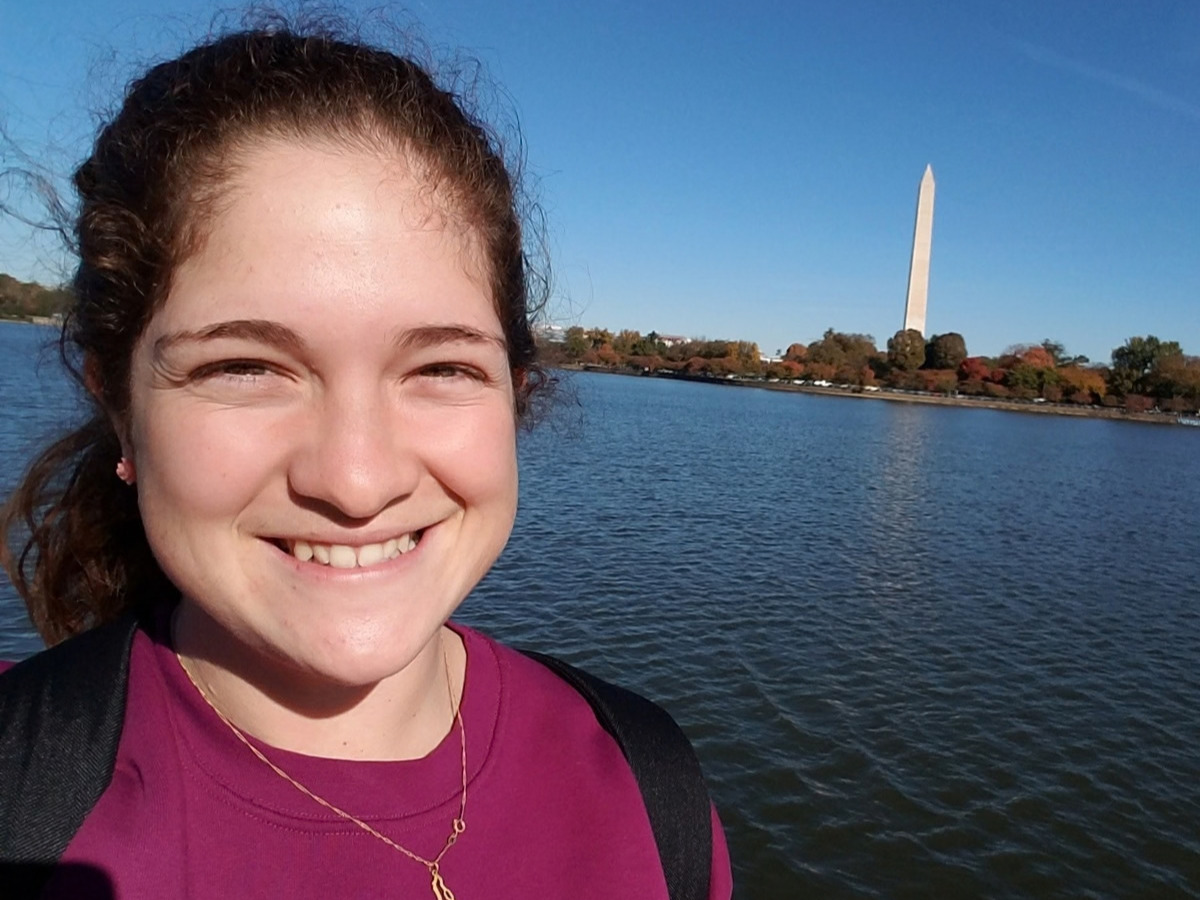
When I first landed in Greater Washington ten years ago, that was the only way I could describe it. It was my very first time ever setting foot in the United States, and on a purely physical level, my brain couldn’t process what was happening. I walked out of the airport in August into sweltering heat, looked up, and saw it rain. Coming from Israel, where summer is completely, predictably dry, standing in ninety-degree weather while water poured from the sky felt like stepping onto another planet.

I remember that first Shabbat so clearly. Fresh out of the IDF Education Corps, my uniform barely packed away, I walked into an entirely unfamiliar world of American synagogue life and vibrant liberal Judaism. Everything was culturally complex and utterly fascinating. I came with an educator’s fire, convinced my goal was simple: to evoke emotion around Israel. I was completely okay with anger or frustration, too, as long as there was a heartbeat. What took me by surprise back then was how deeply people wanted to speak Hebrew with me, stumbling over words with a genuine hunger that touched me then, and honestly still touches me today.

Ten years later, I walked off a plane and into this community once again. But the person writing this today feels worlds away from that wide-eyed young woman standing in the August rain.

Ten Years Can Change Everything

A decade carries immense weight. In those ten years, my life changed completely. I got married, became a mom to two incredible kids, and built a home back in Israel. Professionally, I stepped into global Jewish education, as the Educational Director and Manager for the Shlichut program worldwide. Returning now as both a mother and a seasoned professional, I see families, children, and a community I care about deeply through an entirely new lens.

And let’s be honest. The community itself is walking through a very different reality today than in 2016.

Between political polarization, rising antisemitism, and the heavy, lingering trauma of war, we have all been through the wringer. The warm, generous heart of Greater Washington is still here, but the air in the room feels different. Talking about Israel today often feels like handling a hot potato. It’s on everyone’s minds constantly, burning hot, but people are often anxious or hesitant to touch it. In a world dominated by quick soundbites and algorithms, we are constantly surrounded by sharp exclamation points and very few curious question marks.

Yet, wrestling with complexity is in our DNA as Jews. It’s who we are. And when the noise of the world tries to force us into rigid boxes, authentic, human connection becomes our sanctuary.

Living Bridges in a Fragmented World

Since October 7, that truth has hit me on a deeply personal level. Shlichut (emissary work) was never meant to be a lecture or a series of polished talking points. It is a living, breathing, two-way street. In the darkest days after the attack, I watched our emissaries across the globe stand as human bridges. They were carrying unbearable heartbreak, some grieving murdered friends, others waiting on agonizing news of hostage family members, one young woman who was supposed to be at the Nova music festival and had only flown out the day before. Yet, they showed up every single day to share their raw, vulnerable truths. In return, this community wrapped them in love, holding space for their broken hearts. That mutual embrace proved to me why we do this: news headlines don’t heal people, but real relationships do.

Stepping into leadership as the head of Greater Washington’s mishlachat (delegation) program, right as it hits its own 10-year milestone, feels like coming full circle in a way that gives me goosebumps. I keep returning to the cantor’s prayer from the High Holidays: Hineni he’ani mima’as (Here I stand, impoverished in deeds). It is that quiet, overwhelming feeling of asking yourself, Who am I to carry this weight? Yet, I step into it with immense devotion, reverence, and gratitude for the trust you’ve placed in me.

My goal for our team of shlichim is to unlock the door for real, honest conversation. My role is to be a problem solver and a catalyst, helping our partner organizations thrive, guiding our shlichim to succeed, and advancing Federation’s mission on the ground. I hope people leave our conversations feeling energized, knowing that whatever challenge or vision they bring to the table, we can tackle it together, not just in words, but through meaningful action.

Anchored in Hope

At my core, as an educator and a mother, I am stubborn about hope.

Hope isn’t a passive wish. Instead, it’s the active belief that a better tomorrow is worth fighting for. I see it in my children every morning, I see it in the Mishlachat delegation serving this community, and I see it in the way people here continue to show up for one another.

Ultimately, my hope is anchored in the conviction that October 7 does not define us. It is an immense tragedy, one that we must study, learn from, and forever remember, but the Jewish people, the State of Israel, and Zionism hold a history, memory, and purpose that existed long before us and will endure long after us.

We are defined by our enduring strength, our continuity, and the way our communities show up for one another, not by the catastrophes along the way. In that shared resilience, hope isn’t just an idea, it is a lived reality.

As our Mishlachat program marks its 10-year milestone, we are already looking ahead, envisioning what our presence will mean as we approach Israel’s 80th anniversary in two years, its 90th in a decade, and far into the future. We cannot predict every curve in the road, but we can decide how we walk it together.

My door is wide open. Let’s dream big, ask the hard questions, and build this next chapter together.

Your support helps ensure our community can continue building meaningful relationships with Israel through authentic experiences, personal connections, and lifelong learning.

Donate

Related posts

Three Years After October 7, There is Still Work to Do

Three Years After October 7, There is Still Work to Do

Three years later, what does it mean to keep showing up?

It’s natural to look backward.

To remember where we were when the terrible news began to come in from Israel on October 7, 2023. To think of the lives lost and the lives forever changed by that day. To feel again the uncertainty of those first hours, when no one knew what would happen next.

But three years later, it’s also worth looking forward.

What does it mean to keep showing up after the first shock has passed? What does support look like when an emergency becomes a long-term reality? And what will it take for communities, families and individuals to begin rebuilding, not simply what was lost, but what comes next?

Those questions have shaped The Jewish Federation of Greater Washington’s response ever since.

Because while October 7 was one day, its impact didn’t end that night, the next day, or the next week. The war and fighting that followed created new and evolving needs across Israel. Three years later, families are still displaced. Communities face prolonged uncertainty. Trauma continues as new waves of violence reopen old wounds. Businesses and local economies need help recovering. And new needs emerge as the crisis continues.

Over the past three years, Federation has responded not with a single effort, but with an evolving commitment to the people and communities of Israel. Through 14 rounds of funding, more than 60 grants and $15.4 million provided in crisis relief, Federation has supported 42 organizations across the country, adapting its response as needs changed.

That commitment comes from something deeper than crisis response. It comes from the belief that Jewish communities around the world are connected, and when one part of our community is hurting, we have a responsibility to stand with one another.

This is what Jewish peoplehood means at Federation. It means standing with Israel, being present in moments of profound need, and taking pride in the strength and resilience of the Jewish people. Even though we are thousands of miles apart, we are bound by a shared sense of belonging and care for one another.

Showing up means asking, again and again, what people need now. That question has never been only, How do we respond to this crisis? It has also been, How do we help people continue living?

Helping People Through the Immediate Crisis

In the days after October 7, moving forward meant something very simple. Getting through the day. People needed medical care. Families who had been forced from their homes needed somewhere to turn. Federation directed funding where the needs were most urgent, including $1.2 million for emergency medical care, supporting efforts such as Sheba Medical Center’s rapid mobilization of medical teams and preparation for mass casualties, along with $500,000 for victims of terror and their families, and $550,000 to support evacuees and displaced families.

For people living through an unfolding emergency, this kind of support can mean something as fundamental as knowing that someone is there. As the weeks turned into months, what people needed changed, and the need for support continued to grow.

Helping People Cope

Some of the most lasting effects of October 7 were not immediately visible. For families who lost loved ones, there was grief. For survivors of the attack, there was trauma. For children and parents whose lives had been uprooted, there was the challenge of finding some sense of normalcy again. And there is no single path to healing.

Federation allocated $3.7 million to trauma response, supporting 13 organizations with different approaches to reaching survivors, reservists, young people and families. Some trained mental health professionals to respond to widespread trauma, while others provided direct therapeutic care to those who needed it.

Helping People Rebuild

In northern Israel, communities have faced prolonged uncertainty and disruption amid fighting along Israel’s northern border. Families are still displaced. Daily life was put on hold. The question of when it would be possible to return, and what returning would look like, became part of everyday life. To support these communities, Federation allocated $4.3 million in aid to northern Israel, the largest share of its crisis funding.

People needed to work, businesses needed to recover, and communities needed to regain their footing. That included communities like Kibbutz Re’im, near the Gaza border, where Federation first invested $250,000 to address immediate security needs and later committed another $500,000 as part of a longer-term partnership supporting the community’s recovery and future. Federation also directed $2.5 million toward economic development, supporting efforts such as the Jewish Federations of North America’s (JFNA’s) Israel Emergency Loan Fund, which helps small businesses keep their doors open, employees paid, and communities stable during uncertain times.

But rebuilding is not a single grant or moment in time. Through our partnerships with Kibbutz Re’im and the Kinneret Valley Cluster in northern Israel, Federation is staying alongside communities that will be rebuilding for years to come.

These investments represent different answers to the same question: What does someone need in order to take the next step?

The answers are deeply personal, often complicated, and constantly changing. Our role is to keep listening and respond to what people need now.

Three Years Later, There is Still a Next Step

Fourteen rounds of funding tell a story of response becoming recovery. But behind those numbers are people. A family trying to rebuild a routine. A community waiting to feel settled again. A business owner trying to reopen. A child working through something no child should have to experience. A person learning how to live with loss.

And, alongside them, organizations working every day to help.

Three years after October 7, remembering remains essential, but so does looking forward. Rebuilding after a crisis does not happen in a single moment, but through thousands of acts of care, support and persistence, often long after the world has moved on to the next headline.

For our Federation, the work of responding to October 7 has meant being there for the immediate emergency, committing to communities for the long term, and continuing to ask what people and communities will need for the road ahead.

Today, as we commemorate three years since the horrific attacks that shook our world, the question is no longer only what happened on October 7.

It is what happens next.

And how, together, we can help communities in Israel move forward with hope.

Your support helps Federation keep showing up for people and communities in Israel, today and for the long road ahead.

Donate

Related posts

Between Fear and Love Between Fear and Love
Between Fear and Love
As the October 7 anniversary returns, how can the Jewish community channel grief and passion into a future shaped by both vigilance and love? Drawing on Rav Joseph Soloveitchik’s Kol Dodi Dofek, this reflection explores the tension between self-protection and moral aspiration.
read more

Between Fear and Love

Between Fear and Love

This time last year, we were holding our breath as an agreement came together to free the last living hostages in Gaza. Over the course of two long years, our community in Greater Washington served as an epicenter of advocacy. People in official and unofficial capacities across our region met with delegations, built relationships, acted as hosts and liaisons, and did everything they could to keep the hostages top of mind so that a deal would be made.

This year, however, it is less clear how to channel our grief and passion. We are continuing to support long-term recovery efforts in Israel. But how do we greet this tender anniversary now that there is no immediate action to be taken?

It turns out that Rav Joseph Soloveitchik may have an answer. Recently, I read Kol Dodi Dofek (Listen, My Beloved Knocks), Soloveitchik’s famous 1956 theological address and saw how aptly his framework applies to our times.

Soloveitchik argues that the Jewish people must exist in two mindsets: encampment and congregation, “An encampment is created out of a desire for self-defense and thrives on fear. A congregation is fashioned out of longing for the realization of an exalted moral idea and thrives on love.”

In a world full of real threats, we need to think defensively, understanding that there are forces outside of our control shaping our reality. At the same time, we must move beyond the realm of fate into the realm of destiny, rising above our historical circumstances to pursue a larger moral idea on our own terms.

Navigating the tension between fear and love is the modern Jewish project. And I think the anniversary of October 7 can hold a piece of both. We can use the occasion to remember, grieve, and renew our vigilance, and channel the emotion of the day into building a future worthy of those we’ve lost.

I wish I could write solely in defense of the congregation side of things. That I could implore all of us to go ahead and trade in our fear for aspiration. But that’s not the reality we’re living in. We must continue finding the balance between self-protection and self-actualization. We must become adept at hunkering down and reaching outward, at flowing in and out of a dichotomy of postures according to what history and our moment demand.

Three years on, sitting with what happened on October 7 still makes me physically ill. I can only hope this dark fixture in the Jewish calendar becomes something we can use to strengthen our people and build this world from love.

Shabbat Shalom and may the memory of all the innocent lives lost on October 7, 2023, and the many days since be for a blessing,

Related posts