Need support? Call 703-J-CARING (703-522-7464)

Fostering a Culture of Security

Fostering a Culture of Security

As antisemitism continues to rise around the world, the need for proactive, community-wide security is as important as ever. Our community is no stranger to this need; in March, 40 security incidents were reported across Greater Washington, targeting synagogues, Jewish schools, and other institutions. But by promoting broader community preparedness, we can build our resiliency and strength against any potential threat.

That’s why the Jewish Federation of Greater Washington’s security initiative, JShield, is launching the Shield Program, an expanded training platform marking a strategic evolution of its work to protect and empower the community.

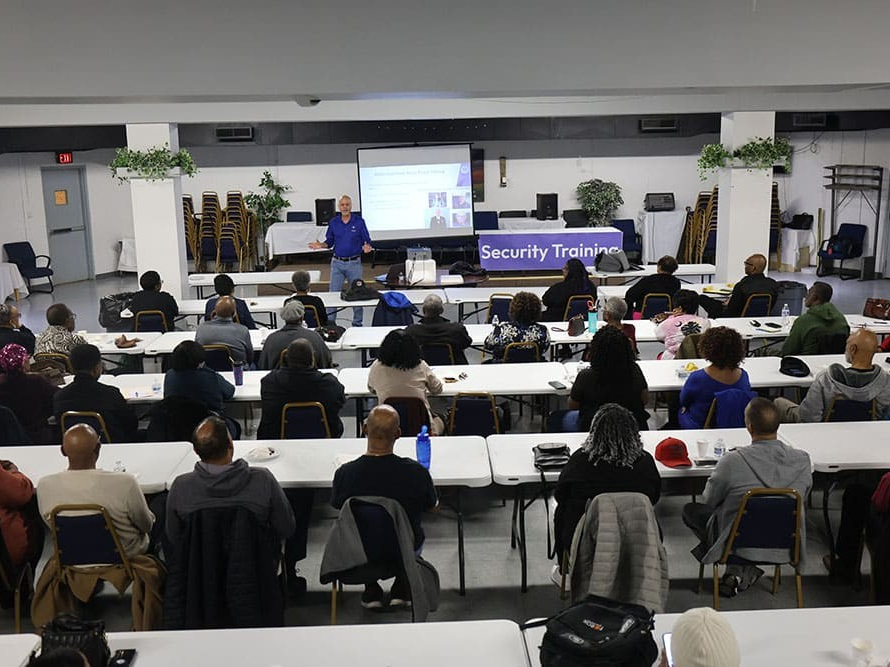
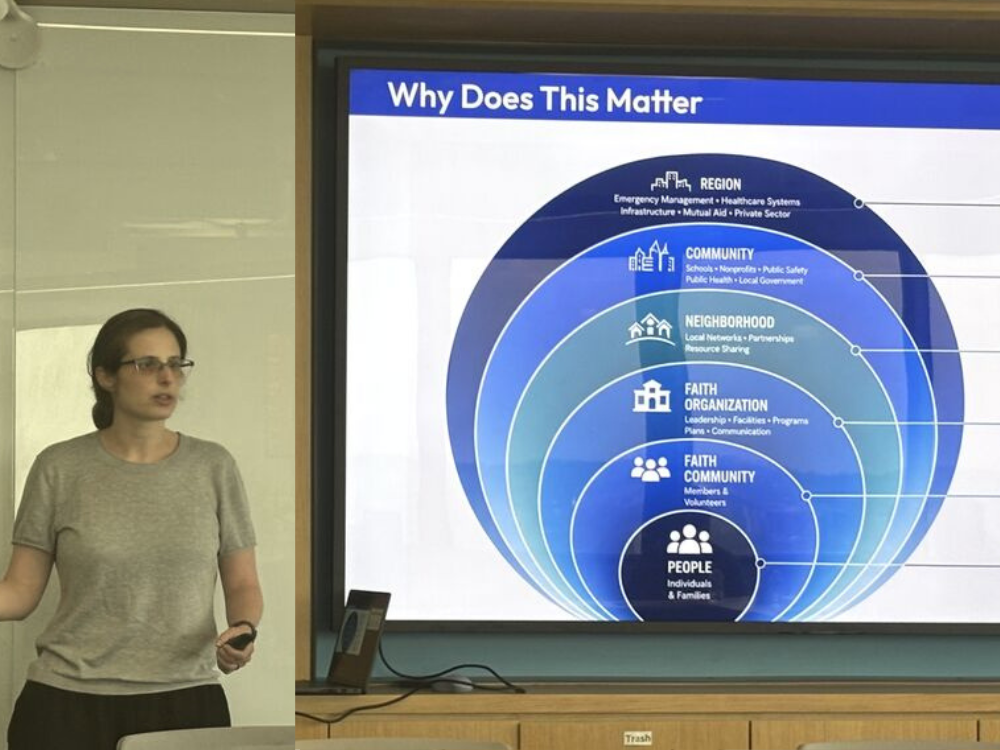
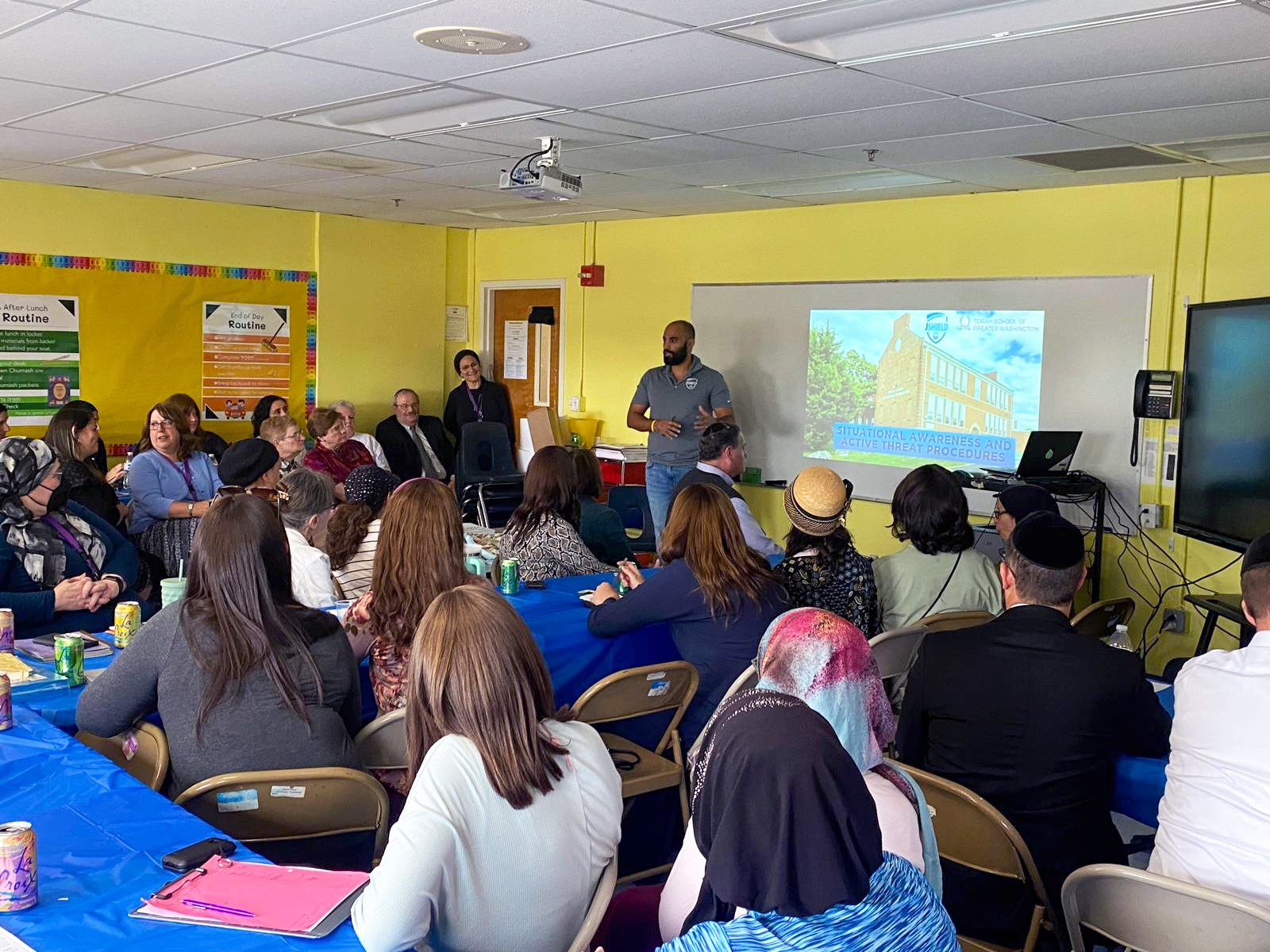
The Shield Program builds on our extensive experience supporting Jewish institutions, delivering a more focused and accessible approach to training. Rather than a one-size-fits-all model, it offers practical learning tailored to different roles and settings, from core safety foundations and crisis response to leadership planning, community awareness, and even self-defense.
At its center is a simple idea: security is not the responsibility of one person or one position—it’s something we all share.

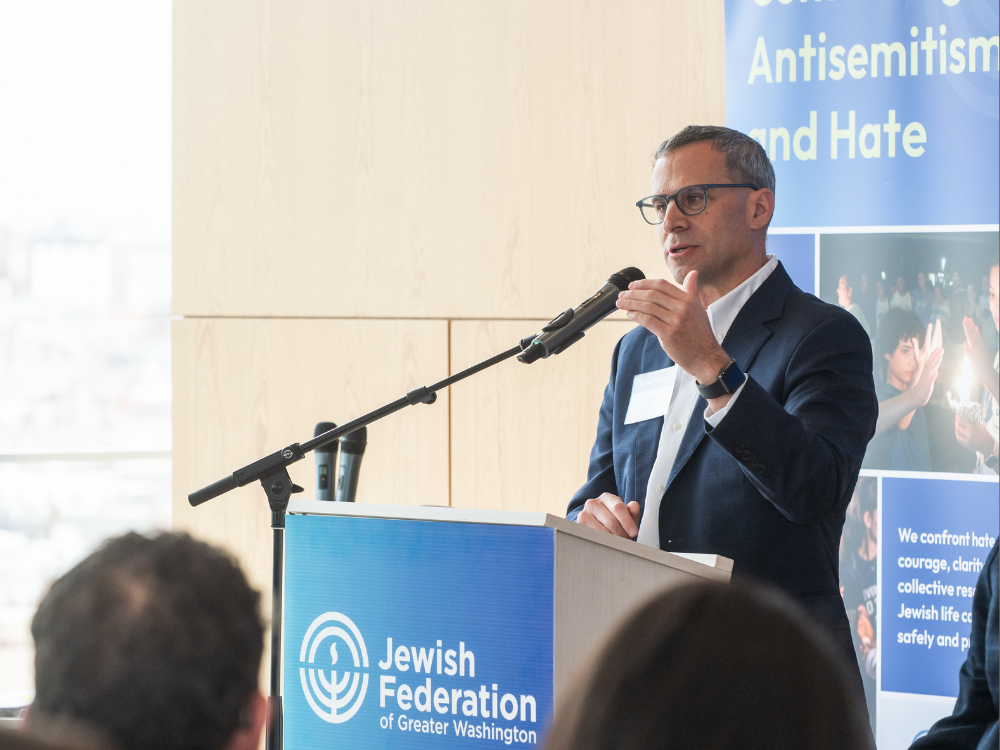
“The core mission of JShield is built on the philosophy that community safety is about empowering every individual to play a role,” said Rusty Rosenthal, Federation’s Executive Director of Community Security. “This expanded platform builds on partnership with our community, delivering practical, real-world training that helps people recognize risks, respond effectively, and contribute to a culture where safety is shared. At a time of rising antisemitism, that collective preparedness is essential.”

Importantly, Shield trainings are provided entirely free of charge, removing financial barriers and ensuring that organizations of all sizes can access high-quality security support.

“I feel fortunate to have JShield as a security partner,” said Monica Saff, Executive Director of Ohr Kodesh Congregation. “They have facilitated several security trainings for my staff team and have also helped me with reporting two issues of concern and advised me about the right steps to take. It’s reassuring for our community to know that we work closely with JShield and have their guidance and support as we make ongoing decisions about security.” 

Through JShield, Federation goes beyond funding security—it helps build the habits, coordination, and awareness that make communities safer every day. The goal is not only to respond in moments of risk, but to embed security as a shared responsibility so Jewish life can be experienced fully, openly, and safely.

Find more information on security and trainings.

Related posts

Community Security in Action

Community Security in Action

Through JShield, The Jewish Federation of Greater Washington’s community security initiative, we work closely with law enforcement and Jewish institutions across our region to strengthen security, share real-time information, and coordinate response efforts across institutions that might otherwise operate independently. This work helps ensure that Jewish organizations across Greater Washington are not operating in isolation, but are prepared, connected, and supported in maintaining a safe and secure community.

Why coordination matters now

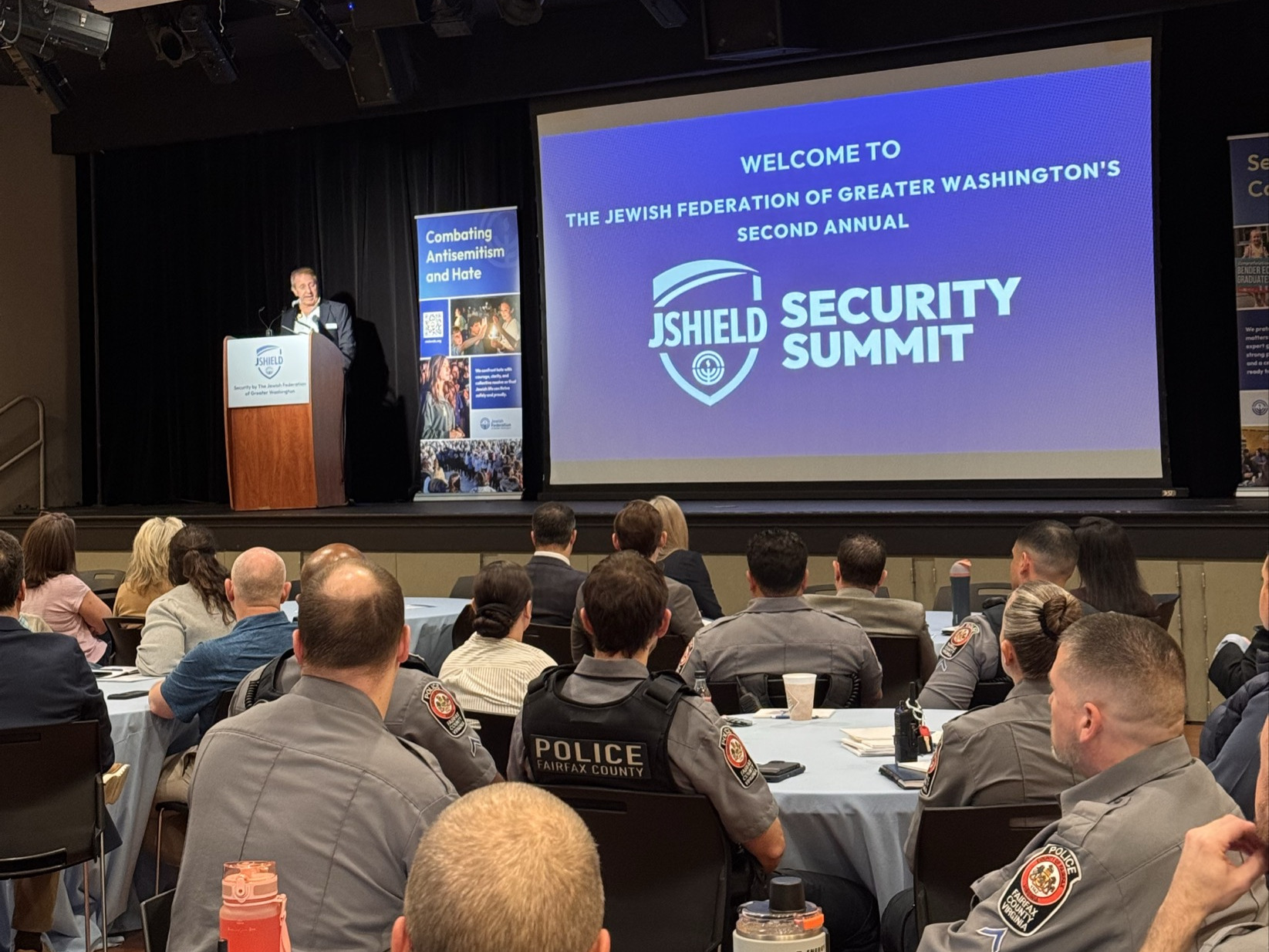
At a time when antisemitism continues to rise around the world, and in the wake of recent incidents targeting Jewish communities in Michigan, Amsterdam, and beyond, this kind of coordination is more important than ever. The JShield Security Summit is one way we put that coordination into action, bringing together community leaders, security experts, and law enforcement to share knowledge, strengthen relationships, and align on how we respond to emerging threats.

Over the course of the day, more than 100 participants gained insights from JShield and partner experts, including regional law enforcement and federal officials who shared resources to help Jewish organizations strengthen their security. Sessions focused on practical guidance, from navigating the application process for federal nonprofit security grants to developing clear plans of action in response to potential threats.

Throughout the Summit, the depth of our partnerships was clear. Law enforcement leaders and security professionals from across the region showed up not just as participants, but as committed partners in this work. Many are not members of the Jewish community, yet they are deeply invested in helping protect it—a reflection of the trust and relationships built through JShield, and of the allies those relationships have created beyond the community itself.

Strengthening a shared security system

The Summit reflects Federation’s unique role in building a culture of security in Greater Washington. Through JShield, Federation connects Jewish institutions with the expertise, information, and resources they need to strengthen not only their security, but the security of the entire Jewish community. By bringing together partners who might not otherwise share the same space—from synagogue leaders to federal agencies—Federation is working to ensure Jewish institutions, as well as the people they serve, are safer, more prepared, and better equipped to respond when it matters most.

Learn more about JShield and how Federation is working to strengthen community security.

Learn more

Related posts

When Antisemitism Takes Hold

When Antisemitism Takes Hold

Antisemitism doesn’t emerge in a vacuum

One way that I have been thinking about antisemitism is as a kind of twisted and inexcusable stress response. In times of social or economic strain, people tend to go looking for explanations as to why things don’t work the way they want or why life feels harder. And far too often, they reach for the oldest hatred in the book as their answer. Comforted by conspiratorial thinking, they conclude it must be the Jews who are to blame.

This cycle can then be hastened by popular figures who step in and exploit people’s anxieties for their own goals. As Deborah Lipstadt explains, “[Bad actors] cannot create a fire where none exists, but they can add fuel to preexisting fires.” The more disconcerted people feel, the more they may turn to hating Jews, and the more wayward leaders will encourage those inclinations. Antisemitism and chaos are intertwined. Sadly, and to great harm, this has been the pattern for millennia.

What this means for us is that there is space to tackle the challenge from two sides: by pushing back against antisemitism explicitly and tending to the health of our democracy generally, both of which we are focused on at Federation.

Five years ago, we adopted a multi-pronged strategy to address antisemitism in our region. This includes providing funds to address antisemitism in public and private schools, developing teen leaders who can directly confront antisemitism, supporting local Hillels in their campus efforts, as well as providing critical resources to local agencies including the Jewish Community Relations Council (JCRC).

We are also working to strengthen the relationships that underpin a healthy democracy and break down conflict by facilitating conversation among community members of diverse perspectives; deepening Black–Jewish relations; and partnering with local agencies and institutions on civic engagement efforts; all of which contribute to a more connected, stable, and resilient community.

Ultimately, fighting against antisemitism is a form of fighting for our democracy just as fighting for democracy and strengthening civil institutions is a form of fighting antisemitism. As antisemitism metastasizes, everyone loses. When we replace mistrust with credibility and community, everyone wins. It’s our civic duty to call out antisemitism and disrupt its chaotic breeding ground.

At a time when so many people are losing faith in institutions, Federation can be a steady fixture. A shared space where our community can come practice listening to those who think differently, caring for the vulnerable, welcoming the stranger, and working together toward a shared vision for the future. If antisemitism is what seeps in when our social foundation starts to crack, we can help ensure its integrity.

Related posts

Israel & the United States at War with Iran Special Update

Israel & the United States at War with Iran Special Update

Israel Update: Day 23 of the US–Israel War with Iran

Prepared by Jewish Federations of North America’s Israel Office
Shared by The Jewish Federation of Greater Washington

Jewish Federations of North America’s Israel Office has issued a detailed update on the rapidly evolving conflict between Israel, the United States, and Iran, including developments in Israel, the broader region, and guidance for Jewish institutions.

Read the full update

Related posts

An Update on Our Response in Israel

An Update on Our Response in Israel

How we're meeting the moment.

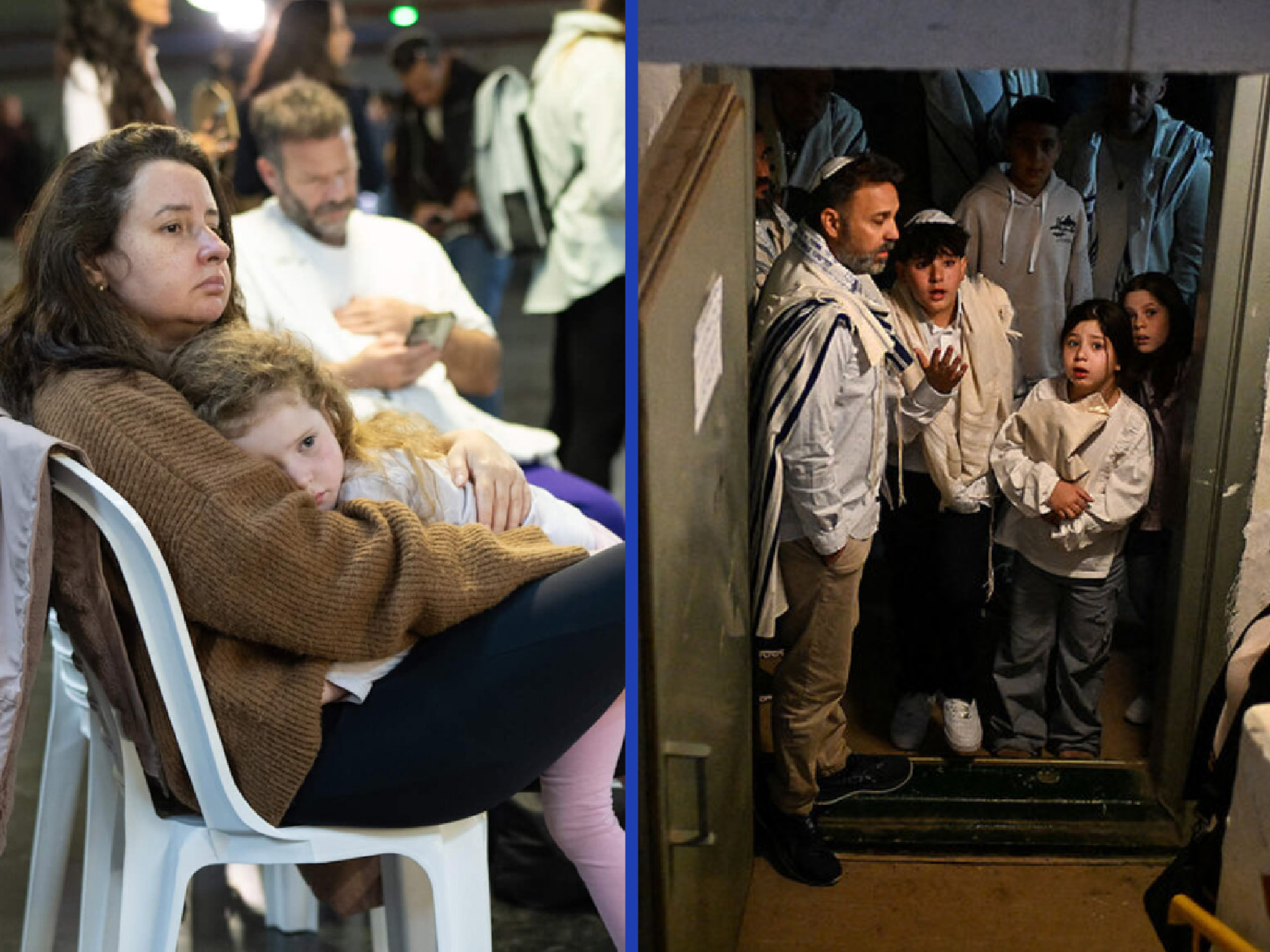
As the war with Iran continues to escalate across the region and families across Israel once again take shelter in safe rooms and bomb shelters, we stand firmly with the people of Israel. We mourn the victims of the recent Iranian ballistic missile strike in Beit Shemesh, in which at least nine civilians were killed and dozens were injured. We remain in close communication with partners there as more details emerge.

Immediate Action

Federation is allocating $250,000 to address the urgent needs in Israel. Funds will be directed to existing partners on the ground, including JDC and The Jewish Agency for Israel (JAFI), and based on evolving local needs in coordination with community partners.

Over the coming days and weeks, we will continue to evaluate developments carefully to mobilize our community to respond where support is needed most.

Security at Home

JShield, Federation’s community security initiative, remains in regular contact with law enforcement and community partners. While there are no known or anticipated security threats in Greater Washington at this time, we continue to reinforce vigilance and encourage all organizations to continue maintaining the security protocols already in place.

Community members who witness suspicious activity can report an incident here. In an emergency, call 911 immediately.

Organizational security-related questions may be directed to security@shalomdc.org.

Next Steps

Watch a live, firsthand update from Israel. Federation’s Israel Office Director, Karen Katzman, joined Gil Preuss on Wednesday, March 4 on Zoom. Speaking directly from Israel, Karen shared what she is seeing on the ground and what we are hearing from partners across the region.

Read the latest Israel update. Special briefings from the Jewish Federations of North America (JFNA) are available on our news page.

Stay informed and engaged. We will continue to post verified briefings and share meaningful ways for our community to respond as the situation evolves.

Many have already asked how to help. Our current response is being mobilized through existing Federation resources and long-term investments stewarded by the Foundation, enabling swift and accountable action. Those who wish to contribute may do so here.

Learn more about or support our ongoing work in Israel.

Photo credit: L: Erik Marmor/Getty Image; R: Rami Slush/Reuters

Related posts

Disagreement Need Not Mean Distance

Disagreement Need Not Mean Distance

Strengthening Connection and Dialogue on Israel and Beyond

I’ve been thinking about Federation’s role in Jewish life. To be fair, I’m pretty much always thinking about this. But I’m looking at the swirl of everything going on in our world, and wondering what is it that we owe our community in this moment?

As the sociologist Robert Bellah might put it (a reference I’m borrowing from a recent meeting of our Governing Board), some communities find strength in internal alignment while others rely on a series of interconnected bridges to stay strong and cohesive. Our community is likely best defined as a combination of the two. We hold a common commitment to a strong and vibrant Jewish community while operating across a breadth of differences. We must therefore continue building durable throughways to ensure we stay connected to Jewish life and each other.

This, of course, includes our work to engage our community with Israel. Core to our strategy is the goal to engage the full range of our community with the full range of Israeli society according to our community members’ own interests. This year, we’ll be continuing to work with Jewish organizations across our community to build out opportunities for more people to learn about and connect with Israel.

Additionally, as I wrote this week in partnership with scholar Ted Sasson, The Jewish Federation of Greater Washington is a Zionist organization. And as such, we have a responsibility to live up to our definition of the term and show people that Zionism is “broad enough to accommodate a community of Jews who hold (or grapple with) attitudes about Israel that span the range from the right to the left.”

After all, the latest JFNA study found that a majority of American Jews are struggling with specific Israeli government policies, even as they continue to believe in a Jewish, democratic homeland and Israel’s right to exist. If we care about a vibrant Jewish community, we cannot ignore this. We owe it to those deeply troubled by Israel’s actions to continue engaging them and creating the conditions for open dialogue and authentic connections with Israel and Israelis.

On a local note, our latest pulse survey found that political and social disagreements are the number one driver of disengagement with Jewish life and community. After issues of safety and antisemitism, Jews in the DC area rank political polarization as one of the most critical issues facing Jewish Greater Washington. More and more, I see a core part of Federation’s role as not only mitigating this crisis but turning our unique communal makeup into a source of strength.

Disagreement need not mean distance. Uncertainty need not mean isolation. What’s going on in the world, and certainly in Israel, is complicated and, for many, deeply personal. What matters is not that we arrive at the same conclusions but that we feel comfortable and, better yet, moved to meet each other on those bridges and find a way forward together.

Related posts

Strengthening Jewish Life While Confronting Hate

Strengthening Jewish Life While Confronting Hate

Earlier this month, Bret Stephens delivered the State of World Jewry address at 92NY. His remarks caught people’s attention. Stephens argued the Jewish community should shift energy and resources away from fighting antisemitism and instead double down on investing in Jewish education and engagement. As he put it, “Jew hatred is the product of a psychological reflex, and that kind of reflex can never be educated out of existence, even if, for a time, it may be sublimated or shamed into quiescence.”

I agree and disagree with his main points (and find fault with some of the additional opinions he presented). I agree with Stephens that now is a moment for Jewish revival, that helping more people explore and connect with Jewish ideas, practices, and peoplehood will be what shapes a vibrant Jewish future. At Federation, we are committed to working across our community to invest in and scale substantive, meaningful Jewish experiences—like summer camp, trips to Israel, learning and discussion opportunities, day school, and more—so that anyone who is interested has the chance to dig in and discover the joy of Jewish life.

But it would be irresponsible to ignore the work of countering antisemitism. We can and should be leaders in holding individuals and institutions to account and helping people understand antisemitism as a serious issue. Our work to build relationships, alliances, and understanding is not futile. If there are things we can do to mitigate hateful behavior, we should do them.

Admittedly, we may not be able to change the minds of the Carlsons and the Owenses of the world. But we can help shape programming and guidelines for schools, educate and engage leaders, work with teenagers before they go to college, and build bridges with other minority and interfaith communities, among other efforts. Not only does this work help address antisemitism, but it may also change the lived experiences of many in the Jewish community.

Stephens muses, “There is nothing Jews can do to cure the Jew haters of their hate. They can hire their own psychiatrists.” And he may be right. We are not responsible for people’s hateful and misguided beliefs. But perhaps I have a bit more faith than Stephens in our ability to multitask. I am confident we can build vibrant Jewish life while protecting it and being there for the students and teachers and everyday people who are coming face to face with antisemitism on a regular basis.

As Jews, we don’t ignore, we tackle. Today, that means being part of the sacred, collective efforts to stop hate before it starts while simultaneously strengthening Jewish identity, pride, and joy for the future.

Related posts

First to Go Out, Last to Return

First to Go Out, Last to Return

On October 7, 2023, Ran (Rani) Gvili, 24, was at his parents’ home in Meitar, in southern Israel, on medical leave from his service in an elite police unit. About two weeks earlier, he had injured his shoulder in an off-road motorcycle accident and was scheduled to undergo surgery just days later. As his family rushed into the shelter amid relentless sirens, Rani put on his police uniform and prepared to leave. His mother, Talik, asked him where he thought he was going. Rani replied simply: “Do you really think I’d stay home knowing my friends are fighting? No way.” (as reported by The Times of Israel)

Defender of Alumim

As chaos raged all around, without waiting to be called, Rani drove straight into the fighting. He first assisted survivors of the Nova Music Festival and then joined the heroic battle to defend the nearby Kibbutz Alumim. He neutralized dozens of terrorists and saved the lives of many residents, even as he sustained severe injuries to his arm and leg. Over time, he became known as “Rani, Defender of Alumim.” He fought relentlessly until he ran out of ammunition. It was later learned that he fell in battle and that his body was abducted to Gaza.

Bringing Rani Home

Last week, at long last, the circle was closed. After critical intelligence was received regarding his whereabouts, hundreds of soldiers, accompanied by dozens of forensic dental specialists, set out on a mission almost impossible to imagine: locating Rani’s body in a cemetery in Gaza. After approximately 48 hours of exhausting searches under extremely difficult conditions, the long-awaited answer came—Rani was found.

Dr. Assi Sharon, who took part in the mission alongside the forces in Gaza, described the emotional moment: “There wasn’t a dry eye. People were deeply moved, with a profound sense of reverence. We recited Kaddish, and there was a ceremony with the Chief of Staff—a very special moment. As I stood there, I realized I could finally remove the yellow ribbon, and I did.” (as reported by JFEED)

843 Days, 12 Hours, 5 Minutes, and 59 Seconds

With this, one of the most painful, yet also most inspiring, chapters in the history of the State of Israel and the Jewish people came to an end. After 843 days, 12 hours, 5 minutes, and 59 seconds, the clock at Hostages Square in Tel Aviv stopped. A shofar was sounded, and many recited the Shehecheyanu blessing, giving thanks for reaching this moment.

The mitzvah of redeeming captives, which Maimonides called the greatest commandment in Judaism, was fulfilled. The Israeli ethos—viewing the return of every soldier and civilian from enemy hands as a supreme moral obligation—was upheld. All 251 Israelis and foreign nationals abducted to Gaza on October 7, together with two Israeli civilians and two fallen soldiers previously held by Hamas, were returned.

The Power of Public Pressure

The sustained public effort to bring the hostages home was essential. Throughout this long—far too long—period, the Hostage Families Forum worked tirelessly to keep this issue at the forefront of the public agenda, most prominently in Israel and the United States.

One powerful testament to the impact of this cause can be found in the words of Alon Ohel, who returned from captivity after 738 days: “They opened a laptop and showed me a picture of someone holding a drawing of me, with a piano behind her. That’s when I understood that people I didn’t know were fighting for me. It gave me even more strength—if people who don’t know me are fighting for me, who am I to give up?”

A Shared Response, Across Oceans

With great pride and deep appreciation, it can be said that our community also took an active part in the collective endeavor to bring the hostages home, and in Israel’s broader recovery efforts. Shortly after October 7, Federation established the Israel Crisis Relief Fund and raised more than $15 million from the community for emergency assistance to Israel, nearly half a million dollars of which was transferred directed to the Hostage Families Forum. Beyond this, Federation supported the Hostage Families Forum in convening community events that brought people together with hostage family members and former captives, allowing them to share their personal stories and mobilize the broader community around the cause. The Community Shlichim—placed in synagogues and Jewish organizations across the community as part of a joint initiative of Federation and the Jewish Agency for Israel—led a wide range of activities focused on the hostages. These included creating dedicated spaces highlighting the hostages and their stories, and organizing events such as a community solidarity walk, an interactive cartoon exhibition addressing the hostage crisis and current Israeli issues, and many more.

“Thanks to Your Efforts…”

For all of this—and so much more—we extend our heartfelt thanks to everyone across our community who took part in advancing this most important cause.

As Matan Sivek, Founder of the Hostage Families Forum US, put it:

“The Jewish Federation of Greater Washington joined forces with hostage families from day one to ensure they get the financial and communal support they need. The DMV community advocated, marched, embraced, and was on the front line of ensuring the highest echelons don’t forget about the hostages. We are grateful for the leadership and partnership of Federation in this historic moment in Jewish history. Thanks to your efforts, they are back.”

Photo Captions: Ran (Rani) Gvili in uniform; Israel Defense Forces; Photo courtesy of IDF; Hostages Square clock at the moment of release; Photo: Avshalom Sassoni / Maariv; Alon Ohel, former hostage, after return; Photo: Eden Danielle Kleiban Pakter; Pozez JCC community walk for hostage awareness; Photo: Hostage Families Forum US, Leigh Vogel

Related posts

When hate tried to destroy, you helped rebuild

When hate tried to destroy, you helped rebuild

After an act of antisemitic arson devastated Beth Israel Congregation in Jackson, Mississippi, our community stepped up. It’s a small but deeply rooted congregation where Jewish life has endured for generations—now facing the long road of recovery.

In response, 222 donors across Greater Washington raised nearly $60,000 to support restoration and healing, ensuring Beth Israel can continue to serve as a place of worship, gathering, and Jewish life. Per the congregation’s request, funds are being distributed by the Jewish Federations of North America to reach them directly and with care.

Moments like this remind us what Federation is for: to mobilize resources when crisis hits, and to build a more connected, secure, and vibrant Jewish community every day.

Thank you to everyone who gave. Your generosity sent a clear message: they are not alone and Jewish life will continue to thrive. 

This is what it means to show up as a Jewish community. This is the power of collective giving.

Related posts

Helping Our Community Access NSGP Security Funding

Helping Our Community Access NSGP Security Funding

More than $300 million in federal security funding is available this year to help protect Jewish institutions. Accessing that funding, however, is competitive, technical, and time-sensitive.

That’s where JShield comes in.

Funding Helps—But Access Isn’t Automatic

Federal security grants can make a real difference, but only if institutions are able to secure them. The process is competitive and complex, and without support, too many opportunities are left on the table.

This year, lawmakers have proposed allocating approximately $300 million to the Nonprofit Security Grant Program (NSGP), a $25 million increase over last year. It’s an important step but accessing that funding still isn’t simple or guaranteed. Applying requires time, technical expertise, and careful coordination—resources many organizations don’t have while also running programs, supporting families, and serving their communities.

Where Federation Leads

Through JShield, The Jewish Federation of Greater Washington helps local Jewish institutions do this work with clarity and confidence. The support is practical and hands-on: advising organizations, preparing grant applications, and guiding them through a process that can otherwise feel overwhelming. This support is provided at no cost to institutions.

In 2025 alone, this work helped bring more than $5.25 M in security funding into our community. That funding helps institutions access resources they might otherwise miss and strengthens the safety of Jewish life across our region.

Security Is Ongoing Work

There is no finish line when it comes to security. It’s not a single grant or a one-time investment. It’s ongoing work that requires expertise, coordination, and strong relationships.

Through JShield, and with direct support from community donors, we help Jewish institutions prepare, apply, and stay focused on serving their communities.

Meet JShield

Related posts