What 300 Jewish Leaders Can Teach Us About Showing Up in a Difficult Moment
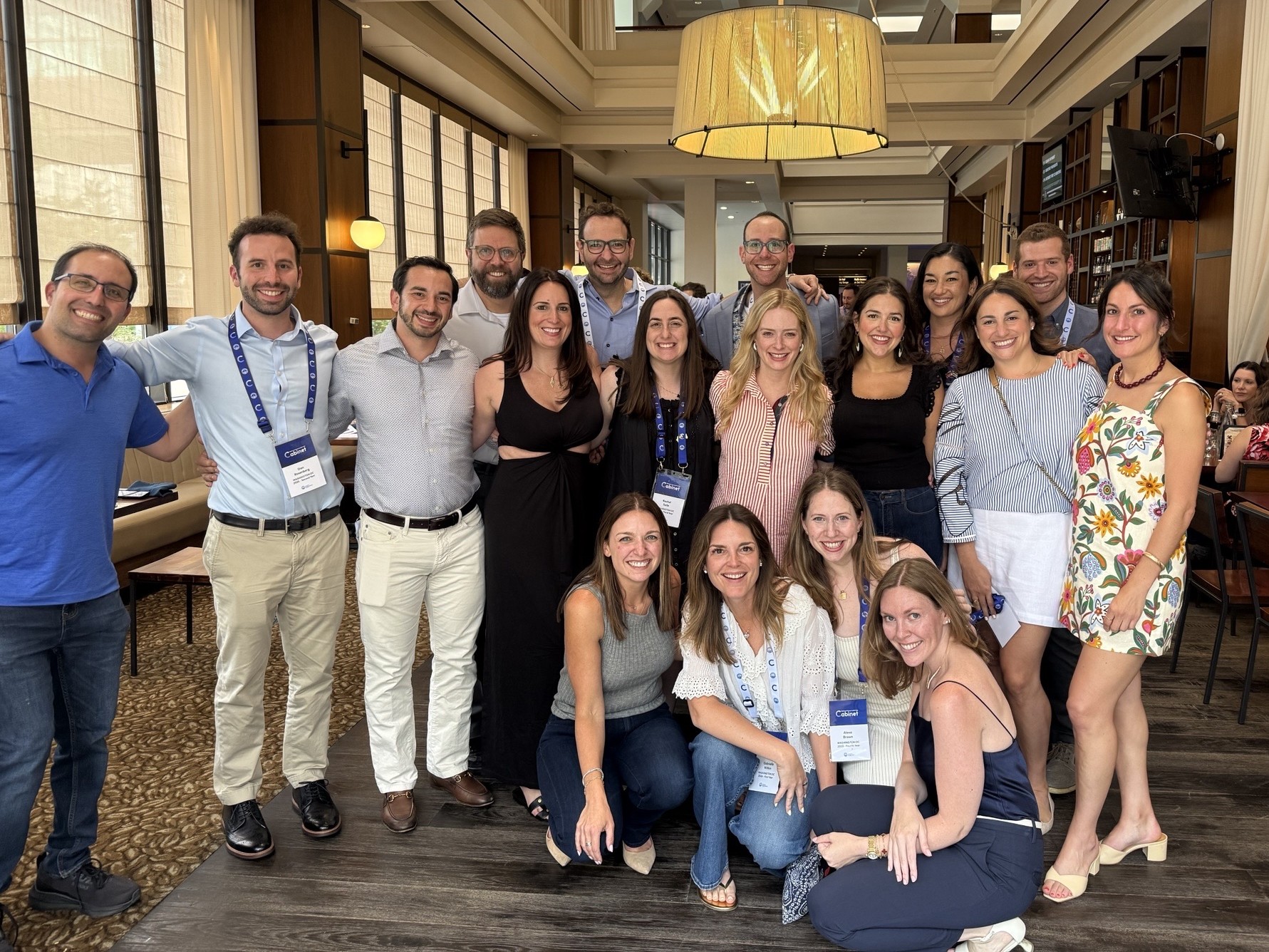
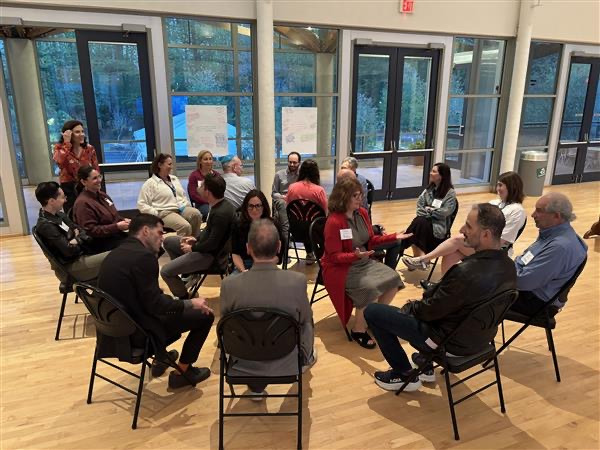
The room was full of 300 Jewish leaders from different cities. Different careers. Different Jewish experiences. Different ideas about what comes next. And yet, as Cabinet members from Greater Washington looked around the room in Minneapolis, one thing kept becoming clear.
They weren’t as “different” as they might have imagined.
“We all have the same concerns,” said The Jewish Federation of Greater Washington Cabinet member Dana Klein. “It doesn’t matter which community we come from, what we do for work, if we have kids or not. We are all invested and concerned about the same issues facing our community. And that is very powerful.”
For three days in August, hundreds of Jewish leaders from across North America gathered for the Jewish Federations of North America National Young Leadership Cabinet Retreat, including a cohort of 20 members from Greater Washington.
They came to talk about philanthropy, security, Israel, and global Jewry. They heard from Minneapolis Mayor Jacob Frey and Rabbi Arianna Gordon of Temple Israel in West Bloomfield. They wrestled with how to talk across differences, how to serve their communities and how to become better leaders. But underneath all of it was a more personal question.
What does it mean to be a Jewish leader right now?
Turning Challenges into Leadership
Antisemitism is rising. Security has become something Jewish communities have to think about in their own neighborhoods. Families are making decisions about how visible they want to be. And more than one Cabinet member spoke about the feeling of watching everything unfold and wondering what, exactly, you are supposed to do about it.
Gabrielle Witkin put it plainly. “This is a hard moment to be Jewish,” she said. “And hard moments are exactly when leaders get made or lost.”
Gabrielle is a Jew by choice, and that choice comes with a responsibility she takes seriously. “I want a world where every Jew can live a safe, vibrant Jewish life. I want to leave this world better than I found it for my children.”
That desire to do something, rather than simply watch, is part of what brings people to Cabinet.
For Dana, Federation has made being an active part of the Jewish community a priority. “At a time when our community is constantly at risk, locally and abroad, giving back and making ourselves stronger has never been more important,” she said.
And there is a recognition that, as difficult as this moment is, Jewish communities have something powerful to draw on. Each other.
They attended the Retreat hoping to learn, enhance their leadership skills, and grow their network. That was one of the most meaningful parts of the Retreat for Britney Wambold, Cabinet Co-Chair, who sits on Federation’s Next Gen Board. She has met people through Cabinet from different cities, careers, Jewish backgrounds and phases of life. “Everyone is driven, cares deeply about making an impact, and shares a commitment to philanthropy and the Jewish community,” she said.
“I knew I would meet some nice people, but I was not expecting to make lifelong friends,” Dana added.
Britney knows that feeling well. “There is also something really special about knowing you have so many people in your corner,” she said. “Cabinet is full of people who genuinely want to see each other succeed and support one another throughout life.”
Alexa Brown, Cabinet Advisor, has watched that happen over four retreats. “What makes Cabinet different is how personal it is,” she said. “You walk away with some of your closest friends.”
At Cabinet Everyone Just Gets It
 Three hundred people, and no one had to explain why they were there. That may have been the most powerful feeling in the room.
No one had to explain why security matters. Why Israel feels personal. Why the future of Jewish life is something worth worrying about. Why, even while building careers and raising families, they feel a responsibility to give their time, energy and resources to something bigger than themselves.
They didn’t have to explain why they were there because everyone else already understood. “It’s so easy to feel overwhelmed by everything happening in the world around us,” Alexa said. “Being with chevre (friends) reminds us we don’t ever need to face anything alone.”
For Gabrielle, that realization brought clarity. “I expected to feel small in that room. Instead I got clarity.” She came home with a better understanding of where she can make an impact, not everywhere, but somewhere meaningful. “I came home knowing where I can serve best rather than trying to serve everywhere.”
The Moment that Reframed Their Entire Perspective
One conversation in particular stayed with Gabrielle. Her caucus leader said something that reframed the way she was thinking about philanthropy:
“The only people giving to the Jewish community are the Jews.”
The idea, though simple, resonated deeply in a room full of people already asking themselves how much they should give, how much time they should devote, and how much responsibility they are willing to take on.
The conversation turned to giving beyond what feels comfortable. For Gabrielle, the discomfort was the point. Because leadership, she realized, isn’t necessarily about finding the comfortable thing you can do. Sometimes it is about deciding what you’re willing to sacrifice because you believe the community is worth it.
What Happens After the Cabinet Retreat?
The three days end, but the conversations, friendships, and questions don’t. If anything, they become more urgent, because eventually, every Jewish leader has to decide what kind of role they want to play in the future they’re helping create.
What kind of Jewish community do we want to leave for the people coming after us?
For Gabrielle, that question is at the heart of Cabinet.
“The next generation of leaders will not be produced by accident,” she emphasized. “We need to be gathered, trained, challenged, and connected to peers who are carrying the same weight. That is what builds the bench our community will need in ten and twenty years.”
And that work cannot wait.
“It matters that we are doing it now, in our thirties and forties, while we are raising the generation after us,” she said. “Our kids are watching how we respond to this moment.”
To join us in building that future or to learn more about Cabinet, please reach out to Jeremy Frisch, Federation’s Philanthropy Officer, Donor Engagement.