Need support? Call 703-J-CARING (703-522-7464)

A Full Table for a Sweet New Year

A Full Table for a Sweet New Year

There are certain tastes that make it feel like Rosh Hashanah.

An apple dipped in honey. The jewel-like seeds of a pomegranate. A round challah, golden and sometimes studded with raisins. Glazed sweet potatoes. A melt-in-your mouth holiday roast or brisket. And the simanim, the symbolic foods placed on the table with hopes and blessings for a sweet, abundant year ahead.

A Rosh Hashanah table brings magic to Jewish families. Candles flickering. Familiar recipes making their annual appearance. Plates being passed around. Full bellies, full hearts, and the simple joy of being surrounded by loved ones.

This Friday night, community members across Greater Washington will gather around their tables to welcome the Jewish New Year.

For families who keep kosher, especially larger households, preparing that table can mean buying significant quantities of kosher meat, produce and holiday staples, and the costs can add up quickly. For families already feeling financial pressure, the High Holidays can bring an added burden at a time that is meant to be filled with joy.

That’s where Yad Yehuda, a partner of The Jewish Federation of Greater Washington, comes in.

How Yad Yehuda is Bringing Joy this High Holiday Season

Thousands of individuals across the Greater Washington Jewish community rely on Capital Kosher Pantry, the region’s only kosher food pantry, for support provided in an atmosphere of dignity and respect. A program of Yad Yehuda, the pantry provides fresh produce, proteins, shelf-stable groceries and personal care items, restocked weekly.

But Rosh Hashanah requires something more. “We want people to be able to celebrate the holidays without worrying about how they’re going to afford them,” says Stephanie Savir, Director of Operations at Yad Yehuda.

In the days leading up to the holiday, Yad Yehuda mobilizes its entire network to make that possible. Kosher food providers, dozens of volunteers, companies, synagogues, other food pantries and community partners come together to help fill the pantry’s shelves and freezers.

Packing for a Sweet New Year with the Capital Kosher Pantry

Community members have spent the week working side by side volunteering to unload deliveries, sort enormous quantities of food, pack Rosh Hashanah boxes and prepare them for distribution.

Thanks to support from Federation, pallets of fresh produce have arrived by the thousands of pounds. Cold storage has been filled with roasts and chicken. More deliveries continue to arrive as the holiday approaches.

It takes an entire community to prepare for a holiday at this scale. And this is exactly the kind of work that happens when Federation’s partnership with a local organization extends into active community engagement.

Yad Yehuda expects this year’s Rosh Hashanah distribution to reach approximately 1,600 to 1,800 individuals.

The Capital Kosher Pantry has grown considerably since its beginnings as a small food closet. Today, the organization operates a dedicated facility with multiple refrigeration units, a 20-foot freezer container, pantry, and other services designed to meet the needs of the community. During the year, it runs much like a small grocery store, where patrons can confidentially schedule appointments and select foods for their households.

A Community that Brings Light to Everyone

Supporting a thriving Jewish community in Greater Washington means making sure people can participate fully in Jewish life in ways that reflect who they are. For families who keep kosher, that means having access to kosher food.

For those celebrating Rosh Hashanah, it means having the ingredients to prepare the foods that carry generations of meaning.

And for all of us, it means making sure that financial circumstances do not determine who gets to experience the joy and traditions of the Jewish holidays.

That is why Federation is proud to support Yad Yehuda. By strengthening the organizations that understand the distinct needs of our community and are there to meet them, Federation ensures we are not only present in moments of crisis, but in the ordinary, deeply meaningful moments that make up Jewish life.

This is what it means to make room for everyone at the table. Together, we can make sure that, regardless of circumstance, anyone in our community can celebrate, participate, and create their own Rosh Hashanah memories.

Learn more about Yad Yehuda’s food pantry here.

Related posts

What Happens When We Keep Talking About Israel

What Happens When We Keep Talking About Israel

As an Israeli currently living in the United States, I spend a lot of time thinking about the space between Israel and American Jewish communities. It is a space I came as a Shlicha (Israeli emissary) to help bridge. But right now, that bridge can feel complicated and ever widening.

For many, Israel has become a topic that comes with strong feelings, important questions, and a desire to better understand. After years of war, loss, political upheaval, and uncertainty, people are asking questions about what is happening in Israel, how Israelis are experiencing this moment, and what October 7 has changed. Some are thinking more deeply about the decisions being made by Israel’s leaders, while others are trying to navigate what it means to love Israel while also holding questions or concerns.

And sometimes, people simply don’t know who they can ask.

That is what made a recent conversation at Washington Hebrew Congregation feel so important.

An Invitation to Ask Anything

The idea started with coffee. I sat down with the Rabbi and the leader of the young professionals group at Washington Hebrew Congregation, and we talked about something they were hearing more and more from young adults. They wanted a real conversation about Israel. Not another presentation telling them what to think.

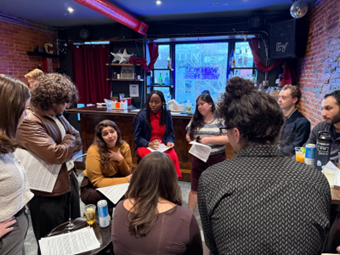
So on August 1, I joined the 2239 young adult group for an “Ask Me Anything” gathering about Israel. We brought bagels (because, let’s be honest, no Jewish gathering is complete without them) and sat around a table.

There were hard questions. Different opinions. Questions I didn’t always have a perfect answer for. And that was the point. I wasn’t there simply to answer questions as an Israeli. I wanted to hear their perspectives, too.

What does Israel mean to you?

What has changed in the way you think about Israel?

What questions have you been afraid to ask?

What does it feel like to be a young American Jew trying to make sense of Israel right now?

The conversation moved in both directions. We talked about Israel, but we also talked about the American Jewish experience. We talked about the distance between what Israelis experience and what American Jews see and hear from thousands of miles away.

And slowly, something happened. The conversation became less about finding the “right” answer and more about understanding one another.

One participant told me, “Dialogue makes me feel less alone in my experience.”

Another said, “I was surprised to learn that Israelis genuinely thought that October 7 was going to be the end of Israel. I am thankful to Hila for acknowledging based on her experience as a Shlicha that it’s not useful to disregard American Jews when it comes to Israel, because what happens in Israeli politics affects the Diaspora.”

And perhaps my favorite thing I heard was: “I have more questions than answers, but I’m more hopeful about the future.”

The Power of Talking to an Israeli

I had just returned from a trip home to Israel when we gathered that Shabbat. My trip made me reflect on the distance between these two communities in a new way.

In Israel, the war and its consequences are part of everyday life. Here, American Jews are experiencing Israel through their own communities, relationships, values, questions and concerns.

We need spaces where these two different experiences can meet. That is what I believe the role of a Shlicha (Federation’s Israeli emissary program) can be at its best. A Shlicha can bring something that is difficult to get from a headline, a social media post or a political debate. Someone who can say, “This is what I experienced in Israel.” And then listen when someone here says, “This is what Israel feels like to me.”

That exchange matters. The relationship between Israel and American Jewry isn’t guaranteed by geography, history, or even shared identity. It has to be built. And especially in these complicated years, it is worth building.

There is a temptation, when a subject feels as emotionally charged as Israel does right now, to avoid the conversation altogether. But silence doesn’t make the questions disappear. If anything, it makes the distance between us greater.

Creating More Places to Connect

This is where The Jewish Federation of Greater Washington plays such an important role. Through the Shlichim program, Federation creates opportunities for Israelis and American Jews to build relationships that go beyond a single event or a single conversation. And those connections can look different everywhere. We might join a young adult group for an “Ask Me Anything” over bagels. We might speak with teens, visit a classroom, work with a religious school, join an Israel committee or help a synagogue explore Israeli culture and society.

As a new year of programming begins, I hope more schools, synagogues, youth groups, religious schools, Israel committees and community organizations will consider inviting a Shlicha into the conversation. Because right now, when Israel can feel like one of the hardest things to talk about, we need more spaces where we can talk honestly, listen deeply, and stay connected. If you or your organization is interested, you can see our programming offerings here.

I left that gathering reminded of how little it can take to begin something meaningful. A room. Some bagels. An open heart. And a willingness to ask one another, “What do you really think?”.

Related posts

Get to Know Capital Camps

Get to Know Capital Camps

It's Summer Camp Season!

A summer away from home. A dining hall full of noise. A Shabbat filled with song and dance. A friendship that started in a bunk and is still going strong twenty years later.

Ask an American Jew what first made them feel “Jewish,” and there’s a decent chance the answer involves summer camp.

Jewish overnight camp is one of the key ways that Judaism becomes an immersive way of life. For families in the DMV, Capital Camps has been that introduction for nearly four decades.

What actually happens at Capital Camps?

The short answer: a lot.

Located in the Catoctin Mountains of Pennsylvania, just 75 miles from DC, Capital Camps is the premier Jewish community overnight camp in the region. A core partner of The Jewish Federation of Greater Washington, each summer, more than 900 campers and 180 staff come together across multiple village programs. Programming spans waterfront activities, a ropes course, theater & arts through the Habima program, a working farm, and Jewish life experiences that run through the entire summer. A 700-person dining hall serves kosher meals (meat, dairy, and pareve kitchens, if you were wondering), and staff provide daily opportunities for campers to connect with Jewish text, tradition, and community.

First-time campers enter through the Yalla program, a specially designed experience for children navigating camp for the very first time. Older campers transition into leadership programming that, for many, becomes their first tangible leadership experience: running a Shabbat, taking responsibility for a cabin, or mentoring a younger camper.

Capital Camps also works to ensure that different groups feel included and that they can enjoy everything the summer camp experience has to offer. The Atzma’im inclusion program ensures that children of any denominational affiliation, gender, race, sexual orientation, or socioeconomic status, including those with a range of intellectual, emotional, and physical abilities can fully participate in the camp experience. The campus is fully ADA compliant and support staff is available for medical and mental health services. Through annual partnerships with Friends of the IDF, Israeli campers who have lost someone through conflict are welcomed to camp, a reminder that the camp’s community extends well beyond its 75-mile radius.

How does the Foundation support camp?

Access to transformative Jewish experiences is one of the most powerful investments a community can make. Research shows that Jewish overnight camp creates lasting connection to Jewish identity, community, and leadership in ways that are difficult to replicate.

Study after study, from the Foundation for Jewish Camp to Brandeis University’s Cohen Center for Modern Jewish Studies, finds that Jewish camp alumni are more likely to marry Jewish partners, raise Jewish children, donate to Jewish causes, and remain engaged in Jewish communal life across the arc of their adulthood. The mechanism is straightforward: immersive, joyful, community-based experiences during formative years create an attachment to Jewish life that withstands the drift of adulthood.

We know this, and yet, cost remains one of the primary reasons families don’t send their children to Jewish overnight camp. If we can lower this barrier to access, we know we can create strong and vibrant future generations of Jews.

Scholarship funding exists to remove this exact barrier.

The Jewish Community Foundation of the Jewish Federation of Greater Washington is proud to support the expansion of access to transformative experiences like Capital Camps through strategic philanthropy and scholarship funding through both Donor Advised Funds and Legacy Gifts. Because one of the truths we keep returning to in this work is that belonging isn’t something you can teach in the abstract. It has to be lived. And the experiences that young people carry with them into adulthood, their sense of Jewish identity, their instinct toward community, their capacity for leadership, are often rooted in summers like this one.

Ready to learn more?

If you’re a donor thinking about where camp scholarship funding goes, it goes here: to a child who might not otherwise have access to the people, the places, and their connection to Jewry they just haven’t met yet.

The Catoctin Mountains are waiting!

Related posts

Pride, Israel, and Building Bridges Through Shlichut

Pride, Israel, and Building Bridges Through Shlichut

There was one moment during the Pozez JCC Pride celebration on June 21 that I haven’t stopped thinking about.

The event was designed to celebrate Pride and provide a window into Israeli culture, art, and community. As the Jewish Federation of Greater Washington’s Community Shlicha (Israeli emissary) in Northern Virginia, I was there to help bring the Israeli perspective into the evening through stories, culture, and personal connection. Guests explored our LGBTQ+ LOVE Archive, a photography exhibition featuring LGBTQ+ couples and families across Israel before settling in for a joyful drag performance by New York performers Matzah Belle Soup and Alvah Klempt.

It also happened to be Father’s Day.

During the performance, one of the performers invited the father of a gay attendee onto the stage, and he completely stole the show. He was hilarious, joyful, and fully embraced the moment.

After the performance, one of the drag queens came up to me and said:

“That dad is exactly like my dad.” She told me she immediately wanted to call him and wish him a Happy Father’s Day, telling him how grateful she was to have him as her father.

It was a small exchange, but it captured something much larger about the evening: community, connection, and the powerful impact of making people feel loved and supported for who they are.

Acceptance has a ripple effect. A supportive parent doesn’t only change the life of their own child. It shows others what love and belonging can look like. As she spoke about her father, I couldn’t help but think of my own, and of standing beside him at the Tel Aviv Pride Parade.

Where My Connection to Pride Began

My connection to Pride is deeply personal. Some of my earliest memories are of attending the Tel Aviv Pride Parade with my father. I remember the colors, the music, the joy, and the sense that everyone belonged. At the time, I didn’t fully understand the political or social significance of those moments, but I understood what it felt like to be surrounded by people who were free to be themselves.

Years later, I met my wife, Hila, and together we built our life within a community that made space for us. As an Israeli, Pride reminds me that progress is possible and that the freedoms many of us experience today were built by people who came before us and fought for them.

And as one of Federation’s Shlichim, Pride is an opportunity to create spaces where people feel seen, welcomed, and connected—to each other, to their community, and to Israel.

How Shlichim Bring Israeli Stories to Community Life

As a Shlicha, my role is to share Israel through lived experience: through memory, through culture, through complexity, and through real people.

For me, Israel education is ultimately about people and stories.

This event was intentionally designed to create a joyful and welcoming space during a particularly complicated and emotionally heavy time. Guests walked through a photography exhibition featuring LGBTQ+ couples from across Israel while enjoying Israeli-inspired cocktails. We then welcomed two Jewish drag performers from New York who brought humor, creativity, and joy to the stage.

What I loved about this format was that people were learning about Israel without feeling like they were sitting in a lecture. They were experiencing Israeli culture, stories, and exploring questions of identity, family, and belonging in a natural and personal way.

Seeing Ourselves in the Story

One photograph in the exhibition held special meaning for me.

It was a picture of my wife, Hila, and me under our wedding chuppah.

I included it intentionally. Rather than seeing LGBTQ+ Israelis as distant figures, participants were seeing someone they already knew through community connection. They know our story, our relationship. And suddenly, Israel was not just a place being described. It was a place being lived by people in their own community. Most importantly, I wanted people to see LGBTQ+ Israelis not as statistics or symbols, but as human beings with stories that many of us can relate to.

In many ways, our photo served as a reminder that the stories being told throughout the exhibit are not just Israeli stories. They are the stories of real people, families, and communities.

Israel Is Not One Narrative

LGBTQ+ life in Israel, like Israel itself, is complex and multifaceted. What I hoped participants would take away is that LGBTQ+ life in Israel is not one story. It is many.

There are moments of progress and celebration. There are ongoing challenges. There are vibrant communities and everyday lives that continue to evolve.

But most importantly, there are people—real people—whose lives are shaped by the same things that shape all of ours: family, love, belonging, and the search for community.

Why Storytelling Builds Connection to Israel

People often encounter Israel through headlines. But headlines rarely leave room for nuance, humanity, or complexity.

Stories do.

When we engage with LGBTQ+ Israelis, or any Israelis, we are engaging with questions that are deeply familiar: Who are we? Where do we belong? How do we build families and communities? How do we create spaces where people feel seen?

These are universal questions. And that is why storytelling matters so deeply in Jewish communal life.

What Shlichim Make Possible

This is where Shlichim play a unique role, and where Federation’s investment in this work becomes so meaningful. Shlichim help transform Israel from something distant into something immediate and relatable.

We don’t only bring information. We bring ourselves—our memories, our cultures, our families, our contradictions, and our hopes. Through that, we create a bridge between Israel and the Greater Washington Jewish community. Federation’s support makes it possible for those bridges to exist. It allows Israeli voices to be present in community life in an ongoing, sustained way, as relationships. These relationships build strong Jewish identities for now and for the future.

This Gives Me Hope

What gives me hope is not just that people came to this event. It’s that they stayed.

In fact, they stayed long after the program officially ended. They stayed across generations, across identities, across perspectives.

They stayed for conversations. They came to celebrate Pride, but they also came to learn, to listen, and to connect—to each other, and to Israel.

In a time that often feels fragmented, that matters more than ever. Because community is not built through a single moment. It is built through repeated acts of showing up for one another.

And often, it begins with something very simple: creating a space where people feel welcome.

Related posts

Why I Leaned into the NoVA Leadership Cohort

Why I Leaned into the NoVA Leadership Cohort

I’ve spent a lifetime experiencing the incredible, vibrant diversity of the Jewish world. I grew up Conservative in Toronto, navigated Reform spaces in Anaheim after my family moved there when I was nine, engaged with Chabad, and even spent time backpacking through Israel, staying on my family’s kibbutz.

Moving around as much as I have, I’ve seen just about every model of Jewish community layout imaginable, from tiny, 20-family pockets with a traveling rabbi to massive communities where people only show up for the High Holidays. Experiencing that full spectrum also gave me a deeper understanding about what makes a Jewish community thrive.

When my family and I moved to Alexandria right before the pandemic, we knew it was time to finally put down deep roots and find a true home in our local community. I jumped into leadership, eventually chairing several committees at Beth El Hebrew Congregation. But while I loved my synagogue, I couldn’t shake a familiar feeling: NoVA’s Jewish community was missing out on key opportunities to come together.

The structures we’ve inherited naturally build walls between community leaders throughout our region. But the reality is, leaders across our different NoVA organizations actually want to work together. At our core, we are facing the same challenges and chasing the same goals. We are more alike than we realize and are stronger and more effective together. We just needed the space, the trust, and the opportunity to do it.

That opportunity came for me when I learned about Federation’s Northern Virginia Leadership Cohort from Carly Rubenstein, Board President at Beth El. She told me it was something I’d find fascinating and impactful for my work in the community. I didn’t know a single other person who had signed up for it, but I decided to take the leap.

Professional-Grade Tools for Community Transformation

I recently took six months off from the corporate world to dedicate myself fully to volunteering as a leader in Jewish communal work, so I wasn’t looking for a casual networking mixer. I wanted something substantial. To my surprise, the caliber of this Federation program ranked right up there with the absolute best professional development trainings I’ve ever done in the corporate sector.

Led by renowned leadership consultant Rae Ringel, the program is entirely about giving you tools, learning by doing, and doing in a group of leaders who have the same mission and values. Through a dynamic mix of in-person and virtual sessions, Rae guided us through “connection modalities” that taught us how to surface differing perspectives, navigate difficult conversations, and truly articulate both our personal stories and our organizations’ missions.

For me, the most tangible takeaway was learning structured, innovative frameworks to pull apart larger, sometimes overwhelming community challenges into manageable, actionable pieces, building the concrete skills to execute your vision.

The Power of Coalition: “Shipbuilding” in NoVA

What surprised me most, though, was the sheer willingness of everyone in the room to work together.

There is a distinct difference between standard corporate or nonprofit experience and Jewish nonprofit experience. To me, the main difference is “shipbuilding,” learning how to build lasting coalitions across different denominations, synagogues, and grassroots organizations in a casual, high-trust environment.

The Jewish Federation of Greater Washington understands this, explicitly designing the program to facilitate these deep connections by assigning us to smaller “coffee groups,” which became the foundation for real collaboration.

Just this week I was texting with another participant from my cohort. We recreate those coffee groups all the time. We are constantly leaning on one another, bouncing ideas off each other, and using the exact problem-solving structures we learned together to figure out how to best serve Jewish NoVA.

By bringing together leaders from across the Jewish communal space in NoVA, Federation is actively weaving a powerful network of friends and collaborators. The cohort has allowed lay leaders and professionals across the region to realize we are not facing our challenges alone.

Now’s The Time: Join the Third NoVA Leadership Cohort

If you are reading this and feeling even a little bit intrigued, my advice to you is simple: don’t be afraid to give it a shot.

Whether you are a seasoned board member, a dedicated committee chair, an engaged volunteer, or someone who hasn’t held a formal leadership role yet but has a passionate desire to grow, this cohort will give you the tools to decide how you want to be involved and the lifelong network to back you up.

Federation is launching the third Northern Virginia Leadership Cohort this fall. From August 2026 through May 2027, a new group of 16–20 lay leaders will come together for a kickoff event, a closing celebration, and 8 monthly sessions (alternating between in-person and Zoom) led once again by Rae Ringel. To learn more and nominate a talented and dedicated individual with a desire to grow in their Jewish leadership journey (including yourself), please see here.

We need a diverse set of organizations, ages, and perspectives to make a truly strong, vibrant, and unified NoVA Jewish community a reality.

Take it from me—it is entirely worth the investment.

Related posts

Find Your People with JLive
Find Your People with JLive

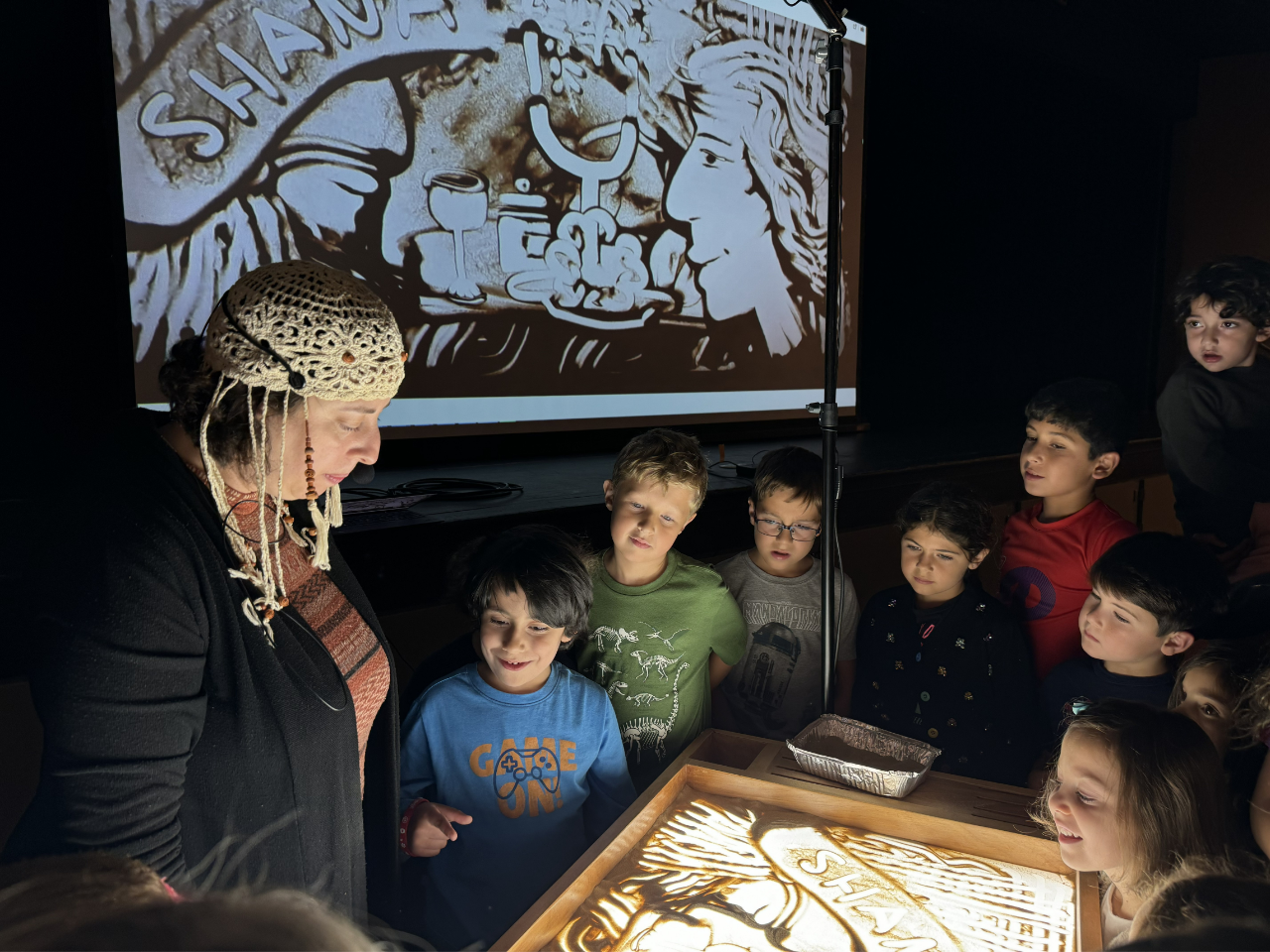
On any given day in Northern Virginia, there may be a young professionals happy hour in Arlington, a family challah bake in Fairfax, a food packing event in Alexandria, or an Israeli dance class in Reston.

The challenge isn’t whether Jewish life exists across Northern Virginia. It’s whether people know how to find it.

When someone decides they want to get more connected, if they’re new to the area, looking to meet other young families, searching for Jewish experiences for their children, or simply hoping to find community the next question is often:

“Where do I even start???”

Do you Google? Scroll Instagram? Check three different community websites? Or find out about something amazing an hour after it already happened?

Making Jewish Life Easier to Find

That’s the opportunity behind JLive, a new digital platform coming to Northern Virginia later this year through a partnership between the Jewish Federation of Greater Washington and the Pozez Jewish Community Center of Northern Virginia.

Launching first in Northern Virginia before a future rollout across Washington D.C. and Maryland, JLive is designed to make discovering and sharing Jewish programs, events, and experiences easier than ever before. From Shabbat dinners and cultural events to volunteer opportunities, family programs, and young adult gatherings, the platform will serve as a centralized hub for Jewish life across the region.

Building Connection Across Northern Virginia

“Our community spans a wide geographic area, and JLive has the potential to make Jewish life feel more connected, accessible, and visible than ever before,” said Vanessa Sax, Federation’s Senior Director of Strategy and Community Building for Northern Virginia. “It’s not only about helping people find events, but also about helping people find one another and discover the incredible Jewish experiences already happening across Northern Virginia every day.”

For years, Pozez JCC Executive Director Jeff Dannick has been thinking deeply about how to make Jewish life easier to navigate and more accessible. While the region is home to a thriving Jewish ecosystem, many residents still experience Jewish life in silos, connected to one organization, neighborhood, or stage of life without visibility into the broader community around them.

JLive can help change that.

“One of my greatest hopes has always been to make Jewish life across Northern Virginia easier to access, easier to navigate, and easier to feel part of, no matter your zip code, background, or stage of life,” said Dannick. “Northern Virginia is home to a dynamic and growing Jewish community, and JLive will help shine a brighter light on all that’s already happening while creating new opportunities for connection and belonging.”

Creating More Pathways into Jewish Life

The initiative reflects Federation’s broader role as a connector, convener, and community builder across Greater Washington: investing in tools and partnerships that help lower barriers to participation, amplify the work of local organizations, and create more pathways into Jewish life.

“JLive is a powerful tool to amplify the incredible work happening across our community,” said Gil Preuss, Federation CEO. “Jeff’s leadership and vision have been instrumental in bringing this initiative forward, and we are proud to partner with the Pozez JCC to launch a platform that strengthens connections, lowers barriers to participation, and helps more people find meaningful pathways into Jewish community.”

There’s a whole community out there waiting to be discovered—opportunities to learn, try something new, meet new people, and build lasting friendships. Through initiatives like JLive, Federation is helping more people find their place within it.

See what’s happening in our community and how you can get involved through Federation’s Community Calendar.
Related posts

Building a Community Where Differences Are the Glue, Not the Wedge

Building a Community Where Differences Are the Glue, Not the Wedge

How do we build a healthier Jewish community rooted in respect, trust, and constructive dialogue, when it feels like we can barely agree on anything?

That’s the one million dollar question, and it’s exactly what brought 22 local leaders from throughout Greater Washington together over the last four months. From February through May, this group took part in the Courageous Leadership Fellowship, a partnership between Federation and the Shalom Hartman Institute, to sharpen their ability to lead with empathy, courage, and respect in a world that feels increasingly polarized.

Grounded in shared values of mutual understanding and encouraging belonging, participants explored what courageous leadership looks like in practice and left better equipped to lead meaningful change and foster constructive conversations across our community.

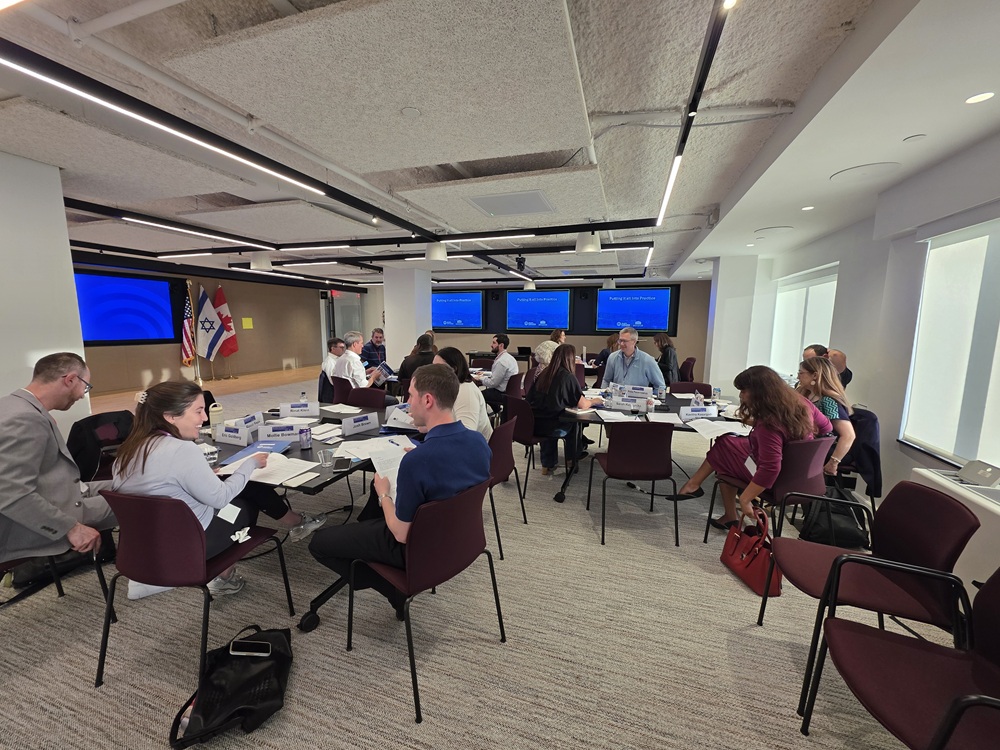
Instead of just talking about these ideas in theory, the sessions got down to the intricate reality of community work. Led by Hartman scholars Sara Labaton, Elana Stein Hain, and Masua Sagiv, the group explored various themes, including finding inner clarity, leadership in polarities, the challenges and importance of maintaining a big tent community, and finally the future through two lenses: repair and transformation. Through a “where do you stand” activity, they moved past case studies and tackled real communal dilemmas, followed by small group discussions.

By the time the fellowship wrapped up, these leaders walked away feeling far more confident in their ability to facilitate difficult dialogues and communal decision-making, and just as importantly, deeply connected to the leaders and institutions who are actively shaping the future of Jewish life across Greater Washington.

This work gets to the heart of one of Federation’s core commitments: creating a community where everyone feels like they belong, that they’re listened to, and that they can contribute to a vibrant Jewish future, not in spite of our differences, but with them.

A strong community doesn’t require us to always see eye-to-eye. It requires us to know how to talk to each other when we don’t. By investing in leaders and relationships across our communal landscape, Federation is helping cultivate the trust, respect, and connection our community needs to stick together and thrive.

Learn more about Federation’s work to build a strong, inclusive community here.

Related posts

Not Your Toy, but Definitely Your Soundtrack for Decoding Israel

Not Your Toy, but Definitely Your Soundtrack for Decoding Israel

The air inside Bialik 26 was thick with excitement. It was May 2018, seven years before the world as we knew it would fracture on October 7, and the popular Be’er Sheva neighborhood spot was packed to the brim. That night, the student cafe was the beating heart of the city’s queer community. Everyone was crammed shoulder-to-shoulder, eyes glued to the glowing screens broadcasting the world’s largest music competition, the Eurovision Song Contest.

Netta Barzilai was onstage singing “Toy,” an unapologetic, feminist anthem wrapped in quirky pop brilliance and thousands of shining lucky cats (see them in all their magnificence here). When the final votes came in and Israel was declared the winner, the whole place burst into tears and cheers.

We couldn’t believe it had actually happened. Israel had won the contest exactly 20 years after its last win in 1998!

It was one of the most powerful, unforgettable moments of my life. That night, the entire country felt unified in an overwhelming wave of pure, unadulterated joy.

The Reality of Being a Shlicha Today

Fast forward to nearly a year ago, when I packed up my life in Israel and moved to the U.S. to begin as a shlicha (Israeli emissary) at The Jewish Federation of Greater Washington. At a time when so many are navigating their relationship with Israel, Federation’s shlichim program brings Israelis into local classrooms, synagogues, and living rooms, creating a space for real conversation and connection.

Shortly after I arrived, I quickly realized that being an Israeli emissary today looks radically different than it did in the past. In our post-October 7 reality, discussions about Israel and Jewish life are heavier, more emotional, and infinitely more complex. At the same time, they are deeply rooted in something essential: Jewish peoplehood, shared identity, and joy.

From the beginning, I felt a strong responsibility to show up for difficult conversations about Israel wherever they happened. But, over time, I’ve come to understand that my role is also to offer something broader, to reflect the full story of Israel and the Jewish people. Not only complexity and challenge, but also resilience, pride, and (even) fun.

That understanding came together this month in a very natural way with one of the most unifying cultural moments in Jewish and Israeli life-Eurovision season!

For anyone here in America, you might not have even heard of Eurovision, or maybe you’re just noticing it pop up on your feeds now that it’s finally having a breakout moment on TikTok. But in Israel? It’s like the Super Bowl, but for musicians. It’s a massive song contest combining fierce cultural pride, voting drama, and representation on the global stage.

With Israel proudly taking home second-place just last week, it was the perfect moment for me to help our Greater Washington community look at Israel through a different soundtrack.

A Nation’s Story, Written in Song

Ever since October 7, it is incredibly easy for our relationship with Israel to be entirely defined by trauma, crisis, and anxiety. But relationships can’t survive on the negative. If we only look at Israel through the lens of heartbreak, we lose sight of the very thing we are trying to protect.

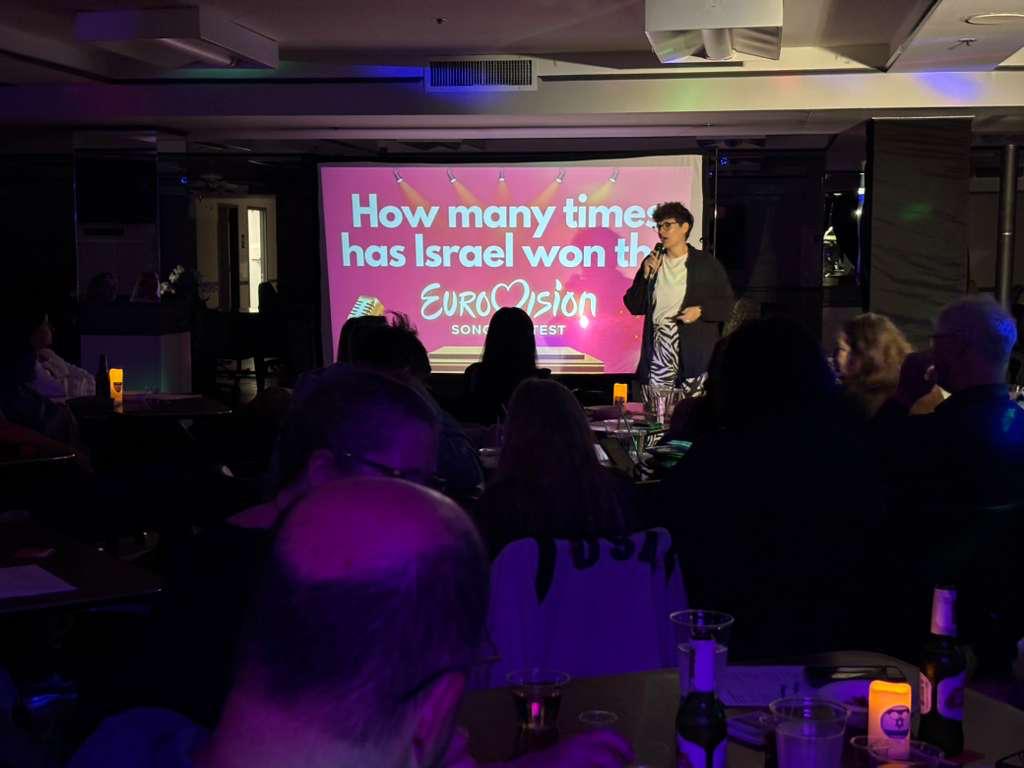
Through Federation’s Hands On Israel workshops, I get to move past headlines and bring the real, lived reality of my home directly into local spaces. Over the past few weeks, I traveled across multiple communities in Greater Washington, using the lens of Eurovision to open a portal into Israeli society.

I shared how Israel celebrated its first historic win in 1978 with Izhar Cohen’s “A Ba Ni Bi” just five years after we entered the contest in 1973. Then, just a year later in 1979, “Hallelujah” captured the magic of hosting the contest in Jerusalem for the first time, launching us to a back-to-back victory. By 1983, the tone shifted to one of profound historical weight, when Ofra Haza sang “Chai” (alive) defiantly in Munich, Germany. The song became a breathtaking symbol of Jewish resilience in the shadow of a horrifying past.

As the decades marched on, the music mirrored a rapidly modernizing society. In 1998, Dana International’s historic win with “Diva” reflected a 1990s Israel that was embracing groundbreaking LGBTQ+ inclusion, female empowerment, and cultural openness.

Twenty years later, that legacy of radical representation culminated in Netta’s “Toy,” bringing a bold, global feminist voice back to the stage that I felt reverberate firsthand that night at Bialik 26.

The most recent chapters of our Eurovision journey allowed us to share the raw, immediate grief of our current era on the global stage. Eden Golan’s “Hurricane” in 2024 is deeply tied to the post-October 7 reality, capturing a nation’s immediate trauma and its stubborn insistence on standing tall despite the storm. The music looks forward with “A New Day Will Rise” in 2025, speaking directly to our collective yearning for renewal and rebuilding.

And just a week ago, we were able to experience the thrill in real time, as we listened to Noam Bettan capture hearts across the world (and a second-place win) with his powerful song, “Michelle.”

Shared Identity Over Debate

One of the most moving parts of this journey was watching the transformation inside the rooms here in Greater Washington. Across different synagogues, community centers, and living rooms, local American Jews and Israeli expats sat together in the same space. This kind of programming creates an exciting entry point into Jewish peoplehood. It moves the conversation into the heart, allowing people to connect emotionally. I am so grateful to be part of this work and to Federation for making this, and so many other meaningful Israel programs, available right here in our region.

Looking back at that euphoric night in Be’er Sheva in 2018, I am reminded that joy is a form of resilience. And as I continue my work here, I carry that music with me, always hoping, of course, to one day bring the trophy home again.

Interested in bringing similar experiential Israel education to your local community? Check out Federation’s Hands On Israel workshops to get started.

Learn more about Federation’s work strengthening Jewish peoplehood and sharing Israeli culture here.

Related posts

A Vote of Confidence in Jewish Community

A Vote of Confidence in Jewish Community

Why connection, participation, and generosity all go hand in hand.

There’s a consensus brewing. Emerging across opinion pages, podcasts, and dinner tables is the idea that we’ve strayed too far from one another. The question driving many of our national and communal conversations is how do we renew our obligations to each other?

Just this week, I’ve listened to discussions about how generosity was meant to be one of liberalism’s founding principles. How our educational pursuits were meant to prepare us to be good citizens and servant leaders. How we were meant to talk to strangers. How we were never meant to bowl alone.

All these ideas are swirling within our Jewish community as well. For all our differences, the thing people want most is to connect—to feel like they belong and that the Jewish people would not be complete without them and what they have to offer. And, indeed, we are not. I believe wholeheartedly the Jewish community is incomplete without everyone at the table.

Which makes now a perfect moment to double down on the sacred, timeless work of community building. Next week is Giving Week and I am asking everyone who cares about the Jewish community and values the Jewish future to contribute. Your gift—of any amount—matters. Your participation matters. You matter.

Giving is a vote of confidence in our shared efforts to build a strong and joyful Jewish community, one that supports and brings together the full breath of Jewish life. It’s also what supports our work as a Federation to bolster a network of Jewish agencies and programs that care for people in need, engage people in every life stage in meaningful Jewish experiences, perpetuate and strengthen Jewish identity and peoplehood, and look after the safety of the Jewish people.

What’s more, the simple act of giving collectively, alongside so many others who care about Jewish life, makes its own powerful statement that we are here and that we believe in the promise of community and acting together to the benefit of others.

I lament the challenges and the tumult of our times. But I find incredible comfort and hope in the fact that our path to a brighter future involves so many beautiful things: connection, participation, curiosity, debate, and a love for Jewish wisdom and tradition.

It’s notable that in this era of hyper-individualism, people are hungry for mutual obligation. But that’s the punchline of responsibility and interdependence: it’s only in being tied to each other that we find the transcendence we seek. Obligations are on offer, I invite you to come claim them.

Related posts

What Our Community is Asking For

What Our Community is Asking For

Listening to Build a Stronger Jewish Community

As Federation begins to look ahead to the priorities that will guide our work in the coming months and years, we are taking stock of what we’re hearing from our community. In fact, our Community Leadership Council recently concluded a monthslong listening tour to surface views and insights from across the community.

What they found was a widespread desire for Jewish life to be more accessible, affordable, and easily navigable. Just as we saw in our 2025 Community Impact Survey, people across almost all demographic, geographic, and socio-economic backgrounds want to be more engaged in Jewish life and community, but many aren’t sure where to turn or feel discouraged by barriers to entry. This is a sentiment we take seriously at Federation and one that will inform our continued efforts to ensure anyone who is interested in Jewish life can easily find what they’re looking for.

One project that is already underway is our work to make Jewish day school more affordable by taking advantage of a new Federal Tax Credit Scholarship Program. We expect this program to complement and amplify Jewish day school’s current tuition assistance and fundraising efforts and provide opportunities for more students to pursue a Jewish education, which we know also has positive ripple effects on families looking to dive deeper into Jewish life.

Starting in January 2027, eligible taxpayers may receive a federal tax credit of up to $1,700 per year by contributing to an approved Scholarship Granting Organization (SGO). Unlike a taxable donation, a tax credit provides a 1:1 reduction in taxes owed. These SGOs, which will operate as independent 501(c)(3)s, will then distribute need-based scholarships to participating schools and eligible families, who can then use those funds toward tuition or other education-related expenses.

Federation is working in close partnership with local day schools to set up SGOs in our region to ensure our community can benefit from this new program. We are also working with other Jewish organizations, public school leaders, and community non-profits to help them understand the changes and opportunities that come with the legislation.

Our work in this arena is only one part of a broader agenda to make sure that all members of the Jewish community seeking to engage in Jewish life are able to do so. As we consider the future, we can’t let a lack of information or inability to pay keep anyone from participating.

There is a lot of coordination going on behind the scenes, bringing together schools, partners, and community leaders to tackle crucial communal issues. Ultimately, this is where Federation thrives, aligning efforts, building and strengthening infrastructure, and helping turn opportunity into access. We don’t consider any of our work finished—far from it—but we are confident that as we move forward with a clearer sense of what’s getting in the way, and what it will take to address it, we can do so with an ear to the ground and eye toward progress.

A special thank you to the inaugural members of the Community Leadership Council. More to come on their findings from the listening tour!

Related posts