Need support? Call 703-J-CARING (703-522-7464)

Coming Together to Protect our Communities

Coming Together to Protect our Communities

In Pirkei Avot, we’re taught: “It is not your duty to finish the work, but neither are you at liberty to neglect it.” In the Torah, we are commanded not to stand idly by when our neighbors are in need.

These Jewish values—responsibility, solidarity, and action—were loudly heard last week when hundreds of Jewish leaders and advocates gathered on Capitol Hill to advocate for the safety and security of our Jewish communities nationwide.

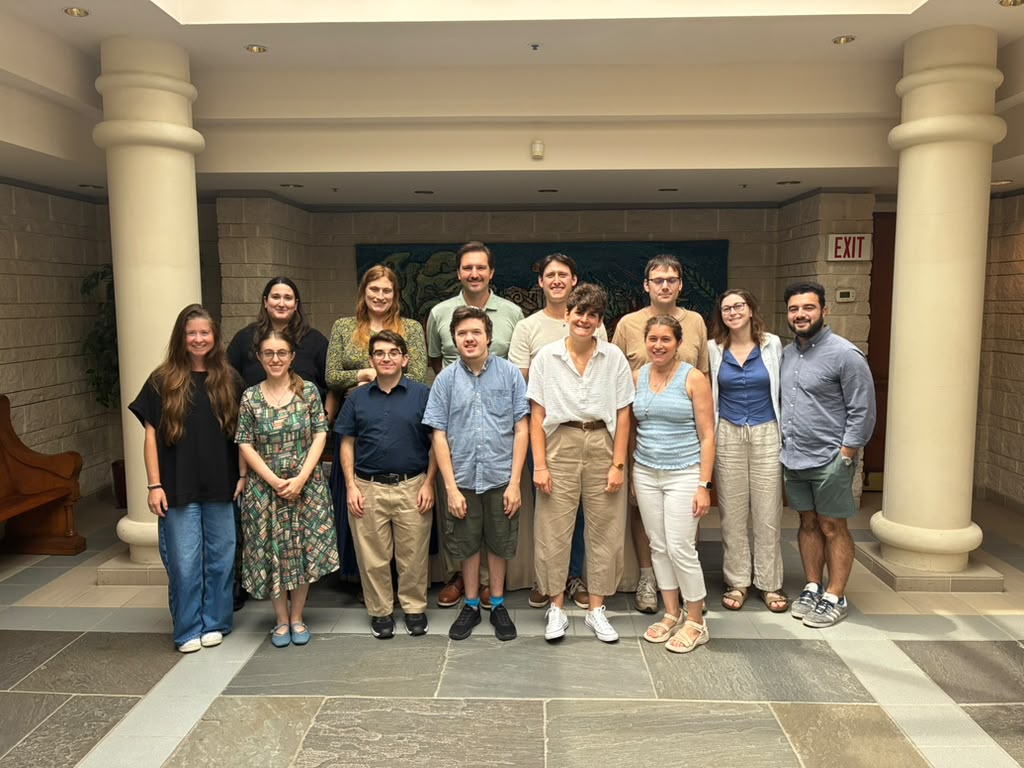
More than 400 leaders from 82 Jewish communities came to Washington, DC as part of The Jewish Federations of North America’s Security Fly-In. Representing Jewish Federations, synagogues, JCCs, schools, camps, Hillels, community relations councils, and security organizations, participants arrived carrying not only policy priorities, but deeply personal stories.

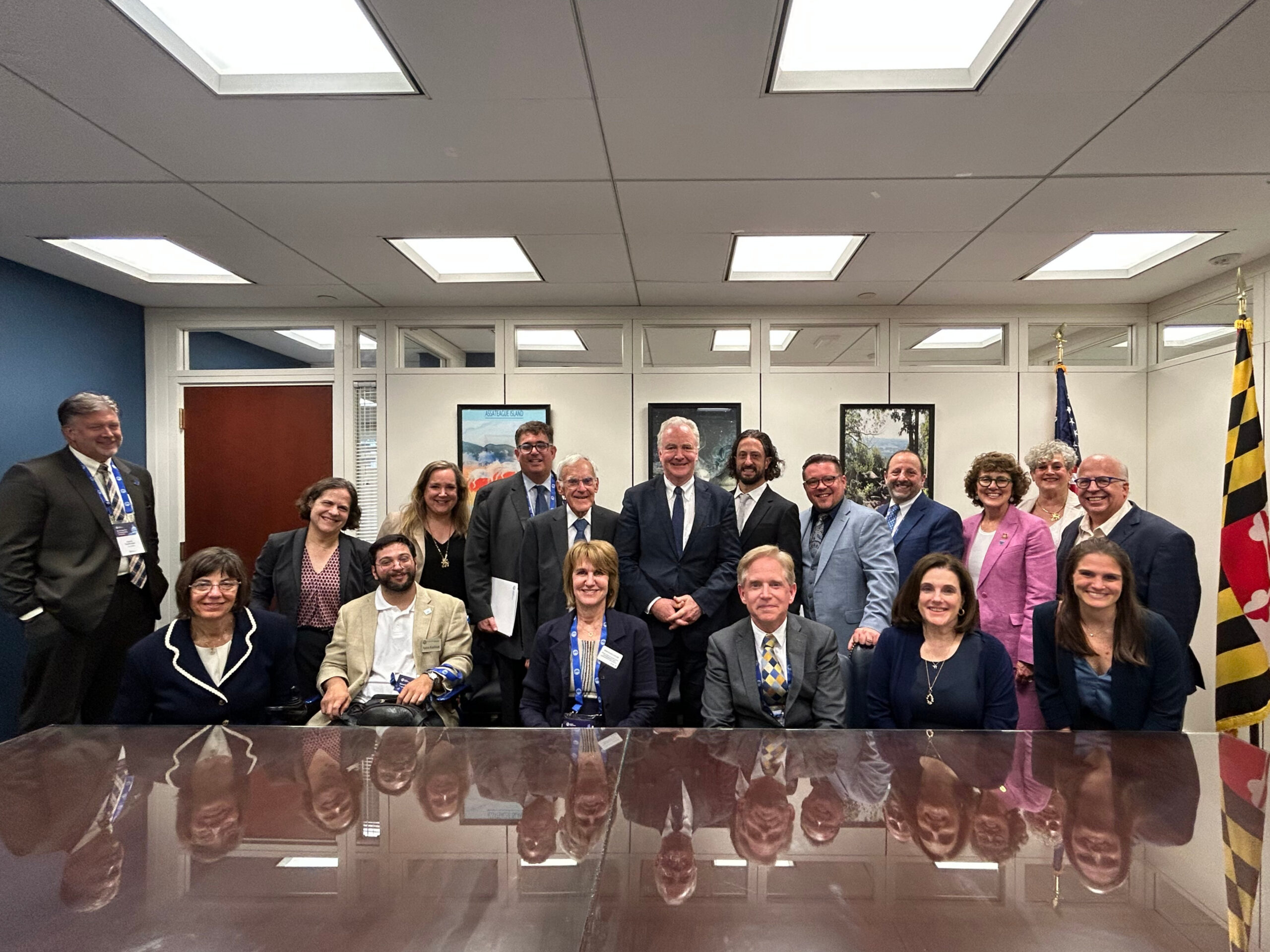
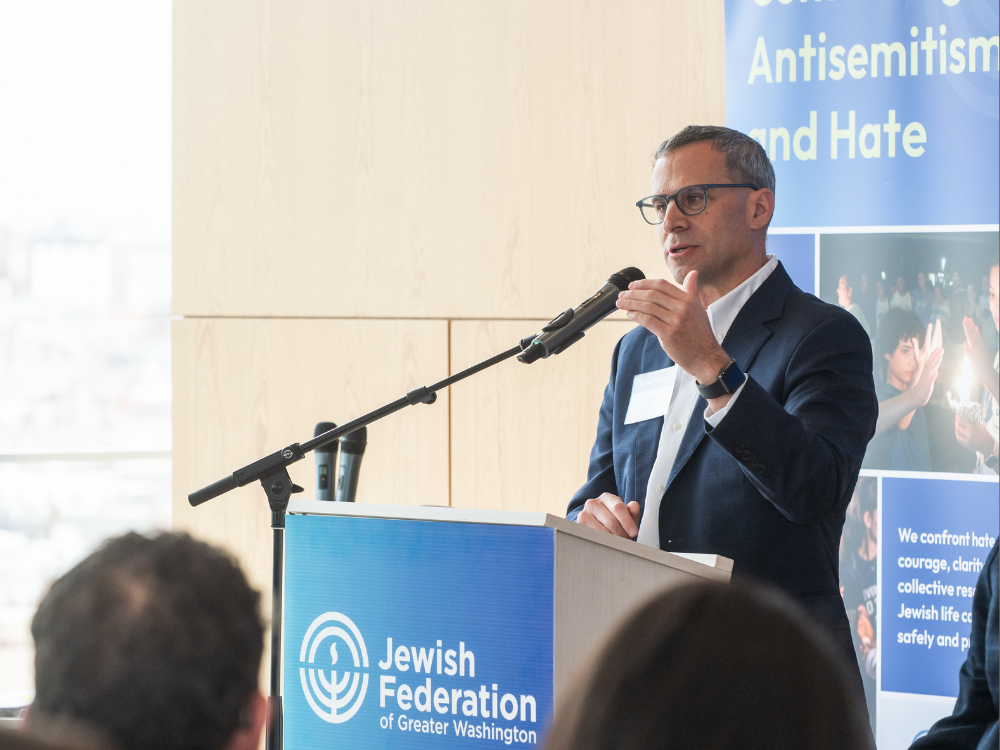
The Greater Washington delegation, organized by The Jewish Federation of Greater Washington alongside partners including Jewish Community Relations Council of Greater Washington, met with members of Congress and congressional staff from across our region, including Senator Mark Warner of Virginia and Senator Chris Van Hollen of Maryland.

Every Person Had a Story

Before those meetings began, something else happened in the room: people shared their fears, their exhaustion, and their determination.

Every person present had a story of how their community has had to grapple with rising antisemitism and security concerns.

A synagogue leader explaining the impossible budgeting decisions communities now face as security costs continue to rise. A parent describing that their five-year-old child knows not to enter their synagogue building if there’s no security on duty. A camp professional talking about the responsibility of creating joyful Jewish experiences while also preparing for emergency scenarios no one ever imagined would become routine.

Eddie Rubin, a parent at Temple Israel in West Bloomfield, Michigan where there was an antisemitic attack in March, shared: “I need people to understand what ‘inches away’ meant.” If the car packed with explosives made it just a few more inches, “That’s my kids classroom, where he’s sitting. Had [the attacker] been able to get out of that car, he would have been inside my kids’ classroom in seconds. And my kids would not be here today.”

The emotion in the room was palpable. Many spoke about how difficult it has become to accept heightened security as “the new normal.” Communities are doing everything possible to keep people safe, but funding has not kept pace with the growing threats facing Jewish institutions and other faith communities across the country.

Turning Personal Stories Into Advocacy

And yet, amid the fear and frustration, there was also tremendous strength.

There was power in seeing hundreds of Jewish communal leaders from every corner of the country come together with one shared message: Jewish life must be protected, and our communities deserve to gather openly and safely.

Those personal stories became the heart of conversations on Capitol Hill. Our delegation urged lawmakers to strengthen federal support for nonprofit and faith-based security programs and to advance legislation like the bipartisan Jewish American Security Act, which seeks to expand resources that help protect vulnerable communities.

This advocacy effort comes at a time when antisemitism and threats against Jewish institutions have reached alarming levels. Across the country, Jewish communities are being forced to make impossible choices between funding critical programs and funding the security measures needed to protect them.

In Greater Washington, our community is working proactively to meet this growing need through initiatives like JShield, Federation’s community security initiative. By leveraging trusted partnerships, strong relationships with law enforcement, and a community-wide approach to safety, JShield is helping build a culture of security across our region—one where every institution and community member understands their role in keeping our community safe.

JShield provides one-on-one consultations, emergency preparation plans, security trainings, help securing nonprofit security grants, and more to hundreds of local Jewish institutions entirely free of charge, ensuring that cost is never a barrier to safety.

Showing Up for Our Community

As we marked Jewish Heritage Month, the Security Fly-In served as a powerful reminder that Jewish identity is not only something we celebrate, it’s something we have to protect. Advocacy is one of the ways we do that. By showing up. By telling our stories. By refusing to stand idly by.

The work ahead is not finished. But last week, hundreds of voices came together to ensure that Congress heard clearly what our communities need: safety, partnership, and the ability to live Jewish life openly and without fear.

Related posts

Supporting Israel’s Recovery and Resilience

Supporting Israel’s Recovery and Resilience

Responding in Real Time

Israel continues to face evolving challenges, from the lasting impact of October 7 to the realities of the latest war with Iran. In moments like these, the strength of our global Jewish community is measured by how quickly and effectively we show up for one another.

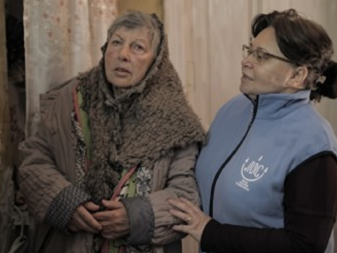
Through our longstanding partnership with The Jewish Agency for Israel, Federation is helping ensure that individuals, families, and communities receive both immediate support and long-term care when they need it most.

Meeting Urgent Needs, Strengthening Communities

Throughout the year, The Jewish Agency focused on supporting those most affected by helping communities rebuild, assisting vulnerable populations, and strengthening Israeli society in the face of ongoing uncertainty. From aiding displaced families to supporting long-term recovery, this work helped restore stability and a sense of possibility.

At the same time, thousands of Jews around the world made the life-changing decision to build their future in Israel. In 2025 alone, more than 20,000 new immigrants arrived amid war and rising global antisemitism, demonstrating a powerful commitment to Israel’s future.

Showing Up in Moments That Matter

The impact of this work is perhaps most visible in moments of crisis.

In December 2025, following a terror attack at a Chanukah gathering in Bondi Beach, Australia, The Jewish Agency deployed trauma experts within 48 hours, providing immediate support to the local Jewish community while activating global resources for recovery and resilience.

This kind of rapid, coordinated response reflects a deeper truth about the Jewish people:

“When Jews are attacked anywhere, it affects us everywhere… Our answer is solidarity, responsibility, and the determination to build a stronger future together.”

That sense of shared responsibility—across borders and communities—is what makes this work possible.

A Global Network of Connection and Care

Beyond crisis response, The Jewish Agency continues to strengthen the bonds that connect Jews worldwide.

Through programs that build identity, deepen relationships, and foster a sense of belonging, Jews across generations and geographies are connected not only to Israel, but to one another. In 2025, this global network proved essential, ensuring that communities everywhere felt supported, prepared, and part of something larger than themselves.

Federation’s Role: Turning Responsibility into Action

Federation’s support makes this work possible.

By investing in The Jewish Agency, we are not only responding to immediate needs—we are strengthening the global infrastructure that ensures the Jewish people can respond, recover, and rebuild together.

This partnership reflects a core belief: that our community is strongest when we act as one. When Israel faces hardship, we show up. When communities need support, we mobilize. And when connection matters most, we help build it.

Looking Ahead

The challenges facing Israel did not end in 2025—and neither did our commitment.

Together with The Jewish Agency and partners around the world, Federation continues to support recovery, strengthen communities, and deepen the bonds that connect us as one people.

Because ensuring a strong, resilient Israel and a connected global Jewish community is not just about responding in moments of crisis. It’s about building a future grounded in shared responsibility, belonging, and hope.

Photo Credit: The Jewish Agency for Israel

Related posts

A Moment to Reimagine What’s Next

A Moment to Reimagine What’s Next

After years of crisis response, it’s time to imagine—and build—the Jewish future we want.

For the past several years, really ever since COVID, our communal agenda has been shaped in large part by external crises. There’s no shame in this. Federation, supported by a passionate Jewish community, is well suited to crisis response. We have the local and global infrastructure to reach people and deploy help, a core part of our role.

Through a pandemic, wars, antisemitic attacks, the devastation of October 7, economic uncertainty, and political and social upheaval, we, as a community, have been there to help the Jewish people and those in need locally and around the world.

Across our community and in conversation with others from around the country, I hear how eager people are to reclaim a sense of agency over the Jewish future. To not only fend off the destructive forces of the day, but to build something great. This isn’t to say that we should abandon our work to be there for the Jewish people and Israel in times of crisis, not at all. Without question, we will need to remain diligent in responding to a dysregulated world. But we can be serious about our dreams too.

As Rabbi Lord Jonathan Sacks used to say, “Jewish faith is written in the future tense.” We are in close contact with our past, but we are also a people of possibility. We would be doing the Jewish story a disservice if we did not make the most of the opportunities in front of us to strengthen Jewish identity, pride, joy, and connection. This is the spirit that defines our community, and one we will continue to harness in our work ahead.

Already, we are working to grow and scale the things we know have significant impact. Shabbat dinners (as I wrote about last week), Jewish summer camp, youth groups, Jewish day schools, Jewish learning, and immersive Jewish experiences, including trips to Israel and local retreats, have tremendous effects on someone’s identity. How can we expand these offerings and make them more accessible to more people? How can we be a home for people with diverse opinions? How do we use our resources and relationships to maximum effect for people across all age groups?

It feels strange in this time of absurd and heartbreaking headlines to be talking about agency. But it’s precisely in this moment when things feel most out of our control that we are called to wrestle it back. Like so many times throughout Jewish history, we can define for ourselves who we are and where we are going. Between our collective responsibility and capacity to strengthen Jewish life, and Federation’s relationships, resources, and talent for convening, the future is ours for the shaping.

Related posts

Honoring Survivors, Every Day

Honoring Survivors, Every Day

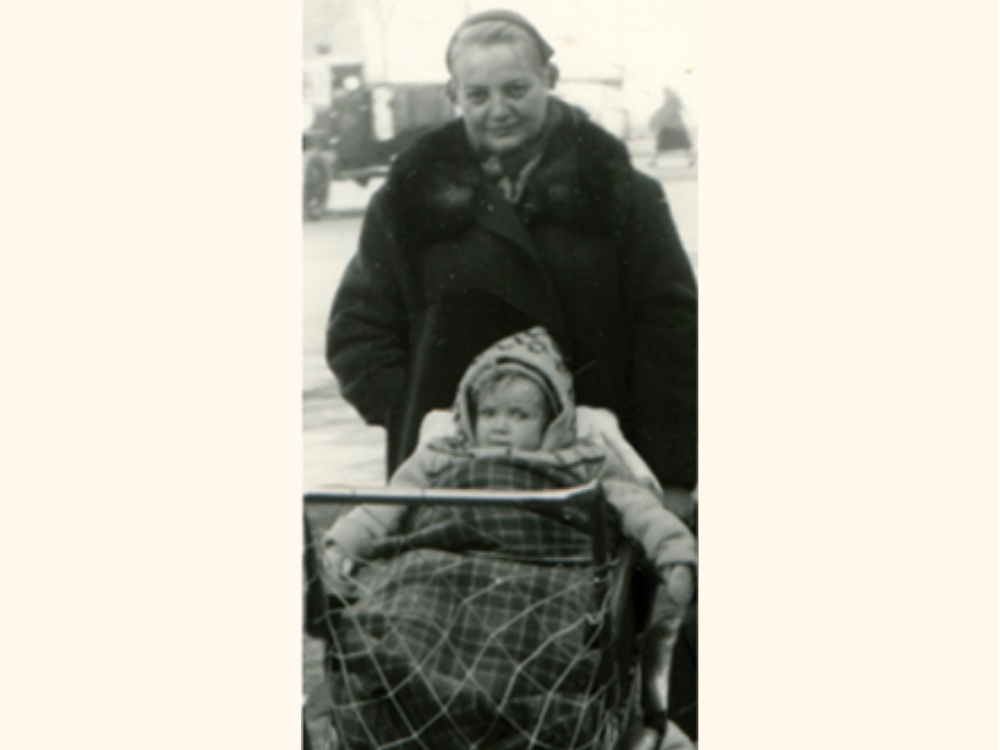
Shortly after the outbreak of World War II, two-year old Sonia* and her mother fled Belarus, which would soon fall to the Nazis. Her father, a Soviet army officer, was killed on the front line. After the war, Sonia’s family rebuilt what they could of their lives, with Sonia eventually pursuing a career as a teacher.

Life in the Soviet Union was far from easy, though. Finding consistent, well-paying work was a challenge, and Sonia and her daughter endured rampant antisemitism. Even in the late 1970s, her daughter was barred from attending university due to her Jewish identity. That’s why in 1980, they made the brave and difficult decision to emigrate to the United States.

For almost two decades, Sonia worked in a Russian-language daycare, providing care and comfort to the next generation, eventually retiring in Maryland. Yet as she’s gotten older, her day-to-day life has become more challenging. She has significant mobility issues, rarely leaving the house and accessing only the ground floor of her apartment. Her daughter and son-in-law help where they can, yet loneliness and isolation still set in.

That’s where Federation and our partner JSSA—the Jewish social service agency serving Greater Washington—comes in. Each year, JSSA helps hundreds of Holocaust survivors live their final years with dignity and safety. Federation support enables JSSA to provide homecare and home nursing, medical support, food programs, socialization activities, and more. As Holocaust survivors age and their needs become more complex and acute, this care is increasingly essential.

For Sonia, this assistance is deeply personal. With help from a homecare worker, she is able to remain in her own home and complete tasks that would otherwise be too daunting. Virtual exercise classes support her physical well-being, while online Russian-language classes on Jewish themes help her stay connected to her community and culture. These services do more than meet basic needs; they provide connection and stability.

Together, Federation and JSSA are dedicated to ensuring that no Jew feels alone, and that every survivor is met with the care and respect they deserve. We honor survivors by showing up for them now, in real and tangible ways. Through this partnership, we are turning memory into action—ensuring that “Never Again” is not only a promise for the future, but a responsibility we uphold every day.

*To protect her privacy, Sonia’s name has been changed.

Related posts

Holding Hope in a Time of War

Holding Hope in a Time of War

On Friday, February 27, just before Shabbat, Inbal called her family in Israel with a question that had become all too familiar: Are you prepared for every possible scenario?

They told her they had already been ready for weeks. In many ways, everyone felt that something was coming. And yet, as she would soon learn, nothing can truly prepare you for war.

Inbal is part of the Community Shlichim program, a partnership between The Jewish Federation of Greater Washington, The Jewish Agency for Israel (JAFI), local synagogues, and other partner organizations which brings Israeli emissaries to our region to deepen connection and bring Israeli life and perspective into our community. Originally from a small town in northern Israel, Inbal now finds herself navigating the distance between two realities—supporting the Greater Washington community while her own family lives through the unfolding crisis at home.

Here is her story:

When Sirens Began

The night of February 27 on the East Coast, Saturday morning in Israel, I received a news alert: sirens were sounding across Israel. I immediately called my father, sensing that this might be the beginning of a war with Iran. He told me that he was already on his way to his military base to report for reserve duty.

My thoughts then turned to my grandfather, who goes to synagogue early every Shabbat morning. That day, we could not reach him. He only realized what had begun when he returned home from prayer. Our whole family was tense, worried a siren might go off while he was still outside and unprepared.

That was Shabbat morning in Israel.

Between Fear and Joy

The war began during the holiday of Purim. Purim is meant to be one of the happiest holidays, a time to dress up, celebrate, laugh, and be together, filled with joy and light. And yet, in Israel, the transition between sadness and joy is something we know all too well, and sometimes the distance between them is only a matter of hours. In a strange and almost ironic way, 2,500 years after the story of Purim, it can feel as though we are witnessing another Purim story unfolding, another moment in which the Jewish people are called upon to stand strong.

Holding Two Realities

Since that morning, I have spoken with my family almost every day. My grandfather continues to go to synagogue, still without taking his phone. When sirens sound, he says they simply continue praying, even though the stress is very real. He maintains his routine because, as he explained to me, staying at home for so long is not healthy, neither mentally nor physically.

Many of my family members and friends have also been called for reserve duty, some for the seventh time since October 7. They are exhausted, and yet they tell me that they understand the importance of this moment. They hold on to the hope that after this round, there will finally be a few years of quiet.

Meanwhile, being here in Washington as an Israeli shlicha during a time like this is deeply complex. On the one hand, I feel a strong responsibility to be present with the community, to continue showing up, and to create connection and meaning around what is happening. On the other hand, there is a constant feeling of distance, and with it, the fear of being disconnected from everything unfolding back home.

A Community to be Proud Of

Nevertheless, I feel incredibly fortunate to be part of the Greater Washington Jewish community, a community that truly cares. Every day, people ask me how my family is doing. They check in. They engage in conversations about what is happening. This support helps me stay connected and grounded, while also allowing me to find a sense of balance.

Perhaps most unexpectedly, it is the young children in the community who help me the most in these moments. They bring me into their world of imagination, stories, and innocence, and for brief moments, they allow me to breathe.

Through this experience, I have come to understand that the message I bring here is my sense of responsibility. If the people in Israel can continue to demonstrate resilience, courage, and strength every single day, then I must carry and reflect that same resilience here as well. After all, the story of the Jewish people has always been one of resilience, of facing darkness and still choosing light.

With Hope for Spring

As the war enters its fifth week, we now find ourselves approaching Passover, the holiday of freedom and spring. Passover tells the story of leaving Egypt, of moving from slavery to freedom, and of becoming who we are meant to be. In this moment, I find myself hoping that this Passover will bring a sense of freedom for all of us—the freedom to live openly as who we are, proud of our Israeli and Jewish identities; to walk with our flag and our Star of David without fear; and to live without the routine of war, without constantly seeking the nearest shelter.

Passover also marks the arrival of spring, a season of renewal, when everything begins to grow again after the storms. There is something deeply powerful in that connection: just as strong trees withstand the storm, we see resilience, and like flowers that bloom in the fields, we see new beginnings. Perhaps that is the Jewish people’s story—to hold both, and to remember that if we want to see the rainbow, we must first be willing to stand in the rain.

Learn more about our Community Shlichim program.

Related posts

Support When it Matters

Support When it Matters

How Federation partnerships enabled rapid response in Beit Shemesh

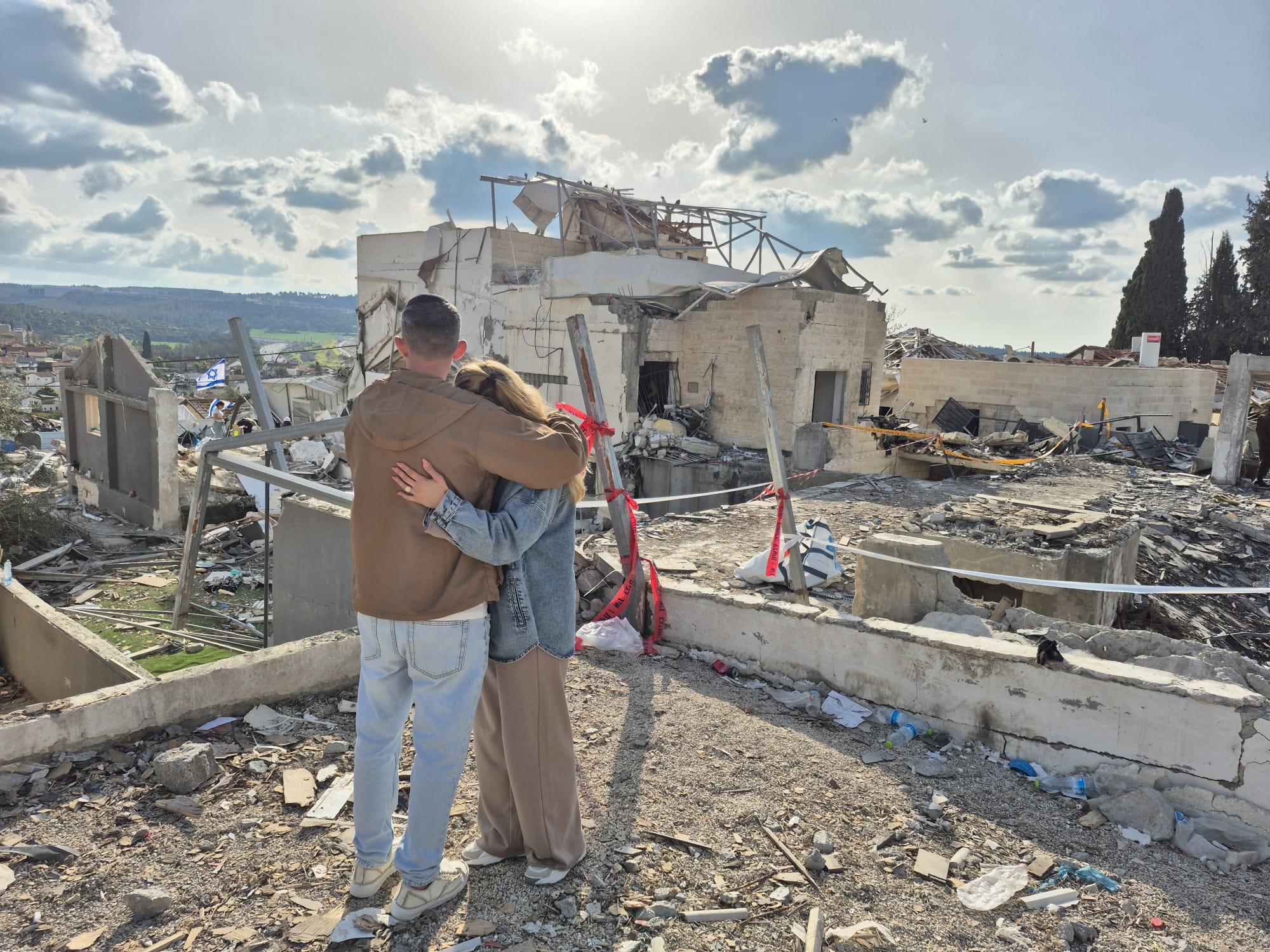
On March 1, the city of Beit Shemesh, located in the hills near Jerusalem, was rocked by a direct strike from an Iranian missile. In the immediate aftermath, The Jewish Federation of Greater Washington mobilized our network of on-the-ground partners to rapidly assess urgent needs and direct emergency support where it would have the greatest impact. We quickly identified the Zinman Community Center as a critical anchor for relief and recovery.

The Zinman Community Center has been dedicated to serving the city’s most vulnerable residents for many years, including lower income elderly and young Ethiopian Israelis. Located just one block from the site of the missile strike, the Center was able to respond immediately—opening its doors to first responders and survivors within an hour of the attack.

In the wake of a missile strike, Israelis are often left navigating uncertainty: damaged or inhabitable homes, injured loved ones, and the ongoing stress and anxiety caused by further sirens and attacks. In those first critical hours, speed and coordination were essential to ensure there was a clear, trusted place to turn for support.

From community center to support hub

Because of its longstanding relationship with the Center, Federation was able to act quickly and decisively, recognizing that the Center was not only well-known within the community, but also strategically positioned to meet the moment. With Federation’s emergency funding, the Center became a Family Support Hub for the neighborhood. Staff and volunteers helped residents file government claims for damaged property, access other government and local benefits, and connect with social workers for psychological support.

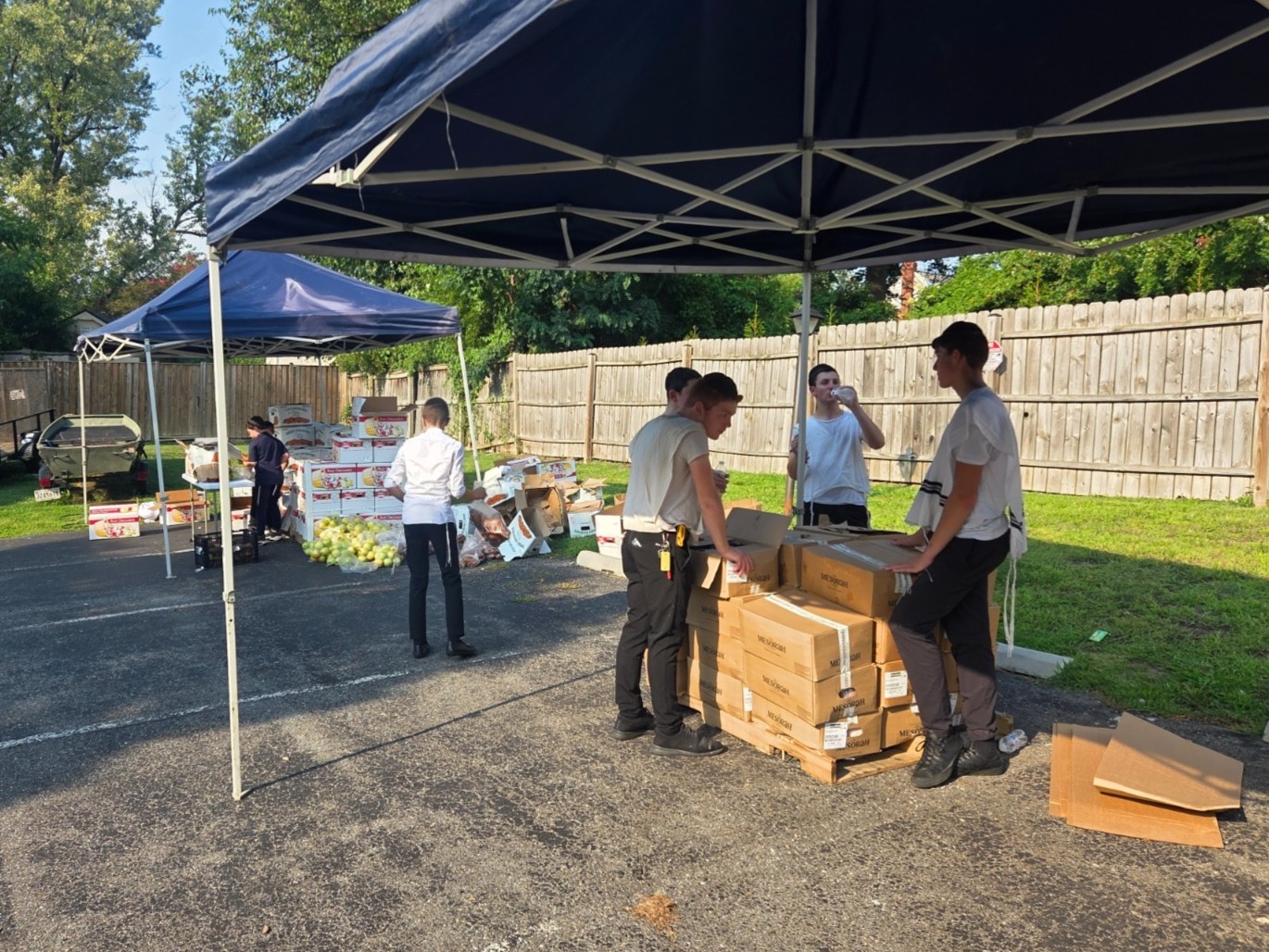
At the same time, Federation’s support made it possible for the Center to bring moments of normalcy and joy. Children and families were able to gather in the immediate days following the strike to celebrate Purim, enjoying a party outside and in the Center’s mamad (safe room) when needed. Volunteers assembled and delivered warm meals and activity kits to elderly Holocaust survivors who remained in the area. Every day, the Center helps hundreds of residents find connection, relief, and support from each other.

What made this possible

At a moment of crisis in Israel, Federation’s role is to act quickly and strategically—activating trusted local partners who are already embedded in their communities, so support reaches people quickly and where it matters most. Through its support for the Zinman Community Center, Federation is helping residents of Beit Shemesh recover, rebuild, and remain resilient in the face of immense challenges.

Learn more about how we are supporting partners in Israel during the current crisis.

Learn more

Related posts

Israel & the United States at War with Iran Special Update

Israel & the United States at War with Iran Special Update

Israel Update: Day 23 of the US–Israel War with Iran

Prepared by Jewish Federations of North America’s Israel Office
Shared by The Jewish Federation of Greater Washington

Jewish Federations of North America’s Israel Office has issued a detailed update on the rapidly evolving conflict between Israel, the United States, and Iran, including developments in Israel, the broader region, and guidance for Jewish institutions.

Read the full update

Related posts

Beit Shemesh, The City that Shaped Me

Beit Shemesh, The City that Shaped Me

Following a deadly Iranian missile strike in his hometown of Beit Shemesh, one Federation’s community shaliach (Israeli emissary), Yismaw, shares his personal perspective.

When I was three years old, my family and I made aliyah (immigrated) to Israel from Ethiopia. We settled in Beit Shemesh, a city about thirty minutes from Jerusalem, where I was raised.

To me, Beit Shemesh is much more than just the city where I grew up. It is the place that shaped me, where my childhood and teenage years unfolded, where I forged friendships and created countless memories. Beit Shemesh has always been and always will be my home—it is embedded deep in my heart.

That’s why when I first learned that there was a deadly attack on Beit Shemesh on March 1, the first full day of the war between Israel and Iran, my first instinct was to call my friends and family back home. Everyone is there: my grandfather, my family, my community. Thank God, everyone I called was okay. Sadly, the same can’t be said for many other families in my city.

Being so far away from home during moments like these is not simple. The distance feels heavy, the pull to home and the desire to be there stronger than ever. Yet at the same time, I feel grateful to be here, with my Greater Washington community. I have felt an outpouring of warmth and support from everyone I’ve spoken with. Each person reaching out, asking questions, and genuinely caring about the safety of my family and friends in Israel has created a sense of home for me here.

Thank you for holding my family, my city, and all of Israel in your thoughts and prayers. During this painful and complicated time, this support is what strengthens me.

To learn more about what Federation is doing to support Israel in this time of crisis, including in Beit Shemesh, see here.

Many have already asked how to help. Our current response is being mobilized through existing Federation resources and long-term investments stewarded by the Foundation, enabling swift and accountable action. Those who wish to contribute may do so here.

Related posts

Federation Mobilizes Emergency Support for Communities in Israel

Federation Mobilizes Emergency Support for Communities in Israel

New allocations support medical care, trauma response, and community needs through trusted partners across the country.

On Monday, March 9, 2026, The Jewish Federation of Greater Washington’s Israel & Overseas Committee approved $125,000 in emergency allocations to partners in Israel to support urgent medical, humanitarian, and community needs following recent attacks.

In moments of crisis, Federation mobilizes the resources and relationships of our community to ensure help reaches those who need it most.

The allocations approved this week reflect urgent areas of need identified by Federation’s partners across Israel.

Emergency Allocations Supporting Communities Across Israel ($125,000)

Strengthening trauma capacity in northern Israel ($50,000): Federation funding will help expand emergency surgery capacity at Tzafon Medical Center (formerly known as Poriyah), which serves more than 300,000 residents in Israel’s north, where attacks have sharply increased demand for emergency care. The grant will fund the purchase of an additional anesthesia workstation for the hospital’s Trauma Unit.

Supporting vulnerable residents in the Kinneret Valley Cluster ($35,000): Communities in the Kinneret Valley Cluster—one of Federation’s partner regions in Israel, comprising 15 municipalities—remain under threat, with many residents without private shelters in a region where there is often only one minute to reach protection. Federation support will help the Cluster provide transportation to safe spaces during alerts, expand trauma response services, and deliver essential supplies during prolonged emergency conditions.

Standing with victims of terror ($25,000): After an attack, Israelis may be faced with the need to evacuate their homes, receive medical or psychological care, or confront a new reality of grief. Through the Jewish Agency for Israel’s Fund for Victims of Terror, families affected by these attacks receive immediate assistance, including emergency financial support, trauma care, and guidance in the difficult days following injury, displacement, or loss. Federation support helps ensure this rapid-response system is available when families need it most.

Providing community support in Beit Shemesh ($15,000): Following an Iranian missile strike that killed nine civilians and forced evacuations in Beit Shemesh, the Zinman Community Center became a gathering point for affected residents. Federation support is helping the center coordinate emergency programming and provide emotional support for evacuees and survivors.

Federation maintains long-standing relationships with these partners through decades of work with The Jewish Agency for Israel, our response following October 7, and our prior partnership with the city of Beit Shemesh. These connections allow our community to respond quickly and meaningfully when it matters most. They also reflect Federation’s broader Israel strategy: strengthening ties between Greater Washington and communities across Israel.

Our Israel Strategy

Related posts

Find Your People with JLive Find Your People with JLive
Find Your People with JLive
Jewish life is thriving across Northern Virginia, but finding it can be challenging. Through a new partnership between the Jewish Federation of Greater Washington and the Pozez JCC, JLive will make it easier to discover events, programs, volunteer opportunities, and meaningful community connections.
read more

Looking beyond the headlines in Israel

Looking beyond the headlines in Israel

What our partners and relationships are helping us understand right now.

Once again, our hearts and minds are turned toward Israel as the conflict with Iran continues to unfold. In a briefing this week with Karen Katzman, director of our Israel office, we heard about what life is like in Israel right now. Karen described text messages warning of incoming missiles. Rushing to shelters. Looking after family. Even young kids are now well practiced as to what to do when a siren goes off.

It’s hard watching this from afar. It may also feel hard to figure out what to do. Do we respond based on what we see on the news or what shows up in our inbox? Where are needs most urgent? As we consider Federation’s response, I want to highlight some specific ways that we are thinking about this moment and what we can collectively do to help.

For many decades, since before the creation of the State of Israel, Federation has been working with global organizations to support the needs of Israel and Israelis through our partnership with JDC and the Jewish Agency (JAFI). They continue to be central to an effective response.

For example, the Jewish Agency’s Fund for Victims of Terror provides immediate cash assistance to people who have been displaced or whose family member was injured or killed by rocket attacks. The funds can be used for food, clothes, toothbrushes, diapers, and whatever else they need to get situated. JDC is likewise deploying emergency supplies, running a national mental health initiative, and supporting a network of caseworkers to continue caring for Israel’s vulnerable, among other rapid-response efforts. These are critical and ongoing programs that serve an important and unique role in times of crisis.

Beyond our traditional partners, Federation has also developed new relationships with Israeli communities and organizations since October 7. Take, for instance, Poriya Hospital in the north. Medical professionals are working 12-hour shifts to ensure full coverage. Meanwhile, schools and daycare centers are closed, which means doctors, nurses, and hospital staff need help with childcare. This isn’t something you would hear about on the news, but we know about this need because of the ongoing relationships we’ve established with our network over the past three years. (Federation, in fact, helped get onsite childcare up and running at the hospital following October 7 and the shelling from Hezbollah.)

Finally, we are working closely with local Washington-based synagogues and other organizations to understand their direct relationships in Israel and support them in making a difference. For example, one of our local synagogues is working with their sister congregation in Israel to ensure they can gather safely, with adequate access to shelter space during missile alerts.

Across all these mechanisms, Federation and the Greater Washington Jewish community is well positioned to understand the challenges Israelis are facing beyond the headlines. The relationships we have developed with Israeli leaders and organizations allow us to gain a clearer and more detailed picture of what’s happening on the ground. Together, this enables us to act swiftly, thoughtfully, and effectively to meet emerging needs.

I could go on but what I want you to know is that our community is making a difference. We are showing up for Israel and Israelis by responding to real needs in real time. And we are doing this all thanks to the tireless work of our partners in Israel and the incredible support of our community members. Ultimately, Federation is a conduit for your passion and commitment. Thank you for being there for Israel in this moment and for everything you do for the Jewish people.

Related posts