Need support? Call 703-J-CARING (703-522-7464)

The Strength of Jewish Peoplehood

The Strength of Jewish Peoplehood

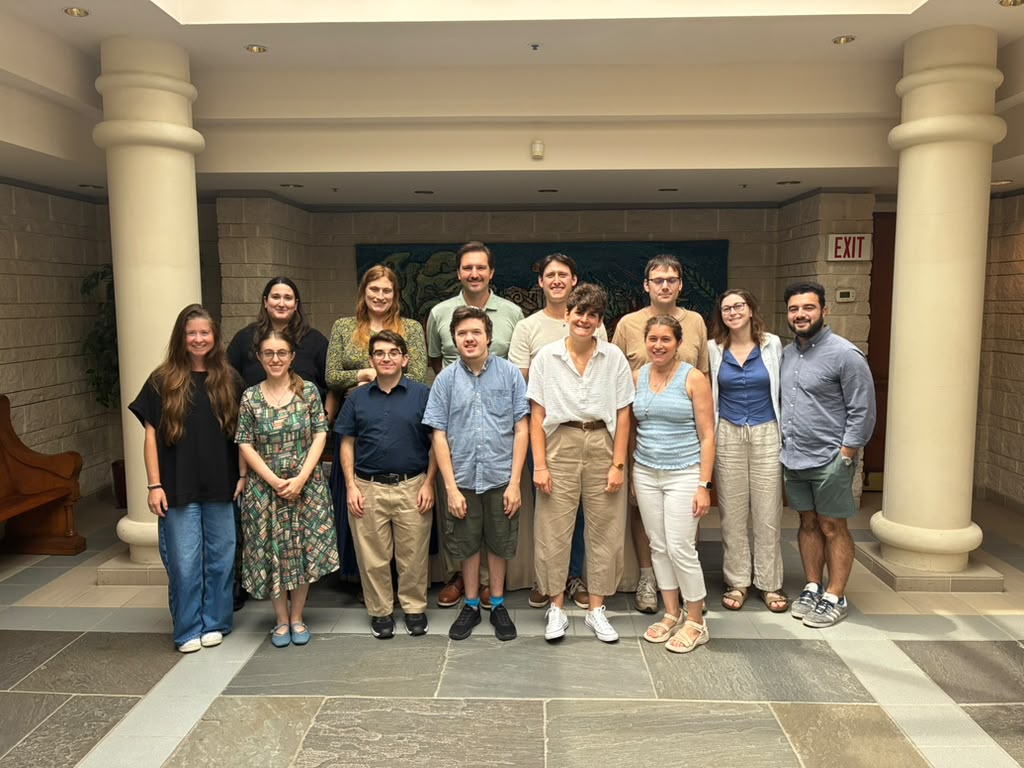
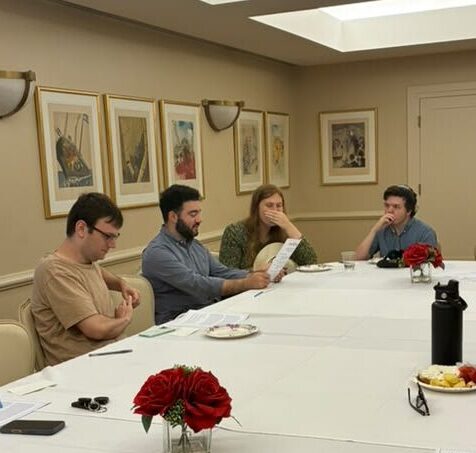
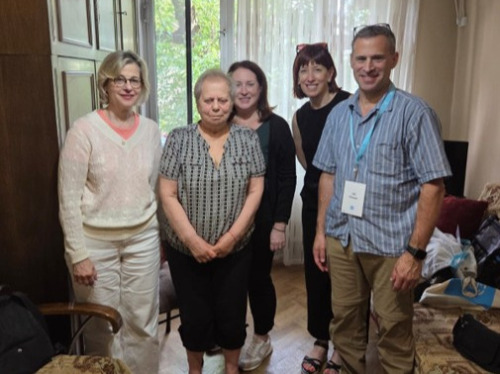
Earlier this month I traveled to Ukraine, Georgia, and Poland with a group of Federation executives to see firsthand the work our community makes possible through our partnership with JDC, The American Jewish Joint Distribution Committee, one of the leading Jewish humanitarian organizations. I am still reflecting on our time but wanted to share three things I learned:

There was a strong sense of optimism among the Ukrainians we met.

Although we only ventured as far as western Ukraine, which is quieter than other parts, the effects of the war were ever-present. We spoke with several families who had been uprooted several times in the last 15 years as the conflict has expanded, and others in the midst of rebuilding their lives.

And still, I was struck by how optimistic the community was about the future. Displaced or not, they had each other. The relationships they formed gave them a sense of purpose and a community to both sustain and rely upon.

The Jewish community in Georgia is an ancient Diaspora community, dating back 2,600 years to the Babylonian exile.

In Ukraine, I was inspired by people rebuilding Jewish life after displacement. In Georgia, I was equally inspired by a community that has preserved Jewish life for more than two millennia.

Though histories vary across countries, the story of Eastern European Jewry is one of extraordinary resilience alongside extraordinary tragedy. Through World War I, the Holocaust, decades of Soviet repression—when Jews were not allowed to practice openly—and countless other hurdles, these communities have had to swim against the current of history to hold onto their traditions, their identity, and one another. This has not been easy, and many Jewish communities in the region are much smaller than they once were. But there are signs of renewal, thanks to the efforts of young leaders on the ground, dedicated organizations like JDC, and communities like ours who care about investing in global Jewry.

JDC has been doing amazing work for a long time—thanks to partners like Federation.

I saw photos from 1919 of JDC feeding war refugees in Poland. And some from 1940 showing JDC workers providing basic goods and clothing to the Warsaw Ghetto (the organization even helped fund the 1943 Warsaw Ghetto Uprising). For over a century now the Jewish people have come together to care for the vulnerable, in response to and despite immense global challenges.

This work is still being done today while evolving to meet emerging needs. For instance, we visited one of JDC’s Hesed welfare centers in Ukraine, established after the fall of the Soviet Union to care for elderly and vulnerable Jews. There, we heard about how the local Jewish community is serving those in need while also expanding their mental health offerings, refugee services, early childhood programs, and more.

I am deeply grateful to all the JDC team members who welcomed us and to everyone who shared their stories. I also want to extend a heartfelt thank you to everyone who helps make the amazing work underway happen through their support of Federation.

We talk all the time about investing in Jewish life and making good on the belief that we are all responsible for one another. This trip allowed me to see this promise in action. My time confirmed that one of the Jewish people’s greatest strengths is our willingness to show up for each other—a tradition as vital today as it has ever been.

P.S. I only scratched the surface here. If you’d like to hear more about the remarkable people I met and see additional photos from the trip, I hope you’ll watch the recording of our webinar. And if these stories remind you, as they did me, of what’s possible when we show up for one another, I invite you to support Federation’s Annual Campaign. Your generosity helps make partnerships like this a reality.

Related posts

Get to Know Capital Camps Get to Know Capital Camps
Get to Know Capital Camps
A summer away from home can become a lifetime of Jewish connection. For nearly four decades, Capital Camps has helped children build friendships, leadership skills, and Jewish identity through immersive camp experiences made possible by community support and scholarship funding.
read more

There Are So Many Ways to Be Jewish: A Reflection from Mexico City

There Are So Many Ways to Be Jewish: A Reflection from Mexico City

While touring one of the oldest synagogues in Mexico City on our recent Women’s Philanthropy mission, our guide said something that has stayed with me.

“There are so many ways to be Jewish.”

That is the beauty of Judaism. There is no single way to feel connected, to be seen, or to create meaning within this religion and this community. There are countless ways. While I had heard that before, standing where I was standing, surrounded by the people I was traveling with, it landed differently. It felt truer than ever.

As co-chair of the Jewish Federation of Greater Washington’s Women’s Philanthropy Mission to Mexico City, I had the privilege of helping lead a group of extraordinary women through an experience that moved between history and contemporary Jewish life—from walking through the historic center of Mexico City and visiting long-standing synagogues, to spending time at community institutions like the Centro Deportivo Israelita and Olami ORT, where Jewish life is actively being shaped for the future.

Everywhere we went, we saw that truth reflected back to us. We visited organizations and communities that have built something remarkable for the people they serve, each one shaped by its own history and its current needs. I left inspired by the reminder of what is possible when people decide to build.

Finding My Place

Lindsay Karr and Jessika Wellisch, Co-Chairs, Federation’s Women’s Philanthropy Mission to Mexico City

I have carried that feeling home, and it has me thinking about all the ways I can create my own Jewish identity within the communities I belong. As a parent raising three Jewish children. Within my close circle of friends. In my community here at home. And in the wider work of Federation, both in DC and at the national level. The trip gave me a new lens for seeing my own role, not as someone who simply participates, but as someone who can help build and shape what comes next.

And of course, what I will remember most is the people.

The Best Conversations Happened in Traffic

This trip was, at its heart, about building connection. And yes, we spent more than our fair share of time on the bus, moving between sites like Xochimilco, Casa Gilardi, and neighborhood community spaces, but even that became part of the experience. Those hours gave me the chance to truly get to know so many of the women on the trip.

To me, that is what being Jewish has always been about: relationships and connection.

I am deeply grateful to have served as a co-chair of this experience, and even more grateful for the people who made the journey alongside me. I returned home inspired to keep creating, and to keep building the connections that hold our community together.

There Are Countless Ways

One of the things I value most about Federation is that it creates space for each of us to explore our Jewish identity in ways that are meaningful to us. Whether through Women’s Philanthropy, travel experiences like this one, or the many opportunities to learn, connect, and give back throughout the year, there are countless ways to find your place and help shape our community.

If you’re curious about where your own Jewish journey might lead, I hope you’ll consider joining a future Women’s Philanthropy event or mission. You never know which conversation, which community, or which moment will stay with you long after you have returned home.

Looking to experience the power of Jewish community firsthand? Learn more about Federation’s giving societies like Women’s Philanthropy, or find a local event through our Community Calendar.

Related posts

A Lesson I’ve Carried Since 1987

A Lesson I’ve Carried Since 1987

Before traveling to Georgia and Ukraine, I want to share a story that has shaped how I think about our responsibility to one another.

I just finished my friend Daniel Grossman’s new book Seeing Red. In it, Danny recounts his time working as a young foreign service officer in Leningrad and his overt and covert efforts to help refuseniks. As you might guess, his tour ended when the Soviets kicked him out.

Danny’s tales brought back memories of my own trip to the Soviet Union in 1987. A friend and I were living in New York leading a Zionist youth group, and the Jewish Agency asked (though not explicitly due to the sensitive nature of the operation) if we would be willing to travel to the Soviet Union and visit with refuseniks—some living in central cities such as Moscow and others in more remote communities in Siberia, including Irkutsk or Novosibirsk—and bring aid on behalf of global Jewry.

We were provided with specific people to visit (one of whom is pictured with me above) and asked to deliver Russian-Hebrew dictionaries—which we had to wear under our clothes to get past security—along with goods people could sell to earn money after many had lost their jobs and messages of support from Jews around the world. Looking back, I realize that trip gave me an enduring appreciation for what it means to be responsible for one another as a Jewish people. It’s a lesson that has stayed with me ever since, and one I’ve been thinking about as I prepare to return to the region.

This coming week, I’ll be joining a group of Federation executives on a trip to Georgia and Ukraine. We will visit with people in their homes and see firsthand the critical services your generosity makes possible through Federation’s partnership with JDC. We’ll hear directly from local communities about their circumstances and the challenges they are facing. We’ll also meet with volunteers and activists in Ukraine to learn how they’re developing local leadership and sustaining Jewish community in the face of war, uncertainty, and economic hardship.

I believe in the power of doing this work in person. By showing up, we’ll get to witness the dignity, resilience, and determination with which these communities are building Jewish life and bring those lessons back with us. And we, in turn, will get to express our continued commitment to caring for the most vulnerable and building Jewish life around the world.

If you’re interested in learning more about our exchange, I invite you to join a webinar on Wednesday, July 22 at 12:00 PM a few days after I return. I’ll share what we discovered and how those insights will help inform Federation’s ongoing work to support Jewish communities in the former Soviet Union and beyond.

If you’d like to learn more about the work your generosity makes possible in Ukraine, you can do so here.

In 1987, I set off with a backpack full of supplies and messages of solidarity. Today, I travel carrying the trust and generosity of an entire community. This is one of my favorite aspects of Federation’s work—helping to build our community here in Greater Washington while strengthening the bonds that defy borders. It’s these kinds of missions that put into action the idea that no Jewish community stands alone. We are part of a global family, one that shows up for, relies on, and supports one another.

Related posts

Get to Know Capital Camps Get to Know Capital Camps
Get to Know Capital Camps
A summer away from home can become a lifetime of Jewish connection. For nearly four decades, Capital Camps has helped children build friendships, leadership skills, and Jewish identity through immersive camp experiences made possible by community support and scholarship funding.
read more

What Mexico Taught Me About the Global Jewish Community

What Mexico Taught Me About the Global Jewish Community

When I decided to co-chair the Jewish Federation of Greater Washington’s Women’s Philanthropy mission to Mexico City, I expected to learn more about another Jewish community. To see how Jewish life is lived in a different corner of the world, meet remarkable people, and better understand both the challenges and opportunities they face.

What I didn’t fully expect was how deeply connected our communities are, even separated by thousands of miles, different languages, and different histories.

Throughout our journey—from walking along Paseo de la Reforma and through the historic heart of Mexico City, to visiting synagogues, community centers, and cultural institutions—I kept seeing the same thread woven through every conversation and every organization we visited: a shared commitment to building Jewish life for the next generation.

In every place we visited, I found myself returning to the same profound question: What enables a people not only to survive but also to thrive, adapt, and continue creating in new contexts?

The Future Has Small Hands

Our visit to Olami’s Idea Lab offered a beautiful answer. There, children are not simply taught information. They are taught to see themselves as makers, capable of imagining, building, solving, and repairing. In a world that often encourages passive consumption, they are being empowered to believe that they can shape the future with their own minds, hands, and hearts.

It struck me how deeply Jewish this idea is.

Throughout Jewish history in the diaspora, we have rarely had the luxury of permanence or certainty. Communities were uprooted, dispersed, and compelled to begin again across continents and generations. Yet wherever Jews found refuge and opportunity, they built. They built homes, synagogues, schools, businesses, and communities rooted in values, belonging, learning, and shared responsibility.

Time and again, Jewish life became an act of sacred creation.

The Question That Followed Me Home

Lindsay Karr and Jessika Wellisch, Co-Chairs, Federation’s Women’s Philanthropy Mission to Mexico City

What moved me most in Mexico was witnessing a community continuing that tradition in its own unique context—vibrant, creative, deeply connected, and forward-looking. While preserving Jewish identity remains at its center, this community is also asking how to empower the next generation to contribute meaningfully to the world through that identity.

The children in the Idea Lab are not merely creating projects. They are practicing agency, imagination, collaboration, and repair. In many ways, they are inheriting one of the oldest Jewish callings: to take what exists and help shape it into something more whole, more compassionate, and more alive. Perhaps that is one of the great gifts of belonging to a people shaped by diaspora.

We learn that home is not merely a place we inherit; it is something we continually create. Community is not simply something we belong to; it is something we build together.

As I left Olami, I found myself wondering: How will we continue to use our divinely given gift of being makers to repair our aching, broken world? And, what’s possible if each of us embraces our responsibility not only to inherit the world, but to co-create it?

The Gift I Didn’t Expect

That may be the greatest gift of traveling with Federation and Women’s Philanthropy. We set out to learn about Jewish communities beyond our own, but along the way, we discover something about ourselves. We return home with a deeper appreciation for the many ways Jewish life flourishes around the world, and with a renewed sense of our own role in shaping its future.

Looking to experience the power of Jewish community firsthand? Learn more about Federation’s giving societies like Women’s Philanthropy, or find a local event through our Community Calendar.

Related posts

Get to Know Capital Camps Get to Know Capital Camps
Get to Know Capital Camps
A summer away from home can become a lifetime of Jewish connection. For nearly four decades, Capital Camps has helped children build friendships, leadership skills, and Jewish identity through immersive camp experiences made possible by community support and scholarship funding.
read more

Venezuela Earthquake Situation Update

Venezuela Earthquake Situation Update

Venezuela Earthquake Situation Update

Prepared by Jewish Federations of North America’s Israel Office
Shared by The Jewish Federation of Greater Washington

On Wednesday evening, two powerful earthquakes measuring magnitudes 7.2 and 7.5 struck northern Venezuela less than a minute apart, causing widespread destruction. Search-and-rescue operations continue as emergency crews race to locate survivors trapped beneath collapsed buildings. Tragically, at least 235 deaths and more than 4,300 injuries have been confirmed, though both figures are expected to rise. Hundreds of people are verified as missing, and communications outages and extensive damage in Caracas and the coastal state of La Guaira have left tens of thousands temporarily unaccounted for with families frantically searching for loved ones. Tens of thousands have also been displaced, with many sheltering in public buildings and open spaces as aftershocks continue.

International assistance is mobilizing rapidly, although damage to Maiquetía International Airport has complicated the arrival of international rescue and humanitarian teams. The United Nations is coordinating urban search-and-rescue efforts, while the United States, Mexico, Colombia, Spain, France, Italy, and El Salvador have deployed rescue personnel, medical teams, equipment, and humanitarian supplies. Relief organizations are also providing emergency food, shelter, and medical assistance.

Impact on the Jewish Community

Nearly all of Venezuela’s approximately 3,000 Jews live in Caracas, where many buildings in Jewish neighborhoods sustained damage. Three community members have been confirmed dead, and one remains missing after the building they were in collapsed. Sadly, those numbers are expected to rise. Several community members have been left homeless, and the community is working to secure temporary housing. Despite the tragedy, community leaders report a strong sense of calm and coordination, having quickly accounted for members, assessed the needs of older adults and those experiencing anxiety, and provided appropriate support.

Our hearts are with the Jewish community of Venezuela and all those affected by these devastating earthquakes. We mourn those who lost their lives and pray for the swift recovery of everyone who has been injured.

JDC Response

JDC has maintained a longstanding presence in Venezuela through its partnership with the Jewish community, supporting a welfare and humanitarian aid network for its most vulnerable members. JDC was in contact with community leadership within minutes of the earthquake and remains in close communication to assess urgent needs, including conditions at key community institutions now serving as shelters. Immediate priorities include shelter management, essential supplies, water, sanitation, electricity, safety, psychosocial support, and operational coordination.

JDC has also launched a non-sectarian response through JDC GRID (Global Response and Innovative Development), its humanitarian and disaster response arm. In partnership with the local community, it is prioritizing the delivery of food, safe drinking water, and other essential supplies to the hardest-hit and most difficult-to-reach areas, including La Guaira. As access improves, JDC plans to provide medical organizations with critical supplies and support temporary shelter for displaced families.

The Jewish Agency Response

The Jewish Agency for Israel activated its Overseas Emergency Desk immediately following the earthquake and has remained in continuous contact with community leadership. It is providing immediate assistance to affected community members, including temporary housing and other essential support, and has established a dedicated hotline through its Global Center for Venezuelan immigrants in Israel and those seeking information about immigrating to Israel.

In recent years, through its JReady program, the Jewish Agency has helped strengthen the community’s emergency preparedness through resilience and trauma training and emergency planning. As a result, the community has responded to the crisis in an organized and effective manner, while JReady continues to provide guidance and ongoing support.

This crisis highlights the value of the global emergency response network that Federations have built and sustained. Thanks to our ongoing core support, the North American Jewish community was able to respond immediately and will continue to stand with the Jewish community of Venezuela for as long as needed.

Additional Humanitarian Response

The Israeli government has said it is preparing for the possibility of sending an aid delegation. “The Foreign Ministry is holding a situational assessment with the relevant figures in Israel and is determining ways to help,” it said in a statement on Thursday morning. However, the absence of diplomatic relations between Israel and Venezuela would complicate any deployment.

Other Jewish and Israeli humanitarian organizations have also mobilized, although Israeli organizations face challenges obtaining visas for Israeli passport holders. IsraAID has deployed its global Emergency Response Team, working with specialists from neighboring Colombia to assess needs and support affected communities. Cadena International, HIAS, and World Jewish Relief are coordinating with local partners to assess needs and prepare emergency assistance. NATAN is dispatching medical and mental health professionals, while SmartAID is deploying search-and-rescue personnel along with water purification systems, telecommunications equipment, and clean energy units, particularly for remote areas.


The Venezuela Earthquake Relief Fund has been established by JFNA, our national Federation partner, to provide immediate humanitarian assistance and support long-term recovery efforts.

Donate

Related posts

Get to Know Capital Camps Get to Know Capital Camps
Get to Know Capital Camps
A summer away from home can become a lifetime of Jewish connection. For nearly four decades, Capital Camps has helped children build friendships, leadership skills, and Jewish identity through immersive camp experiences made possible by community support and scholarship funding.
read more

Helping Possibility Take Root

Helping Possibility Take Root

What a blooming lemon tree can teach us about faith and the future.

My lemon tree started blooming, which is exciting. I planted it a year ago and now it is officially on its way to producing fruit. I have learned, however, that it takes eight months after flowering for a lemon tree to produce a lemon. I have newfound respect for such a citrus.

I’m also waiting on an avocado tree to arrive. Though, I know that will likewise take some time to warm up and it could be months if not years before I see any avocados (for those keeping track, my pomegranate tree took six years to produce any pomegranates).

There’s an obvious metaphor here about the importance of planting for the future and looking forward to the fruits of one’s labor. But the small white lemon flowers currently gracing my backyard have me thinking less about legacy and more about faith. Perhaps it’s because I was recently introduced to a Rabbi Lord Jonathan Sacks, z”l, quote, “Faith is the belief in the power of possibility over the power of probability.”

Gardening is an enjoyable way to live in the realm of the probable. If I take care of my plants appropriately and combine the key ingredients of soil, water, sun, and nutrients, there is a good chance that they will grow and thrive and produce something beautiful (though never a given). My olive trees have yet to produce olives. But I’m pretty sure they will, and this is comforting.

It’s much harder, though, to have that same peace of mind when it comes to the possible—that which has a chance of occurring but only if dedicated people make it so.

There are a lot of things headed in the wrong direction. And as we ramp up to America’s semi-quincentennial and another election cycle, it all seems to be reaching a fever pitch. Finding our way forward as we build Jewish life in the context of uncertainty and political extremism will be hard and messy work, and success is certainly not guaranteed.

But for all the very real challenges facing the Jewish people, we have everything we need in Jewish Greater Washington to make the possible real. Our collective creativity, leadership, resources, and commitment have never been greater. Jewish history, in fact, is a compendium of the less likely thing happening, so it wouldn’t be out of character for us to believe in new possibilities and bring them to fruition.

In the next few years, we will wrestle with questions that cut to the core of who we are and what we aspire to be as individuals, citizens, a community, and the Jewish people. And while we need to be clear-eyed about what’s going on around us, it’s also part of our mandate to see things as they could be.

That’s a driving force for us at Federation, to support our community in grappling with and responding to what is unfolding while also working to realize our shared vision of the future. We must take the probable seriously, but it is equally important to feed and water the possible and, together, help it take root.

Shabbat Shalom, with a twist.

Related posts

Get to Know Capital Camps Get to Know Capital Camps
Get to Know Capital Camps
A summer away from home can become a lifetime of Jewish connection. For nearly four decades, Capital Camps has helped children build friendships, leadership skills, and Jewish identity through immersive camp experiences made possible by community support and scholarship funding.
read more

Not Your “Toy”, but Definitely Your Soundtrack for Decoding Israel

Not Your “Toy”, but Definitely Your Soundtrack for Decoding Israel

The air inside Bialik 26 was thick with excitement. It was May 2018, seven years before the world as we knew it would fracture on October 7, and the popular Be’er Sheva neighborhood spot was packed to the brim. That night, the student cafe was the beating heart of the city’s queer community. Everyone was crammed shoulder-to-shoulder, eyes glued to the glowing screens broadcasting the world’s largest music competition, the Eurovision Song Contest.

Netta Barzilai was onstage singing “Toy,” an unapologetic, feminist anthem wrapped in quirky pop brilliance and thousands of shining lucky cats (see them in all their magnificence here). When the final votes came in and Israel was declared the winner, the whole place burst into tears and cheers.

We couldn’t believe it had actually happened. Israel had won the contest exactly 20 years after its last win in 1998!

It was one of the most powerful, unforgettable moments of my life. That night, the entire country felt unified in an overwhelming wave of pure, unadulterated joy.

The Reality of Being a Shlicha Today

Fast forward to nearly a year ago, when I packed up my life in Israel and moved to the U.S. to begin as a shlicha (Israeli emissary) at The Jewish Federation of Greater Washington. At a time when so many are navigating their relationship with Israel, Federation’s shlichim program brings Israelis into local classrooms, synagogues, and living rooms, creating a space for real conversation and connection.

Shortly after I arrived, I quickly realized that being an Israeli emissary today looks radically different than it did in the past. In our post-October 7 reality, discussions about Israel and Jewish life are heavier, more emotional, and infinitely more complex. At the same time, they are deeply rooted in something essential: Jewish peoplehood, shared identity, and joy.

From the beginning, I felt a strong responsibility to show up for difficult conversations about Israel wherever they happened. But, over time, I’ve come to understand that my role is also to offer something broader, to reflect the full story of Israel and the Jewish people. Not only complexity and challenge, but also resilience, pride, and (even) fun.

That understanding came together this month in a very natural way with one of the most unifying cultural moments in Jewish and Israeli life-Eurovision season!

For anyone here in America, you might not have even heard of Eurovision, or maybe you’re just noticing it pop up on your feeds now that it’s finally having a breakout moment on TikTok. But in Israel? It’s like the Super Bowl, but for musicians. It’s a massive song contest combining fierce cultural pride, voting drama, and representation on the global stage.

With Israel proudly taking home second-place just last week, it was the perfect moment for me to help our Greater Washington community look at Israel through a different soundtrack.

A Nation’s Story, Written in Song

Ever since October 7, it is incredibly easy for our relationship with Israel to be entirely defined by trauma, crisis, and anxiety. But relationships can’t survive on the negative. If we only look at Israel through the lens of heartbreak, we lose sight of the very thing we are trying to protect.

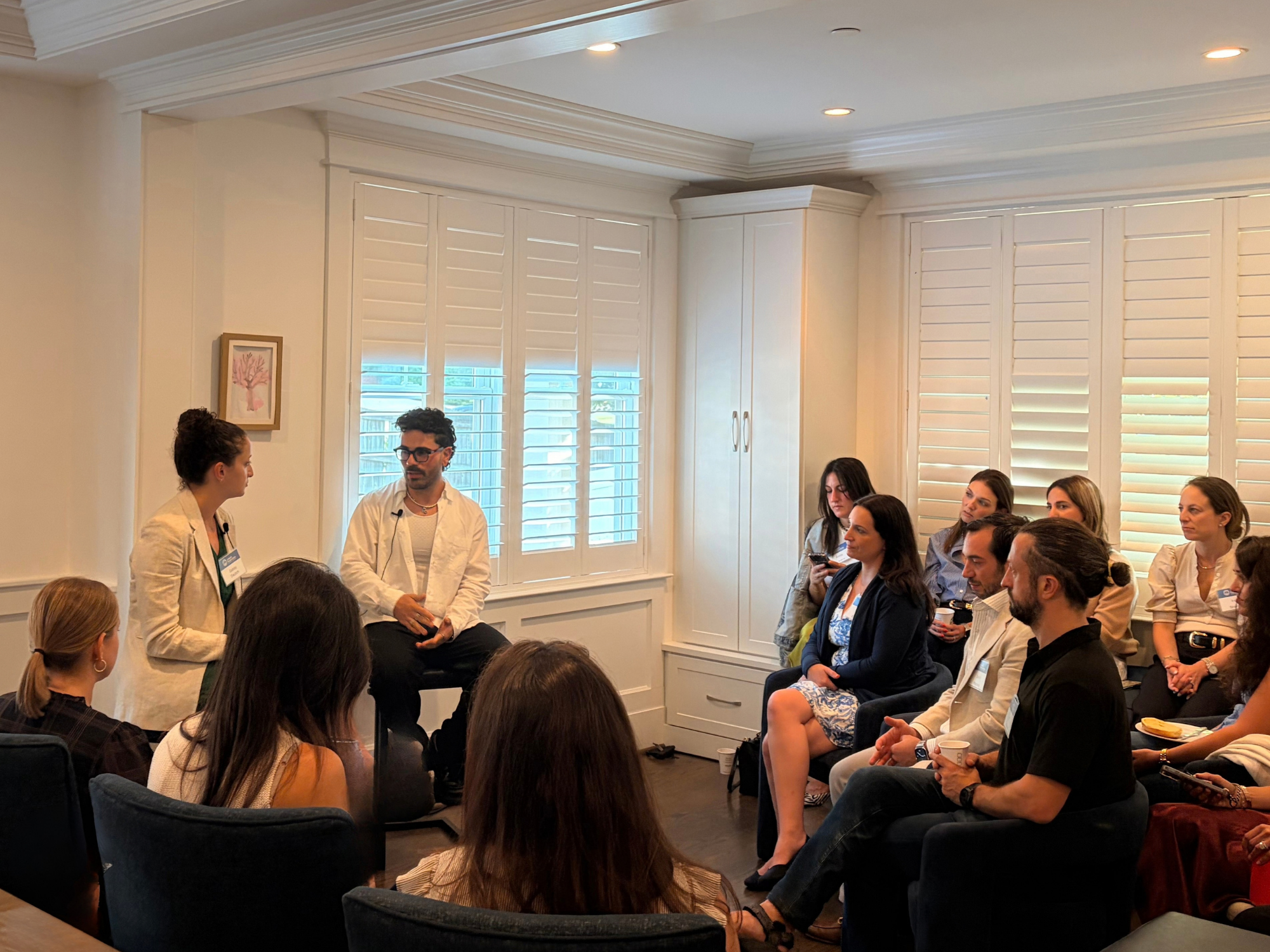
Through Federation’s Hands On Israel workshops, I get to move past headlines and bring the real, lived reality of my home directly into local spaces. Over the past few weeks, I traveled across multiple communities in Greater Washington, using the lens of Eurovision to open a portal into Israeli society.

I shared how Israel celebrated its first historic win in 1978 with Izhar Cohen’s “A Ba Ni Bi” just five years after we entered the contest in 1973. Then, just a year later in 1979, “Hallelujah” captured the magic of hosting the contest in Jerusalem for the first time, launching us to a back-to-back victory. By 1983, the tone shifted to one of profound historical weight, when Ofra Haza sang “Chai” (alive) defiantly in Munich, Germany. The song became a breathtaking symbol of Jewish resilience in the shadow of a horrifying past.

As the decades marched on, the music mirrored a rapidly modernizing society. In 1998, Dana International’s historic win with “Diva” reflected a 1990s Israel that was embracing groundbreaking LGBTQ+ inclusion, female empowerment, and cultural openness.

Twenty years later, that legacy of radical representation culminated in Netta’s “Toy,” bringing a bold, global feminist voice back to the stage that I felt reverberate firsthand that night at Bialik 26.

The most recent chapters of our Eurovision journey allowed us to share the raw, immediate grief of our current era on the global stage. Eden Golan’s “Hurricane” in 2024 is deeply tied to the post-October 7 reality, capturing a nation’s immediate trauma and its stubborn insistence on standing tall despite the storm. The music looks forward with “A New Day Will Rise” in 2025, speaking directly to our collective yearning for renewal and rebuilding.

And just a week ago, we were able to experience the thrill in real time, as we listened to Noam Bettan capture hearts across the world (and a second-place win) with his powerful song, “Michelle.”

Shared Identity Over Debate

One of the most moving parts of this journey was watching the transformation inside the rooms here in Greater Washington. Across different synagogues, community centers, and living rooms, local American Jews and Israeli expats sat together in the same space. This kind of programming creates an exciting entry point into Jewish peoplehood. It moves the conversation into the heart, allowing people to connect emotionally. I am so grateful to be part of this work and to Federation for making this, and so many other meaningful Israel programs, available right here in our region.

Looking back at that euphoric night in Be’er Sheva in 2018, I am reminded that joy is a form of resilience. And as I continue my work here, I carry that music with me, always hoping, of course, to one day bring the trophy home again.

Interested in bringing similar experiential Israel education to your local community? Check out Federation’s Hands On Israel workshops to get started.

Learn more about Federation’s work strengthening Jewish peoplehood and sharing Israeli culture here.

Related posts

Get to Know Capital Camps Get to Know Capital Camps
Get to Know Capital Camps
A summer away from home can become a lifetime of Jewish connection. For nearly four decades, Capital Camps has helped children build friendships, leadership skills, and Jewish identity through immersive camp experiences made possible by community support and scholarship funding.
read more

Supporting Israel’s Recovery and Resilience

Supporting Israel’s Recovery and Resilience

Responding in Real Time

Israel continues to face evolving challenges, from the lasting impact of October 7 to the realities of the latest war with Iran. In moments like these, the strength of our global Jewish community is measured by how quickly and effectively we show up for one another.

Through our longstanding partnership with The Jewish Agency for Israel, Federation is helping ensure that individuals, families, and communities receive both immediate support and long-term care when they need it most.

Meeting Urgent Needs, Strengthening Communities

Throughout the year, The Jewish Agency focused on supporting those most affected by helping communities rebuild, assisting vulnerable populations, and strengthening Israeli society in the face of ongoing uncertainty. From aiding displaced families to supporting long-term recovery, this work helped restore stability and a sense of possibility.

At the same time, thousands of Jews around the world made the life-changing decision to build their future in Israel. In 2025 alone, more than 20,000 new immigrants arrived amid war and rising global antisemitism, demonstrating a powerful commitment to Israel’s future.

Showing Up in Moments That Matter

The impact of this work is perhaps most visible in moments of crisis.

In December 2025, following a terror attack at a Chanukah gathering in Bondi Beach, Australia, The Jewish Agency deployed trauma experts within 48 hours, providing immediate support to the local Jewish community while activating global resources for recovery and resilience.

This kind of rapid, coordinated response reflects a deeper truth about the Jewish people:

“When Jews are attacked anywhere, it affects us everywhere… Our answer is solidarity, responsibility, and the determination to build a stronger future together.”

That sense of shared responsibility—across borders and communities—is what makes this work possible.

A Global Network of Connection and Care

Beyond crisis response, The Jewish Agency continues to strengthen the bonds that connect Jews worldwide.

Through programs that build identity, deepen relationships, and foster a sense of belonging, Jews across generations and geographies are connected not only to Israel, but to one another. In 2025, this global network proved essential, ensuring that communities everywhere felt supported, prepared, and part of something larger than themselves.

Federation’s Role: Turning Responsibility into Action

Federation’s support makes this work possible.

By investing in The Jewish Agency, we are not only responding to immediate needs—we are strengthening the global infrastructure that ensures the Jewish people can respond, recover, and rebuild together.

This partnership reflects a core belief: that our community is strongest when we act as one. When Israel faces hardship, we show up. When communities need support, we mobilize. And when connection matters most, we help build it.

Looking Ahead

The challenges facing Israel did not end in 2025—and neither did our commitment.

Together with The Jewish Agency and partners around the world, Federation continues to support recovery, strengthen communities, and deepen the bonds that connect us as one people.

Because ensuring a strong, resilient Israel and a connected global Jewish community is not just about responding in moments of crisis. It’s about building a future grounded in shared responsibility, belonging, and hope.

Photo Credit: The Jewish Agency for Israel

Related posts

Holding Hope in a Time of War

Holding Hope in a Time of War

On Friday, February 27, just before Shabbat, Inbal called her family in Israel with a question that had become all too familiar: Are you prepared for every possible scenario?

They told her they had already been ready for weeks. In many ways, everyone felt that something was coming. And yet, as she would soon learn, nothing can truly prepare you for war.

Inbal is part of the Community Shlichim program, a partnership between The Jewish Federation of Greater Washington, The Jewish Agency for Israel (JAFI), local synagogues, and other partner organizations which brings Israeli emissaries to our region to deepen connection and bring Israeli life and perspective into our community. Originally from a small town in northern Israel, Inbal now finds herself navigating the distance between two realities—supporting the Greater Washington community while her own family lives through the unfolding crisis at home.

Here is her story:

When Sirens Began

The night of February 27 on the East Coast, Saturday morning in Israel, I received a news alert: sirens were sounding across Israel. I immediately called my father, sensing that this might be the beginning of a war with Iran. He told me that he was already on his way to his military base to report for reserve duty.

My thoughts then turned to my grandfather, who goes to synagogue early every Shabbat morning. That day, we could not reach him. He only realized what had begun when he returned home from prayer. Our whole family was tense, worried a siren might go off while he was still outside and unprepared.

That was Shabbat morning in Israel.

Between Fear and Joy

The war began during the holiday of Purim. Purim is meant to be one of the happiest holidays, a time to dress up, celebrate, laugh, and be together, filled with joy and light. And yet, in Israel, the transition between sadness and joy is something we know all too well, and sometimes the distance between them is only a matter of hours. In a strange and almost ironic way, 2,500 years after the story of Purim, it can feel as though we are witnessing another Purim story unfolding, another moment in which the Jewish people are called upon to stand strong.

Holding Two Realities

Since that morning, I have spoken with my family almost every day. My grandfather continues to go to synagogue, still without taking his phone. When sirens sound, he says they simply continue praying, even though the stress is very real. He maintains his routine because, as he explained to me, staying at home for so long is not healthy, neither mentally nor physically.

Many of my family members and friends have also been called for reserve duty, some for the seventh time since October 7. They are exhausted, and yet they tell me that they understand the importance of this moment. They hold on to the hope that after this round, there will finally be a few years of quiet.

Meanwhile, being here in Washington as an Israeli shlicha during a time like this is deeply complex. On the one hand, I feel a strong responsibility to be present with the community, to continue showing up, and to create connection and meaning around what is happening. On the other hand, there is a constant feeling of distance, and with it, the fear of being disconnected from everything unfolding back home.

A Community to be Proud Of

Nevertheless, I feel incredibly fortunate to be part of the Greater Washington Jewish community, a community that truly cares. Every day, people ask me how my family is doing. They check in. They engage in conversations about what is happening. This support helps me stay connected and grounded, while also allowing me to find a sense of balance.

Perhaps most unexpectedly, it is the young children in the community who help me the most in these moments. They bring me into their world of imagination, stories, and innocence, and for brief moments, they allow me to breathe.

Through this experience, I have come to understand that the message I bring here is my sense of responsibility. If the people in Israel can continue to demonstrate resilience, courage, and strength every single day, then I must carry and reflect that same resilience here as well. After all, the story of the Jewish people has always been one of resilience, of facing darkness and still choosing light.

With Hope for Spring

As the war enters its fifth week, we now find ourselves approaching Passover, the holiday of freedom and spring. Passover tells the story of leaving Egypt, of moving from slavery to freedom, and of becoming who we are meant to be. In this moment, I find myself hoping that this Passover will bring a sense of freedom for all of us—the freedom to live openly as who we are, proud of our Israeli and Jewish identities; to walk with our flag and our Star of David without fear; and to live without the routine of war, without constantly seeking the nearest shelter.

Passover also marks the arrival of spring, a season of renewal, when everything begins to grow again after the storms. There is something deeply powerful in that connection: just as strong trees withstand the storm, we see resilience, and like flowers that bloom in the fields, we see new beginnings. Perhaps that is the Jewish people’s story—to hold both, and to remember that if we want to see the rainbow, we must first be willing to stand in the rain.

Learn more about our Community Shlichim program.

Related posts

Finding Comfort in Passover Traditions

Finding Comfort in Passover Traditions

In a time of uncertainty, the rituals of Passover offer something steady

My siblings and I held our Passover menu planning Zoom call earlier this week. I’m in charge of the brisket, among other things, and I’ll be making my mom’s recipe. No secret ingredients, no innovative twists. Just a tried-and true and beloved rendition. That, I suppose, is the unofficial theme of our Seder this year (though I may experiment with a new vegetarian soup).

Indeed, given all the volatility in the world, the thing I’m craving most from Passover is its sense of routine. For those of us who grew up with the holiday, the Passover Seder is, above all, familiar. How the Seder unfolds may vary from year to year, but the story, the food, the songs, and the traditions always combine to create a uniquely consistent touchpoint with family, Jewish identity, and peoplehood.

Passover also has a way of using the past to evoke new feelings of possibility. While the Haggadah stays consistent, the moment in which we live is continuously changing. In recounting our story, we may focus on new sections or have different reactions to readings or songs. We may uncover fresh sources of energy, clarity, and ingenuity, which we will need on the road ahead.

We have important work in front of us: to engage and connect with members of the Jewish community who are struggling right now, to be a steady partner for Israeli communities, to build strong, substantive, and joyful Jewish life, and to care for the people around us. And the first step to making it all happen starts by remembering who we are and the role we’re meant to play in the world.

I encourage you to gather some friends, invite someone new to the table, and connect once again to our story. In true Jewish fashion, it’s in connecting to our tradition and to each other that we’ll prepare ourselves to move forward.

Related posts

Get to Know Capital Camps Get to Know Capital Camps
Get to Know Capital Camps
A summer away from home can become a lifetime of Jewish connection. For nearly four decades, Capital Camps has helped children build friendships, leadership skills, and Jewish identity through immersive camp experiences made possible by community support and scholarship funding.
read more