Open More Possibilities. Join a community of donors shaping the future of Jewish life.

What Happens When We Keep Talking About Israel
What Happens When We Keep Talking About Israel

As an Israeli currently living in the United States, I spend a lot of time thinking about the space between Israel and American Jewish communities. It is a space I came as a Shlicha (Israeli emissary) to help bridge. But right now, that bridge can feel complicated and ever widening.

For many, Israel has become a topic that comes with strong feelings, important questions, and a desire to better understand. After years of war, loss, political upheaval, and uncertainty, people are asking questions about what is happening in Israel, how Israelis are experiencing this moment, and what October 7 has changed. Some are thinking more deeply about the decisions being made by Israel’s leaders, while others are trying to navigate what it means to love Israel while also holding questions or concerns.

And sometimes, people simply don’t know who they can ask.

That is what made a recent conversation at Washington Hebrew Congregation feel so important.

An Invitation to Ask Anything

The idea started with coffee. I sat down with the Rabbi and the leader of the young professionals group at Washington Hebrew Congregation, and we talked about something they were hearing more and more from young adults. They wanted a real conversation about Israel. Not another presentation telling them what to think.

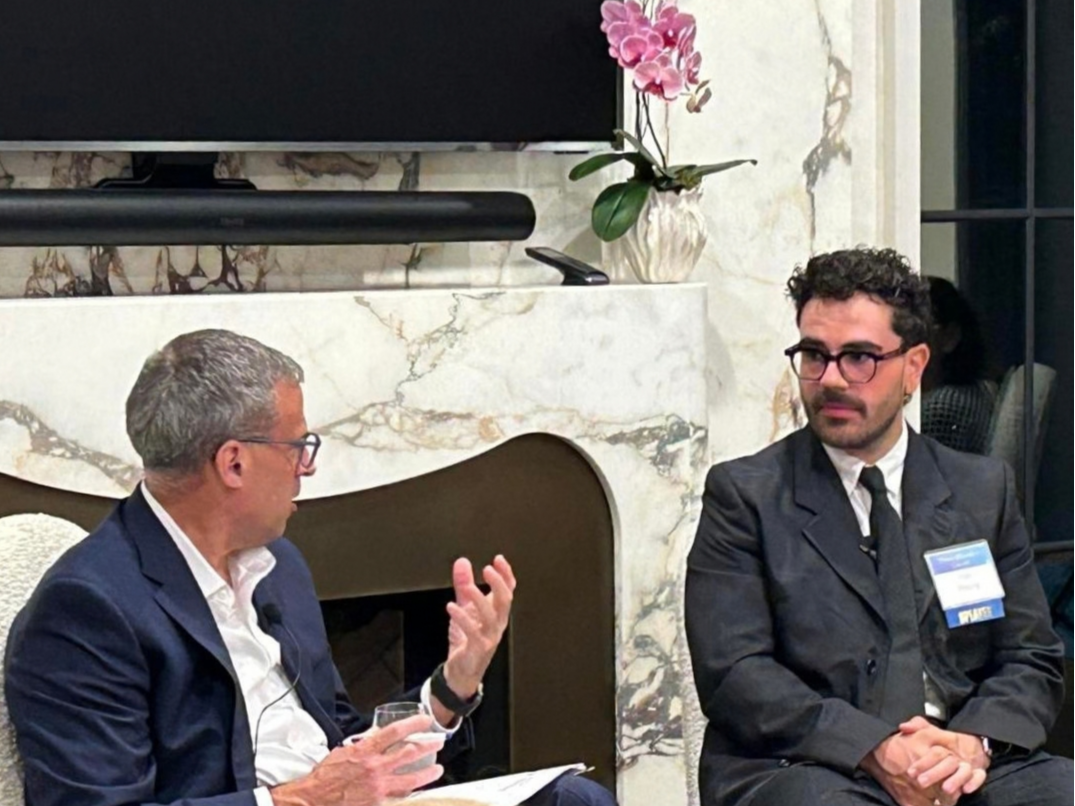
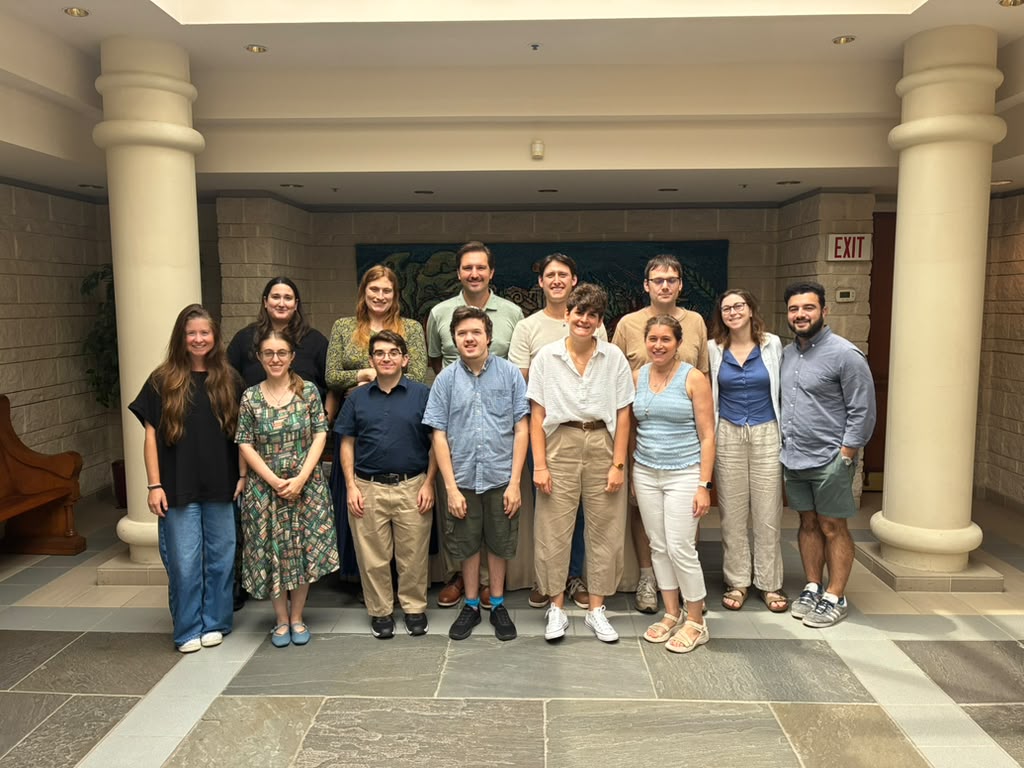
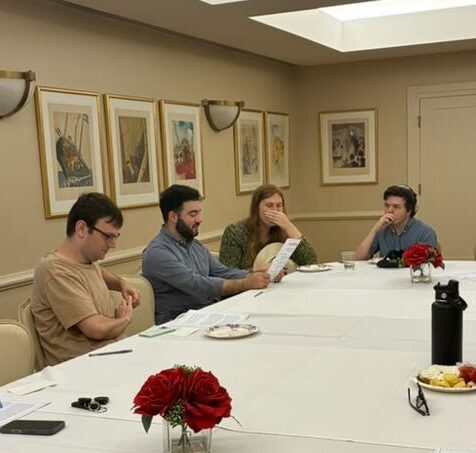
So on August 1, I joined the 2239 young adult group for an “Ask Me Anything” gathering about Israel. We brought bagels (because, let’s be honest, no Jewish gathering is complete without them) and sat around a table.

There were hard questions. Different opinions. Questions I didn’t always have a perfect answer for. And that was the point. I wasn’t there simply to answer questions as an Israeli. I wanted to hear their perspectives, too.

What does Israel mean to you?

What has changed in the way you think about Israel?

What questions have you been afraid to ask?

What does it feel like to be a young American Jew trying to make sense of Israel right now?

The conversation moved in both directions. We talked about Israel, but we also talked about the American Jewish experience. We talked about the distance between what Israelis experience and what American Jews see and hear from thousands of miles away.

And slowly, something happened. The conversation became less about finding the “right” answer and more about understanding one another.

One participant told me, “Dialogue makes me feel less alone in my experience.”

Another said, “I was surprised to learn that Israelis genuinely thought that October 7 was going to be the end of Israel. I am thankful to Hila for acknowledging based on her experience as a Shlicha that it’s not useful to disregard American Jews when it comes to Israel, because what happens in Israeli politics affects the Diaspora.”

And perhaps my favorite thing I heard was: “I have more questions than answers, but I’m more hopeful about the future.”

The Power of Talking to an Israeli

I had just returned from a trip home to Israel when we gathered that Shabbat. My trip made me reflect on the distance between these two communities in a new way.

In Israel, the war and its consequences are part of everyday life. Here, American Jews are experiencing Israel through their own communities, relationships, values, questions and concerns.

We need spaces where these two different experiences can meet. That is what I believe the role of a Shlicha (Federation’s Israeli emissary program) can be at its best. A Shlicha can bring something that is difficult to get from a headline, a social media post or a political debate. Someone who can say, “This is what I experienced in Israel.” And then listen when someone here says, “This is what Israel feels like to me.”

That exchange matters. The relationship between Israel and American Jewry isn’t guaranteed by geography, history, or even shared identity. It has to be built. And especially in these complicated years, it is worth building.

There is a temptation, when a subject feels as emotionally charged as Israel does right now, to avoid the conversation altogether. But silence doesn’t make the questions disappear. If anything, it makes the distance between us greater.
Creating More Places to Connect

This is where The Jewish Federation of Greater Washington plays such an important role. Through the Shlichim program, Federation creates opportunities for Israelis and American Jews to build relationships that go beyond a single event or a single conversation. And those connections can look different everywhere. We might join a young adult group for an “Ask Me Anything” over bagels. We might speak with teens, visit a classroom, work with a religious school, join an Israel committee or help a synagogue explore Israeli culture and society.

As a new year of programming begins, I hope more schools, synagogues, youth groups, religious schools, Israel committees and community organizations will consider inviting a Shlicha into the conversation. Because right now, when Israel can feel like one of the hardest things to talk about, we need more spaces where we can talk honestly, listen deeply, and stay connected. If you or your organization is interested, you can see our programming offerings here.

I left that gathering reminded of how little it can take to begin something meaningful. A room. Some bagels. An open heart. And a willingness to ask one another, “What do you really think?”.
Related posts

Why this moment feels familiar Why this moment feels familiar
Why this moment feels familiar
As institutions increasingly single out Jews and demand ideological conformity, Jewish educators and communities face a difficult question: will the price of belonging become denying our identity? We must push back against antisemitism and protect the Jewish and universal values we have long fought to uphold.
read more

Turning Gratitude Into Legacy

Turning Gratitude Into Legacy

The Summer I Connected with My Jewish Identity

When I look back at the arc of my life, I can trace the trajectory directly to a single summer when I was 17 years old.

Growing up in a Reform Jewish home in New Jersey, we celebrated a few holidays, I went to Sunday School, and I participated in my youth group, but being Jewish was not the engine driving my daily world. That shifted the summer I boarded a plane to Israel on a North American Federation for Temple Youth (NFTY) trip for six weeks, made possible by my Rabbi who helped me secure a scholarship from Jewish Federation of Greater MetroWest NJ.

I still remember the feeling of stepping off that flight into the Mediterranean heat. Out of nowhere, that classic teenage sense of independence collided with something vastly bigger than myself. A sudden, overwhelming realization that I belonged to a global family. I wasn’t just a teenager on summer vacation. I was part of a living history.

That single journey completely altered my path. It sparked a lifelong love for Israel and Zionism, inspired me to eventually buy a second home there, and set the entire course of my professional life in Jewish community work.

None of that happened by accident. Years before I stepped onto that plane, people I would never meet decided to invest in the Jewish future. They made sure a scholarship existed for a 17-year-old girl from New Jersey who didn’t even realize how much she needed it yet.

The Seeds Planted on Desert Soil

That summer shaped everything that followed. Fresh out of school, I took my first professional job at the United Jewish Appeal (UJA) in New York City (where one of my sons is currently working), launching my career in fundraising. Later, from 1988 to 1990, I worked right here as the Missions Coordinator for The Jewish Federation of Greater Washington. Having experienced the magic of an Israel trip firsthand, helping others embark on those same eye-opening journeys felt deeply full-circle.

Over the years, whether serving on the national Board of Directors for AIPAC or maintaining a home in Israel, my connection to our people has remained the heartbeat of my life.

Paying it Forward

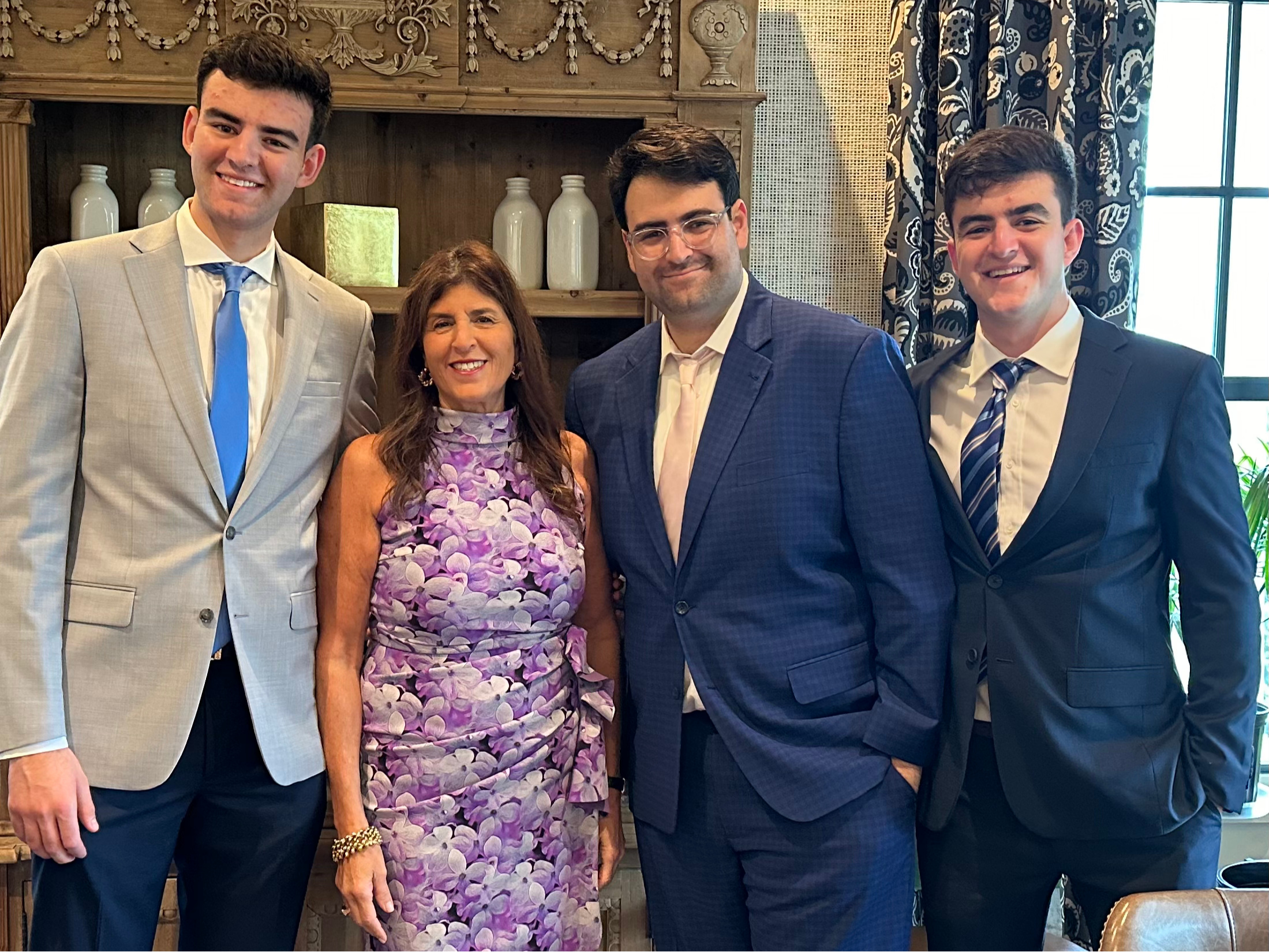
What keeps me involved with The Jewish Federation of Greater Washington today is twofold: the remarkable dedication of the staff who steward this work every day, and a fundamental desire to pay my origin story forward. Because I was the beneficiary of a scholarship that changed my life, I want to make sure the next generation has those same opportunities to discover and deepen their Jewish identity.

When most people hear the word legacy, they think about looking backward, a summary of a life already lived. But as a mother, that’s not how I see it at all.

For me, legacy is entirely about what comes next.

It’s the same instinct that kicks in when we think about our children’s futures. We save, we plan, and we do everything in our power to ensure that when they step out into the world, the safety nets, opportunities, and communities they need will be waiting for them. We have an opportunity to make our own legacy—and for who better than our children?

Leaving a gift to the Jewish community in my estate plans is simply an extension of that same maternal care. Just as I think about my own children’s future, I feel a responsibility to invest in the community they will inherit years from now.

Join Us

Today, you can make that same lasting impact on our community by creating a Jewish legacy. August is National Make-A-Will Month, a timely reminder that taking a few moments to outline your wishes is a powerful way to protect what you love most and secure our shared future.

When I think about the adversity the Jewish people continue to face, I recognize the strength, persistence and fortitude that all comes from being in a community. Federation plays a significant role in helping sustain and strengthen our community.

By leaving a legacy gift with Federation, you can spark a young person’s journey, inspire a lifetime of Jewish commitment, and ensure that when the next 17-year-old gets on a plane to Israel, feeling invincible and curious, a vibrant, welcoming community is right there waiting for them when they return.

To learn more and receive guidance on leaving a legacy gift, visit shalomdc.org/legacy or contact Natalia Straus, Senior Director of Major and Legacy Giving.

Related posts

Why this moment feels familiar Why this moment feels familiar
Why this moment feels familiar
As institutions increasingly single out Jews and demand ideological conformity, Jewish educators and communities face a difficult question: will the price of belonging become denying our identity? We must push back against antisemitism and protect the Jewish and universal values we have long fought to uphold.
read more

The Winter Bella Thought She Would Face Alone

The Winter Bella Thought She Would Face Alone

In the August heat, winter feels worlds away.

But think back to the coldest day of last winter in Greater Washington: the biting wind, the layers of clothing, the rush to get back indoors. Now imagine facing those temperatures while worrying whether you’d have reliable heat at all.

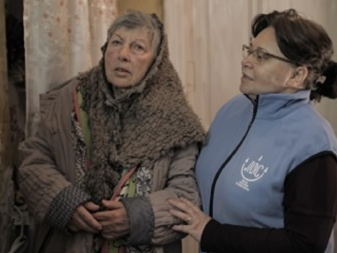
That was the challenge confronting 79-year-old Bella in Odesa, Ukraine, who spent last winter doing everything she could to stay warm.

She turned on her electric heater, but only in the room where she slept. She watched it carefully, knowing every extra minute of warmth came with a cost, as electricity prices have soared since the outbreak of the war in 2022. When the cold became too much, she filled bottles with boiling water and placed them in her bed, letting them provide a little warmth through the night.

But she could not stay in bed all day.

“It gets terribly cold here,” Bella says. “One winter it was only [43 degrees Farenheit]… inside.”

Bella has lived her entire life in the same century-old building, a home that has witnessed decades of history and family memories.

But in recent years, the sounds outside her window have changed.

The war has brought a new reality to Odesa’s elderly Jewish community. Air raid sirens. Attacks on critical infrastructure. Power outages that leave homes dark and cold for hours, sometimes days.

For Bella, who lives alone and depends on a small pension, every disruption creates another worry. Will she be able to afford her medicine? Will she have enough food? Will she be able to stay warm?

But even in the darkness, Bella is reminded of something important. She is not alone.

A Lifeline Across the Ocean

Thousands of miles away, members of The Jewish Federation of Greater Washington community are helping ensure that elderly Jews like Bella are cared for. Thanks to support from Federation’s unrestricted Annual Campaign and grants from its Jewish Community Foundation, the American Joint Distribution Committee (JDC) can provide Bella with essential winter assistance, food, and medication.

Last winter, the help allowed Bella to use her limited income for heating and other necessities, but the impact went far beyond what arrived at her door. It told her that someone remembered her. That someone cared. That she remained part of a Jewish community, even across continents. This month, Odesa has faced waves of horrible attacks. An overnight Russian missile and drone strike earlier this month damaged residential buildings and other infrastructure, leaving people injured and disrupting power and water in parts of the city.

More Than a Number

Bella is one of thousands. In 2025, Federation helped JDC provide lifesaving support to 5,077 elderly Jews throughout the Odesa region, including 847 Holocaust survivors.

Numbers help us understand the scale of a crisis. But they cannot tell us what it feels like to sit alone in a cold apartment, or what it means when someone knocks on your door to help.

Behind every number is a story. There is also Lyudmila, 79, who lives alone and relies on support to afford her medications, food, and utilities. With a monthly pension of only $104, Lyudmila knows exactly how quickly costs can add up.

“I use my JDC bank card to buy my medications,” she says. “Then I can purchase food and pay for utilities from my pension. Without the bank card, I wouldn’t be able to afford the treatment I need to survive.”

Warmth That Goes Beyond the Heater

In Odesa, warmth comes in many forms. Sometimes it is a package delivered to someone’s door. Sometimes it is medicine that makes an impossible choice a little easier.

And sometimes, it is simply a visit.

JDC’s homecare workers provide practical support to frail and homebound seniors, helping with cooking, laundry, errands, and personal care. But their presence offers something equally important: companionship.

A conversation. A familiar face. The reassurance that someone is still looking out for you. This is what Jewish responsibility looks like in action. Kol Yisrael arevim zeh bazeh—all of Israel is responsible for one another.

Keeping Jewish Life Alive

Even after years of crisis, Odesa’s Jewish community continues to find moments of joy. Last year, as Rosh Hashanah approached, seniors gathered with younger generations through Kesher Dorot, a program designed to connect older adults with children and families.

Together, they painted pomegranate paintings by the sea, creating something beautiful while celebrating the traditions that have carried Jewish communities through generations.

For a moment, the war was not the center of the room. Community was.

Because survival is about more than having enough food, medicine, or heat.

It is about knowing you have a family.

They Are Counting on Us

Just this weekend, Odesa faced another wave of horrible attacks. An overnight Russian missile and drone strike damaged residential buildings and other infrastructure, leaving people injured and disrupting power and water in parts of the city.

For people like Bella and Lyudmila, the war is not something they read about in the news. It is the sound of explosions outside their windows. The overwhelming fear that at any minute it may be their home blasted into ruins. It is a dark, freezing apartment when the power goes out, and the rising cost of the food and medicine they need to stay alive.

And it is why our support matters now more than ever.

Through The Jewish Federation of Greater Washington, you can help JDC continue to save lives in Ukraine, providing food, medicine, winter assistance, homecare, and the human connection that reminds people like Bella and Lyudmila that they have not been forgotten.

There are thousands more stories like theirs. And when you give to Federation, you help make sure we can be there for them.

Related posts