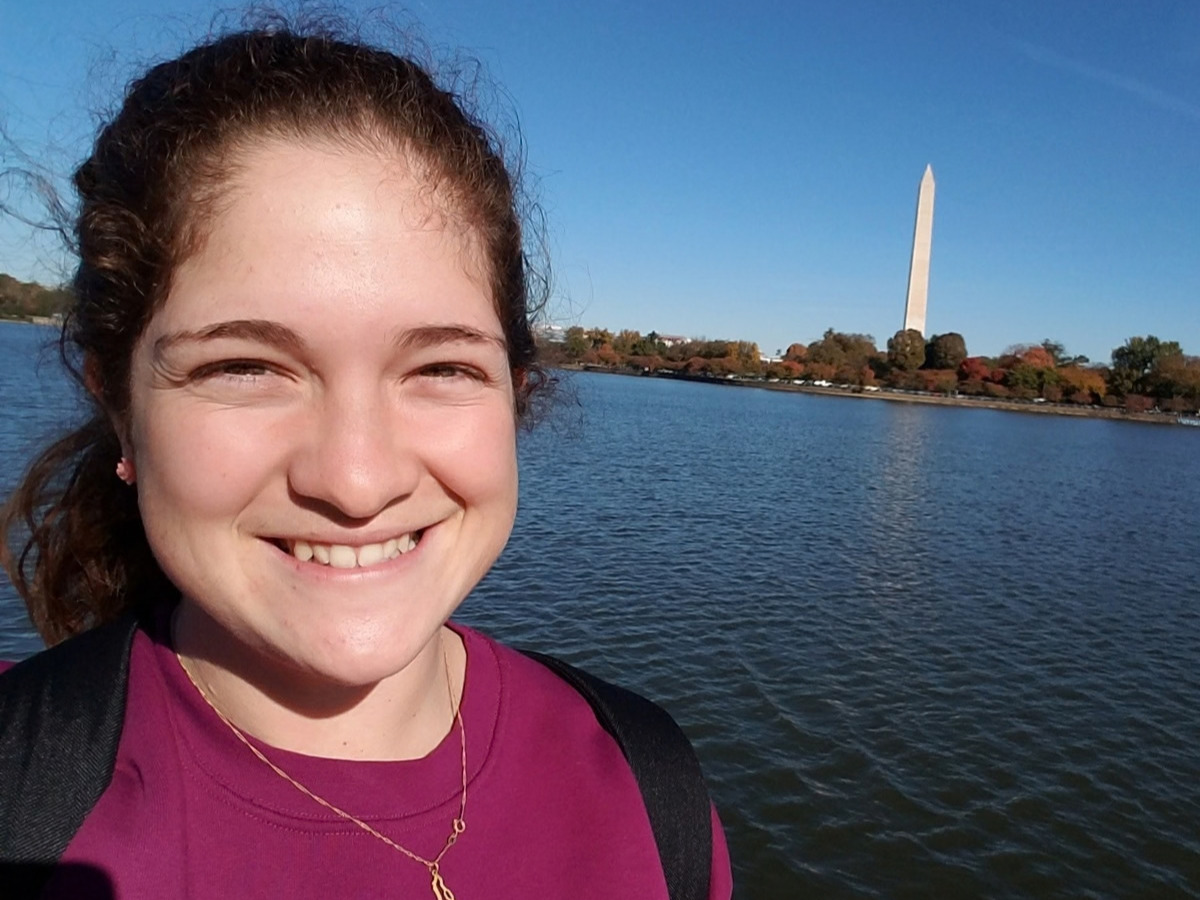
Ella A., Senior Shlicha and Head of the Israeli Delegation to DC
Everything felt so completely new.
When I first landed in Greater Washington ten years ago, that was the only way I could describe it. It was my very first time ever setting foot in the United States, and on a purely physical level, my brain couldn’t process what was happening. I walked out of the airport in August into sweltering heat, looked up, and saw it rain. Coming from Israel, where summer is completely, predictably dry, standing in ninety-degree weather while water poured from the sky felt like stepping onto another planet.
I remember that first Shabbat so clearly. Fresh out of the IDF Education Corps, my uniform barely packed away, I walked into an entirely unfamiliar world of American synagogue life and vibrant liberal Judaism. Everything was culturally complex and utterly fascinating. I came with an educator’s fire, convinced my goal was simple: to evoke emotion around Israel. I was completely okay with anger or frustration, too, as long as there was a heartbeat. What took me by surprise back then was how deeply people wanted to speak Hebrew with me, stumbling over words with a genuine hunger that touched me then, and honestly still touches me today.
Ten years later, I walked off a plane and into this community once again. But the person writing this today feels worlds away from that wide-eyed young woman standing in the August rain.
Ten Years Can Change Everything
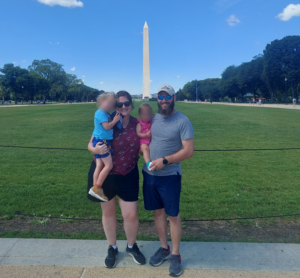
A decade carries immense weight. In those ten years, my life changed completely. I got married, became a mom to two incredible kids, and built a home back in Israel. Professionally, I stepped into global Jewish education, as the Educational Director and Manager for the Shlichut program worldwide. Returning now as both a mother and a seasoned professional, I see families, children, and a community I care about deeply through an entirely new lens.
And let’s be honest. The community itself is walking through a very different reality today than in 2016.
Between political polarization, rising antisemitism, and the heavy, lingering trauma of war, we have all been through the wringer. The warm, generous heart of Greater Washington is still here, but the air in the room feels different. Talking about Israel today often feels like handling a hot potato. It’s on everyone’s minds constantly, burning hot, but people are often anxious or hesitant to touch it. In a world dominated by quick soundbites and algorithms, we are constantly surrounded by sharp exclamation points and very few curious question marks.
Yet, wrestling with complexity is in our DNA as Jews. It’s who we are. And when the noise of the world tries to force us into rigid boxes, authentic, human connection becomes our sanctuary.
Living Bridges in a Fragmented World
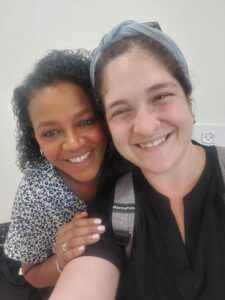
Since October 7, that truth has hit me on a deeply personal level. Shlichut (emissary work) was never meant to be a lecture or a series of polished talking points. It is a living, breathing, two-way street. In the darkest days after the attack, I watched our emissaries across the globe stand as human bridges. They were carrying unbearable heartbreak, some grieving murdered friends, others waiting on agonizing news of hostage family members, one young woman who was supposed to be at the Nova music festival and had only flown out the day before. Yet, they showed up every single day to share their raw, vulnerable truths. In return, this community wrapped them in love, holding space for their broken hearts. That mutual embrace proved to me why we do this: news headlines don’t heal people, but real relationships do.
Stepping into leadership as the head of Greater Washington’s mishlachat (delegation) program, right as it hits its own 10-year milestone, feels like coming full circle in a way that gives me goosebumps. I keep returning to the cantor’s prayer from the High Holidays: Hineni he’ani mima’as (Here I stand, impoverished in deeds). It is that quiet, overwhelming feeling of asking yourself, Who am I to carry this weight? Yet, I step into it with immense devotion, reverence, and gratitude for the trust you’ve placed in me.
My goal for our team of shlichim is to unlock the door for real, honest conversation. My role is to be a problem solver and a catalyst, helping our partner organizations thrive, guiding our shlichim to succeed, and advancing Federation’s mission on the ground. I hope people leave our conversations feeling energized, knowing that whatever challenge or vision they bring to the table, we can tackle it together, not just in words, but through meaningful action.
Anchored in Hope
At my core, as an educator and a mother, I am stubborn about hope.
Hope isn’t a passive wish. Instead, it’s the active belief that a better tomorrow is worth fighting for. I see it in my children every morning, I see it in the Mishlachat delegation serving this community, and I see it in the way people here continue to show up for one another.
Ultimately, my hope is anchored in the conviction that October 7 does not define us. It is an immense tragedy, one that we must study, learn from, and forever remember, but the Jewish people, the State of Israel, and Zionism hold a history, memory, and purpose that existed long before us and will endure long after us.
We are defined by our enduring strength, our continuity, and the way our communities show up for one another, not by the catastrophes along the way. In that shared resilience, hope isn’t just an idea, it is a lived reality.
As our Mishlachat program marks its 10-year milestone, we are already looking ahead, envisioning what our presence will mean as we approach Israel’s 80th anniversary in two years, its 90th in a decade, and far into the future. We cannot predict every curve in the road, but we can decide how we walk it together.
My door is wide open. Let’s dream big, ask the hard questions, and build this next chapter together.
Your support helps ensure our community can continue building meaningful relationships with Israel through authentic experiences, personal connections, and lifelong learning.
Three years after October 7, Hen Mazzig reflects on grief, Jewish identity, antisemitism, and the importance of making room for one another across different experiences and perspectives.
As the October 7 anniversary returns, how can the Jewish community channel grief and passion into a future shaped by both vigilance and love? Drawing on Rav Joseph Soloveitchik’s Kol Dodi Dofek, this reflection explores the tension between self-protection and moral aspiration.
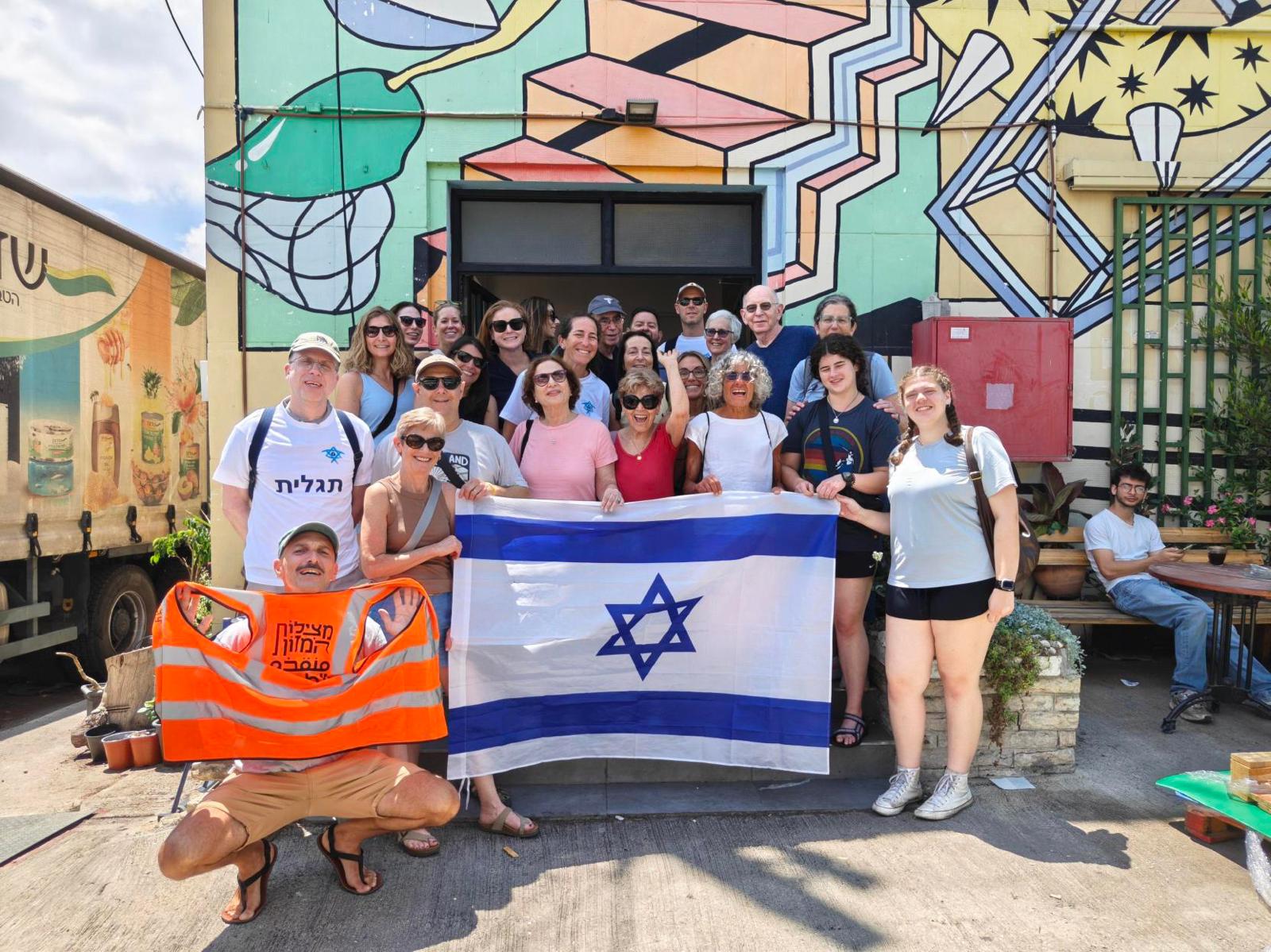
More than 25 members of Greater Washington’s Jewish community traveled to Israel for an eight-day volunteer mission, deepening a growing partnership with Kibbutz Nir Oz through service, solidarity, and personal connections.