Need support? Call 703-J-CARING (703-522-7464)

Pride, Israel, and Building Bridges Through Shlichut

Pride, Israel, and Building Bridges Through Shlichut

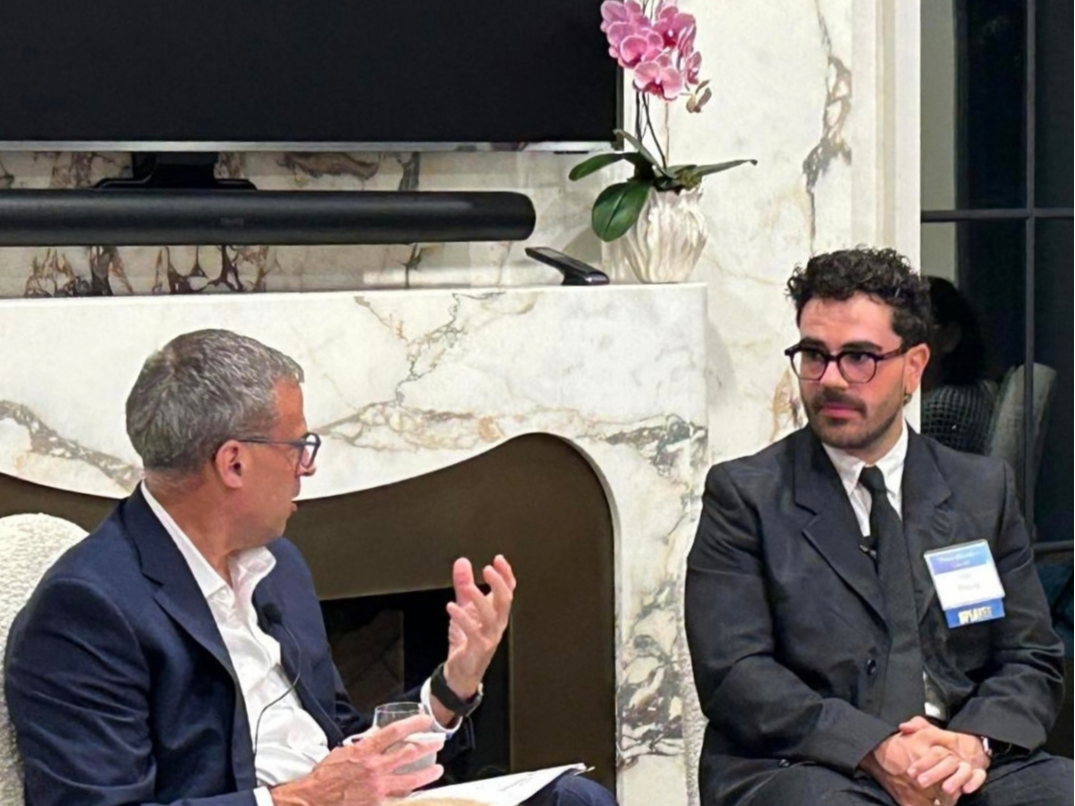
There was one moment during the Pozez JCC Pride celebration on June 21 that I haven’t stopped thinking about.

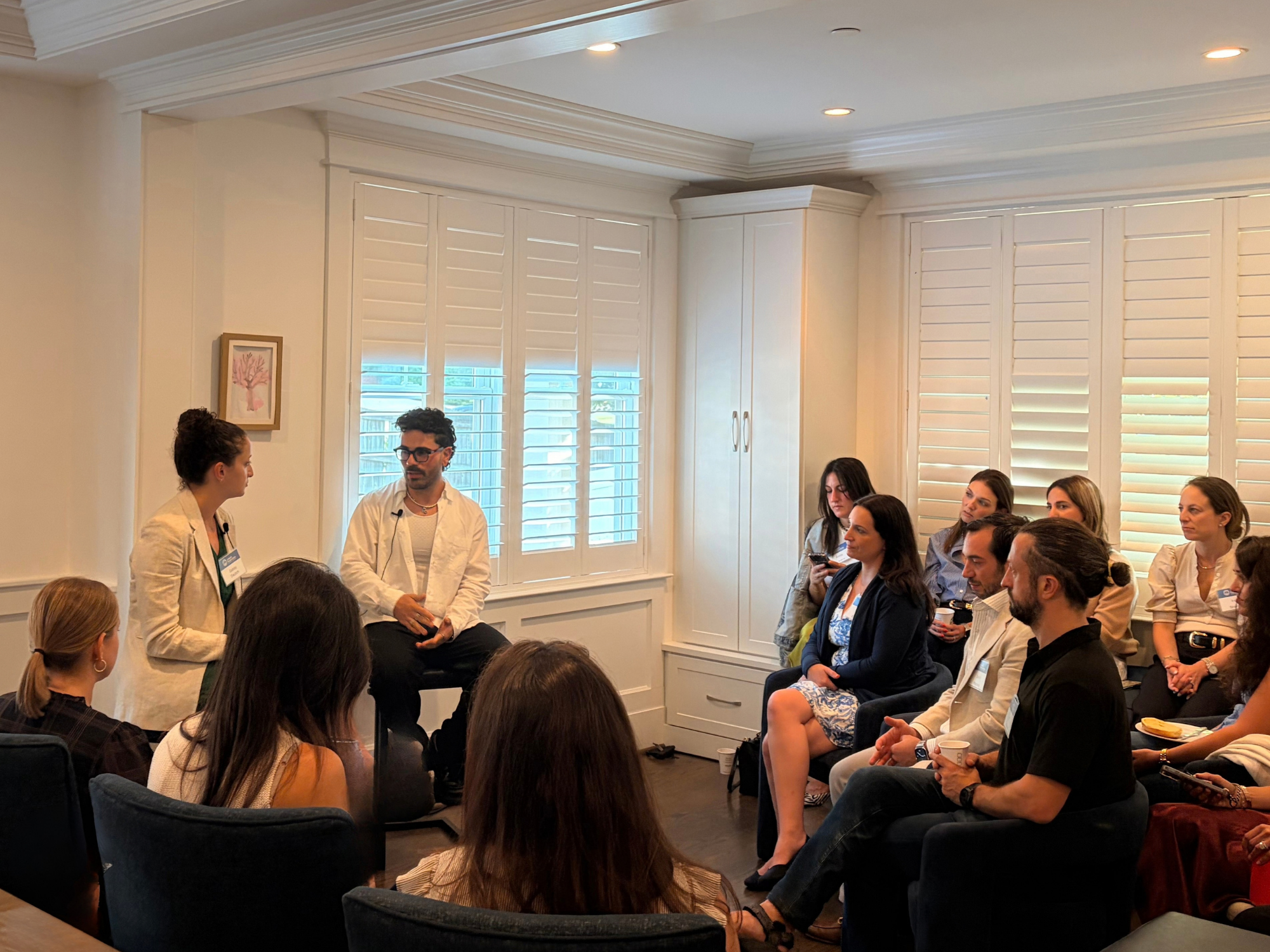
The event was designed to celebrate Pride and provide a window into Israeli culture, art, and community. As the Jewish Federation of Greater Washington’s Community Shlicha (Israeli emissary) in Northern Virginia, I was there to help bring the Israeli perspective into the evening through stories, culture, and personal connection. Guests explored our LGBTQ+ LOVE Archive, a photography exhibition featuring LGBTQ+ couples and families across Israel before settling in for a joyful drag performance by New York performers Matzah Belle Soup and Alvah Klempt.

It also happened to be Father’s Day.

During the performance, one of the performers invited the father of a gay attendee onto the stage, and he completely stole the show. He was hilarious, joyful, and fully embraced the moment.

After the performance, one of the drag queens came up to me and said:

“That dad is exactly like my dad.” She told me she immediately wanted to call him and wish him a Happy Father’s Day, telling him how grateful she was to have him as her father.

It was a small exchange, but it captured something much larger about the evening: community, connection, and the powerful impact of making people feel loved and supported for who they are.

Acceptance has a ripple effect. A supportive parent doesn’t only change the life of their own child. It shows others what love and belonging can look like. As she spoke about her father, I couldn’t help but think of my own, and of standing beside him at the Tel Aviv Pride Parade.

Where My Connection to Pride Began

My connection to Pride is deeply personal. Some of my earliest memories are of attending the Tel Aviv Pride Parade with my father. I remember the colors, the music, the joy, and the sense that everyone belonged. At the time, I didn’t fully understand the political or social significance of those moments, but I understood what it felt like to be surrounded by people who were free to be themselves.

Years later, I met my wife, Hila, and together we built our life within a community that made space for us. As an Israeli, Pride reminds me that progress is possible and that the freedoms many of us experience today were built by people who came before us and fought for them.

And as one of Federation’s Shlichim, Pride is an opportunity to create spaces where people feel seen, welcomed, and connected—to each other, to their community, and to Israel.

How Shlichim Bring Israeli Stories to Community Life

As a Shlicha, my role is to share Israel through lived experience: through memory, through culture, through complexity, and through real people.

For me, Israel education is ultimately about people and stories.

This event was intentionally designed to create a joyful and welcoming space during a particularly complicated and emotionally heavy time. Guests walked through a photography exhibition featuring LGBTQ+ couples from across Israel while enjoying Israeli-inspired cocktails. We then welcomed two Jewish drag performers from New York who brought humor, creativity, and joy to the stage.

What I loved about this format was that people were learning about Israel without feeling like they were sitting in a lecture. They were experiencing Israeli culture, stories, and exploring questions of identity, family, and belonging in a natural and personal way.

Seeing Ourselves in the Story

One photograph in the exhibition held special meaning for me.

It was a picture of my wife, Hila, and me under our wedding chuppah.

I included it intentionally. Rather than seeing LGBTQ+ Israelis as distant figures, participants were seeing someone they already knew through community connection. They know our story, our relationship. And suddenly, Israel was not just a place being described. It was a place being lived by people in their own community. Most importantly, I wanted people to see LGBTQ+ Israelis not as statistics or symbols, but as human beings with stories that many of us can relate to.

In many ways, our photo served as a reminder that the stories being told throughout the exhibit are not just Israeli stories. They are the stories of real people, families, and communities.

Israel Is Not One Narrative

LGBTQ+ life in Israel, like Israel itself, is complex and multifaceted. What I hoped participants would take away is that LGBTQ+ life in Israel is not one story. It is many.

There are moments of progress and celebration. There are ongoing challenges. There are vibrant communities and everyday lives that continue to evolve.

But most importantly, there are people—real people—whose lives are shaped by the same things that shape all of ours: family, love, belonging, and the search for community.

Why Storytelling Builds Connection to Israel

People often encounter Israel through headlines. But headlines rarely leave room for nuance, humanity, or complexity.

Stories do.

When we engage with LGBTQ+ Israelis, or any Israelis, we are engaging with questions that are deeply familiar: Who are we? Where do we belong? How do we build families and communities? How do we create spaces where people feel seen?

These are universal questions. And that is why storytelling matters so deeply in Jewish communal life.

What Shlichim Make Possible

This is where Shlichim play a unique role, and where Federation’s investment in this work becomes so meaningful. Shlichim help transform Israel from something distant into something immediate and relatable.

We don’t only bring information. We bring ourselves—our memories, our cultures, our families, our contradictions, and our hopes. Through that, we create a bridge between Israel and the Greater Washington Jewish community. Federation’s support makes it possible for those bridges to exist. It allows Israeli voices to be present in community life in an ongoing, sustained way, as relationships. These relationships build strong Jewish identities for now and for the future.

This Gives Me Hope

What gives me hope is not just that people came to this event. It’s that they stayed.

In fact, they stayed long after the program officially ended. They stayed across generations, across identities, across perspectives.

They stayed for conversations. They came to celebrate Pride, but they also came to learn, to listen, and to connect—to each other, and to Israel.

In a time that often feels fragmented, that matters more than ever. Because community is not built through a single moment. It is built through repeated acts of showing up for one another.

And often, it begins with something very simple: creating a space where people feel welcome.

Related posts

Choosing to Build Choosing to Build
Choosing to Build
Jewish America stands at a pivotal crossroads as the United States approaches its 250th anniversary. This reflection explores democracy, Jewish identity, polarization, antisemitism, and the responsibilities that will shape the next era of American Jewish life
read more
We’re Wired for Connection We’re Wired for Connection
We’re Wired for Connection
Thank goodness for basketball, soccer, and even aliens. Reflecting on the joy of shared experiences, this message explores how connection, belonging, and collective purpose strengthen communities and inspire Federation’s work to build meaningful relationships across Jewish life.
read more

Choosing to Build

Choosing to Build

As America approaches 250 years, we each have a role in shaping what comes next.

In 1979, President Jimmy Carter gave a speech that described America as in a bit of a funk. Decades later, as we prepare to celebrate our country’s 250th birthday, the vibes (as the youths say) are different but once again off. There’s so much playing out on the national stage that feels discordant, absurd, and divorced from our ideals. For many, it feels like an odd time for a big celebration.

But as anyone who has ever been in a funk will tell you, you get out not by hunkering down but by building and creating. So, this semiquincentennial, rather than gloss over any conflicted feelings, I’m suggesting we go ahead and harness them. Ask not about the state of your country’s paint, but what you can do with your brush, if you will.

Jokes about the reflecting pool aside, there’s something to be said for our potential as a community to contribute to our country’s future. In a conversation with The Atlantic’s Jeffrey Goldberg, Yehuda Kurtzer of the Shalom Hartman Institute pointed out that Jews are uniquely positioned to have an outsized impact on America’s moral trajectory. And it’s important that we honor this.

America and American Judaism have imprinted on each other. As a minority community, we have been shaped by the broader society and have invested significant energy into shaping that same society. Now is the time to lean into this legacy. Just as we must focus on building Jewish identity within our current context, we must also commit to reinforcing our national values. Strengthening America for the better must continue to be a core American Jewish undertaking—to the benefit of all.

Our desire to be part of a well-functioning, pluralistic, and democratic society also informs our work at Federation. We believe in the importance of a broad range of views across the Jewish community and across American society. We also seek to support and galvanize our community to make an impact according to Jewish tradition and values. By supporting an ecosystem that facilitates meaningful connection, discussion, and action, we are working to trigger positive changes both within our community and at scale.

There are people today who describe America as a country in decline, with the infighting and all our challenges serving as evidence that our country’s best years are behind us. But I don’t buy this. Nothing about the American story or the story of the Jewish people was ever guaranteed and yet, somehow, in every era, we have found a way to strive closer to our ideals.

Things can seem rough out there and still, it is within our power to meet our country at this crossroads and nudge it towards the core principles from the Declaration of Independence (with an important revision):

We hold these truths to be self-evident, that all people are created equal, that they are endowed by their creator with certain unalienable rights, that among them are life, liberty, and the pursuit of happiness.

Related posts

We’re Wired for Connection We’re Wired for Connection
We’re Wired for Connection
Thank goodness for basketball, soccer, and even aliens. Reflecting on the joy of shared experiences, this message explores how connection, belonging, and collective purpose strengthen communities and inspire Federation’s work to build meaningful relationships across Jewish life.
read more

We’re Wired for Connection

We’re Wired for Connection

The desire to belong may be one of our most powerful instincts.

Thank goodness for basketball. And soccer. And aliens.

I can’t claim to be a Knicks fan, but I am a fan of joy and connection and that’s exactly what I’m seeing pour out of official and unofficial New Yorkers. What a pleasure it is to see people come together and bask in something shared. Witnessing New York City’s jubilation has made me happier and my team was out in round one of the playoffs.

Likewise, as a soccer fan, I am also very much enjoying the stories coming out of the World Cup. There has been a lot of heartwarming content about fans coming to the U.S. and delighting in the hospitality of everyday Americans (and our ice-cold sodas). We are enjoying each other’s company as fellow sports fans and that feels good.

From what I hear, a sense of large-scale connection is also an animating theme in Steven Spielberg’s latest movie Disclosure Day, which I’m hoping to see this weekend. It’s been a while since I’ve been to the movies but give me an intriguing premise, alien encounters, and a chance to meditate on our shared humanity and I’m there.

After all, our brains, and spirits, crave stories like these. Our desire to feel connected to each other and to something bigger than ourselves is hardwired. We don’t have to train or teach ourselves to seek this out. We want to belong. We want to celebrate and cheer and stand in awe in the middle of 5th Avenue. Watching the big game (or a UFO landing) is always better with a crowd.

What we do have to work at is acting on our instincts and lowering the barriers to connection. This is a major focus of our work at Federation. How do we build a regional Jewish infrastructure that can routinely spark and sustain meaningful relationships? How do we help people join and lead collective endeavors?

How do we ensure individual lives, experiences, and aspirations combine to form something larger, stronger, and more meaningful than any of us could create alone?

There’s a lot of darkness out there, but some of the highlights of the last couple weeks are reminding me that we have more in common than we think. So long as we work together, hatred and division don’t stand a chance against sympathetic joy, pride, amusement, and fellowship.

Related posts

The Desk Between Us The Desk Between Us
The Desk Between Us
When Valerie completed her Federation interview writing exercise, she didn’t realize she was sitting at the same desk where her grandfather once wrote fundraising appeals for United Jewish Appeal. His legacy of service quietly became part of her own journey in Jewish communal life.
read more

The Jewish Connections I Never Expected to Find in Greece

The Jewish Connections I Never Expected to Find in Greece

The Jewish Connections I Never Expected to Find in Greece

Standing in a synagogue in Thessaloniki, Greece, the weight of history hits you all at once.

Before World War II, this city was the cultural heart of Sephardic Jewish life, so vibrant it was called the “Jerusalem of the Balkans.” But during the Holocaust, the community was wiped out with horrifying speed. In less than six months, 96% of the Jewish population was murdered. Out of 50,000 people, fewer than 2,000 survived.

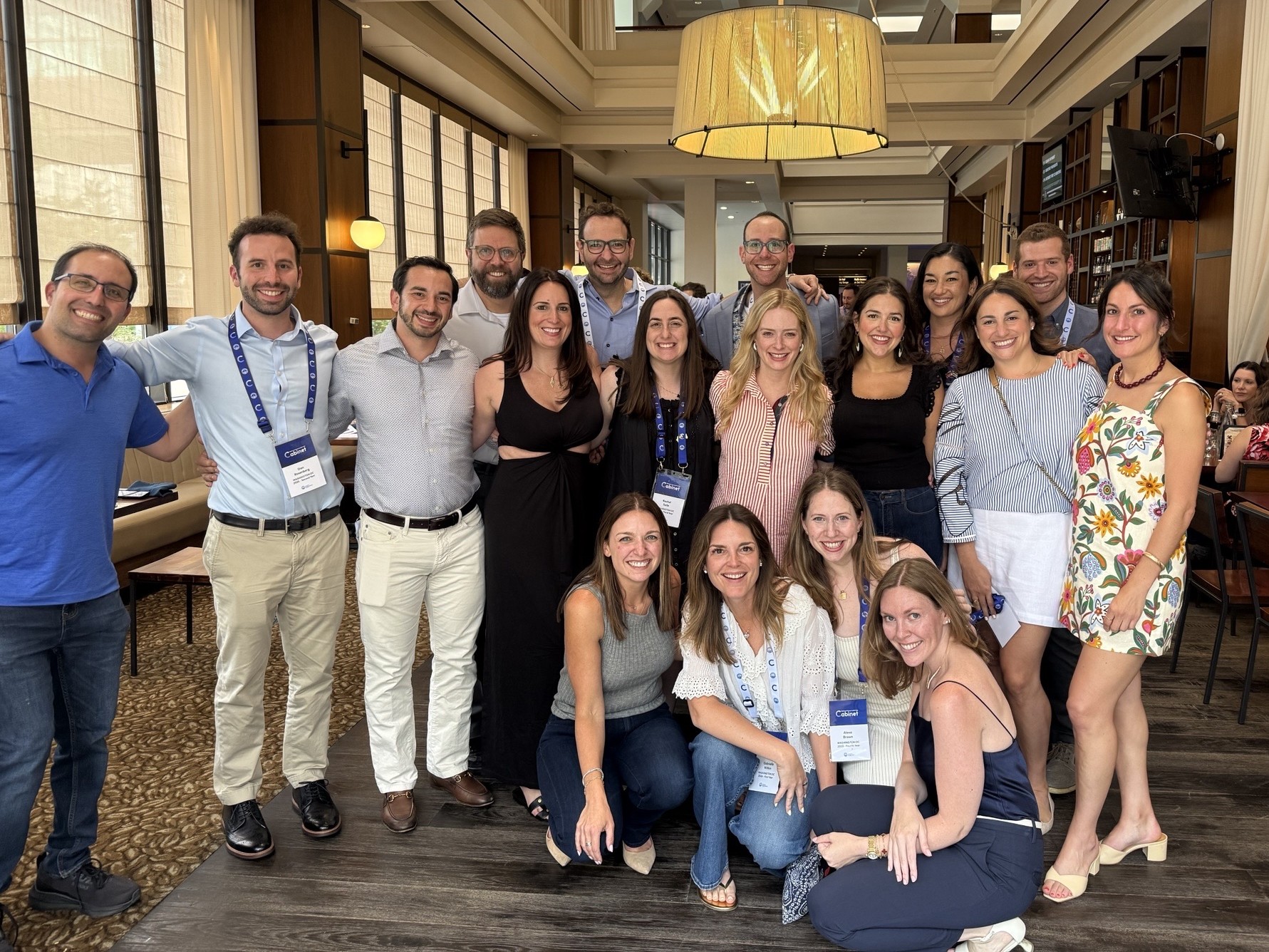
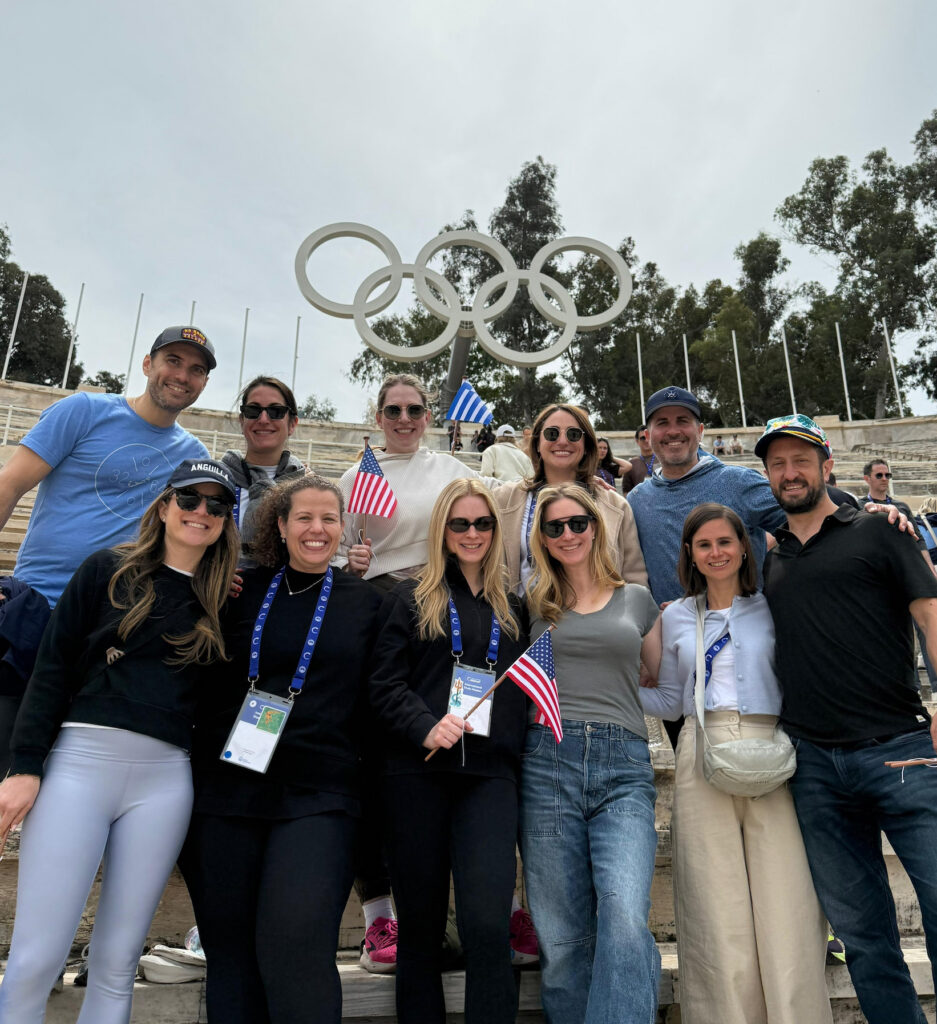
I was in Thessaloniki this past May on a study mission with Cabinet, the Jewish Federations of North America’s (JFNA) five-year leadership program for volunteer leaders aged 30-45.

Finding the Path to Jewish Leadership with Federation

I didn’t grow up in a Federation family. When my wife and I settled down to raise our kids, that was when we first sought out The Jewish Federation of Greater Washington. As a financial advisor, I was inspired by the generous giving of a few clients that donate directly from their retirement accounts to places they care about. I knew I wanted to be involved in philanthropy, and Federation felt like the right fit, because it allowed us to give broadly. It was comforting to know our dollars would act as a wide safety net, directly benefiting our community members who need services and support.

As our journey with Federation developed, I wanted to learn more, develop deeper friendships, and continue to grow a professional community of peers. That’s when I decided to join Cabinet. I knew this opportunity would be a key pathway for me to grow my impact and my connection to my Jewish community. What I didn’t know at the time was that it would also connect me to our broader Jewish family.

How Cabinet Connected Me Beyond Greater Washington

Cabinet missions shift between Israel and various diaspora communities like Hungary, Argentina, or Greece, pulling leaders out of their home communities to show them exactly where our collective dollars go globally. Traveling to Greece with our cohort this past May completely shifted my perspective, opening my eyes to a corner of the Jewish world I never would have experienced on my own.

While in Thessaloniki, our Cabinet cohort met a local family who beat those impossible wartime odds. The mother is a survivor, and her family only made it through because her father had immigrated from Germany. In a community where almost everyone spoke Ladino or Greek, no one spoke German. His ability to understand and translate became their only shield. To sit across from their descendants today, generations later, still living, practicing, and maintaining a Jewish life there, was a total “wow” moment.

A World Away, Yet Family

In Athens, our cohort sat in a Jewish-owned coffee house and listened to a widowed mother talk about life post-October 7. She shared how her social circle has had to pull inward because the rise in visible antisemitism on the streets is impossible to ignore. You can’t walk through Athens right now and not be reminded that you are different. Yet, at the same time, the city has become a haven for Israelis migrating from the conflict.

Without the access and immersion provided by Cabinet, I wouldn’t have had these raw, firsthand conversations. I wouldn’t have seen how our giving acts as a vital lifeline for our global family.

At a time when our world and our own communities can feel incredibly fractured, seeing that global connection was good medicine. It was a powerful reminder that there are people around the world who see things exactly the way we do, who see us as part of their collective identity, and who are just happy we showed up.

Finding Your Pathway

When I first joined Cabinet, my kids were very young, and finding the time felt daunting. But my message to my peers in Greater Washington is simple: you have to challenge yourself. If your community and your identity matter to you, you have to actively create the time for it.

You don’t need an abundance of hours to get involved, but you do need to step up. Find your own pathway, define it, and do it. What you do will stay with you forever.

Learn more about how you can get involved in Federation here.

Related posts

The Desk Between Us The Desk Between Us
The Desk Between Us
When Valerie completed her Federation interview writing exercise, she didn’t realize she was sitting at the same desk where her grandfather once wrote fundraising appeals for United Jewish Appeal. His legacy of service quietly became part of her own journey in Jewish communal life.
read more

How We Build a Community That Outlasts the Storm

How We Build a Community That Outlasts the Storm

It was pouring. The kind of heavy, relentless DC rain that usually keeps everyone inside. But on that night, out at Metrobar, nobody seemed to care about getting soaked.

It was the launch party for The Jewish Federation of Greater Washington’s Next Gen rebrand in November 2021, and it was the first time in a year and a half, after the long, cooped-up isolation of the pandemic, that this community of 20, 30, and 40-somethings was finally coming together in person. Looking out at the crowd laughing and talking through the downpour, you could feel the sheer joy of people finally together again.

Watching them, I saw the future of our community taking shape in the rain. And for me, as I step into my new role as Federation’s Senior Director of Financial Resource Development (FRD), it remains a deeply personal touchstone.

Inheriting a 50-Year Legacy

My understanding of Jewish community was shaped long before I began my professional journey here, by my paternal grandfather, Murray Green. I grew up watching his deep involvement with Jewish communal organizations in New York. As a child, I remember going to the galas and functions where he was honored, watching a generation that took absolute, unconditional responsibility for building the institutional Jewish life we inherit today. The camps, the day schools, the very foundations of our community.

Today, we are navigating challenges he could have never foreseen back in the 1970s. We are managing a deeply polarized political landscape, a painful rise in antisemitism, and shrinking attention spans driven by social media.

Judaism has always been a place for robust debate, where we can argue passionately in one room and eat bagels together at kiddush in the next, but that civic fabric is eroding in American life at large. Federation is the place where the capital, the relationships, and the leadership come together to find solutions to these massive, modern challenges.

Where the Personal Meets the Professional

I began my work in non-profit fundraising 13 years ago, first at Achilles International in New York, followed by the Cystic Fibrosis Foundation in Bethesda. By my late 20s, I realized I was working constantly but lacking a community of my own.

I figured, why not mold my personal and professional worlds together? 

That’s what brought me here six years ago, starting just six weeks before COVID-19 changed everything. Since then, Federation has been the backdrop of my entire life. Over these past pivotal years, I got engaged, married, survived the pandemic, went through the emotional rollercoaster of IVF, and brought two beautiful children into the world. Through every high and low, the staff and lay leaders here have had my back.

In fact, after my first child was born, I took a look at my baby registry out of pure curiosity. To my absolute amazement, Federation donors were the second-largest cohort of people who contributed. Today, every single time I pick up my diaper bag or wrap my kids in a blanket, I think of the specific donor who sent it to us.

Deepening Connection Every Day

That is the beauty of this work. It’s all about the long arc of relationships. We aren’t just looking for a transactional gift right now. We are investing in 40-year relationships, walking alongside people from the very beginning of their leadership journeys.

Now, as I help lead our FRD team, my biggest priority is deepening the connections we’ve been building across every corner of our community. We have incredible younger adults eager to meet seasoned leaders, and we have senior leaders who want to mentor and pass down their philanthropic values.

My goal is to continue the work of weaving these generations together into one succinct tapestry of programming and relationships. To create a community where a young professional feels entirely comfortable making an 8 p.m. Sunday phone call to a seasoned mentor for advice, building organic, multi-generational networks that exist outside of organizational boxes.

The Power of Showing Up

When I need a total break from the fast-paced world of strategy and campaign goals, you can find me outside. My perfect, work-free Sunday is spent with my husband, our three-year-old, and our five-month-old, walking around the zoo, soaking in the greenery, or pushing the stroller on a run.

When I look at my two small children, I think constantly about continuity. They are the future, and they are the reason we do this.

Right now, there are over 400,000 Jewish people across the Greater Washington metro area, spanning from the vibrant tech hubs of Northern Virginia to the heart of the District. Yet, only a fraction of those households currently contribute to our annual campaign. Too often, people fall into the trap of thinking, “Someone else will take care of it,” or “My single donation doesn’t matter that much.” 

But the truth is, it doesn’t work unless everyone participates.

If you care about the overarching continuity and safety of the entire Jewish ecosystem, and if you want to ensure there is a vibrant, connected community for the next 75 years, you can achieve it with Federation.

I want every single Jewish person in our region to know that if they pick up the phone, they can find a place where they truly belong.

We have the imagination, the capacity, and the heart to build that future together.

Rain or shine.

Related posts

The Desk Between Us The Desk Between Us
The Desk Between Us
When Valerie completed her Federation interview writing exercise, she didn’t realize she was sitting at the same desk where her grandfather once wrote fundraising appeals for United Jewish Appeal. His legacy of service quietly became part of her own journey in Jewish communal life.
read more

Shaping Jewish Life on Our Own Terms

Shaping Jewish Life on Our Own Terms

Navigating pride, unease, and the responsibility to shape our future together.

I just finished Stained Glass by Flora Cassen, a book that explores antisemitism’s effect on Jewish identity. She puts into words what’s been on my mind lately, which is that this is a challenging time for many to navigate Jewish expression. At times, life as a Jew in the DMV feels pretty great. We have amazing institutions, myriad forms of programming across a variety of interests, and an actively engaged community. And yet, there’s another dynamic afoot. Something that causes us to question whether we should put on a Star of David, wear a shirt with Hebrew writing, or plan a Jewish event in public.

By way of a snapshot, in the same historical moment in which public schools in our area are designating days off for Rosh Hashanah and Yom Kippur, vandals are spray-painting swastikas on desks. What are we to make of such a juxtaposition?

I don’t want to minimize the way in which our community has become ingrained in the fabric and rhythms of the region and the country more broadly. As others have said, almost any generation in Jewish life would trade their circumstances for ours. What Cassen points out, however, is that we have a lingering sense of insecurity based on centuries of history and, with a rise in antisemitism, a new and justifiable sense of unease.

Our job as a Federation is to recognize and shape our reality to the best of our ability and to build, continuously, toward a better future. That means supporting our communal ecosystem to be able to double down on the good and push back against the bad. We are situated at the epicenter of Jewish life in Greater Washington and can partner with, convene, and mobilize individuals and agencies to help more people live proud Jewish lives, as publicly or privately as they choose, independent of any external factors.

This work includes tackling antisemitism for the sake of current and future generations, in addition to helping more people deepen their ties to the ongoing story of the Jewish people. We don’t have to classify this moment as positive or negative, golden or threatened. What matters is that we move forward as a community in pursuit of a future that we define for ourselves.

We are here to strengthen a Jewish ecosystem capable of spurring Jewish pride and connection while doing what we can to influence the landscape of Jewish life in America, no matter which way the winds might blow.

Related posts

The Desk Between Us The Desk Between Us
The Desk Between Us
When Valerie completed her Federation interview writing exercise, she didn’t realize she was sitting at the same desk where her grandfather once wrote fundraising appeals for United Jewish Appeal. His legacy of service quietly became part of her own journey in Jewish communal life.
read more

Building a Community Where Differences Are the Glue, Not the Wedge

Building a Community Where Differences Are the Glue, Not the Wedge

How do we build a healthier Jewish community rooted in respect, trust, and constructive dialogue, when it feels like we can barely agree on anything?

That’s the one million dollar question, and it’s exactly what brought 22 local leaders from throughout Greater Washington together over the last four months. From February through May, this group took part in the Courageous Leadership Fellowship, a partnership between Federation and the Shalom Hartman Institute, to sharpen their ability to lead with empathy, courage, and respect in a world that feels increasingly polarized.

Grounded in shared values of mutual understanding and encouraging belonging, participants explored what courageous leadership looks like in practice and left better equipped to lead meaningful change and foster constructive conversations across our community.

Instead of just talking about these ideas in theory, the sessions got down to the intricate reality of community work. Led by Hartman scholars Sara Labaton, Elana Stein Hain, and Masua Sagiv, the group explored various themes, including finding inner clarity, leadership in polarities, the challenges and importance of maintaining a big tent community, and finally the future through two lenses: repair and transformation. Through a “where do you stand” activity, they moved past case studies and tackled real communal dilemmas, followed by small group discussions.

By the time the fellowship wrapped up, these leaders walked away feeling far more confident in their ability to facilitate difficult dialogues and communal decision-making, and just as importantly, deeply connected to the leaders and institutions who are actively shaping the future of Jewish life across Greater Washington.

This work gets to the heart of one of Federation’s core commitments: creating a community where everyone feels like they belong, that they’re listened to, and that they can contribute to a vibrant Jewish future, not in spite of our differences, but with them.

A strong community doesn’t require us to always see eye-to-eye. It requires us to know how to talk to each other when we don’t. By investing in leaders and relationships across our communal landscape, Federation is helping cultivate the trust, respect, and connection our community needs to stick together and thrive.

Learn more about Federation’s work to build a strong, inclusive community here.

Related posts

The Desk Between Us The Desk Between Us
The Desk Between Us
When Valerie completed her Federation interview writing exercise, she didn’t realize she was sitting at the same desk where her grandfather once wrote fundraising appeals for United Jewish Appeal. His legacy of service quietly became part of her own journey in Jewish communal life.
read more

Not Your “Toy”, but Definitely Your Soundtrack for Decoding Israel

Not Your “Toy”, but Definitely Your Soundtrack for Decoding Israel

The air inside Bialik 26 was thick with excitement. It was May 2018, seven years before the world as we knew it would fracture on October 7, and the popular Be’er Sheva neighborhood spot was packed to the brim. That night, the student cafe was the beating heart of the city’s queer community. Everyone was crammed shoulder-to-shoulder, eyes glued to the glowing screens broadcasting the world’s largest music competition, the Eurovision Song Contest.

Netta Barzilai was onstage singing “Toy,” an unapologetic, feminist anthem wrapped in quirky pop brilliance and thousands of shining lucky cats (see them in all their magnificence here). When the final votes came in and Israel was declared the winner, the whole place burst into tears and cheers.

We couldn’t believe it had actually happened. Israel had won the contest exactly 20 years after its last win in 1998!

It was one of the most powerful, unforgettable moments of my life. That night, the entire country felt unified in an overwhelming wave of pure, unadulterated joy.

The Reality of Being a Shlicha Today

Fast forward to nearly a year ago, when I packed up my life in Israel and moved to the U.S. to begin as a shlicha (Israeli emissary) at The Jewish Federation of Greater Washington. At a time when so many are navigating their relationship with Israel, Federation’s shlichim program brings Israelis into local classrooms, synagogues, and living rooms, creating a space for real conversation and connection.

Shortly after I arrived, I quickly realized that being an Israeli emissary today looks radically different than it did in the past. In our post-October 7 reality, discussions about Israel and Jewish life are heavier, more emotional, and infinitely more complex. At the same time, they are deeply rooted in something essential: Jewish peoplehood, shared identity, and joy.

From the beginning, I felt a strong responsibility to show up for difficult conversations about Israel wherever they happened. But, over time, I’ve come to understand that my role is also to offer something broader, to reflect the full story of Israel and the Jewish people. Not only complexity and challenge, but also resilience, pride, and (even) fun.

That understanding came together this month in a very natural way with one of the most unifying cultural moments in Jewish and Israeli life-Eurovision season!

For anyone here in America, you might not have even heard of Eurovision, or maybe you’re just noticing it pop up on your feeds now that it’s finally having a breakout moment on TikTok. But in Israel? It’s like the Super Bowl, but for musicians. It’s a massive song contest combining fierce cultural pride, voting drama, and representation on the global stage.

With Israel proudly taking home second-place just last week, it was the perfect moment for me to help our Greater Washington community look at Israel through a different soundtrack.

A Nation’s Story, Written in Song

Ever since October 7, it is incredibly easy for our relationship with Israel to be entirely defined by trauma, crisis, and anxiety. But relationships can’t survive on the negative. If we only look at Israel through the lens of heartbreak, we lose sight of the very thing we are trying to protect.

Through Federation’s Hands On Israel workshops, I get to move past headlines and bring the real, lived reality of my home directly into local spaces. Over the past few weeks, I traveled across multiple communities in Greater Washington, using the lens of Eurovision to open a portal into Israeli society.

I shared how Israel celebrated its first historic win in 1978 with Izhar Cohen’s “A Ba Ni Bi” just five years after we entered the contest in 1973. Then, just a year later in 1979, “Hallelujah” captured the magic of hosting the contest in Jerusalem for the first time, launching us to a back-to-back victory. By 1983, the tone shifted to one of profound historical weight, when Ofra Haza sang “Chai” (alive) defiantly in Munich, Germany. The song became a breathtaking symbol of Jewish resilience in the shadow of a horrifying past.

As the decades marched on, the music mirrored a rapidly modernizing society. In 1998, Dana International’s historic win with “Diva” reflected a 1990s Israel that was embracing groundbreaking LGBTQ+ inclusion, female empowerment, and cultural openness.

Twenty years later, that legacy of radical representation culminated in Netta’s “Toy,” bringing a bold, global feminist voice back to the stage that I felt reverberate firsthand that night at Bialik 26.

The most recent chapters of our Eurovision journey allowed us to share the raw, immediate grief of our current era on the global stage. Eden Golan’s “Hurricane” in 2024 is deeply tied to the post-October 7 reality, capturing a nation’s immediate trauma and its stubborn insistence on standing tall despite the storm. The music looks forward with “A New Day Will Rise” in 2025, speaking directly to our collective yearning for renewal and rebuilding.

And just a week ago, we were able to experience the thrill in real time, as we listened to Noam Bettan capture hearts across the world (and a second-place win) with his powerful song, “Michelle.”

Shared Identity Over Debate

One of the most moving parts of this journey was watching the transformation inside the rooms here in Greater Washington. Across different synagogues, community centers, and living rooms, local American Jews and Israeli expats sat together in the same space. This kind of programming creates an exciting entry point into Jewish peoplehood. It moves the conversation into the heart, allowing people to connect emotionally. I am so grateful to be part of this work and to Federation for making this, and so many other meaningful Israel programs, available right here in our region.

Looking back at that euphoric night in Be’er Sheva in 2018, I am reminded that joy is a form of resilience. And as I continue my work here, I carry that music with me, always hoping, of course, to one day bring the trophy home again.

Interested in bringing similar experiential Israel education to your local community? Check out Federation’s Hands On Israel workshops to get started.

Learn more about Federation’s work strengthening Jewish peoplehood and sharing Israeli culture here.

Related posts

The Desk Between Us The Desk Between Us
The Desk Between Us
When Valerie completed her Federation interview writing exercise, she didn’t realize she was sitting at the same desk where her grandfather once wrote fundraising appeals for United Jewish Appeal. His legacy of service quietly became part of her own journey in Jewish communal life.
read more

Navigating Change Together

Navigating Change Together

How Jewish community helps ground us through life’s transitions.

A couple weeks ago, my wife and I set off on a drive up to Boston to see our daughter graduate from college and then a few days later over to Pittsburgh to see our son graduate with a Master’s degree. It won’t surprise you to hear that witnessing these two milestones got me thinking about life’s transitions and the swirl of excitement, loss, and uncertainty that frequently come with them.

As Bruce Feiler points out in his book, Life Is in the Transitions: Mastering Change at Any Age, we spend more of our lives in flux than we realize. Life events can be good or bad. They can be determined by a decision that we make on our own or something that happens to us. Major life events also typically last about five years, and much of our adult lives are spent in unsettled states. This isn’t necessarily a negative thing—change can indicate growth and evolution—but it is the reality of most of our lives.

This sense of unsettledness is pervasive for many of us today. The world is changing faster than any of us could have imagined. Deep assumptions about our security, identity, friends, work, etc. are being challenged. And that is beyond changes that may be happening in our personal lives. All of this can get to be overwhelming. But that sense of instability is lessened and, in some ways, even reversed when we find community.

Feiler argues that a well-constructed life is one guided by the ABC’s—agency, belonging, and cause. To thrive, we need to feel like we can impact the world around us; that we have people to lean on; and have a way to serve something greater than ourselves. These three factors keep us grounded through life’s twists and turns, and they are all on offer in our community.

That’s what I hope people who engage with Federation and our partners come to feel, that Jewish Greater Washington is a place where they can commune with the ABC’s, across every life stage and within the ongoing story of Jewish peoplehood.

Our work as a Federation, therefore, is to ensure our community remains host to a grand Jewish playground, where people can come learn about themselves and find people with whom to climb through good times and bad no matter what’s going on in their lives.

That’s what I see as the beauty of community building. In choosing to join forces on our quest for meaning, we vastly improve each other’s odds of success. By engaging in Jewish discovery and expression together, we multiply each other’s agency, deepen each other’s sense of belonging, and further each other’s ability to pursue what matters to us most.

P.S. happy to recommend Bruce Feiler’s thoughtful guest essay in today’s New York Times.

Related posts

The Desk Between Us The Desk Between Us
The Desk Between Us
When Valerie completed her Federation interview writing exercise, she didn’t realize she was sitting at the same desk where her grandfather once wrote fundraising appeals for United Jewish Appeal. His legacy of service quietly became part of her own journey in Jewish communal life.
read more

A Vote of Confidence in Jewish Community

A Vote of Confidence in Jewish Community

Why connection, participation, and generosity all go hand in hand.

There’s a consensus brewing. Emerging across opinion pages, podcasts, and dinner tables is the idea that we’ve strayed too far from one another. The question driving many of our national and communal conversations is how do we renew our obligations to each other?

Just this week, I’ve listened to discussions about how generosity was meant to be one of liberalism’s founding principles. How our educational pursuits were meant to prepare us to be good citizens and servant leaders. How we were meant to talk to strangers. How we were never meant to bowl alone.

All these ideas are swirling within our Jewish community as well. For all our differences, the thing people want most is to connect—to feel like they belong and that the Jewish people would not be complete without them and what they have to offer. And, indeed, we are not. I believe wholeheartedly the Jewish community is incomplete without everyone at the table.

Which makes now a perfect moment to double down on the sacred, timeless work of community building. Next week is Giving Week and I am asking everyone who cares about the Jewish community and values the Jewish future to contribute. Your gift—of any amount—matters. Your participation matters. You matter.

Giving is a vote of confidence in our shared efforts to build a strong and joyful Jewish community, one that supports and brings together the full breath of Jewish life. It’s also what supports our work as a Federation to bolster a network of Jewish agencies and programs that care for people in need, engage people in every life stage in meaningful Jewish experiences, perpetuate and strengthen Jewish identity and peoplehood, and look after the safety of the Jewish people.

What’s more, the simple act of giving collectively, alongside so many others who care about Jewish life, makes its own powerful statement that we are here and that we believe in the promise of community and acting together to the benefit of others.

I lament the challenges and the tumult of our times. But I find incredible comfort and hope in the fact that our path to a brighter future involves so many beautiful things: connection, participation, curiosity, debate, and a love for Jewish wisdom and tradition.

It’s notable that in this era of hyper-individualism, people are hungry for mutual obligation. But that’s the punchline of responsibility and interdependence: it’s only in being tied to each other that we find the transcendence we seek. Obligations are on offer, I invite you to come claim them.

Related posts

The Desk Between Us The Desk Between Us
The Desk Between Us
When Valerie completed her Federation interview writing exercise, she didn’t realize she was sitting at the same desk where her grandfather once wrote fundraising appeals for United Jewish Appeal. His legacy of service quietly became part of her own journey in Jewish communal life.
read more