What Happens When We Keep Talking About Israel
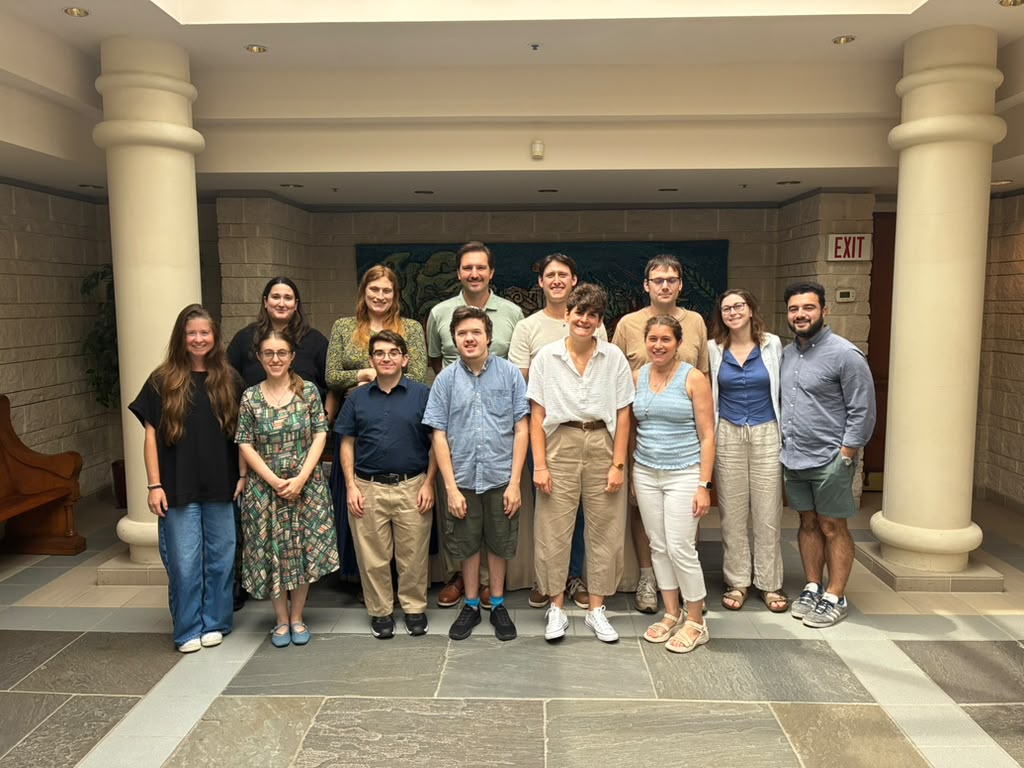
As an Israeli currently living in the United States, I spend a lot of time thinking about the space between Israel and American Jewish communities. It is a space I came as a Shlicha (Israeli emissary) to help bridge. But right now, that bridge can feel complicated and ever widening.
For many, Israel has become a topic that comes with strong feelings, important questions, and a desire to better understand. After years of war, loss, political upheaval, and uncertainty, people are asking questions about what is happening in Israel, how Israelis are experiencing this moment, and what October 7 has changed. Some are thinking more deeply about the decisions being made by Israel’s leaders, while others are trying to navigate what it means to love Israel while also holding questions or concerns.
And sometimes, people simply don’t know who they can ask.
That is what made a recent conversation at Washington Hebrew Congregation feel so important.
An Invitation to Ask Anything
The idea started with coffee. I sat down with the Rabbi and the leader of the young professionals group at Washington Hebrew Congregation, and we talked about something they were hearing more and more from young adults. They wanted a real conversation about Israel. Not another presentation telling them what to think.
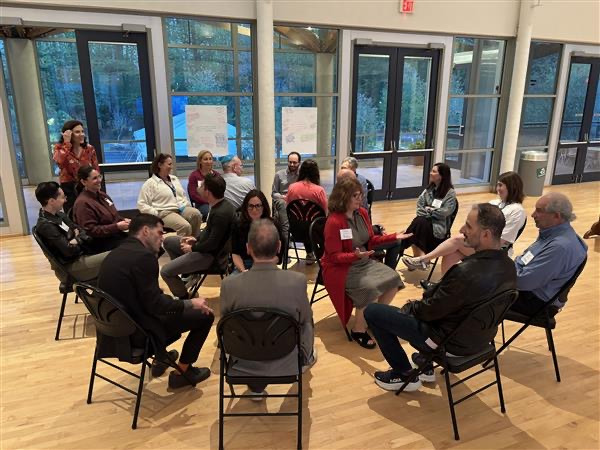
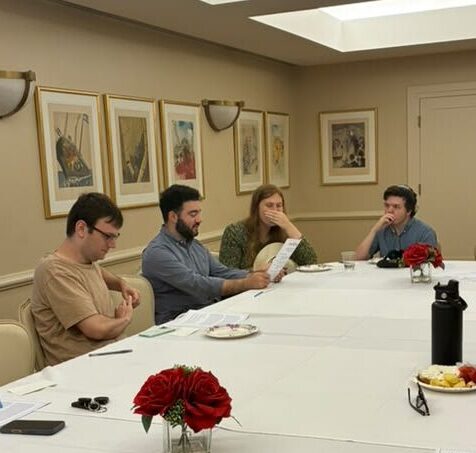
So on August 1, I joined the 2239 young adult group for an “Ask Me Anything” gathering about Israel. We brought bagels (because, let’s be honest, no Jewish gathering is complete without them) and sat around a table.
There were hard questions. Different opinions. Questions I didn’t always have a perfect answer for. And that was the point. I wasn’t there simply to answer questions as an Israeli. I wanted to hear their perspectives, too.
What does Israel mean to you?
What has changed in the way you think about Israel?
What questions have you been afraid to ask?
What does it feel like to be a young American Jew trying to make sense of Israel right now?
The conversation moved in both directions. We talked about Israel, but we also talked about the American Jewish experience. We talked about the distance between what Israelis experience and what American Jews see and hear from thousands of miles away.
And slowly, something happened. The conversation became less about finding the “right” answer and more about understanding one another.
One participant told me, “Dialogue makes me feel less alone in my experience.”
Another said, “I was surprised to learn that Israelis genuinely thought that October 7 was going to be the end of Israel. I am thankful to Hila for acknowledging based on her experience as a Shlicha that it’s not useful to disregard American Jews when it comes to Israel, because what happens in Israeli politics affects the Diaspora.”
And perhaps my favorite thing I heard was: “I have more questions than answers, but I’m more hopeful about the future.”
The Power of Talking to an Israeli
I had just returned from a trip home to Israel when we gathered that Shabbat. My trip made me reflect on the distance between these two communities in a new way.
In Israel, the war and its consequences are part of everyday life. Here, American Jews are experiencing Israel through their own communities, relationships, values, questions and concerns.
We need spaces where these two different experiences can meet. That is what I believe the role of a Shlicha (Federation’s Israeli emissary program) can be at its best. A Shlicha can bring something that is difficult to get from a headline, a social media post or a political debate. Someone who can say, “This is what I experienced in Israel.” And then listen when someone here says, “This is what Israel feels like to me.”
That exchange matters. The relationship between Israel and American Jewry isn’t guaranteed by geography, history, or even shared identity. It has to be built. And especially in these complicated years, it is worth building.
There is a temptation, when a subject feels as emotionally charged as Israel does right now, to avoid the conversation altogether. But silence doesn’t make the questions disappear. If anything, it makes the distance between us greater.
Creating More Places to Connect
This is where The Jewish Federation of Greater Washington plays such an important role. Through the Shlichim program, Federation creates opportunities for Israelis and American Jews to build relationships that go beyond a single event or a single conversation. And those connections can look different everywhere. We might join a young adult group for an “Ask Me Anything” over bagels. We might speak with teens, visit a classroom, work with a religious school, join an Israel committee or help a synagogue explore Israeli culture and society.
As a new year of programming begins, I hope more schools, synagogues, youth groups, religious schools, Israel committees and community organizations will consider inviting a Shlicha into the conversation. Because right now, when Israel can feel like one of the hardest things to talk about, we need more spaces where we can talk honestly, listen deeply, and stay connected. If you or your organization is interested, you can see our programming offerings here.
I left that gathering reminded of how little it can take to begin something meaningful. A room. Some bagels. An open heart. And a willingness to ask one another, “What do you really think?”.