Need support? Call 703-J-CARING (703-522-7464)

Reflections from A Senior Shlicha: Year One

Reflections from A Senior Shlicha: Year One
Over the past year, I have had the honor of serving as the Senior Shlicha (Israeli emissary) and head of the Israeli delegation on behalf of The Jewish Agency and the Jewish Federation of Greater Washington (JFGW). I relocated here last summer with my husband and our three children. Our delegation of young Shlichim is the second-largest in North America, comprising 11 passionate and dedicated emissaries. This speaks to Federation’s deep commitment to meaningful Israel engagement and its recognition of the Shlichim’s vital role in building bridges between Israel and this vibrant local Jewish community. Just last year, the Mishlachat (delegation) reached nearly 20,000 participants through more than 400 programs. Our Shlichim serve in congregations, JCCs, the Federation itself, and Makom, where one Shlicha works with individuals with disabilities. From Gaithersburg to Fairfax, our presence spans the region, reflecting our shared goal of connecting with and positively impacting the entire Greater Washington community. At the same time, we are committed to bringing the strength and solidarity of this beautiful community back to Israel. As we finalize next year’s work plan and prepare to welcome new Shlichim to our delegation, I’ve taken time to reflect on the approaches we use to deepen the relationship between Israel and our local Jewish community. Here are three moments that shaped my understanding of our role as Shlichim.

1. Commemorating October 7 – Pozez JCC

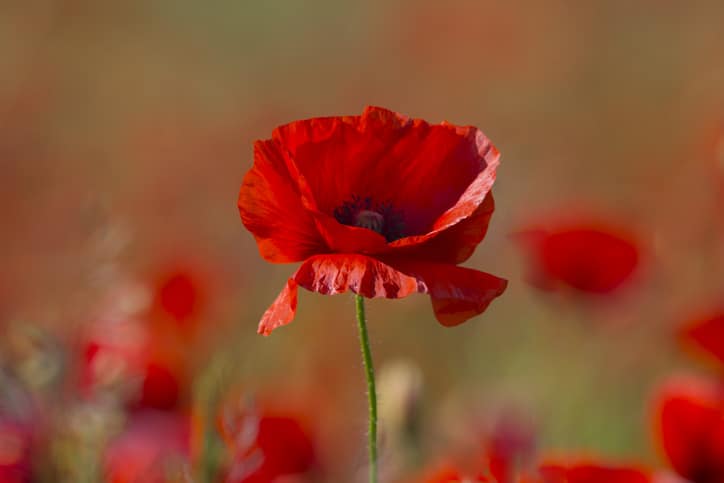
One of the most meaningful experiences I participated in was a commemoration event held at the Pozez JCC to mark one year since the deadly attacks on October 7. The evening included workshops focused on Israeli art and storytelling. I presented an Israeli art gallery titled Wrapping Memory, which explores life in the Gaza envelope region prior to the attacks. During my presentation, I introduced the symbol of the red poppy—Israel’s national flower—and its layered meanings. The poppy symbolizes beauty, nature, connection to the land, and renewal. But it also represents loss and mourning. In Israel Defense Forces terminology, perach (flower) is used to refer to a fallen soldier. Many in the audience had never encountered this symbolism before. But in that moment, they connected emotionally with something deeply Israeli.

Aha Moment:

This event reminded me of the unique power of cultural programming. Through music, art, literature, and language, we can foster shared understanding and invite meaningful conversation about Israel—without always centering politics. Even in the wake of tragedy, new spaces for dialogue and connection can emerge.

2. People-to-People Connection – A Grandmother’s Words

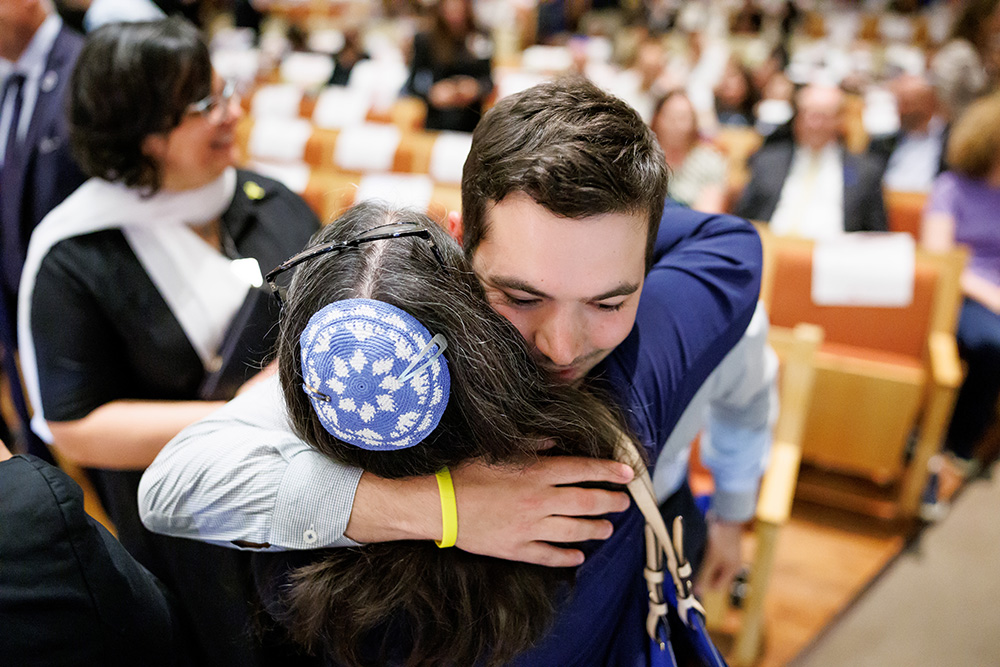
This next story comes from one of our Shlichim, Tamar, who led a B’nai Mitzvah program focused on Jewish and Israeli values. Families were invited to a final celebration. Afterward, a grandmother approached her and said: “When you asked the kids what makes them feel Jewish, I realized—having you here, and what you represent, makes me feel more Jewish.”

Aha Moment:

That simple, powerful statement reminded me that genuine connection happens through people—not just programs. A Shaliach’s presence can become a living bridge between Israel and local Jewish life, deepening one’s own Jewish identity. Through relationships, conversations, and shared experiences, Shlichim create bonds that no one-time event can replace.

3. Facilitated Dialogue – Empowering Young Voices

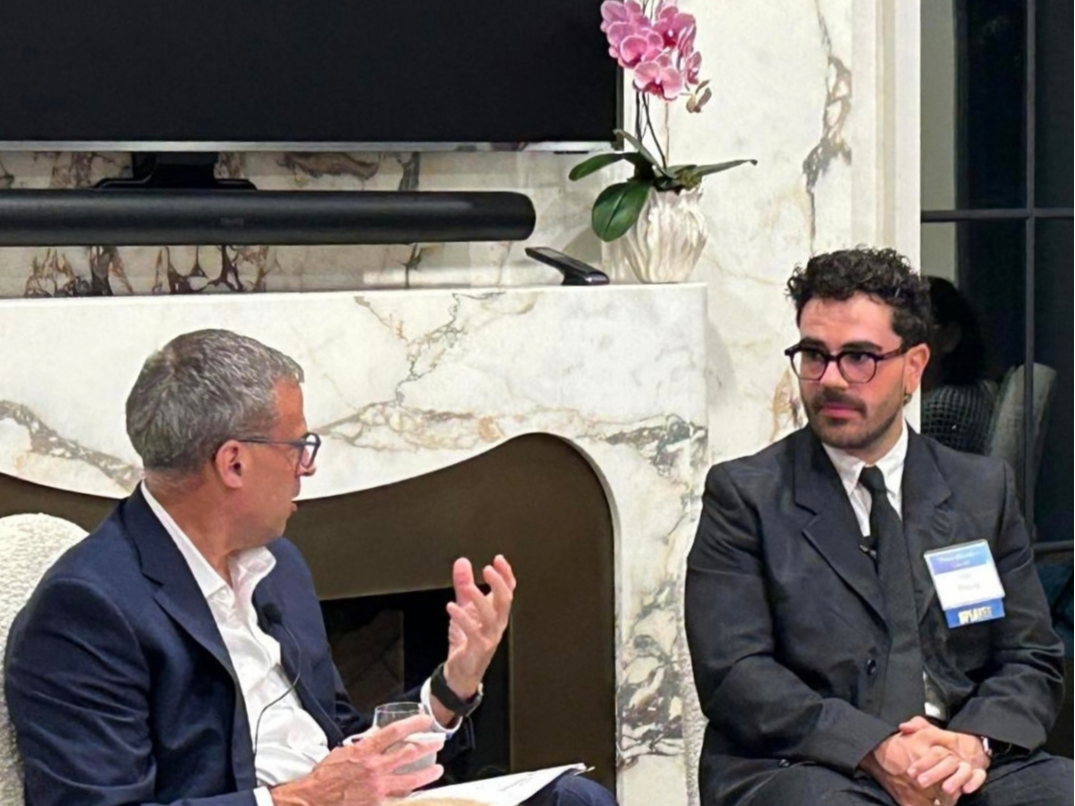
A few months ago, I co-led a panel for young professionals from across the DMV. We discussed the complexities of modern Israeli discourse, the rise of antisemitism, and the overwhelming role of social media in shaping perceptions. Many of the participants had grown up with an idealized image of Israel—Eretz Zavat Halav U’dvash (a land flowing with milk and honey)—and had little exposure to its complexities. Some expressed feeling insecure when faced with difficult conversations about Israel or antisemitic rhetoric. They felt unprepared and lacked the tools to speak up. We discussed the value of open dialogue, approaching disagreement with curiosity and courage, and the importance of finding one’s voice. I shared that growing up in Israel, I was encouraged to speak up, ask questions, and stand for my beliefs. I told them: “You just need to be a little more Israeli.”

Aha Moment:

Empowering young adults to engage with Israel requires more than information—it requires confidence, resilience, and helping them find their voice. We must not only teach about Israel, but also support our community in learning how to speak about Israel—especially when it’s difficult. This is one of our goals for next year. Thank you for the opportunity to share these reflections. As Shlichim, we are honored to walk alongside this community—to listen, to connect, and to build bridges of understanding in both directions. As we reflect on the events unfolding in Israel, I truly believe we are living through historic moments. My hope for the coming year is that we will reunite to mark peace, not war, and that all the hostages will return home soon.

Over the past year, I have had the honor of serving as the Senior Shlicha (Israeli emissary) and head of the Israeli delegation on behalf of The Jewish Agency and the Jewish Federation of Greater Washington (JFGW). I relocated here last summer with my husband and our three children.

Our delegation of young Shlichim is the second-largest in North America, comprising 11 passionate and dedicated emissaries. This speaks to Federation’s deep commitment to meaningful Israel engagement and its recognition of the Shlichim’s vital role in building bridges between Israel and this vibrant local Jewish community.

Just last year, the Mishlachat (delegation) reached nearly 20,000 participants through more than 400 programs. Our Shlichim serve in congregations, JCCs, the Federation itself, and Makom, where one Shlicha works with individuals with disabilities. From Gaithersburg to Fairfax, our presence spans the region, reflecting our shared goal of connecting with and positively impacting the entire Greater Washington community. At the same time, we are committed to bringing the strength and solidarity of this beautiful community back to Israel.

As we finalize next year’s work plan and prepare to welcome new Shlichim to our delegation, I’ve taken time to reflect on the approaches we use to deepen the relationship between Israel and our local Jewish community.

Here are three moments that shaped my understanding of our role as Shlichim.

1. Commemorating October 7 – Pozez JCC

One of the most meaningful experiences I participated in was a commemoration event held at the Pozez JCC to mark one year since the deadly attacks on October 7. The evening included workshops focused on Israeli art and storytelling. I presented an Israeli art gallery titled Wrapping Memory, which explores life in the Gaza envelope region prior to the attacks.

During my presentation, I introduced the symbol of the red poppy—Israel’s national flower—and its layered meanings. The poppy symbolizes beauty, nature, connection to the land, and renewal. But it also represents loss and mourning. In Israel Defense Forces terminology, perach (flower) is used to refer to a fallen soldier.

Many in the audience had never encountered this symbolism before. But in that moment, they connected emotionally with something deeply Israeli.

Aha Moment:

This event reminded me of the unique power of cultural programming. Through music, art, literature, and language, we can foster shared understanding and invite meaningful conversation about Israel—without always centering politics. Even in the wake of tragedy, new spaces for dialogue and connection can emerge.

2. People-to-People Connection – A Grandmother’s Words

This next story comes from one of our Shlichim, Tamar, who led a B’nai Mitzvah program focused on Jewish and Israeli values. Families were invited to a final celebration. Afterward, a grandmother approached her and said:

“When you asked the kids what makes them feel Jewish, I realized—having you here, and what you represent, makes me feel more Jewish.”

Aha Moment:

That simple, powerful statement reminded me that genuine connection happens through people—not just programs. A Shaliach’s presence can become a living bridge between Israel and local Jewish life, deepening one’s own Jewish identity. Through relationships, conversations, and shared experiences, Shlichim create bonds that no one-time event can replace.

3. Facilitated Dialogue – Empowering Young Voices

A few months ago, I co-led a panel for young professionals from across the DMV. We discussed the complexities of modern Israeli discourse, the rise of antisemitism, and the overwhelming role of social media in shaping perceptions.

Many of the participants had grown up with an idealized image of Israel—Eretz Zavat Halav U’dvash (a land flowing with milk and honey)—and had little exposure to its complexities. Some expressed feeling insecure when faced with difficult conversations about Israel or antisemitic rhetoric. They felt unprepared and lacked the tools to speak up.

We discussed the value of open dialogue, approaching disagreement with curiosity and courage, and the importance of finding one’s voice. I shared that growing up in Israel, I was encouraged to speak up, ask questions, and stand for my beliefs. I told them: “You just need to be a little more Israeli.”

Aha Moment:

Empowering young adults to engage with Israel requires more than information—it requires confidence, resilience, and helping them find their voice. We must not only teach about Israel, but also support our community in learning how to speak about Israel—especially when it’s difficult. This is one of our goals for next year.

Thank you for the opportunity to share these reflections. As Shlichim, we are honored to walk alongside this community—to listen, to connect, and to build bridges of understanding in both directions.

As we reflect on the events unfolding in Israel, I truly believe we are living through historic moments. My hope for the coming year is that we will reunite to mark peace, not war, and that all the hostages will return home soon.

Related posts

Turning Gratitude Into Legacy Turning Gratitude Into Legacy
Turning Gratitude Into Legacy
A scholarship for a six-week NFTY trip to Israel at age 17 sparked a lifelong love for Israel and Jewish community work. Today, that experience inspires a commitment to legacy giving and creating opportunities for the next generation to deepen their Jewish identity.
read more

Life Between the Sirens: Daily Resilience in Israel’s Bomb Shelters

Life Between the Sirens: Daily Resilience in Israel’s Bomb Shelters

Fictionalized for storytelling purposes. Inspired by real experiences.

In Israel, life runs on the rules of the Home Front Command: no school, no work, stay close to shelter. Missiles are tracked, detected—and then the sirens sound.

In those 90 seconds, babies are lifted awake. Children are scooped into arms. Families rush into bomb shelters while texting relatives: Are you okay? Are you safe?

But behind the headlines and alerts are the quiet, human moments that rarely make the news. These moments tell the real story of life between the sirens—where fear and resilience live side by side.

The Shelter Within

One girl sleeps in leopard-print pajamas because they help her feel strong, just in case she has to run in the middle of the night. A toddler keeps a few toys in the shelter. Teenagers scroll silently, connected to their friends through glowing screens. A woman knits without looking up. Two kids play a clapping game, their laughter soft but real.

These are the small rituals of control when the world outside feels unrecognizable.

In the shared stillness of bomb shelters, strangers become familiar. Neighbors check in. People make sure everyone gets in before the door closes. Safety isn’t just personal—it’s collective.

“Club Concrete” and the Kindness of Snacks

The shelter becomes more than a safe space—it becomes a temporary community.

One neighbor sets up folding chairs like she’s hosting guests. Another pours lukewarm tea from a dented thermos. Someone shares Bamba. Someone else remembers a phone charger. There’s quiet generosity in every gesture. People make space for one another in more ways than one.

Sometimes they’re inside for ten minutes. Sometimes, hours. Either way, they wait—together.

Fragments of a Full Life

This isn’t just a story of defense. It’s a story of dinners left on stoves, of Lego IDF headquarters half-built, of whispered prayers into baby-soft necks after a long, sleepless night of sirens. It’s teens turning fear into song lyrics. Parents making hard decisions in soft voices. It’s life, in fragments.

Each story is individual. But the experience is shared.

What Holds Us Together

There’s no single story of what it means to live between sirens. But in cities and kibbutzim, in stairwells and shelters, thousands of quiet moments speak volumes.

Resilience is real. So is grief. So is exhaustion, and fear, and laughter.

And so is love—the kind that hands you a granola bar when you didn’t pack one. The kind that lets your child sing loud in a space where silence feels safer. The kind that chooses leopard-print pajamas, just in case.

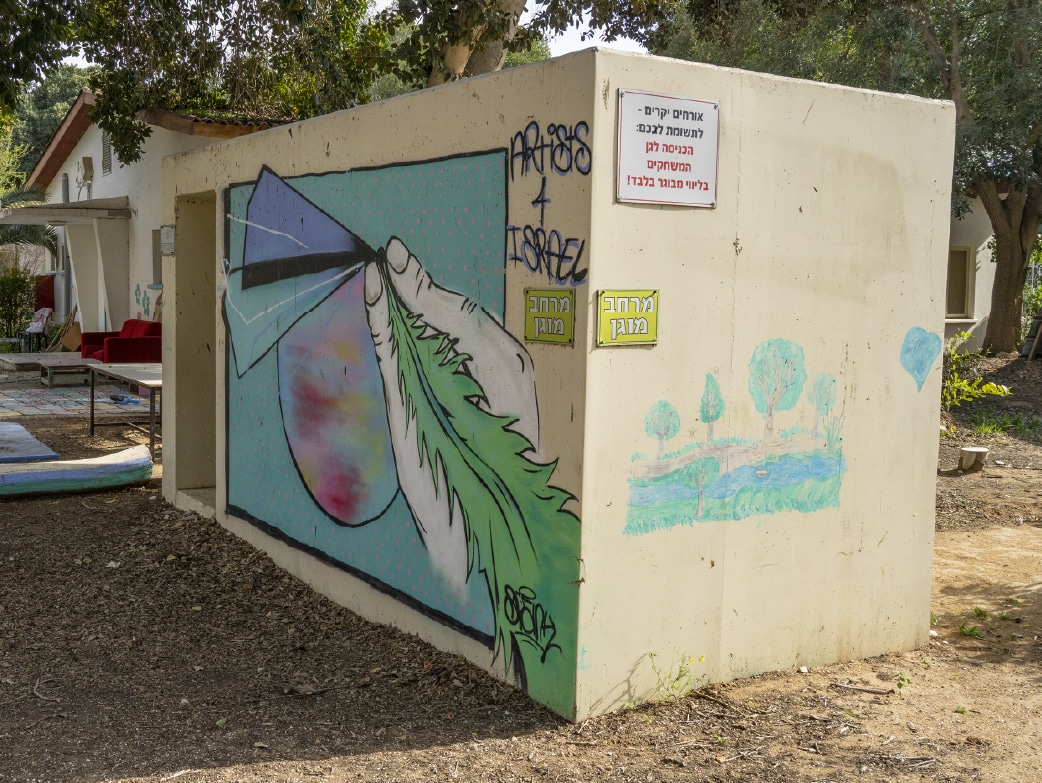
The kind that leads a group of diaspora Jews to paint a mural on a bomb shelter wall, so Israeli children have something bright and joyful to look at in the moments they run to survive.

These are the moments—small, sacred, human—that hold us together, even when the world outside threatens to come apart.

Related posts

This isn’t business as usual

This isn’t business as usual

In Crisis. We Come Together.

Today we’re reminded that resilience, collective action, and solidarity are more than values—they’re our sacred responsibilities.

As urgent needs emerge in Israel and here at home, our community is asking: How can we help?

In Israel, families are sheltering from an unrelenting wave of missile strikes. Soroka Medical Center in Be’er Sheva was hit, forcing patients and staff into protected areas and temporarily shutting down essential medical services.

In Greater Washington, we’re reeling from violent antisemitic attacks and rising fear.

This isn’t business as usual.

This is the moment to lean in—together.

DONATE NOW

Because of your support, Federation is responding in real time:

  • Delivering trauma care and urgent relief in Israel
  • Improving shelters for evacuees through new partnerships in the Kinneret Valley Cluster (KVC)
  • Strengthening security through our JShield initiative, which provides emergency planning, physical safeguards, and grant support for synagogues, schools, and gathering spaces across Greater Washington
  • Your support provides urgent, critical resources to help keep our community safe—here and in Israel.

Stay Informed. Stay Connected.

Our partners are hosting virtual briefings with real-time updates on the crisis in Israel and growing security concerns here at home.

Updates are often posted on short notice, so we encourage you to check this page regularly. Recordings will be posted as we receive them for those unable to attend.

Let’s meet this moment, together.

Related posts

Updates on Israel / Iran Conflict & How to Stay Connected

Updates on Israel / Iran Conflict & How to Stay Connected

As you’re no doubt following in the news and through your personal networks, Iran has launched hundreds of missiles and drones into civilian areas across Israel in response to Israel’s efforts to degrade Iran’s nuclear capabilities. More than a dozen civilians have been killed, including children, with hundreds more injured across multiple cities. Israelis are living under constant threat and Jews around the world are watching with worry and solidarity.

What sets Iran’s attack apart is the scale and the intent, aimed at civilians rather than military targets. Israel remains focused, strategic, and aiming its attacks squarely at neutralizing immediate and long-term threats.

Even as the situation continues to unfold, one truth is clear: Israelis are once again under fire. And once again, our community is ready to respond.

Our Onward Israel participants—13 young adults from Greater Washington—have been in Israel since June 4. Following the attacks, they were moved from Tel Aviv to the Dead Sea for safety. Federation staff have been in touch with them directly, offering support, care, and connection. We are proud of their resilience and maturity in facing this moment.

Federation’s Role: Strategic, Informed, Impactful

We are in close contact with our partners on the ground in Israel and monitoring real-time updates from our Israel Office Director, who is actively guiding our response—even while navigating their own safety during attacks.

Our investments over the past two years continue to play a critical role in supporting Israelis as they respond to the new challenges being faced. Trauma response systems and municipal partnerships are operating as intended, reflecting the resilience those investments were designed to build. That said, public shelter needs are significant, and our partners—the Jewish Agency for Israel (JAFI) and the American Jewish Joint Distribution Committee (JDC)—are well-positioned to respond if additional support is needed.

Thanks to our long-term work in Israel, which strengthens education, community development, and civil institutions, and the rapid-response infrastructure of our Israel Crisis Response Allocation (ICRA), we can respond quickly, responsibly, and in partnership.

One of our newest grantees, Kinneret Valley Cluster (KVC), a regional coalition, is working around the clock in 15 communities in the North of Israel. Its CEO, Dror Lalush, is meeting with regional mayors and other executives to understand needs throughout the region. In a recent conversation, Dror expressed deep gratitude for the Federation-funded shelter that is currently enabling his staff to continue operating safely from their headquarters.

This moment underscores the value of having strong, trusted partnerships already in place before a crisis begins.

What’s Next?

We are tracking developments in real-time. As new needs surface, we’ll continue to share updates from our Israel Office and other partners. For those looking for a trusted way to support Israel right now, we are here and committed to meaningful, coordinated impact.

In moments like this, the Federation’s strength is your strength. Together, we stand committed—with resolve, resilience, and with an enduring bond between our community and the people of Israel.

Related posts

Why the Nova Exhibition Matters—Here, in Greater Washington

Why the Nova Exhibition Matters—Here, in Greater Washington

Burned tents. Twisted metal. Scorched earth and scattered shoes.

That’s what visitors will see when the Nova Music Festival Exhibition opens in Washington, DC—a raw, immersive experience that brings the events of October 7 into sharp, unflinching focus.

Hundreds of young people were dancing under the stars at a peace festival. By morning, 378 were murdered. Others were injured, kidnapped, or left to carry unbearable memories. The exhibition tells that story—using the very objects left behind.

Why Here, Why Now

This city doesn’t just shape laws—it shapes narratives. And those narratives are still under attack.

Nearly two years after the October 7 massacre, Jewish students continue to face harassment for wearing a Magen David. On Wednesday, May 21, two Israeli Embassy workers were shot and killed outside of the Capital Jewish Museum.

Posters of kidnapped Israelis are still being torn down in local neighborhoods. And there are still people—some in public leadership—who question whether the attacks happened the way survivors describe them.

Bringing the Nova Exhibition to Washington isn’t just about remembrance. It’s about truth. It’s about urgency. And it’s about making space—for people to see what happened, sit with it, and decide what kind of world they want to build in response.

A Space to Witness and Understand

The exhibition goes beyond explanation—it brings people inside the experience. Through survivor testimony, personal artifacts, and immersive design, visitors move through the joy of the festival, the terror of the attack, and the heartbreak left in its wake.

It’s hard. It’s raw. And it’s necessary.

Because in a time when facts are debated and grief is politicized, bearing witness becomes a moral act.

But this is also a place for connection—for shared grief, honest dialogue, and the strength that comes from seeing one another fully.

What’s Ahead

Federation is proud to help bring the Nova Exhibition to Washington—together with partners here and in Israel. This is a space for truth-telling, healing, and solidarity—not just for the Jewish community, but for anyone who believes in dignity and human rights.

Ticket sales are now open at novaexhibition.com. Learn more, share this story, and come experience this powerful exhibition for yourself.

This isn’t just about what happened. It’s about what we choose to do now.

Photo credit: novaexhibition.com

Related posts

Seeing a Different Side of Israel – Together

Seeing a Different Side of Israel – Together

Earlier this month, we had the extraordinary opportunity to host participants from Kitov—a bold and visionary program from Israel’s Shaharit Institute, supported in part by a Federation Impact Grant.

Kitov brings together a uniquely diverse group of Israeli changemakers – religious and secular, Jewish and Arab, Ashkenazi and Mizrahi, progressive and traditional. Their mission? To tackle some of Israel’s most pressing and complex societal challenges through collaboration, empathy, and innovation through deep dialogue and creative problem-solving.

During their visit to Washington, DC, Kitov participants immersed themselves in the fabric of American Jewish life. From warm and lively Shabbat dinners with local families, to thought-provoking conversations about antisemitism on college campuses, to engaging visits like their stop at Mem Global (Formerly Moishe House). Every encounter sparked connection, learning, and mutual respect. These moments offered a glimpse into the vibrant diversity of Israel, and reminded us just how much we share across oceans and borders.

During the visit, I had the opportunity and privilege to meet with the group and its leader, Dr. Eilon Schwartz, together with Karen Katzman, Director of Federation’s Israel Office. In our conversations, we explored the shared challenges facing Israeli society and the American Jewish community, the opportunities ahead, and most importantly, meaningful pathways for continued collaboration between our communities.

In a time of uncertainty – across Israel, the U.S., and the world – Federation is proud to stand with initiatives like Kitov, which works to build bridges, elevate unheard voices, and strengthen the ties between people of all backgrounds. This is how we shape a more inclusive, resilient, and hopeful future for all of us.

Together, let’s keep building – toward a better tomorrow.

Related posts

Turning Gratitude Into Legacy Turning Gratitude Into Legacy
Turning Gratitude Into Legacy
A scholarship for a six-week NFTY trip to Israel at age 17 sparked a lifelong love for Israel and Jewish community work. Today, that experience inspires a commitment to legacy giving and creating opportunities for the next generation to deepen their Jewish identity.
read more

Let’s stop the infighting: A Call for Unity

Let’s stop the infighting: A Call for Unity

In the following letter, a group of Jewish Federation and foundation leaders call for unity, civility, and collaboration in the face of the rising tide of hatred toward Jews.”

Dear Friends and Leaders of the Jewish Community,

We write to you today with urgency, with heartbreak, and with unwavering resolve. The time to unite is now, not tomorrow or next week but NOW.

At a time when antisemitism is rising at a staggering and dangerous pace—on campuses, in the streets, online, and tragically, again in deadly acts of violence—we must confront truth: those who seek to harm Jews do not ask us how we vote, how we feel about Israel, or what kind of kippah—if any—we wear.

Last Wednesday evening, in our nation’s capital, it was murder. Weeks earlier, arson was attempted at the home of a Jewish governor. From Pittsburgh to Poway, and across North America, we are victims of threats, vandalism, harassment, and intimidation with a frequency and intensity many of us never imagined we would experience in our lifetimes. Our community is deeply divided on many issues: on how best to or even if we can fight antisemitism, on the future of Israel and its war in Gaza, and on politics more broadly.

These are real and meaningful debates, and we must have them in good faith and with respect. But let us be clear: those who hate us rarely make such distinctions. To them, a Jew is a Jew. And history has shown us where that logic can lead. Throughout history, when Jews failed to unite in the face of existential threats, the consequences were catastrophic. The destruction of the Second Temple was not only the result of Roman power, but also of sinat chinam—baseless hatred and infighting among Jews. We cannot afford to repeat those mistakes. Our disagreements, however, deeply felt, must not overshadow our shared obligation to protect and uplift the Jewish people.

We are all in this together, and we must stop fighting each other. Now is the time to stand shoulder to shoulder—not in uniformity of opinion, but in unity of purpose. This is not the job of one Jewish organization or a few brave leaders, it is OUR responsibility. We, as Jewish leaders, choose unity over division.

We, the undersigned, call upon every Jewish leader—religious and secular, progressive and conservative, young and old—to find common cause in the most fundamental of obligations: to ensure the safety, dignity, and future of our people. Let our disagreements not divide us into paralysis or despair. Let them sharpen our thinking and deepen our commitments.

And above all, let us remember that in moments of crisis, Jewish strength has always come from Jewish unity.

Am Yisrael Chai.

With hope and determination,

(Names listed in Alphabetical Order)

B. Elka Abrahamson, Rabbi
President
The Wexner Foundation

Amanda Abrams
Executive Director
The Zalik Foundation

Marc Baker
President and CEO
Combined Jewish Philanthropies

Josh Donner
Executive Director
The Shapira Foundation

Lisa Eisen
Co President
Charles and Lynn Schusterman Family Philanthropies

Rabbi Noah Farkas
President and CEO
Jewish Federation of Los Angeles

Jeff Finkelstein
President and CEO
Jewish Federation of Greater Pittsburgh

Barry Finestone
President and CEO
Jim Joseph Foundation

Julie Platt and Eric Fingerhut
Chair, President and CEO
Jewish Federations of North America

Deena Fuchs
Executive Director
Micah Philanthropies

Rachel Garbow Monroe
President and CEO
The Harry and Jeanette Weinberg Foundation

Rabbi David Gedzelman
President and CEO
The Steinhardt Foundation for Jewish Life

Eric S. Goldstein
CEO
UJA-Federation of New York

Michael Hoffman
President and CEO
Jewish Federation of Palm Beach County

Stephen Hoffman
Chairman
The Jack, Joseph and Morton Mandel Foundation

Steven Ingber
CEO
Jewish Federation of Detroit

Brain Jaffee
CEO
The Jewish Foundation of Cincinnati

Jay Kaiman
President
The Marcus Foundation

Karyn Cohen Leviton
VP, Jewish Life and Engagement
One8 Foundation

Adam Minsky
President and CEO
UJA Federation of Greater Toronto

Yamit Taragan Nahami
Acting CEO
Aviv Foundation

Lonnie Nassiter
CEO and President
JUF Chicago

Adina Poupko
Executive Director
Natan Fund

Gil Preuss
CEO
The Jewish Federation of Greater Washington

Dana Raucher
Executive Director
The Samuel Bronfman Foundation

Erika Rudin-Luria
President
Jewish Federation of Cleveland

Joy Sissisky
President and CEO
Bay Area Jewish Community Federation and Endowment Fund

Andrés Spokoiny
President and CEO
Jewish Funders Network

Marina Yudborovsky
CEO
Genesis Philanthropy Group

Related posts

Turning Gratitude Into Legacy Turning Gratitude Into Legacy
Turning Gratitude Into Legacy
A scholarship for a six-week NFTY trip to Israel at age 17 sparked a lifelong love for Israel and Jewish community work. Today, that experience inspires a commitment to legacy giving and creating opportunities for the next generation to deepen their Jewish identity.
read more

Remembering Major Chen Buchris, Deputy Commander of the Maglan Unit

Remembering Major Chen Buchris, Deputy Commander of the Maglan Unit

Major Chen Buchris, Deputy Commander of the Maglan Unit, was a brave and stoic warrior and leader. He dedicated his entire being to the army, and in his rare free time, he would return to his parents’ home in Ashdod. There, he trained, played guitar, and studied Mesillat Yesharim (The Path of the Just—a Jewish text on mannerisms).

Chen fell on the cursed October 7th Sabbath, during a charge he led in the battle to clear Nahal Oz of the accursed terrorists who had taken control of it.

The opening words of the book he so loved to study are: “The foundation of piety and the root of pure service is for a person to clarify and affirm what his obligation is in his world.”

After Chen’s Shiva and hearing about his pure character from his brother (who was a commander in the army—a combat officer like all the brave sons and daughters of the Buchris family), I took it upon myself to study Mesillat Yesharim in Chen’s memory.

It seems to me that there are no more precise words to describe a person to whom we all owe our lives. Chen, you will forever be, to me, the one who fulfilled his obligation in this world.

Photo Credit: Times of Israel

Related posts

Jennifer Scher Named Recipient of 2025 Phyllis G. Margolius Impossible Dream Award

Jennifer Scher Named Recipient of 2025 Phyllis G. Margolius Impossible Dream Award

The Phyllis Margolius Family Foundation is thrilled to announce that Jennifer Scher has been named as the recipient of the 2025 Phyllis G. Margolius Impossible Dream Award. Scher was selected by the committee for her work to foster support for Israel as Vice President of the MidAtlantic Region for Friends of the IDF (FIDF).

Scher is the third recipient of the Phyllis G. Margolius Impossible Dream Award, given annually to a Jewish communal professional who echoes the character, inspiration, and determination of its namesake, Phyllis Ann Goldman Margolius. Phyllis cared deeply about strengthening the Jewish community in Washington, D.C., Israel, and around the world. Where others saw problems, she saw opportunities and solutions, pushing the needle forward and motivating those around her to do the same.

As part of the award, Scher will receive an $18,000 cash prize for her dedication to empowering Jewish identity and building meaningful connections to Israel.

“I am deeply honored to receive the Phyllis G. Margolius Impossible Dream Award,” said Jennifer Scher. “Phyllis was a dynamic and transformative leader, and I am privileged to be associated with someone who was such a champion of Jewish life, Israel, and community. Since 2006, the Greater Washington, DC community has mentored and nurtured my professional growth. I am incredibly grateful for the unwavering support and guidance of my lay and professional partners, who have been by my side for nearly 20 years. On October 8, 2023, in the heartbreak of tragedy and fog of war, I told my husband, ‘I am in this job at FIDF, in this moment, for a reason, and I can’t imagine being anywhere else.’”

Scher has served as the Vice President of the MidAtlantic Region for FIDF for three years, where she champions Israel’s soldiers and educates communities on Israel’s security challenges. Under her guidance, FIDF has established a strong young leadership cohort, growing young Jews’ connection to Israel. She also spearheaded the establishment of a WhatsApp group that provides ongoing updates and briefings, gathered Lone Soldier parents to support them while their children are at war, and helped organize Legacy Camp, a program bringing children from IDF bereaved families to Capital Camps.

Prior to FIDF, Scher was the Director of Community Advancement at Gesher Jewish Day School and the Director of Northern Virginia Engagement at The Jewish Federation of Greater Washington. She is an active member of Congregation Olam Tikvah and a longtime parent at Gesher Jewish Day School and Capital Camps.

“In a time where community is needed, Jennifer is making a way, especially for young people to come together to help support and talk about Israel and Jewish community in a post-October 7 world,” said Selection Committee Member Josh Maxey. “When Jennifer speaks, I see a person committed to continue serving her community and ensuring we have the next generation of exemplary leaders.”

The Jewish Federation of Greater Washington has been an invaluable partner in the fulfillment of this award. Phyllis devoted many hours in the work of Federation, and it is one of the many organizations in which she observed the depth of devotion and talent that Jewish professionals bring to our community.

“We are immensely proud to have Jennifer Scher as our award winner for the prestigious Phyllis G. Margolius Impossible Dream Award,” said Philip Margolius, President of the Phyllis Margolius Family Foundation. “Her achievements and dedication embody the essential qualities that this award represents: resilience, creativity, and the ability to rise to any challenge. We hope that receiving the Impossible Dream Award will further inspire Jennifer to continue her exemplary work in the field.”

Jennifer Scher will receive her award at an event to honor Jewish communal professionals on Thursday, May 8, 2025 at the Bender JCC in Rockville, Maryland. The event is co-sponsored by the Phyllis Margolius Family Foundation, The Jewish Federation of Greater Washington and the BenderJCC.

Related posts

Turning Gratitude Into Legacy Turning Gratitude Into Legacy
Turning Gratitude Into Legacy
A scholarship for a six-week NFTY trip to Israel at age 17 sparked a lifelong love for Israel and Jewish community work. Today, that experience inspires a commitment to legacy giving and creating opportunities for the next generation to deepen their Jewish identity.
read more

A Week of Mixed Emotions

A Week of Mixed Emotions

My heart breaks with the news of the horrific plane crash near Reagan National Airport late Wednesday night. May the memories of those lost in this unthinkable incident forever be a blessing, and may we send strength to all the first responders and officials working tirelessly on the investigation and extensive recovery operation still unfolding.

At the same time, since my last note, 12 more innocent people have been reunited with their friends and family. The videos have been deeply moving — it’s an incredible relief to see these hostages return home after almost 500 days of captivity. I can only imagine what they have gone through and what lies ahead.

I know we’re all waiting with bated breath for the return of three more hostages this weekend, including Keith Siegel, and of course, for every one of those still in captivity.

This past weekend, I had the privilege of joining the capstone retreat for Federation’s Jewish Community Leaders Program (JCLP) at Capital Camps. Together, we marked the culmination of a year’s worth of learning, growth, fostering deep relationships, and building trust. One participant captured the essence of the experience: “This weekend’s retreat capped off a tremendous year and opened up opportunities to engage meaningfully in the community. It nourished my soul.” I’m deeply inspired by this dynamic group, and more than confident in their ability to lead with passion and pride. It’s been an honor to be part of their journey. Many thanks to Shelly Kupfer and Mark Levitt for co-chairing, and to Dana Bornstein and Elisa Deener-Agus for being the professional leads on such a transformative program.

A recent ADL and Hillel International survey found that more than 83% of Jewish students on college campuses have experienced or witnessed antisemitism since October 7, 2023. In their message on the results, my colleagues Jonathan Greenblatt and Adam Lehman rightfully noted that, “universities must act decisively. They must speak out against antisemitism and ensure their campuses are safe for Jewish students.” I couldn’t agree more. I’m grateful that your support ensures Federation can continue to combat antisemitism in our schools, colleges, and universities.

Our Northern VA Leadership Cohort met last week for the second time — and enjoyed their time together so much they didn’t want it to end. Their focus on how to be inspiring leaders sparked rich discussions about how participants could apply shared insights within their respective organizations. These leaders are deeply dedicated to the future of the Jewish community in NOVA, and eager to continue this important work after their cohort wraps up. We’re lucky to have them help drive Jewish Northern VA forward.

A look ahead: More than two dozen excited travelers will come together tonight for a “kick-off” Shabbat dinner as they prepare for our Federation Intergenerational Mission to Panama next month. This initial gathering will begin to build lasting friendships and connections as they prepare to visit the largest Jewish community in Central America. I’m looking forward to their updates and pictures!

Related posts

Turning Gratitude Into Legacy Turning Gratitude Into Legacy
Turning Gratitude Into Legacy
A scholarship for a six-week NFTY trip to Israel at age 17 sparked a lifelong love for Israel and Jewish community work. Today, that experience inspires a commitment to legacy giving and creating opportunities for the next generation to deepen their Jewish identity.
read more