Open More Possibilities. Join a community of donors shaping the future of Jewish life.

Rabbi Aderet Drucker Named Recipient of 2026 Phyllis G. Margolius Impossible Dream Award
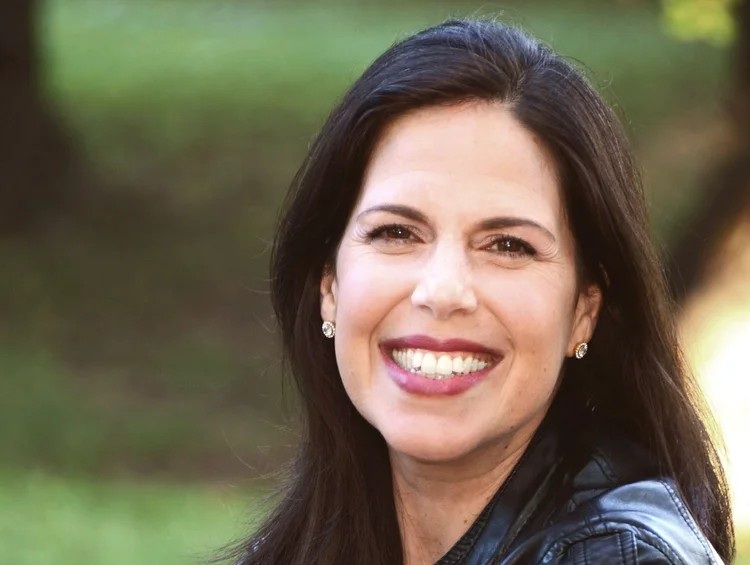
Rabbi Aderet Drucker Named Recipient of 2026 Phyllis G. Margolius Impossible Dream Award

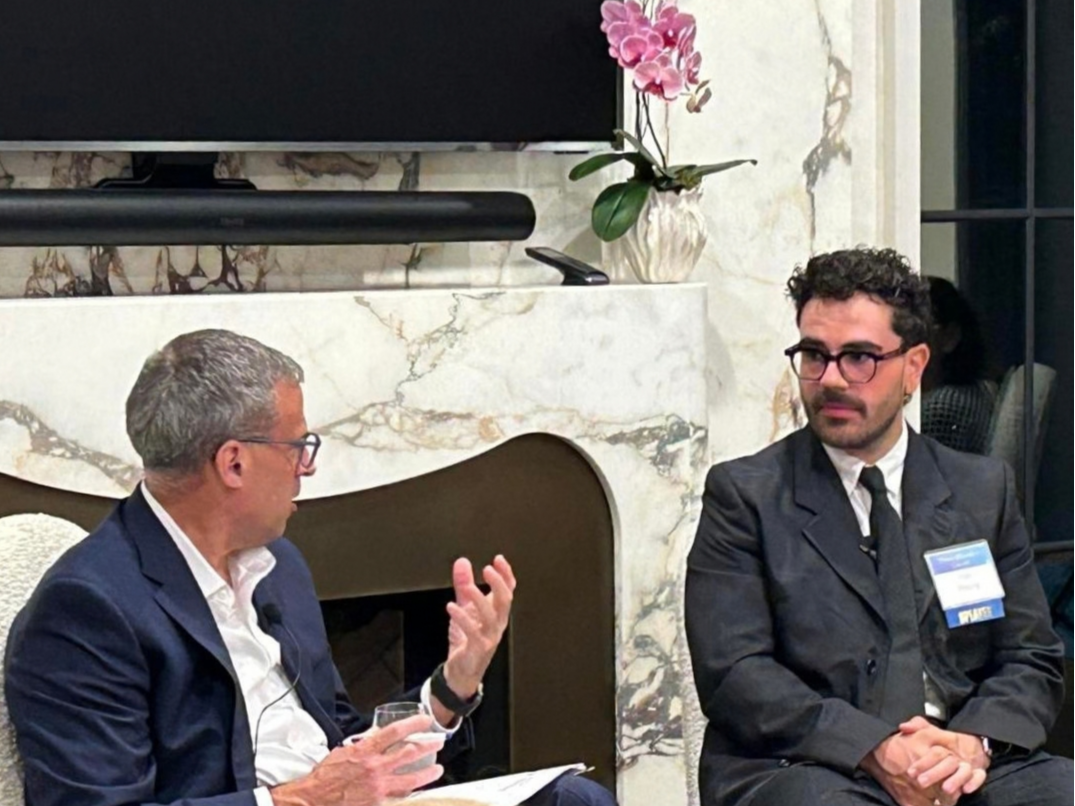
The Phyllis Margolius Family Foundation is excited to announce that Rabbi Aderet Drucker has been named as the recipient of the 2026 Phyllis G. Margolius Impossible Dream Award. Rabbi Drucker, the Executive Director and Community Rabbi of the Den Collective, was selected by the committee in recognition of her achievements in building intentional Jewish community for adults 20s-40s in Greater Washington.

Rabbi Drucker is the fourth recipient of the Phyllis G. Margolius Impossible Dream Award, given annually to a Jewish communal professional who echoes the character, inspiration, and determination of its namesake, Phyllis Ann Goldman Margolius. Phyllis cared deeply about strengthening the Jewish community in Washington, DC, Israel, and around the world. Where others saw problems, she saw opportunities and solutions, pushing the needle forward and motivating those around her to do the same.

As part of the award, Rabbi Drucker will receive an $18,000 cash prize for her dedication to fostering intentional spaces of belonging and growing meaningful Jewish connections.

“I am deeply honored to receive the Phyllis G. Margolius Impossible Dream Award,” said Rabbi Aderet Drucker. “Phyllis’s legacy of creativity, determination, and belief in what is possible, even in the face of challenge, continues to inspire me. In a time marked by profound loneliness and disconnection in our world, our work at the Den Collective is rooted in cultivating intimate spaces where deep transformation is possible, fostering a community of true belonging, rich Jewish learning and exploration, meaningful relationships with rabbis who walk alongside people with care and guidance, and opportunities for leadership empowerment and development.”

Rabbi Drucker has served as the Executive Director & Community Rabbi of the Den Collective for eight years, helping guide the organization into its milestone 10th year while expanding its reach, programs, and infrastructure into a nationally recognized model of intentional Jewish community for adults in their 20s, 30s, and 40s throughout the Greater Washington area, blending community organizing, pastoral care, and mindfulness to create spaces grounded in Jewish study, leadership development, and meaningful connection.

Prior to joining the Den Collective, Rabbi Drucker was a campus rabbi at Maryland Hillel, where she co-founded the University of Maryland’s first Interfaith Student Fellowship in partnership with a minister and an imam, creating a space that brought Muslim, Christian, and Jewish students together for transformative relationship-building.

She is also a certified Jewish Mindfulness Meditation Teacher through Or HaLev and the Institute for Jewish Spirituality, a Global Justice Fellow with American Jewish World Service, and was selected for the inaugural cohort of JCADA’s Ambassador Program, dedicated to creating safe spaces for survivors of intimate partner violence.

“What makes Aderet an impossible dreamer is her approach,” said Diane Schilit and Dani Schneider. “Aderet is a visionary leader whose work blends Jewish wisdom, relational organizing, pastoral care, and mindfulness to create transformative community for adults in their 20s–40s. She is shaping a transformative future for Jewish Washington, innovating from the ground up with a person-centered approach, embedding Jewish learning, empowering members to lead in their homes and communities, and extending the Den’s impact beyond its walls.

The Jewish Community Foundation and The Jewish Federation of Greater Washington have been invaluable partners in the fulfillment of this award. Phyllis devoted many hours in the work of Federation, and it is one of the many organizations in which she observed the depth of devotion and talent that Jewish professionals bring to our community.

Rabbi Drucker will receive her award at the Impossible Dream Award Celebration to honor Jewish communal professionals on Thursday, May 7, 2026 in Rockville, Maryland. The event is co-sponsored by the Phyllis Margolius Family Foundation, the Jewish Community Foundation of The Jewish Federation of Greater Washington, and the Bender JCC.
Bringing Israel to Life “Hands-On”

Bringing Israel to Life “Hands-On”

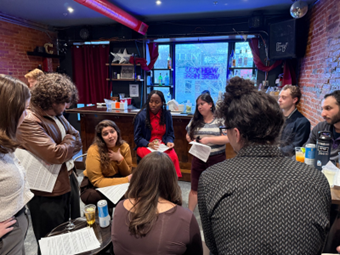
For those looking to discover new things or have meaningful conversations about Israel, Federation’s Hands-on Israel workshops is an exciting place to start.

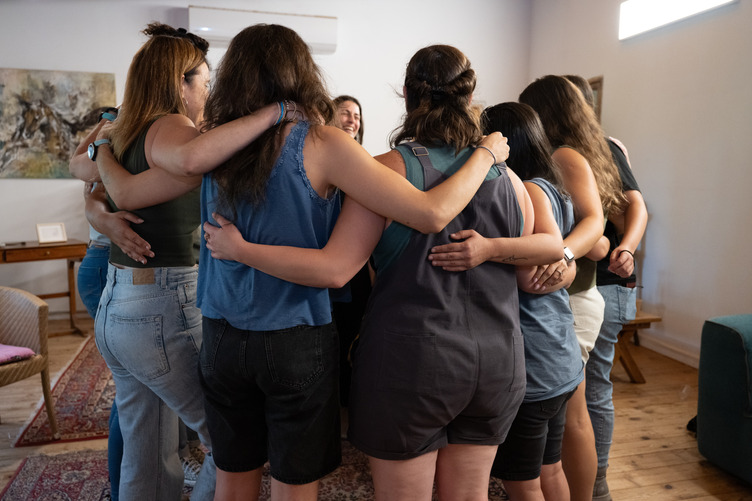
Through this growing initiative, Federation partners with synagogues, schools, young adult groups, and community organizations to expand access to dynamic Israel programming that is creative, educational, and personal. Led by our community Shlichim (Israeli emissaries), these workshops complement existing community offerings, creating new opportunities for connection and learning.

Whether it’s preschoolers exploring Israeli culture through art, teens learning about women in Israeli cinema, or older adults discussing the uniqueness of Israeli leadership, each workshop is designed to bring Israel to life in a tangible and innovative way. From leadership and identity sessions to Israeli crafts and music, the goal is simple: to create authentic, accessible connections to Israel for all ages.

And it’s working! Demand for Hands-on Israel continues to grow, with strong participation across age groups and geographies. Some organizations have invited shlichim back multiple times to lead sessions with different age groups or on different topics, and as each cohort of shlichim brings their own passions, talents, and perspectives, the workshops continue to evolve—keeping the experience fresh, relevant, and impactful.

Through Hands-on Israel, Federation is not only expanding access to Israel engagement, but strengthening connections, building community, and creating meaningful experiences that resonate long after the workshop ends.

Because sometimes, the most powerful way to connect is not just to learn about something, but to experience it together.

Interested in a Hands-on Israel workshop for your own community or organization? Learn how to request a workshop here.

Related posts

Why this moment feels familiar Why this moment feels familiar
Why this moment feels familiar
As institutions increasingly single out Jews and demand ideological conformity, Jewish educators and communities face a difficult question: will the price of belonging become denying our identity? We must push back against antisemitism and protect the Jewish and universal values we have long fought to uphold.
read more

Honoring Survivors, Every Day

Honoring Survivors, Every Day

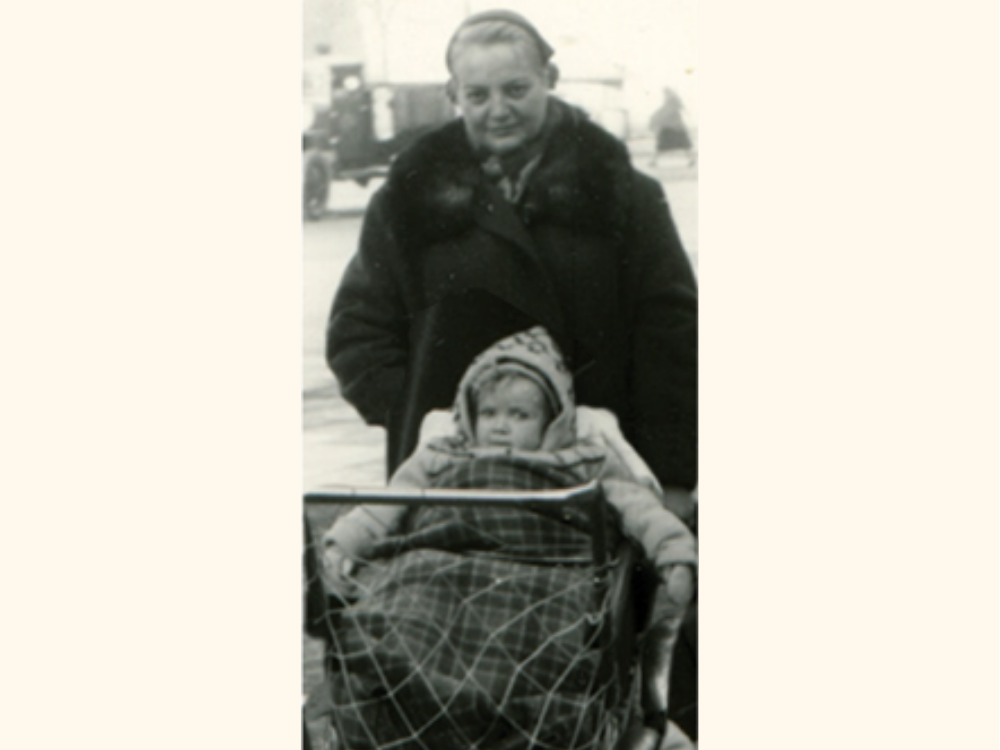
Shortly after the outbreak of World War II, two-year old Sonia* and her mother fled Belarus, which would soon fall to the Nazis. Her father, a Soviet army officer, was killed on the front line. After the war, Sonia’s family rebuilt what they could of their lives, with Sonia eventually pursuing a career as a teacher.

Life in the Soviet Union was far from easy, though. Finding consistent, well-paying work was a challenge, and Sonia and her daughter endured rampant antisemitism. Even in the late 1970s, her daughter was barred from attending university due to her Jewish identity. That’s why in 1980, they made the brave and difficult decision to emigrate to the United States.

For almost two decades, Sonia worked in a Russian-language daycare, providing care and comfort to the next generation, eventually retiring in Maryland. Yet as she’s gotten older, her day-to-day life has become more challenging. She has significant mobility issues, rarely leaving the house and accessing only the ground floor of her apartment. Her daughter and son-in-law help where they can, yet loneliness and isolation still set in.

That’s where Federation and our partner JSSA—the Jewish social service agency serving Greater Washington—comes in. Each year, JSSA helps hundreds of Holocaust survivors live their final years with dignity and safety. Federation support enables JSSA to provide homecare and home nursing, medical support, food programs, socialization activities, and more. As Holocaust survivors age and their needs become more complex and acute, this care is increasingly essential.

For Sonia, this assistance is deeply personal. With help from a homecare worker, she is able to remain in her own home and complete tasks that would otherwise be too daunting. Virtual exercise classes support her physical well-being, while online Russian-language classes on Jewish themes help her stay connected to her community and culture. These services do more than meet basic needs; they provide connection and stability.

Together, Federation and JSSA are dedicated to ensuring that no Jew feels alone, and that every survivor is met with the care and respect they deserve. We honor survivors by showing up for them now, in real and tangible ways. Through this partnership, we are turning memory into action—ensuring that “Never Again” is not only a promise for the future, but a responsibility we uphold every day.

*To protect her privacy, Sonia’s name has been changed.

Related posts

Capital J Mainstage: Bess Kalb – EDCJCC

Capital J Mainstage: Bess Kalb – EDCJCC
Emmy-nominated comedy writer and bestselling author Bess Kalb joins us to discuss what it means to be a Jewish parent in America today. Bess Kalb is an Emmy-nominated comedy writer and the New York Times bestselling author of Nobody Will Tell You This But Me, a New York Times Book Review Editors’ Choice, and the children’s book series Buffalo Fluffalo. She wrote for eight years for Jimmy Kimmel Live!; has written for the Emmy Awards, the Academy Awards, the Democratic National Convention; and has contributed to The New Yorker and This American Life. She is head writer and executive producer of the Writers Guild Award–nominated Yearly Departed, an Amazon comedy special, and is adapting Nobody Will Tell You This But Me into a feature film with Sight Unseen Pictures. She lives with her husband and two children in New York.

Day at the J: The Women Who Made Us

Day at the J: The Women Who Made Us
Behind every one of us is a woman who showed up, spoke up, and refused to let us forget where we came from. This Day at the J celebrates the women who shaped us and invites us to explore what we've carried forward. While kids ages 7 and under enjoy an afternoon of engaging activities, parents can choose how they want to spend their time. If you've read Nobody Will Tell You This But Me by Bess Kalb — a funny, moving, and deeply Jewish portrait of four generations of women told through the voice of a grandmother who simply refuses to be forgotten — join us for a rich group discussion about memory, love, loss, and what it means to be the person someone believed in completely. The book will be provided ahead of time in your choice of paperback, digital, or audiobook format so you have everything you need to dive in. Didn't get to the book? No problem! Spend the afternoon exploring your own family story through guided genealogy activities and family tree building. You may be surprised what you uncover — and what's been waiting to be passed down. The afternoon wraps with the whole family back together for pizza and Havdalah, ending the week the way it should: around the table and with the people who matter.

Turning Interest Into Engagement

Turning Interest Into Engagement

A simple yet powerful entry point for connection.

There are approximately 85,000 Jewish young adults in the DC region, many of whom have moved from other places. Which means that we have a tremendous responsibility to make Jewish life as accessible as possible. Plus, young people want in.

We’ve heard unequivocally from young Jews that they want to be more involved and are eager for low-barrier Jewish experiences. Indeed, our 2025 Pulse Survey found that young adults are both the least connected to and the most interested in Jewish life. (Results show 62% of Jews under 35 in D.C. and NOVA want to be more engaged with Jewish life and community.)

It’s with this in mind that we are taking steps to widen the path toward greater Jewish engagement. Recently, our board approved funding for a joint effort across six organizations (The Den Collective, the Edlavitch DCJCC, GatherDC, Hadar, OneTable, and Sixth & I). These organizations are already part of a collaborative that has been working to strengthen Jewish life for those in their 20s and 30s in our region and they are eager to keep experimenting and growing together.

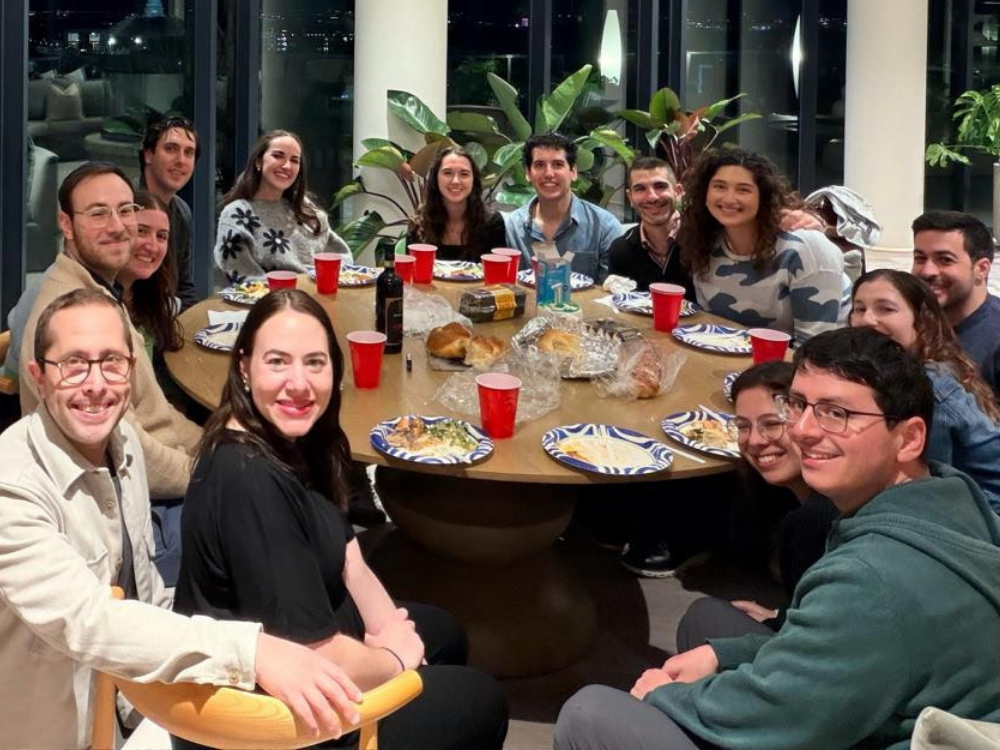
The focus of their next venture will be to grow the number of young adults participating in Shabbat dinners. We know from data and experience that Shabbat is one of the most effective levers of Jewish engagement. It is meaningful, accessible, and recurring. It is transformative in its own right and serves as a gateway to deeper connection. It is a ready-made touch point capable of meeting the post-October 7th interest among young Jews in stepping further into Jewish life.

We also know young people aren’t the only ones interested. Parents of young children, empty nesters, newcomers, and more are hungering for the comfort, structure, community, and spirituality of Shabbat. The group therefore plans to start with young adults as a target audience and expand from there.

I’m excited about this work because I am passionate about the outcome and moved to see a bedrock of our tradition become a key point of welcome and discovery. I also think it depicts what Federation is meant to do: leverage our strategic vantage point, establish forward-thinking partnerships, and bring our community closer while moving it forward.

The Shabbat dinner effort is just getting started. The goal in this first year is to increase participation among young adults by 10% as we learn how best to bring in more people. And core to this is that the partners have each other. They will enact a shared strategy and learn and iterate together, faster and with more precision than they could alone. They will set ever more significant and challenging goals as we collectively seek to transform the community. To me, this is what innovation and partnership—and Federation—are all about.

With more to come.

Related posts

Why this moment feels familiar Why this moment feels familiar
Why this moment feels familiar
As institutions increasingly single out Jews and demand ideological conformity, Jewish educators and communities face a difficult question: will the price of belonging become denying our identity? We must push back against antisemitism and protect the Jewish and universal values we have long fought to uphold.
read more

Reconsidering the “Wicked” Child

Reconsidering the “Wicked” Child

As we prepare for our family’s upcoming seder, I am thinking about not only the relatives and friends who will grace our table, but also those four allegorical children who are perennial guests: the chacham (wise) one, the rasha (wicked) one, the tam (simple) one, and the one who does know how to ask. It’s the rasha who I am most intrigued by this year. But I’d recast the moniker “wicked” child as the “skeptic” or “critic” or even “rebel.” As part of the Passover seder, we are instructed to entertain the questions of a child who doesn’t feel they are part of what’s taking place, and who may even choose to stand apart from it. “What does this service mean to you?” the critical child asks, and we answer the best we can. This always seemed like a sour note in the Passover program, but lately I’ve come to see the beauty in the exchange. How striking that one of our most sacred traditions insists we acknowledge skepticism.

Making Space for the Question

What if our role when it comes to the so-called rasha isn’t to scold them but to acknowledge and honor their questions? What if we came to see our cherished rituals—and indeed our people—as incomplete without those who criticize and doubt? We are not whole without those who push boundaries and challenge our assumptions and ingrained ways. How remarkable that our tradition does not cast aside this child, but rather provides them an invitation to our table year after year … and how remarkable that this child accepts the invitation and joins.

Federation’s flagship Jewish Community Leaders Program (JCLP) includes a visit to a megachurch in Maryland to learn about how they build communities of belonging. Our group was inspired to learn they didn’t define themselves by rigid red lines, while still holding a clear sense of their core values. Instead, they defined themselves by an ongoing relationship with a spiritual center. They considered anyone oriented toward a common set of principles as relevant and part of their flock. It’s got me wondering: in this post-October 7 landscape, how do we help shape our future by evolving our community’s relationship with boundaries? These are not easy questions, particularly in a moment when the need for clarity and certainty feels so real.

At Federation, we will continue engaging this question and find new ways to create space for the challenging voice, the uncomfortable question, the perspective that stretches our assumptions. After all, many of the shifts that now feel foundational—expanded roles for women, inclusion of LGBTQ Jews, the recognition of multiracial Jewish identity—were once at the edges of communal acceptance. They moved inward because passionate people pushed to widen the frame.

Our Community Leadership Council (CLC) has been using this year to listen to the broad voices of our community—nearly 200 people from 26 diverse groups—including those engaged in our traditional institutions, as well as people who have not affiliated, who have felt marginalized, or who have created their own communities to meet their unique needs. It’s critical to gather insights from all to help understand and shape our community priorities.

At the Same Table

In describing the four children at the seder, Rabbi Jonathan Sacks noted, “there is a message of hope in this family portrait. Though they disagree, they sit around the same table, telling the same story. Though they differ, they stay together. They are part of a single family… The Jewish people is an extended family. We argue, we differ, there are times when we are deeply divided. Yet we are part of the same story. We share the same memories. At difficult times we can count on one another. We feel one another’s pain. Out of this multiplicity of voices comes something none of us could achieve alone.”

Bringing the entirety of our community together across differences is a bold move. It’s clear that has been our work all along. The goal has never been to embrace uniform views. On the contrary, the thing we’re meant to embrace is each other, in all our messy, diverse, and divine glory.

With wishes for a happy and meaningful Passover,

Elisa

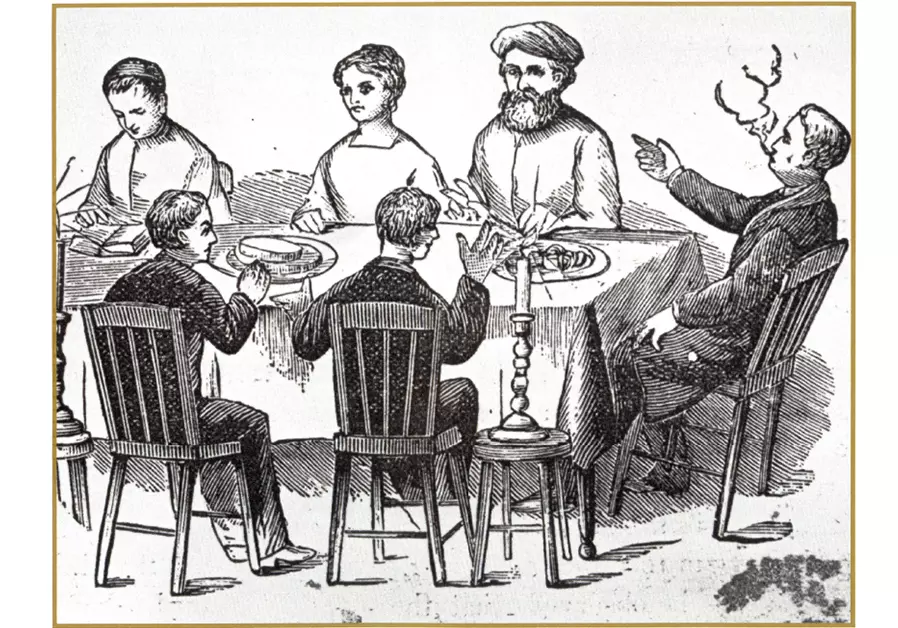
Credit: Chicago Haggadah, 1879, a historic American Jewish Passover Haggadah published in Chicago. It is a notable example of early American Jewish print culture, reflecting the growing Jewish community in Chicago in the post-Civil War era. Who do you see as the rasha?

Related posts

Why this moment feels familiar Why this moment feels familiar
Why this moment feels familiar
As institutions increasingly single out Jews and demand ideological conformity, Jewish educators and communities face a difficult question: will the price of belonging become denying our identity? We must push back against antisemitism and protect the Jewish and universal values we have long fought to uphold.
read more

Finding Comfort in Passover Traditions

Finding Comfort in Passover Traditions

In a time of uncertainty, the rituals of Passover offer something steady

My siblings and I held our Passover menu planning Zoom call earlier this week. I’m in charge of the brisket, among other things, and I’ll be making my mom’s recipe. No secret ingredients, no innovative twists. Just a tried-and true and beloved rendition. That, I suppose, is the unofficial theme of our Seder this year (though I may experiment with a new vegetarian soup).

Indeed, given all the volatility in the world, the thing I’m craving most from Passover is its sense of routine. For those of us who grew up with the holiday, the Passover Seder is, above all, familiar. How the Seder unfolds may vary from year to year, but the story, the food, the songs, and the traditions always combine to create a uniquely consistent touchpoint with family, Jewish identity, and peoplehood.

Passover also has a way of using the past to evoke new feelings of possibility. While the Haggadah stays consistent, the moment in which we live is continuously changing. In recounting our story, we may focus on new sections or have different reactions to readings or songs. We may uncover fresh sources of energy, clarity, and ingenuity, which we will need on the road ahead.

We have important work in front of us: to engage and connect with members of the Jewish community who are struggling right now, to be a steady partner for Israeli communities, to build strong, substantive, and joyful Jewish life, and to care for the people around us. And the first step to making it all happen starts by remembering who we are and the role we’re meant to play in the world.

I encourage you to gather some friends, invite someone new to the table, and connect once again to our story. In true Jewish fashion, it’s in connecting to our tradition and to each other that we’ll prepare ourselves to move forward.

Related posts

Why this moment feels familiar Why this moment feels familiar
Why this moment feels familiar
As institutions increasingly single out Jews and demand ideological conformity, Jewish educators and communities face a difficult question: will the price of belonging become denying our identity? We must push back against antisemitism and protect the Jewish and universal values we have long fought to uphold.
read more

Yom HaZikaron Community Event: Through the Camera

Yom HaZikaron Community Event: Through the Camera
Special Screening of “Alex’s Group” and Conversation with Director Yonatan Nir Join Pozez JCC, JCRC of Greater Washington, and JSSA for a meaningful community gathering in honor of Yom HaZikaron – Israel’s Memorial Day for Fallen Soldiers and Victims of Terror. The evening will feature a screening of the Israeli documentary “Alex’s Group,” followed by a conversation with the film’s director, Yonatan Nir, together with Rabbi Rachel Hersh from JSSA. The film follows eight Israelis from diverse backgrounds who participate in a year-long therapeutic photography group led by Israel Prize–winning photographer Alex Levac. Through powerful images and open conversations, the group explores the personal and collective impact of trauma on individuals, families, and communities. While rooted in the Israeli experience, the film raises universal questions about how people and societies cope with loss, trauma, support one another in times of hardship, and find paths toward healing, resilience, and hope. Following the screening, the director will share the story behind the film and reflect on trauma, community, and post-traumatic growth. Event Program: -Opening moment in honor of Yom HaZikaron -Opening remarks by director Yonatan Nir -Screening of “Alex’s Group” (60 min) -Reflections on trauma, community, and resilience with director Yonatan Nir, JSSA’s Rabbi Rachel Hersh, and the audience This program is free. RSVP required.

The Future Is Human

The Future Is Human

AI may shape the future, but connection, curiosity, and community will always define us.

Our thoughts are with West Bloomfield’s Temple Israel community after yesterday’s attack. We are breathing a sigh of relief that everyone remained safe, including students and staff at the temple’s preschool. We are immensely grateful to the security guards, police officers, and firefighters who put themselves in harm’s way and responded to the situation swiftly and effectively.  

The incident is a sad reminder of how important robust security measures are today. Through JShield, The Jewish Federation of Greater Washington’s community security initiative, we are continuing to work closely with law enforcement and Jewish institutions across our region to keep our community safe.

I noticed recently that AI was incorporated into a software I use to log my expenses…and it was pretty great. The program automatically filled in blanks, predicted categories, and made the whole upload process easier. I also used it to analyze quantitative and qualitative data, and it brought out ideas and themes that I had not noticed before. I can see why these tools are catching on. And yet, the rise of AI is not affecting our strategy here at Federation.

Even at the dawn of this radical new leap, we believe the future is human. In fact, at a time when AI is transforming everything from our emails to our state policies, I can’t help but notice it’s our humanness that’s gaining cachet.

Perhaps that’s why some banks are now advertising “human help” to attract new customers. Why Hermès commissioned hand-drawn graphics for their website. Or why Apple hired artists to create their new logo out of glass and colored lights. There’s something beautiful and inherently valuable about knowing a real person was involved in the work.

Of course, as Jews, we have always been wonderfully human. For sure, we know how to gather and find purpose and meaning with and among each other. We also learn by relishing in each other’s individual and sometimes unpredictable perspectives. Our texts are contradictory, our debates unique and far reaching. Though the bots may soon be able to mimic our thought patterns, it will be our organic curiosity, creativity, and empathy that will keep us whole.

As Robert Putnam writes in Bowling Alone (not the first time I’ve mentioned this work and not the last), “The single most common finding from a half century’s research on the correlates of life satisfaction, not only in the United States but around the world, is that happiness is best predicted by the breadth and depth of one’s social connections.”

We must continue coming together, in-person, to learn, celebrate, discuss, mourn, serve, or simply be. Doing so will have the dual effect of benefiting us individually and strengthening our entire community. It’s also how we grow. Community manages to both support and sustain us while also putting us in contact with the people who can challenge our assumptions and push us beyond our would-be bubbles. Shabbat dinners, text studies, trips, lectures and so on, will be that much more important in an age of online silos.

To that end, I want to hear from you: where and how do you seek human connection? What are the elements in your life keeping you grounded and engaged with others?

I’m all for innovation. The Jewish community must embrace and leverage cutting edge tools to our advantage. But it’s not lost on me that the more advanced our world becomes, the more we hunger for ancient wisdom. What a phenomenal opportunity we have to subvert the forces that automate and isolate and instead foster the connection humanity craves.

Related posts

Why this moment feels familiar Why this moment feels familiar
Why this moment feels familiar
As institutions increasingly single out Jews and demand ideological conformity, Jewish educators and communities face a difficult question: will the price of belonging become denying our identity? We must push back against antisemitism and protect the Jewish and universal values we have long fought to uphold.
read more