Open More Possibilities. Join a community of donors shaping the future of Jewish life.

Security Is an Ongoing Process, Not a One-Time Fix

Security Is an Ongoing Process, Not a One-Time Fix

Every week, I’m in conversation with local Jewish institutions—synagogues, schools, community centers—about what’s happening on the ground when it comes to security.

What I’m hearing is consistent: people are doing more, thinking differently, and responding to a landscape that continues to shift.

And it’s not easy.

Security is an ongoing process. It’s not a one-time fix, and definitely not a box you check and forget.

Many organizations have already changed their posture: adding personnel, revising protocols, tightening procedures. But most of these changes weren’t in the budget. Figuring out when and how to deploy security staff isn’t a simple call. It’s a conversation involving lay leaders, professional teams, congregants, and sometimes even elected officials.

There’s also the ongoing need to upgrade infrastructure, replacing aging cameras, updating access systems, and ensuring equipment is reliable and up to date. These aren’t theoretical concerns; they’re part of responsible, forward-looking planning. Federal funding, like the Department of Homeland Security’s (DHS) Nonprofit Security Grant Program (NSGP), can help. But the process takes time and bandwidth. That’s why JShield offers direct support throughout the grant process: from crafting strong applications to navigating post-award paperwork, so institutions can secure and use the resources they need.

Bandwidth is a real issue. I’ve worked with synagogues that simply didn’t have the staff time or technical knowledge to complete the post-award steps. Not because the need wasn’t there, but because the process is burdensome. That means important funding can go unused.

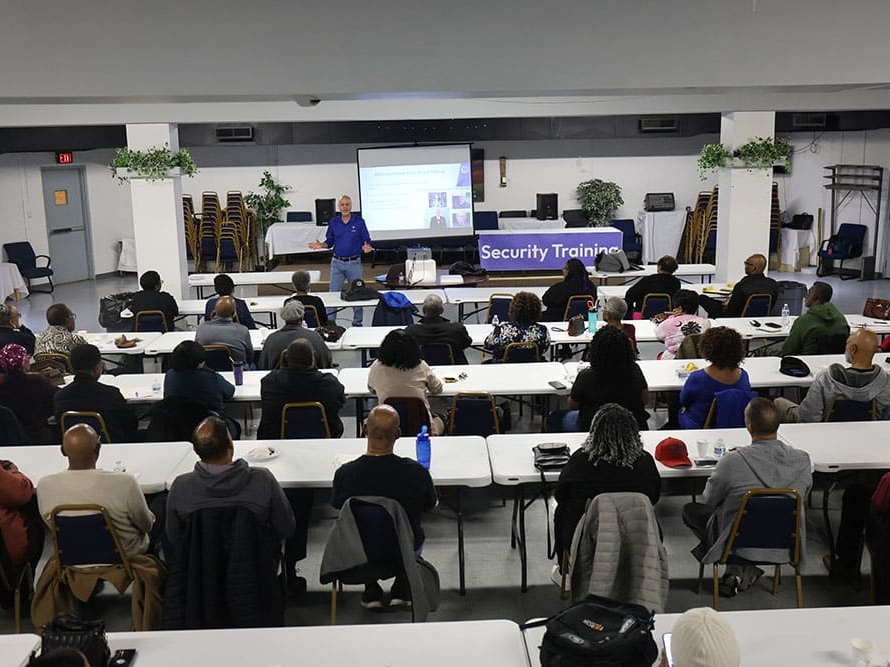
And still, security is so much more than equipment or guards. Preparedness is also about people—training staff, involving community members, and making sure emergency plans are reviewed, updated, and practiced. There’s still a real need to expand who’s engaged in this work. The more people who know what to do and how to respond, the stronger and more resilient we become as a community.

That’s what JShield is here for. We help institutions across Greater Washington build practical, sustainable security through training, planning, assessments, and hands-on support. And when funding or capacity isn’t there, we work to help close the gap.

Over the past few months, The Jewish Federation of Greater Washington has been reviewing dozens of security grant applications from local institutions—each one a reflection of real needs and responsible planning. That process has made it even clearer how much care, creativity, and commitment our community is bringing to this work. It’s also underscored how important it is that we continue to invest in security—not just as a reaction to threats, but as a shared responsibility for the future.

Ultimately, this isn’t just about what we’re protecting. It’s about ensuring that every Jewish institution has what it needs to remain open, connected, and strong.

If your organization needs support—at any stage—we’re here.

Learn more at www.shalomdc.org/security
 

Related posts

Why this moment feels familiar Why this moment feels familiar
Why this moment feels familiar
As institutions increasingly single out Jews and demand ideological conformity, Jewish educators and communities face a difficult question: will the price of belonging become denying our identity? We must push back against antisemitism and protect the Jewish and universal values we have long fought to uphold.
read more

We’re at our Heartbreak Hill. Let’s keep going—together.

We’re at our Heartbreak Hill. Let’s keep going—together.

There’s an infamous stretch of the Boston Marathon route called Heartbreak Hill. It sits between miles 20 and 21, a point at which the race weighs heavy on the runners, and the finish line is not yet in view. This stretch of road has been on my mind this week as our community finds itself rallying to meet another critical moment.

It’s hard to believe that after the horrors of October 7th and the war with Hamas, Israelis would once again be called upon to demonstrate their resilience, but that was the situation over the past two weeks as Israel sought to eliminate Iran’s nuclear program and Iran sought to inflict pain on the Israeli population. In response, Federation is accelerating funds and increasing support to provide Israelis with additional trauma care and mental health support, upgrade shelters for thousands of evacuees—including Jewish, Arab and Druze communities, and ensure specialized support for at-risk teens and displaced families. Learn more and donate.

Here at home, we are focused on security. This week, I joined a delegation of 400 Jewish leaders from around the country to urge Congress to adopt the Jewish Community’s Six-Point Policy on Security. The proposal calls for a comprehensive strategy to increase security for the Jewish community, including increasing Nonprofit Security Grant Program funding to $1 billion, expanding support for security personnel and local law enforcement at Jewish institutions, and enhancing FBI intelligence capabilities to address potential threats. It also emphasizes prosecuting antisemitic hate crimes and holding tech platforms accountable for spreading antisemitic content. Contact your representative.

This work is urgent, important, and deserving of your support. I also want to acknowledge that like those marathon runners rounding mile 20, it’s possible that the challenges over the past five years might be getting to us. Since 2020, we’ve been giving it our all to come together as a community and address immense needs locally, globally and in Israel. Through Covid, Ukraine, October 7, and beyond our collective efforts have been monumental and record breaking—and it’s understandable if we’re feeling more than a little fatigued.

The magic of Heartbreak Hill, however, is that while the marathon runners are exhausted, they are doing it with the largest crowds along the path of the race cheering them on. In our community’s case, we meet this moment by becoming both runner and cheerleader. We need everyone in our collective race. Our success depends not on a few but on all of us. And we need to remind each other we’re not alone on the course. We have one another, our allies, a purpose, and a Jewish story still unfolding.

We recognize that significant challenges remain. Our support for Israel continues to be vital. We must accelerate our investment in ensuring security at all Jewish institutions and events—and rise to meet the surge in interest and engagement we’re seeing across our community: to be together, to experience the richness of learning, celebration, and connection. After all, our goal continues to be to strengthen Jewish life and engage more people in the beauty of Judaism and the Jewish people.

We’ve been through a lot as a community, and there’s a lot more we’ll need to navigate together, but so long as we keep our vision for vibrant Jewish life front and center, there’s no hill we can’t climb.

Shabbat Shalom,

Gil

Related posts

Why this moment feels familiar Why this moment feels familiar
Why this moment feels familiar
As institutions increasingly single out Jews and demand ideological conformity, Jewish educators and communities face a difficult question: will the price of belonging become denying our identity? We must push back against antisemitism and protect the Jewish and universal values we have long fought to uphold.
read more

“We’re Not Changing Minds”: Inside a Raw, Real Conversation on Antisemitism in Greater Washington

“We’re Not Changing Minds”: Inside a Raw, Real Conversation on Antisemitism in Greater Washington

What does it mean to fight antisemitism in 2025?

If you think it’s just about calling out hate, think again.

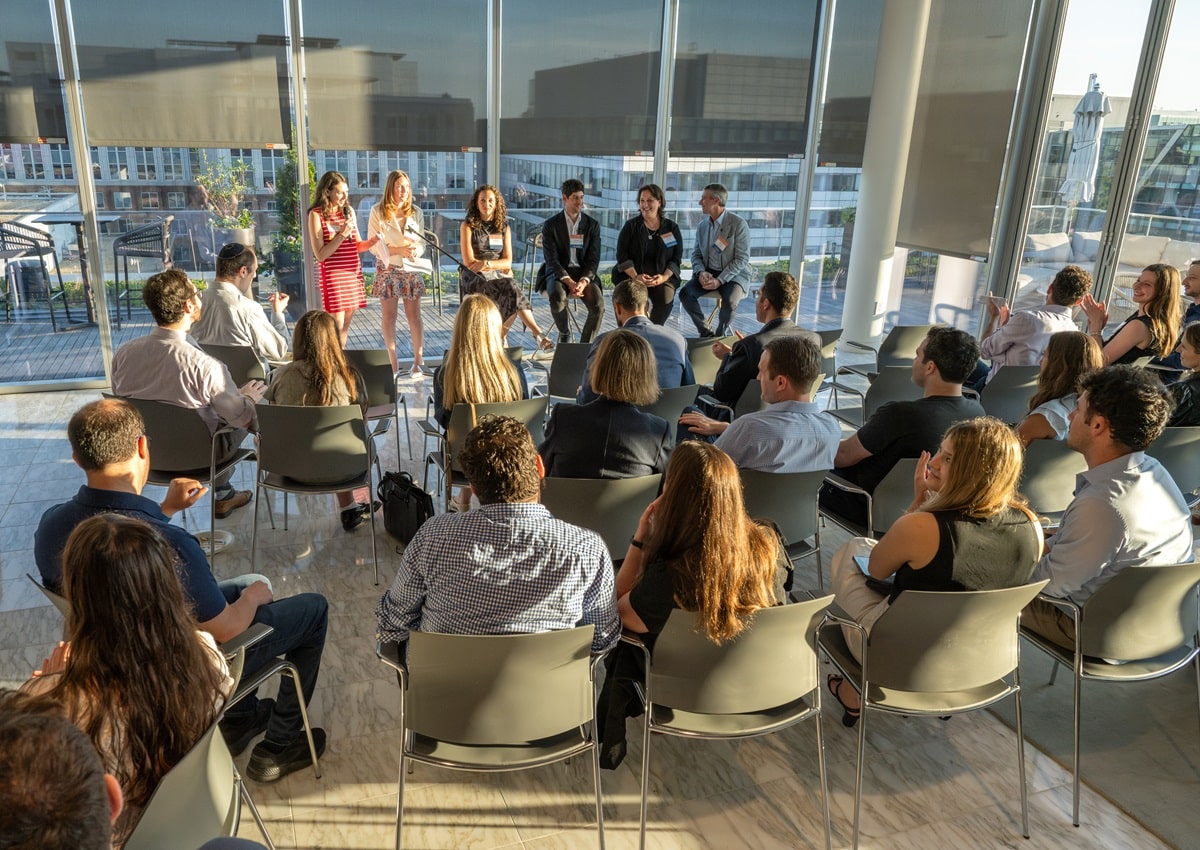
At a recent panel hosted by the Jewish Federation of Greater Washington’s Ben Gurion Society, three frontline leaders—
Rob Granader, Vicki Fishman, and Omer Oppenheim—sat down for a candid, sometimes uncomfortable, and deeply human conversation about what it really takes to protect and uplift Jewish life today.

And they didn’t hold back. The conversation opened with a sobering acknowledgment: antisemitism is not only rising, but it’s also becoming more complex to address.

“We’re losing the battle on social media.”

That’s how Rob Granader put it. A longtime advocate and Federation task force leader, Granader spoke with urgency about the cultural and political headwinds facing the Jewish community. “We’re in a mode in this world where we’re not changing our minds,” he said. “So do you go after your foes—or do you focus on strengthening your friends?”

It’s a question that doesn’t have easy answers. But it’s one that this panel wrestled with head-on.

Omer Oppenheim, Director of Government Relations at Jewish Federations of North America, pointed to broader communal division as a critical barrier: “Half the Jewish community thinks the problem is antisemitism on the right, and the other half thinks it’s on the left. If we can’t agree on what the problem is, how can we expect others to get on the same page?”

The Hidden Frontlines: Schools, City Councils, and Quiet Wins

While many headlines today focus on college campuses, Vicki Fishman, Director of Virginia Government and Community Relations at the Jewish Community Relations Council (JCRC), pointed to a quieter, more insidious battleground: K–12 schools. “The problem may not be antisemitism itself—it might be bad teaching,” she explained. “And when you have a good policy but a bad teacher, you still end up with antisemitic outcomes.”

She also shared a behind-the-scenes win in Alexandria, Virginia, where quiet advocacy helped stop a BDS resolution before it could gain traction. “To hear from someone who’s not a friend of Israel that there’s no appetite for this—it gave me hope.”

The Power of Relationships

A recurring theme throughout the evening was the importance of relationships—especially when navigating difficult conversations. Whether it’s educating a local official about the implications of invoking antisemitic tropes or deciding when to call out versus call in, the panelists emphasized nuance and persistence.

Fishman shared a story about a local politician who used problematic language on national television. “We got him on the phone and talked to him about what the problem was… and he stopped making that reference.” These behind-the-scenes efforts, while not always visible, are essential to long-term change.

Hope in Action

Despite the challenges, the panelists shared what gives them hope. Granader spoke passionately about the younger generation: “Post October 7, there’s been so much energy… People are showing up and being resolute about being Jewish in a way that is just so encouraging.”

Oppenheim, who works on Capitol Hill often, added, “Both parties care about combating antisemitism… Maybe now is not the right time, but in three months, six months—however long it takes—it’ll be the right time to make meaningful change.”

“They’re lions.”

That’s how Granader described the younger generation of Jewish students stepping up in the wake of October 7. “They’re resolute. They’re showing up. And they’re not afraid to be visibly, proudly Jewish.”

It’s a sentiment echoed by Oppenheim: “Both parties care about combating antisemitism,” he said. “Maybe now isn’t the moment for big change—but that moment is coming.”

From Conversation to Action – What YOU Can Do

Our esteemed panel didn’t mince words. “Live Jewishly in whatever way you can, and don’t be shy about it,” Fishman challenged, recounting how wearing a yellow pin or a dog tag necklace can often spark conversation.

Other advice from the panel included:

Responding to action alerts and contacting your members of Congress is one of the most direct ways to make your voice heard and support policies that combat antisemitism.

Stay informed by subscribing to newsletters like those from the Jewish Community Relations Council (JCRC) and Jewish Insider. Awareness is a powerful first step toward action.

Get involved in advocacy days hosted by your local and state legislatures. Showing up in person demonstrates the strength and visibility of our community.

When you’re invited to join a task force or working group, say yes. Your voice and perspective matter, and your involvement can shape meaningful outcomes.

Live Jewishly—and do so openly. Everyday moments, from casual conversations to public expressions of identity, can become powerful opportunities for education and connection.

Consider hosting gatherings like Shabbat dinners. These informal settings allow others to experience Jewish life in an authentic, welcoming, and non-confrontational way.

Keep in mind that what may seem obvious to you might be unfamiliar to others. Be ready to explain Jewish history, culture, and experiences with patience and clarity.

And finally, as Rob Granader said so well: “Say ‘yes’ when Federation calls!”

Related posts

Why this moment feels familiar Why this moment feels familiar
Why this moment feels familiar
As institutions increasingly single out Jews and demand ideological conformity, Jewish educators and communities face a difficult question: will the price of belonging become denying our identity? We must push back against antisemitism and protect the Jewish and universal values we have long fought to uphold.
read more

We Grieve Together. We Stand Together

We Grieve Together. We Stand Together

Last night, two young members of our community, Sarah Milgrim and Yaron Lischinsky, were murdered in an antisemitic attack in Washington, DC.

They were peacebuilders—deeply committed to fostering understanding, repairing divides, and creating a more just and compassionate world. Sarah was a beloved member of our extended Federation family, known personally by several on our team. Yaron was planning on proposing to Sarah. Their life together was just beginning to take shape.

And it was stolen by hate.

We grieve. We rage. We feel afraid.

It is in our shared pain and the deep connection we find in one another—in our Jewish community—that we begin to heal.

We are in close contact with local and federal law enforcement. Our partners in law enforcement are answering the call to increase presence around Jewish institutions. Our JShield security team is on high alert and working around the clock to protect our community.

The Jewish community of Greater Washington is strong. We stand in solidarity in our commitment to combat hate.

We are shaken—but we are not alone. And we will move forward—together.

May their memories be for a blessing—and a source of strength. 

With broken hearts and unbreakable resolve,

Robin & Gil

Robin Hettleman Weinberg
President, Jewish Federation of Greater Washington

Gil Preuss
CEO, Jewish Federation of Greater Washington

Photo Credit: The New York Times courtesy of the Milgrim Family

Related posts

Why this moment feels familiar Why this moment feels familiar
Why this moment feels familiar
As institutions increasingly single out Jews and demand ideological conformity, Jewish educators and communities face a difficult question: will the price of belonging become denying our identity? We must push back against antisemitism and protect the Jewish and universal values we have long fought to uphold.
read more

Security Is a Team Sport: Building a Culture of Collective Responsibility

Security Is a Team Sport: Building a Culture of Collective Responsibility

“Security starts with us in the community.”

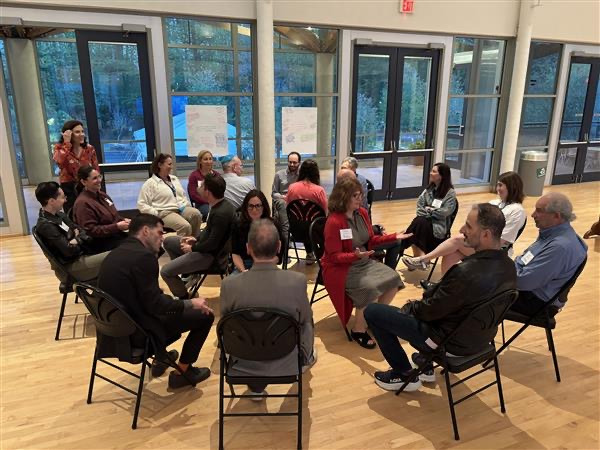
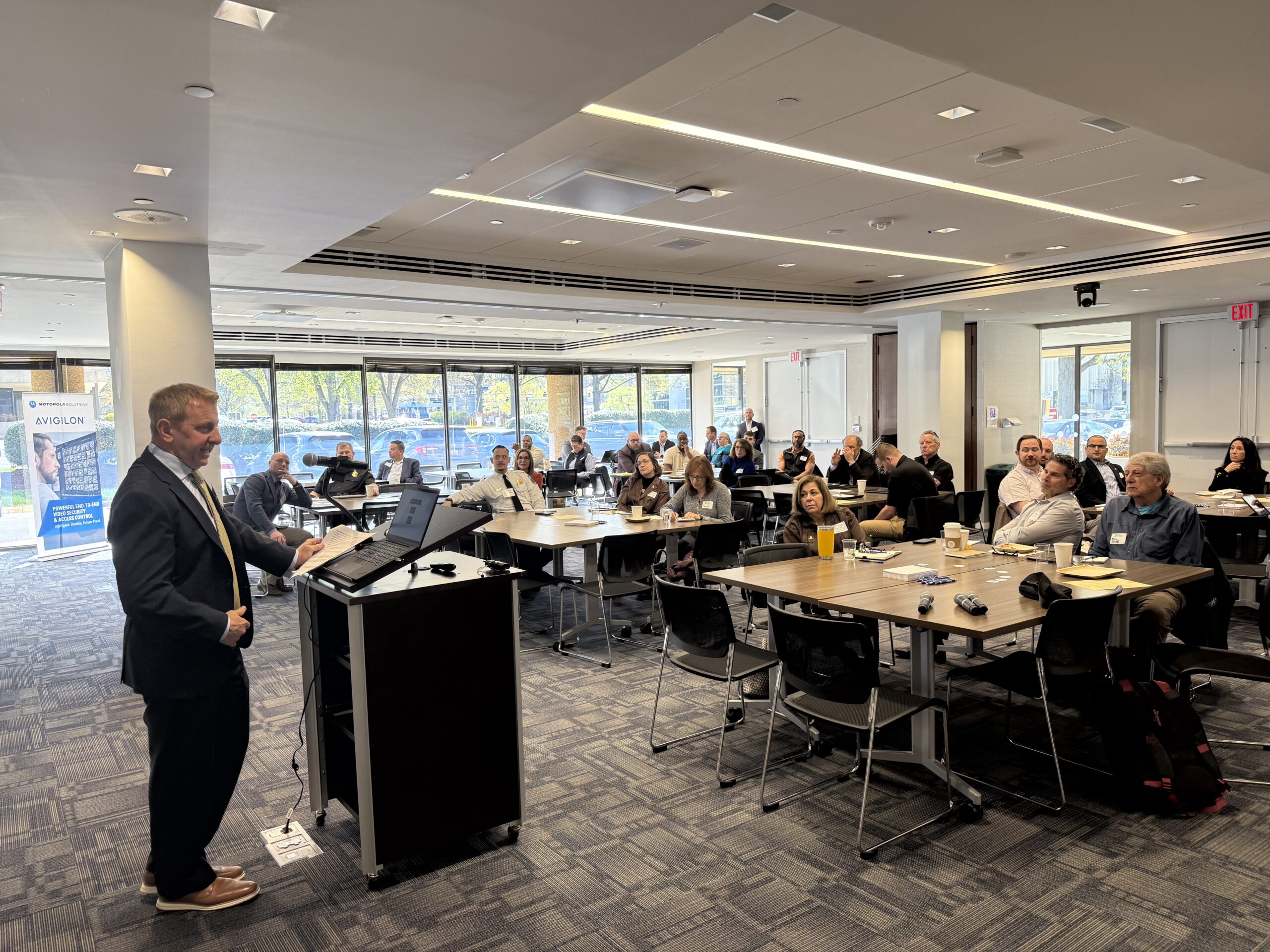
This was the message delivered by Captain Ian Clark of the Montgomery County Police Department to more than 50 attendees from across the DMV at an all-day summit on April 8. Formed in 2023, JShield is the community security service organized by and housed within the Jewish Federation of Greater Washington. The theme that prevention of threats to Jewish institutions and members of the community is not a duty that can be solely delegated to “the professionals” or hiring of security guards for events but requires, among other things, situational awareness, preparation and planning, communication and development of strong relationships with local and federal law enforcement and experts in the security space.

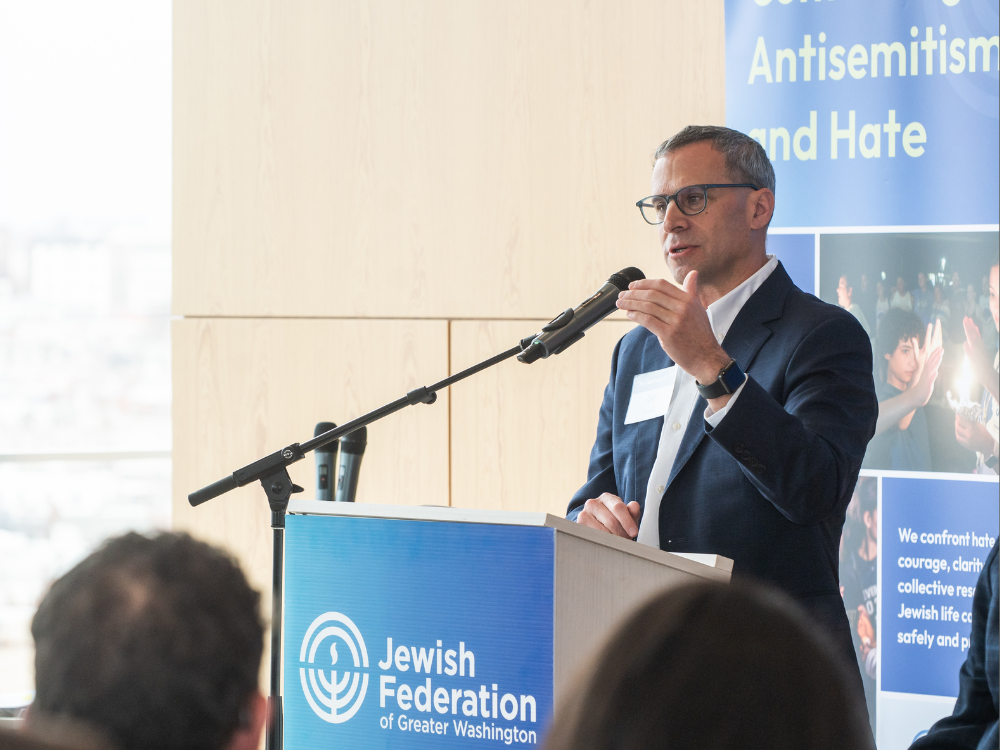
In his keynote address, former Department of Homeland Security Secretary Michael Chertoff shared insights that resonated with participants, outlining several high-level factors contributing to the increase in threats to the Jewish Community. He began by explaining the buildup of stress within the U.S. over the last few decades. He identified the stress as developing from the 2008 recession, the COVID lockdown, foreign policy issues, tariffs, declining confidence in where the U.S. stands in the global landscape, and domestic terrorist attacks. Concurrently, with the increase in stress comes a heightened sense of threat and uncertainty and, subsequently, a reduction in personal inhibitions. He closed by emphasizing the importance of developing a culture of security in communities and that security is a team sport.

Rusty Rosenthal, the Executive Director of JShield, began his remarks by echoing this sentiment–emphasizing that JShield does not and was never intended to work in isolation. He described the partnerships that JShield, as a new agency, has forged with similar organizations focused on the Jewish community, such as Secure Community Network, ADL, JCRC, and other Federations’ security departments, federal and local law enforcement agencies.

The presentations by Rosenthal and his team focused on the extensive expertise that each brings to the improvement of the security posture in the Jewish community.

Laura Katzif, Northern Virginia Security Advisor and Security Director at Pozez JCC highlighted her background in emergency preparedness—and the importance of understanding that threats to well-being go beyond active shooter to extreme weather, domestic feuds within families that are sometimes acted out in schools, and other dangers. Her perspective involves identifying risks in an organization and how to mitigate them. She identified the emergency preparedness process and the types of plans that might be needed. She characterized much of the approach of the JShield team as “teaching adaptability” because real-life conflict doesn’t follow a script.

Shay HaLevi, Deputy Director of Community Security, described the human reaction to threats and how he brings his training to individuals within an organization on a human level. That training ranges from breathing techniques for remaining calm to how a greeter may best approach an unknown person in an organizational setting.

Adam Bronstone, Grants Specialist, highlighted the assistance JShield provides in assisting organizations effectively apply for security grants. He also provided insight into the confusion about the current commitment to funding such grants in the future.

Ty Mooney, JShield Intelligence Analyst, explained the importance of reporting each incident on JShield’s Incident Reporting Form. That form allows JShield and its partners to receive information simultaneously. Additionally, JShield is working to refine the reporting forms to distill more actionable data for our region.

A summit highlight was a panel led by representatives from the Fairfax County, Montgomery County, and D.C. Metropolitan Police Departments. The consistent message they conveyed was to report any and all incidents, both big and small. They also took some time to explain the distinction between a hate bias incident versus a possible hate crime and took questions from attendees.

The summit also included a discussion of the relevance and possible continued threat posed to the United States by Hamas, Hezbollah, and Iran. One panelist emphasized that the one common element among both foreign and domestic terrorists and extremists on both the right and the left is antisemitism.

Participants and panelists applauded the summit not just as an informative session but as a convening of all those in the community who either study, work to prevent, or want to forestall terrorism and other threats to the Jewish community.

JShield plans to hold the summit annually as it continues to increase its impact on the community and its awareness and participation in its own collective security.

Related posts

Why this moment feels familiar Why this moment feels familiar
Why this moment feels familiar
As institutions increasingly single out Jews and demand ideological conformity, Jewish educators and communities face a difficult question: will the price of belonging become denying our identity? We must push back against antisemitism and protect the Jewish and universal values we have long fought to uphold.
read more