Open More Possibilities. Join a community of donors shaping the future of Jewish life.

Meet Vanessa Sax

Meet Vanessa Sax

Bringing people and organizations together across Jewish Northern Virginia.

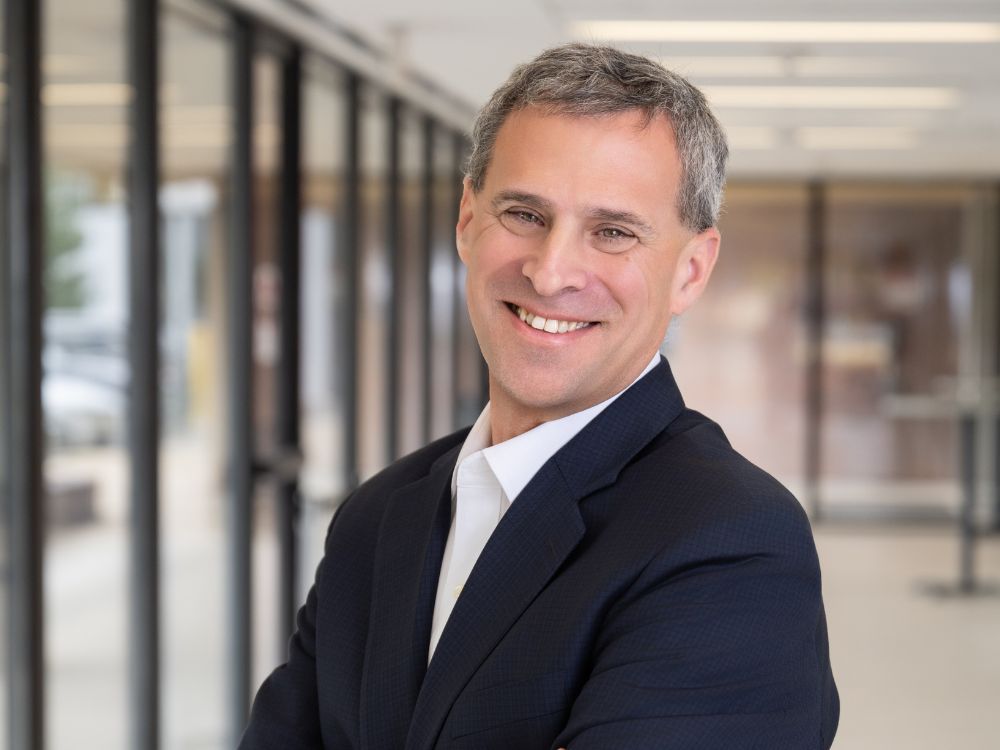
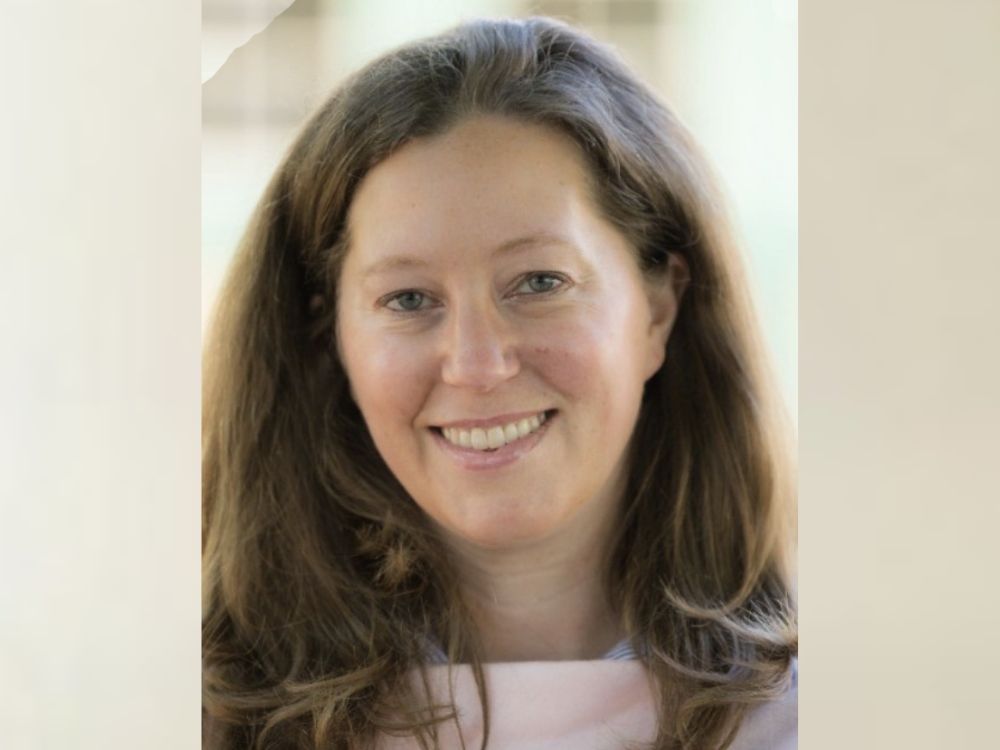
We’re excited to introduce Vanessa Sax, who joined The Jewish Federation of Greater Washington in December to focus on strategy and community building in Northern Virginia.

A former Northern Virginia resident herself, she’s excited to reconnect with the community she came to know well. In her role, she’ll work with partners across Northern Virginia’s Jewish community to strengthen relationships, expand leadership opportunities, and build on the strong momentum already underway across the region.

“As someone who lived in Northern Virginia for seven years, I understand firsthand the opportunities this community has to offer.” Vanessa shared, “My goal is to continue strengthening a sense of connection and belonging for Jews living in Northern Virginia, both in their micro-communities and across the broader Northern Virginia Jewish community.”

Vanessa brings a strong background in community building. She was the first employee of Sixth & I Historic Synagogue, helping establish it as a hub for arts, ideas, and Jewish life in Washington, DC. She later held a leadership role at Zuckerman Gravely Management, focusing on mentorship, professional development, and complex negotiations shaping several DC real estate markets.

Her work reflects a deep commitment to building relationships, strengthening community, and helping shape the next chapter of Jewish Northern Virginia.

Federation CEO Gil shared: “One of the key takeaways from our Community Pulse Survey was the desire for greater engagement in Jewish life and community in Northern Virginia. Through Vanessa’s vision and community-building skills, we can achieve exactly that.”

Curious about our ongoing work in Northern Virginia?

Learn more

Related posts

Why this moment feels familiar Why this moment feels familiar
Why this moment feels familiar
As institutions increasingly single out Jews and demand ideological conformity, Jewish educators and communities face a difficult question: will the price of belonging become denying our identity? We must push back against antisemitism and protect the Jewish and universal values we have long fought to uphold.
read more

Bagels and Business with Randy Altschuler

Bagels and Business with Randy Altschuler
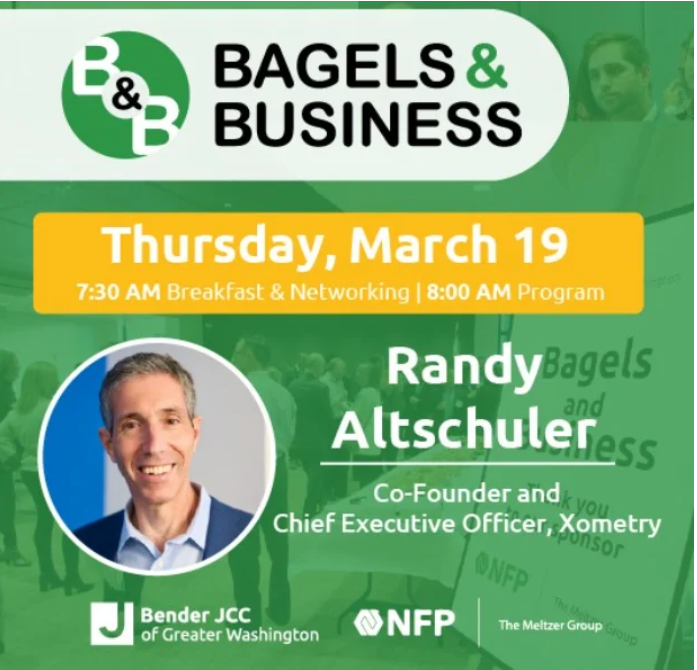
Bagels & Business is an opportunity to network and hear how local business leaders attain success in their fields. Bagels & Business on Thursday, March 19th features Randy Altschuler, CEO and co-founder of Xometry, the global AI digital marketplace that is rapidly transforming manufacturing and helping companies create resilient supply chains. As an expert in the application of Artificial Intelligence, Randy also serves on the Board of Directors for OpenLane (NYSE: KAR), a leading operator of digital marketplaces for wholesale used vehicles.

How should Jewish organizations respond to the growing criticism of Israel from inside our communities?

How should Jewish organizations respond to the growing criticism of Israel from inside our communities?

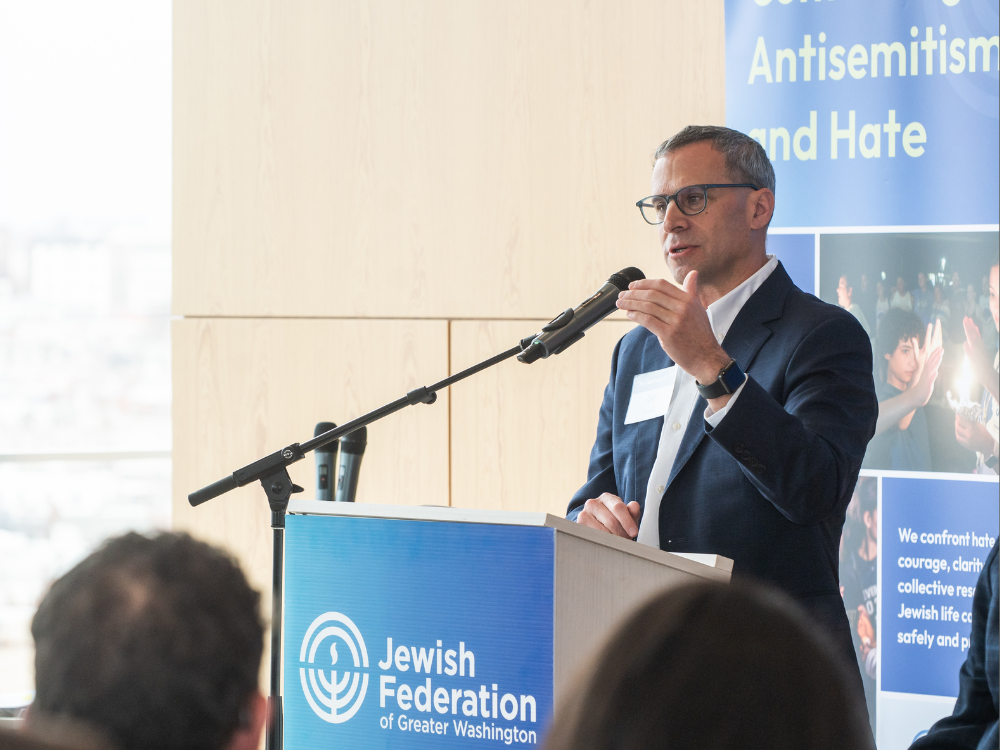
Gil Preuss, Chief Executive Officer

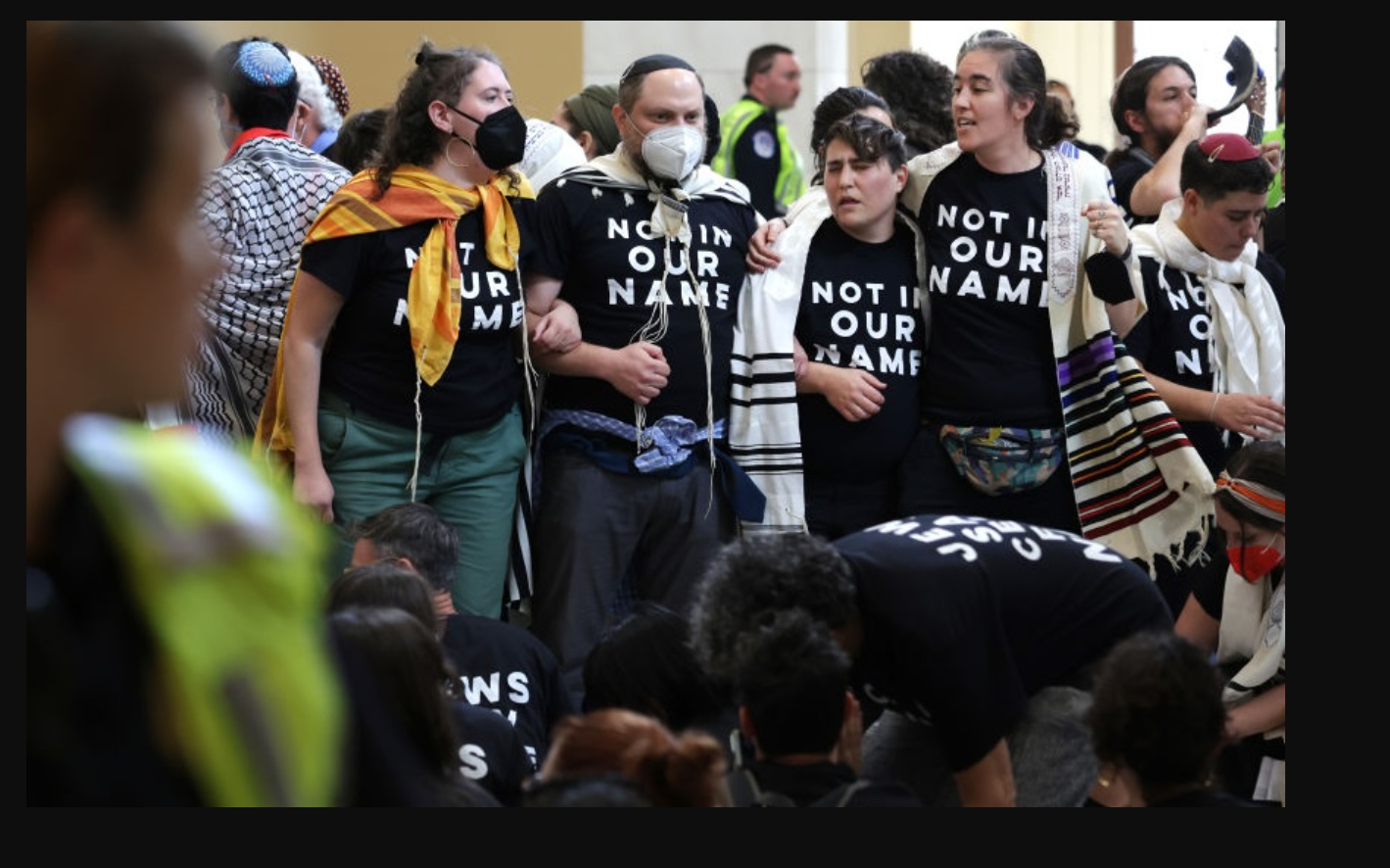
Surveys released last week by the Jewish Federations of North America and Combined Jewish Philanthropies of Greater Boston are among the first to report Jewish views about Israel since early in the Gaza war. They are also among the first in a very long time that ask Jewish respondents whether they identify as Zionists, and what they mean by the term. The findings have important implications for how Jewish communal institutions relate to Israel and the rapidly expanding spectrum of opinion inside the American Jewish community.

Photo Credit: Alex Wong/Getty Images

Read the full eJewishPhilanthropy (eJP) article

Related posts

Why this moment feels familiar Why this moment feels familiar
Why this moment feels familiar
As institutions increasingly single out Jews and demand ideological conformity, Jewish educators and communities face a difficult question: will the price of belonging become denying our identity? We must push back against antisemitism and protect the Jewish and universal values we have long fought to uphold.
read more

From Fragmentation to Framework: A Regional Leadership Conversation

From Fragmentation to Framework: A Regional Leadership Conversation

How We Hold Complexity Shapes What Community Feels Like

Across our community, leaders are navigating real tensions: belonging and boundaries, safety and responsibility, clarity and pluralism. These aren’t abstract debates. They shape what Jewish life feels like in our synagogues, agencies, schools, and communal spaces every single day.

How leaders hold that complexity determines whether our community feels safe or splintered, principled or reactive, connected or alone.

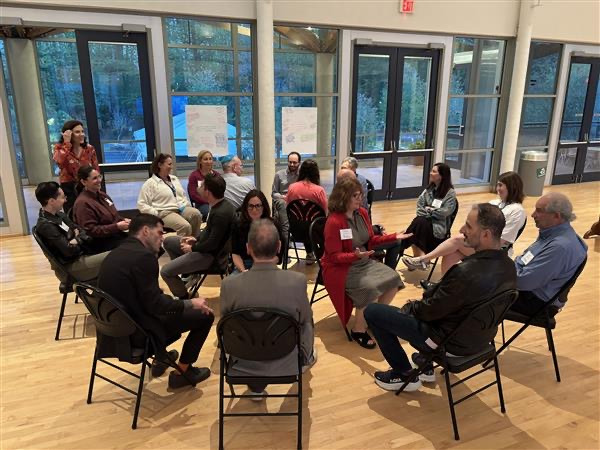
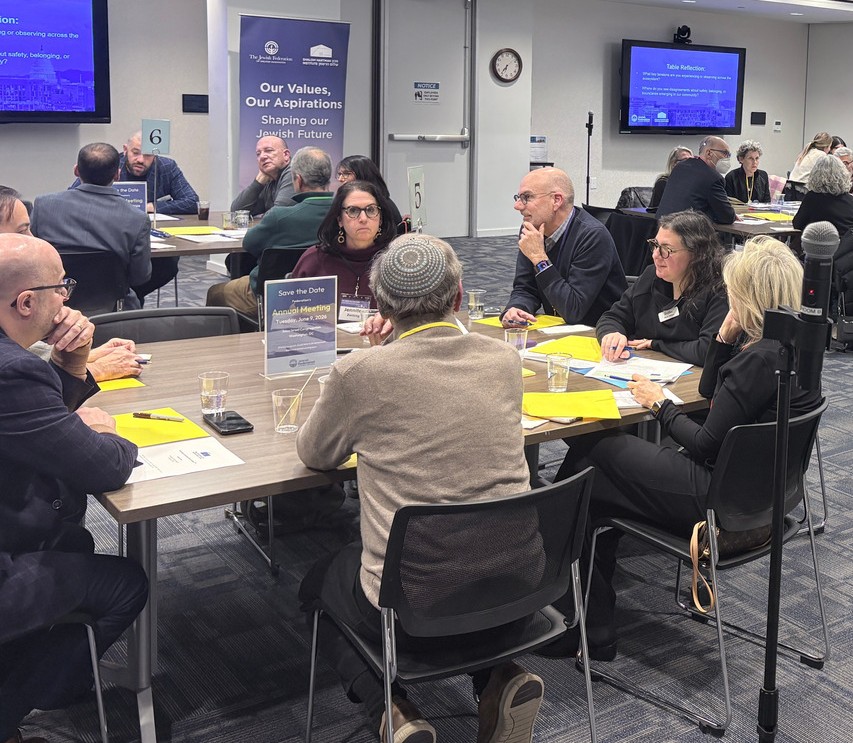
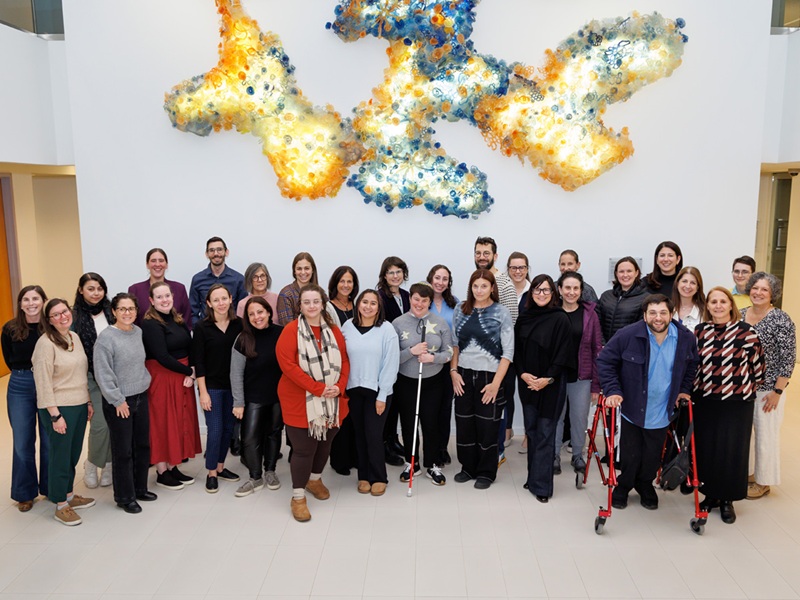
That’s why The Jewish Federation of Greater Washington continues to partner with the Shalom Hartman Institute as part of a sustained investment in Jewish leadership. Together, we equip leaders across our region with the shared language and frameworks needed to navigate complex communal challenges. Earlier this month, that partnership convened senior and emerging leaders for a candid conversation about what this moment requires of a vibrant Jewish community.

More than 60 leaders participated across the full spectrum of Jewish Greater Washington: congregational rabbis, synagogue presidents, agency executives, foundation trustees, long-time board members, and rising lay leaders. They represented institutions across denominations, missions, and generations—many of whom do not typically sit at the same tables.

Bringing this breadth of leadership into one room reflects Federation’s unique role and its investment in the relationships and common language leaders need to respond to difference with intention instead of reaction.

Shared Language in a Strained Moment

Our community includes many organizations, identities, ideologies, and expressions of Jewish belonging. Honoring that breadth and creating space where it can exist in conversation rather than collision is central to our mission as a community builder.

The goal was not uniformity, but shared understanding.

To anchor the conversation, we drew on the “Our Fragile Tents” framework developed and presented by Yehuda Kurtzer, President of the Shalom Hartman Institute. The framework offered language to help leaders name the fractures, fears, and ideological divides shaping Jewish life today, allowing the conversation to go deeper, faster.

Leaders began at tables, speaking openly about the tensions inside their own institutions. Several distinctions proved especially clarifying: the difference between communities of kinship and communities of consent; the ways participation, interest, and national identity shape expectations; and the recognition that not every community can or should operate by the same norms.

Leaders spoke candidly about what they are holding:

“Understanding the boundaries necessary in my community that may not be necessary in the larger Jewish community was eye-opening.”

“The varying definitions of community and the norms that guide them will directly shape how I lead.”

As leaders explored one another’s reflections, it became clear that no single institution is holding this moment alone.

No one left with every tension resolved. Agreement was never the objective. The goal was building the relationships and shared understanding that allow our community to move through strain without fracturing.

Strengthening the Ecosystem

The conversation underscored how much this moment requires coordination and clarity across our community. No single synagogue, agency, or leadership body can bring this breadth of voices together across ideologies and generations.

By convening leaders in serious dialogue, Federation strengthens the relationships that help our community stay steady under pressure. Without shared language and cross-institutional relationships, leaders are left to navigate strain in isolation. Bringing institutions together ensures those tensions are held collectively rather than alone.

When leaders share common language and trust one another, institutions are better positioned to respond with clarity rather than escalation, with steadiness rather than isolation. The experience of Jewish life across our region—how safe it feels, how welcoming it feels, how principled it feels—is shaped by those choices.

A vibrant Jewish community depends on leaders who can hold complexity with clarity, speak honestly across difference, and remain committed to the whole, especially when it’s hard.

Strengthening that leadership capacity is central to Federation’s mission and essential to the long-term resilience of Jewish life in Greater Washington.

This convening was one step. Federation is now reviewing and synthesizing the reflections shared that evening to guide our next steps, so leaders across our community are better equipped for what this moment demands.


About the Partnership

For eight years, Federation’s partnership with the Shalom Hartman Institute has been rooted in a shared commitment to strengthening Jewish leadership and deepening relationships across our diverse community. Together, we have built a space for learning, reflection, and growth—a place where leaders wrestle with big questions, develop the clarity and courage needed to navigate complex times, and explore how to hold our community’s multitude of perspectives when the stakes feel high while communicating across differences in service of a stronger, more connected Greater Washington Jewish community.

Federation’s leadership programs help emerging and seasoned leaders alike grow their skills, deepen Jewish learning, and lead with purpose.
Explore more

Related posts

Why this moment feels familiar Why this moment feels familiar
Why this moment feels familiar
As institutions increasingly single out Jews and demand ideological conformity, Jewish educators and communities face a difficult question: will the price of belonging become denying our identity? We must push back against antisemitism and protect the Jewish and universal values we have long fought to uphold.
read more

Strengthening Jewish Life While Confronting Hate

Strengthening Jewish Life While Confronting Hate

Earlier this month, Bret Stephens delivered the State of World Jewry address at 92NY. His remarks caught people’s attention. Stephens argued the Jewish community should shift energy and resources away from fighting antisemitism and instead double down on investing in Jewish education and engagement. As he put it, “Jew hatred is the product of a psychological reflex, and that kind of reflex can never be educated out of existence, even if, for a time, it may be sublimated or shamed into quiescence.”

I agree and disagree with his main points (and find fault with some of the additional opinions he presented). I agree with Stephens that now is a moment for Jewish revival, that helping more people explore and connect with Jewish ideas, practices, and peoplehood will be what shapes a vibrant Jewish future. At Federation, we are committed to working across our community to invest in and scale substantive, meaningful Jewish experiences—like summer camp, trips to Israel, learning and discussion opportunities, day school, and more—so that anyone who is interested has the chance to dig in and discover the joy of Jewish life.

But it would be irresponsible to ignore the work of countering antisemitism. We can and should be leaders in holding individuals and institutions to account and helping people understand antisemitism as a serious issue. Our work to build relationships, alliances, and understanding is not futile. If there are things we can do to mitigate hateful behavior, we should do them.

Admittedly, we may not be able to change the minds of the Carlsons and the Owenses of the world. But we can help shape programming and guidelines for schools, educate and engage leaders, work with teenagers before they go to college, and build bridges with other minority and interfaith communities, among other efforts. Not only does this work help address antisemitism, but it may also change the lived experiences of many in the Jewish community.

Stephens muses, “There is nothing Jews can do to cure the Jew haters of their hate. They can hire their own psychiatrists.” And he may be right. We are not responsible for people’s hateful and misguided beliefs. But perhaps I have a bit more faith than Stephens in our ability to multitask. I am confident we can build vibrant Jewish life while protecting it and being there for the students and teachers and everyday people who are coming face to face with antisemitism on a regular basis.

As Jews, we don’t ignore, we tackle. Today, that means being part of the sacred, collective efforts to stop hate before it starts while simultaneously strengthening Jewish identity, pride, and joy for the future.

Related posts

Why this moment feels familiar Why this moment feels familiar
Why this moment feels familiar
As institutions increasingly single out Jews and demand ideological conformity, Jewish educators and communities face a difficult question: will the price of belonging become denying our identity? We must push back against antisemitism and protect the Jewish and universal values we have long fought to uphold.
read more

From Intention to Action: What JDAIM Is Teaching Our Community About Inclusion

From Intention to Action: What JDAIM Is Teaching Our Community About Inclusion

Jewish Disability Awareness, Acceptance, and Inclusion Month (JDAIM) invites us each year to ask a hard but necessary question: who feels fully welcomed into Jewish communal life and who still encounters barriers, even when our intentions are good?

When values outpace systems

In recent years, our community has begun to confront an uncomfortable truth., While many Jewish organizations deeply value inclusion, good intentions alone are not enough to create access, especially for young adults with disabilities. Inclusion requires skills, systems, and sustained commitment.

Learning what inclusion requires

That realization came into focus in 2023, when we partnered with Matan, a national leader in disability inclusion in Jewish life, to conduct a communitywide assessment. Matan works with Jewish organizations across North America to build the tools and confidence needed to create truly inclusive communities. One finding stood out clearly: Jewish professionals wanted to be inclusive of people with disabilities, particularly young adults, but many did not know how to translate that desire into practice.

That insight became a turning point.

Turning learning into action

In response, we launched the Lieberman Fellowship for Jewish Organizations Serving Young Adults, a yearlong cohort learning experience (2024–2025) led by Matan. The fellowship focused on moving organizations from intention to implementation, helping teams rethink policies, practices, and culture through an inclusion lens. At the conclusion of the learning year, participating organizations, along with one additional congregation, received grants to turn learning into action through concrete inclusion projects.

This JDAIM, we pause to take stock of progress at the projects’ midpoint. What we found was encouraging—not because the work was finished, but because it is becoming more thoughtful, more systematic, and more honest.

What’s changing across our community

Across the region, organizations are shifting away from ad hoc accommodations toward intentional, systems-based approaches to access. Some are redesigning how people request accommodations or improving digital and physical accessibility. Others are investing in staff training, inclusive employment pathways, peer support, or relationship-centered spaces like Shabbat tables and social programming. Again and again, we are seeing that small but deliberate changes—clear communication, accessible tools, sensory supports—can dramatically expand participation and belonging.

That progress has not come without challenges. Many teams underestimated how long it would take to coordinate across departments and partners. Staff transitions and technology limitations slowed timelines. In some cases, organizations intentionally slowed decision-making to ensure solutions would be sustainable and meaningful rather than rushed. These challenges are real, but they also reflect a growing sophistication in how our community understands inclusion: not as a quick fix, but as long-term work that must be built to last.

Inclusion, in action

Each organization is approaching inclusion differently, shaped by its mission, audience, and capacity. Together, these efforts reflect a shared shift toward more intentional and sustainable access.

Inclusive employment and workforce pathways

  • Adas Israel is piloting a supported employment program for young adults with intellectual and developmental disabilities, envisioning a multi-year pathway to meaningful, paid work and vocational growth.

Accessible spaces, programs, and experiences

  • Bender JCC is investing in accessible fitness equipment and assistive listening devices, alongside hosting sensory-friendly cultural programming.
  • Edlavitch DCJCC repaired hazardous entryways and launched a visibility campaign highlighting accessibility across programs.

Digital communications access

  • GatherDC transformed its community calendar to include accessibility information, mobile usability, and screen-reader tools, changing how thousands of young adults find Jewish experiences.

Peer support, community design, and belonging

  • B’nai Israel Congregation is pairing a young adult inclusion peer program with accessible communication training for staff and lay leaders.
  • OneTable supported hosts creating intentionally inclusive Shabbat tables, including spaces centered for autistic and Deaf/ASL communities.

Data-informed systems and long-term engagement

  • Pozez JCC is building data-informed systems to track and strengthen engagement of neurodiverse young adults over time.

Training, capacity-building, and organizational practice

  • Mem Global distributed social inclusion kits, launched accessibility microgrants, and is preparing to hire a Camper Care Director to support emotional and behavioral needs at immersive experiences.
  • Sixth & I is preparing comprehensive social inclusion trainings for staff and volunteers serving young adults in less-structured Jewish spaces.
  • Temple Rodef Shalom standardized its accommodation request process, shifting from informal responses to clear, transparent, and equitable access systems.

The lesson we’re carrying forward

Perhaps the most important lesson emerging from this work: inclusion is grounded in relationships, strengthened through training, and sustained by systems, not by individuals alone. When access is embedded into how organizations operate, it becomes part of communal life.

Beyond JDAIM

This JDAIM, we are not just raising awareness. We are witnessing growth—imperfect, iterative, and deeply committed. Our community is learning what it truly means to create Jewish spaces where young adults with disabilities are not merely accommodated, but genuinely welcomed, supported, and able to belong.

Learn more

Related posts

Why this moment feels familiar Why this moment feels familiar
Why this moment feels familiar
As institutions increasingly single out Jews and demand ideological conformity, Jewish educators and communities face a difficult question: will the price of belonging become denying our identity? We must push back against antisemitism and protect the Jewish and universal values we have long fought to uphold.
read more

The Network’s Spring Real Estate Breakfast: Jewish Leadership and the Revitalization of Georgetown

The Network’s Spring Real Estate Breakfast: Jewish Leadership and the Revitalization of Georgetown
The Jewish Federation of Greater Washington’s Real Estate Division invites you to the 2026 Spring Real Estate Breakfast for an exclusive morning of networking and engaging conversation with leaders shaping the future of Georgetown. This program will explore the strategic revitalization of Georgetown through the perspective of local business owners and prominent real estate leaders. The morning will open with remarks from Marco Ferrario, Co-Owner of Flor Coffee + Books, followed by a panel discussion moderated by Deborah Bilek, CEO of the Georgetown Business Improvement District. Panelists include:
  • Andrew Dana, Co-Founder and Co-Owner of Call Your Mother Deli
  • Dan Simons, Co-Founder and Co-Owner of Founding Farmers
  • Kim Stein, Principal at KLNB
Together, they will share insights into how thoughtful development, community-driven initiatives, and innovative business practices are shaping Georgetown’s growth and revitalization.

This event is currently at capacity. If you are interested in joining the waitlist, contact Barry Jakov.

Speakers

 
Event is free for current Builders Society members. Register by Tuesday, March 24 Kosher breakfast and coffee will be provided. Business casual attire. *The location and street address for these events will be emailed to each guest prior to the event, using the email address provided at registration.
The Jewish Federation of Greater Washington’s Real Estate Division hosts a biannual, invitation-only gathering that convenes select leaders in the commercial real estate industry who share a commitment to strengthening both their professional networks and their connection to the Jewish community of Greater Washington.  This highly curated event fosters candid conversation, meaningful relationship-building, and a deep sense of community, professionally, Jewishly, and personally.

Leadership:

Event Co-Chairs David Duber, Max Sandler, Warren Margolies Real Estate Co-Chairs Alisa Rosenberg, Founder and Managing Partner, Junction Development Albert Small, Director, Renaissance Centro Real Estate Committee Miriam Brodie, Vice President, Senior Associate, Kimley-Horn Meg Brown, Partner, Holland & Knight Adam Ducker, CEO, RCLCO Nick Gordon, Vice President, MRP Realty Brian Gould, Managing Director, Berkadia Emily Heppen, Leasing & Asset Manager, University of Maryland Jeff Kayce, Managing Director, Bozzuto Warren Margolies, Partner, Dentons Scott Nudelman, Managing Principal, Vitrian Barbara Wachter Needle, Partner, Reno & Cavanaugh David Duber, Founder and Managing Director, District Lodging Capital Lily Goldstein, Vice President, JBG Smith Max Sandler, Managing Partner, Tidewater Mortgage Services, Inc Network Co-Chairs Brad Lackey, Managing Director, AlTi Tiedemann Global Wendy Feldman Block, Executive Managing Director, Savills Network Chair Emeriti Brad Buslik, Principal, H&R Retail Marty Janis, CEO, Atlantic Services Group, Inc. Max Sandler, Principal, Tidewater Mortgage Services, Inc. Janis Schiff, Partner, Holland & Knight Brian Schwalb, Attorney General, Office of the Attorney General for the District of Columbia

Talking Across Difference: An Israel Educator Workshop – Educator Session 2

Talking Across Difference: An Israel Educator Workshop – Educator Session 2
The Jewish Federation of Greater Washington is proud to bring to our community a two-part educator training with For the Sake of Argument (FSA) about engaging in disagreement about Israel, with the goal of building skills and confidence to disagree thoughtfully rather than avoiding challenging conversations. Led by Abi Dauber Stern, cofounder of FSA, the training is for educators and shlichim (Israeli emissaries) working with high school, young adult, and adult learners. Supervisors, directors, clergy, and lay leaders are invited to join us for the opening session to experience firsthand a typical FSA workshop and gain insight into what our local shlichim and educators will be learning. Educators are expected to attend both dates for a deeper dive and to gain practical application tools. This training is part of Federation’s broader Israel engagement strategy and reflects our commitment to pluralism within the Jewish community. Thursday, March 19  North Bethesda, MD*
  • 9:00 AM – 11:00 AM — Opening session (open to all)
  • 9:00 AM – 12:45 PM — Educator session (part 1)
Monday, March 23 Bethesda*
  • 9:00 AM – 12:30 PM — Educator session (part 2)
Register
Questions? Please contact us.

Talking Across Difference: An Israel Educator Workshop

Talking Across Difference: An Israel Educator Workshop
The Jewish Federation of Greater Washington is proud to bring to our community a two-part educator training with For the Sake of Argument (FSA) about engaging in disagreement about Israel, with the goal of building skills and confidence to disagree thoughtfully rather than avoiding challenging conversations. Led by Abi Dauber Stern, cofounder of FSA, the training is for educators and shlichim (Israeli emissaries) working with high school, young adult, and adult learners. Supervisors, directors, clergy, and lay leaders are invited to join us for the opening session to experience firsthand a typical FSA workshop and gain insight into what our local shlichim and educators will be learning. Educators are expected to attend both dates for a deeper dive and to gain practical application tools. This training is part of Federation’s broader Israel engagement strategy and reflects our commitment to pluralism within the Jewish community. Thursday, March 19  North Bethesda, MD*
  • 9:00 AM – 11:00 AM — Opening session (open to all)
  • 9:00 AM – 12:45 PM — Educator session (part 1)
Monday, March 23 Bethesda, MD*
  • 9:00 AM – 12:30 PM — Educator session (part 2)
Register
Questions? Please contact us.