Open More Possibilities. Join a community of donors shaping the future of Jewish life.

Thinking About What Truly Shapes Jewish Life
Thinking About What Truly Shapes Jewish Life

How we might build the next chapter of Jewish community together.

I’ve been thinking a lot about how change happens. What experiences or events have a unique and significant impact on a person’s life? What are the drivers or enablers that can move a community forward? What is needed to shift a trajectory, to address a problem, or seize an opportunity?

I am thinking about this because we live in a moment when we, as a Jewish people, are facing a series of challenges (and opportunities) as our world changes in significant ways. We therefore need to consider our approach when it comes to our work to build a vibrant Jewish community in the DMV.

For the past many years, we have worked hard to identify new programs or strategies that would bring people in. We have sought ideas from the community and funded a variety of new initiatives. And many of these initiatives have been successful. We have partnered with incredible local agencies and synagogues to create new initiatives and bring ideas to life. This work has been eye-opening and worthwhile.

I also want to explore what it might look like for this next period of Jewish life, if we shift our focus from continuing to source new ideas to scaling the initiatives that we know for certain achieve the objectives we have in mind—the ones that over years of study and observation have proven successful in building connection, identity, and community.

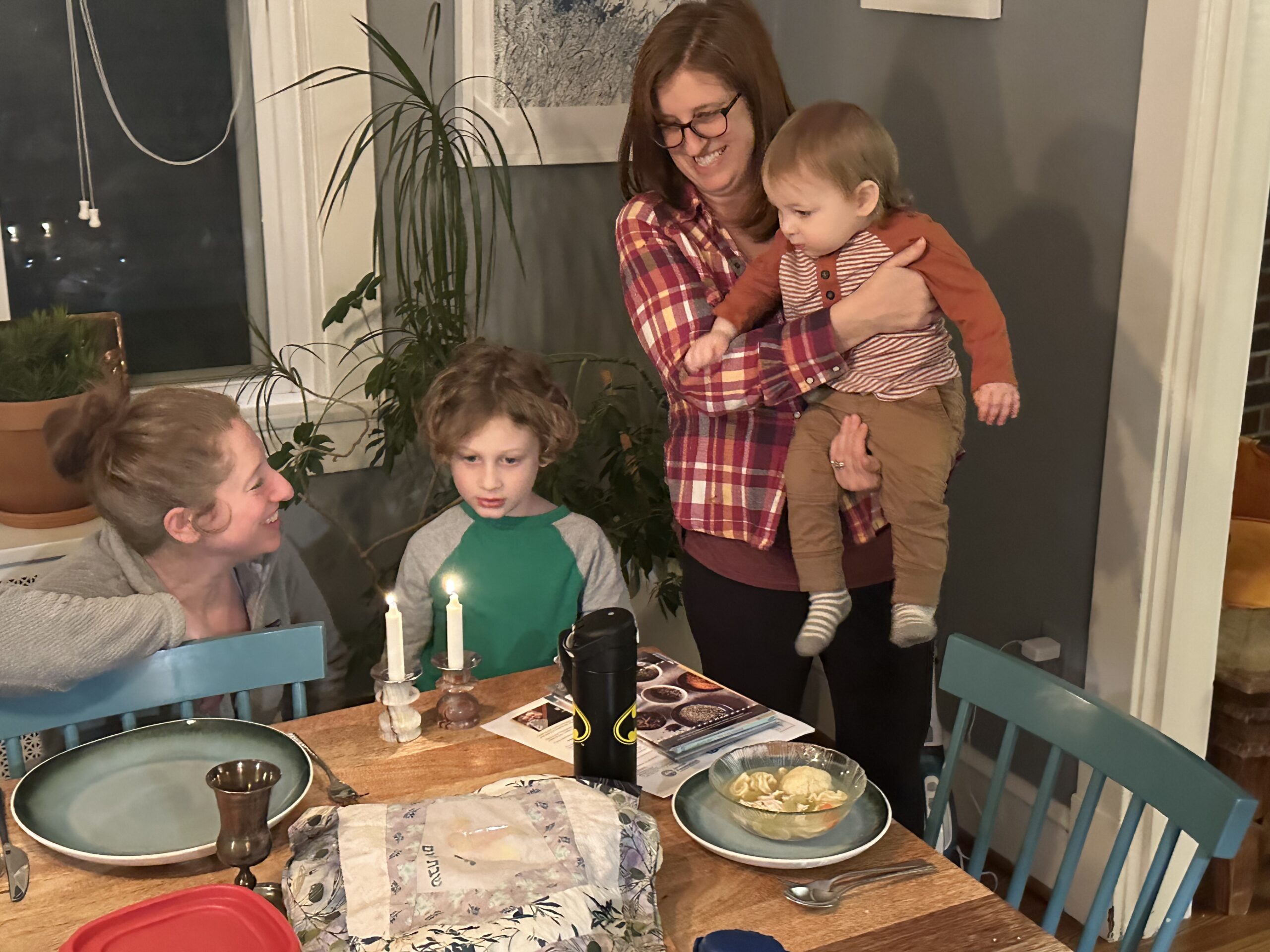
We know that Jewish overnight camp, youth groups, Jewish learning, immersive experiences, especially to Israel, Jewish day schools, and Shabbat dinners all achieve these goals. Moreover, and just as importantly, they are scalable. These may not be the only experiences that have such an impact, but channeling our energy and creativity into each of these six areas could yield tremendous results.

For example, there are currently 3,500 kids in Greater Washington who go to Jewish overnight camp. What impact might we have on the Jewish future if we doubled that number over the next ten years and another 3,500 children and teens experience the joy and community of camp? What if for the next decade, we focus on the proven wins in Jewish life—those things we know to be both high impact and scalable—and bring in many more people to these experiences?

We are currently debating and stress testing these questions internally at Federation and I want to share our thinking with you as part of that process. How does our list of impactful Jewish experiences strike you? Where do you see challenges with our approach? In what ways can the broader community contribute to Jewish engagement?

I look forward to hearing your thoughts. Through it all, know that our core objective remains the same: working together to build a community where everyone feels they belong, can connect deeply to others and the Jewish people, and inspired to shape our collective future.

More to come.
Related posts

Why this moment feels familiar Why this moment feels familiar
Why this moment feels familiar
As institutions increasingly single out Jews and demand ideological conformity, Jewish educators and communities face a difficult question: will the price of belonging become denying our identity? We must push back against antisemitism and protect the Jewish and universal values we have long fought to uphold.
read more

Our Moment to Lead

Our Moment to Lead

This past week I had the privilege of joining an informal group of Jewish foundation and Federation leaders to discuss issues facing Jewish life. This year especially, I appreciated the intentional time, set aside from my usual schedule, to dive into some deep discussions. The seventy-degree weather didn’t hurt either.

The tenor of our time together included a clear focus on the future. Everyone agreed that fighting antisemitism remains an urgent and essential priority for which we need to have a more integrated and effective strategy. At the same time, people were most eager to talk about the things we could build together. How to strengthen Jewish engagement, communal trust, bridges to other communities, our vision for a vibrant, pluralistic Jewish future, and so on.

Coursing through the week was the idea that now is a time to go all in. We are living in a moment that calls on us to grapple with the most critical issues facing the Jewish community. This is not a time for avoidance or incrementalism. We should not—and must not—shy away from what needs to be done.

And we can do it! Because the other consistent takeaway was that we collectively have the capacity to meet this moment so long as we work together. No single individual, organization, or foundation can achieve their goals independently but combined, we have everything we need to realize our shared ambitions. The scale and complexity of both the challenges and the opportunities we face demand collaboration, humility, and shared responsibility.

In the end, I left for the airport feeling hopeful. There are extraordinary people across the country doing extraordinary work on behalf of the Jewish people, thoughtfully, courageously, and with deep care for our community. I want to hold onto this thought for 2026 and, like the California sun, soak up all its benefits.

Related posts

Why this moment feels familiar Why this moment feels familiar
Why this moment feels familiar
As institutions increasingly single out Jews and demand ideological conformity, Jewish educators and communities face a difficult question: will the price of belonging become denying our identity? We must push back against antisemitism and protect the Jewish and universal values we have long fought to uphold.
read more

Tu BiShevat Seder

Tu BiShevat Seder
Celebrate Tu BiShvat: The New Year of the Trees with a meaningful, hands-on seder centered on environmental responsibility and renewal. Through ritual, learning, and shared reflection, we’ll explore our connection to the earth, honor the wisdom of the seasons, and consider how Jewish values call us to protect the planet. Join us for fruit, wine, conversation, and practical inspiration for caring for our world—together. 🌱 Am Kolel will provide a main course. Please sign up to bring a dessert here: https://docs.google.com/spreadsheets/d/1c-fY7s3BKSkOBu0J4BQNco3hN05RXlqClK3QV1gTLMM/edit?usp=sharing

Author Talk with Clay Risen: Red Scare: Blacklists, McCarthyism, and the Making of Modern America

Author Talk with Clay Risen: Red Scare: Blacklists, McCarthyism, and the Making of Modern America
Explore the history and current relevance of the mid-20th century Red Scare. Learn about this dark period, which particularly affected civil rights activists, teachers, Hollywood stars, and DC’s federal workers, including many Jewish figures. Author and New York Times reporter Clay Risen will be in conversation with Capital Jewish Museum Executive Director, Bea Gurwitz. Presented in partnership with the Haberman Institute for Jewish Studies. ABOUT THE BOOK: Red Scare: Blacklists, McCarthyism, and the Making of Modern America by Clay Risen From an award-winning historian and New York Times reporter comes the timely story about McCarthyism that both “lays out the many mechanisms of repression that made the Red Scare possible…[and] describes how something that once seemed so terrifying and interminable did, in fact, come to an end” (The New Yorker)—based in part on newly declassified sources. Now, for the first time in a generation, Clay Risen delivers a narrative history of the anti-Communist witch hunt that gripped America in the decade following World War II. This period, known as the Red Scare, was an outgrowth of the conflict between social conservatives and New Deal progressives, and the terrifying onset of the Cold War. Marked by an unprecedented degree of political hysteria, this was a defining moment in American history, completely unlike any that preceded it. Drawing upon newly declassified documents and with “scenes are so vivid that you can almost feel yourself sweating along with the witnesses” (The New York Times Book Review), journalist Clay Risen recounts how politicians like Joseph McCarthy, with the help of an extended network of other government officials and organizations, systematically ruined thousands of lives in their deluded pursuit of alleged Communist conspiracies. “Thorough, impassioned...detailed, [and] tension-packed” (Los Angeles Times), Red Scare reveals an all-too-familiar pattern of illiberal conspiracy-mongering and political and cultural backlash that speaks directly to the antagonism and divisiveness of our contemporary moment. ABOUT THE SPEAKERS Bea Gurwitz is Executive Director of the Lillian & Albert Small Capital Jewish Museum. Prior to joining the Museum in 2024, she served as the deputy director of the National Humanities Alliance—an organization dedicated to bolstering the humanities on college campuses, promoting public engagement with the humanities, and increasing funding for humanities organizations. Additional career highlights include consulting with the National Endowment for the Humanities and the United States Department of State. She has also taught at the University of Maryland and the University of California, Berkeley, and in the New York City public school system. Gurwitz’s academic work focuses on the history of Jewish communities and other ethnic groups in Latin America, and she is the author of Argentine Jews in the Age of Revolt (Brill, 2016). Clay Risen is a reporter with The New York Times and the author, most recently, of "Red Scare: Blacklists, McCarthyism and the Making of Modern America," which The Chicago Tribune named one of the ten best books of 2025. He is the author of several previous books on American history, including "The Crowded Hour: Theodore Roosevelt, the Rough Riders and the Dawn of the American Century," "The Bill of the Century: The Epic Battle for the Civil Rights Act," and "A Nation on Fire: America in the Wake of the King Assassination." He lives in Brooklyn. Image Credit: Promotional photos provided courtesy of the speakers.

Why Our Connection to Israel Matters More Than Ever

Why Our Connection to Israel Matters More Than Ever

For me, working to facilitate greater connection between our community and Israel feels like second nature. Since joining the Jewish professional world, it’s been a given that helping more people form meaningful relationships with Israel would be a core part of my work. Indeed, it’s a pillar of what we do at Federation and near to my heart as someone who knows and loves Israel.

A Changing Relationship Across Generations

In the current social and political climate, I am also recognizing how important it is that we articulate why we do this work and how we go about it. The Washington Post recently found that 68% of American Jews over 65 feels emotionally connected to Israel. For those between ages 18 and 34, that number drops to 36%. Stats like these abound.

There are a variety of reasons for this drop that I will not address at the moment (though I will in future reflections), but it’s clear we need to do more to support all Jews, and particularly younger Jews, in accessing one of the premier benefits that comes with their identity. Staying in relationship with Israel, even when we disagree or face different challenges, allows us to deepen our own Jewish experience. I’ve been fortunate to accompany many people on their first visit to Israel. It never gets old seeing them discover how special it feels to be immersed in a country with a Jewish rhythm, a thriving culture, Hebrew as a national language, and a clear sense of Jewish agency. It is an unparalleled mix of comforting and empowering.

Making Space for Complexity and Difference

Importantly, any successful approach to Israel engagement must honor the diversity of perspectives that exist in our community. I’ve seen the way October 7th and its aftermath has awakened people’s interest in and affinity for Israel. I have also seen the way many among us are struggling to figure out their relationship with Israel in this moment—and witnessed that struggle enrich our community by helping us all wrestle with what we believe and who we want to be as a people. The pathway forward must make space for multiple avenues of exploration, learning, and questioning.

How Federation Is Deepening Connection

To that end, Federation is undertaking a new phase in our Israel engagement work. Our goal is to strengthen the connective tissue—the infrastructure, programming, and partnerships—that will bring Greater Washington and Israel closer, year after year, in ways that resonate with each individual and organization. And to do so in partnership with Jewish organizations, lay leaders, educators, clergy, professionals, and philanthropists. We’ll be focusing on deepening everyday connections and building on the partnerships that have been forming organically these past few years.

What This Looks Like in Practice

Take our relationship with Kibbutz Nir Oz for example. A group of local synagogues came together to turn an emergency fundraising effort after October 7 into a genuine exchange. Kibbutz members have come to visit Washington, including former hostage Gadi Mozes, and some members of our community have visited the kibbutz in Israel. We are now supporting local lay leaders who are leading the partnership to shape opportunities for our community members to volunteer at the kibbutz and visit other Federation partners in the area.

There’s more to come, and I will be sure to keep you updated. For now, I’ll leave you with the thought that articulating the meaning that comes from a personal connection to Israel is a precious and urgent imperative. It’s on those of us who know and bask in that meaning to help others find it too.

Learn about our Israel Strategy

Related posts

Why this moment feels familiar Why this moment feels familiar
Why this moment feels familiar
As institutions increasingly single out Jews and demand ideological conformity, Jewish educators and communities face a difficult question: will the price of belonging become denying our identity? We must push back against antisemitism and protect the Jewish and universal values we have long fought to uphold.
read more

A Top 10 from last year, looking ahead to 2026

A Top 10 from last year, looking ahead to 2026

I was inspired this week to put together my own Top 10 list as way to look back at 2025 and jump into 2026. I hope you enjoy this snapshot of ideas, content, and ruminations that captured my mind this past year:

  1. The moment that stopped me in my tracks: Watching the return of the last living hostages on October 13 as part of the ceasefire agreement in Gaza. The deal was announced in the days after I had the honor of joining hostage families in praying for their release.
  2. The link I sent to the most people: Dan Senor’s State of World Jewry address at the 92nd St Y.
  3. The books I’m still thinking about: People Love Dead Jews by Dara Horn; Abundance by Derek Thompson and Ezra Klein; and The Marshall Plan by Benn Steil.
  4. The idea that changed my mind: Sometimes the most innovative thing is to scale a known idea rather than create something new.
  5. The question I found myself returning to all year: What does THIS moment call on us UNIQUELY to do as The Jewish Federation of Greater Washington?
  6. The artist I had on repeat: The Idan Raichel Project
  7. The news from Israel that made me smile: Hebrew University scientists discover an RNA molecule that can help fight antibiotic-resistant bacteria. And the top Hebrew baby names in 5785 were Lavie and Avigail, channeling the strength of lions and overwhelming joy.
  8. The assumption I think we’ll need to let go of: That we won’t be able to overcome our divisions and work together to address critical issues.
  9. The offbeat trend that will take hold in 2026: As someone who occasionally finds themselves on the cutting-edge (I had been pushing Fanny Packs for years before their triumphant return), I am going to predict that analog alarm clocks will be all the rage as people begin to resist screens and carve out time away from the digital world.
  10. The top baby name for 2026: Whatever my future grandson is going to be named!

Bonus Round

  • The Federation team’s favorite vocab words: Connection, relationship, or belonging.
  • The paint color Pantone should have picked for color of the year: Pomegranate Red in honor of my homegrown pomegranates I picked from my fruit tree (and let’s add fig, lemon, blueberry, and olive in anticipation of my summer harvest).
  • The best new dish I made: Peruvian Roasted Chicken (I skipped the cilantro sauce).
  • The item that gives me hope: My son having just won his fantasy football league after years of trying.
  • The other item that gives me hope: The depth of commitment in this community to each other and to building a vibrant Jewish community today and for tomorrow. I am constantly in awe of this community and its many incredible people.

Have an answer to any of the above? An offbeat trend prediction of your own? Send them my way, I would love to hear them!

Related posts

Why this moment feels familiar Why this moment feels familiar
Why this moment feels familiar
As institutions increasingly single out Jews and demand ideological conformity, Jewish educators and communities face a difficult question: will the price of belonging become denying our identity? We must push back against antisemitism and protect the Jewish and universal values we have long fought to uphold.
read more

Author Sarah Hurwitz, “As a Jew” at Washington Hebrew Congregation

Author Sarah Hurwitz, “As a Jew” at Washington Hebrew Congregation
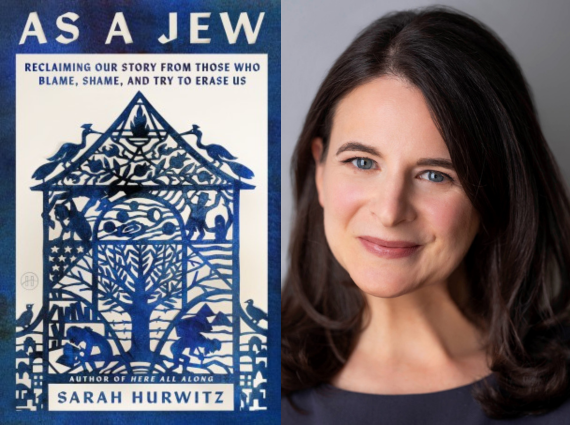
Bestselling author and former White House speechwriter Sarah Hurwitz joins Washington Hebrew to talk about her second book, "As a Jew" — an urgent and deeply personal exploration of how antisemitism has shaped Jewish identity and her own journey to reclaim her faith. Please join us for a Pre-Amram reception with appetizers at 5:30 pm, followed by the author talk at 6:00 pm.

Introduction to Judaism at Temple Rodef Shalom

Introduction to Judaism at Temple Rodef Shalom
Beginning Wednesday, January 21 at 7:00 PM, Introduction to Judaism offers an 18-week journey into Jewish beliefs, holidays, texts, history, and culture. Ideal for interfaith couples, spiritual seekers, those exploring conversion, and anyone eager to deepen their Jewish learning. Classes meet Wednesday evenings, 7:00–8:30 PM, at Temple Rodef Shalom, led by Rabbi Alexandra Stein and Cantor Allen Leider. https://templerodefshalom.shulcloud.com/form/introduction-to-judaism-winter-spring-2026.html

Understanding Our Community to Strengthen Our Future

Understanding Our Community to Strengthen Our Future

What we’re learning from the 2025 Impact Index Pulse Survey 

This summer, more than 1,300 Jewish community members from across Greater Washington participated in Federation’s Impact Index Pulse Survey, giving us a clearer picture of how Jewish life is experienced across our region. Through a 20-minute text-based survey, respondents shared their attitudes and behaviors across eight pillars of communal wellbeing: engagement, education, belonging, safety, activism, health, caring, and connection to Israel and global Jewry.

Conducting research like this is core to our role in the community. We invest in data projects like this to inform our strategies and investments, and to equip synagogues, schools, human service agencies, and community-building organizations with insights they need to strengthen Jewish life in alignment with their own missions.

While we are not a synagogue, this insight matters deeply for synagogue leaders to know that among 29% of individuals who are not currently engaged but want to be, affordability is real barrier. 78% of those individuals say they would participate more in synagogue life if membership were more affordable.

This finding is especially important for our human service agencies: only 44% of individuals who identified as financially vulnerable reported knowing where to find help in the Jewish community during a time of need—in comparison to 55% of more well-off individuals.

We do not exist in a vacuum. Our community is telling us clearly where the opportunities lie: deepening engagement, expanding belonging, strengthening care, and ensure that every Jew regardless of geography, background, or perspective has access to a vibrant Jewish life. The survey shows that 72% of Jewish adults in Greater Washington consider themselves engaged with Jewish life to some degree, and at the same time, 54% say they would like to be more engaged, including 62% of respondents under the age 35 who live in the inner core of Northern Virginia and D.C. proper.

Federation will continue to fund and lead studies like this because understanding our community is essential to strengthening it, and to stewarding our collective resources responsibly.

Explore the report

Related posts

Why this moment feels familiar Why this moment feels familiar
Why this moment feels familiar
As institutions increasingly single out Jews and demand ideological conformity, Jewish educators and communities face a difficult question: will the price of belonging become denying our identity? We must push back against antisemitism and protect the Jewish and universal values we have long fought to uphold.
read more

Giving Jewishly: A Fireside Chat with Rabbi Aderet Drucker

Giving Jewishly: A Fireside Chat with Rabbi Aderet Drucker
Join the Jewish Community Foundation for a cozy fireside chat with Rabbi Aderet Drucker, Executive Director of the Den Collective, who will facilitate three community dialogues centered on the theme of giving Jewishly. During the 90-minute session, participants will surface values, stories, and perspectives and interpretations of Jewish philanthropy within the context of Jewish values. Register for one of three options in MD, Northern VA, or DC. Maryland - Thursday, January 15 (Register by January 9) Northern Virginia - Wednesday, February 4 (Register by January 29) Washington, DC - Thursday, February 26 (Register by February 20) Questions? Contact Jannah Yutkovitz. *These intimate gatherings will take place at private homes across Greater Washington. For security purposes, the location and street address will be emailed to each guest prior to the event, using the email address provided at registration. Learn more about security at Federation events. We’re committed to building an inclusive community. If you need accommodations to participate meaningfully, please contact us in advance.