Open More Possibilities. Join a community of donors shaping the future of Jewish life.

Get to Know Capital Camps

Get to Know Capital Camps

It's Summer Camp Season!

A summer away from home. A dining hall full of noise. A Shabbat filled with song and dance. A friendship that started in a bunk and is still going strong twenty years later.

Ask an American Jew what first made them feel “Jewish,” and there’s a decent chance the answer involves summer camp.

Jewish overnight camp is one of the key ways that Judaism becomes an immersive way of life. For families in the DMV, Capital Camps has been that introduction for nearly four decades.

What actually happens at Capital Camps?

The short answer: a lot.
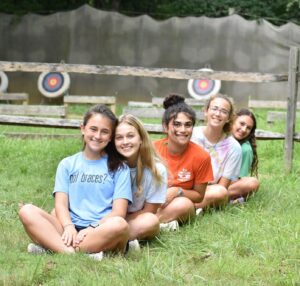
Located in the Catoctin Mountains of Pennsylvania, just 75 miles from DC, Capital Camps is the premier Jewish community overnight camp in the region. A core partner of The Jewish Federation of Greater Washington, each summer, more than 900 campers and 180 staff come together across multiple village programs. Programming spans waterfront activities, a ropes course, theater & arts through the Habima program, a working farm, and Jewish life experiences that run through the entire summer. A 700-person dining hall serves kosher meals (meat, dairy, and pareve kitchens, if you were wondering), and staff provide daily opportunities for campers to connect with Jewish text, tradition, and community.

First-time campers enter through the Yalla program, a specially designed experience for children navigating camp for the very first time. Older campers transition into leadership programming that, for many, becomes their first tangible leadership experience: running a Shabbat, taking responsibility for a cabin, or mentoring a younger camper.

Capital Camps also works to ensure that different groups feel included and that they can enjoy everything the summer camp experience has to offer. The Atzma’im inclusion program ensures that children of any denominational affiliation, gender, race, sexual orientation, or socioeconomic status, including those with a range of intellectual, emotional, and physical abilities can fully participate in the camp experience. The campus is fully ADA compliant and support staff is available for medical and mental health services. Through annual partnerships with Friends of the IDF, Israeli campers who have lost someone through conflict are welcomed to camp, a reminder that the camp’s community extends well beyond its 75-mile radius.

How does the Foundation support camp?

Access to transformative Jewish experiences is one of the most powerful investments a community can make. Research shows that Jewish overnight camp creates lasting connection to Jewish identity, community, and leadership in ways that are difficult to replicate.

Study after study, from the Foundation for Jewish Camp to Brandeis University’s Cohen Center for Modern Jewish Studies, finds that Jewish camp alumni are more likely to marry Jewish partners, raise Jewish children, donate to Jewish causes, and remain engaged in Jewish communal life across the arc of their adulthood. The mechanism is straightforward: immersive, joyful, community-based experiences during formative years create an attachment to Jewish life that withstands the drift of adulthood.

We know this, and yet, cost remains one of the primary reasons families don’t send their children to Jewish overnight camp. If we can lower this barrier to access, we know we can create strong and vibrant future generations of Jews.

Scholarship funding exists to remove this exact barrier.

The Jewish Community Foundation of the Jewish Federation of Greater Washington is proud to support the expansion of access to transformative experiences like Capital Camps through strategic philanthropy and scholarship funding through both Donor Advised Funds and Legacy Gifts. Because one of the truths we keep returning to in this work is that belonging isn’t something you can teach in the abstract. It has to be lived. And the experiences that young people carry with them into adulthood, their sense of Jewish identity, their instinct toward community, their capacity for leadership, are often rooted in summers like this one.

Ready to learn more?

If you’re a donor thinking about where camp scholarship funding goes, it goes here: to a child who might not otherwise have access to the people, the places, and their connection to Jewry they just haven’t met yet.

The Catoctin Mountains are waiting!
Related posts

Giving That Reflects Your Values, Even as the Tax Rules Change

Giving That Reflects Your Values, Even as the Tax Rules Change

How new tax laws create a unique window to give with greater impact and intention in 2025.

When the tax laws shift, people often ask: What does this mean for how I give?
But the real question is: What kind of impact do I want to make and how can I make it count right now?

If you’re thinking about how to give more intentionally, you’re not alone. Our Jewish Community Foundation works with community members every day to ensure their giving reflects their priorities and keeps making a difference, even as circumstances change.

What’s Changing and What it Means for You

A new law called the One Big Beautiful Bill Act (OBBBA) will change how charitable deductions work in 2025 and 2026. If you give regularly—or are thinking about how to give more intentionally—these changes could affect you.

In 2025: A Chance to Maximize Your Giving

The SALT (state and local tax) deduction cap temporarily increases from $10,000 to $40,000 (from 2025 to 2030). That means more people, especially homeowners, will be able to itemize deductions. Limits on charitable deductions coming in 2026 make 2025 a smart year to give.

Consider:

  • Making a larger gift than usual: bunch several years of charitable gifts in 2025
  • Opening or contributing to a Donor Advised Fund (DAF)
  • Donating appreciated stock or property
  • Accelerating a legacy gift or funding a named endowment: 2025 could be a smart year to fund a legacy gift or named endowment.

In 2026: New Charitable Deduction Limits

Two new rules may reduce how much you can deduct if you itemize:

  • A new floor: You can only deduct charitable gifts that exceed 0.5% of your income
  • A new ceiling: For those in the highest income brackets, the tax benefit of itemized deductions, including charitable gifts, is effectively capped at 35%

Some donors may choose to “bunch” their giving by consolidating multiple years of giving into 2025 to take advantage of more favorable deduction rules. One of the most effective ways to do this is by funding a Donor Advised Fund (DAF) now.

By contributing more to a DAF in 2025, you can maximize your deduction in a high-impact year while still supporting Federation and other causes you care about over time. It’s a smart way to align your giving with both tax efficiency and long-term impact.

The law also extends the 2017 tax rates, standard deduction levels, and estate and gift tax exemptions indefinitely, but these could change with future legislation.

If You Take the Standard Deduction

Even if you don’t itemize, in 2026, you’ll still be able to deduct:

  • Up to $1,000 (single filers)
  • Up to $2,000 (married couples)

For Those 70½+: A Powerful Giving Tool

If you’re 70½ or older, you can donate up to $108,000 in 2025 (indexed annually) directly from your IRA to a nonprofit like The Jewish Federation of Greater Washington (with that limit expected to rise in 2026). These Qualified Charitable Distributions (QCDs) reduce your taxable income and aren’t affected by the new deduction limits.

Note: QCDs can’t be used to fund DAFs, but they can go directly to support The Jewish Federation of Greater Washington or any qualifying nonprofit.

Your Partner in Purpose

Most people don’t give because of tax deductions. You give because you care—about Jewish life, about this community, about the future we’re building together.

Our Foundation is here to help you give in a way that’s aligned and intentional, even as the rules evolve. Whether you’re giving this year, advising others on giving, planning ahead, or thinking about a legacy, we’ll help you make sense of the options—and make the most of them.

Tax laws will likely keep evolving, and we’ll be here to help you adapt every step of the way.

Ready to take the first step? Let’s talk about your goals, your values, and how you want your giving to make a difference—this year and beyond.

For more information about how tax changes might affect you, join our Keys to Tax and Charitable Gift Planning Under the New Tax Law webinar on November 12.

This summary is for informational purposes only and does not constitute legal, tax, or financial advice. Please consult your professional advisor. 

Related posts