Need support? Call 703-J-CARING (703-522-7464)

From Intention to Action: What JDAIM Is Teaching Our Community About Inclusion
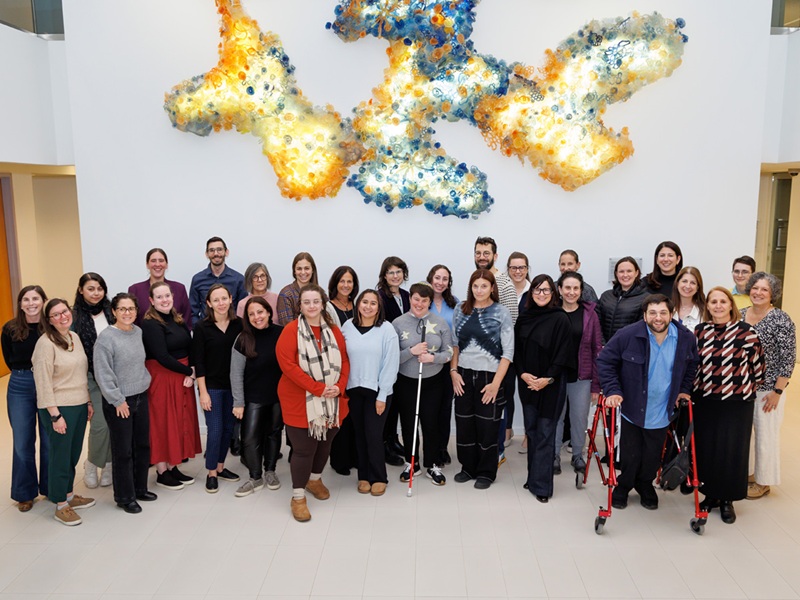
From Intention to Action: What JDAIM Is Teaching Our Community About Inclusion

Jewish Disability Awareness, Acceptance, and Inclusion Month (JDAIM) invites us each year to ask a hard but necessary question: who feels fully welcomed into Jewish communal life and who still encounters barriers, even when our intentions are good?

When values outpace systems

In recent years, our community has begun to confront an uncomfortable truth., While many Jewish organizations deeply value inclusion, good intentions alone are not enough to create access, especially for young adults with disabilities. Inclusion requires skills, systems, and sustained commitment.

Learning what inclusion requires

That realization came into focus in 2023, when we partnered with Matan, a national leader in disability inclusion in Jewish life, to conduct a communitywide assessment. Matan works with Jewish organizations across North America to build the tools and confidence needed to create truly inclusive communities. One finding stood out clearly: Jewish professionals wanted to be inclusive of people with disabilities, particularly young adults, but many did not know how to translate that desire into practice.

That insight became a turning point.

Turning learning into action

In response, we launched the Lieberman Fellowship for Jewish Organizations Serving Young Adults, a yearlong cohort learning experience (2024–2025) led by Matan. The fellowship focused on moving organizations from intention to implementation, helping teams rethink policies, practices, and culture through an inclusion lens. At the conclusion of the learning year, participating organizations, along with one additional congregation, received grants to turn learning into action through concrete inclusion projects.

This JDAIM, we pause to take stock of progress at the projects’ midpoint. What we found was encouraging—not because the work was finished, but because it is becoming more thoughtful, more systematic, and more honest.

What’s changing across our community

Across the region, organizations are shifting away from ad hoc accommodations toward intentional, systems-based approaches to access. Some are redesigning how people request accommodations or improving digital and physical accessibility. Others are investing in staff training, inclusive employment pathways, peer support, or relationship-centered spaces like Shabbat tables and social programming. Again and again, we are seeing that small but deliberate changes—clear communication, accessible tools, sensory supports—can dramatically expand participation and belonging.

That progress has not come without challenges. Many teams underestimated how long it would take to coordinate across departments and partners. Staff transitions and technology limitations slowed timelines. In some cases, organizations intentionally slowed decision-making to ensure solutions would be sustainable and meaningful rather than rushed. These challenges are real, but they also reflect a growing sophistication in how our community understands inclusion: not as a quick fix, but as long-term work that must be built to last.

Inclusion, in action

Each organization is approaching inclusion differently, shaped by its mission, audience, and capacity. Together, these efforts reflect a shared shift toward more intentional and sustainable access.

Inclusive employment and workforce pathways

  • Adas Israel is piloting a supported employment program for young adults with intellectual and developmental disabilities, envisioning a multi-year pathway to meaningful, paid work and vocational growth.

Accessible spaces, programs, and experiences

  • Bender JCC is investing in accessible fitness equipment and assistive listening devices, alongside hosting sensory-friendly cultural programming.
  • Edlavitch DCJCC repaired hazardous entryways and launched a visibility campaign highlighting accessibility across programs.

Digital communications access

  • GatherDC transformed its community calendar to include accessibility information, mobile usability, and screen-reader tools, changing how thousands of young adults find Jewish experiences.

Peer support, community design, and belonging

  • B’nai Israel Congregation is pairing a young adult inclusion peer program with accessible communication training for staff and lay leaders.
  • OneTable supported hosts creating intentionally inclusive Shabbat tables, including spaces centered for autistic and Deaf/ASL communities.

Data-informed systems and long-term engagement

  • Pozez JCC is building data-informed systems to track and strengthen engagement of neurodiverse young adults over time.

Training, capacity-building, and organizational practice

  • Mem Global distributed social inclusion kits, launched accessibility microgrants, and is preparing to hire a Camper Care Director to support emotional and behavioral needs at immersive experiences.
  • Sixth & I is preparing comprehensive social inclusion trainings for staff and volunteers serving young adults in less-structured Jewish spaces.
  • Temple Rodef Shalom standardized its accommodation request process, shifting from informal responses to clear, transparent, and equitable access systems.

The lesson we’re carrying forward

Perhaps the most important lesson emerging from this work: inclusion is grounded in relationships, strengthened through training, and sustained by systems, not by individuals alone. When access is embedded into how organizations operate, it becomes part of communal life.

Beyond JDAIM

This JDAIM, we are not just raising awareness. We are witnessing growth—imperfect, iterative, and deeply committed. Our community is learning what it truly means to create Jewish spaces where young adults with disabilities are not merely accommodated, but genuinely welcomed, supported, and able to belong.
Learn more

Related posts

Reclaiming Agency, Together

Reclaiming Agency, Together

I was in Israel last month on a unique trip. Throughout the time, I heard from Israelis and Palestinians across the political spectrum describe the same feeling: they want a better world for their families and yet feel a profound lack of agency in making it happen. They want progress but don’t feel like there is anything they can do to push back against the overwhelming forces shaping their reality. It struck me that many of us are feeling this way too.

Things feel challenging and worse yet, we feel powerless to change them. We open our news apps and read horror stories. But what are we to do about it? This is a question Jews have grappled with in every age. And the answer remains the same. It’s precisely when things feel the most uncertain and out of our control that we must focus on reclaiming and making use of our own agency.

The role of Federation in this moment is deeply connected to this idea. Part of our mission is to help create the conditions in which individuals and organizations can act with confidence and intention and amplify personal agency to even greater outcomes. How do we keep pushing forward as a community in difficult times? How can we bring people together to amplify impact? These questions are shaping our work today.

Of course, agency is tricky in that it’s layered. First, we must feel we have it. Then we must be motivated to use it. And finally, we must find ways to combine our efforts to create something even more powerful. What’s more, every step is as delicate as it is important. It doesn’t take much to sap our energy. Certainly, the entrenched challenges in the Middle East, the morphing global order, and scenes of violence in our country are enough to render anyone frozen.

I don’t fault anyone for choosing to focus on their immediate zone of responsibility. There is tremendous purpose to be found in looking after our loved ones and doing what we can to make it day to day. But if we are to shape history and build a society that reflects our values, a “beloved community” as Dr. Martin Luther King Jr. put it, then we must find it within ourselves to look beyond ourselves.

We must chip away at the overwhelm. For those who wielded a snow shovel last week will tell you, it’s amazing what you can accomplish with steady determination and the will to break through that which seems immovable. We may not be able to make sweeping policy changes, but we can, at any given moment, make a difference on an individual and even communal scale. We can connect with our neighbors, serve those in need, and work together to strengthen our community.

Related posts

First to Go Out, Last to Return

First to Go Out, Last to Return

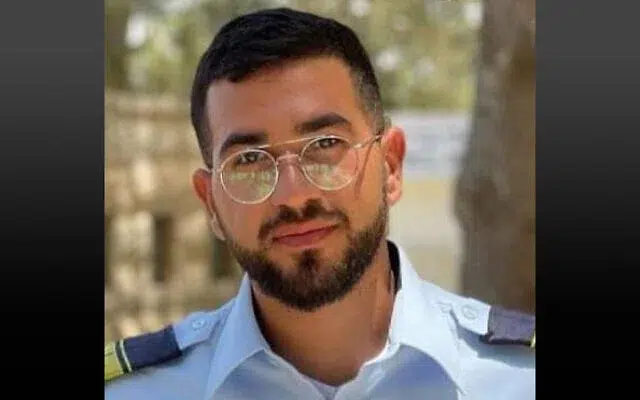
On October 7, 2023, Ran (Rani) Gvili, 24, was at his parents’ home in Meitar, in southern Israel, on medical leave from his service in an elite police unit. About two weeks earlier, he had injured his shoulder in an off-road motorcycle accident and was scheduled to undergo surgery just days later. As his family rushed into the shelter amid relentless sirens, Rani put on his police uniform and prepared to leave. His mother, Talik, asked him where he thought he was going. Rani replied simply: “Do you really think I’d stay home knowing my friends are fighting? No way.” (as reported by The Times of Israel)

Defender of Alumim

As chaos raged all around, without waiting to be called, Rani drove straight into the fighting. He first assisted survivors of the Nova Music Festival and then joined the heroic battle to defend the nearby Kibbutz Alumim. He neutralized dozens of terrorists and saved the lives of many residents, even as he sustained severe injuries to his arm and leg. Over time, he became known as “Rani, Defender of Alumim.” He fought relentlessly until he ran out of ammunition. It was later learned that he fell in battle and that his body was abducted to Gaza.

Bringing Rani Home

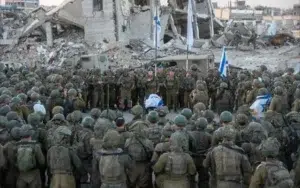
Last week, at long last, the circle was closed. After critical intelligence was received regarding his whereabouts, hundreds of soldiers, accompanied by dozens of forensic dental specialists, set out on a mission almost impossible to imagine: locating Rani’s body in a cemetery in Gaza. After approximately 48 hours of exhausting searches under extremely difficult conditions, the long-awaited answer came—Rani was found.

Dr. Assi Sharon, who took part in the mission alongside the forces in Gaza, described the emotional moment: “There wasn’t a dry eye. People were deeply moved, with a profound sense of reverence. We recited Kaddish, and there was a ceremony with the Chief of Staff—a very special moment. As I stood there, I realized I could finally remove the yellow ribbon, and I did.” (as reported by JFEED)

843 Days, 12 Hours, 5 Minutes, and 59 Seconds

With this, one of the most painful, yet also most inspiring, chapters in the history of the State of Israel and the Jewish people came to an end. After 843 days, 12 hours, 5 minutes, and 59 seconds, the clock at Hostages Square in Tel Aviv stopped. A shofar was sounded, and many recited the Shehecheyanu blessing, giving thanks for reaching this moment.

The mitzvah of redeeming captives, which Maimonides called the greatest commandment in Judaism, was fulfilled. The Israeli ethos—viewing the return of every soldier and civilian from enemy hands as a supreme moral obligation—was upheld. All 251 Israelis and foreign nationals abducted to Gaza on October 7, together with two Israeli civilians and two fallen soldiers previously held by Hamas, were returned.

The Power of Public Pressure

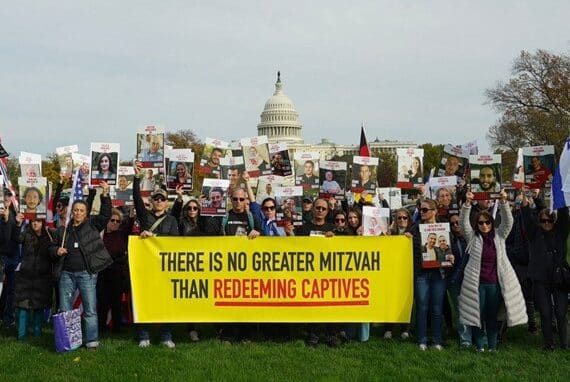
The sustained public effort to bring the hostages home was essential. Throughout this long—far too long—period, the Hostage Families Forum worked tirelessly to keep this issue at the forefront of the public agenda, most prominently in Israel and the United States.

One powerful testament to the impact of this cause can be found in the words of Alon Ohel, who returned from captivity after 738 days: “They opened a laptop and showed me a picture of someone holding a drawing of me, with a piano behind her. That’s when I understood that people I didn’t know were fighting for me. It gave me even more strength—if people who don’t know me are fighting for me, who am I to give up?”

A Shared Response, Across Oceans

With great pride and deep appreciation, it can be said that our community also took an active part in the collective endeavor to bring the hostages home, and in Israel’s broader recovery efforts. Shortly after October 7, Federation established the Israel Crisis Relief Fund and raised more than $15 million from the community for emergency assistance to Israel, nearly half a million dollars of which was transferred directed to the Hostage Families Forum. Beyond this, Federation supported the Hostage Families Forum in convening community events that brought people together with hostage family members and former captives, allowing them to share their personal stories and mobilize the broader community around the cause. The Community Shlichim—placed in synagogues and Jewish organizations across the community as part of a joint initiative of Federation and the Jewish Agency for Israel—led a wide range of activities focused on the hostages. These included creating dedicated spaces highlighting the hostages and their stories, and organizing events such as a community solidarity walk, an interactive cartoon exhibition addressing the hostage crisis and current Israeli issues, and many more.

“Thanks to Your Efforts…”

For all of this—and so much more—we extend our heartfelt thanks to everyone across our community who took part in advancing this most important cause.

As Matan Sivek, Founder of the Hostage Families Forum US, put it:

“The Jewish Federation of Greater Washington joined forces with hostage families from day one to ensure they get the financial and communal support they need. The DMV community advocated, marched, embraced, and was on the front line of ensuring the highest echelons don’t forget about the hostages. We are grateful for the leadership and partnership of Federation in this historic moment in Jewish history. Thanks to your efforts, they are back.”

Photo Captions: Ran (Rani) Gvili in uniform; Israel Defense Forces; Photo courtesy of IDF; Hostages Square clock at the moment of release; Photo: Avshalom Sassoni / Maariv; Alon Ohel, former hostage, after return; Photo: Eden Danielle Kleiban Pakter; Pozez JCC community walk for hostage awareness; Photo: Hostage Families Forum US, Leigh Vogel

Related posts

Finding Light: Ori’s Journey as a Shlicha in Greater Washington

Finding Light: Ori’s Journey as a Shlicha in Greater Washington

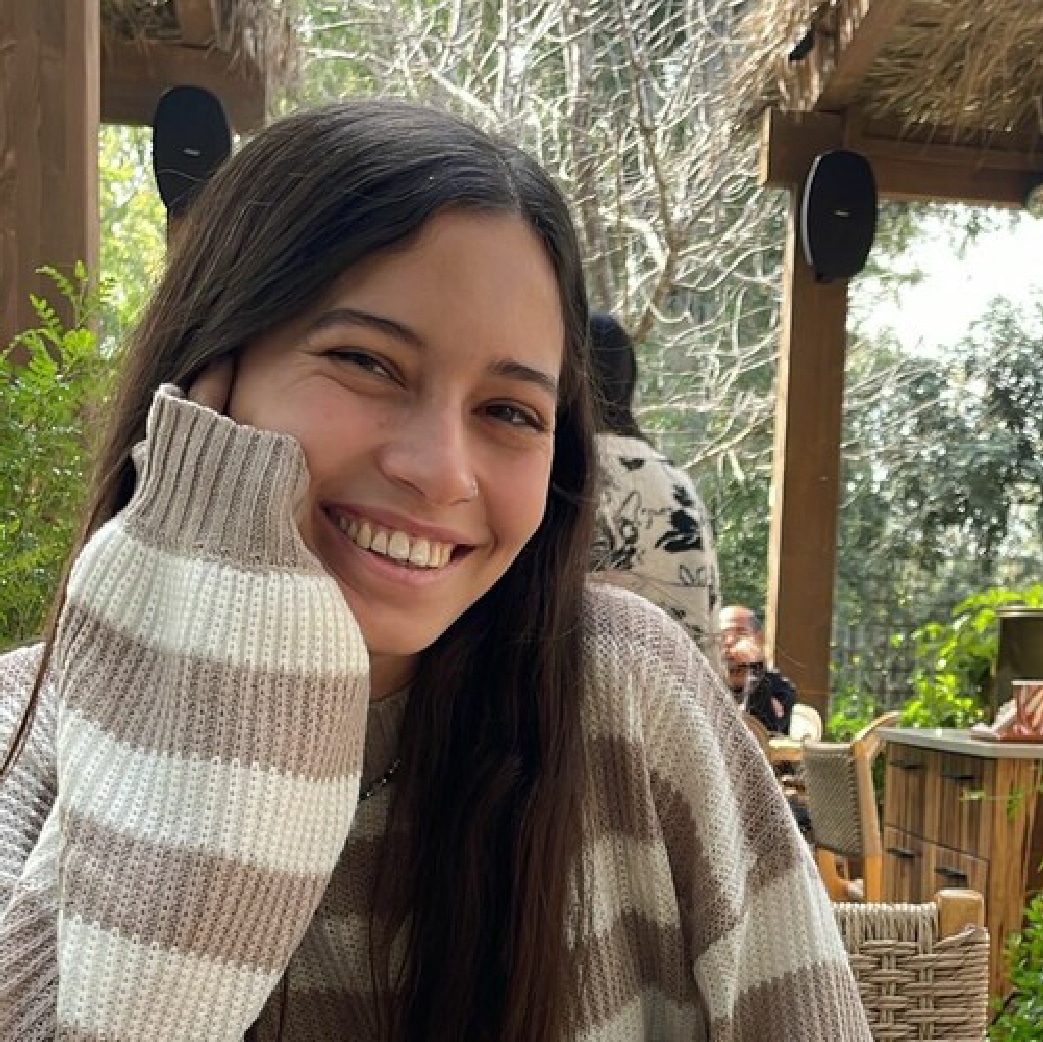
Ori is 23, and she carries something most adults twice her age still struggle to hold: the responsibility of representing Israel with honesty, heart, and humility—especially to kids. She’s one of 11 community shlichim (Israeli emissaries) bringing Israel to life across Greater Washington through Federation’s Shlichim Program.

Growing up in Moshavat Kinneret, a small community in northern Israel, Ori was surrounded by family, a strong sense of responsibility, and a beloved boxer dog she still misses. Before coming to Greater Washington, Ori spent two summers at a Jewish camp in upstate New York.

Teaching Israel in a Complicated Moment

Now living in Greater Washington, Ori spends her days with children, parents, and educators—teaching Hebrew, leading workshops, and helping our community deepen its connection to Israeli life and culture. But talking about Israel isn’t as simple as it used to be. She says it’s gotten harder in the last few years. Kids are asking deeper questions. There’s no single story to tell.

“I’m not saying Israel is perfect,” she says. “Like anything else, there are things that are good and things that are bad. I want to show them both sides.” Ori doesn’t pretend otherwise. She listens, brings her own questions, and creates space for kids to talk about Israel with curiosity, honesty, and care.

Pride Without Pretending

Ori loves teaching about Israel’s creativity—from everyday inventions to world-changing breakthroughs, like cherry tomatoes. “The best invention,” she says, laughing.

Through Made in Israel, an interactive Hands-on Israel workshop she leads, participants explore the Israeli innovations they’ve heard of and many they haven’t. They learn about the brilliant minds behind these inventions through games and challenges that spark curiosity and pride. Ori’s goal is more than just facts. She shows people that Israel is a place of ideas, impact, and imagination.

Teaching Joy, Too

For Ori, representing Israel isn’t only about navigating complexity—it’s also about sharing joy. She brings Israeli traditions into American Jewish life in ways that feel lasting and personal. “We’re not sitting sad and miserable in Israel—we’re happy,” she says. “We’re living.” That’s what she wants kids to see: that Israel is a home, full of celebration, tradition, and joy.

Ori’s work is part of a larger effort to build people-to-people connection through immersive, everyday experiences. Through Federation’s Shlichim Program, Israeli emissaries like Ori help bring Israel to life in schools, synagogues, JCCs, and more—creating personal, lasting moments of understanding and connection across Greater Washington.

Bringing Community with Her

Ori often talks about the community she grew up in—a kibbutz where kids moved freely, everyone knew each other, and life felt safe and shared. “It’s a very community-like place,” she says. “It’s a safe space… I really, really love it.” That sense of belonging is something she carries with her. And through her teaching, she hopes to help create more of that feeling for the children and families she meets here.

Leaving Something Behind

One of the biggest surprises for Ori has been seeing what Jewish life looks like outside of Israel. She didn’t know what to expect. But she’s found deep relationships, strong communities, and new ways of expressing Jewish identity that continue to shape her own perspective. Ori wants to bring more of Israel into Jewish spaces here, and she hopes the connections she’s made will last long after she leaves.

“I don’t want to just be a shlicha who came and left,” she says. “I want to leave something behind.”

Looking Ahead

When she thinks about the future of Jewish life in the U.S., Ori doesn’t hesitate. She hopes people feel safe being openly Jewish. She hopes for greater unity, more listening, and a community that remains a source of strength, even in uncertain times. Until then, she’s teaching, learning, and building relationships—one day, one conversation at a time.

Continue the Conversation at RE:Israel

Ori’s story reflects the honest, values-driven work of Israel education today—work that feels more urgent than ever. In the wake of October 7, educators, parents, and communal leaders are grappling with big, essential questions:

  • How do we teach and talk about Israel with clarity and care?
  • How do we support young people in holding complexity without letting go of connection?
  • And how do we reframe Israel education for this new era, with tools that are honest, nuanced, and real?

These conversations will take center stage on Tuesday, February 24, at RE:Israel: Reflect. Reframe. Reconnect., a half-day learning experience for educators, communal professionals, lay leaders, and parents seeking thoughtful, practical engagement with Israel education in this moment.

Related posts

When hate tried to destroy, you helped rebuild

When hate tried to destroy, you helped rebuild

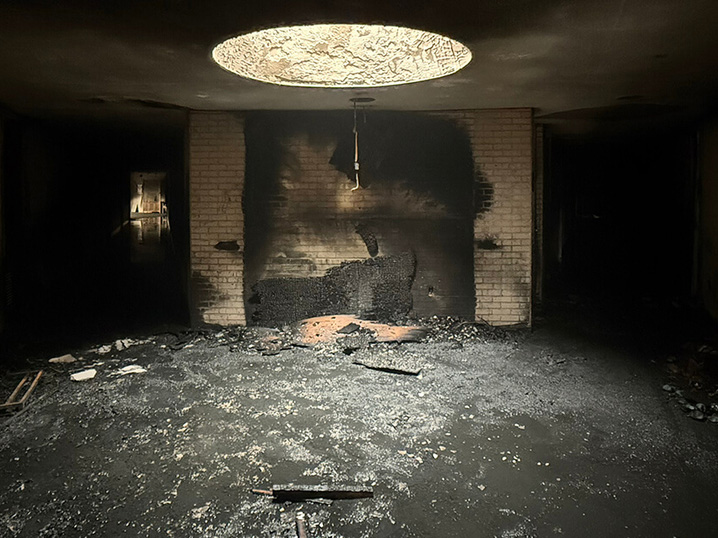
After an act of antisemitic arson devastated Beth Israel Congregation in Jackson, Mississippi, our community stepped up. It’s a small but deeply rooted congregation where Jewish life has endured for generations—now facing the long road of recovery.

In response, 222 donors across Greater Washington raised nearly $60,000 to support restoration and healing, ensuring Beth Israel can continue to serve as a place of worship, gathering, and Jewish life. Per the congregation’s request, funds are being distributed by the Jewish Federations of North America to reach them directly and with care.

Moments like this remind us what Federation is for: to mobilize resources when crisis hits, and to build a more connected, secure, and vibrant Jewish community every day.

Thank you to everyone who gave. Your generosity sent a clear message: they are not alone and Jewish life will continue to thrive. 

This is what it means to show up as a Jewish community. This is the power of collective giving.

Related posts