Open More Possibilities. Join a community of donors shaping the future of Jewish life.

Navigating Change Together
Navigating Change Together

How Jewish community helps ground us through life’s transitions.

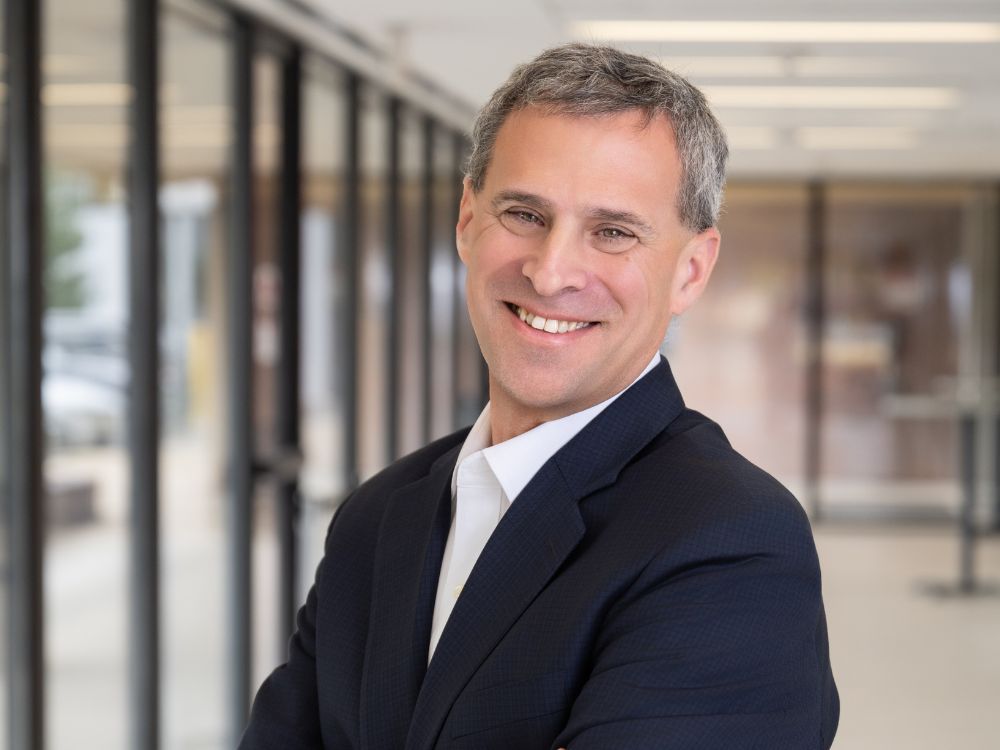
A couple weeks ago, my wife and I set off on a drive up to Boston to see our daughter graduate from college and then a few days later over to Pittsburgh to see our son graduate with a Master’s degree. It won’t surprise you to hear that witnessing these two milestones got me thinking about life’s transitions and the swirl of excitement, loss, and uncertainty that frequently come with them.

As Bruce Feiler points out in his book, Life Is in the Transitions: Mastering Change at Any Age, we spend more of our lives in flux than we realize. Life events can be good or bad. They can be determined by a decision that we make on our own or something that happens to us. Major life events also typically last about five years, and much of our adult lives are spent in unsettled states. This isn’t necessarily a negative thing—change can indicate growth and evolution—but it is the reality of most of our lives.

This sense of unsettledness is pervasive for many of us today. The world is changing faster than any of us could have imagined. Deep assumptions about our security, identity, friends, work, etc. are being challenged. And that is beyond changes that may be happening in our personal lives. All of this can get to be overwhelming. But that sense of instability is lessened and, in some ways, even reversed when we find community.

Feiler argues that a well-constructed life is one guided by the ABC’s—agency, belonging, and cause. To thrive, we need to feel like we can impact the world around us; that we have people to lean on; and have a way to serve something greater than ourselves. These three factors keep us grounded through life’s twists and turns, and they are all on offer in our community.

That’s what I hope people who engage with Federation and our partners come to feel, that Jewish Greater Washington is a place where they can commune with the ABC’s, across every life stage and within the ongoing story of Jewish peoplehood.

Our work as a Federation, therefore, is to ensure our community remains host to a grand Jewish playground, where people can come learn about themselves and find people with whom to climb through good times and bad no matter what’s going on in their lives.

That’s what I see as the beauty of community building. In choosing to join forces on our quest for meaning, we vastly improve each other’s odds of success. By engaging in Jewish discovery and expression together, we multiply each other’s agency, deepen each other’s sense of belonging, and further each other’s ability to pursue what matters to us most.

P.S. happy to recommend Bruce Feiler’s thoughtful guest essay in today’s New York Times.
Related posts

Why this moment feels familiar Why this moment feels familiar
Why this moment feels familiar
As institutions increasingly single out Jews and demand ideological conformity, Jewish educators and communities face a difficult question: will the price of belonging become denying our identity? We must push back against antisemitism and protect the Jewish and universal values we have long fought to uphold.
read more

A Vote of Confidence in Jewish Community

A Vote of Confidence in Jewish Community

Why connection, participation, and generosity all go hand in hand.

There’s a consensus brewing. Emerging across opinion pages, podcasts, and dinner tables is the idea that we’ve strayed too far from one another. The question driving many of our national and communal conversations is how do we renew our obligations to each other?

Just this week, I’ve listened to discussions about how generosity was meant to be one of liberalism’s founding principles. How our educational pursuits were meant to prepare us to be good citizens and servant leaders. How we were meant to talk to strangers. How we were never meant to bowl alone.

All these ideas are swirling within our Jewish community as well. For all our differences, the thing people want most is to connect—to feel like they belong and that the Jewish people would not be complete without them and what they have to offer. And, indeed, we are not. I believe wholeheartedly the Jewish community is incomplete without everyone at the table.

Which makes now a perfect moment to double down on the sacred, timeless work of community building. Next week is Giving Week and I am asking everyone who cares about the Jewish community and values the Jewish future to contribute. Your gift—of any amount—matters. Your participation matters. You matter.

Giving is a vote of confidence in our shared efforts to build a strong and joyful Jewish community, one that supports and brings together the full breath of Jewish life. It’s also what supports our work as a Federation to bolster a network of Jewish agencies and programs that care for people in need, engage people in every life stage in meaningful Jewish experiences, perpetuate and strengthen Jewish identity and peoplehood, and look after the safety of the Jewish people.

What’s more, the simple act of giving collectively, alongside so many others who care about Jewish life, makes its own powerful statement that we are here and that we believe in the promise of community and acting together to the benefit of others.

I lament the challenges and the tumult of our times. But I find incredible comfort and hope in the fact that our path to a brighter future involves so many beautiful things: connection, participation, curiosity, debate, and a love for Jewish wisdom and tradition.

It’s notable that in this era of hyper-individualism, people are hungry for mutual obligation. But that’s the punchline of responsibility and interdependence: it’s only in being tied to each other that we find the transcendence we seek. Obligations are on offer, I invite you to come claim them.

Related posts

Why this moment feels familiar Why this moment feels familiar
Why this moment feels familiar
As institutions increasingly single out Jews and demand ideological conformity, Jewish educators and communities face a difficult question: will the price of belonging become denying our identity? We must push back against antisemitism and protect the Jewish and universal values we have long fought to uphold.
read more

Rhythm & Ruach with Auntie A

Rhythm & Ruach with Auntie A
Music helps to anchor a child’s cultural identity. Rhythm ‘N’ Ruach high energy music and movement to encourage joyful Jewish learning. Ideal for children ages 0 – 4 years old, this program encourages children and their loved ones to participate in the music with real instrument and yoga poses, creating an inspirational and educational experience. Caregivers will be required to stay for the entirety of the program.

What Our Community is Asking For

What Our Community is Asking For

Listening to Build a Stronger Jewish Community

As Federation begins to look ahead to the priorities that will guide our work in the coming months and years, we are taking stock of what we’re hearing from our community. In fact, our Community Leadership Council recently concluded a monthslong listening tour to surface views and insights from across the community.

What they found was a widespread desire for Jewish life to be more accessible, affordable, and easily navigable. Just as we saw in our 2025 Community Impact Survey, people across almost all demographic, geographic, and socio-economic backgrounds want to be more engaged in Jewish life and community, but many aren’t sure where to turn or feel discouraged by barriers to entry. This is a sentiment we take seriously at Federation and one that will inform our continued efforts to ensure anyone who is interested in Jewish life can easily find what they’re looking for.

One project that is already underway is our work to make Jewish day school more affordable by taking advantage of a new Federal Tax Credit Scholarship Program. We expect this program to complement and amplify Jewish day school’s current tuition assistance and fundraising efforts and provide opportunities for more students to pursue a Jewish education, which we know also has positive ripple effects on families looking to dive deeper into Jewish life.

Starting in January 2027, eligible taxpayers may receive a federal tax credit of up to $1,700 per year by contributing to an approved Scholarship Granting Organization (SGO). Unlike a taxable donation, a tax credit provides a 1:1 reduction in taxes owed. These SGOs, which will operate as independent 501(c)(3)s, will then distribute need-based scholarships to participating schools and eligible families, who can then use those funds toward tuition or other education-related expenses.

Federation is working in close partnership with local day schools to set up SGOs in our region to ensure our community can benefit from this new program. We are also working with other Jewish organizations, public school leaders, and community non-profits to help them understand the changes and opportunities that come with the legislation.

Our work in this arena is only one part of a broader agenda to make sure that all members of the Jewish community seeking to engage in Jewish life are able to do so. As we consider the future, we can’t let a lack of information or inability to pay keep anyone from participating.

There is a lot of coordination going on behind the scenes, bringing together schools, partners, and community leaders to tackle crucial communal issues. Ultimately, this is where Federation thrives, aligning efforts, building and strengthening infrastructure, and helping turn opportunity into access. We don’t consider any of our work finished—far from it—but we are confident that as we move forward with a clearer sense of what’s getting in the way, and what it will take to address it, we can do so with an ear to the ground and eye toward progress.

A special thank you to the inaugural members of the Community Leadership Council. More to come on their findings from the listening tour!

Related posts

Why this moment feels familiar Why this moment feels familiar
Why this moment feels familiar
As institutions increasingly single out Jews and demand ideological conformity, Jewish educators and communities face a difficult question: will the price of belonging become denying our identity? We must push back against antisemitism and protect the Jewish and universal values we have long fought to uphold.
read more

Mega Challah Bake Featuring the Challah Mom

Mega Challah Bake Featuring the Challah Mom
Get ready for a one-of-a-kind Mega Challah Bake — an unforgettable evening of energy, inspiration, and connection. Join women from across the Greater Washington community for a joyful, high-energy experience where you’ll mix, knead and braid your own challah while connecting with something deeper — your creativity, your community and your Jewish identity. Featuring special guest Anat Ishai (aka “Challah Mom”), an Israeli social media sensation who has inspired thousands of women around the world. Through the powerful combination of challah baking, music, and dance, Anat shares her journey of Jewish pride, resilience, and joy — inviting every woman to reconnect with her own Jewish soul. Come ready to laugh, dance, and be uplifted. Whether you’re a seasoned baker or trying challah for the first time, this is an experience you won’t want to miss.

Lag B’Omer in the Park

Lag B’Omer in the Park
Mark Lag B’Omer, the 33rd day between Passover and Shavuot, a break in the planting season when celebrations were permissible, a time to honor teachers and students. It is customary to have outdoor gatherings and picnics. Come together in community for music, folk dancing, drumming, and thoughtful discussions. Bring something to share (vegetarian/dairy) and come as you are. Schedule- All Afternoon: Lawn games Ice cream bar and snacks Arts & Crafts 1:30-2:30 Learning with Rabbi Miriam Music with Reb David 2:30-3:30 Drumming Kids programming Israeli Dancing with Rabbi Miriam

Through Our Eyes: Jewish Teens Turn Identity into Art

Through Our Eyes: Jewish Teens Turn Identity into Art

Since October 7, Jewish teens around the world have been navigating a complex mix of emotions: grief, fear, pride, resilience. And increasingly, they’re not just processing these feelings quietly. They’re turning them into action.

A recent report from the Jewish Agency for Israel (JAFI) found that 74% of young Jews believe they can positively shape the future, a striking reflection of growing optimism and stronger connection to Jewish life.

In Greater Washington, a group of teens is doing exactly that.

Turning Emotion Into Expression

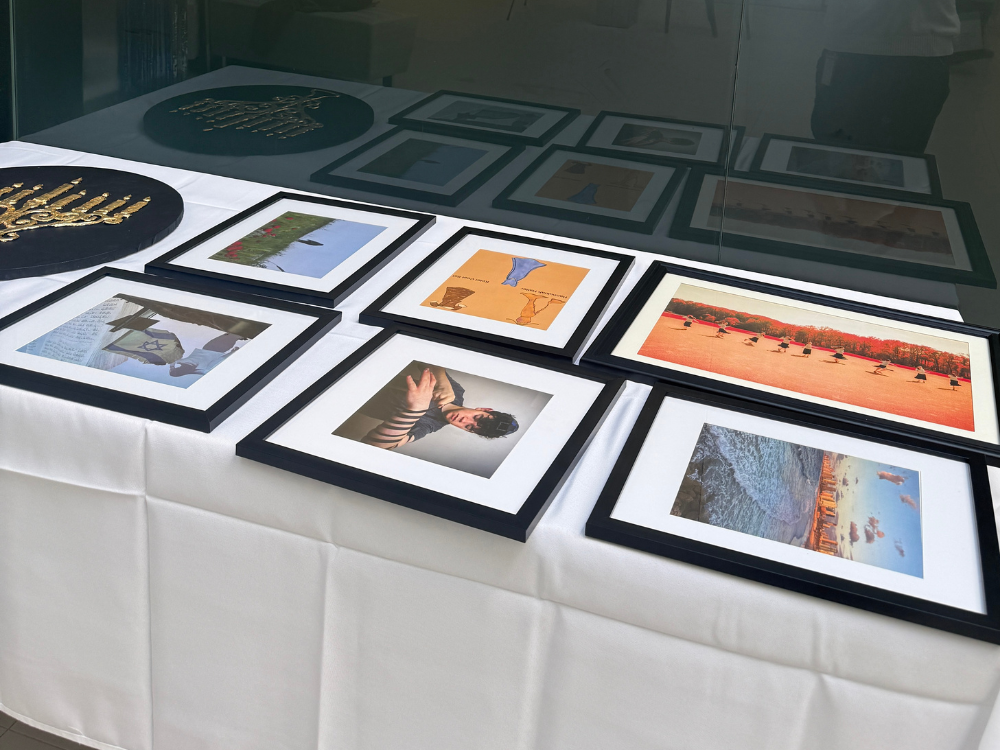
Through Our Eyes, an original art exhibit created by local teens Emma Libowitz, Ayelet Magder, Ofek Bar-Ori, Sophie Moyal, and Aviela Dennen, brings together the voices and experiences of Jewish teens in this moment. Through paintings, poetry, and mixed media, the exhibit offers a deeply personal look at what it means to be Jewish today, grounded not in headlines or politics, but in lived experience.

“At a time when antisemitism is often discussed in abstract or political terms, this exhibit restores humanity to the conversation,” said Ofek. “It allows [people] to see Jewish teens not as representatives of conflict, but as individuals with complex emotions, identities, and stories.”

For many of the teens, the exhibit is both a creative outlet and a communal space. “It acts as a space for teens to lean into their Jewish identities and express their thoughts and emotions, where they might not have otherwise had a place to do so,” Ayelet shared.

That sense of belonging, expression, and connection doesn’t happen in a vacuum.

Each of these teens is involved in Jewish life across the region: whether through the Bender JCC, camps like Ramah and Capital Camps, or other youth experiences that have helped shape their identities over time. These are the environments where Jewish teens build confidence, explore their values, and form the relationships that allow them to show up fully as themselves.

Investing in the Ecosystem

Federation plays a critical role in making those environments possible, supporting both teens and the professionals who guide and work alongside them.

By supporting camps, youth groups, JCCs, and other teen programming across Greater Washington, Federation invests in the spaces where identity is formed and strengthened. These investments don’t just power programs, they power identity, helping to cultivate a generation of young people who feel connected, confident, and empowered to express what being Jewish means to them.

As the exhibit travels to JCCs, synagogues, and schools across the region, it is creating new opportunities for connection, not just between teens, but across the broader community. “We hope the exhibit will help teens know that you’re not alone,” said Aviela. “That there are other teens going through the same things.”

And that expression matters now more than ever. “There has been a variety of reactions to October 7 within the Jewish community,” Emma shared. “Our experience as Jewish teens isn’t a monolith. Right now, we need the support and encouragement of adults to speak openly, voice our concerns, and reaffirm our communal values.”

The Through Our Eyes exhibit is modeling something powerful: that in the face of challenge, Jewish identity is not only something to hold onto. It’s something to build, express, and share.

Because when young people are given the tools, the space, and the support to explore who they are, they don’t just respond to the moment—they help shape what comes next.

Related posts

Why this moment feels familiar Why this moment feels familiar
Why this moment feels familiar
As institutions increasingly single out Jews and demand ideological conformity, Jewish educators and communities face a difficult question: will the price of belonging become denying our identity? We must push back against antisemitism and protect the Jewish and universal values we have long fought to uphold.
read more

What We’re Hearing Across the Community and What It Means

What We’re Hearing Across the Community and What It Means

What does it actually feel like to find your way into Jewish life in our community?

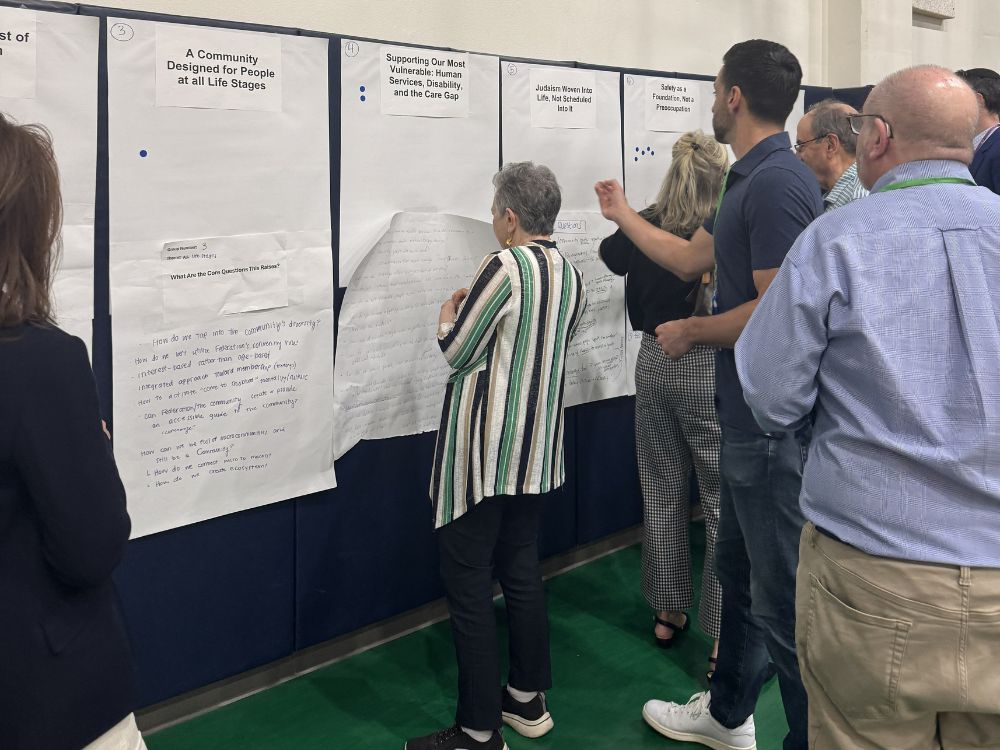
Over the past few months, the Community Leadership Council (CLC) set out to hear directly from the full diversity of our Greater Washington Jewish community. Nearly 200 people across 26 groups shared their experiences, bringing forward a wide range of backgrounds, life stages, levels of engagement, and perspectives to ensure our work reflects what matters most to people and informs how we prioritize and invest.

Separately, more than 1,300 people participated in a community-wide survey, offering a broader view of how people are experiencing Jewish life today.

When you look at it all together, a picture starts to emerge. Not perfect or unanimous, but consistent in ways that matter.

People are looking to connect, participate, and feel like they belong.

The Role of Federation

These patterns clarify where Federation fits.

We do not run every program or guide every individual. Our role is to make the system work better—bringing organizations together, investing in what works, and making it easier to navigate Jewish life.

Much of this work happens behind the scenes: aligning organizations so experiences feel connected, expanding access, convening leaders to address shared challenges, and strengthening the system so it works better for the people it serves.

This is the difference between a collection of organizations and a connected community.

The CLC extends this work beyond the room. Leaders take these insights back into their organizations, and the findings will be shared more broadly so others across the community can engage with and respond to what we are learning.

What We’re Seeing Across the Community

Finding your way in isn’t always simple. For many, it starts with basic questions:

  • Where do I go?
  • Who is this for?
  • How do I begin?

With so many organizations and options, it can be hard to know where to start or how to move from one experience to the next.

Some of what we heard:

  • Cost shapes participation. From camps and schools to programs and events, cost plays a real role in how people engage. Sometimes it limits choice. Sometimes it limits participation altogether.

“Day school affordability is a huge issue. Jewish life is expensive.”

  • Belonging is not a given. Across identities, life stages, and levels of involvement, people are looking for spaces where they feel comfortable and seen. That’s true for those who are deeply connected, and for those still deciding if there is a place for them.

“We moved to the area and don’t have connections or a sense of belonging. I want to be invited to Shabbat dinners…”

  • There is a desire for everyday Jewish life. Our community shows up in meaningful ways during moments of need, and that continues. At the same time, many people are looking for something more consistent: experiences that are part of daily life and feel worth showing up for.

“I want a community that comes together for joyful reasons. Not just crisis gatherings.”

No Single Experience Tells the Whole Story

By listening closely to what people hope to see and build in our community, we begin to see the themes we share in common and better align our work with how people want to engage.

The CLC designed and led this effort, engaging people across the community, gathering input through both listening and survey data, and bringing those insights together to clarify what we’re hearing.

Why This Work Matters

If you’ve ever tried to find your way into Jewish life—whether you’re new, coming back, or looking for something different—this likely feels familiar. And there is something reassuring in knowing there is a community that cares and is working to make that experience better.

This work starts by paying attention to what people are actually experiencing and being honest about where things aren’t working. The Community Leadership Council helps identify patterns across those experiences and clarify where the community is asking for something different.

What Comes Next

“What we heard gives us a clearer sense of what the community wants and where it is asking for something different,” said Marla Schulman, Chair of the Community Leadership Council. “What we learned is the importance of continuing to engage voices across the community in building it.”

Those insights are now informing the next stage of our work, as Federation’s Board considers how they should shape our priorities and direction moving forward. And some of this work is already underway: expanding access, strengthening coordination across organizations, and making it easier to find and engage in Jewish life. Our goal is to make it finding your way in clearer, closer, and more within reach.

We’ll keep sharing what we’re learning, and how it’s shaping the work ahead.

Related posts

Why this moment feels familiar Why this moment feels familiar
Why this moment feels familiar
As institutions increasingly single out Jews and demand ideological conformity, Jewish educators and communities face a difficult question: will the price of belonging become denying our identity? We must push back against antisemitism and protect the Jewish and universal values we have long fought to uphold.
read more

A Moment to Reimagine What’s Next

A Moment to Reimagine What’s Next

After years of crisis response, it’s time to imagine—and build—the Jewish future we want.

For the past several years, really ever since COVID, our communal agenda has been shaped in large part by external crises. There’s no shame in this. Federation, supported by a passionate Jewish community, is well suited to crisis response. We have the local and global infrastructure to reach people and deploy help, a core part of our role.

Through a pandemic, wars, antisemitic attacks, the devastation of October 7, economic uncertainty, and political and social upheaval, we, as a community, have been there to help the Jewish people and those in need locally and around the world.

Across our community and in conversation with others from around the country, I hear how eager people are to reclaim a sense of agency over the Jewish future. To not only fend off the destructive forces of the day, but to build something great. This isn’t to say that we should abandon our work to be there for the Jewish people and Israel in times of crisis, not at all. Without question, we will need to remain diligent in responding to a dysregulated world. But we can be serious about our dreams too.

As Rabbi Lord Jonathan Sacks used to say, “Jewish faith is written in the future tense.” We are in close contact with our past, but we are also a people of possibility. We would be doing the Jewish story a disservice if we did not make the most of the opportunities in front of us to strengthen Jewish identity, pride, joy, and connection. This is the spirit that defines our community, and one we will continue to harness in our work ahead.

Already, we are working to grow and scale the things we know have significant impact. Shabbat dinners (as I wrote about last week), Jewish summer camp, youth groups, Jewish day schools, Jewish learning, and immersive Jewish experiences, including trips to Israel and local retreats, have tremendous effects on someone’s identity. How can we expand these offerings and make them more accessible to more people? How can we be a home for people with diverse opinions? How do we use our resources and relationships to maximum effect for people across all age groups?

It feels strange in this time of absurd and heartbreaking headlines to be talking about agency. But it’s precisely in this moment when things feel most out of our control that we are called to wrestle it back. Like so many times throughout Jewish history, we can define for ourselves who we are and where we are going. Between our collective responsibility and capacity to strengthen Jewish life, and Federation’s relationships, resources, and talent for convening, the future is ours for the shaping.

Related posts

Why this moment feels familiar Why this moment feels familiar
Why this moment feels familiar
As institutions increasingly single out Jews and demand ideological conformity, Jewish educators and communities face a difficult question: will the price of belonging become denying our identity? We must push back against antisemitism and protect the Jewish and universal values we have long fought to uphold.
read more

Fat Torah: Exploration of Judaism + Body Liberation

Fat Torah: Exploration of Judaism + Body Liberation
Fat Torah is all about diving into the questions of what Judaism has to say about fatphobia, fat activism, and body liberation. Together we’ll explore Jewish wisdom, culture, and history—including the ways antisemitism has also shaped body narratives—and discover how our tradition can be a source of dignity and joy for every body. Inspired by Rabbi Minna Bromberg’s Every Body Beloved: A Jewish Embrace of Fatness, this class will invite you to reimagine Jewish community as a place where belonging and liberation are for all of us. No experience necessary. Everyone is welcome. This gathering will take place in Gaithersburg, MD. Specific meet-up location and additional details will be shared with registrants after the registration deadline. Register by May 28th. the Den Collective serves 20s, 30s, and 40s throughout the Greater Washington Area.