Open More Possibilities. Join a community of donors shaping the future of Jewish life.

What if connection is closer than we think?

What if connection is closer than we think?

A company recently ran an experiment to connect individuals across two politically polarized locations. They set up one payphone in San Francisco and another in Abilene, Texas, and invited passersby to ring the other location. After 400 conversations, the company found that an overwhelming majority of the exchanges were positive, and more than half included laughter. People discussed politics but spent more time talking about everyday life, family, aspirations, grief, and happiness.

Stories like this challenge the narrative of inevitable polarization. The findings remind us that even through the fog of division, it’s in our nature to find our way to each other’s humanity. Our disagreements are real. But disagreement doesn’t have to prevent us from connecting and working toward common goals. In fact, the passion behind our convictions can frequently be a starting point for finding common ground.

Indeed, we’re heading into consequential weeks in Israel and the United States. All the while, a new era of Jewish life is unfolding. This is precisely when we need to come together as a collective, in the nation’s capital, to pursue a shared future.

Federation is a mechanism for making this possible. We create opportunities for people to come together and shape, strengthen, and benefit from a strong Jewish community in an era of overlapping headwinds. Our work runs the gamut: supporting organizations that provide food assistance and other essential services; helping Jews at every life stage make Jewish friends, engage in Jewish learning, and explore Jewish wisdom; taking on the complex challenges facing the Jewish people and Israel, and so much more.

In many ways, we’re running a countercultural operation. At a time when so much seems designed to deepen our partisan and social divides, we’re choosing to install metaphorical payphones. We’re investing in the relationships, institutions, and shared experiences that bring us closer. And we’re working together to leave Jewish life, and the world around us, better than we found it.

I invite you to be part of this work and stake a claim in our countercultural approach by making a gift to Federation. Through October 30, any amount you give to Federation’s efforts to support vibrant Jewish life in our region will be matched dollar-for-dollar, doubling your impact.

In this election season, one of the most important votes of confidence we can cast is in one another. Time now to get to the polls.

Double your impact

Related posts

Why this moment feels familiar Why this moment feels familiar
Why this moment feels familiar
As institutions increasingly single out Jews and demand ideological conformity, Jewish educators and communities face a difficult question: will the price of belonging become denying our identity? We must push back against antisemitism and protect the Jewish and universal values we have long fought to uphold.
read more

Hanukkah Party & Jewish Research in Galicia

Hanukkah Party & Jewish Research in Galicia
Join us for our: Annual Chanukah Party 12:00 – 3:00PM Location: TBD. There will be a one-hour program, conducted over Zoom at 1:30 PM Eastern Time, broadcast to Party Goers and others via Zoom. This is one of the many activities that is a benefit of JGSGW membership. Nonmembers may register to attend for a fee of $10. Emily H. Garber will teach you about specialized resources and techniques for Jewish genealogical research in the province of Galicia, Austrian Empire. Emily’s discussion will include a review of the history and context of recordkeeping and examples of records useful for those seeking ancestors in the Austrian Empire. This one-hour program, conducted over Zoom at 1:30 pm EST, is free for members. This is one of the many activities that is a benefit of JGSGW membership. Nonmembers may register to attend for a fee of $10. Emily H. Garber (M.A., archaeology) is a Jewish family historian and frequent speaker at International Association of Jewish Genealogical Societies and NGS conferences. She’s coordinated Jewish genealogy courses for SLIG and GRIP. She holds a Boston University Genealogical Research program certificate. Emily blogs at https://extrayad.blogspot.com/ and has written several articles for Avotaynu and an article on Holocaust research for NGS Magazine. She chairs the Phoenix Jewish Genealogy Group, is Vice President of the IAJGS and on the board of the Arizona Jewish Historical Society.

Why this moment feels familiar

Why this moment feels familiar

What history can teach us about antisemitism today

Historians have pushed back on the narrative that immigration officials anglicized the names of Jews upon their arrival at Ellis Island. In fact, it wasn’t until later, when Jews were trying to get jobs, fit into their communities, and avoid discrimination and bullying that they opted to obscure their Jewish heritage.

I was thinking about this history as I followed the news this week about a group of American Jewish educators that canceled their trip to an international conference in Italy after being asked to undergo a political and ideological litmus test.

Of course, the Reggio Emilia conference is not the only one discriminating against Jews. Institutions are excluding Jews in ways obvious and subtle across a variety of contexts that go unseen and unchecked with increasing regularity. Professional organizations are coming out with statements on Israel thus sending a message that those who disagree with the statements are not welcome. Students are calling for walkouts and using social pressure to isolate those who disagree.

I worry that in this context, Jews will start hiding who they are. If the price of belonging becomes denying our identity, it may feel like we have no choice but to pay.

So, while I hate what our educators had to face, I am glad this story is unfolding in public. If sunlight is the best disinfectant, we need all the rays we can get pouring over such overt acts of antisemitism. No Jew should be singled out, held to a different standard, and expected to answer for the actions of others simply because they’re Jewish. We do not ask this of any other group.

At Federation, we are calling attention to these incidents whenever they arise. We are working through our national partners to maintain pressure on civic and political leaders to upend this kind of discrimination—toward us and toward anyone else. And we are continuing to build a sense of Jewish pride and push back against antisemitism from a position of strength, conviction, and love for Jewish peoplehood.

At the turn of a previous century, Jews had to learn to keep their heads down and blur their identities to get by. But they didn’t stop there. Jewish leaders and organizations went on to fight for laws prohibiting discrimination in employment, helping secure protections not only for Jews but for everyone, to ensure that those who followed didn’t face the layers of discrimination that they did.

We must harness this same instinct. There are clear parallels between the antisemitism of yesterday and what we see unfolding today. It’s becoming acceptable among more institutions and more people to single out Jews. We must push back not only for our own benefit but on behalf of the Jewish and universal values we have long fought to protect.

Related posts

Jewish Family Discovery Days: Oct 2026-June 2027, Arlington, VA

Jewish Family Discovery Days: Oct 2026-June 2027, Arlington, VA
Join other young families with children ages 0-8 for joyful Jewish learning, and create crafts to fill your Jewish homes with meaning and delight! Come to one or all sessions, from October 2026-June 2027. Siblings and grandparents are welcome! Free. Registration is required. Click here to register for one or multiple sessions: https://members.etzhayim.net/form/jfdd These monthly experiences at Congregation Etz Hayim are made possible by a grant from The Jewish Federation of Greater Washington.

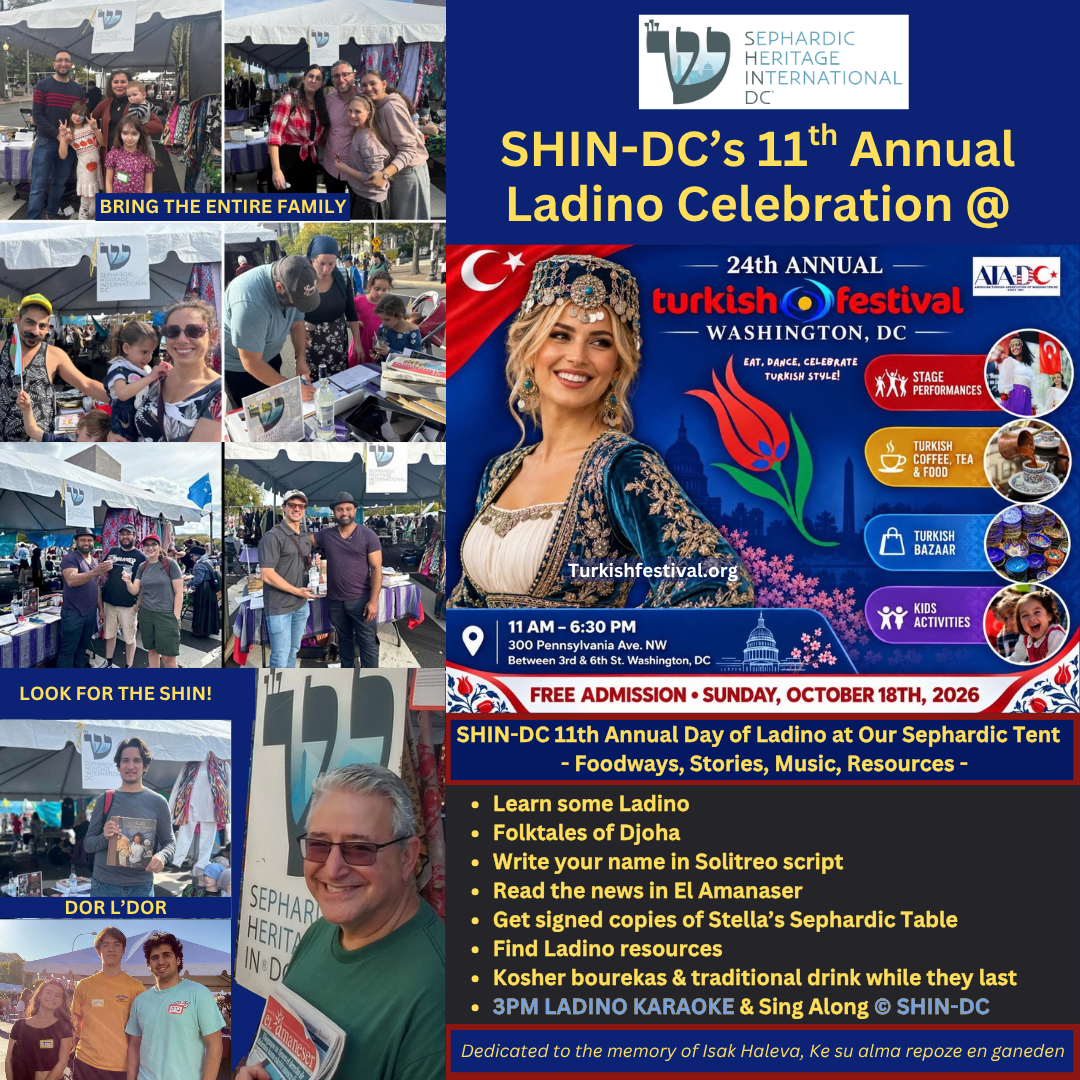
SHIN-DC 11th Annual Day of Ladino at DC’s Turkish Festival

SHIN-DC 11th Annual Day of Ladino at DC’s Turkish Festival
FOODWAYS , STORIES, MUSIC, RESOURCES - Learn some Ladino - Folktales of Djoha - Write your name in Solitreo script - Read the news in El Amanaser - Get signed copies of Stella’s Sephardic Table - Find Ladino resources - Kosher bourekas and traditional drink while they last - 3PM LADINO KARAOKE & Sing Along © SHIN-DC More Info at the link just below: shindc.org/11Ladino2026 Questions? Want to volunteer? Email info at shindc dot org. DC’s 24th Annual Turkish Festival Organized By the American Turkish Association (ATA-DC) ___________________ SEPHARDIC HERITAGE INTERNATIONAL (SHIN-DC) shindc.org Twitter/Instagram: @Sephardic_in_DC Questions? Email info@shindc.org. Keep up with SHIN-DC on Facebook: https://www.facebook.com/Sephardic.Heritage.IN.DC/ Subscribe to the SHIN-DC Newsletter: https://lp.constantcontactpages.com/sl/C4fipZZ Subscribe to the SHIN-DC YouTube Channel: @shindcsephardicheritageint925 https://www.youtube.com/channel/UC6LXc3Fvzm1uYlmrqh-3nbg

New data shows growing interest in Jewish life

New data shows growing interest in Jewish life

Yesterday, Jewish Federations of North America (JFNA) released new data about the growth of interest in Jewish life that sparked after the October 7 terror attacks. Jewish professionals refer to this phenomenon as “the surge” and responding to it remains a top priority for Jewish institutions, including Federation.

In the weeks and months following October 7, we did not know how it would affect Jewish engagement due to the rise of campus protests and global antisemitism. Would people feel closer to their Jewish identity or increasingly shy away from it?

What we saw, however, was that when it felt difficult to be Jewish—to face the pain of 10/7, to navigate differing perspectives on Israel, to open ourselves up to being seen as different—that Jews stepped in.

In 2024, 43% of the American Jewish community wanted or were seeking more engagement in Jewish life. Everyone from young adults to midlife and older adults, to parents of young kids were eager to learn more about Israel and Jewish life, and participate in Jewish programs. Those who were least engaged before 10/7, were particularly eager to find new venues for learning, and above all, connect with others in the Jewish community.

It’s unclear how long the surge will last. But thus far, it seems to be sustained. The latest survey results show that 38% of Jewish Americans are part of the surge, a seven-point increase from last spring and a hint at a new normal.

Evident in the data is a strong desire for social connection. To me, this reinforces the idea that in a topsy-turvy world, the search for belonging will increasingly shape how people live and the choices they make. One number I’m noting: of those who were not previously engaged in the Jewish community, 41% have attended events but are still trying to find the right fit.

As you can imagine, this has important implications for our work at Federation. To help people find what they seek, we must continue investing in diverse programming that gives everyone access to rich and meaningful Jewish experiences and helps them meet, connect, and learn with other people. Shabbat dinners, deep dives, meetups, family-friendly events, all of it matters.

Whatever responses we pursue, they must be part of a community-wide effort to notice when people show up and help them connect and stay connected. We all know what it feels like to take a chance on something, to be the new person in a room. Which means we also know what a difference it makes to chat with friendly people and feel shepherded into the group. That’s a role every one of us can play.

Statistics—and our own human intuition—prove that demand for belonging is up. Our work now is to provide the supply.

One way we can help meet this moment is by supporting the organizations that make Jewish life thrive. Yesterday was DAF Day, a national day of giving through donor advised funds. If you have a DAF, I hope you’ll consider recommending a grant to Federation. And if you don’t yet have one, I invite you to open a DAF and direct a $1,800 gift to an eligible Jewish or Israeli nonprofit of your choice through our Jewish Community Foundation’s Open More Possibilities initiative.

Related posts

Why this moment feels familiar Why this moment feels familiar
Why this moment feels familiar
As institutions increasingly single out Jews and demand ideological conformity, Jewish educators and communities face a difficult question: will the price of belonging become denying our identity? We must push back against antisemitism and protect the Jewish and universal values we have long fought to uphold.
read more

Three Years Later, We Don’t Have to Carry This Alone

Three Years Later, We Don’t Have to Carry This Alone

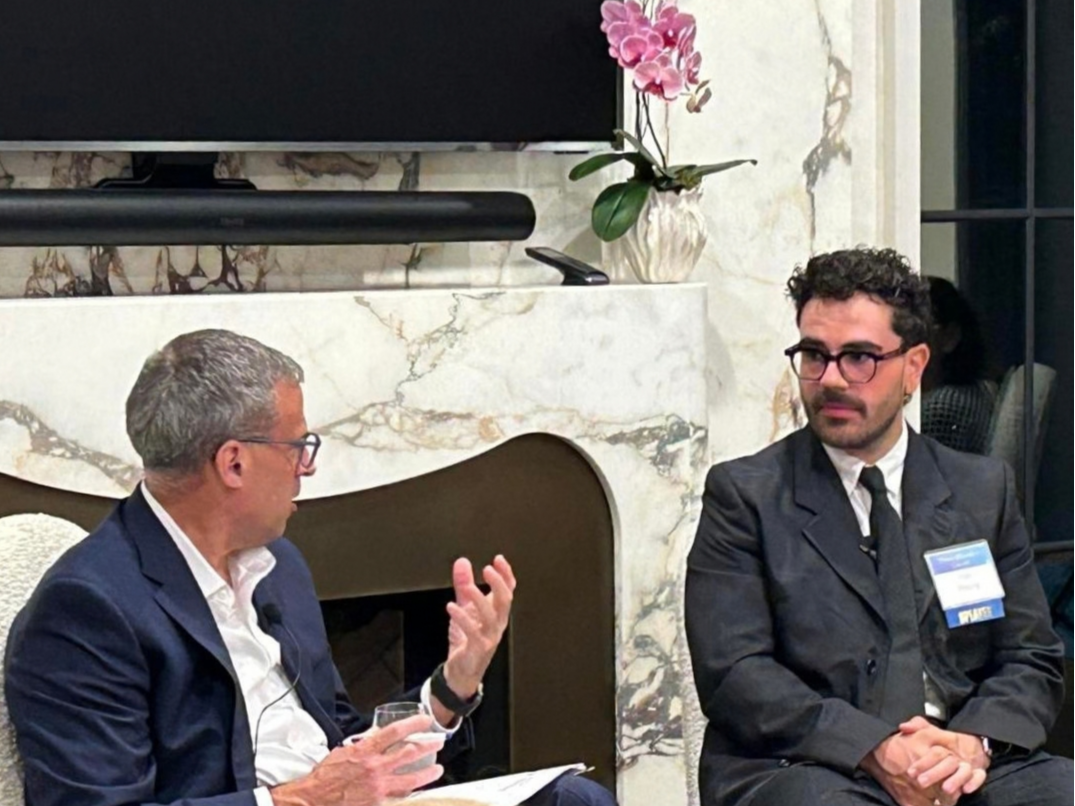
Being part of one people doesn’t mean we all have the same experience, the same politics, or the same response. It does mean we can make room for one another, protect one another, and show up for one another. Three years after October 7, Hen Mazzig speaks with us about the importance of community.

Three years after October 7, we are still trying to figure out how to talk about it. How do we talk about Israel when the conversation can so quickly become political? How do we talk about antisemitism when so many American Jews are encountering it in ways they never expected? How do we talk about Jewish identity when the past three years have changed what it means to feel visibly, publicly Jewish?

And perhaps most difficult of all: How do we talk to one another when we have lived through the same historical moment in such different ways?

Hen Mazzig has spent years having these conversations.

Across Israel, the United States, and Jewish communities around the world, he has listened to people try to make sense of October 7 and everything that has followed. He has heard anger and grief, fear and frustration. He has also heard something he didn’t necessarily expect to encounter so often: exhaustion.

“I hear how hard it is for a lot of people,” Mazzig says. “And that’s really sad.” Three years later, people are looking for a way to understand each other.

What We Misunderstand About Each Other

Part of the challenge, he believes, is that Israelis and diaspora Jews are often looking at one another through the lens of their own experiences.

For Israelis, October 7 was a profound trauma that changed the way many people see their own safety, their country, and the world around them. Mazzig sees that trauma in the defensiveness that can sometimes emerge in conversations about Israel.

But he also wants Israelis to understand what is happening outside of Israel. “American Jews are paying the price,” he points out.

The experience of an American Jew navigating antisemitism is different from that of an Israeli who has experienced October 7 and its aftermath firsthand. American Jews may be dealing with antisemitic incidents in their schools, workplaces, or communities. They may have lost friendships. They may feel increasingly uncertain about how openly to express their Jewish identity.

Meanwhile, Israelis are carrying the experience of a society profoundly shaken by violence and the ongoing consequences of that trauma. The experiences aren’t identical, and they don’t have to be identical for the grief on both sides to be real.

“I just think it’s different sorts of grief,” Mazzig observes, “but it’s grief, and it’s real grief on both parts.”

That, he believes, is something we need to make more room for. Being part of one people doesn’t mean having one experience. We don’t all live in the same place. We don’t have the same politics. We don’t respond to October 7 in the same way.

And we don’t always see what the other person is carrying.

The question, then, isn’t whose grief is more legitimate. It’s whether we can become curious enough about one another to recognize that both are real.

How We Talk to One Another

That curiosity becomes especially important when the conversation gets difficult. Mazzig shares that he is constantly asked for talking points. “I keep getting asked for talking points,” he says. “‘Give us some talking points. What do we say when people say this to us?’”

The question reveals something about where many people are right now. They want to be prepared. They want to have the right facts. They want to know exactly what to say before they enter a conversation they fear they might not be equipped to handle.

But his answer is, in some ways, to stop worrying so much about having the perfect thing to say. “Everyone is an expert in something,” he remarks. “Try and engage in a meaningful way. Remind people that you are a human being.”

You can speak from your own experience. You can listen to someone else’s. You can acknowledge something that is true even when it doesn’t fit neatly into your own worldview. “There’s so many truths to every issue,” Mazzig explains, “and we just need to be able to hold all of them.”

It’s what he describes as a “yes, and” approach. The understanding that recognizing one truth doesn’t require us to erase another.

Yes, this is what I believe, and someone else may experience it differently.

Yes, I can care deeply about Israel, and still have difficult questions.

Yes, I can be hurt by antisemitism, and still recognize that another Jew may be responding to that experience differently than I am.

That doesn’t make the conversation easier, but it can make it more human. He is equally clear about something else: engaging does not have to mean engaging all the time.

After three years of crisis, being part of the conversation does not require constant public engagement. There are moments when showing up means speaking. There are other moments when it means stepping back, protecting your energy, and taking care of yourself.

What Jewish Community Looks Like Now

Perhaps what has surprised Mazzig most over the past three years is not simply how difficult these conversations have become. It’s how tired people are. “To keep hearing it over and over and over again, you know, you’ve been in this work for a long time,” he reflects. “We’re three years past October 7, and yet it’s getting worse, not better.”

But alongside that exhaustion, he has seen something else. People showing up.

He has met “so many Jewish-adjacent” people who, while not Jewish themselves, have shown up for the Jewish community over the last three years. He has watched people build relationships across differences and step toward one another when it would have been easier to retreat.

And when Mazzig talks about what Jewish community means to him, his examples are remarkably ordinary. His husband’s family. People he’s met in Washington, D.C. His spin instructor. Israeli Jews. American Jews. Jews around the world.

The people who become part of your life in unexpected ways.

“What I love most about being Jewish,” he says, “is that no matter where I go, I feel like I have a family and I have a story.”

That may be one of the most tangible expressions of Jewish peoplehood: not that Jews everywhere have the same story, but that wherever you go, you can find people who are part of yours.

Mazzig believes the Jewish community has shown up in extraordinary ways over the past three years. When we’re down, he stresses, “we come and help one another.”

Three Years Later, We Can Still Choose Hope

Three years after October 7, there is no single answer for what Jewish peoplehood should look like. Maybe it doesn’t need one.

Being one people has never meant agreeing on everything. Maybe it has always meant something harder and more meaningful. Making room for one another even when our experiences don’t match. Protecting one another without requiring sameness. Showing up even when we’re tired.

And remembering that we have each other.

“This understanding that, you know, we have each other,” Mazzig notes. It is a simple idea. After three difficult years, it may also be one of the most important. Because the story isn’t finished.

He holds onto that through hope. “I hold on to hope, because that’s all we’ve got.” And then, with the certainty that hope requires: “I have to know that it’s going to get better.”

Not because everything is okay. Not because the grief has ended, the disagreements have been resolved, or the questions have easy answers. But because hope is a commitment to a future we cannot yet see.

And getting there, Mazzig reminds us, is something we don’t have to do alone.

Am Yisrael Chai.
Your support helps Federation bring people together, foster meaningful conversations, and strengthen the relationships that sustain our community.

Donate

Related posts

Why this moment feels familiar Why this moment feels familiar
Why this moment feels familiar
As institutions increasingly single out Jews and demand ideological conformity, Jewish educators and communities face a difficult question: will the price of belonging become denying our identity? We must push back against antisemitism and protect the Jewish and universal values we have long fought to uphold.
read more

Walking Through the Same Doors, Ten Years Later

Walking Through the Same Doors, Ten Years Later

Everything felt so completely new.

When I first landed in Greater Washington ten years ago, that was the only way I could describe it. It was my very first time ever setting foot in the United States, and on a purely physical level, my brain couldn’t process what was happening. I walked out of the airport in August into sweltering heat, looked up, and saw it rain. Coming from Israel, where summer is completely, predictably dry, standing in ninety-degree weather while water poured from the sky felt like stepping onto another planet.

I remember that first Shabbat so clearly. Fresh out of the IDF Education Corps, my uniform barely packed away, I walked into an entirely unfamiliar world of American synagogue life and vibrant liberal Judaism. Everything was culturally complex and utterly fascinating. I came with an educator’s fire, convinced my goal was simple: to evoke emotion around Israel. I was completely okay with anger or frustration, too, as long as there was a heartbeat. What took me by surprise back then was how deeply people wanted to speak Hebrew with me, stumbling over words with a genuine hunger that touched me then, and honestly still touches me today.

Ten years later, I walked off a plane and into this community once again. But the person writing this today feels worlds away from that wide-eyed young woman standing in the August rain.

Ten Years Can Change Everything

A decade carries immense weight. In those ten years, my life changed completely. I got married, became a mom to two incredible kids, and built a home back in Israel. Professionally, I stepped into global Jewish education, as the Educational Director and Manager for the Shlichut program worldwide. Returning now as both a mother and a seasoned professional, I see families, children, and a community I care about deeply through an entirely new lens.

And let’s be honest. The community itself is walking through a very different reality today than in 2016.

Between political polarization, rising antisemitism, and the heavy, lingering trauma of war, we have all been through the wringer. The warm, generous heart of Greater Washington is still here, but the air in the room feels different. Talking about Israel today often feels like handling a hot potato. It’s on everyone’s minds constantly, burning hot, but people are often anxious or hesitant to touch it. In a world dominated by quick soundbites and algorithms, we are constantly surrounded by sharp exclamation points and very few curious question marks.

Yet, wrestling with complexity is in our DNA as Jews. It’s who we are. And when the noise of the world tries to force us into rigid boxes, authentic, human connection becomes our sanctuary.

Living Bridges in a Fragmented World

Since October 7, that truth has hit me on a deeply personal level. Shlichut (emissary work) was never meant to be a lecture or a series of polished talking points. It is a living, breathing, two-way street. In the darkest days after the attack, I watched our emissaries across the globe stand as human bridges. They were carrying unbearable heartbreak, some grieving murdered friends, others waiting on agonizing news of hostage family members, one young woman who was supposed to be at the Nova music festival and had only flown out the day before. Yet, they showed up every single day to share their raw, vulnerable truths. In return, this community wrapped them in love, holding space for their broken hearts. That mutual embrace proved to me why we do this: news headlines don’t heal people, but real relationships do.

Stepping into leadership as the head of Greater Washington’s mishlachat (delegation) program, right as it hits its own 10-year milestone, feels like coming full circle in a way that gives me goosebumps. I keep returning to the cantor’s prayer from the High Holidays: Hineni he’ani mima’as (Here I stand, impoverished in deeds). It is that quiet, overwhelming feeling of asking yourself, Who am I to carry this weight? Yet, I step into it with immense devotion, reverence, and gratitude for the trust you’ve placed in me.

My goal for our team of shlichim is to unlock the door for real, honest conversation. My role is to be a problem solver and a catalyst, helping our partner organizations thrive, guiding our shlichim to succeed, and advancing Federation’s mission on the ground. I hope people leave our conversations feeling energized, knowing that whatever challenge or vision they bring to the table, we can tackle it together, not just in words, but through meaningful action.

Anchored in Hope

At my core, as an educator and a mother, I am stubborn about hope.

Hope isn’t a passive wish. Instead, it’s the active belief that a better tomorrow is worth fighting for. I see it in my children every morning, I see it in the Mishlachat delegation serving this community, and I see it in the way people here continue to show up for one another.

Ultimately, my hope is anchored in the conviction that October 7 does not define us. It is an immense tragedy, one that we must study, learn from, and forever remember, but the Jewish people, the State of Israel, and Zionism hold a history, memory, and purpose that existed long before us and will endure long after us.

We are defined by our enduring strength, our continuity, and the way our communities show up for one another, not by the catastrophes along the way. In that shared resilience, hope isn’t just an idea, it is a lived reality.

As our Mishlachat program marks its 10-year milestone, we are already looking ahead, envisioning what our presence will mean as we approach Israel’s 80th anniversary in two years, its 90th in a decade, and far into the future. We cannot predict every curve in the road, but we can decide how we walk it together.

My door is wide open. Let’s dream big, ask the hard questions, and build this next chapter together.

Your support helps ensure our community can continue building meaningful relationships with Israel through authentic experiences, personal connections, and lifelong learning.

Donate

Related posts

Why this moment feels familiar Why this moment feels familiar
Why this moment feels familiar
As institutions increasingly single out Jews and demand ideological conformity, Jewish educators and communities face a difficult question: will the price of belonging become denying our identity? We must push back against antisemitism and protect the Jewish and universal values we have long fought to uphold.
read more

Day at the J

Day at the J
Looking for something to do on a Saturday afternoon that the kids will love and you’ll enjoy yourself? Day at the J gives the kids an afternoon of play and the adults a few hours to enjoy all the JCC has to offer before coming together for dinner and Havdalah to close out Shabbat. Prep for Shabbat and talk about what Shabbat means in your home, whether you’re Jewish or not. Let’s explore rest as a busy working parent and how to find those moments, even if they look different than they used to. We’ll make our own Shabbat Judaica to take home. As always, there will also be time to play games, enjoy drinks, work out at the gym, or just hang out with other adults.

TSNS Community Coffee: Raising Children Jewishly

TSNS Community Coffee: Raising Children Jewishly
TSNS Community Coffee Series Come to Temple Sinai for a coffee and to hear from a speaker about issues related to the growth and development of young children. Sign up below and we will send a reminder the day before the program. February 26--Raising Children Jewishly 9:45 AM Raising Children Jewishly — Lauren Binder & TSRS Director Cantor Rebecca Robins | A conversation about creating meaningful Jewish experiences and traditions with young children, at home and in community.