Open More Possibilities. Join a community of donors shaping the future of Jewish life.

What if connection is closer than we think?

What if connection is closer than we think?

A company recently ran an experiment to connect individuals across two politically polarized locations. They set up one payphone in San Francisco and another in Abilene, Texas, and invited passersby to ring the other location. After 400 conversations, the company found that an overwhelming majority of the exchanges were positive, and more than half included laughter. People discussed politics but spent more time talking about everyday life, family, aspirations, grief, and happiness.

Stories like this challenge the narrative of inevitable polarization. The findings remind us that even through the fog of division, it’s in our nature to find our way to each other’s humanity. Our disagreements are real. But disagreement doesn’t have to prevent us from connecting and working toward common goals. In fact, the passion behind our convictions can frequently be a starting point for finding common ground.

Indeed, we’re heading into consequential weeks in Israel and the United States. All the while, a new era of Jewish life is unfolding. This is precisely when we need to come together as a collective, in the nation’s capital, to pursue a shared future.

Federation is a mechanism for making this possible. We create opportunities for people to come together and shape, strengthen, and benefit from a strong Jewish community in an era of overlapping headwinds. Our work runs the gamut: supporting organizations that provide food assistance and other essential services; helping Jews at every life stage make Jewish friends, engage in Jewish learning, and explore Jewish wisdom; taking on the complex challenges facing the Jewish people and Israel, and so much more.

In many ways, we’re running a countercultural operation. At a time when so much seems designed to deepen our partisan and social divides, we’re choosing to install metaphorical payphones. We’re investing in the relationships, institutions, and shared experiences that bring us closer. And we’re working together to leave Jewish life, and the world around us, better than we found it.

I invite you to be part of this work and stake a claim in our countercultural approach by making a gift to Federation. Through October 30, any amount you give to Federation’s efforts to support vibrant Jewish life in our region will be matched dollar-for-dollar, doubling your impact.

In this election season, one of the most important votes of confidence we can cast is in one another. Time now to get to the polls.

Double your impact

Related posts

Why this moment feels familiar Why this moment feels familiar
Why this moment feels familiar
As institutions increasingly single out Jews and demand ideological conformity, Jewish educators and communities face a difficult question: will the price of belonging become denying our identity? We must push back against antisemitism and protect the Jewish and universal values we have long fought to uphold.
read more

Investing in the Future of Jewish Northern Virginia: Meet Federation’s Third Leadership Cohort

Investing in the Future of Jewish Northern Virginia: Meet Federation’s Third Leadership Cohort

The strength of a Jewish community depends not only on its organizations and programs, but also on the people who bring them to life. Across Jewish Northern Virginia, Federation is helping leaders find new ways to connect with one another, deepen their involvement, and help shape the future of Jewish life in the region.

The Jewish Federation of Greater Washington is pleased to announce the third cohort of its Northern Virginia Leadership Cohort, bringing together 24 participants for a collaborative leadership experience running from September 2026 through May 2027.

Designed for Jewish leaders actively involved in a Northern Virginia synagogue, Jewish organization, school, or volunteer role, the cohort helps participants strengthen their leadership skills while building meaningful relationships across the community.

Through monthly facilitated sessions, peer learning, and cross-cohort connections, participants develop practical tools for leadership while gaining a broader understanding of the people, organizations, and opportunities that make up Northern Virginia’s Jewish community.

For Federation, the program is part of a broader commitment to helping Jewish life thrive across the region.

“Federation is committed to serving as a convener, connector, and champion of Jewish Northern Virginia,” said Melanie Schaeffer, Associate Director for Northern Virginia Community Outreach.

“Our goal is to help the region continue to grow as a vibrant hub of Jewish life, where leaders, donors, and community members are actively and meaningfully engaged. Investing in leadership development is one of the most important ways we can make that goal a reality. This cohort is a perfect example of that vision in action.”

Building connections that strengthen the whole community

For participants, the cohort offers more than leadership training. It creates opportunities to meet peers beyond their existing circles, discover new ways to contribute, and see how their own interests and involvement connect to the broader community.

Gabrielle Witkin, who learned about the cohort through her involvement with Women’s Philanthropy following a Federation mission, sees leadership development as a way to build on the work she is already doing.

“I have spent my time with Federation inside Women’s Philanthropy, and I have seen what happens when a group of women decides something matters. It gets done,” Witkin said. “What the cohort gives me is the surrounding context. A clearer picture of how the whole community fits together, so that what we build inside Women’s Philanthropy connects to the rest of our community instead of running alongside it.”

For Witkin, the relationships formed through the program are central to its value. She hopes to gain a deeper understanding of community needs and build connections with leaders across Northern Virginia who share a vision for vibrant Jewish life.

She also sees the experience as an investment in the next generation. “I want my daughter to see her mother commit to something she is passionate about and stay committed. Not for a season. For years. Change takes time, and it takes a community, and she should watch someone do that up close.”

Finding new ways to get involved

The cohort is also helping participants discover opportunities they might not have encountered otherwise.

For Molly Nizhnikov, joining the program was a chance to explore the Northern Virginia Jewish community beyond her existing connections as a synagogue member and Capital Camps parent.

“My goal is to find my place in the NoVA Jewish community,” Nizhnikov said. “I want to understand the full landscape of Jewish organizations and programs here, and to learn where I can give my time to strengthen organizations that fit my life stage.”

Already, the connections are translating into action. Through a fellow participant, Nizhnikov found an opportunity to join a Capital Camps committee. She has also begun attending additional community events and hopes to build a more active role in Jewish communal life.

“The first few sessions have been energizing,” she said. “Meeting like-minded people from across NoVA who value a vibrant Jewish community has been hugely reaffirming, and the one-on-one conversations I’ve had with cohort members are already helping me feel more connected.”

Her experience reflects one of the cohort’s central goals: helping participants move from being connected to individual organizations to feeling connected to the wider community—and finding meaningful ways to contribute their time, talents, and leadership.

Turning relationships into community

For Jenna Friedberg, who recently moved to Northern Virginia from Richmond, the cohort offers both a way to establish roots in a new community and an opportunity to continue growing as a leader.

“I have always sought and held leadership roles within my community, wherever that may be,” Friedberg said. “When I learned of this cohort, I saw it as an opportunity to not only find my place in the NoVA Jewish community but also to develop my leadership skills further.”

“Having this cohort experience provides a unique opportunity to build and strengthen our community,” she said. “Not only can I invite the new friend I made on the bike trail to my place for Shabbat dinner, but I can also represent Federation to her and get her involved.”

For Friedberg, the experience builds on a longstanding relationship with Federation that began during college, when she served as her university’s Hillel president and later participated in Federation programs. Now, she is looking forward to helping others find their place in Northern Virginia’s Jewish community, too.

A stronger future, built together

Although each participant brings a different background, set of interests, and vision for leadership, their goals share a common thread: a desire to help Jewish life in Northern Virginia grow stronger and more connected.

That work takes more than any one person or organization. It requires leaders who understand the community’s breadth, build relationships across existing boundaries, and work together to turn shared aspirations into action.

By investing in established and emerging leaders and creating space for them to learn from one another, Federation is helping cultivate the relationships, skills, and shared commitment that will support Jewish Northern Virginia for years to come.

Meet the cohort and learn more about the program. Explore the participants’ bios and discover what brings them to this shared leadership experience.

Learn more about Federation’s work in Northern Virginia and how we partner with local organizations and community members to strengthen Jewish life across the region.

Related posts

Why this moment feels familiar Why this moment feels familiar
Why this moment feels familiar
As institutions increasingly single out Jews and demand ideological conformity, Jewish educators and communities face a difficult question: will the price of belonging become denying our identity? We must push back against antisemitism and protect the Jewish and universal values we have long fought to uphold.
read more

Why this moment feels familiar

Why this moment feels familiar

What history can teach us about antisemitism today

Historians have pushed back on the narrative that immigration officials anglicized the names of Jews upon their arrival at Ellis Island. In fact, it wasn’t until later, when Jews were trying to get jobs, fit into their communities, and avoid discrimination and bullying that they opted to obscure their Jewish heritage.

I was thinking about this history as I followed the news this week about a group of American Jewish educators that canceled their trip to an international conference in Italy after being asked to undergo a political and ideological litmus test.

Of course, the Reggio Emilia conference is not the only one discriminating against Jews. Institutions are excluding Jews in ways obvious and subtle across a variety of contexts that go unseen and unchecked with increasing regularity. Professional organizations are coming out with statements on Israel thus sending a message that those who disagree with the statements are not welcome. Students are calling for walkouts and using social pressure to isolate those who disagree.

I worry that in this context, Jews will start hiding who they are. If the price of belonging becomes denying our identity, it may feel like we have no choice but to pay.

So, while I hate what our educators had to face, I am glad this story is unfolding in public. If sunlight is the best disinfectant, we need all the rays we can get pouring over such overt acts of antisemitism. No Jew should be singled out, held to a different standard, and expected to answer for the actions of others simply because they’re Jewish. We do not ask this of any other group.

At Federation, we are calling attention to these incidents whenever they arise. We are working through our national partners to maintain pressure on civic and political leaders to upend this kind of discrimination—toward us and toward anyone else. And we are continuing to build a sense of Jewish pride and push back against antisemitism from a position of strength, conviction, and love for Jewish peoplehood.

At the turn of a previous century, Jews had to learn to keep their heads down and blur their identities to get by. But they didn’t stop there. Jewish leaders and organizations went on to fight for laws prohibiting discrimination in employment, helping secure protections not only for Jews but for everyone, to ensure that those who followed didn’t face the layers of discrimination that they did.

We must harness this same instinct. There are clear parallels between the antisemitism of yesterday and what we see unfolding today. It’s becoming acceptable among more institutions and more people to single out Jews. We must push back not only for our own benefit but on behalf of the Jewish and universal values we have long fought to protect.

Related posts

New data shows growing interest in Jewish life

New data shows growing interest in Jewish life

Yesterday, Jewish Federations of North America (JFNA) released new data about the growth of interest in Jewish life that sparked after the October 7 terror attacks. Jewish professionals refer to this phenomenon as “the surge” and responding to it remains a top priority for Jewish institutions, including Federation.

In the weeks and months following October 7, we did not know how it would affect Jewish engagement due to the rise of campus protests and global antisemitism. Would people feel closer to their Jewish identity or increasingly shy away from it?

What we saw, however, was that when it felt difficult to be Jewish—to face the pain of 10/7, to navigate differing perspectives on Israel, to open ourselves up to being seen as different—that Jews stepped in.

In 2024, 43% of the American Jewish community wanted or were seeking more engagement in Jewish life. Everyone from young adults to midlife and older adults, to parents of young kids were eager to learn more about Israel and Jewish life, and participate in Jewish programs. Those who were least engaged before 10/7, were particularly eager to find new venues for learning, and above all, connect with others in the Jewish community.

It’s unclear how long the surge will last. But thus far, it seems to be sustained. The latest survey results show that 38% of Jewish Americans are part of the surge, a seven-point increase from last spring and a hint at a new normal.

Evident in the data is a strong desire for social connection. To me, this reinforces the idea that in a topsy-turvy world, the search for belonging will increasingly shape how people live and the choices they make. One number I’m noting: of those who were not previously engaged in the Jewish community, 41% have attended events but are still trying to find the right fit.

As you can imagine, this has important implications for our work at Federation. To help people find what they seek, we must continue investing in diverse programming that gives everyone access to rich and meaningful Jewish experiences and helps them meet, connect, and learn with other people. Shabbat dinners, deep dives, meetups, family-friendly events, all of it matters.

Whatever responses we pursue, they must be part of a community-wide effort to notice when people show up and help them connect and stay connected. We all know what it feels like to take a chance on something, to be the new person in a room. Which means we also know what a difference it makes to chat with friendly people and feel shepherded into the group. That’s a role every one of us can play.

Statistics—and our own human intuition—prove that demand for belonging is up. Our work now is to provide the supply.

One way we can help meet this moment is by supporting the organizations that make Jewish life thrive. Yesterday was DAF Day, a national day of giving through donor advised funds. If you have a DAF, I hope you’ll consider recommending a grant to Federation. And if you don’t yet have one, I invite you to open a DAF and direct a $1,800 gift to an eligible Jewish or Israeli nonprofit of your choice through our Jewish Community Foundation’s Open More Possibilities initiative.

Related posts

Why this moment feels familiar Why this moment feels familiar
Why this moment feels familiar
As institutions increasingly single out Jews and demand ideological conformity, Jewish educators and communities face a difficult question: will the price of belonging become denying our identity? We must push back against antisemitism and protect the Jewish and universal values we have long fought to uphold.
read more

Walking Through the Same Doors, Ten Years Later

Walking Through the Same Doors, Ten Years Later

Everything felt so completely new.

When I first landed in Greater Washington ten years ago, that was the only way I could describe it. It was my very first time ever setting foot in the United States, and on a purely physical level, my brain couldn’t process what was happening. I walked out of the airport in August into sweltering heat, looked up, and saw it rain. Coming from Israel, where summer is completely, predictably dry, standing in ninety-degree weather while water poured from the sky felt like stepping onto another planet.

I remember that first Shabbat so clearly. Fresh out of the IDF Education Corps, my uniform barely packed away, I walked into an entirely unfamiliar world of American synagogue life and vibrant liberal Judaism. Everything was culturally complex and utterly fascinating. I came with an educator’s fire, convinced my goal was simple: to evoke emotion around Israel. I was completely okay with anger or frustration, too, as long as there was a heartbeat. What took me by surprise back then was how deeply people wanted to speak Hebrew with me, stumbling over words with a genuine hunger that touched me then, and honestly still touches me today.

Ten years later, I walked off a plane and into this community once again. But the person writing this today feels worlds away from that wide-eyed young woman standing in the August rain.

Ten Years Can Change Everything

A decade carries immense weight. In those ten years, my life changed completely. I got married, became a mom to two incredible kids, and built a home back in Israel. Professionally, I stepped into global Jewish education, as the Educational Director and Manager for the Shlichut program worldwide. Returning now as both a mother and a seasoned professional, I see families, children, and a community I care about deeply through an entirely new lens.

And let’s be honest. The community itself is walking through a very different reality today than in 2016.

Between political polarization, rising antisemitism, and the heavy, lingering trauma of war, we have all been through the wringer. The warm, generous heart of Greater Washington is still here, but the air in the room feels different. Talking about Israel today often feels like handling a hot potato. It’s on everyone’s minds constantly, burning hot, but people are often anxious or hesitant to touch it. In a world dominated by quick soundbites and algorithms, we are constantly surrounded by sharp exclamation points and very few curious question marks.

Yet, wrestling with complexity is in our DNA as Jews. It’s who we are. And when the noise of the world tries to force us into rigid boxes, authentic, human connection becomes our sanctuary.

Living Bridges in a Fragmented World

Since October 7, that truth has hit me on a deeply personal level. Shlichut (emissary work) was never meant to be a lecture or a series of polished talking points. It is a living, breathing, two-way street. In the darkest days after the attack, I watched our emissaries across the globe stand as human bridges. They were carrying unbearable heartbreak, some grieving murdered friends, others waiting on agonizing news of hostage family members, one young woman who was supposed to be at the Nova music festival and had only flown out the day before. Yet, they showed up every single day to share their raw, vulnerable truths. In return, this community wrapped them in love, holding space for their broken hearts. That mutual embrace proved to me why we do this: news headlines don’t heal people, but real relationships do.

Stepping into leadership as the head of Greater Washington’s mishlachat (delegation) program, right as it hits its own 10-year milestone, feels like coming full circle in a way that gives me goosebumps. I keep returning to the cantor’s prayer from the High Holidays: Hineni he’ani mima’as (Here I stand, impoverished in deeds). It is that quiet, overwhelming feeling of asking yourself, Who am I to carry this weight? Yet, I step into it with immense devotion, reverence, and gratitude for the trust you’ve placed in me.

My goal for our team of shlichim is to unlock the door for real, honest conversation. My role is to be a problem solver and a catalyst, helping our partner organizations thrive, guiding our shlichim to succeed, and advancing Federation’s mission on the ground. I hope people leave our conversations feeling energized, knowing that whatever challenge or vision they bring to the table, we can tackle it together, not just in words, but through meaningful action.

Anchored in Hope

At my core, as an educator and a mother, I am stubborn about hope.

Hope isn’t a passive wish. Instead, it’s the active belief that a better tomorrow is worth fighting for. I see it in my children every morning, I see it in the Mishlachat delegation serving this community, and I see it in the way people here continue to show up for one another.

Ultimately, my hope is anchored in the conviction that October 7 does not define us. It is an immense tragedy, one that we must study, learn from, and forever remember, but the Jewish people, the State of Israel, and Zionism hold a history, memory, and purpose that existed long before us and will endure long after us.

We are defined by our enduring strength, our continuity, and the way our communities show up for one another, not by the catastrophes along the way. In that shared resilience, hope isn’t just an idea, it is a lived reality.

As our Mishlachat program marks its 10-year milestone, we are already looking ahead, envisioning what our presence will mean as we approach Israel’s 80th anniversary in two years, its 90th in a decade, and far into the future. We cannot predict every curve in the road, but we can decide how we walk it together.

My door is wide open. Let’s dream big, ask the hard questions, and build this next chapter together.

Your support helps ensure our community can continue building meaningful relationships with Israel through authentic experiences, personal connections, and lifelong learning.

Donate

Related posts

Why this moment feels familiar Why this moment feels familiar
Why this moment feels familiar
As institutions increasingly single out Jews and demand ideological conformity, Jewish educators and communities face a difficult question: will the price of belonging become denying our identity? We must push back against antisemitism and protect the Jewish and universal values we have long fought to uphold.
read more

Why I Chose Federation

Why I Chose Federation

Growing up, I never thought I’d work for a Jewish Federation. As a teen and young adult, I was heavily involved in Jewish life and in Zionist youth groups, but the Federation system hadn’t factored into my career plans. I surprised my younger self therefore when after some time in academia, I applied for a job at the Jewish Federation of Cleveland in 2002.

The person interviewing me asked why it was I had chosen to take this step. I replied that if you want to create change, you must go to an organization that has the capacity to create change.

A couple decades later, I believe this more than ever. A Jewish Federation’s capacity to spur impact for and on behalf of a Jewish community is unparalleled. This is because the Federation structure allows us to operate on three levels at once: engaging individuals, partnering with organizations, and sparking community-wide action.

It’s for this reason (among many others) that whenever someone suggests a century-old system couldn’t possibly serve the needs of the future, I always push back. Federation is a legacy institution precisely because of our ability to evolve to meet the shifting challenges and opportunities we face. As Shira Hutt and Mimi Kravetz of the Jewish Federations of North America wrote last week, the Federation model isn’t static and never has been.

Of course, having the capacity to effect change doesn’t mean anything unless we put it to work. At Federation, we get to inspire, engage, and mobilize people to generate the resources and ideas that will help sustain Jewish life. Many organizations can raise funds, but only Federation can bring significant resources, a network of partnerships, talented staff and lay leadership, and the broader community together to tackle shared goals. We get to ask hard questions. Try new things. And work on the frontier of what’s next.

That’s another thing I love about the role of Federation—we are relied upon to serve as both leader and supporter. We have a clear vision for the future of Jewish life and take seriously our work to use our bully pulpit and to represent the needs and interests of Jewish Greater Washington. But it means just as much to us to operate in the spaces where we don’t have all the answers. Elevating important issues and bringing people together to have important conversations and express and exchange ideas is also a critical part of our work.

I was an enthusiastic job candidate back in the day, and my enthusiasm for what our community can accomplish has only grown. Especially now, as historic challenges mount, we must leverage the full extent of our capacity to create change. We have so much going for us as a community. It’s our job to convert that potential into forward motion for the sake of today and tomorrow.

Related posts

Why this moment feels familiar Why this moment feels familiar
Why this moment feels familiar
As institutions increasingly single out Jews and demand ideological conformity, Jewish educators and communities face a difficult question: will the price of belonging become denying our identity? We must push back against antisemitism and protect the Jewish and universal values we have long fought to uphold.
read more

What Our Community Needs From Us

What Our Community Needs From Us

Who are we responsible for and how do we best serve our community in this moment? These are key questions we are always asking ourselves at Federation but especially now as our world shifts.

However you describe this time we are living in, it’s clear to me that we are entering a new chapter of Jewish life. Whereas the last couple decades were about modernizing Jewish engagement, this new era must also focus on staying connected across lines of difference and working together toward a common future.

As I shared last week, I believe there are core values that have the power to bind us through any kind of tumult, namely the pursuit of justice and love for Jewish peoplehood. We may not always agree on the definition of each, but we can be in conversation about what they mean and what role they play in our lives.

In addition, I also believe there are first principles that must guide our work at Federation to strengthen Jewish life in Greater Washington.

The first is that we are here to serve all 400,000 people who live in Jewish households across the Greater Washington region. While we also have an important role to play beyond this, we do have a unique responsibility in this region for these people. We are committed to reaching people wherever they are in their Jewish journey, from the deeply engaged to those who have not yet found their connection. We are here for young adults, young families, seniors, and every other subset of our population. Our constituency spans the full breadth of the Jewish DMV.

This doesn’t mean that we don’t prioritize certain goals. Every organization must prioritize if they want to have an impact. We are proud of our work to ramp up engagement efforts in Northern Virginia and our partnerships with organizations serving young adults across the region, for example—but approaching our work with the knowledge that we are responsible for the entirety of our community is central to our theory of change.

The next principle is that we seek to create a community that expects and supports disagreement. There are boundaries to the Jewish people, but within those borders is a whole medley of individual and collective viewpoints that are constantly evolving. At Federation, we see how important it is to honor this. We want to see our community growing, learning, and building their ties to Jewish peoplehood and Israel. It follows then that we must make space for different views and experiences, so that we might stay in conversation and help each other forge and strengthen our Jewish connections over time.

The real work, however, is not in laying out these principles but abiding by their implications. How do we reach people who don’t know what’s on offer? How do we make decisions about where communal funds should go? How do we make room for people to grapple with questions about Israel or other elements of Jewish life even when it makes others uncomfortable?

None of these things have easy answers, but that’s what makes our work as a community so worthwhile. Our relationship with time is communal. We have always faced history together and have managed time and again to change it. As we stand together as a people on Yom Kippur, with all our great differences, asking for forgiveness, so must we stand together building our collective future.

Related posts

Why this moment feels familiar Why this moment feels familiar
Why this moment feels familiar
As institutions increasingly single out Jews and demand ideological conformity, Jewish educators and communities face a difficult question: will the price of belonging become denying our identity? We must push back against antisemitism and protect the Jewish and universal values we have long fought to uphold.
read more

We Asked for This Instead of Party Gifts

We Asked for This Instead of Party Gifts

30 Years Later, It’s Still the Best Decision We Ever Made.

Thirty years ago, my husband, David, and I hosted a party to celebrate our upcoming birthdays. The theme was the 70s, so we dressed up like hippies, brought in a live band, and filled the room with our closest friends (including several future Federation presidents like Robin Weinberg, Mark Levitt, Gary Berman, Liza Levy, and Stuart Kurlander). But as much as we loved celebrating, material gifts weren’t what mattered to us. In the middle of the music and dancing, we hit pause, took the microphone from the band, and talked to our friends about the importance of community and caring for something bigger than yourself. We told everyone: “We don’t want gifts. If you want to celebrate us, make a donation to our new fund.”

We called it the Hopes and Dreams Fund, designated to support informal Jewish education, summer camps, youth groups, and Israel experiences. It was our way of setting the pace for our lives early on, using a joyful milestone to lead with philanthropy and show our peers that you don’t have to wait to make a real impact. That mindset didn’t start with a large bank account or a fancy background. I didn’t grow up wealthy. But I distinctly remember going to synagogue as a child and seeing my parents’ names at the top of the campaign donor lists. They walked the walk. They taught me by doing.

So when my tax advisor sat us down in our 30s and suggested we open a Donor Advised Fund (DAF), I knew there was no place I’d rather establish it than within the Jewish community. I wanted my giving to count toward our collective Jewish reputation for generosity, and I wanted to be a role model for my peers.

I could never have imagined that that early decision would eventually lead to me co-chairing the Jewish Community Foundation of The Jewish Federation of Greater Washington’s Open More Possibilities initiative today.

Open More Possibilities

Looking back, what made all the difference for us was simply having the door opened and being invited in. The Foundation intrinsically understands that same need today—to create space for the next generation of donors to step into their own philanthropic power.

That is why this initiative is so close to my heart. To welcome 100 new fundholders into our Foundation family, the Foundation is making an $1,800 gift to an eligible Jewish or Israeli nonprofit of the donor’s choosing. It’s a true partnership, making it easier than ever for young donors and families to begin their own journey of giving. And once you begin, the impact ripples outward in ways you can’t even predict.

Passing the Torch

Everything you do sets the tone for the next generation. As people who care deeply about our community, we can’t leave those lessons to chance. We have to be intentional about creating a culture of generosity in our families.

Philanthropy is one of the most powerful ways we put our Jewish values into action. Our values tell us to care for one another, to strengthen our communities, and to take responsibility for the world we hope to build. Giving transforms those values from ideas into action. It offers the next generation a tangible way to understand that their Jewish identity is not just something they inherit. It is something they actively must carry forward.

When my son, Evan, reached a milestone birthday, we told him we’d match him dollar-for-dollar if he opened his own DAF. He did. Helping him enter his own philanthropic journey was one of my proudest moments as a mother. Now, as a grandmother, I’m already thinking about my grandchildren. I plan to open Donor Advised Funds for them through Open More Possibilities because I want philanthropy to become part of their story, too. My wish for them is to grow up seeing generosity as a lifelong expression of their Jewish identity.

Bringing Light to the World

There is also a powerful statement made when you give through a Jewish foundation. Over the years, I’ve had non-Jewish charities call to thank me for a grant and mention, “We saw the check came from the Jewish Community Foundation.” Raising that visibility, showing the world how Jewish givers support the broader community, is more vital now than ever.

Since October 7, saying the world has felt heavy is an understatement. But we don’t have to dwell in the dark. The simple act of giving gives us the strength to say: We will persevere. We will not just survive; we will thrive. Giving fills you from the inside out. It offers energy, hope, and purpose. For me, philanthropy is a spiritual experience. It bubbles up in my throat. The more I give, the more I receive.

Becoming one of the 100 new DAF holders opened through this campaign means taking a step as a leader. Deciding to take your hard-earned resources and invest them in the future shows the world, and your family, exactly who you are.

I once read a quote that said you make a living by what you get, but you make a life by what you give. Looking back over my life, I know that to be true in my bones. I can’t imagine a world where I didn’t want to leave things better than I found them.

Building the Future by Investing in Philanthropy

I know opening a Donor Advised Fund is an important decision that requires a meaningful commitment. That’s why Open More Possibilities matters so much to me. By making an additional $1,800 gift, the Foundation is recognizing the importance of that investment and taking the first step alongside every person who decides to open their first DAF. It’s a way of showing that our community is with you from the very beginning.

I hope these first 100 fundholders won’t be the end of the story. I hope they’ll become mentors, role models, and teachers. I hope they’ll inspire their children and someday their grandchildren to carry these values forward. That’s how we strengthen Jewish life, not only for today, but for generations to come.

I invite you to join us. Make an investment in philanthropy, in our community, and in the future we will build together. Let’s Open More Possibilities—for ourselves, for the next generation, and for the Jewish people.

This reflection was originally posted by Jewish Community Foundation of The Jewish Federation of Greater Washington.

Related posts

Why this moment feels familiar Why this moment feels familiar
Why this moment feels familiar
As institutions increasingly single out Jews and demand ideological conformity, Jewish educators and communities face a difficult question: will the price of belonging become denying our identity? We must push back against antisemitism and protect the Jewish and universal values we have long fought to uphold.
read more

What Values Should Guide Jewish Life?

What Values Should Guide Jewish Life?

There’s nothing quite like hearing others wrestle with questions that have been rolling around in my head. It’s a welcome reminder that we have so much to learn from one another if we keep our eyes and ears open. So it was with Danny Gordis’s latest podcast interview with Rabbi David Stav, a widely respected Israeli Orthodox rabbi and religious thinker.

The particular topic of discussion: what are the core Jewish values that Jews of all stripes would want to make central to their lives?

Rabbi Stav says yes. He ventures that there are two principles that we can all agree upon: first, we cannot allow immoral behavior to take place; and second, we are loyal to our family, community, nation, and people. While we may not always agree on the definition of each nor on the balance and tradeoffs that may exist between the two, we are committed to these core ideas and the need to constantly struggle with what they mean in our individual and collective lives.

I love this framework. My former boss said that Genesis 18:19 is the mission statement for the Jewish people, “For I have singled him (Abraham) out, that he may instruct his children and his posterity to keep the way of God by doing what is just and right.” I cannot fathom Jewish identity without the drive to stand for what is right. But neither can I imagine Judaism without a commitment to kinship, that conviction that all of Israel are responsible for one another. Just as we care for our family and friends so do we as Jews for the greater Jewish people.

That’s where I see us playing an important role as a Federation. We want to be part of exploring and reconciling core Jewish values. We are committed to supporting our community in discussing, debating, and building the relationships it will take to grapple with our biggest questions and move forward together.

That’s why, if I were to add a third principle to Rabbi Stav’s list, it would be that we are humble enough to know our ideas might be wrong. Our views have and will continue to change over time, individually and collectively. What seems obvious to us today may appear more complex or even wrong to us in the future, and vice versa.

Pursuing both justice and peoplehood is therefore about staying in conversation. It is recognizing that through a commitment to these two core values, we can build a vibrant collective future locally and with Jews around the world. While different people will live out their Jewish values in different ways, I have faith in our communal venture, too. As we head into a new year, I am eager to see how we might articulate our beliefs for a new era of Jewish life.

P.S. I want to acknowledge that today marks the 25th anniversary of the September 11 terrorist attacks. We are holding the memory of all those we lost, and their loved ones, in our hearts.

Related posts

Why this moment feels familiar Why this moment feels familiar
Why this moment feels familiar
As institutions increasingly single out Jews and demand ideological conformity, Jewish educators and communities face a difficult question: will the price of belonging become denying our identity? We must push back against antisemitism and protect the Jewish and universal values we have long fought to uphold.
read more

What 300 Jewish Leaders Can Teach Us About Showing Up in a Difficult Moment

What 300 Jewish Leaders Can Teach Us About Showing Up in a Difficult Moment

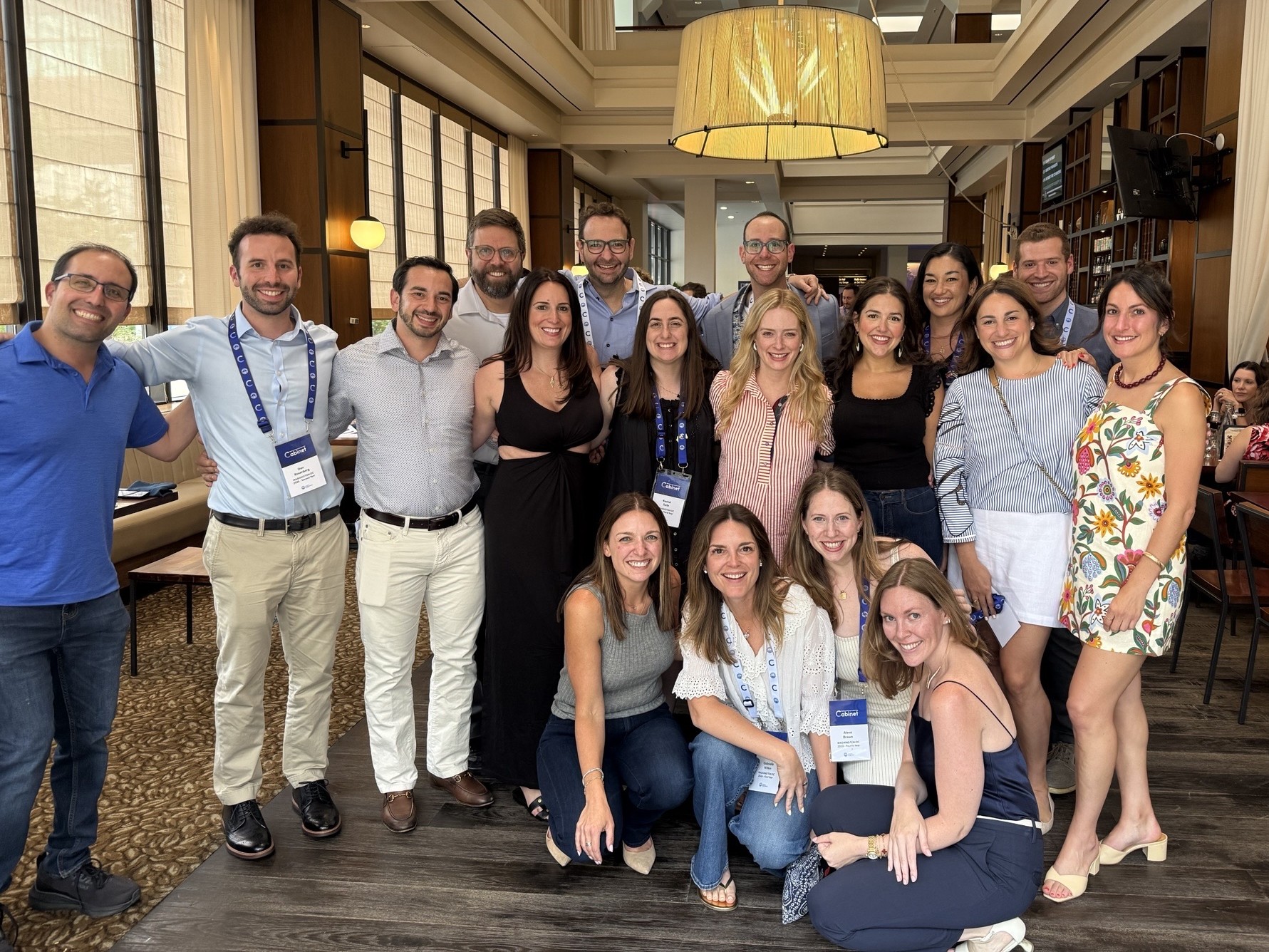
The room was full of 300 Jewish leaders from different cities. Different careers. Different Jewish experiences. Different ideas about what comes next. And yet, as Cabinet members from Greater Washington looked around the room in Minneapolis, one thing kept becoming clear.

They weren’t as “different” as they might have imagined.

“We all have the same concerns,” said The Jewish Federation of Greater Washington Cabinet member Dana Klein. “It doesn’t matter which community we come from, what we do for work, if we have kids or not. We are all invested and concerned about the same issues facing our community. And that is very powerful.”

For three days in August, hundreds of Jewish leaders from across North America gathered for the Jewish Federations of North America National Young Leadership Cabinet Retreat, including a cohort of 20 members from Greater Washington.

They came to talk about philanthropy, security, Israel, and global Jewry. They heard from Minneapolis Mayor Jacob Frey and Rabbi Arianna Gordon of Temple Israel in West Bloomfield. They wrestled with how to talk across differences, how to serve their communities and how to become better leaders. But underneath all of it was a more personal question.

What does it mean to be a Jewish leader right now?

Turning Challenges into Leadership

Antisemitism is rising. Security has become something Jewish communities have to think about in their own neighborhoods. Families are making decisions about how visible they want to be. And more than one Cabinet member spoke about the feeling of watching everything unfold and wondering what, exactly, you are supposed to do about it.

Gabrielle Witkin put it plainly. “This is a hard moment to be Jewish,” she said. “And hard moments are exactly when leaders get made or lost.”

Gabrielle is a Jew by choice, and that choice comes with a responsibility she takes seriously. “I want a world where every Jew can live a safe, vibrant Jewish life. I want to leave this world better than I found it for my children.”

That desire to do something, rather than simply watch, is part of what brings people to Cabinet.

For Dana, Federation has made being an active part of the Jewish community a priority. “At a time when our community is constantly at risk, locally and abroad, giving back and making ourselves stronger has never been more important,” she said.

And there is a recognition that, as difficult as this moment is, Jewish communities have something powerful to draw on. Each other.

They attended the Retreat hoping to learn, enhance their leadership skills, and grow their network. That was one of the most meaningful parts of the Retreat for Britney Wambold, Cabinet Co-Chair, who sits on Federation’s Next Gen Board. She has met people through Cabinet from different cities, careers, Jewish backgrounds and phases of life. “Everyone is driven, cares deeply about making an impact, and shares a commitment to philanthropy and the Jewish community,” she said.

“I knew I would meet some nice people, but I was not expecting to make lifelong friends,” Dana added.

Britney knows that feeling well. “There is also something really special about knowing you have so many people in your corner,” she said. “Cabinet is full of people who genuinely want to see each other succeed and support one another throughout life.”

Alexa Brown, Cabinet Advisor, has watched that happen over four retreats. “What makes Cabinet different is how personal it is,” she said. “You walk away with some of your closest friends.”

At Cabinet Everyone Just Gets It
Three hundred people, and no one had to explain why they were there. That may have been the most powerful feeling in the room.

No one had to explain why security matters. Why Israel feels personal. Why the future of Jewish life is something worth worrying about. Why, even while building careers and raising families, they feel a responsibility to give their time, energy and resources to something bigger than themselves.

They didn’t have to explain why they were there because everyone else already understood. “It’s so easy to feel overwhelmed by everything happening in the world around us,” Alexa said. “Being with chevre (friends) reminds us we don’t ever need to face anything alone.”

For Gabrielle, that realization brought clarity. “I expected to feel small in that room. Instead I got clarity.” She came home with a better understanding of where she can make an impact, not everywhere, but somewhere meaningful. “I came home knowing where I can serve best rather than trying to serve everywhere.”

The Moment that Reframed Their Entire Perspective

One conversation in particular stayed with Gabrielle. Her caucus leader said something that reframed the way she was thinking about philanthropy:

“The only people giving to the Jewish community are the Jews.”

The idea, though simple, resonated deeply in a room full of people already asking themselves how much they should give, how much time they should devote, and how much responsibility they are willing to take on.

The conversation turned to giving beyond what feels comfortable. For Gabrielle, the discomfort was the point. Because leadership, she realized, isn’t necessarily about finding the comfortable thing you can do. Sometimes it is about deciding what you’re willing to sacrifice because you believe the community is worth it.

What Happens After the Cabinet Retreat?

The three days end, but the conversations, friendships, and questions don’t. If anything, they become more urgent, because eventually, every Jewish leader has to decide what kind of role they want to play in the future they’re helping create.

What kind of Jewish community do we want to leave for the people coming after us?

For Gabrielle, that question is at the heart of Cabinet.

“The next generation of leaders will not be produced by accident,” she emphasized. “We need to be gathered, trained, challenged, and connected to peers who are carrying the same weight. That is what builds the bench our community will need in ten and twenty years.”

And that work cannot wait.

“It matters that we are doing it now, in our thirties and forties, while we are raising the generation after us,” she said. “Our kids are watching how we respond to this moment.”

To join us in building that future or to learn more about Cabinet, please reach out to Jeremy Frisch, Federation’s Philanthropy Officer, Donor Engagement.
Related posts

Why this moment feels familiar Why this moment feels familiar
Why this moment feels familiar
As institutions increasingly single out Jews and demand ideological conformity, Jewish educators and communities face a difficult question: will the price of belonging become denying our identity? We must push back against antisemitism and protect the Jewish and universal values we have long fought to uphold.
read more