Need support? Call 703-J-CARING (703-522-7464)

Standing with the Jewish Community of Jackson, Mississippi
Standing with the Jewish Community of Jackson, Mississippi

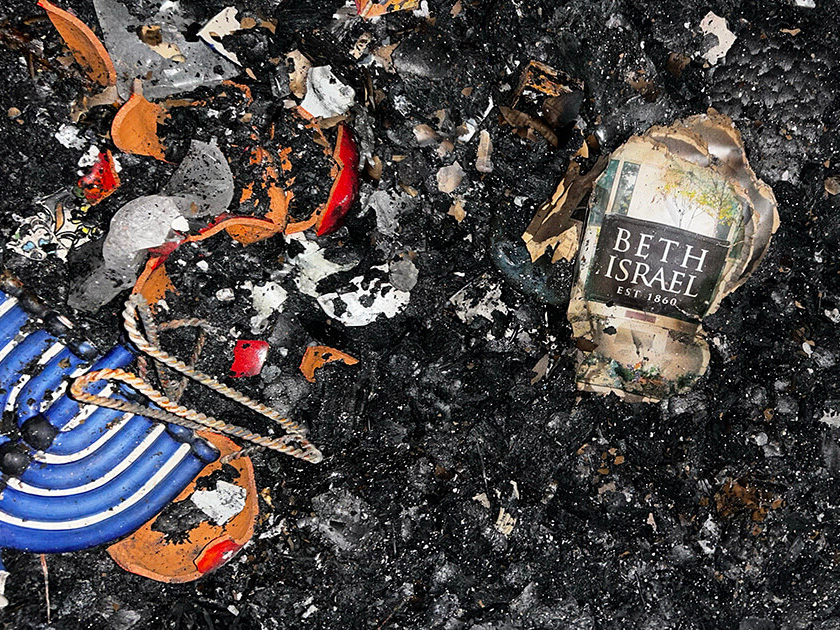
Following an antisemitic arson attack on Beth Israel Congregation in Jackson, Mississippi, The Jewish Federation of Greater Washington is coordinating support for recovery, rebuilding, and community safety.

Over the weekend, an act of antisemitic arson devastated Beth Israel Congregation in Jackson, Mississippi—an attack not only on a building, but on the heart of Jewish life in a small and geographically isolated community. In a region with few nearby Jewish institutions, the loss of a synagogue carries particular weight. It was an attack on Jewish life in a place where sustaining it is neither easy nor assumed.

Several Torah scrolls were destroyed or damaged in the fire, a profound spiritual and communal loss for the congregation. One Torah that survived the Holocaust was protected and not damaged. Its survival does not lessen what was lost, but it stands as a reminder of the endurance of Jewish life in the face of hatred.

This was not vandalism. It was a deliberate act of antisemitic violence, echoing a painful history for this congregation, which was bombed by the Ku Klux Klan in 1967 for its civil rights leadership.
For Jews in small Southern communities, maintaining Jewish life often already requires resilience, vigilance, and deep commitment. When a synagogue is targeted, the loss extends far beyond physical walls. It disrupts the ability to gather, to worship, and to remain visible as a Jewish community. Our hearts are with the Jackson Jewish community as they begin the long and painful work of rebuilding.

We are working in close coordination with national and regional partners, including Jewish Federations of North America, as well as Federation partners in the region, including the Memphis Jewish Federation, the nearest Federation community. In response, The Jewish Federation of Greater Washington has opened a dedicated fund to support recovery and rebuilding efforts. This approach helps ensure support is coordinated, responsible, and responsive to real needs on the ground, while allowing the affected community to focus on care, recovery, and rebuilding.

How You Can Help

Support recovery and rebuilding efforts through a dedicated fund coordinated by The Jewish Federation of Greater Washington. Funds raised will be directed to trusted, vetted partners working directly with the congregation and community.

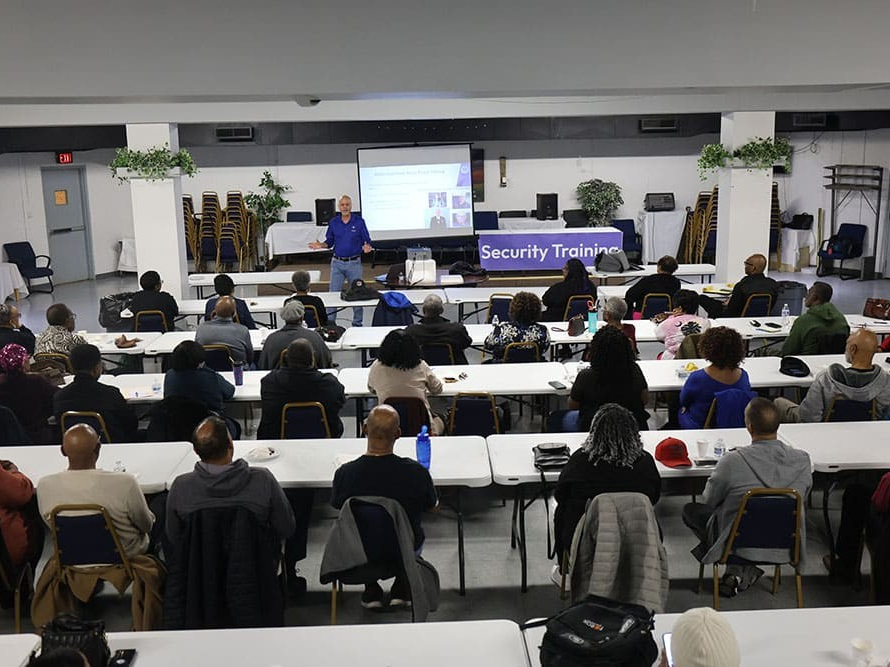
At the same time, this attack reinforces why shared investment in community security remains essential. Synagogues and Jewish institutions should never have to stand alone in protecting themselves. Here in Greater Washington, we continue to strengthen preparedness, infrastructure, and coordination through our community security efforts, reflecting our commitment to protecting Jewish life today and into the future.

This is the role Federation plays every day: connecting our community and its donors to moments of greatest need, stewarding resources with care, and helping ensure Jewish life can endure wherever it is threatened.

Moments like this test us, and they also remind us why collective action remains one of the most powerful expressions of Jewish responsibility and care.
Donate to Support the Jackson, Mississippi Jewish Community

Related posts

Your Dollars at Work: A Path Back to Purpose

Your Dollars at Work: A Path Back to Purpose

How your support is helping Israelis heal, retrain, and rebuild after war

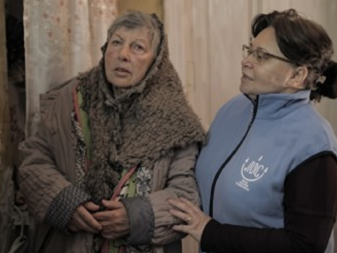
When Omer returned to his classroom after October 7, he couldn’t breathe.

Five of his students were gone, killed in the attacks. Just stepping into the room triggered waves of panic, grief, and memory. He felt like he couldn’t go on.

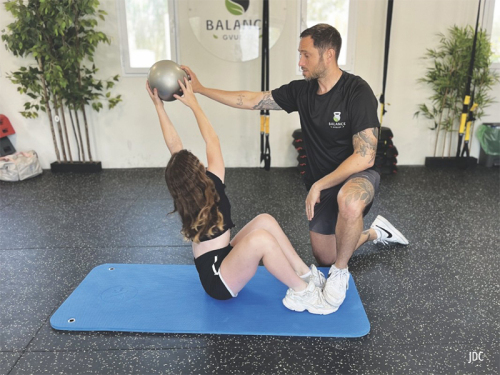
But through weekly sessions with a JDC counselor, Omer slowly rediscovered his footing. Today, he’s not just working—he’s leading. Omer now runs a therapeutic gym in a Gaza-border community, helping fellow survivors rebuild physically and emotionally. “I found a way to move forward,” he said. “And to help others do the same.”

This is what your dollars make possible.

In the wake of the Iron Swords War, thousands of Israelis were forced to evacuate their homes. Many lost not just their sense of safety, but their livelihoods. The trauma was deep, the economic toll was devastating, and the path to stability felt out of reach.

That’s why Federation responded swiftly, providing a $500,000 grant to JDC to launch “Getting Victims of War Back to Work”, Israel’s first trauma-informed employment recovery model. More than just getting back to work, it’s about dignity, healing, and long-term resilience—about helping people get back to life.

With your support, here’s what’s already happening:

  • 890 Israelis have received hands-on vocational training, career guidance, and access to real employment opportunities
  • 131 participants have already been hired, earning more than 6% above minimum wage
  • 500 trauma survivors are in employment rehab, double the original 2025 goal
  • 40% of previously unemployed participants have found jobs; 100% of at-risk employees stayed employed
  • 18 locations now offer specialized career recovery support (up from 11)
  • 48 employers have been trained to support hires navigating trauma
  • And early evaluations show a 14% decrease in PTSD symptoms among participants

This model is now informing national efforts to scale trauma-informed employment support.

A Bold Investment in Israel’s Future Workforce

Through this initiative, we’re supporting Israelis not just in healing, but in retraining and returning to work with purpose.

Beyond immediate relief, it’s recovery with resilience built in.

And this is exactly the kind of long-term, people-centered impact we’re working toward through Federation’s Israel strategy: investing in long-term recovery and deepening connection between our communities.

Photo: JDC

Learn more

Related posts

What This Moment Means and How We’re Responding

What This Moment Means and How We’re Responding

In the wake of the horrific terrorist attack in Australia, I want to speak directly to our community here at home.

Our hearts are with the victims, their families, and the Jewish community in Australia as they mourn and begin to heal. Violence against Jews anywhere reverberates everywhere, and moments like this understandably heighten concern within our own community.

Here in Greater Washington, the safety and security of Jewish life remains our highest priority. Through JShield, Federation’s community-wide security initiative, we are in close coordination with local and federal partners and with Jewish ​institutions across our region, supporting schools, synagogues, and organizations with threat monitoring, training, assessments, and grant support at no cost. You can learn more about how JShield works to keep our community safe at shalomdc.org/security.

If you see or experience something concerning, we encourage you to report it to JShield. Reporting helps identify patterns and supports coordination with our security partners.

Jewish life will continue. We will gather, celebrate, learn, and mark our holidays together, thoughtfully, responsibly, and with care for one another.

At the same time, this moment calls on all of us to be attentive to the language and actions we tolerate in our public spaces. Antisemitism, in any form, must be named and challenged, and Jewish communities must never be left to carry that burden alone.

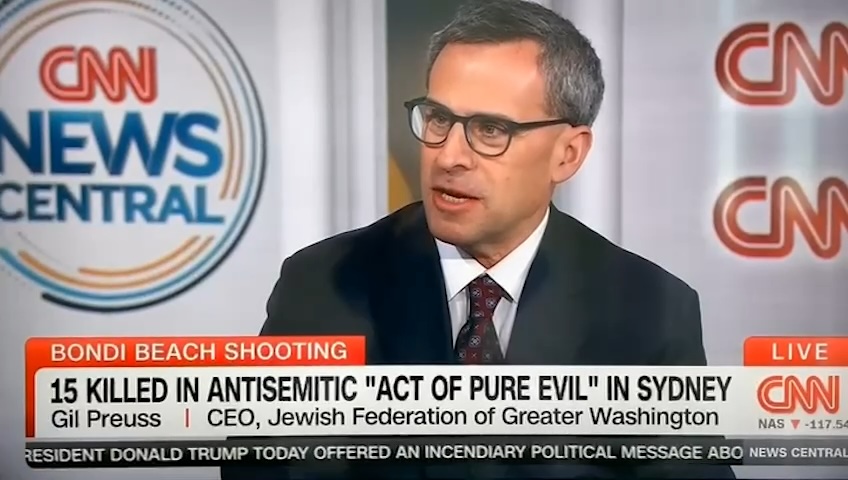
Earlier today, I shared these concerns in a brief conversation on CNN about antisemitism and the responsibility to challenge it before it escalates. You can watch it clip below.

Thank you for the many ways you show up for one another and for our community, especially in difficult moments. We are grateful for your partnership and your trust, and we remain committed to keeping Jewish life in Greater Washington strong, safe, and connected.

This is a moment for shared responsibility. Take action by supporting JShield and strengthening Jewish community security.

Support community security

Related posts

The Heroes of Greater Washington

The Heroes of Greater Washington

Reading the news reminds me of the comic books I read as a kid. They’d start off with large headlines announcing the latest victories of the world’s villains, each update more concerning than the last. Then, when things were at their bleakest, the superheroes would show up and answer the call of a world in distress. Which is to say I’m accustomed to looking around for heroes when times get tough.

This year, I found the heroes I was searching for in all of you. Harnessing the twin forces of empathy and resolve, community members across Greater Washington stepped up to be there for people in need in a year of overwhelming uncertainty. Thanks to your support, Federation was able to expand and strengthen a network of care across D.C., Maryland, and Northern Virginia and infuse resources where they were needed most.

Our partners at JSSA, Yad Yehuda, and Hebrew Free Loan Association of Greater Washington, among others, responded to serial crises with food assistance, interest free loans, mental health resources, and other emergency support. Our area rabbis joined together to distribute grants made available by Federation to those who could use a helping hand. And Jewish organizations of all sizes set aside funds to make Jewish experiences, including Jewish day school and Jewish summer camp, more accessible to more people.

Meanwhile, Makom, JCADA, and JCA, and Tzedek DC, and others continued the quiet, sacred work of caring for the elderly in our community, advocating and providing services for those living with disabilities, responding to reports of abuse and domestic violence, and helping families get back on their feet after periods of struggle. This work was made possible by your partnership.

That’s why even as we close out a year that often felt challenging, I’m encouraged, hopeful even, about what lies ahead. The world does not lack for destructive forces. But there are even more heroes in our midst who meet suffering with love and generosity and do what they can to ensure our community’s human service offerings remain strong.

If this work moves you, I invite you to keep responding and give to Federation’s Annual Campaign. The Annual Campaign is the most essential source of funding for Federation’s work across our region, enabling us to support vital services people rely on every day and all the more so in times of crisis.

The impact of federal layoffs, the government shutdown, and the ongoing affordability crisis is hitting our area hard. Thousands of members of the Jewish community are struggling with poverty and meeting their basic needs. A gift to Federation ensures we can continue helping people through this moment and access the joy of Jewish life.

As the saying goes, not all heroes wear capes. But what our local champions lack in costume, they more than make up for in heart. The resources we are able to provide through the Annual Campaign reflect our commitment to each other. Thank you for showing up in the name of community. We need you.

Donate today

Related posts

Your Dollars at Work: Building Home Through Education in Israel

Your Dollars at Work: Building Home Through Education in Israel

This year, a new secondary school opened in the Galilee—the first in 47 years.

It was made possible by a partnership between the Rosh Pina, Mevu’ot Hermon, and Upper Galilee municipalities. But it didn’t happen in isolation. It’s part of something bigger: Homeward/Habaita, an ambitious, multi-partner initiative working to grow and strengthen communities in the Western Negev and Galilee through education.

With a $500,000 grant from our Israel Crisis Relief Allocations, that vision is becoming real.

In its first year alone, Homeward/Habaita:

  • Recruited 374 new teachers through the Educators’ Communities project
  • Reached 8,874 children and teens in the Western Negev through summer programs
  • Supported the launch of 52 new education initiatives by local educators
  • Helped 25 rural communities create new social and communal education frameworks
  • Benefited more than 36,000 students across 89 communities

Beyond temporary relief, these efforts foster long-term belonging. The kind of connection that makes staying feel possible and coming back feel worth it.

In Ma’ale Yosef, where northern moshavim were hit especially hard by the October 7 attacks, local leaders prioritized education as the first step toward returning home. “The establishment of the education systems within the communities for elementary school children and teens is the first thing we set out to do,” said Tal Ohana, demographic growth project manager for the region.

Natalie Simhon, education department director and president of Moshav Even Menahem, added: “We were disconnected from our homes, disconnected from the ability to be together—and when we create an informal solution, we build a community, we create a sense of belonging.”

This is what your support makes possible: investments in the educators, schools, and programs that hold communities together—especially when everything else feels uncertain.

We’re deeply proud to be in this work with trusted partners in Israel. And we’re grateful to stand with our community here in Greater Washington, who help make all of this happen.

This is just one of the several long-term investments we’re making across Israel. Our growing partnerships with Kinneret Valley Cluster (KVC) and Kibbutz Re’im will help us reach even more communities with this kind of bold, local leadership.

Learn more

Related posts

Bracing for the Storm with $150K in Community Support

Bracing for the Storm with 0K in Community Support

Thanks to your support, we're allocating $150,000 in emergency funding to help community members facing financial hardship during the federal shutdown.

Tracking the impact of the federal government shutdown is like watching a storm roll in.

It’s already drizzling. As SNAP benefits expire and federal workers miss their first paychecks, the forecast is likely to worsen.

For many in our community, what started as financial uncertainty is becoming a true crisis.

To help address the rising tide of need, we’re allocating $150,000 to assist those affected by the shutdown.

These grants are part of our ongoing commitment to respond quickly and compassionately to community crises.

In coordination with local partner organizations, including JSSA (who runs our J-CARING hotline), we’re monitoring needs in real time to ensure help reaches those who need it most.

We’ve long been at-the-ready to respond to the needs of our community—the last few years have made us experts. From the pandemic to national protests, the war in Ukraine to October 7 and its aftermath, and now this shutdown, we’ve learned how to act swiftly and strategically when the need is urgent.

Today, we’re proud to help meet immediate needs while strengthening our community’s network of care for the future.

This work is only possible because of the trust and generosity of donors who give to our Annual Campaign, ensuring our community can weather the hardest days and prepare for the brightest ones.

It’s raining out. If you can help keep those around us dry, please donate today.

If you or someone you know needs support, call the J-CARING hotline or visit our Crisis Response resources page.

Related posts

A Time to Sob, and a Time to Dance

A Time to Sob, and a Time to Dance

As we welcome home the living hostages, we ready ourselves for the work of healing

This has been an emotional week. Earlier today, I watched a clip of Rachel Goldberg-Polin, mother of Hersh Goldberg-Polin who was kidnapped and executed by Hamas, address a crowd of hopeful Israelis ahead of the hostage release. She summed up the moment beautifully by referencing Ecclesiastes. “There is a time to sob and a time to dance, and we must do both right now.”

It’s true, a lot must happen in this moment. This is a good time to breathe a sigh of relief and indulge in the joy of welcoming home the living hostages. It’s also a good time to ready ourselves for the work ahead as we set about to end one phase and begin another.

I am trying to remain optimistic that we are seeing the faint lights of a brighter future for both Israelis and Palestinians emerge. Still, what happens next is an open question. As of today, many hostage families are still waiting on the return of their loved ones’ remains. Israelis are continuing to navigate layers of trauma. And Palestinians are facing the immense task of rebuilding their lives under the cruel returned control of Hamas. Healing, addressing antisemitism and anti-Israel sentiment, and exploring new possibilities for the Middle East region are all on the table.

While we cannot control the future dynamics of the Middle East, Federation will be there for Israelis as they find their way back to a new normal. Later this month, Zohar Livne Mizrahi, Secretary General of Kibbutz Re’im—located beside the Nova music festival site—will visit our community. Federation is partnering with Kibbutz Re’im as its residents rebuild their homes and their lives after October 7.

For those interested in learning more, join us for a conversation with Zohar Livne Mizrahi on October 31, featuring stories of resilience and recovery, and an optional VR experience that brings survivor testimonies to life. You can learn more here.

We will keep you posted on additional ways to be involved in Israel’s recovery efforts. We also remain committed to helping Jewish community members form personal connections with Israel that transcend moments of crisis. Our friendship is about being there for each other in times of need and also about growing together in joy and possibility.

Finally, as we close out this roller coaster week, I want to acknowledge the work of the hostage families and their hardworking supporters, including those in our own community. Even in the throes of fear and grief, friends and family of the hostages pushed themselves to keep us all focused. Their tireless and courageous efforts helped bring the living hostages home. The hostage families are Jewish heroes. I am praying their tenacity becomes part of the Jewish inheritance and a precursor to more dancing.

Related posts

A Moment of Homecoming, Hope, and Healing

A Moment of Homecoming, Hope, and Healing

As hostages return home, we hold space for relief, grief, and the long road to renewal ahead.

This morning, Israel confirmed the release of all the remaining living hostages taken on October 7, 2023, as part of the ceasefire agreement. While we wait, with sorrow and hope, for the remains of the other hostages expected to be returned, we celebrate a moment we have prayed and hoped for: many who were taken so brutally by Hamas are finally home.

For families who have waited in fear and uncertainty for 737 days, this is a profound turning point. We exhale in relief, renew our commitment to the work ahead, and lean into hope for a Jewish future free from the darkness that has unfolded since that day in October.

We express deep gratitude for the Hostages and Missing Families Forum, whose tireless advocacy has inspired us all, and for the Nova Tribe, whose courage and creativity through the Nova Music Festival Exhibition this past summer helped our community remember and heal.

We welcome home those returning, and we stand with the families of the missing, still caught in agonizing limbo, and with the families waiting to receive the remains of their loved ones.

We can never fully comprehend what survivors and the families of those lost or held hostage have endured. The weight of their grief, fear, and trauma is beyond measure. Yet as a community, we share in the sacred work of carrying that burden together. May the memories of those we have lost be for a blessing.

This moment also brings immense sorrow as we mourn the loss of Roei Shalev, a survivor of the attack at the Nova Music Festival, who took his own life just days ago, two years after watching Hamas murder his girlfriend. His passing is a devastating reminder of the invisible wounds so many still carry—pain that is deep, relentless, and far from over.

In the tender days ahead, our purpose remains clear: to show up for one another, to support the families still waiting, and to remain steadfast in our commitment to Jewish life, the people of Israel, safety, and Jewish peoplehood here in Greater Washington and around the world. Today’s homecoming and the long work of recovery stand side by side.

Healing, both personal and collective, takes time, care, and each of us choosing compassion again and again. But there is nothing we can’t overcome when we show up for one another, hold each other close, and remind every person that they are not alone in their anguish or in their healing.

May this moment mark the beginning of a broader return—not only of the hostages, but of healing and renewal for us all.

With deep gratitude,

Robin Hettleman Weinberg
President, Jewish Federation of Greater Washington

Gil Preuss
CEO, Jewish Federation of Greater Washington

Related posts

Making Room for Hope

Making Room for Hope

More than 700 days have passed since October 7—nearly two years since that horrific morning tore through Israeli life.

And for every one of those days, dozens of hostages have remained in Gaza, held by Hamas in conditions we can barely imagine. Today, that number stands at 48. It’s believed that 20 are still alive.

Among them is Alon Ohel.

A Glimpse of Life

Last week, for the first time since he was taken, we saw Alon.

In a Hamas video, another hostage—Guy Gilboa Dalal—is paraded through Gaza, pleading for his life. Alon appears beside him. A single, fleeting moment. A moment that marks the first visual proof Alon is still alive since October 7, 2023.

It means something. For his family, it means everything.

Until now, they had nothing. No photo. No message. Nothing since Alon disappeared from a shelter near Kibbutz Re’im, after escaping the Nova music festival massacre.

We now know from Hostage, a new book by survivor Eli Sharabi, who was held captive with Alon for months, that Alon was expected to be released in February. But the second-phase deal never came.

And so, seven months later, the agonizing wait continues.

This Sukkot, We Make Room for Them

As we look ahead to Sukkot, a time of shelter and solidarity, we’re preparing to turn our grief into action.

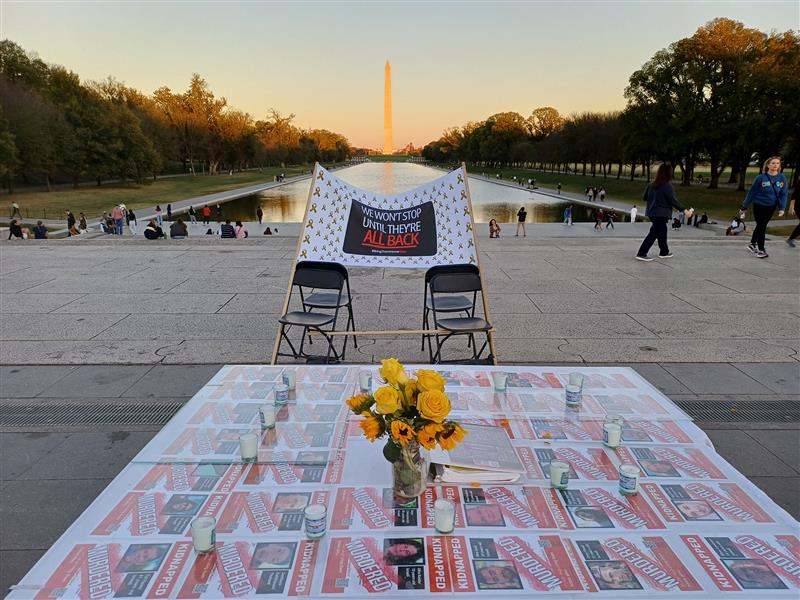
Together with the Hostages Families Forum, Adas Israel, and partners across Greater Washington, we will build a Sukkah of Hope in front of the White House.

A place to gather. To remember. To say out loud: they are still there. And we are still here.

Refusing to Look Away

Even in this unbearable reality, a single photo can mean everything.

It means someone is still alive.
It means their story is not over.
It means we still have time to bring them home.

And it means the world still needs to hold Hamas to account for these ongoing atrocities and the suffering inflicted on so many innocent lives.

We carry that truth into Sukkot, into the shelter we build, the space we hold, and the hope we refuse to let go of.

May this be the year they come home.
And may it also be the year of peace.

Related posts

When Every Second Counts: Healing on Israel’s Frontlines

When Every Second Counts: Healing on Israel’s Frontlines

How do you save a life when seconds matter and rockets are falling?

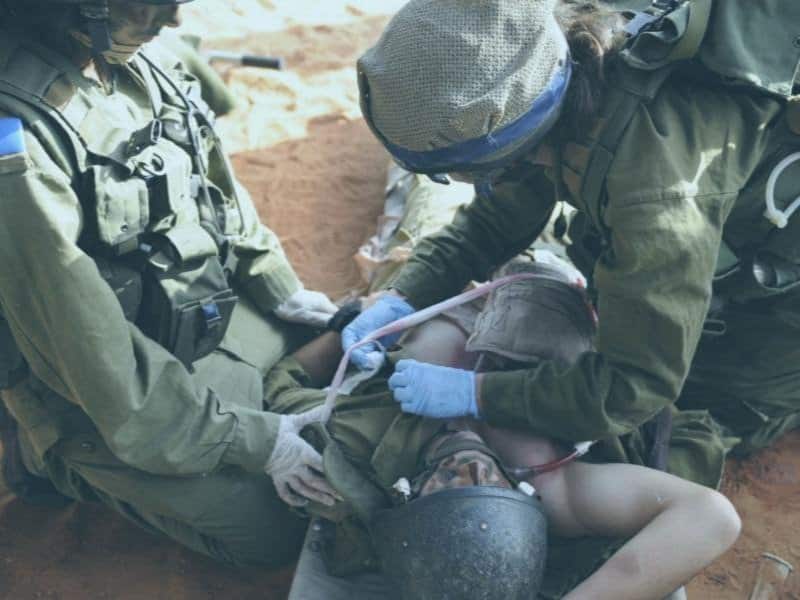
That’s the question Israel’s medical professionals have been answering every day since October 7. In field hospitals, trauma bays, and combat zones, the Israel Defense Forces (IDF) Medical Corps is delivering trauma care under extreme conditions—stabilizing the wounded, treating mass casualties, and innovating in real time.

They’re not just responding to crisis—they’re reshaping what’s possible in battlefield medicine.

Today, the fatality rate for injured Israeli soldiers stands at around 7%—a dramatic drop from past conflicts. That kind of breakthrough doesn’t happen by accident. It takes strategy, speed, and relentless training. It takes care.

Behind the Breakthroughs: A Nationwide Effort

This life-saving work doesn’t stop on the battlefield. Across Israel, hospitals and trauma centers are stepping up in extraordinary ways:

  • At Sheba Medical Center in Ramat Gan, clinicians are pioneering cutting-edge rehabilitation—helping injured civilians and soldiers regain both function and hope.
  • At Soroka Hospital in Be’er Sheva, preparedness proved critical. Even as the hospital sustained damage from rocket fire, its teams saved lives when seconds counted most.
  • In Sderot, the International Resilience Institute is helping survivors navigate the psychological toll of ongoing trauma with holistic, community-rooted care.
  • At Magen David Adom’s underground blood center in Ramla, Israel’s emergency medical services are safeguarding the national blood supply and enabling rapid response—even under threat.
    These aren’t just facilities. They’re lifelines.

Our Community’s Impact

Through The Jewish Federation of Greater Washington’s Israel Crisis Response grants, we’re helping fund this network of healing: trauma recovery, emergency preparedness, and medical innovation that directly supports Israelis facing physical and emotional wounds.

We don’t do this alone. We do it through trusted partners on the ground—and with the strength of our community behind us.

A Conversation That Brings It Home

Now, we’re bringing that story home.

Thanks to the initiative of the American Physicians Fellowship for Medicine in Israel (APF)—and in partnership with Kol Shalom—we’re honored to host Healing on the Frontlines on Wednesday, August 6, 2025: a rare and timely conversation with Brigadier General Dr. Zivon Aviad Beer, Surgeon General of the IDF Medical Corps. Dr. Beer will share firsthand insights into delivering trauma care on and off the battlefield.

Joining him will be Amir Goldshtein, Executive Director of APF, whose organization connects North American medical professionals to Israel’s healthcare system and invests in its long-term resilience.

Also in attendance will be LTC Dr. Roy Nadler, Director of the IDF’s Trauma and Combat Medical Branch, who will be available for conversations before and after the program.

Why It Matters Now

This is a chance to hear what it takes to care for others in the most extreme conditions—and how our collective support helps make that care possible.

This work is far from over. But thanks to the strength of our partners and the generosity of our community, we’re helping Israelis heal, adapt, and move forward. One act of care at a time.

Related posts