Israel at War Briefing: Ceasefire, Israel and Hezbollah, Israeli Society after Roaring Lion
April 13, 2026
The Jewish Federation of Greater Washington
Join the Jewish Federations of North America (JFNA) for a special briefing on the latest developments in the conflict between Israel, the United States, and Iran, including updates on the current ceasefire and the evolving situation in Lebanon. We will also explore the impact on Israeli society after weeks of disruption, with families running to shelters, children out of school, and reservists called up, alongside the ongoing uncertainty as tensions in the north remain unresolved.
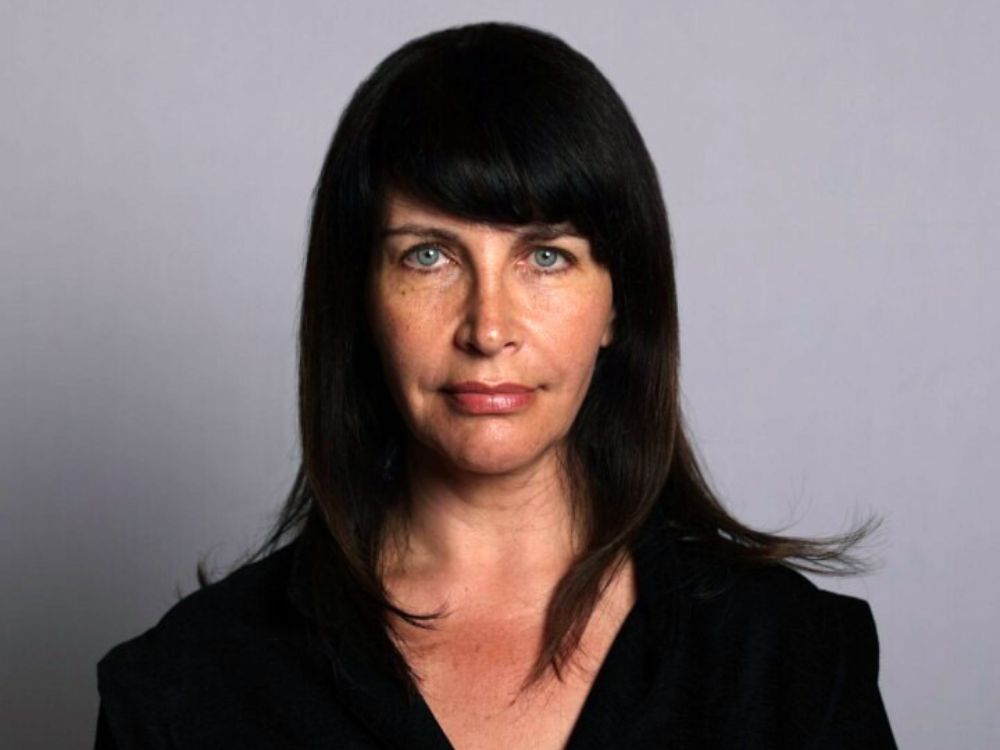
We’ll be joined by Col. (Ret.) Miri Eisin, who will provide expert insight into what is happening now and what may come next.
On Friday, February 27, just before Shabbat, Inbal called her family in Israel with a question that had become all too familiar: Are you prepared for every possible scenario?
They told her they had already been ready for weeks. In many ways, everyone felt that something was coming. And yet, as she would soon learn, nothing can truly prepare you for war.
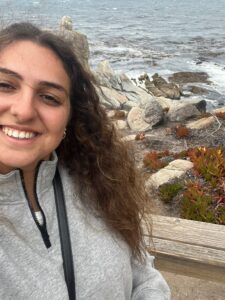
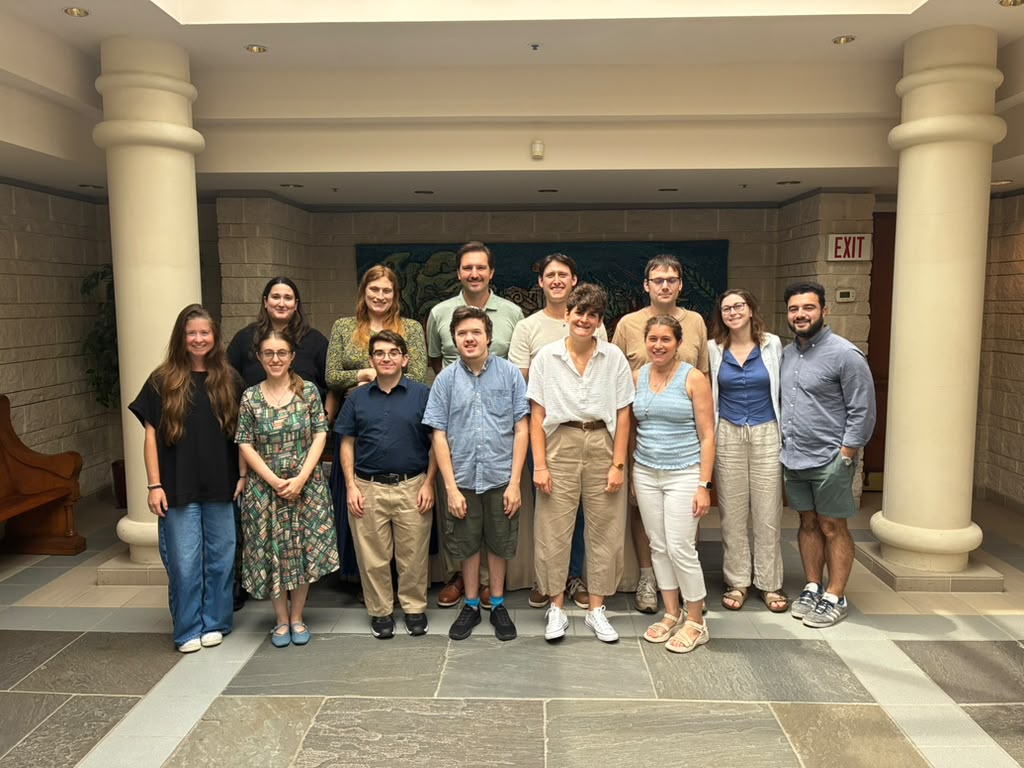
Inbal is part of the Community Shlichim program, a partnership between The Jewish Federation of Greater Washington, The Jewish Agency for Israel (JAFI), local synagogues, and other partner organizations which brings Israeli emissaries to our region to deepen connection and bring Israeli life and perspective into our community. Originally from a small town in northern Israel, Inbal now finds herself navigating the distance between two realities—supporting the Greater Washington community while her own family lives through the unfolding crisis at home.
Here is her story:
When Sirens Began
The night of February 27 on the East Coast, Saturday morning in Israel, I received a news alert: sirens were sounding across Israel. I immediately called my father, sensing that this might be the beginning of a war with Iran. He told me that he was already on his way to his military base to report for reserve duty.
My thoughts then turned to my grandfather, who goes to synagogue early every Shabbat morning. That day, we could not reach him. He only realized what had begun when he returned home from prayer. Our whole family was tense, worried a siren might go off while he was still outside and unprepared.
That was Shabbat morning in Israel.
Between Fear and Joy
The war began during the holiday of Purim. Purim is meant to be one of the happiest holidays, a time to dress up, celebrate, laugh, and be together, filled with joy and light. And yet, in Israel, the transition between sadness and joy is something we know all too well, and sometimes the distance between them is only a matter of hours. In a strange and almost ironic way, 2,500 years after the story of Purim, it can feel as though we are witnessing another Purim story unfolding, another moment in which the Jewish people are called upon to stand strong.
Holding Two Realities
Since that morning, I have spoken with my family almost every day. My grandfather continues to go to synagogue, still without taking his phone. When sirens sound, he says they simply continue praying, even though the stress is very real. He maintains his routine because, as he explained to me, staying at home for so long is not healthy, neither mentally nor physically.
Many of my family members and friends have also been called for reserve duty, some for the seventh time since October 7. They are exhausted, and yet they tell me that they understand the importance of this moment. They hold on to the hope that after this round, there will finally be a few years of quiet.
Meanwhile, being here in Washington as an Israeli shlicha during a time like this is deeply complex. On the one hand, I feel a strong responsibility to be present with the community, to continue showing up, and to create connection and meaning around what is happening. On the other hand, there is a constant feeling of distance, and with it, the fear of being disconnected from everything unfolding back home.
A Community to be Proud Of
Nevertheless, I feel incredibly fortunate to be part of the Greater Washington Jewish community, a community that truly cares. Every day, people ask me how my family is doing. They check in. They engage in conversations about what is happening. This support helps me stay connected and grounded, while also allowing me to find a sense of balance.
Perhaps most unexpectedly, it is the young children in the community who help me the most in these moments. They bring me into their world of imagination, stories, and innocence, and for brief moments, they allow me to breathe.
Through this experience, I have come to understand that the message I bring here is my sense of responsibility. If the people in Israel can continue to demonstrate resilience, courage, and strength every single day, then I must carry and reflect that same resilience here as well. After all, the story of the Jewish people has always been one of resilience, of facing darkness and still choosing light.
With Hope for Spring
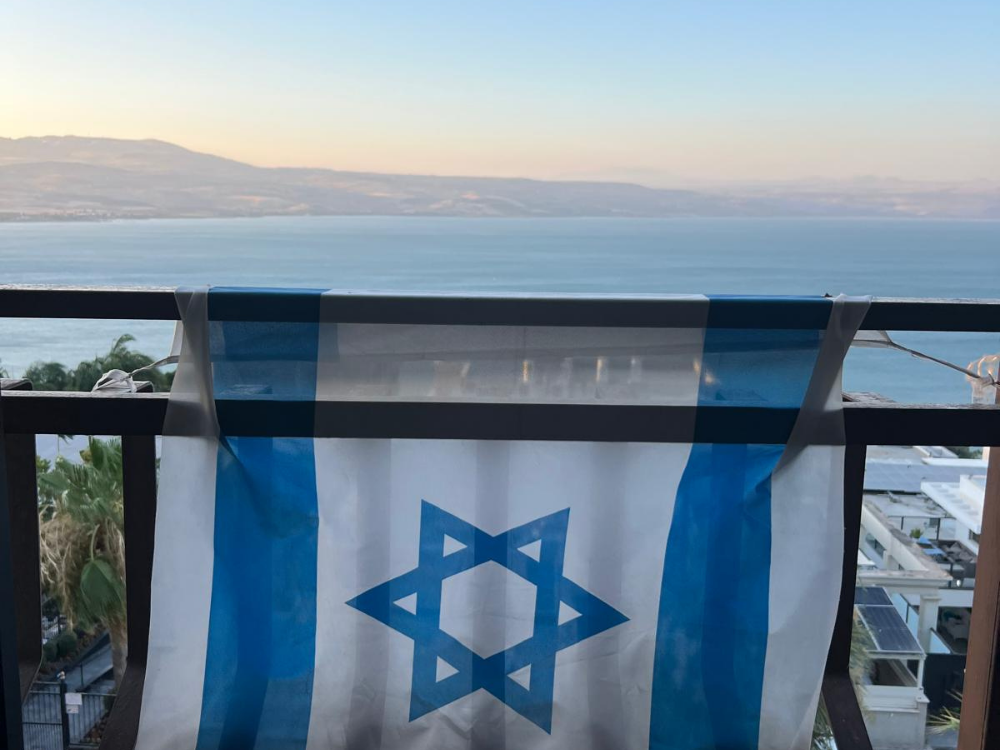
As the war enters its fifth week, we now find ourselves approaching Passover, the holiday of freedom and spring. Passover tells the story of leaving Egypt, of moving from slavery to freedom, and of becoming who we are meant to be. In this moment, I find myself hoping that this Passover will bring a sense of freedom for all of us—the freedom to live openly as who we are, proud of our Israeli and Jewish identities; to walk with our flag and our Star of David without fear; and to live without the routine of war, without constantly seeking the nearest shelter.
Passover also marks the arrival of spring, a season of renewal, when everything begins to grow again after the storms. There is something deeply powerful in that connection: just as strong trees withstand the storm, we see resilience, and like flowers that bloom in the fields, we see new beginnings. Perhaps that is the Jewish people’s story—to hold both, and to remember that if we want to see the rainbow, we must first be willing to stand in the rain.
A joyful birthday celebration became the beginning of a lifelong philanthropic journey. Through Donor Advised Funds, intentional giving, and the Open More Possibilities initiative, one family reflects on building a culture of generosity and passing Jewish values to the next generation.
Rabbi David Stav identifies two core Jewish values: standing against immoral behavior and loyalty to family, community, nation, and people. Adding humility to the framework, this reflection explores how justice, peoplehood, and open conversation can shape a vibrant collective future.
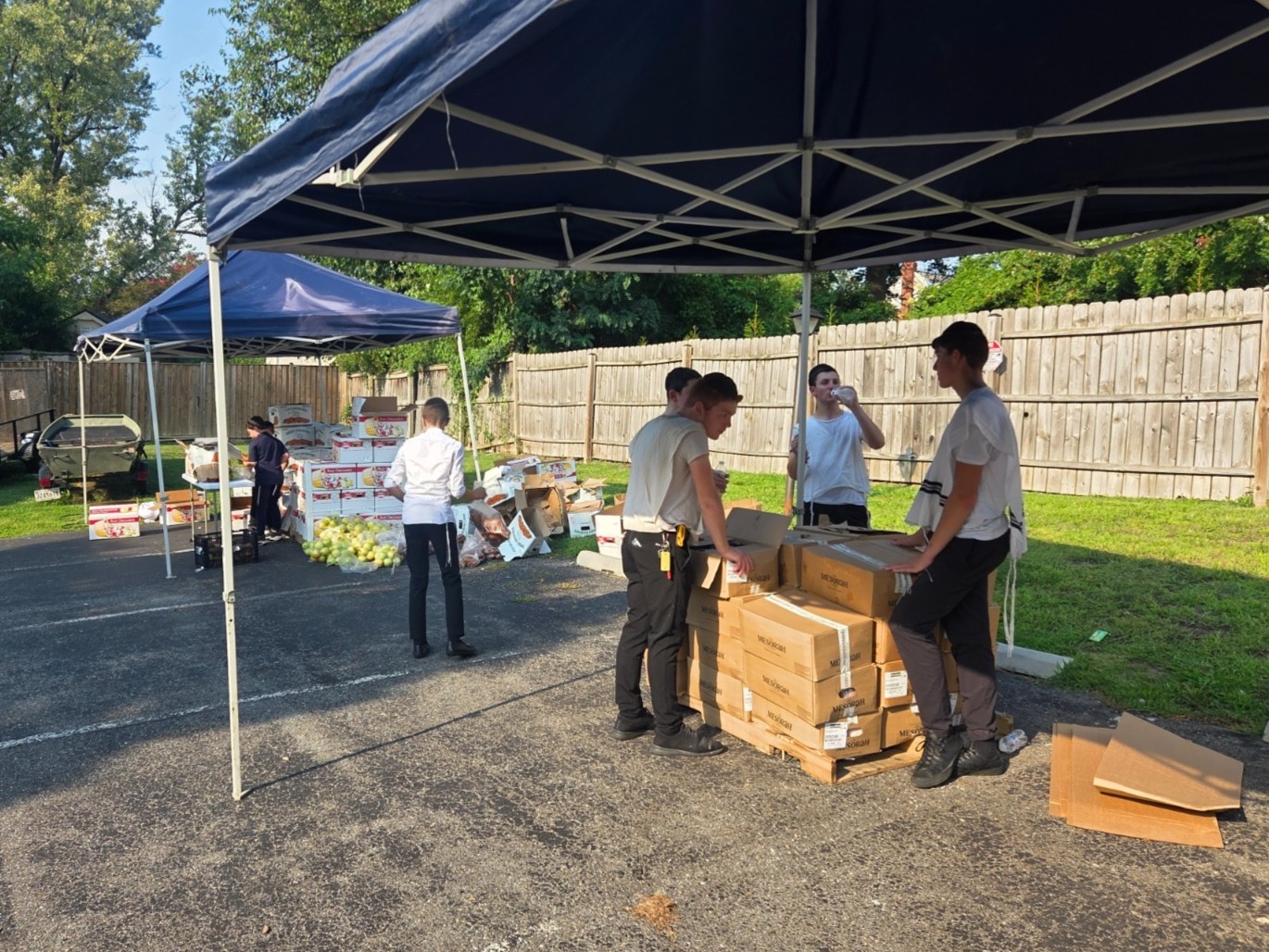
Rosh Hashanah brings familiar tastes, recipes, and traditions to Jewish families. With support from Federation, Yad Yehuda is helping ensure families facing financial pressure can access kosher food and celebrate the Jewish New Year with dignity and joy.
How Federation partnerships enabled rapid response in Beit Shemesh
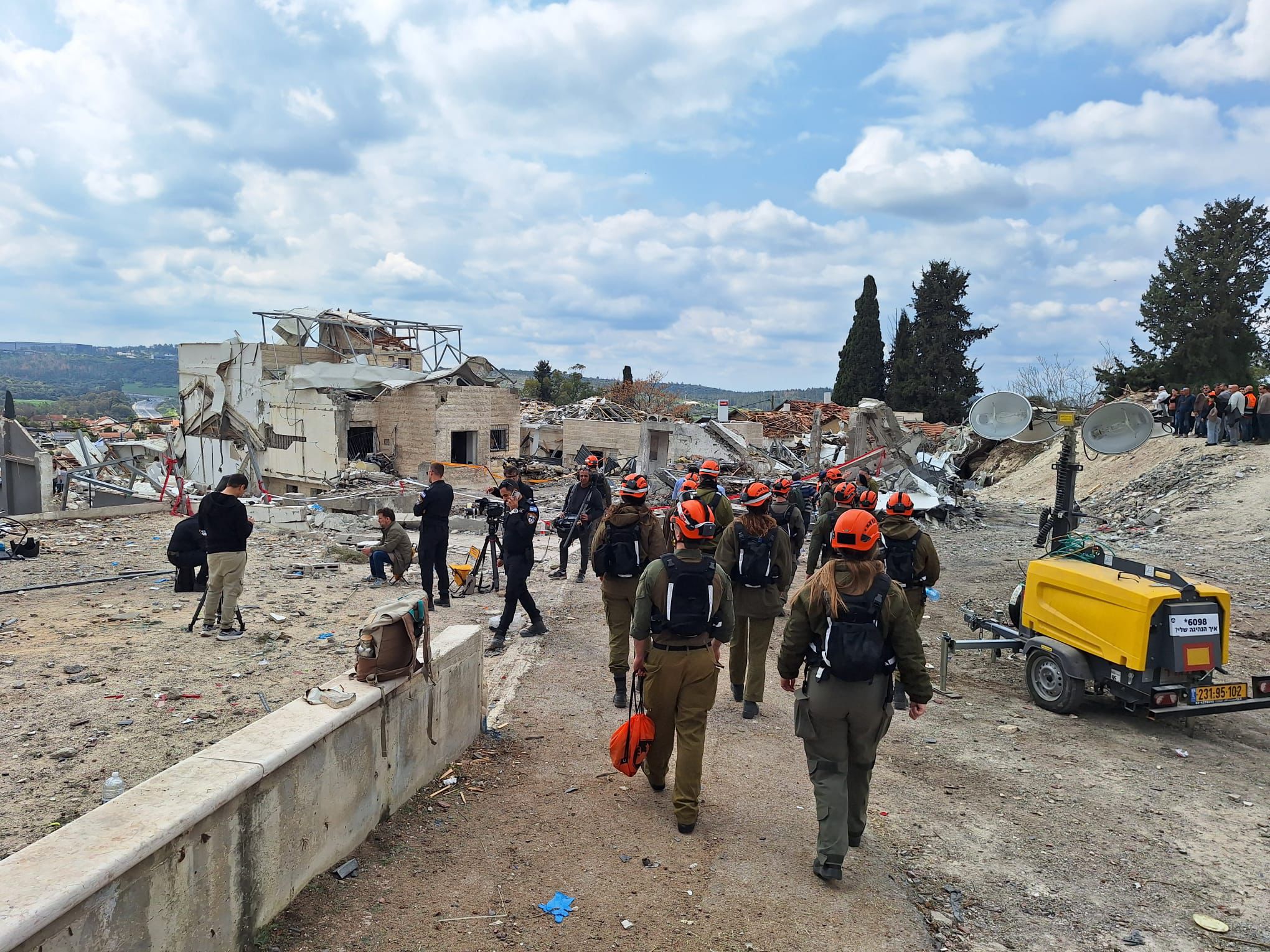
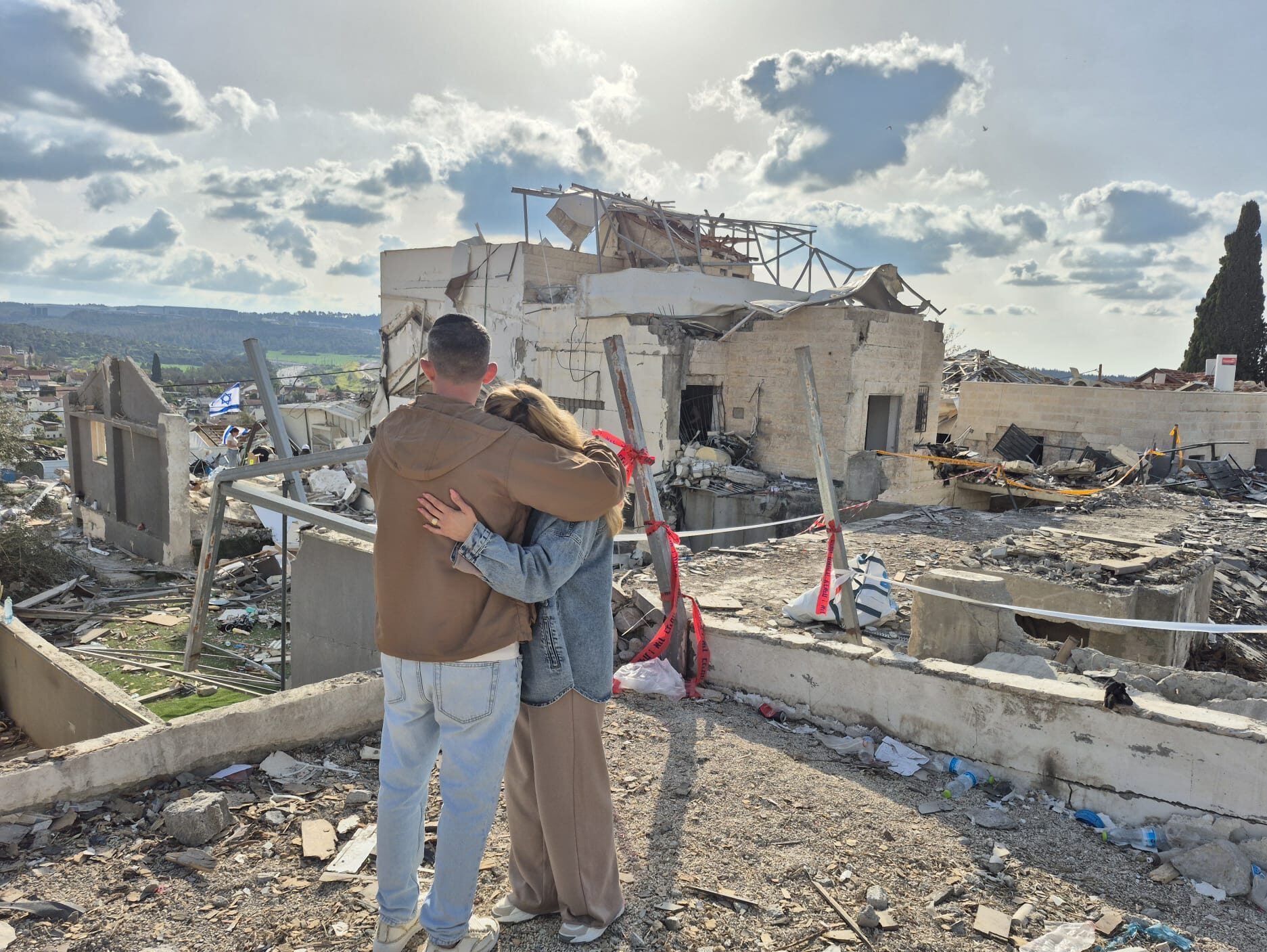
On March 1, the city of Beit Shemesh, located in the hills near Jerusalem, was rocked by a direct strike from an Iranian missile. In the immediate aftermath, The Jewish Federation of Greater Washington mobilized our network of on-the-ground partners to rapidly assess urgent needs and direct emergency support where it would have the greatest impact. We quickly identified the Zinman Community Center as a critical anchor for relief and recovery.
The Zinman Community Center has been dedicated to serving the city’s most vulnerable residents for many years, including lower income elderly and young Ethiopian Israelis. Located just one block from the site of the missile strike, the Center was able to respond immediately—opening its doors to first responders and survivors within an hour of the attack.
In the wake of a missile strike, Israelis are often left navigating uncertainty: damaged or inhabitable homes, injured loved ones, and the ongoing stress and anxiety caused by further sirens and attacks. In those first critical hours, speed and coordination were essential to ensure there was a clear, trusted place to turn for support.
From community center to support hub
Because of its longstanding relationship with the Center, Federation was able to act quickly and decisively, recognizing that the Center was not only well-known within the community, but also strategically positioned to meet the moment. With Federation’s emergency funding, the Center became a Family Support Hub for the neighborhood. Staff and volunteers helped residents file government claims for damaged property, access other government and local benefits, and connect with social workers for psychological support.
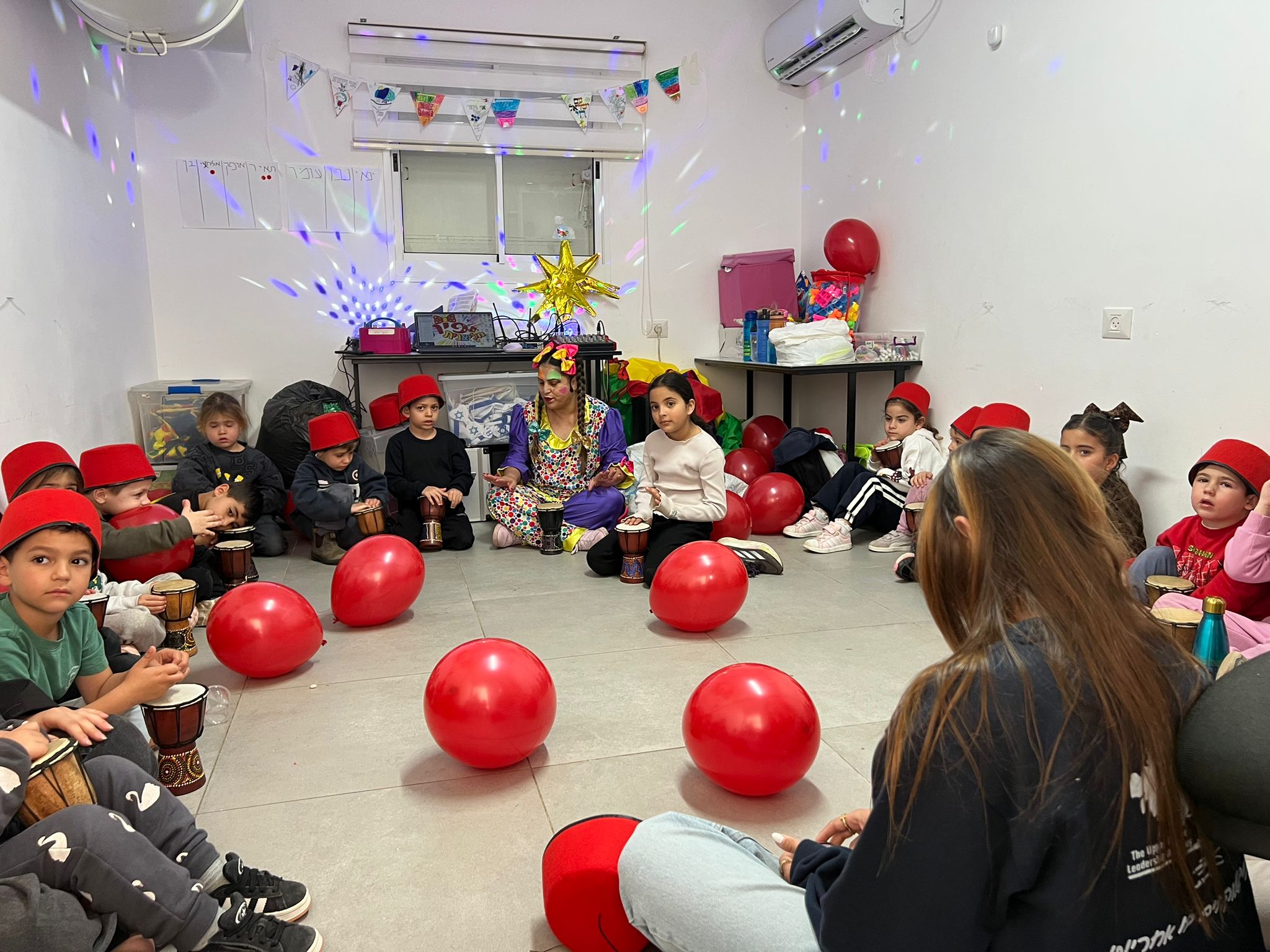
At the same time, Federation’s support made it possible for the Center to bring moments of normalcy and joy. Children and families were able to gather in the immediate days following the strike to celebrate Purim, enjoying a party outside and in the Center’s mamad (safe room) when needed. Volunteers assembled and delivered warm meals and activity kits to elderly Holocaust survivors who remained in the area. Every day, the Center helps hundreds of residents find connection, relief, and support from each other.
What made this possible
At a moment of crisis in Israel, Federation’s role is to act quickly and strategically—activating trusted local partners who are already embedded in their communities, so support reaches people quickly and where it matters most. Through its support for the Zinman Community Center, Federation is helping residents of Beit Shemesh recover, rebuild, and remain resilient in the face of immense challenges.
Learn more about how we are supporting partners in Israel during the current crisis.
A joyful birthday celebration became the beginning of a lifelong philanthropic journey. Through Donor Advised Funds, intentional giving, and the Open More Possibilities initiative, one family reflects on building a culture of generosity and passing Jewish values to the next generation.
Rabbi David Stav identifies two core Jewish values: standing against immoral behavior and loyalty to family, community, nation, and people. Adding humility to the framework, this reflection explores how justice, peoplehood, and open conversation can shape a vibrant collective future.
Rosh Hashanah brings familiar tastes, recipes, and traditions to Jewish families. With support from Federation, Yad Yehuda is helping ensure families facing financial pressure can access kosher food and celebrate the Jewish New Year with dignity and joy.
Briefing: Israel & the United States at War with Iran with Dr. Einat Wilf
March 23, 2026
The Jewish Federation of Greater Washington
Join the Jewish Federations of North America (JFNA) for a special briefing on the rapidly unfolding conflict involving Israel, the United States, and Iran. We’ll be joined by Dr. Einat Wilf for timely insight and analysis on the latest developments and what they may mean for the region and the Jewish community worldwide.
Dr. Wilf is a former member of the Knesset and a leading Israeli thinker on foreign policy and Zionism. She previously served as an IDF intelligence officer and as a foreign policy advisor to Shimon Peres.
12th DC’s Official Mimouna Festival of Good Neighbors with SHIN-DC and JxJ
March 23, 2026
Federation Events
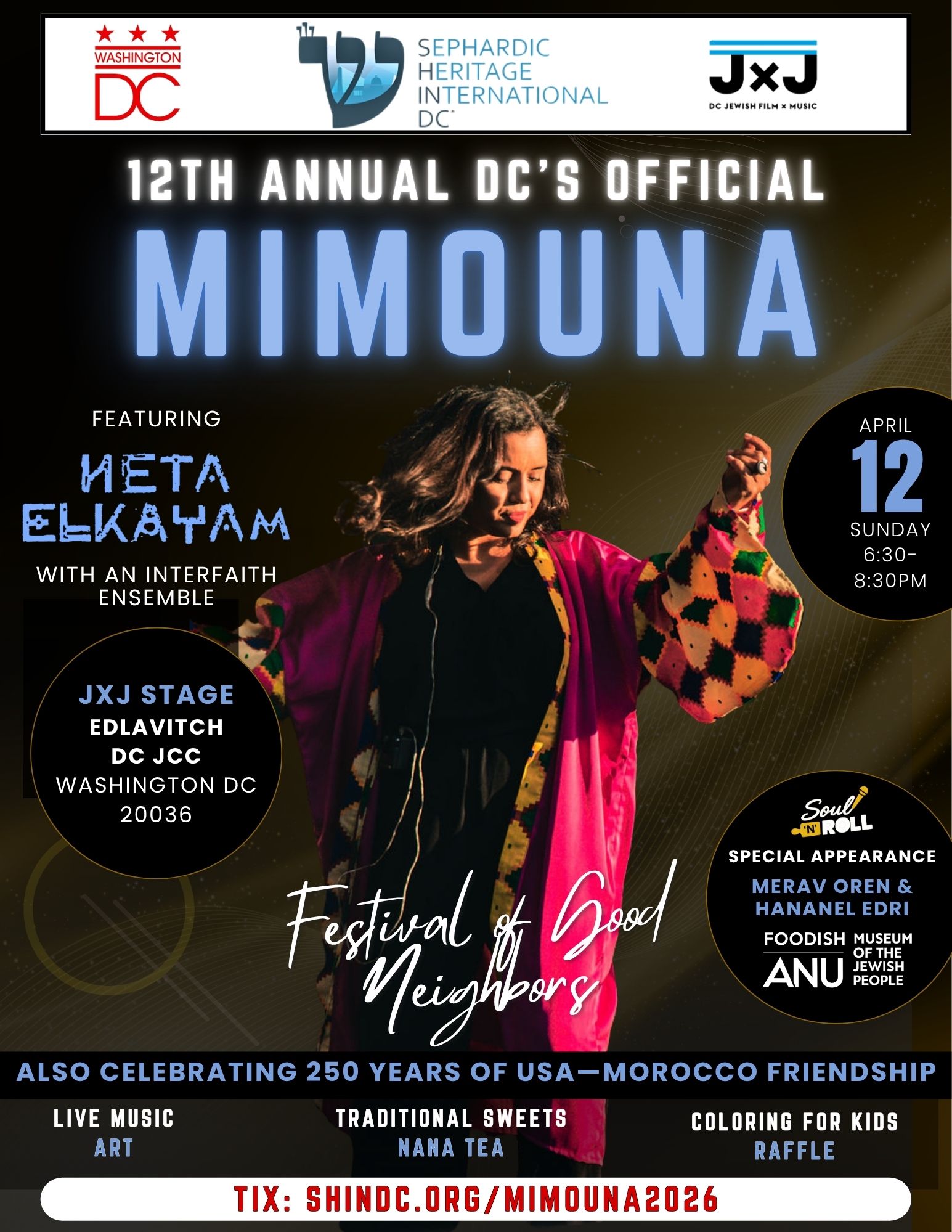
12th DC's Official Mimouna, presented by Sephardic Heritage International (SHIN-DC) together with JxJ: the Washington Jewish Film & Music Festival
✨ Join us for one of DC’s most vibrant and joyful cultural celebrations! ✨
Marking the end of Passover, SHIN-DC’s Mimouna is a festive celebration that honors a beautiful tradition: In Morocco, Muslim neighbors would bring culinary ingredients that Jewish families did not have in their homes during Passover, sparking a joyful evening of neighborly goodwill, hospitality, sweets, music, and shared hopes for prosperity in the new spring season.
Each year, SHIN-DC brings this beloved tradition comes to life in Washington, DC! SHIN-DC’s Mimouna Festival of Good Neighbors—recognized as the District’s official Mimouna—brings together people of ALL BACKGROUNDS. Mimouna 2026:
🎶 Live performance by internationally acclaimed Moroccan-Israeli artist Neta Elkayam, with a special interfaith ensemble
🍯 Delicious traditional sweets
👩🍳 Culinary demos & presentations from ANU – The Museum of the Jewish People in Israel
🎤 Inspiring guest speakers
🌍 A powerful celebration of community, neighborliness, culture, connection, diversity, and being a good neighbor
Plus, this year we’re celebrating 250 years of U.S.A.–Morocco friendship!
✨ Come experience the music, flavors, and spirit of Mimouna—right here in DC. Bring your friends, meet your neighbors, and celebrate together! ✨
Ticket Link: https://shindc.org/mimouna2026/
________________________________________________________
Questions? Email info at shindc dot org | www.shindc.org
* Twitter/Instagram: @Sephardic_in_DC
* Keep up with SHIN-DC on Facebook:
https://m.facebook.com/Sephardic.Heritage.IN.DC/
* Subscribe to the SHIN-DC Newsletter:
https://lp.constantcontactpages.com/sl/C4fipZZ
* Subscribe to the SHIN-DC YouTube Channel:
@shindcsephardicheritageint925
https://www.youtube.com/channel/UC6LXc3Fvzm1uYlmrqh-3nbg
Israel & the United States at War with Iran Special Update
March 18, 2026
Jewish Federations of North America (JFNA)
Israel Update: Day 23 of the US–Israel War with Iran
Prepared by Jewish Federations of North America’s Israel Office
Shared by The Jewish Federation of Greater Washington
Jewish Federations of North America’s Israel Office has issued a detailed update on the rapidly evolving conflict between Israel, the United States, and Iran, including developments in Israel, the broader region, and guidance for Jewish institutions.
Federation is entering a new chapter of Jewish life—one focused on staying connected across lines of difference, serving the full breadth of the Jewish DMV, and working together toward a common future grounded in justice and Jewish peoplehood.
A joyful birthday celebration became the beginning of a lifelong philanthropic journey. Through Donor Advised Funds, intentional giving, and the Open More Possibilities initiative, one family reflects on building a culture of generosity and passing Jewish values to the next generation.
Rabbi David Stav identifies two core Jewish values: standing against immoral behavior and loyalty to family, community, nation, and people. Adding humility to the framework, this reflection explores how justice, peoplehood, and open conversation can shape a vibrant collective future.
Yismaw, Federation community shaliach (Israeli emissary)
Following a deadly Iranian missile strike in his hometown of Beit Shemesh, one Federation’s community shaliach (Israeli emissary), Yismaw, shares his personal perspective.
When I was three years old, my family and I made aliyah (immigrated) to Israel from Ethiopia. We settled in Beit Shemesh, a city about thirty minutes from Jerusalem, where I was raised.
To me, Beit Shemesh is much more than just the city where I grew up. It is the place that shaped me, where my childhood and teenage years unfolded, where I forged friendships and created countless memories. Beit Shemesh has always been and always will be my home—it is embedded deep in my heart.
That’s why when I first learned that there was a deadly attack on Beit Shemesh on March 1, the first full day of the war between Israel and Iran, my first instinct was to call my friends and family back home. Everyone is there: my grandfather, my family, my community. Thank God, everyone I called was okay. Sadly, the same can’t be said for many other families in my city.
Being so far away from home during moments like these is not simple. The distance feels heavy, the pull to home and the desire to be there stronger than ever. Yet at the same time, I feel grateful to be here, with my Greater Washington community. I have felt an outpouring of warmth and support from everyone I’ve spoken with. Each person reaching out, asking questions, and genuinely caring about the safety of my family and friends in Israel has created a sense of home for me here.
Thank you for holding my family, my city, and all of Israel in your thoughts and prayers. During this painful and complicated time, this support is what strengthens me.
To learn more about what Federation is doing to support Israel in this time of crisis, including in Beit Shemesh, see here.
Many have already asked how to help. Our current response is being mobilized through existing Federation resources and long-term investments stewarded by the Foundation, enabling swift and accountable action. Those who wish to contribute may do so here.
Rabbi David Stav identifies two core Jewish values: standing against immoral behavior and loyalty to family, community, nation, and people. Adding humility to the framework, this reflection explores how justice, peoplehood, and open conversation can shape a vibrant collective future.
At an “Ask Me Anything” gathering, young American Jews and an Israeli Shlicha have an honest conversation about Israel, October 7, identity, and the complicated relationship between Israel and American Jewry.
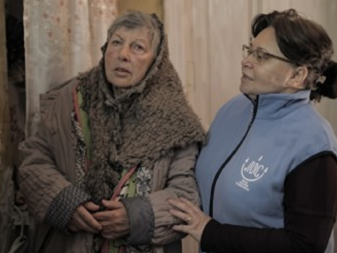
In Odesa, 79-year-old Bella faced freezing winters, power outages, and rising costs alone. Support from The Jewish Federation of Greater Washington and JDC provides food, medicine, winter assistance, homecare, and a vital reminder that she remains part of a Jewish community.
Federation Mobilizes Emergency Support for Communities in Israel
March 10, 2026
The Jewish Federation of Greater Washington
New allocations support medical care, trauma response, and community needs through trusted partners across the country.
On Monday, March 9, 2026, The Jewish Federation of Greater Washington’s Israel & Overseas Committee approved $125,000 in emergency allocations to partners in Israel to support urgent medical, humanitarian, and community needs following recent attacks.
In moments of crisis, Federation mobilizes the resources and relationships of our community to ensure help reaches those who need it most.
The allocations approved this week reflect urgent areas of need identified by Federation’s partners across Israel.
Emergency Allocations Supporting Communities Across Israel ($125,000)
Strengthening trauma capacity in northern Israel ($50,000): Federation funding will help expand emergency surgery capacity at Tzafon Medical Center (formerly known as Poriyah), which serves more than 300,000 residents in Israel’s north, where attacks have sharply increased demand for emergency care. The grant will fund the purchase of an additional anesthesia workstation for the hospital’s Trauma Unit.
Supporting vulnerable residents in the Kinneret Valley Cluster ($35,000): Communities in the Kinneret Valley Cluster—one of Federation’s partner regions in Israel, comprising 15 municipalities—remain under threat, with many residents without private shelters in a region where there is often only one minute to reach protection. Federation support will help the Cluster provide transportation to safe spaces during alerts, expand trauma response services, and deliver essential supplies during prolonged emergency conditions.
Standing with victims of terror ($25,000): After an attack, Israelis may be faced with the need to evacuate their homes, receive medical or psychological care, or confront a new reality of grief. Through the Jewish Agency for Israel’s Fund for Victims of Terror, families affected by these attacks receive immediate assistance, including emergency financial support, trauma care, and guidance in the difficult days following injury, displacement, or loss. Federation support helps ensure this rapid-response system is available when families need it most.
Providing community support in Beit Shemesh ($15,000): Following an Iranian missile strike that killed nine civilians and forced evacuations in Beit Shemesh, the Zinman Community Center became a gathering point for affected residents. Federation support is helping the center coordinate emergency programming and provide emotional support for evacuees and survivors.
Federation maintains long-standing relationships with these partners through decades of work with The Jewish Agency for Israel, our response following October 7, and our prior partnership with the city of Beit Shemesh. These connections allow our community to respond quickly and meaningfully when it matters most. They also reflect Federation’s broader Israel strategy: strengthening ties between Greater Washington and communities across Israel.
Rabbi David Stav identifies two core Jewish values: standing against immoral behavior and loyalty to family, community, nation, and people. Adding humility to the framework, this reflection explores how justice, peoplehood, and open conversation can shape a vibrant collective future.
Rosh Hashanah brings familiar tastes, recipes, and traditions to Jewish families. With support from Federation, Yad Yehuda is helping ensure families facing financial pressure can access kosher food and celebrate the Jewish New Year with dignity and joy.
At an “Ask Me Anything” gathering, young American Jews and an Israeli Shlicha have an honest conversation about Israel, October 7, identity, and the complicated relationship between Israel and American Jewry.
Join Dr. Assaf Suberry, Reb David, and Am Kolel friends for a Sefardi and Yemenite Music Song Circle.
Dr. Assaf Suberry is a musician and social gerontologist whose work explores how music creates connection, healing, and community across generations. His background is Yemenite and from Israel.