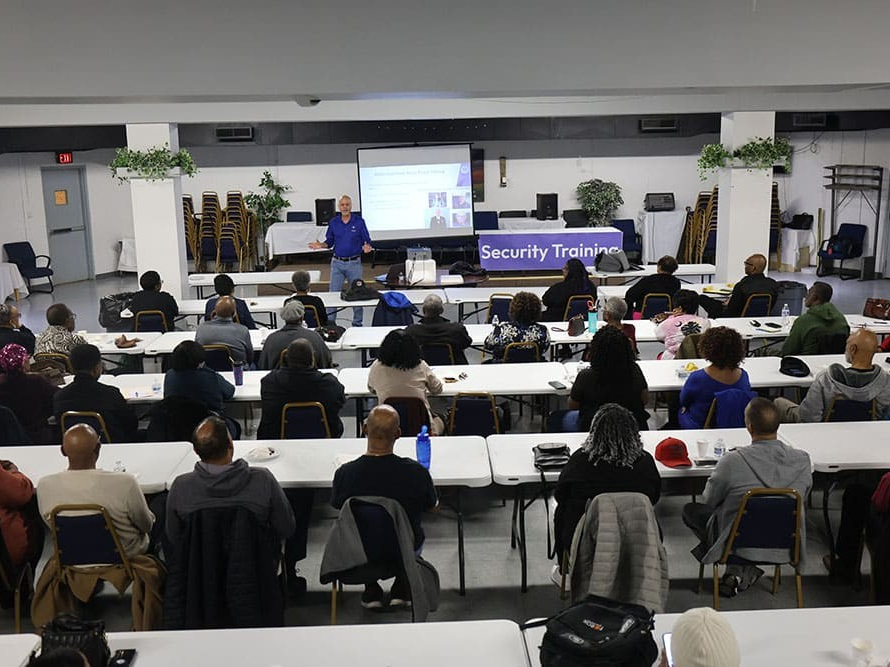
JShield Security Training: Situational Awareness
Recently, a security concern was identified and reported quickly thanks to the awareness and vigilance of a few community members. Because they trusted their instincts and spoke up, the situation was addressed promptly and did not escalate.
While the incident itself was resolved, it offers an important reminder: training matters—and so does taking action when something doesn’t feel right.
Every one of us has a role to play in maintaining safe, welcoming environments across our community and within our institutions. Sometimes that role looks like participating in a security training. Other times, it’s simply noticing what’s around you and trusting your intuition.
Small observations can matter more than we realize:
Individually, these details may seem minor. Together, they can provide critical information—but only if someone chooses to say something.
As we enter a new year, we know the Jewish community will continue to navigate complex and challenging moments. One of the ways we care for one another is by staying alert, informed, and prepared.
JShield supports this work by offering free security trainings for individuals and institutions across our community. These sessions help build confidence, sharpen awareness, and provide practical tools for navigating uncertain situations.
Just as importantly, we encourage everyone to:
Our strength as a community has always come from the way we look out for one another. This moment reinforces a simple but powerful truth: safety is a shared responsibility—a team effort. When we act together, we are more resilient.
Thank you for your continued partnership, your vigilance, and your commitment to keeping our community safe and welcoming.
|
Sunday’s attack in Australia may have happened halfway around the world, but for many of us, it hit much closer to home.
That’s the nature of Jewish vulnerability today. A violent act against a Jewish community “over there” immediately reverberates here. Our sense of safety shifts. Our plans are second-guessed. Fear creeps in.
And that’s exactly why Federation’s security work through JShield isn’t reactive. It doesn’t ebb and flow with the headlines. And it certainly doesn’t start the night before an event.
Because by the time something happens—whether it’s in Sydney or Silver Spring—it’s already too late to start building the relationships, training, and infrastructure that real security depends on.
As soon as we learned of the attack in Australia, our first calls were to local law enforcement partners and the FBI.
We didn’t have to introduce ourselves. We didn’t need to explain why something happening halfway around the world matters here. These are relationships we’ve built steadily over years. When we call, they respond. And they did.
That kind of response isn’t automatic. It’s built on trust. And it’s something we help every institution cultivate—hyper-local connections, district commanders who know your name, first responders who’ve walked your halls. Because when something happens, you don’t want to meet them for the first time. You want to greet them like an old friend.
After the attack, our inboxes filled with last-minute security requests from organizations hosting Chanukah events that had been on the calendar for weeks.
It’s understandable. But it misses the point.
If you needed security last night, you needed it three weeks ago when the event was planned.
Security isn’t something you switch on out of fear. It’s something you build over time—through planning, training, and partnership. That’s what JShield is here to help our community do.
Last year, more than 30 Jewish institutions in our region received threatening letters, most vaguely referencing Gaza, some outright menacing. On their own, each one might have been brushed aside.
But thanks to the reporting we encourage through JShield, we saw the bigger picture. We connected the dots across states. We got the FBI involved.
And we got results. The suspect, who lives just outside Silver Spring, recently pled guilty to federal hate crime charges. That outcome didn’t just happen. It was made possible by a community that’s engaged, prepared, and connected.
Since JShield launched, we’ve helped bring in more than $5 million in federal security grants for local Jewish institutions. We’ve done hundreds of threat assessments. Helped write emergency protocols. Trained thousands of people on situational awareness and how to stay calm under pressure.
And we know those trainings stick. One teacher told us she starts every school day with a breathing exercise she learned from us. Not because she’s scared, but because it helps her and her students feel grounded.
That’s what we mean when we say training is like putting money in the bank. You don’t get to choose the emergency. But every bit of preparation makes you more ready for whatever comes.
If you’ve felt a little more anxious dropping your kids at school or wondered if your synagogue is doing enough to stay safe, you’re not alone. We’re hearing it across the community. And we feel it too.
But fear alone doesn’t keep us safe. Action does.
Right now, we have a critical opportunity. Thanks to a generous match, every dollar you give to support Federation’s security work through JShield will go even farther. That means more trainings, more assessments, and more direct support to institutions across Greater Washington.
Because cost should never be a barrier to security. That’s why every service JShield provides—from threat assessments to training—is offered free to the community, powered by Federation and donors like you.
Security doesn’t start with police. It starts with preparation, with connection, and with showing up for each other before something happens, not just after.
We can’t wait for the next headline to get ready. This is the moment to act.
Give now to protect Jewish life in Greater Washington. Let’s meet this moment—and this powerful matching opportunity—together.
In the wake of the horrific terrorist attack in Australia, I want to speak directly to our community here at home.
Our hearts are with the victims, their families, and the Jewish community in Australia as they mourn and begin to heal. Violence against Jews anywhere reverberates everywhere, and moments like this understandably heighten concern within our own community.
Here in Greater Washington, the safety and security of Jewish life remains our highest priority. Through JShield, Federation’s community-wide security initiative, we are in close coordination with local and federal partners and with Jewish institutions across our region, supporting schools, synagogues, and organizations with threat monitoring, training, assessments, and grant support at no cost. You can learn more about how JShield works to keep our community safe at shalomdc.org/security.
If you see or experience something concerning, we encourage you to report it to JShield. Reporting helps identify patterns and supports coordination with our security partners.
Jewish life will continue. We will gather, celebrate, learn, and mark our holidays together, thoughtfully, responsibly, and with care for one another.
At the same time, this moment calls on all of us to be attentive to the language and actions we tolerate in our public spaces. Antisemitism, in any form, must be named and challenged, and Jewish communities must never be left to carry that burden alone.
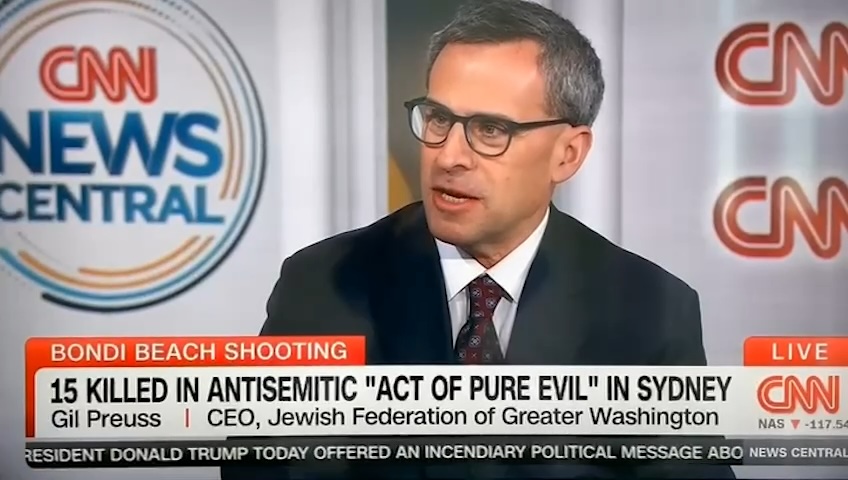
Earlier today, I shared these concerns in a brief conversation on CNN about antisemitism and the responsibility to challenge it before it escalates. You can watch it clip below.
Thank you for the many ways you show up for one another and for our community, especially in difficult moments. We are grateful for your partnership and your trust, and we remain committed to keeping Jewish life in Greater Washington strong, safe, and connected.
This is a moment for shared responsibility. Take action by supporting JShield and strengthening Jewish community security.
Last month, we stumbled onto something extraordinary: a set of original minutes from the very first meetings of the United Jewish Appeal in Washington. Hand-typed pages from 1948 and 1949 outlining early allocations, emergency support for Israel, and the names of families who stepped up to lead, many of whom are still shaping Jewish life in our region today.
Reading these documents feels like opening a time capsule. The issues were different, the world was different, but the heartbeat is the same: people coming together, pooling resources, and taking responsibility for one another.
One moment stands out. In April 1949, local leaders gathered at the Ambassador Hotel for what the minutes called a “special meeting.” The purpose?
“Obtain permission of the Executive Committee to borrow an additional half million dollars to advance the United Jewish Appeal… with regard to the deplorable condition of the new immigrants entering Israel.”
Half a million dollars, approved in one afternoon—a community stepping in without hesitation. You can almost feel the urgency in the room and the shared understanding that their choices mattered; that lives depended on them getting this right.
Another set of minutes from late 1948 details the young community’s first major campaign: 16,163 contributors giving more than $2 million, an astonishing act of collective generosity. Their allocations spanned Israel, local agencies, national advocacy, and emerging Jewish institutions.
And even the follow-up work tells its own story. One line notes the need to “intensify collections” and clean up the outstanding gifts still considered “gettable.” It’s a reminder that closing gaps and meeting the moment has always been part of our work. It’s as true now, at year-end, as it was then.
They debated, they decided, and they built the foundation we’re still standing on today.
As we approach year-end, this history hits differently. It reminds us that our community has always risen to the moment—not because someone told us to, but because collective responsibility is who we are. We give, we show up, and we build together.
Every gift today continues a legacy of care, courage, and shared purpose.
And now, just as they stepped up then, we’re called to do the same. Two year-end matches are helping every gift go further to strengthen belonging, community life, and security across our region:
Make a gift today to support belonging, security, and our nearly 100 years of communal investment.
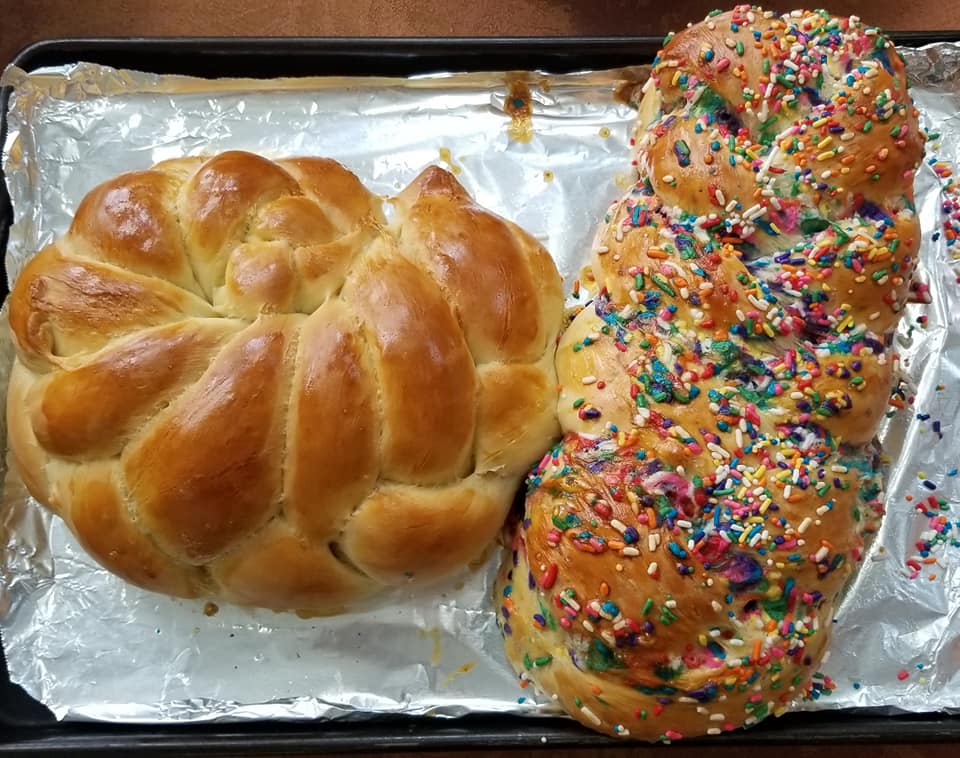
There’s more than one way to slice an apple, bake a challah, or make someone’s day. And there’s definitely more than one way to make a difference.
Every gift to The Jewish Federation of Greater Washington helps someone feel more connected, supported, and seen—whether it’s a teen finding their place in Jewish life, a family getting help in a moment of crisis, or a community strengthened by safety and care.
Explore how your giving shapes Jewish life across Greater Washington:
This season, consider the difference you want to make, then choose the giving path that fits you best. Whether it’s online, through appreciated stock, your Donor Advised Fund, or a charitable IRA distribution, your generosity powers real impact across our region and beyond.
Because there’s no single way to build a strong, vibrant Jewish community. It takes all of us.
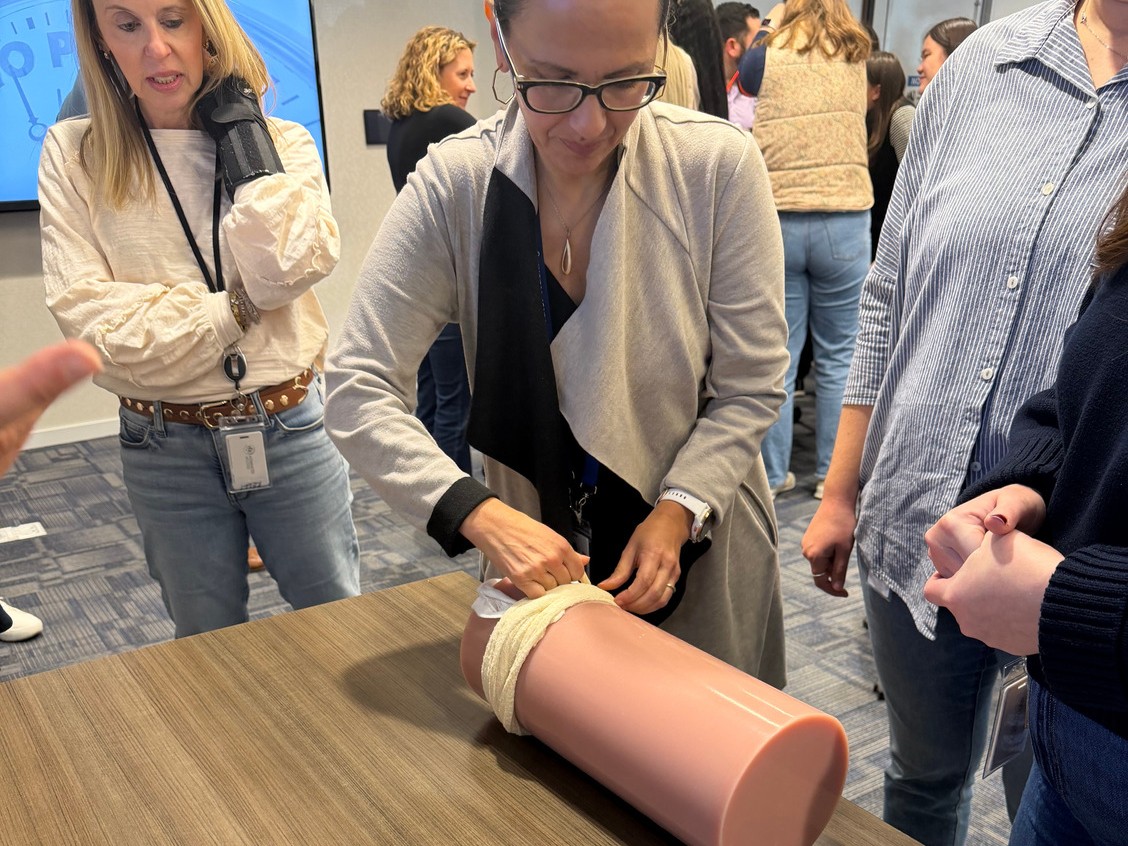
Last week, Federation staff rolled up our sleeves (literally) at STOP THE BLEED®, a hands-on emergency training that teaches you how to respond to life-threatening bleeding. We practiced using tourniquets, packing wounds, and applying pressure—skills we hope we’ll never need, but ones we’re grateful to have learned.
In a crisis, there’s no time to think. When tensions are high and lives are on the line, you fall back on your training. And you hope it’s training that sticks.
That’s where JShield comes in, turning preparation into practice, and making sure that training happens before the moment it’s needed.
For our staff, this training was memorable, even intense. For JShield, it was any other Wednesday. These kinds of high-impact, real-world trainings are standard operating procedure for our community security initiative—proactive, practical, people-first.
JShield supports synagogues, schools, and Jewish organizations across Greater Washington with the tools they need to protect their people: security assessments, grant support, expert trainings, and real-world readiness. So far in 2025, that’s added up to nearly $600,000 in estimated support—from consultations and training to grant writing expertise and threat assessments—helping institutions across the DMV stay prepared and protected.
This kind of training doesn’t happen by accident. It happens because of your support for Federation’s Annual Campaign.
And right now, your gift toward security goes even further, thanks to a limited-time Security Match from The Morningstar Foundation, which is matching 50¢ on the dollar, up to $1 million, to strengthen community safety across Greater Washington.
That means more trainings like this. More experts in more spaces. More peace of mind in a time when it’s never felt more urgent.
So far this year, JShield has helped local Jewish organizations secure more than $4.33 million in federal and state security funding. Your support helps unlock even more.
There’s nothing flashy about learning to stop a bleed. It’s messy. It’s tense. It’s vital.
But it’s also hopeful. Because it means we’re not waiting to react—we’re ready to respond, thanks to JShield. Together, we’re building a community that leads with courage, care, and preparation.
Help power the next life-saving training across Jewish Greater Washington.
Every gift is matched. Every action counts.
I’ve been wrestling with the word “unity.” It sounds nice enough but lately, when I hear different presenters call for unity among the Jewish people, I hesitate.
Is appealing to unity just a way of asking people to conform to the speaker’s preferred ideas and political positions? Is unity a code word for uniformity? Is it a convenient way to exclude ideas that may challenge the status quo? While we may be concerned with significant divisions within the Jewish community, it is not clear to me that calling for unity is the answer. Are we tempted into thinking the easiest way to stand as one would be to think and act alike?
I’ve set “unity” aside for now because our community is strong not in spite of our differences but because of them. The more we can shape a community that values and learns from a diversity of viewpoints and perspectives, the better off we’ll be. Still, proponents of unity have a point. We need a binding force, something that sustains us not simply as a group of individuals but as an enduring community.
There’s a term in chemistry (bear with me) called the “strong force.” The strong force is what holds an atom together, overcoming the lesser forces that would allow protons to repel each other and push apart. That’s how I see our community—spacious and gracious enough to account for differences but sturdy enough to hold our form. I believe that our strong force is the core idea of mutual responsibility, a feeling that we are all responsible one for another.
With a sense of mutual responsibility and a common fate, anything is possible. Once that’s in place, the rest is conversation. Disagreement, overlap, exploration are all okay because even if we ping off each other now and again, we are held by something stronger, a commitment to each other and our shared destiny.
We have a lot to navigate together in the coming months and years. Meeting the surge in interest in Jewish engagement, shaping a diverse and open community, connecting to Israel, and addressing antisemitism and our communal security stand out as priorities heading into 2026 (more on this soon). We have meaty, worthy, urgent goals to tackle, which will, without question, spark disagreements.
Rather than mute our differences, I say let’s turn the volume up on communal conversations embedded within a context and commitment to mutual responsibility. Diversity of thought is not a tax on unity. It’s a form of abundance. We can feel confident that even as we bounce ideas and questions, invitations and quandaries off each other, our communal bond will hold. There’s a stronger force at play.