Need support? Call 703-J-CARING (703-522-7464)

There Are So Many Ways to Be Jewish: A Reflection from Mexico City
There Are So Many Ways to Be Jewish: A Reflection from Mexico City

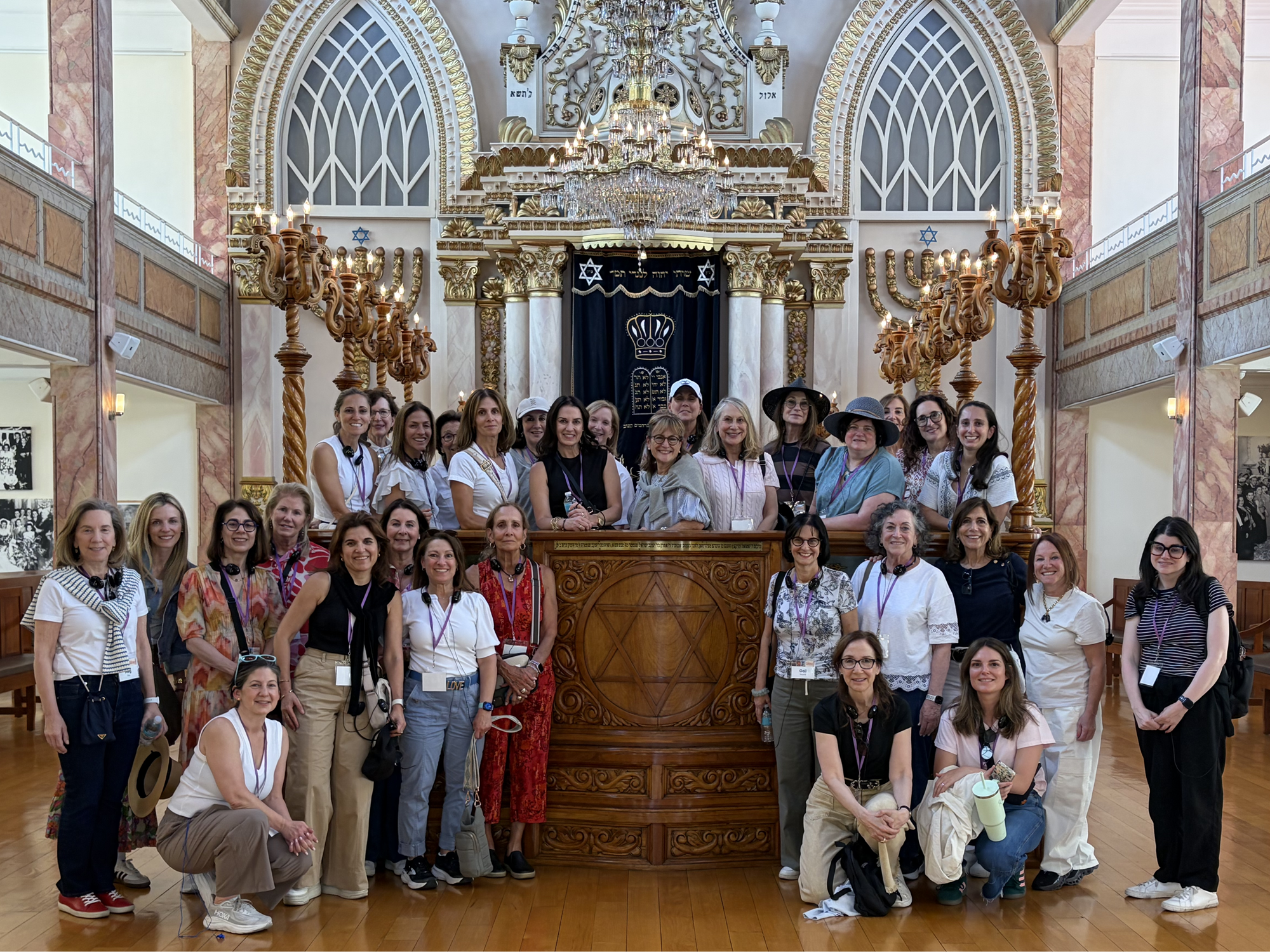
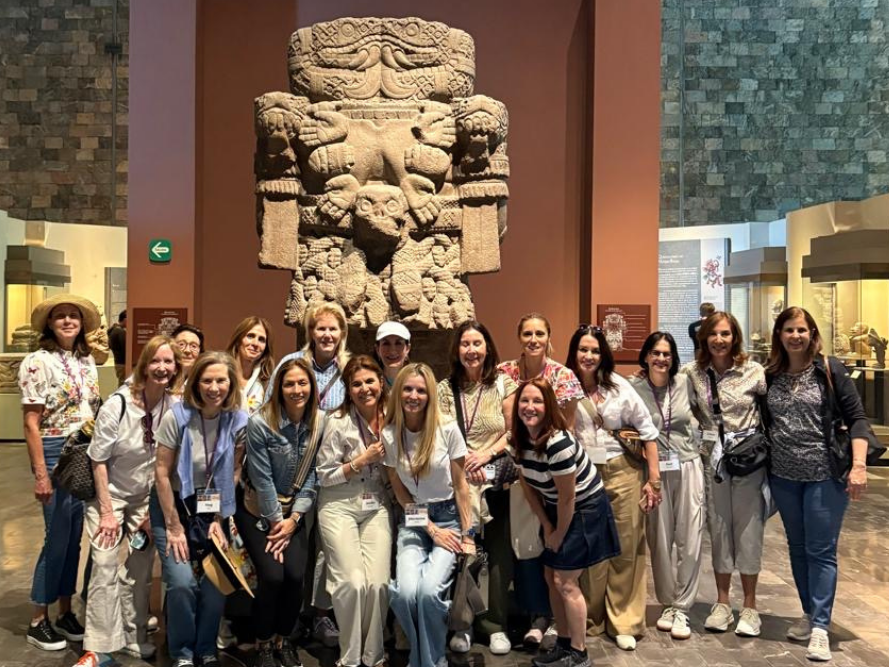
While touring one of the oldest synagogues in Mexico City on our recent Women’s Philanthropy mission, our guide said something that has stayed with me.

“There are so many ways to be Jewish.”

That is the beauty of Judaism. There is no single way to feel connected, to be seen, or to create meaning within this religion and this community. There are countless ways. While I had heard that before, standing where I was standing, surrounded by the people I was traveling with, it landed differently. It felt truer than ever.

As co-chair of the Jewish Federation of Greater Washington’s Women’s Philanthropy Mission to Mexico City, I had the privilege of helping lead a group of extraordinary women through an experience that moved between history and contemporary Jewish life—from walking through the historic center of Mexico City and visiting long-standing synagogues, to spending time at community institutions like the Centro Deportivo Israelita and Olami ORT, where Jewish life is actively being shaped for the future.

Everywhere we went, we saw that truth reflected back to us. We visited organizations and communities that have built something remarkable for the people they serve, each one shaped by its own history and its current needs. I left inspired by the reminder of what is possible when people decide to build.

Finding My Place

Lindsay Karr and Jessika Wellisch, Co-Chairs, Federation’s Women’s Philanthropy Mission to Mexico City

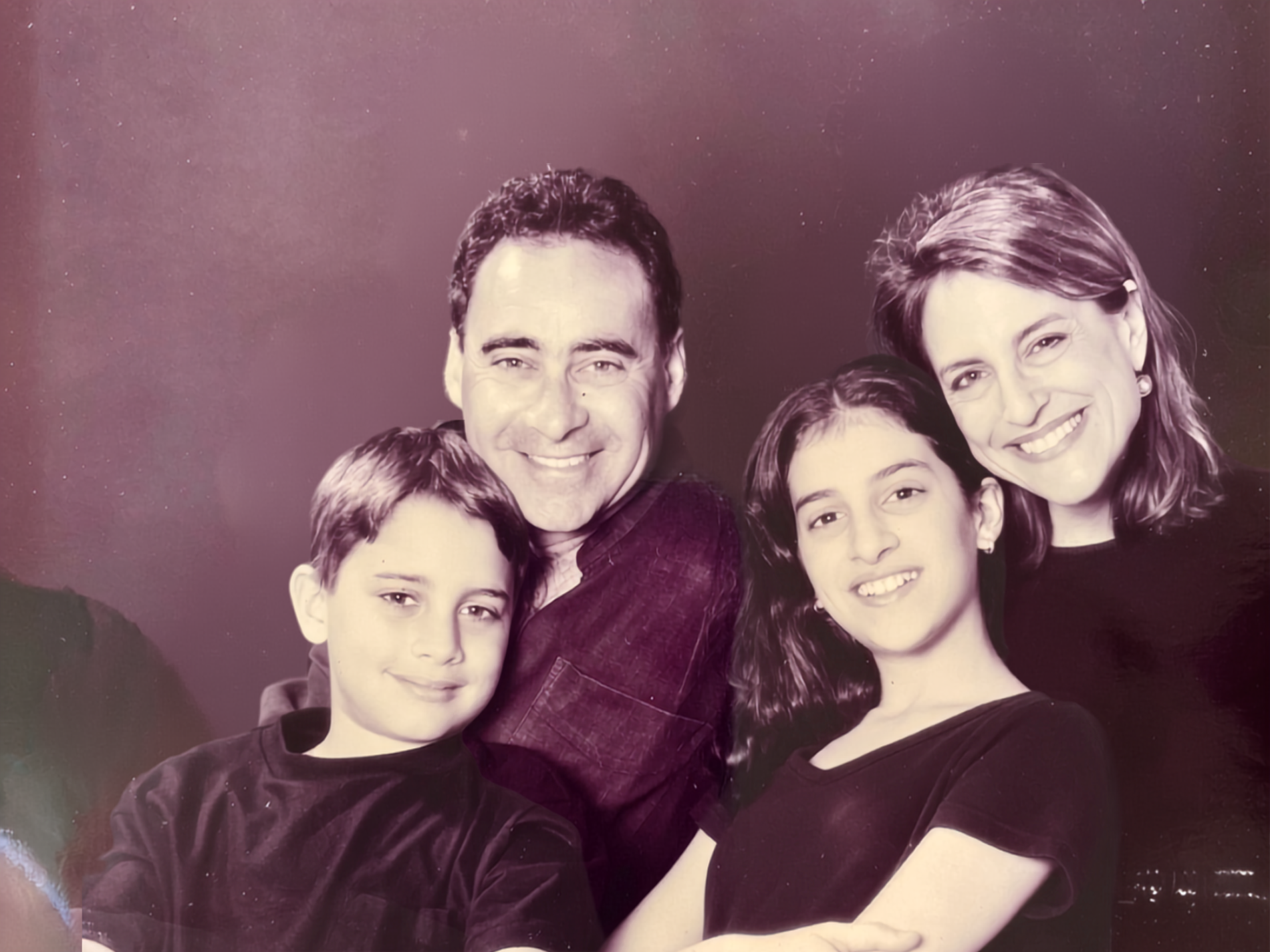
I have carried that feeling home, and it has me thinking about all the ways I can create my own Jewish identity within the communities I belong. As a parent raising three Jewish children. Within my close circle of friends. In my community here at home. And in the wider work of Federation, both in DC and at the national level. The trip gave me a new lens for seeing my own role, not as someone who simply participates, but as someone who can help build and shape what comes next.

And of course, what I will remember most is the people.

The Best Conversations Happened in Traffic

This trip was, at its heart, about building connection. And yes, we spent more than our fair share of time on the bus, moving between sites like Xochimilco, Casa Gilardi, and neighborhood community spaces, but even that became part of the experience. Those hours gave me the chance to truly get to know so many of the women on the trip.

To me, that is what being Jewish has always been about: relationships and connection.

I am deeply grateful to have served as a co-chair of this experience, and even more grateful for the people who made the journey alongside me. I returned home inspired to keep creating, and to keep building the connections that hold our community together.

There Are Countless Ways

One of the things I value most about Federation is that it creates space for each of us to explore our Jewish identity in ways that are meaningful to us. Whether through Women’s Philanthropy, travel experiences like this one, or the many opportunities to learn, connect, and give back throughout the year, there are countless ways to find your place and help shape our community.

If you’re curious about where your own Jewish journey might lead, I hope you’ll consider joining a future Women’s Philanthropy event or mission. You never know which conversation, which community, or which moment will stay with you long after you have returned home.

Looking to experience the power of Jewish community firsthand? Learn more about Federation’s giving societies like Women’s Philanthropy, or find a local event through our Community Calendar.
Related posts

A Lesson I’ve Carried Since 1987

A Lesson I’ve Carried Since 1987

Before traveling to Georgia and Ukraine, I want to share a story that has shaped how I think about our responsibility to one another.

I just finished my friend Daniel Grossman’s new book Seeing Red. In it, Danny recounts his time working as a young foreign service officer in Leningrad and his overt and covert efforts to help refuseniks. As you might guess, his tour ended when the Soviets kicked him out.

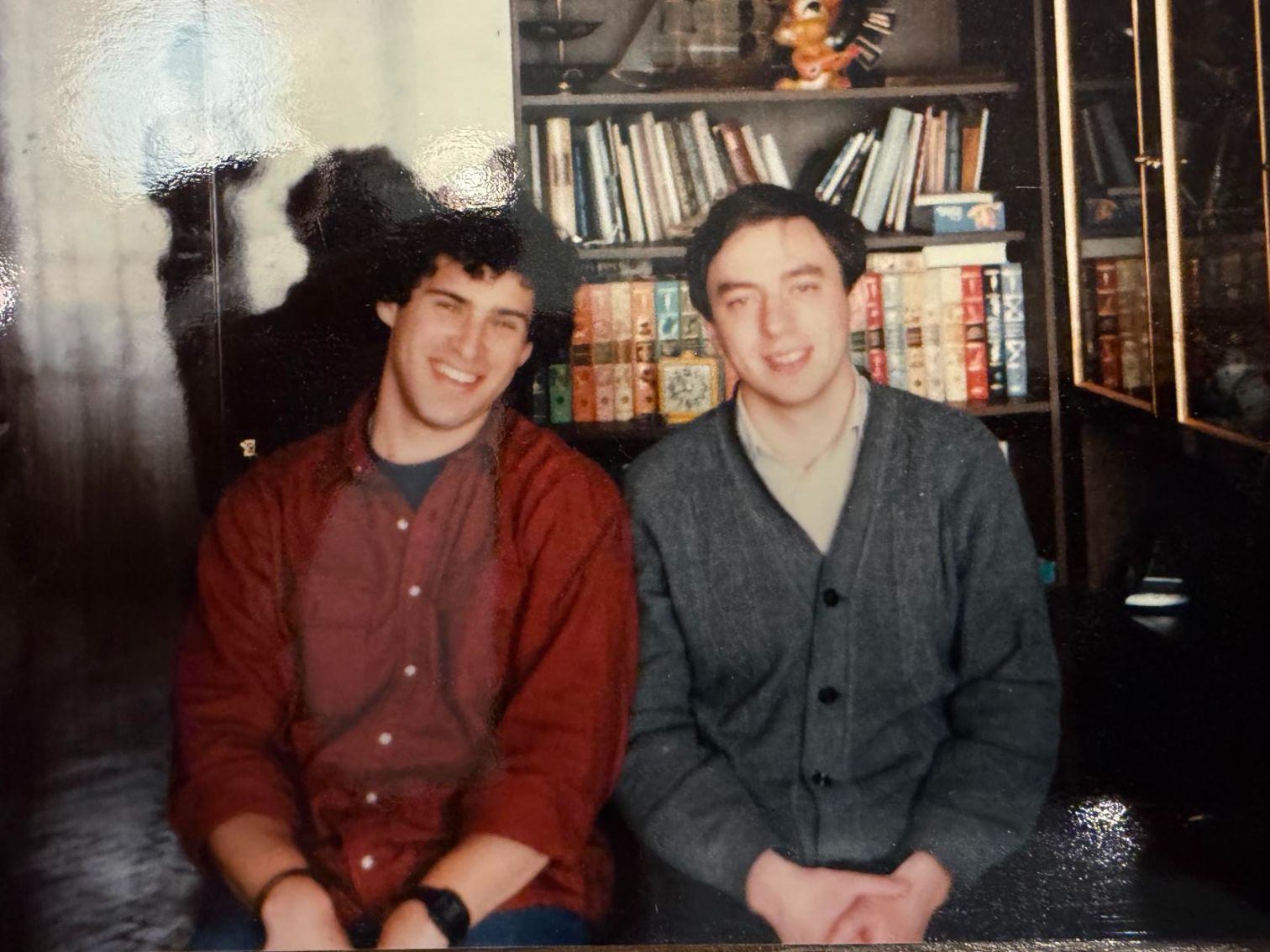
Danny’s tales brought back memories of my own trip to the Soviet Union in 1987. A friend and I were living in New York leading a Zionist youth group, and the Jewish Agency asked (though not explicitly due to the sensitive nature of the operation) if we would be willing to travel to the Soviet Union and visit with refuseniks—some living in central cities such as Moscow and others in more remote communities in Siberia, including Irkutsk or Novosibirsk—and bring aid on behalf of global Jewry.

We were provided with specific people to visit (one of whom is pictured with me above) and asked to deliver Russian-Hebrew dictionaries—which we had to wear under our clothes to get past security—along with goods people could sell to earn money after many had lost their jobs and messages of support from Jews around the world. Looking back, I realize that trip gave me an enduring appreciation for what it means to be responsible for one another as a Jewish people. It’s a lesson that has stayed with me ever since, and one I’ve been thinking about as I prepare to return to the region.

This coming week, I’ll be joining a group of Federation executives on a trip to Georgia and Ukraine. We will visit with people in their homes and see firsthand the critical services your generosity makes possible through Federation’s partnership with JDC. We’ll hear directly from local communities about their circumstances and the challenges they are facing. We’ll also meet with volunteers and activists in Ukraine to learn how they’re developing local leadership and sustaining Jewish community in the face of war, uncertainty, and economic hardship.

I believe in the power of doing this work in person. By showing up, we’ll get to witness the dignity, resilience, and determination with which these communities are building Jewish life and bring those lessons back with us. And we, in turn, will get to express our continued commitment to caring for the most vulnerable and building Jewish life around the world.

If you’re interested in learning more about our exchange, I invite you to join a webinar on Wednesday, July 22 at 12:00 PM a few days after I return. I’ll share what we discovered and how those insights will help inform Federation’s ongoing work to support Jewish communities in the former Soviet Union and beyond.

If you’d like to learn more about the work your generosity makes possible in Ukraine, you can do so here.

In 1987, I set off with a backpack full of supplies and messages of solidarity. Today, I travel carrying the trust and generosity of an entire community. This is one of my favorite aspects of Federation’s work—helping to build our community here in Greater Washington while strengthening the bonds that defy borders. It’s these kinds of missions that put into action the idea that no Jewish community stands alone. We are part of a global family, one that shows up for, relies on, and supports one another.

Related posts

What Mexico Taught Me About the Global Jewish Community

What Mexico Taught Me About the Global Jewish Community

When I decided to co-chair the Jewish Federation of Greater Washington’s Women’s Philanthropy mission to Mexico City, I expected to learn more about another Jewish community. To see how Jewish life is lived in a different corner of the world, meet remarkable people, and better understand both the challenges and opportunities they face.

What I didn’t fully expect was how deeply connected our communities are, even separated by thousands of miles, different languages, and different histories.

Throughout our journey—from walking along Paseo de la Reforma and through the historic heart of Mexico City, to visiting synagogues, community centers, and cultural institutions—I kept seeing the same thread woven through every conversation and every organization we visited: a shared commitment to building Jewish life for the next generation.

In every place we visited, I found myself returning to the same profound question: What enables a people not only to survive but also to thrive, adapt, and continue creating in new contexts?

The Future Has Small Hands

Our visit to Olami’s Idea Lab offered a beautiful answer. There, children are not simply taught information. They are taught to see themselves as makers, capable of imagining, building, solving, and repairing. In a world that often encourages passive consumption, they are being empowered to believe that they can shape the future with their own minds, hands, and hearts.

It struck me how deeply Jewish this idea is.

Throughout Jewish history in the diaspora, we have rarely had the luxury of permanence or certainty. Communities were uprooted, dispersed, and compelled to begin again across continents and generations. Yet wherever Jews found refuge and opportunity, they built. They built homes, synagogues, schools, businesses, and communities rooted in values, belonging, learning, and shared responsibility.

Time and again, Jewish life became an act of sacred creation.

The Question That Followed Me Home

Lindsay Karr and Jessika Wellisch, Co-Chairs, Federation’s Women’s Philanthropy Mission to Mexico City

What moved me most in Mexico was witnessing a community continuing that tradition in its own unique context—vibrant, creative, deeply connected, and forward-looking. While preserving Jewish identity remains at its center, this community is also asking how to empower the next generation to contribute meaningfully to the world through that identity.

The children in the Idea Lab are not merely creating projects. They are practicing agency, imagination, collaboration, and repair. In many ways, they are inheriting one of the oldest Jewish callings: to take what exists and help shape it into something more whole, more compassionate, and more alive. Perhaps that is one of the great gifts of belonging to a people shaped by diaspora.

We learn that home is not merely a place we inherit; it is something we continually create. Community is not simply something we belong to; it is something we build together.

As I left Olami, I found myself wondering: How will we continue to use our divinely given gift of being makers to repair our aching, broken world? And, what’s possible if each of us embraces our responsibility not only to inherit the world, but to co-create it?

The Gift I Didn’t Expect

That may be the greatest gift of traveling with Federation and Women’s Philanthropy. We set out to learn about Jewish communities beyond our own, but along the way, we discover something about ourselves. We return home with a deeper appreciation for the many ways Jewish life flourishes around the world, and with a renewed sense of our own role in shaping its future.

Looking to experience the power of Jewish community firsthand? Learn more about Federation’s giving societies like Women’s Philanthropy, or find a local event through our Community Calendar.
Related posts

The Desk Between Us

The Desk Between Us

Every career has a beginning. Mine might have started before I was born.

When I interviewed at The Jewish Federation of Greater Washington, part of the process included a writing exercise. The assignment was straightforward: write a sample fundraising appeal. So I sat down at my desk, opened my laptop, and got to work.

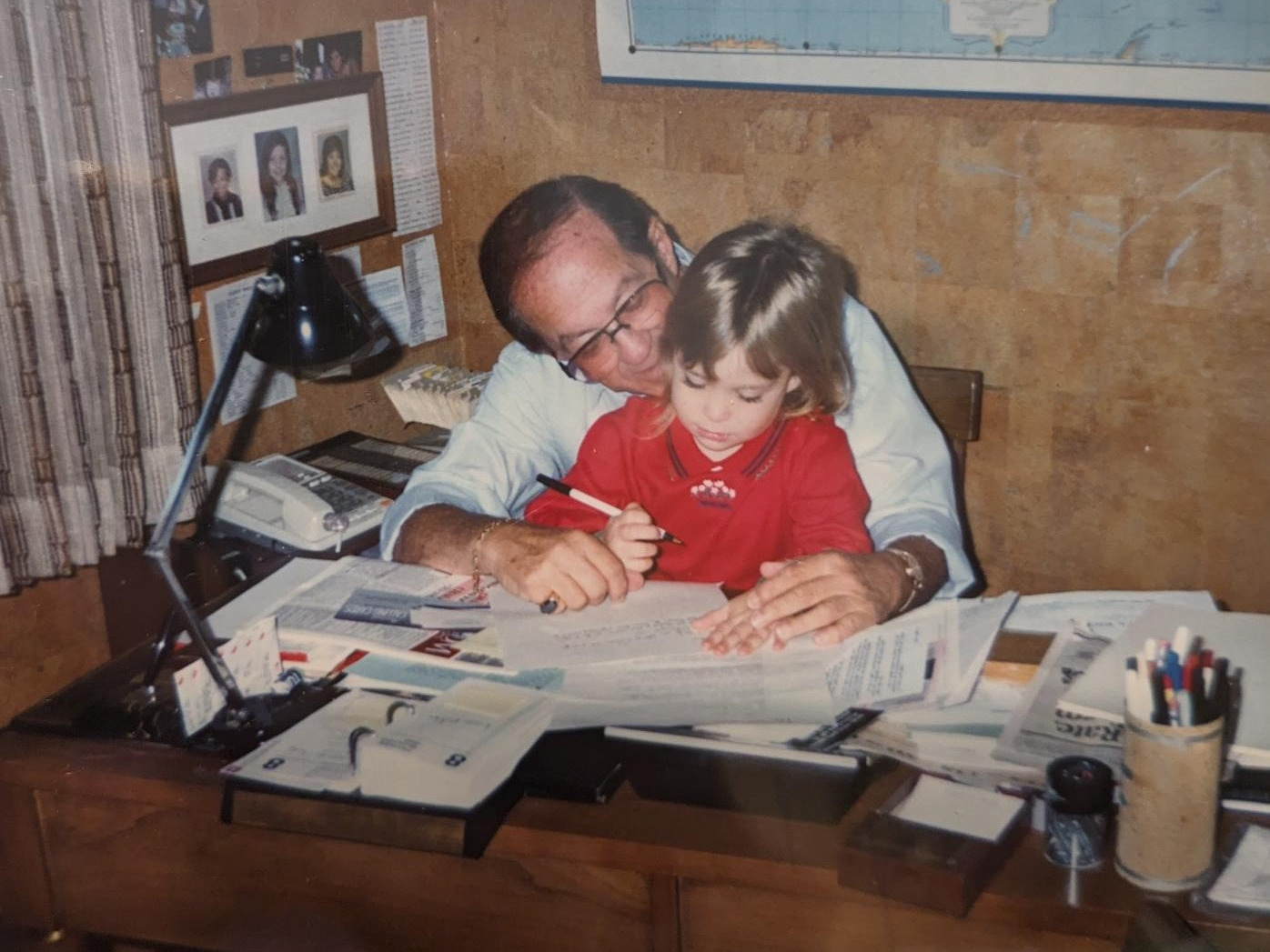
The desk where I wrote that appeal once belonged to my maternal grandfather, my Opa.

Long before I became a Jewish professional, long before I learned the language of campaigns, community building, stewardship, and philanthropy, my grandfather was doing the same work. From this very desk.

Opa’s story began oceans away from mine. As a young Jewish boy, he escaped the horrors of Europe during World War II, fleeing from country to country, even in Mandatory Palestine before Israel became a state, before eventually building a new life in the Bay Area, California. Along the way, he became a military officer, journalist, a traveler, and a gifted communicator. Fluent in five languages, he spent years telling stories and connecting with people across cultures and borders.

Eventually, those talents led him to a career in Jewish communal service. He became the Western Regional Director of United Jewish Appeal (which later evolved into Jewish Federations of North America), helping raise funds and build support for Jewish communities around the world. His friends were politicians and celebrities. He helped bring some of the earliest Israeli emissaries to the West Coast, a precursor to the shlichim programs that remain such an important part of Jewish communal life today. He founded my home synagogue in Northern California. And he spent the rest of his life helping strengthen Jewish community.

I was far too young when he passed away. I never had the chance to know him as an adult, to ask him about his travels, his work, or what it felt like to dedicate a lifetime to serving the Jewish people.

But somehow, pieces of him found their way to me anyway.

More than a decade ago, I began my own journey as a Jewish professional. Different organizations. Different communities, different coasts. Yet so often, I find myself drawn to the same things that animated his work: relationships, storytelling, connection, and the belief that communities are strongest when people come together in service of something larger than themselves.

Sometimes I wonder what he would think of today’s overall Jewish landscape and its space in our world. The man who embraced technology and innovation would have been fascinated by social media, virtual meetings, and the ability to connect with people across the globe with the click of a button. And I suspect he would have loved the fact that, thanks to a hybrid workplace, I now spend part of every week working from home at the very desk where he once wrote his own appeals.

A desk that has quietly served the Jewish community since the 1950s.

A desk that has witnessed handwritten letters, fundraising plans, newspaper articles, family photographs, and now Zoom calls and digital campaigns.

The wood is older now. So am I. But the work continues, and there is something deeply comforting about that.

In a world that changes so quickly, it feels almost magical to place my hands where his once rested and know that, in some small way, we are connected through a shared purpose.

Perhaps that is what legacy really is – the quiet passing of values from one generation to the next. The belief that community matters. The willingness to serve. The courage to tell stories that inspire people to care.

And sometimes, if you are very lucky, a sturdy wooden desk.

The photograph above is of my Opa and me at that same desk many years ago. Neither of us could have known then that one day it would become mine. Or that decades later, we would still be doing the same work together. Z”l Opa 

Related posts

Why I Leaned into the NoVA Leadership Cohort

Why I Leaned into the NoVA Leadership Cohort

I’ve spent a lifetime experiencing the incredible, vibrant diversity of the Jewish world. I grew up Conservative in Toronto, navigated Reform spaces in Anaheim after my family moved there when I was nine, engaged with Chabad, and even spent time backpacking through Israel, staying on my family’s kibbutz.

Moving around as much as I have, I’ve seen just about every model of Jewish community layout imaginable, from tiny, 20-family pockets with a traveling rabbi to massive communities where people only show up for the High Holidays. Experiencing that full spectrum also gave me a deeper understanding about what makes a Jewish community thrive.

When my family and I moved to Alexandria right before the pandemic, we knew it was time to finally put down deep roots and find a true home in our local community. I jumped into leadership, eventually chairing several committees at Beth El Hebrew Congregation. But while I loved my synagogue, I couldn’t shake a familiar feeling: NoVA’s Jewish community was missing out on key opportunities to come together.

The structures we’ve inherited naturally build walls between community leaders throughout our region. But the reality is, leaders across our different NoVA organizations actually want to work together. At our core, we are facing the same challenges and chasing the same goals. We are more alike than we realize and are stronger and more effective together. We just needed the space, the trust, and the opportunity to do it.

That opportunity came for me when I learned about Federation’s Northern Virginia Leadership Cohort from Carly Rubenstein, Board President at Beth El. She told me it was something I’d find fascinating and impactful for my work in the community. I didn’t know a single other person who had signed up for it, but I decided to take the leap.

Professional-Grade Tools for Community Transformation

I recently took six months off from the corporate world to dedicate myself fully to volunteering as a leader in Jewish communal work, so I wasn’t looking for a casual networking mixer. I wanted something substantial. To my surprise, the caliber of this Federation program ranked right up there with the absolute best professional development trainings I’ve ever done in the corporate sector.

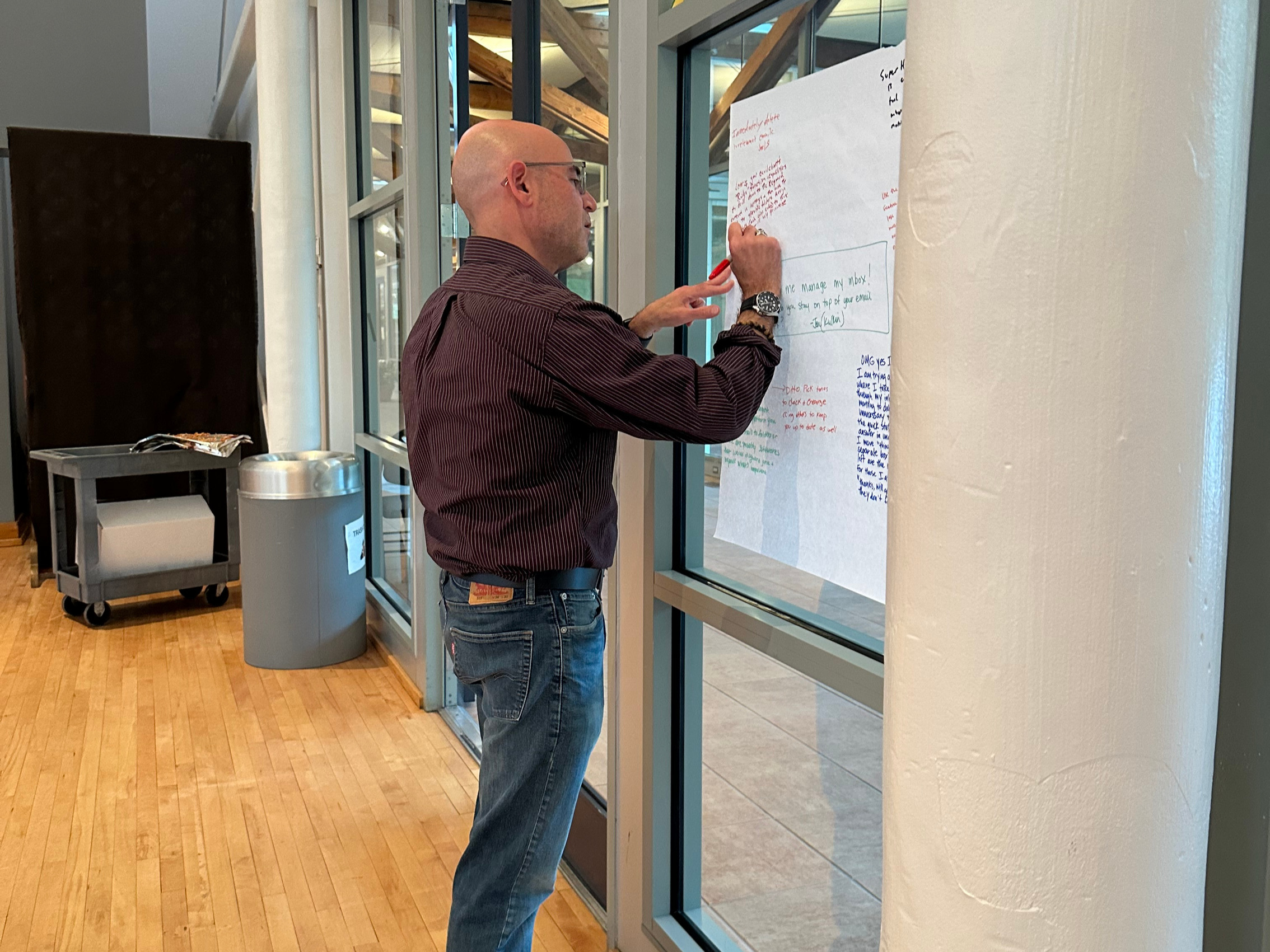
Led by renowned leadership consultant Rae Ringel, the program is entirely about giving you tools, learning by doing, and doing in a group of leaders who have the same mission and values. Through a dynamic mix of in-person and virtual sessions, Rae guided us through “connection modalities” that taught us how to surface differing perspectives, navigate difficult conversations, and truly articulate both our personal stories and our organizations’ missions.

For me, the most tangible takeaway was learning structured, innovative frameworks to pull apart larger, sometimes overwhelming community challenges into manageable, actionable pieces, building the concrete skills to execute your vision.

The Power of Coalition: “Shipbuilding” in NoVA

What surprised me most, though, was the sheer willingness of everyone in the room to work together.

There is a distinct difference between standard corporate or nonprofit experience and Jewish nonprofit experience. To me, the main difference is “shipbuilding,” learning how to build lasting coalitions across different denominations, synagogues, and grassroots organizations in a casual, high-trust environment.

The Jewish Federation of Greater Washington understands this, explicitly designing the program to facilitate these deep connections by assigning us to smaller “coffee groups,” which became the foundation for real collaboration.

Just this week I was texting with another participant from my cohort. We recreate those coffee groups all the time. We are constantly leaning on one another, bouncing ideas off each other, and using the exact problem-solving structures we learned together to figure out how to best serve Jewish NoVA.

By bringing together leaders from across the Jewish communal space in NoVA, Federation is actively weaving a powerful network of friends and collaborators. The cohort has allowed lay leaders and professionals across the region to realize we are not facing our challenges alone.

Now’s The Time: Join the Third NoVA Leadership Cohort

If you are reading this and feeling even a little bit intrigued, my advice to you is simple: don’t be afraid to give it a shot.

Whether you are a seasoned board member, a dedicated committee chair, an engaged volunteer, or someone who hasn’t held a formal leadership role yet but has a passionate desire to grow, this cohort will give you the tools to decide how you want to be involved and the lifelong network to back you up.

Federation is launching the third Northern Virginia Leadership Cohort this fall. From August 2026 through May 2027, a new group of 16–20 lay leaders will come together for a kickoff event, a closing celebration, and 8 monthly sessions (alternating between in-person and Zoom) led once again by Rae Ringel. To learn more and nominate a talented and dedicated individual with a desire to grow in their Jewish leadership journey (including yourself), please see here.

We need a diverse set of organizations, ages, and perspectives to make a truly strong, vibrant, and unified NoVA Jewish community a reality.

Take it from me—it is entirely worth the investment.

Related posts

Venezuela Earthquake Situation Update

Venezuela Earthquake Situation Update

Venezuela Earthquake Situation Update

Prepared by Jewish Federations of North America’s Israel Office
Shared by The Jewish Federation of Greater Washington

On Wednesday evening, two powerful earthquakes measuring magnitudes 7.2 and 7.5 struck northern Venezuela less than a minute apart, causing widespread destruction. Search-and-rescue operations continue as emergency crews race to locate survivors trapped beneath collapsed buildings. Tragically, at least 235 deaths and more than 4,300 injuries have been confirmed, though both figures are expected to rise. Hundreds of people are verified as missing, and communications outages and extensive damage in Caracas and the coastal state of La Guaira have left tens of thousands temporarily unaccounted for with families frantically searching for loved ones. Tens of thousands have also been displaced, with many sheltering in public buildings and open spaces as aftershocks continue.

International assistance is mobilizing rapidly, although damage to Maiquetía International Airport has complicated the arrival of international rescue and humanitarian teams. The United Nations is coordinating urban search-and-rescue efforts, while the United States, Mexico, Colombia, Spain, France, Italy, and El Salvador have deployed rescue personnel, medical teams, equipment, and humanitarian supplies. Relief organizations are also providing emergency food, shelter, and medical assistance.

Impact on the Jewish Community

Nearly all of Venezuela’s approximately 3,000 Jews live in Caracas, where many buildings in Jewish neighborhoods sustained damage. Three community members have been confirmed dead, and one remains missing after the building they were in collapsed. Sadly, those numbers are expected to rise. Several community members have been left homeless, and the community is working to secure temporary housing. Despite the tragedy, community leaders report a strong sense of calm and coordination, having quickly accounted for members, assessed the needs of older adults and those experiencing anxiety, and provided appropriate support.

Our hearts are with the Jewish community of Venezuela and all those affected by these devastating earthquakes. We mourn those who lost their lives and pray for the swift recovery of everyone who has been injured.

JDC Response

JDC has maintained a longstanding presence in Venezuela through its partnership with the Jewish community, supporting a welfare and humanitarian aid network for its most vulnerable members. JDC was in contact with community leadership within minutes of the earthquake and remains in close communication to assess urgent needs, including conditions at key community institutions now serving as shelters. Immediate priorities include shelter management, essential supplies, water, sanitation, electricity, safety, psychosocial support, and operational coordination.

JDC has also launched a non-sectarian response through JDC GRID (Global Response and Innovative Development), its humanitarian and disaster response arm. In partnership with the local community, it is prioritizing the delivery of food, safe drinking water, and other essential supplies to the hardest-hit and most difficult-to-reach areas, including La Guaira. As access improves, JDC plans to provide medical organizations with critical supplies and support temporary shelter for displaced families.

The Jewish Agency Response

The Jewish Agency for Israel activated its Overseas Emergency Desk immediately following the earthquake and has remained in continuous contact with community leadership. It is providing immediate assistance to affected community members, including temporary housing and other essential support, and has established a dedicated hotline through its Global Center for Venezuelan immigrants in Israel and those seeking information about immigrating to Israel.

In recent years, through its JReady program, the Jewish Agency has helped strengthen the community’s emergency preparedness through resilience and trauma training and emergency planning. As a result, the community has responded to the crisis in an organized and effective manner, while JReady continues to provide guidance and ongoing support.

This crisis highlights the value of the global emergency response network that Federations have built and sustained. Thanks to our ongoing core support, the North American Jewish community was able to respond immediately and will continue to stand with the Jewish community of Venezuela for as long as needed.

Additional Humanitarian Response

The Israeli government has said it is preparing for the possibility of sending an aid delegation. “The Foreign Ministry is holding a situational assessment with the relevant figures in Israel and is determining ways to help,” it said in a statement on Thursday morning. However, the absence of diplomatic relations between Israel and Venezuela would complicate any deployment.

Other Jewish and Israeli humanitarian organizations have also mobilized, although Israeli organizations face challenges obtaining visas for Israeli passport holders. IsraAID has deployed its global Emergency Response Team, working with specialists from neighboring Colombia to assess needs and support affected communities. Cadena International, HIAS, and World Jewish Relief are coordinating with local partners to assess needs and prepare emergency assistance. NATAN is dispatching medical and mental health professionals, while SmartAID is deploying search-and-rescue personnel along with water purification systems, telecommunications equipment, and clean energy units, particularly for remote areas.


The Venezuela Earthquake Relief Fund has been established by JFNA, our national Federation partner, to provide immediate humanitarian assistance and support long-term recovery efforts.

Donate

Related posts

The Summer That Shapes a Lifetime

The Summer That Shapes a Lifetime

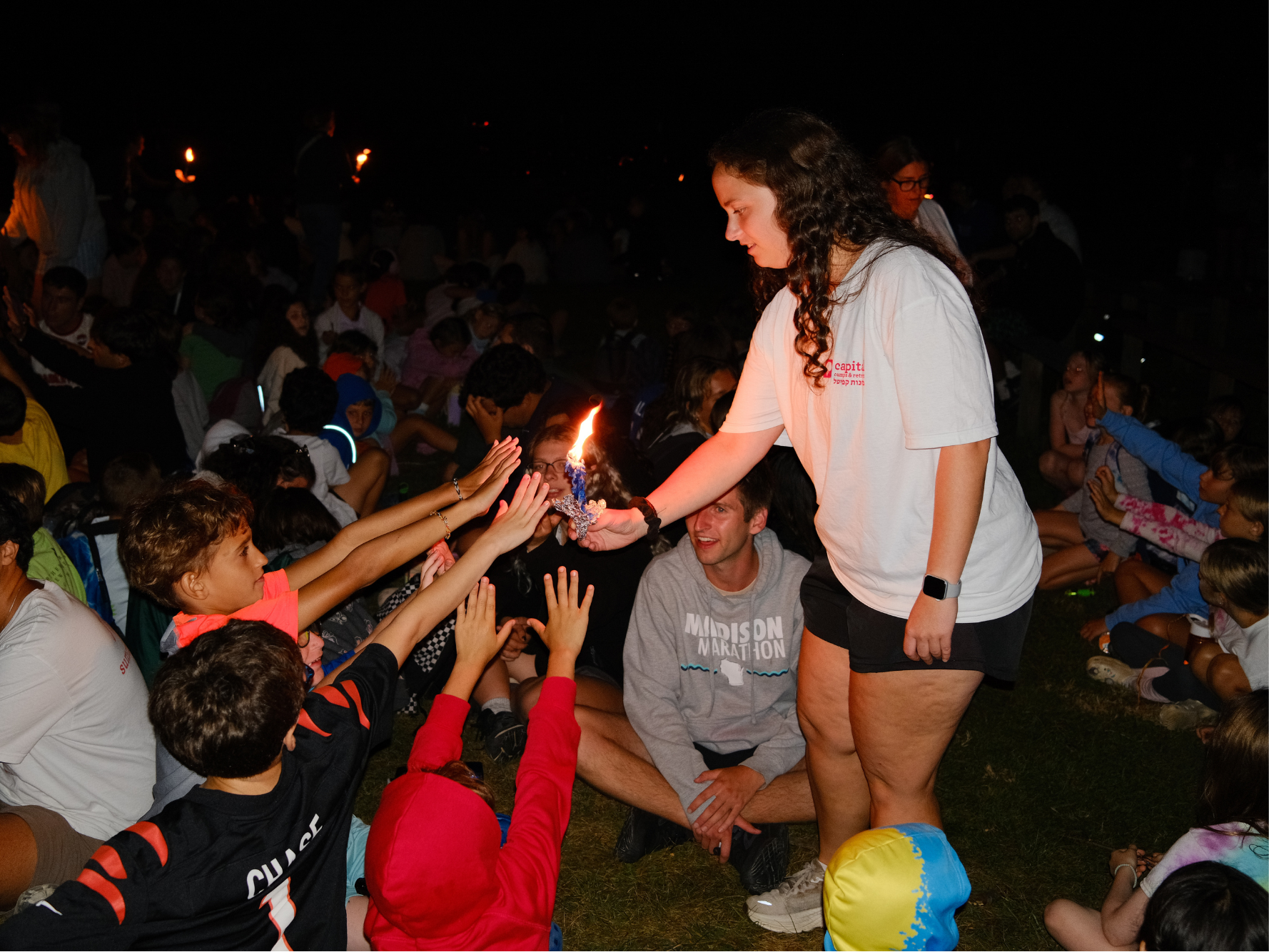
Jewish summer camp is where children build lifelong friendships, grow their independence, develop leadership skills, and strengthen their connection to Jewish life. For many, camp becomes one of the most formative Jewish experiences of their childhood—shaping identity, confidence, and belonging long after summer ends.

Today, families are navigating rising antisemitism, economic uncertainty, and the need for safe, affirming spaces where their children can feel secure, proud, and connected to their Jewish identity. For many, camp can feel out of reach without support.

That’s why Federation invests in two key pathways that make Jewish camp possible for families across Greater Washington: One Happy Camper grants for first-time campers and need-based financial aid for families facing financial barriers.

This summer, those grants will help hundreds of children attend more than 40 Jewish overnight camps across the country, opening the door to a first camp experience that many families might not otherwise be able to afford. And through our need-based financial aid program, campers will attend more than 20 camps nationwide with the support they need to participate fully in Jewish camp life.

As one parent shared, “Camp has always been a high expense, but without the scholarship, it would have been the first thing we would have been forced to remove to save money. Camp is where our children develop leadership skills, a sense of confidence, form lasting connections and relationships, and it helps ground them in their identity.”

Another wrote, “I have lost my job twice this year. I’m also a single parent, but Jewish camp is my top priority. I am grateful beyond words for the financial assistance.”

These stories remind us that financial aid is about much more than covering tuition. It is about ensuring access to safe, joyful, and deeply formative Jewish spaces. It is about helping children build community, develop pride in their Jewish identity, and feel connected to something larger than themselves.

As we look ahead to another summer of campfires, song sessions, Shabbat celebrations, and lifelong memories, we are grateful to the donors who make these opportunities possible.

Together, we are lowering barriers, opening doors, and investing in the next generation of Jewish life.

Want to help more children experience the magic of Jewish camp? Your gift helps ensure that financial circumstances never stand in the way of a transformative Jewish summer.

Related posts

The Work Behind Safe Jewish Spaces

The Work Behind Safe Jewish Spaces

A toddler paints a paper menorah in preschool. A congregation gathers for Shabbat morning services. Teenagers laugh together at a local leadership group. Seniors meet for lunch at the JCC. Students learn Hebrew after school.

These moments are what Jewish life looks like across Greater Washington on any given day.

Behind the scenes, long before anyone walks through the doors of a synagogue, preschool, JCC, or Jewish organization, community leaders are working tirelessly to help ensure those spaces remain safe, resilient, and prepared.

That’s why the Jewish Federation of Greater Washington is thrilled to welcome Laura Katzif as its full-time Community Security Advisor (CSA) serving Northern Virginia and DC.

Expanding JShield’s Reach Across Greater Washington

For the past two years, Laura has supported JShield, Federation’s community security initiative, in a part-time capacity. Now, in this expanded role, she can continue to increase JShield’s capacity to help Jewish institutions strengthen their security, prepare for emergencies, and build lasting partnerships with local law enforcement.

We all know why this expansion matters right now. The need for robust security is a constant reality we live with as a Jewish community. In a climate of rising antisemitism, we’ve seen devastating reminders right in our own backyard and around the world.

Protecting our community requires much more than just reacting to crises. That’s where JShield’s real value comes in. We don’t believe in “touch-and-go” interventions where someone shows up, checks a box, and leaves. JShield meets our local organizations exactly where they are and helps them build a permanent, proactive culture of security. All free of charge, thanks to our donor community.

Laura brings this exact hands-on mission into her daily work as Community Security Advisor. She works directly with synagogues, schools, and communal spaces throughout Northern Virginia and DC, providing strategic guidance, conducting safety assessments, and delivering training tailored to each space. By also serving as a trusted, everyday liaison with local public safety partners, Laura is helping us build a deeply rooted ecosystem of preparedness and collective resilience.

Decades of Security Leadership

Laura brings more than two decades of experience in corporate security, emergency management, crisis response, and business continuity to the role.

Before joining JShield, she served for six years as Director of Security at the Pozez Jewish Community Center of Northern Virginia, overseeing incident response, physical security systems, threat assessments, grant administration, security personnel, and community training. Her career has also included leadership roles with Georgetown University’s Office of Public Safety, the Federal Emergency Management Agency (FEMA), Fairfax County’s Health Department and Office of Emergency Management, and the World Bank Headquarters Security Office. She is also a certified firefighter-paramedic and an active member of both ASIS International and the Association of Threat Assessment Professionals.

Security Is About People

But for Laura, security is about much more than emergency plans.

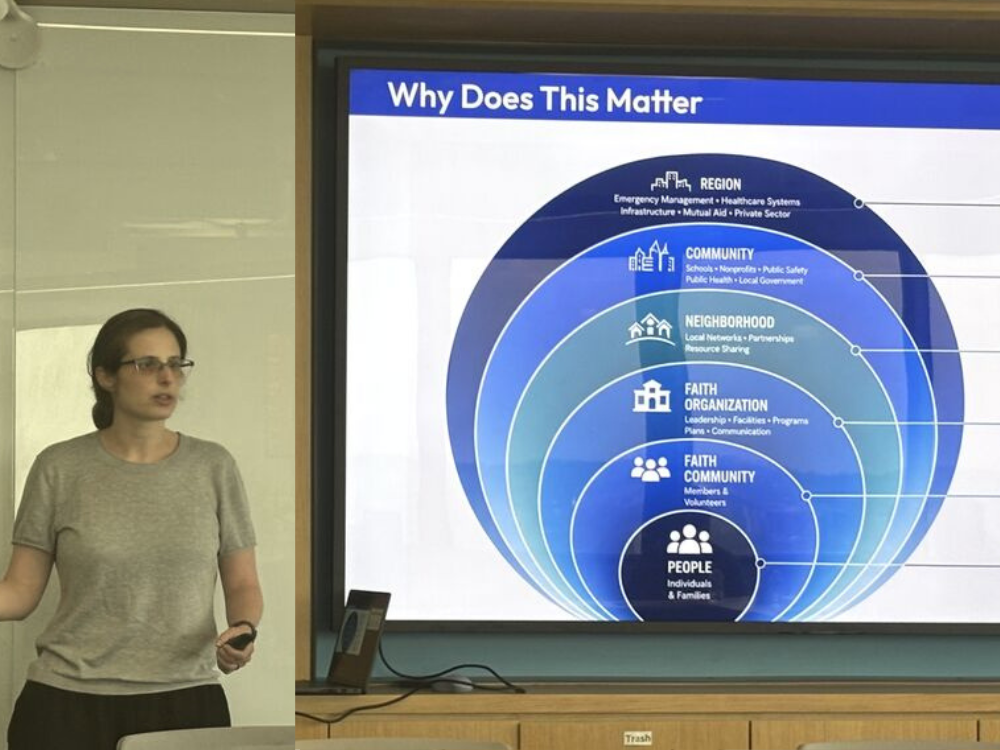
“I truly believe that faith organizations can act as anchors of neighborhoods by providing community gathering spaces, social services, childcare, education, and other vital resources,” she says. “The safer, more secure, and resilient they are, the more likely the community surrounding them is too. The faith community is interconnected, and whether some want to admit it or not, what affects one community affects everyone.”

That philosophy reflects JShield’s broader mission, helping Jewish organizations continue doing what they do best, bringing people together.

Building a culture of security isn’t about hardening our spaces or living in fear. It’s about protecting the vibrant community life happening inside them. It’s about making sure our children can learn without worry, our families can celebrate together with peace of mind, and our neighbors can gather freely.

Together, We’re Protecting What Matters Most

Security-focused giving through Federation helps keep Jewish life across Greater Washington safe and resilient. And thanks to a generous $250,000 match, gifts to JShield will unlock up to $750,000 in impact for our community. 

Your support helps JShield continue providing the training, coordination, and resources that strengthen the security of Jewish institutions throughout our region.

Please consider making a gift to support this critical work. 

Support JShield 

Related posts

We’re Wired for Connection

We’re Wired for Connection

The desire to belong may be one of our most powerful instincts.

Thank goodness for basketball. And soccer. And aliens.

I can’t claim to be a Knicks fan, but I am a fan of joy and connection and that’s exactly what I’m seeing pour out of official and unofficial New Yorkers. What a pleasure it is to see people come together and bask in something shared. Witnessing New York City’s jubilation has made me happier and my team was out in round one of the playoffs.

Likewise, as a soccer fan, I am also very much enjoying the stories coming out of the World Cup. There has been a lot of heartwarming content about fans coming to the U.S. and delighting in the hospitality of everyday Americans (and our ice-cold sodas). We are enjoying each other’s company as fellow sports fans and that feels good.

From what I hear, a sense of large-scale connection is also an animating theme in Steven Spielberg’s latest movie Disclosure Day, which I’m hoping to see this weekend. It’s been a while since I’ve been to the movies but give me an intriguing premise, alien encounters, and a chance to meditate on our shared humanity and I’m there.

After all, our brains, and spirits, crave stories like these. Our desire to feel connected to each other and to something bigger than ourselves is hardwired. We don’t have to train or teach ourselves to seek this out. We want to belong. We want to celebrate and cheer and stand in awe in the middle of 5th Avenue. Watching the big game (or a UFO landing) is always better with a crowd.

What we do have to work at is acting on our instincts and lowering the barriers to connection. This is a major focus of our work at Federation. How do we build a regional Jewish infrastructure that can routinely spark and sustain meaningful relationships? How do we help people join and lead collective endeavors?

How do we ensure individual lives, experiences, and aspirations combine to form something larger, stronger, and more meaningful than any of us could create alone?

There’s a lot of darkness out there, but some of the highlights of the last couple weeks are reminding me that we have more in common than we think. So long as we work together, hatred and division don’t stand a chance against sympathetic joy, pride, amusement, and fellowship.

Related posts

The Jewish Connections I Never Expected to Find in Greece

The Jewish Connections I Never Expected to Find in Greece

The Jewish Connections I Never Expected to Find in Greece

Standing in a synagogue in Thessaloniki, Greece, the weight of history hits you all at once.

Before World War II, this city was the cultural heart of Sephardic Jewish life, so vibrant it was called the “Jerusalem of the Balkans.” But during the Holocaust, the community was wiped out with horrifying speed. In less than six months, 96% of the Jewish population was murdered. Out of 50,000 people, fewer than 2,000 survived.

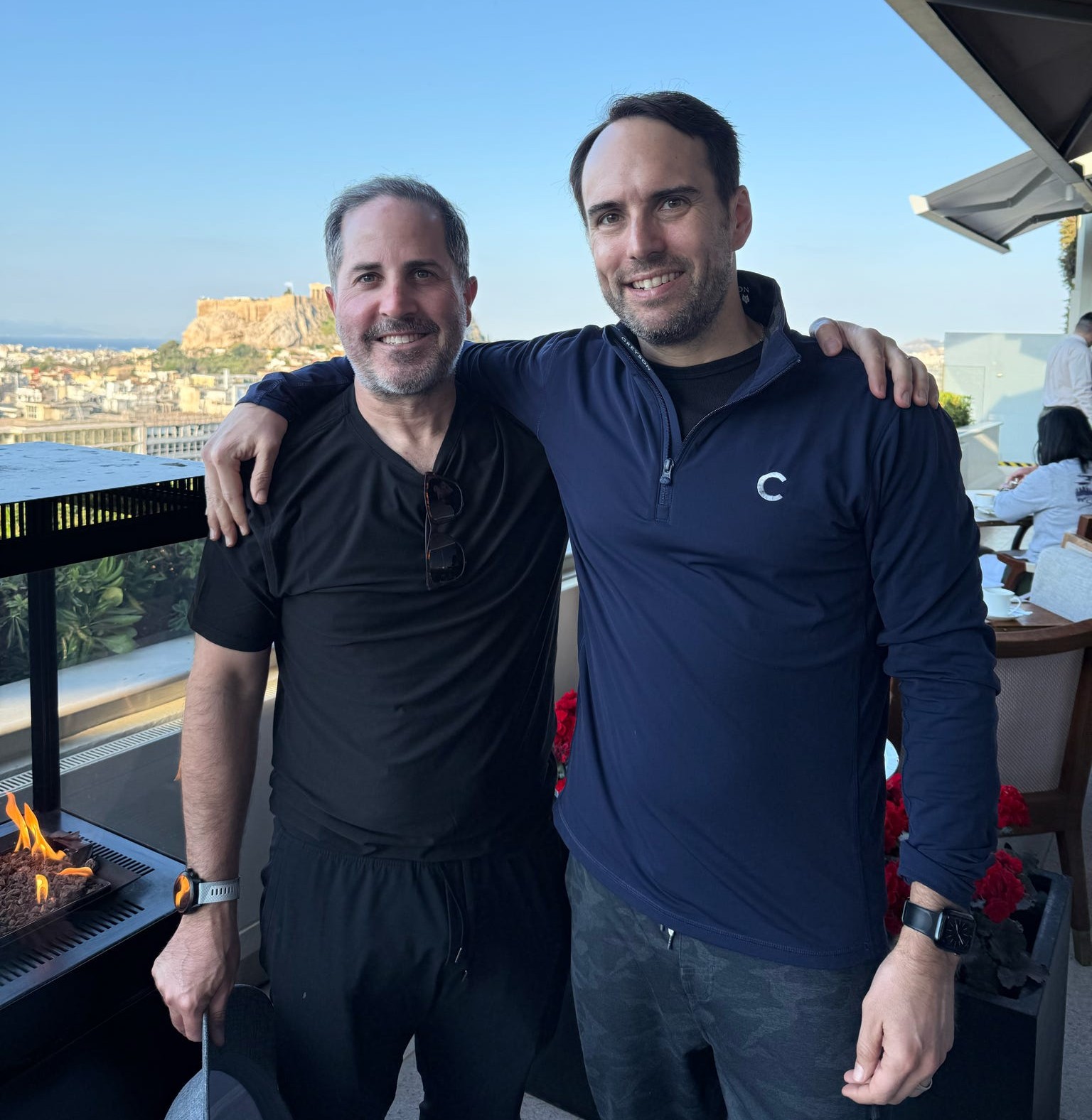
I was in Thessaloniki this past May on a study mission with Cabinet, the Jewish Federations of North America’s (JFNA) five-year leadership program for volunteer leaders aged 30-45.

Finding the Path to Jewish Leadership with Federation

I didn’t grow up in a Federation family. When my wife and I settled down to raise our kids, that was when we first sought out The Jewish Federation of Greater Washington. As a financial advisor, I was inspired by the generous giving of a few clients that donate directly from their retirement accounts to places they care about. I knew I wanted to be involved in philanthropy, and Federation felt like the right fit, because it allowed us to give broadly. It was comforting to know our dollars would act as a wide safety net, directly benefiting our community members who need services and support.

As our journey with Federation developed, I wanted to learn more, develop deeper friendships, and continue to grow a professional community of peers. That’s when I decided to join Cabinet. I knew this opportunity would be a key pathway for me to grow my impact and my connection to my Jewish community. What I didn’t know at the time was that it would also connect me to our broader Jewish family.

How Cabinet Connected Me Beyond Greater Washington

Cabinet missions shift between Israel and various diaspora communities like Hungary, Argentina, or Greece, pulling leaders out of their home communities to show them exactly where our collective dollars go globally. Traveling to Greece with our cohort this past May completely shifted my perspective, opening my eyes to a corner of the Jewish world I never would have experienced on my own.

While in Thessaloniki, our Cabinet cohort met a local family who beat those impossible wartime odds. The mother is a survivor, and her family only made it through because her father had immigrated from Germany. In a community where almost everyone spoke Ladino or Greek, no one spoke German. His ability to understand and translate became their only shield. To sit across from their descendants today, generations later, still living, practicing, and maintaining a Jewish life there, was a total “wow” moment.

A World Away, Yet Family

In Athens, our cohort sat in a Jewish-owned coffee house and listened to a widowed mother talk about life post-October 7. She shared how her social circle has had to pull inward because the rise in visible antisemitism on the streets is impossible to ignore. You can’t walk through Athens right now and not be reminded that you are different. Yet, at the same time, the city has become a haven for Israelis migrating from the conflict.

Without the access and immersion provided by Cabinet, I wouldn’t have had these raw, firsthand conversations. I wouldn’t have seen how our giving acts as a vital lifeline for our global family.

At a time when our world and our own communities can feel incredibly fractured, seeing that global connection was good medicine. It was a powerful reminder that there are people around the world who see things exactly the way we do, who see us as part of their collective identity, and who are just happy we showed up.

Finding Your Pathway

When I first joined Cabinet, my kids were very young, and finding the time felt daunting. But my message to my peers in Greater Washington is simple: you have to challenge yourself. If your community and your identity matter to you, you have to actively create the time for it.

You don’t need an abundance of hours to get involved, but you do need to step up. Find your own pathway, define it, and do it. What you do will stay with you forever.

Learn more about how you can get involved in Federation here.

Related posts