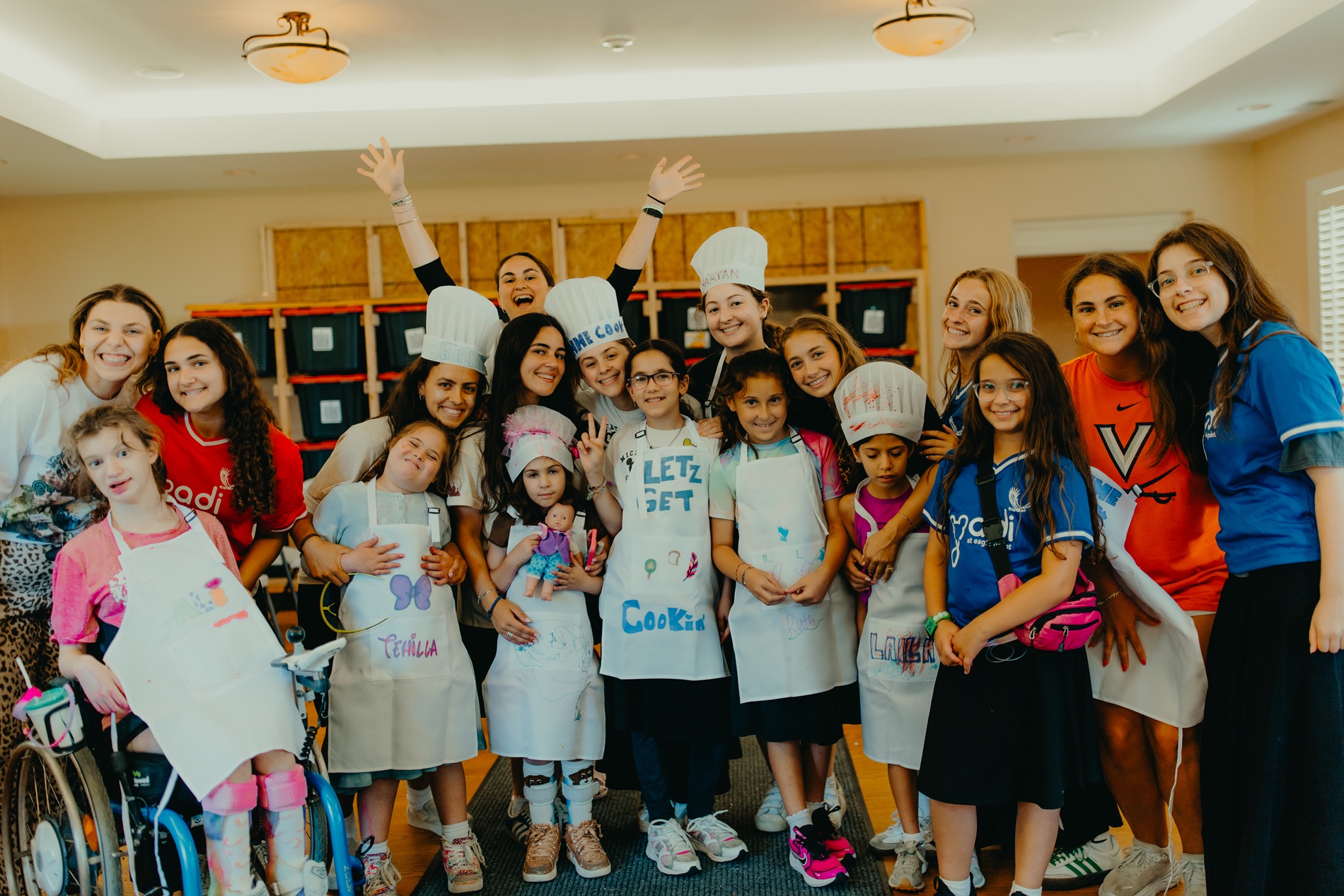
WHC Challah Bake
When Omer returned to his classroom after October 7, he couldn’t breathe.
Five of his students were gone, killed in the attacks. Just stepping into the room triggered waves of panic, grief, and memory. He felt like he couldn’t go on.
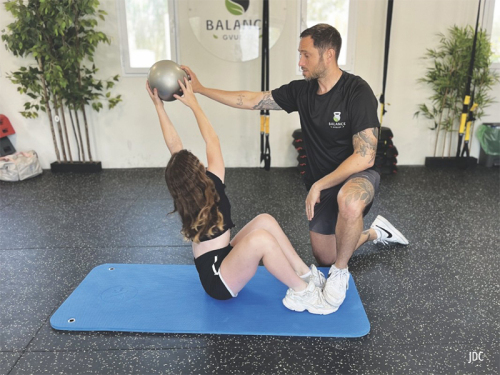
But through weekly sessions with a JDC counselor, Omer slowly rediscovered his footing. Today, he’s not just working—he’s leading. Omer now runs a therapeutic gym in a Gaza-border community, helping fellow survivors rebuild physically and emotionally. “I found a way to move forward,” he said. “And to help others do the same.”
This is what your dollars make possible.
In the wake of the Iron Swords War, thousands of Israelis were forced to evacuate their homes. Many lost not just their sense of safety, but their livelihoods. The trauma was deep, the economic toll was devastating, and the path to stability felt out of reach.
That’s why Federation responded swiftly, providing a $500,000 grant to JDC to launch “Getting Victims of War Back to Work”, Israel’s first trauma-informed employment recovery model. More than just getting back to work, it’s about dignity, healing, and long-term resilience—about helping people get back to life.
With your support, here’s what’s already happening:
This model is now informing national efforts to scale trauma-informed employment support.
Through this initiative, we’re supporting Israelis not just in healing, but in retraining and returning to work with purpose.
Beyond immediate relief, it’s recovery with resilience built in.
And this is exactly the kind of long-term, people-centered impact we’re working toward through Federation’s Israel strategy: investing in long-term recovery and deepening connection between our communities.
Photo: JDC
This summer, more than 1,300 Jewish community members from across Greater Washington participated in Federation’s Impact Index Pulse Survey, giving us a clearer picture of how Jewish life is experienced across our region. Through a 20-minute text-based survey, respondents shared their attitudes and behaviors across eight pillars of communal wellbeing: engagement, education, belonging, safety, activism, health, caring, and connection to Israel and global Jewry.
Conducting research like this is core to our role in the community. We invest in data projects like this to inform our strategies and investments, and to equip synagogues, schools, human service agencies, and community-building organizations with insights they need to strengthen Jewish life in alignment with their own missions.
While we are not a synagogue, this insight matters deeply for synagogue leaders to know that among 29% of individuals who are not currently engaged but want to be, affordability is real barrier. 78% of those individuals say they would participate more in synagogue life if membership were more affordable.
This finding is especially important for our human service agencies: only 44% of individuals who identified as financially vulnerable reported knowing where to find help in the Jewish community during a time of need—in comparison to 55% of more well-off individuals.
We do not exist in a vacuum. Our community is telling us clearly where the opportunities lie: deepening engagement, expanding belonging, strengthening care, and ensure that every Jew regardless of geography, background, or perspective has access to a vibrant Jewish life. The survey shows that 72% of Jewish adults in Greater Washington consider themselves engaged with Jewish life to some degree, and at the same time, 54% say they would like to be more engaged, including 62% of respondents under the age 35 who live in the inner core of Northern Virginia and D.C. proper.
Federation will continue to fund and lead studies like this because understanding our community is essential to strengthening it, and to stewarding our collective resources responsibly.
Last month, we stumbled onto something extraordinary: a set of original minutes from the very first meetings of the United Jewish Appeal in Washington. Hand-typed pages from 1948 and 1949 outlining early allocations, emergency support for Israel, and the names of families who stepped up to lead, many of whom are still shaping Jewish life in our region today.
Reading these documents feels like opening a time capsule. The issues were different, the world was different, but the heartbeat is the same: people coming together, pooling resources, and taking responsibility for one another.
One moment stands out. In April 1949, local leaders gathered at the Ambassador Hotel for what the minutes called a “special meeting.” The purpose?
“Obtain permission of the Executive Committee to borrow an additional half million dollars to advance the United Jewish Appeal… with regard to the deplorable condition of the new immigrants entering Israel.”
Half a million dollars, approved in one afternoon—a community stepping in without hesitation. You can almost feel the urgency in the room and the shared understanding that their choices mattered; that lives depended on them getting this right.
Another set of minutes from late 1948 details the young community’s first major campaign: 16,163 contributors giving more than $2 million, an astonishing act of collective generosity. Their allocations spanned Israel, local agencies, national advocacy, and emerging Jewish institutions.
And even the follow-up work tells its own story. One line notes the need to “intensify collections” and clean up the outstanding gifts still considered “gettable.” It’s a reminder that closing gaps and meeting the moment has always been part of our work. It’s as true now, at year-end, as it was then.
They debated, they decided, and they built the foundation we’re still standing on today.
As we approach year-end, this history hits differently. It reminds us that our community has always risen to the moment—not because someone told us to, but because collective responsibility is who we are. We give, we show up, and we build together.
Every gift today continues a legacy of care, courage, and shared purpose.
And now, just as they stepped up then, we’re called to do the same. Two year-end matches are helping every gift go further to strengthen belonging, community life, and security across our region:
Make a gift today to support belonging, security, and our nearly 100 years of communal investment.
Big news: Sarah Klein, our Senior Director of FRD (Financial Resource Development), has been selected for Cohort III of JFNA’s Executive Accelerator, a national leadership program for the Federation system’s most promising senior professionals.
If you’ve worked with Sarah, you already know what makes her extraordinary. She builds relationships with heart and hustle. She leads with integrity, warmth, and a clear sense of purpose. And she brings deep experience and fresh thinking to everything she does.
This next step for Sarah is about all of us. Through this yearlong program, she’ll gain new tools, fresh perspectives, and a powerful peer network that will help move our work—and our community—forward. And with Federation supervisors and leaders actively engaged in the learning process too, we’re making sure that growth gets embedded across our team.
We’re super-proud to see Sarah recognized, and excited about what this opportunity makes possible for our Federation and our collective future.
Many have asked how they can celebrate this milestone. If you’d like to honor Sarah’s leadership, you can make a tribute gift in her name.
I want to put to words a couple things I’m feeling as we head into the end of the year.
The first is gratitude. Our community in Greater Washington is strong, passionate, caring, creative, and remarkably generous. Federation could not do the work we do to sustain and strengthen Jewish life without you. I have been repeatedly moved by the way this community has mobilized in the face of crisis, and continued the quiet, steady work of looking after one another and shaping a bright and vibrant future on our own terms. From the bottom of my heart, thank you and I cannot wait to continue our partnership.
The second thing I’m feeling is a bit harder to name but could perhaps be described as energized. A multitude of factors, ranging from longing for Jewish knowledge to a globalized feeling of uncertainty are inspiring people to want to connect with their Jewish identities and the Jewish community. As I referenced last week, a recent survey found that 60% of respondents within the DMV are interested in doing more within the Jewish community. People are looking to connect with Jewish content, Jewish practices, Jewish experiences, and with other members of the Jewish community.
Indeed, we have reached a consequential inflection point in Jewish life and we get to help determine what happens next. As Barry Shrage, former president of Combined Jewish Philanthropies in Boston (and my former boss and ongoing mentor) writes, “We are living through a hinge in history, a moment when the door to alternative futures is still open, the future is uncertain, and our actions can define our destiny.”
We have all the makings of a new Jewish awakening, but we need to help put the pieces together so that everyone coming to our door is met with the meaning, purpose, and belonging they seek. This will take a good deal of focused effort, and Federation is here to help drive it forward. In this new year, we are set to increase funding and work with our many partners across the region to expand programs to ensure everyone looking for connection finds a home within our community. This is vital work and even more so at this “hinge” moment when our collective efforts are guaranteed to echo.
It’s a weighty thing responding to a call for meaning. But it’s a privilege too. And we get there by working together to help more people access and explore the values, traditions, and relationships that enrich our lives and sustain our people.
As we move into the final weeks of the year, many in our community will step forward to support this work. I hope you’ll join them. A gift of any size helps ensure that everyone seeking connection, purpose, and belonging can find their place in Greater Washington. If this work inspires you, I invite you to help fuel the work ahead. A gift to our Annual Campaign strengthens the programs, partnerships, and pathways that welcome people into Jewish life and support them once they’re here.
Help our community step over the threshold of possibility. Please give today.
As 2025 winds down, many of us are thinking about the difference we want to make—and how to give in ways that matter most. With changes from the One Big Beautiful Bill Act (OBBBA) taking effect on January 1, 2026, now is the time to plan ahead. New charitable deduction limits—including a 0.5% adjusted gross income (AGI) floor and reduced itemized benefits—may affect giving strategies in 2026 and beyond. That makes this year an important opportunity for strategic giving.
Below are five tax-smart strategies to consider as you make your year-end gift—whether you’re supporting The Jewish Federation of Greater Washington, shaping your long-term philanthropic goals through the Jewish Community Foundation, or both.
Give online for the fastest and most convenient option. Web-based platforms make strengthening Jewish life across Greater Washington simple, safe, and accessible.
Donating appreciated stock allows you to save on capital-gains taxes and receive a charitable deduction for the fair-market value of assets held more than one year. Your gift powers the programs and partnerships that keep Jewish Greater Washington strong.
Tip: Initiate stock transfers by Monday, December 15 to ensure a 2025 tax credit.
Open or add to your fund using cash, securities, or complex assets such as business interests or real estate. You’ll receive a charitable deduction now, your fund can grow tax-free, and you’ll have the flexibility to recommend grants when you’re ready. A DAF can also streamline your giving and engage your family in meaningful philanthropy.
Many donors are choosing to contribute up to $108,000 to their DAFs in 2025 to maximize deductibility before 2026’s new limits take effect.
Example: If you plan to give $36,000 annually over the next three years, “bunching” that total into a single $108,000 gift before December 31, 2025 may allow you to take full advantage of today’s deduction rules—versus a reduced benefit spread across multiple years under the new law.
If you already have a DAF, recommending a grant to Federation’s Annual Campaign by December 31 is one of the quickest ways to make an immediate impact.
If you don’t have a DAF, you can still make your year-end gift directly online, through appreciated assets, or by choosing the strategy that best aligns with your goals. And if you’re thinking ahead, opening a DAF is an option you can explore anytime.
If you are 70½ or older, you can transfer up to $108,000 directly from your IRA to Federation or the Foundation—tax-free.
A QCD
QCDs must be received by December 31 to count for 2025.
Example: A donor who makes a $108,000 QCD before year-end may reduce both their taxable income and future RMDs, while supporting Jewish community needs today.
A gift of appreciated real estate or other complex assets allows you to avoid capital-gains tax and receive a charitable deduction based on the property’s fair-market value (with a qualified appraisal). You may give all or part of a property while retaining lifetime use and build a lasting legacy for Jewish Greater Washington.
Our Federation and Foundation teams can help you identify the giving strategy that aligns with your goals and values before year-end. We encourage you to consult with your professional advisors to determine how these strategies apply to your individual situation.
If you’d like to understand more about how the new 2026 deduction rules work—including the 0.5% floor and the new ceiling for itemized deductions—you can find a full explanation here.
The Jewish Federation of Greater Washington and the Jewish Community Foundation do not provide legal, financial, or tax advice.