Need support? Call 703-J-CARING (703-522-7464)

What We’re Hearing Across the Community and What It Means

What We’re Hearing Across the Community and What It Means

What does it actually feel like to find your way into Jewish life in our community?

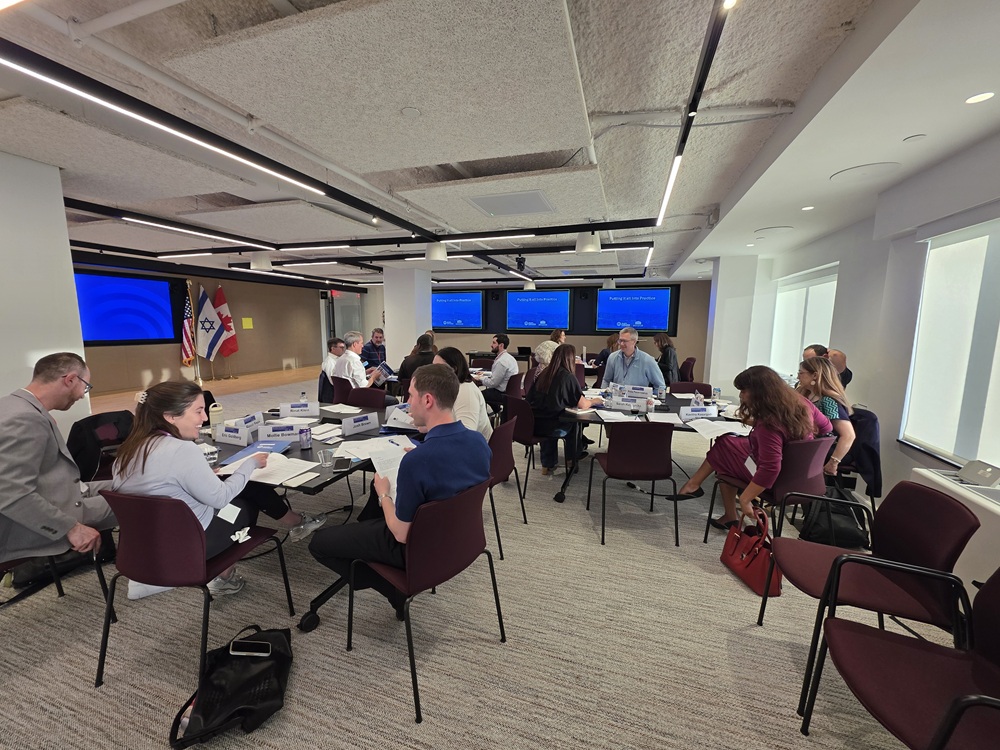
Over the past few months, the Community Leadership Council (CLC) set out to hear directly from the full diversity of our Greater Washington Jewish community. Nearly 200 people across 26 groups shared their experiences, bringing forward a wide range of backgrounds, life stages, levels of engagement, and perspectives to ensure our work reflects what matters most to people and informs how we prioritize and invest.

Separately, more than 1,300 people participated in a community-wide survey, offering a broader view of how people are experiencing Jewish life today.

When you look at it all together, a picture starts to emerge. Not perfect or unanimous, but consistent in ways that matter.

People are looking to connect, participate, and feel like they belong.

The Role of Federation

These patterns clarify where Federation fits.

We do not run every program or guide every individual. Our role is to make the system work better—bringing organizations together, investing in what works, and making it easier to navigate Jewish life.

Much of this work happens behind the scenes: aligning organizations so experiences feel connected, expanding access, convening leaders to address shared challenges, and strengthening the system so it works better for the people it serves.

This is the difference between a collection of organizations and a connected community.

The CLC extends this work beyond the room. Leaders take these insights back into their organizations, and the findings will be shared more broadly so others across the community can engage with and respond to what we are learning.

What We’re Seeing Across the Community

Finding your way in isn’t always simple. For many, it starts with basic questions:

  • Where do I go?
  • Who is this for?
  • How do I begin?

With so many organizations and options, it can be hard to know where to start or how to move from one experience to the next.

Some of what we heard:

  • Cost shapes participation. From camps and schools to programs and events, cost plays a real role in how people engage. Sometimes it limits choice. Sometimes it limits participation altogether.

“Day school affordability is a huge issue. Jewish life is expensive.”

  • Belonging is not a given. Across identities, life stages, and levels of involvement, people are looking for spaces where they feel comfortable and seen. That’s true for those who are deeply connected, and for those still deciding if there is a place for them.

“We moved to the area and don’t have connections or a sense of belonging. I want to be invited to Shabbat dinners…”

  • There is a desire for everyday Jewish life. Our community shows up in meaningful ways during moments of need, and that continues. At the same time, many people are looking for something more consistent: experiences that are part of daily life and feel worth showing up for.

“I want a community that comes together for joyful reasons. Not just crisis gatherings.”

No Single Experience Tells the Whole Story

By listening closely to what people hope to see and build in our community, we begin to see the themes we share in common and better align our work with how people want to engage.

The CLC designed and led this effort, engaging people across the community, gathering input through both listening and survey data, and bringing those insights together to clarify what we’re hearing.

Why This Work Matters

If you’ve ever tried to find your way into Jewish life—whether you’re new, coming back, or looking for something different—this likely feels familiar. And there is something reassuring in knowing there is a community that cares and is working to make that experience better.

This work starts by paying attention to what people are actually experiencing and being honest about where things aren’t working. The Community Leadership Council helps identify patterns across those experiences and clarify where the community is asking for something different.

What Comes Next

“What we heard gives us a clearer sense of what the community wants and where it is asking for something different,” said Marla Schulman, Chair of the Community Leadership Council. “What we learned is the importance of continuing to engage voices across the community in building it.”

Those insights are now informing the next stage of our work, as Federation’s Board considers how they should shape our priorities and direction moving forward. And some of this work is already underway: expanding access, strengthening coordination across organizations, and making it easier to find and engage in Jewish life. Our goal is to make it finding your way in clearer, closer, and more within reach.

We’ll keep sharing what we’re learning, and how it’s shaping the work ahead.

Related posts

The Desk Between Us The Desk Between Us
The Desk Between Us
When Valerie completed her Federation interview writing exercise, she didn’t realize she was sitting at the same desk where her grandfather once wrote fundraising appeals for United Jewish Appeal. His legacy of service quietly became part of her own journey in Jewish communal life.
read more

A Moment to Reimagine What’s Next

A Moment to Reimagine What’s Next

After years of crisis response, it’s time to imagine—and build—the Jewish future we want.

For the past several years, really ever since COVID, our communal agenda has been shaped in large part by external crises. There’s no shame in this. Federation, supported by a passionate Jewish community, is well suited to crisis response. We have the local and global infrastructure to reach people and deploy help, a core part of our role.

Through a pandemic, wars, antisemitic attacks, the devastation of October 7, economic uncertainty, and political and social upheaval, we, as a community, have been there to help the Jewish people and those in need locally and around the world.

Across our community and in conversation with others from around the country, I hear how eager people are to reclaim a sense of agency over the Jewish future. To not only fend off the destructive forces of the day, but to build something great. This isn’t to say that we should abandon our work to be there for the Jewish people and Israel in times of crisis, not at all. Without question, we will need to remain diligent in responding to a dysregulated world. But we can be serious about our dreams too.

As Rabbi Lord Jonathan Sacks used to say, “Jewish faith is written in the future tense.” We are in close contact with our past, but we are also a people of possibility. We would be doing the Jewish story a disservice if we did not make the most of the opportunities in front of us to strengthen Jewish identity, pride, joy, and connection. This is the spirit that defines our community, and one we will continue to harness in our work ahead.

Already, we are working to grow and scale the things we know have significant impact. Shabbat dinners (as I wrote about last week), Jewish summer camp, youth groups, Jewish day schools, Jewish learning, and immersive Jewish experiences, including trips to Israel and local retreats, have tremendous effects on someone’s identity. How can we expand these offerings and make them more accessible to more people? How can we be a home for people with diverse opinions? How do we use our resources and relationships to maximum effect for people across all age groups?

It feels strange in this time of absurd and heartbreaking headlines to be talking about agency. But it’s precisely in this moment when things feel most out of our control that we are called to wrestle it back. Like so many times throughout Jewish history, we can define for ourselves who we are and where we are going. Between our collective responsibility and capacity to strengthen Jewish life, and Federation’s relationships, resources, and talent for convening, the future is ours for the shaping.

Related posts

The Desk Between Us The Desk Between Us
The Desk Between Us
When Valerie completed her Federation interview writing exercise, she didn’t realize she was sitting at the same desk where her grandfather once wrote fundraising appeals for United Jewish Appeal. His legacy of service quietly became part of her own journey in Jewish communal life.
read more

Turning Interest Into Engagement

Turning Interest Into Engagement

A simple yet powerful entry point for connection.

There are approximately 85,000 Jewish young adults in the DC region, many of whom have moved from other places. Which means that we have a tremendous responsibility to make Jewish life as accessible as possible. Plus, young people want in.

We’ve heard unequivocally from young Jews that they want to be more involved and are eager for low-barrier Jewish experiences. Indeed, our 2025 Pulse Survey found that young adults are both the least connected to and the most interested in Jewish life. (Results show 62% of Jews under 35 in D.C. and NOVA want to be more engaged with Jewish life and community.)

It’s with this in mind that we are taking steps to widen the path toward greater Jewish engagement. Recently, our board approved funding for a joint effort across six organizations (The Den Collective, the Edlavitch DCJCC, GatherDC, Hadar, OneTable, and Sixth & I). These organizations are already part of a collaborative that has been working to strengthen Jewish life for those in their 20s and 30s in our region and they are eager to keep experimenting and growing together.

The focus of their next venture will be to grow the number of young adults participating in Shabbat dinners. We know from data and experience that Shabbat is one of the most effective levers of Jewish engagement. It is meaningful, accessible, and recurring. It is transformative in its own right and serves as a gateway to deeper connection. It is a ready-made touch point capable of meeting the post-October 7th interest among young Jews in stepping further into Jewish life.

We also know young people aren’t the only ones interested. Parents of young children, empty nesters, newcomers, and more are hungering for the comfort, structure, community, and spirituality of Shabbat. The group therefore plans to start with young adults as a target audience and expand from there.

I’m excited about this work because I am passionate about the outcome and moved to see a bedrock of our tradition become a key point of welcome and discovery. I also think it depicts what Federation is meant to do: leverage our strategic vantage point, establish forward-thinking partnerships, and bring our community closer while moving it forward.

The Shabbat dinner effort is just getting started. The goal in this first year is to increase participation among young adults by 10% as we learn how best to bring in more people. And core to this is that the partners have each other. They will enact a shared strategy and learn and iterate together, faster and with more precision than they could alone. They will set ever more significant and challenging goals as we collectively seek to transform the community. To me, this is what innovation and partnership—and Federation—are all about.

With more to come.

Related posts

The Desk Between Us The Desk Between Us
The Desk Between Us
When Valerie completed her Federation interview writing exercise, she didn’t realize she was sitting at the same desk where her grandfather once wrote fundraising appeals for United Jewish Appeal. His legacy of service quietly became part of her own journey in Jewish communal life.
read more

The Legacy of Eddie Kaplan

The Legacy of Eddie Kaplan

Edward (“Eddie”) H. Kaplan z”l helped shape Jewish life in Greater Washington through decades of committed leadership.

Eddie served as President of The Jewish Federation of Greater Washington from 1989–1991 and of what is now the Jewish Community Foundation from 1992–1995.

During his tenure, Eddie helped lead key changes at Federation, including the transition to its current name, reflecting a forward-looking approach to engaging the next generation.

Across more than thirty years on Federation’s Board and as a Foundation trustee, Eddie helped advance Federation’s role in strengthening the institutions that anchor Jewish life in our region today. He supported significant investments in the Greater Washington Jewish community and beyond, such as the Capital Camps and Retreat Center (CCRC).
 

A Commitment to Community

Eddie experienced firsthand the power of Federation and its partners to build Jewish life. Born and raised in the DC area, he grew up attending programs at the Bender JCC, then The Jewish Community Center of Greater Washington (JCCGW), and later served on its board. His family have been longtime members of the B’nai Israel Congregation in Maryland.
 

He gave his time, talent, and resources to organizations across our community, including the Bender JCC, Pozez JCC, JSSA, and Charles E. Smith Life Communities.
 

That leadership extended beyond Greater Washington, with national roles through Jewish Federations of North America (JFNA) and the American Jewish Joint Distribution Committee (JDC), reflecting a deep commitment to Jewish communities locally and around the world.
 

His contributions were recognized across the Jewish community, reflecting the breadth of his impact.
 

A Lasting Legacy

Known for his sharp wit and generous spirit, Eddie formed a clear view of what needed to be done and pursued it with determination, grounded in a deep sense of purpose. He gave his all to the work he believed in, bringing both vision and heart to everything he did.

His legacy lives on in stronger institutions, deeper connections, and a community built to endure. We carry that legacy forward with gratitude and extend our deepest sympathies to his family and friends. Those who wish may honor his impact on our community through a tribute gift.

Honor Eddie

Related posts

The Desk Between Us The Desk Between Us
The Desk Between Us
When Valerie completed her Federation interview writing exercise, she didn’t realize she was sitting at the same desk where her grandfather once wrote fundraising appeals for United Jewish Appeal. His legacy of service quietly became part of her own journey in Jewish communal life.
read more

Reconsidering the “Wicked” Child

Reconsidering the “Wicked” Child

As we prepare for our family’s upcoming seder, I am thinking about not only the relatives and friends who will grace our table, but also those four allegorical children who are perennial guests: the chacham (wise) one, the rasha (wicked) one, the tam (simple) one, and the one who does know how to ask. It’s the rasha who I am most intrigued by this year. But I’d recast the moniker “wicked” child as the “skeptic” or “critic” or even “rebel.” As part of the Passover seder, we are instructed to entertain the questions of a child who doesn’t feel they are part of what’s taking place, and who may even choose to stand apart from it. “What does this service mean to you?” the critical child asks, and we answer the best we can. This always seemed like a sour note in the Passover program, but lately I’ve come to see the beauty in the exchange. How striking that one of our most sacred traditions insists we acknowledge skepticism.

Making Space for the Question

What if our role when it comes to the so-called rasha isn’t to scold them but to acknowledge and honor their questions? What if we came to see our cherished rituals—and indeed our people—as incomplete without those who criticize and doubt? We are not whole without those who push boundaries and challenge our assumptions and ingrained ways. How remarkable that our tradition does not cast aside this child, but rather provides them an invitation to our table year after year … and how remarkable that this child accepts the invitation and joins.

Federation’s flagship Jewish Community Leaders Program (JCLP) includes a visit to a megachurch in Maryland to learn about how they build communities of belonging. Our group was inspired to learn they didn’t define themselves by rigid red lines, while still holding a clear sense of their core values. Instead, they defined themselves by an ongoing relationship with a spiritual center. They considered anyone oriented toward a common set of principles as relevant and part of their flock. It’s got me wondering: in this post-October 7 landscape, how do we help shape our future by evolving our community’s relationship with boundaries? These are not easy questions, particularly in a moment when the need for clarity and certainty feels so real.

At Federation, we will continue engaging this question and find new ways to create space for the challenging voice, the uncomfortable question, the perspective that stretches our assumptions. After all, many of the shifts that now feel foundational—expanded roles for women, inclusion of LGBTQ Jews, the recognition of multiracial Jewish identity—were once at the edges of communal acceptance. They moved inward because passionate people pushed to widen the frame.

Our Community Leadership Council (CLC) has been using this year to listen to the broad voices of our community—nearly 200 people from 26 diverse groups—including those engaged in our traditional institutions, as well as people who have not affiliated, who have felt marginalized, or who have created their own communities to meet their unique needs. It’s critical to gather insights from all to help understand and shape our community priorities.

At the Same Table

In describing the four children at the seder, Rabbi Jonathan Sacks noted, “there is a message of hope in this family portrait. Though they disagree, they sit around the same table, telling the same story. Though they differ, they stay together. They are part of a single family… The Jewish people is an extended family. We argue, we differ, there are times when we are deeply divided. Yet we are part of the same story. We share the same memories. At difficult times we can count on one another. We feel one another’s pain. Out of this multiplicity of voices comes something none of us could achieve alone.”

Bringing the entirety of our community together across differences is a bold move. It’s clear that has been our work all along. The goal has never been to embrace uniform views. On the contrary, the thing we’re meant to embrace is each other, in all our messy, diverse, and divine glory.

With wishes for a happy and meaningful Passover,

Elisa

Credit: Chicago Haggadah, 1879, a historic American Jewish Passover Haggadah published in Chicago. It is a notable example of early American Jewish print culture, reflecting the growing Jewish community in Chicago in the post-Civil War era. Who do you see as the rasha?

Related posts

The Desk Between Us The Desk Between Us
The Desk Between Us
When Valerie completed her Federation interview writing exercise, she didn’t realize she was sitting at the same desk where her grandfather once wrote fundraising appeals for United Jewish Appeal. His legacy of service quietly became part of her own journey in Jewish communal life.
read more

When Antisemitism Takes Hold

When Antisemitism Takes Hold

Antisemitism doesn’t emerge in a vacuum

One way that I have been thinking about antisemitism is as a kind of twisted and inexcusable stress response. In times of social or economic strain, people tend to go looking for explanations as to why things don’t work the way they want or why life feels harder. And far too often, they reach for the oldest hatred in the book as their answer. Comforted by conspiratorial thinking, they conclude it must be the Jews who are to blame.

This cycle can then be hastened by popular figures who step in and exploit people’s anxieties for their own goals. As Deborah Lipstadt explains, “[Bad actors] cannot create a fire where none exists, but they can add fuel to preexisting fires.” The more disconcerted people feel, the more they may turn to hating Jews, and the more wayward leaders will encourage those inclinations. Antisemitism and chaos are intertwined. Sadly, and to great harm, this has been the pattern for millennia.

What this means for us is that there is space to tackle the challenge from two sides: by pushing back against antisemitism explicitly and tending to the health of our democracy generally, both of which we are focused on at Federation.

Five years ago, we adopted a multi-pronged strategy to address antisemitism in our region. This includes providing funds to address antisemitism in public and private schools, developing teen leaders who can directly confront antisemitism, supporting local Hillels in their campus efforts, as well as providing critical resources to local agencies including the Jewish Community Relations Council (JCRC).

We are also working to strengthen the relationships that underpin a healthy democracy and break down conflict by facilitating conversation among community members of diverse perspectives; deepening Black–Jewish relations; and partnering with local agencies and institutions on civic engagement efforts; all of which contribute to a more connected, stable, and resilient community.

Ultimately, fighting against antisemitism is a form of fighting for our democracy just as fighting for democracy and strengthening civil institutions is a form of fighting antisemitism. As antisemitism metastasizes, everyone loses. When we replace mistrust with credibility and community, everyone wins. It’s our civic duty to call out antisemitism and disrupt its chaotic breeding ground.

At a time when so many people are losing faith in institutions, Federation can be a steady fixture. A shared space where our community can come practice listening to those who think differently, caring for the vulnerable, welcoming the stranger, and working together toward a shared vision for the future. If antisemitism is what seeps in when our social foundation starts to crack, we can help ensure its integrity.

Related posts

The Desk Between Us The Desk Between Us
The Desk Between Us
When Valerie completed her Federation interview writing exercise, she didn’t realize she was sitting at the same desk where her grandfather once wrote fundraising appeals for United Jewish Appeal. His legacy of service quietly became part of her own journey in Jewish communal life.
read more

Israel & the United States at War with Iran Special Update

Israel & the United States at War with Iran Special Update

Israel Update: Day 23 of the US–Israel War with Iran

Prepared by Jewish Federations of North America’s Israel Office
Shared by The Jewish Federation of Greater Washington

Jewish Federations of North America’s Israel Office has issued a detailed update on the rapidly evolving conflict between Israel, the United States, and Iran, including developments in Israel, the broader region, and guidance for Jewish institutions.

Read the full update

Related posts

The Desk Between Us The Desk Between Us
The Desk Between Us
When Valerie completed her Federation interview writing exercise, she didn’t realize she was sitting at the same desk where her grandfather once wrote fundraising appeals for United Jewish Appeal. His legacy of service quietly became part of her own journey in Jewish communal life.
read more

The Future Is Human

The Future Is Human

AI may shape the future, but connection, curiosity, and community will always define us.

Our thoughts are with West Bloomfield’s Temple Israel community after yesterday’s attack. We are breathing a sigh of relief that everyone remained safe, including students and staff at the temple’s preschool. We are immensely grateful to the security guards, police officers, and firefighters who put themselves in harm’s way and responded to the situation swiftly and effectively.  

The incident is a sad reminder of how important robust security measures are today. Through JShield, The Jewish Federation of Greater Washington’s community security initiative, we are continuing to work closely with law enforcement and Jewish institutions across our region to keep our community safe.

I noticed recently that AI was incorporated into a software I use to log my expenses…and it was pretty great. The program automatically filled in blanks, predicted categories, and made the whole upload process easier. I also used it to analyze quantitative and qualitative data, and it brought out ideas and themes that I had not noticed before. I can see why these tools are catching on. And yet, the rise of AI is not affecting our strategy here at Federation.

Even at the dawn of this radical new leap, we believe the future is human. In fact, at a time when AI is transforming everything from our emails to our state policies, I can’t help but notice it’s our humanness that’s gaining cachet.

Perhaps that’s why some banks are now advertising “human help” to attract new customers. Why Hermès commissioned hand-drawn graphics for their website. Or why Apple hired artists to create their new logo out of glass and colored lights. There’s something beautiful and inherently valuable about knowing a real person was involved in the work.

Of course, as Jews, we have always been wonderfully human. For sure, we know how to gather and find purpose and meaning with and among each other. We also learn by relishing in each other’s individual and sometimes unpredictable perspectives. Our texts are contradictory, our debates unique and far reaching. Though the bots may soon be able to mimic our thought patterns, it will be our organic curiosity, creativity, and empathy that will keep us whole.

As Robert Putnam writes in Bowling Alone (not the first time I’ve mentioned this work and not the last), “The single most common finding from a half century’s research on the correlates of life satisfaction, not only in the United States but around the world, is that happiness is best predicted by the breadth and depth of one’s social connections.”

We must continue coming together, in-person, to learn, celebrate, discuss, mourn, serve, or simply be. Doing so will have the dual effect of benefiting us individually and strengthening our entire community. It’s also how we grow. Community manages to both support and sustain us while also putting us in contact with the people who can challenge our assumptions and push us beyond our would-be bubbles. Shabbat dinners, text studies, trips, lectures and so on, will be that much more important in an age of online silos.

To that end, I want to hear from you: where and how do you seek human connection? What are the elements in your life keeping you grounded and engaged with others?

I’m all for innovation. The Jewish community must embrace and leverage cutting edge tools to our advantage. But it’s not lost on me that the more advanced our world becomes, the more we hunger for ancient wisdom. What a phenomenal opportunity we have to subvert the forces that automate and isolate and instead foster the connection humanity craves.

Related posts

The Desk Between Us The Desk Between Us
The Desk Between Us
When Valerie completed her Federation interview writing exercise, she didn’t realize she was sitting at the same desk where her grandfather once wrote fundraising appeals for United Jewish Appeal. His legacy of service quietly became part of her own journey in Jewish communal life.
read more

Meet Vanessa Sax

Meet Vanessa Sax

Bringing people and organizations together across Jewish Northern Virginia.

We’re excited to introduce Vanessa Sax, who joined The Jewish Federation of Greater Washington in December to focus on strategy and community building in Northern Virginia.

A former Northern Virginia resident herself, she’s excited to reconnect with the community she came to know well. In her role, she’ll work with partners across Northern Virginia’s Jewish community to strengthen relationships, expand leadership opportunities, and build on the strong momentum already underway across the region.

“As someone who lived in Northern Virginia for seven years, I understand firsthand the opportunities this community has to offer.” Vanessa shared, “My goal is to continue strengthening a sense of connection and belonging for Jews living in Northern Virginia, both in their micro-communities and across the broader Northern Virginia Jewish community.”

Vanessa brings a strong background in community building. She was the first employee of Sixth & I Historic Synagogue, helping establish it as a hub for arts, ideas, and Jewish life in Washington, DC. She later held a leadership role at Zuckerman Gravely Management, focusing on mentorship, professional development, and complex negotiations shaping several DC real estate markets.

Her work reflects a deep commitment to building relationships, strengthening community, and helping shape the next chapter of Jewish Northern Virginia.

Federation CEO Gil shared: “One of the key takeaways from our Community Pulse Survey was the desire for greater engagement in Jewish life and community in Northern Virginia. Through Vanessa’s vision and community-building skills, we can achieve exactly that.”

Curious about our ongoing work in Northern Virginia?

Learn more

Related posts

The Desk Between Us The Desk Between Us
The Desk Between Us
When Valerie completed her Federation interview writing exercise, she didn’t realize she was sitting at the same desk where her grandfather once wrote fundraising appeals for United Jewish Appeal. His legacy of service quietly became part of her own journey in Jewish communal life.
read more

Purim Joy Means No One is Left Behind

Purim Joy Means No One is Left Behind

Purim typically conjures images of costumes and raucous merriment, and rightfully so. But the holiday also carries with it a special commandment, matanot la’evyonim, to give directly to those in need. Amid our revelry, we are called to ensure our joy is shared and that no one is left behind.

At Federation, this mitzvah animates our work throughout the year. We know that many people are struggling throughout the community and that Jewish poverty is real and often hidden. Families facing job loss, rising housing costs, medical bills, mental illness, or unexpected crises can quickly find themselves struggling to make ends meet. Last year, through our partnerships and targeted investments, Federation provided $1.85M in critical funds to our local agencies supporting many who are struggling and helps mobilize emergency cash assistance to help individuals and families cover rent, utilities, food, and other essential expenses. These efforts provide not only immediate relief, but also stability and dignity at moments of profound vulnerability. This is a core part of our work that we collectively do every day.

A critical entry point for this support is J-CARING, our community support hotline. With a single call, community members can be connected to financial assistance, mental health services, career counseling, and other vital resources. J-CARING ensures that when someone reaches out, they are met with compassion, discretion, and a clear path forward. You do not need to navigate hardship alone. If you or anyone you know could use some help, please call 703-J-CARING (703-522-7464).

As part of the global Jewish family, we also support Jews in Ukraine who remain affected by four years of war and counting. Our collective efforts have helped deliver cash assistance, humanitarian aid, medical care, and essential supplies, including dignity and hope. Likewise, in the wake of ongoing social and economic strain, individuals and families in Israel continue to face deep uncertainty. Through our trusted partners on the ground, we are providing services and aid to Israel’s most vulnerable.

Inherent in the story of Purim are several lessons that feel as relevant as ever: that circumstances can change in an instant, that collective action matters, that we are bound to one another’s fate. And, importantly, that joy is incomplete if it is not shared.

Please consider making a gift to Federation as we continue our collective work to ensure that those in need across the community have access to critical resources. Your support enables us to forge ahead in our efforts to respond swiftly to crises and sustain the systems of care that define us, among other components of our vital work. As we prepare to celebrate the victory of the Jewish people over those who would cause us harm, we are reminded that we must also care for those struggling within our own community. In true Purim fashion, we get to indulge both our exuberance and our generosity.

Related posts

The Desk Between Us The Desk Between Us
The Desk Between Us
When Valerie completed her Federation interview writing exercise, she didn’t realize she was sitting at the same desk where her grandfather once wrote fundraising appeals for United Jewish Appeal. His legacy of service quietly became part of her own journey in Jewish communal life.
read more