Need support? Call 703-J-CARING (703-522-7464)

What Our Community Needs From Us
What Our Community Needs From Us

Who are we responsible for and how do we best serve our community in this moment? These are key questions we are always asking ourselves at Federation but especially now as our world shifts.

However you describe this time we are living in, it’s clear to me that we are entering a new chapter of Jewish life. Whereas the last couple decades were about modernizing Jewish engagement, this new era must also focus on staying connected across lines of difference and working together toward a common future.

As I shared last week, I believe there are core values that have the power to bind us through any kind of tumult, namely the pursuit of justice and love for Jewish peoplehood. We may not always agree on the definition of each, but we can be in conversation about what they mean and what role they play in our lives.

In addition, I also believe there are first principles that must guide our work at Federation to strengthen Jewish life in Greater Washington.

The first is that we are here to serve all 400,000 people who live in Jewish households across the Greater Washington region. While we also have an important role to play beyond this, we do have a unique responsibility in this region for these people. We are committed to reaching people wherever they are in their Jewish journey, from the deeply engaged to those who have not yet found their connection. We are here for young adults, young families, seniors, and every other subset of our population. Our constituency spans the full breadth of the Jewish DMV.

This doesn’t mean that we don’t prioritize certain goals. Every organization must prioritize if they want to have an impact. We are proud of our work to ramp up engagement efforts in Northern Virginia and our partnerships with organizations serving young adults across the region, for example—but approaching our work with the knowledge that we are responsible for the entirety of our community is central to our theory of change.

The next principle is that we seek to create a community that expects and supports disagreement. There are boundaries to the Jewish people, but within those borders is a whole medley of individual and collective viewpoints that are constantly evolving. At Federation, we see how important it is to honor this. We want to see our community growing, learning, and building their ties to Jewish peoplehood and Israel. It follows then that we must make space for different views and experiences, so that we might stay in conversation and help each other forge and strengthen our Jewish connections over time.

The real work, however, is not in laying out these principles but abiding by their implications. How do we reach people who don’t know what’s on offer? How do we make decisions about where communal funds should go? How do we make room for people to grapple with questions about Israel or other elements of Jewish life even when it makes others uncomfortable?

None of these things have easy answers, but that’s what makes our work as a community so worthwhile. Our relationship with time is communal. We have always faced history together and have managed time and again to change it. As we stand together as a people on Yom Kippur, with all our great differences, asking for forgiveness, so must we stand together building our collective future.
Related posts

We Asked for This Instead of Party Gifts

We Asked for This Instead of Party Gifts

30 Years Later, It’s Still the Best Decision We Ever Made.

Thirty years ago, my husband, David, and I hosted a party to celebrate our upcoming birthdays. The theme was the 70s, so we dressed up like hippies, brought in a live band, and filled the room with our closest friends (including several future Federation presidents like Robin Weinberg, Mark Levitt, Gary Berman, Liza Levy, and Stuart Kurlander). But as much as we loved celebrating, material gifts weren’t what mattered to us. In the middle of the music and dancing, we hit pause, took the microphone from the band, and talked to our friends about the importance of community and caring for something bigger than yourself. We told everyone: “We don’t want gifts. If you want to celebrate us, make a donation to our new fund.”

We called it the Hopes and Dreams Fund, designated to support informal Jewish education, summer camps, youth groups, and Israel experiences. It was our way of setting the pace for our lives early on, using a joyful milestone to lead with philanthropy and show our peers that you don’t have to wait to make a real impact. That mindset didn’t start with a large bank account or a fancy background. I didn’t grow up wealthy. But I distinctly remember going to synagogue as a child and seeing my parents’ names at the top of the campaign donor lists. They walked the walk. They taught me by doing.

So when my tax advisor sat us down in our 30s and suggested we open a Donor Advised Fund (DAF), I knew there was no place I’d rather establish it than within the Jewish community. I wanted my giving to count toward our collective Jewish reputation for generosity, and I wanted to be a role model for my peers.

I could never have imagined that that early decision would eventually lead to me co-chairing the Jewish Community Foundation of The Jewish Federation of Greater Washington’s Open More Possibilities initiative today.

Open More Possibilities

Looking back, what made all the difference for us was simply having the door opened and being invited in. The Foundation intrinsically understands that same need today—to create space for the next generation of donors to step into their own philanthropic power.

That is why this initiative is so close to my heart. To welcome 100 new fundholders into our Foundation family, the Foundation is making an $1,800 gift to an eligible Jewish or Israeli nonprofit of the donor’s choosing. It’s a true partnership, making it easier than ever for young donors and families to begin their own journey of giving. And once you begin, the impact ripples outward in ways you can’t even predict.

Passing the Torch

Everything you do sets the tone for the next generation. As people who care deeply about our community, we can’t leave those lessons to chance. We have to be intentional about creating a culture of generosity in our families.

Philanthropy is one of the most powerful ways we put our Jewish values into action. Our values tell us to care for one another, to strengthen our communities, and to take responsibility for the world we hope to build. Giving transforms those values from ideas into action. It offers the next generation a tangible way to understand that their Jewish identity is not just something they inherit. It is something they actively must carry forward.

When my son, Evan, reached a milestone birthday, we told him we’d match him dollar-for-dollar if he opened his own DAF. He did. Helping him enter his own philanthropic journey was one of my proudest moments as a mother. Now, as a grandmother, I’m already thinking about my grandchildren. I plan to open Donor Advised Funds for them through Open More Possibilities because I want philanthropy to become part of their story, too. My wish for them is to grow up seeing generosity as a lifelong expression of their Jewish identity.

Bringing Light to the World

There is also a powerful statement made when you give through a Jewish foundation. Over the years, I’ve had non-Jewish charities call to thank me for a grant and mention, “We saw the check came from the Jewish Community Foundation.” Raising that visibility, showing the world how Jewish givers support the broader community, is more vital now than ever.

Since October 7, saying the world has felt heavy is an understatement. But we don’t have to dwell in the dark. The simple act of giving gives us the strength to say: We will persevere. We will not just survive; we will thrive. Giving fills you from the inside out. It offers energy, hope, and purpose. For me, philanthropy is a spiritual experience. It bubbles up in my throat. The more I give, the more I receive.

Becoming one of the 100 new DAF holders opened through this campaign means taking a step as a leader. Deciding to take your hard-earned resources and invest them in the future shows the world, and your family, exactly who you are.

I once read a quote that said you make a living by what you get, but you make a life by what you give. Looking back over my life, I know that to be true in my bones. I can’t imagine a world where I didn’t want to leave things better than I found them.

Building the Future by Investing in Philanthropy

I know opening a Donor Advised Fund is an important decision that requires a meaningful commitment. That’s why Open More Possibilities matters so much to me. By making an additional $1,800 gift, the Foundation is recognizing the importance of that investment and taking the first step alongside every person who decides to open their first DAF. It’s a way of showing that our community is with you from the very beginning.

I hope these first 100 fundholders won’t be the end of the story. I hope they’ll become mentors, role models, and teachers. I hope they’ll inspire their children and someday their grandchildren to carry these values forward. That’s how we strengthen Jewish life, not only for today, but for generations to come.

I invite you to join us. Make an investment in philanthropy, in our community, and in the future we will build together. Let’s Open More Possibilities—for ourselves, for the next generation, and for the Jewish people.

This reflection was originally posted by Jewish Community Foundation of The Jewish Federation of Greater Washington.

Related posts

What Values Should Guide Jewish Life?

What Values Should Guide Jewish Life?

There’s nothing quite like hearing others wrestle with questions that have been rolling around in my head. It’s a welcome reminder that we have so much to learn from one another if we keep our eyes and ears open. So it was with Danny Gordis’s latest podcast interview with Rabbi David Stav, a widely respected Israeli Orthodox rabbi and religious thinker.

The particular topic of discussion: what are the core Jewish values that Jews of all stripes would want to make central to their lives?

Rabbi Stav says yes. He ventures that there are two principles that we can all agree upon: first, we cannot allow immoral behavior to take place; and second, we are loyal to our family, community, nation, and people. While we may not always agree on the definition of each nor on the balance and tradeoffs that may exist between the two, we are committed to these core ideas and the need to constantly struggle with what they mean in our individual and collective lives.

I love this framework. My former boss said that Genesis 18:19 is the mission statement for the Jewish people, “For I have singled him (Abraham) out, that he may instruct his children and his posterity to keep the way of God by doing what is just and right.” I cannot fathom Jewish identity without the drive to stand for what is right. But neither can I imagine Judaism without a commitment to kinship, that conviction that all of Israel are responsible for one another. Just as we care for our family and friends so do we as Jews for the greater Jewish people.

That’s where I see us playing an important role as a Federation. We want to be part of exploring and reconciling core Jewish values. We are committed to supporting our community in discussing, debating, and building the relationships it will take to grapple with our biggest questions and move forward together.

That’s why, if I were to add a third principle to Rabbi Stav’s list, it would be that we are humble enough to know our ideas might be wrong. Our views have and will continue to change over time, individually and collectively. What seems obvious to us today may appear more complex or even wrong to us in the future, and vice versa.

Pursuing both justice and peoplehood is therefore about staying in conversation. It is recognizing that through a commitment to these two core values, we can build a vibrant collective future locally and with Jews around the world. While different people will live out their Jewish values in different ways, I have faith in our communal venture, too. As we head into a new year, I am eager to see how we might articulate our beliefs for a new era of Jewish life.

P.S. I want to acknowledge that today marks the 25th anniversary of the September 11 terrorist attacks. We are holding the memory of all those we lost, and their loved ones, in our hearts.

Related posts

What 300 Jewish Leaders Can Teach Us About Showing Up in a Difficult Moment

What 300 Jewish Leaders Can Teach Us About Showing Up in a Difficult Moment

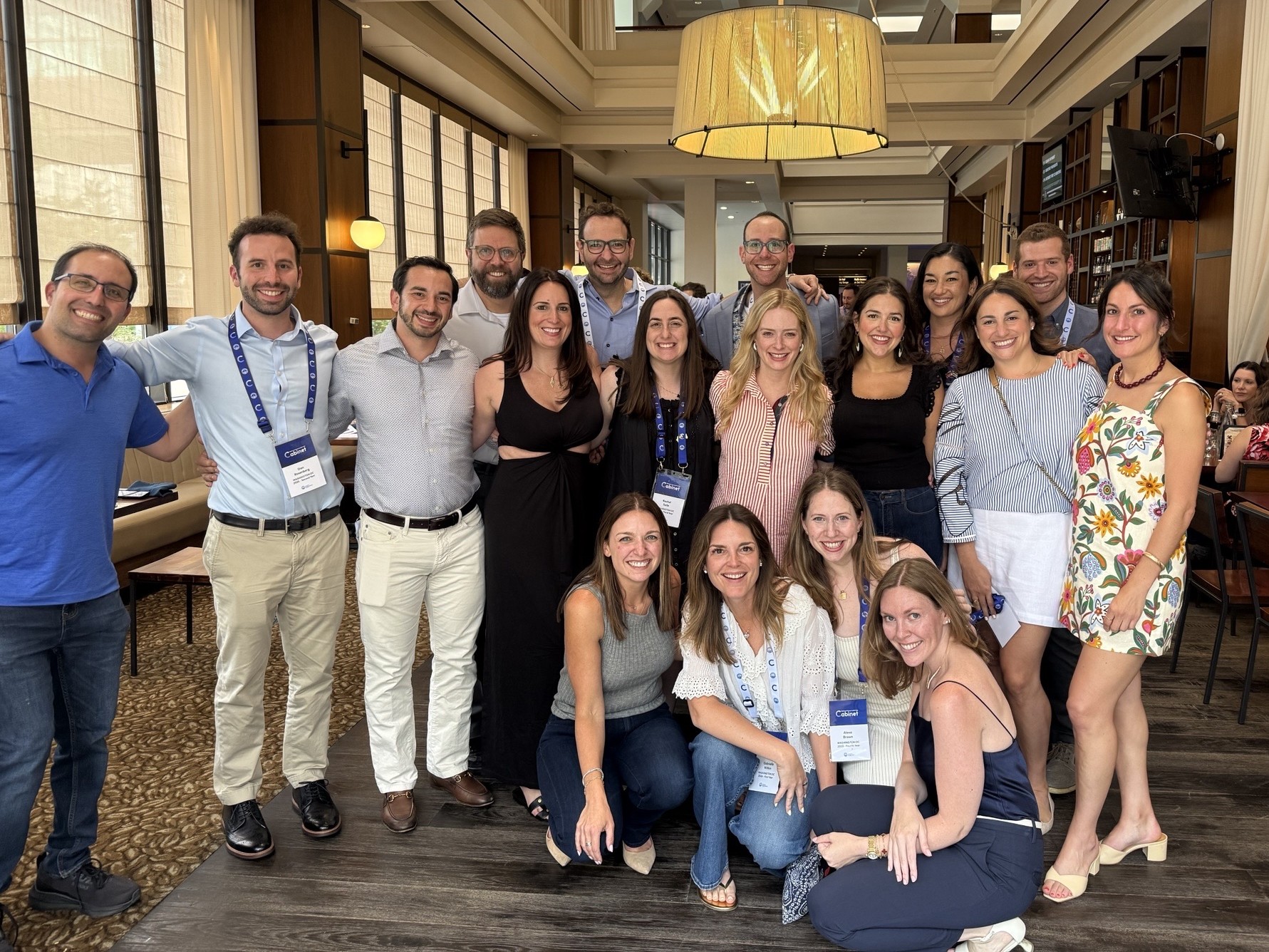
The room was full of 300 Jewish leaders from different cities. Different careers. Different Jewish experiences. Different ideas about what comes next. And yet, as Cabinet members from Greater Washington looked around the room in Minneapolis, one thing kept becoming clear.

They weren’t as “different” as they might have imagined.

“We all have the same concerns,” said The Jewish Federation of Greater Washington Cabinet member Dana Klein. “It doesn’t matter which community we come from, what we do for work, if we have kids or not. We are all invested and concerned about the same issues facing our community. And that is very powerful.”

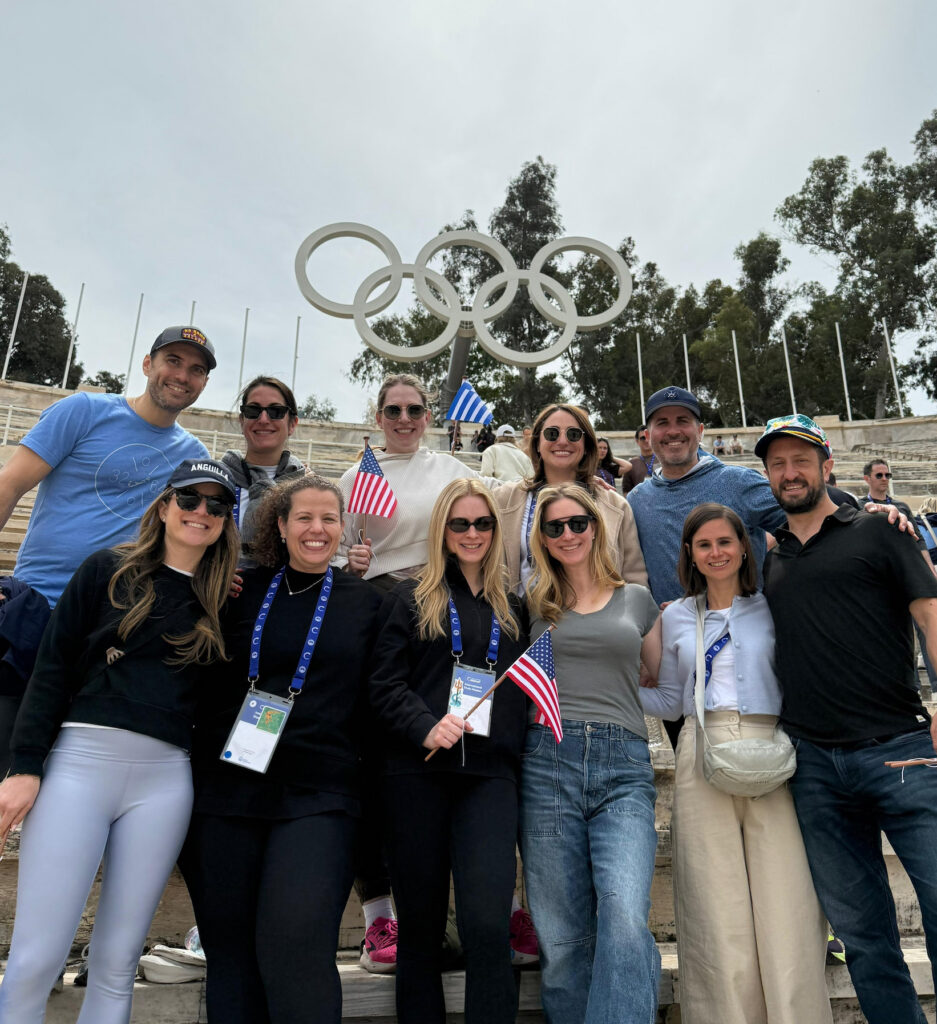
For three days in August, hundreds of Jewish leaders from across North America gathered for the Jewish Federations of North America National Young Leadership Cabinet Retreat, including a cohort of 20 members from Greater Washington.

They came to talk about philanthropy, security, Israel, and global Jewry. They heard from Minneapolis Mayor Jacob Frey and Rabbi Arianna Gordon of Temple Israel in West Bloomfield. They wrestled with how to talk across differences, how to serve their communities and how to become better leaders. But underneath all of it was a more personal question.

What does it mean to be a Jewish leader right now?

Turning Challenges into Leadership

Antisemitism is rising. Security has become something Jewish communities have to think about in their own neighborhoods. Families are making decisions about how visible they want to be. And more than one Cabinet member spoke about the feeling of watching everything unfold and wondering what, exactly, you are supposed to do about it.

Gabrielle Witkin put it plainly. “This is a hard moment to be Jewish,” she said. “And hard moments are exactly when leaders get made or lost.”

Gabrielle is a Jew by choice, and that choice comes with a responsibility she takes seriously. “I want a world where every Jew can live a safe, vibrant Jewish life. I want to leave this world better than I found it for my children.”

That desire to do something, rather than simply watch, is part of what brings people to Cabinet.

For Dana, Federation has made being an active part of the Jewish community a priority. “At a time when our community is constantly at risk, locally and abroad, giving back and making ourselves stronger has never been more important,” she said.

And there is a recognition that, as difficult as this moment is, Jewish communities have something powerful to draw on. Each other.

They attended the Retreat hoping to learn, enhance their leadership skills, and grow their network. That was one of the most meaningful parts of the Retreat for Britney Wambold, Cabinet Co-Chair, who sits on Federation’s Next Gen Board. She has met people through Cabinet from different cities, careers, Jewish backgrounds and phases of life. “Everyone is driven, cares deeply about making an impact, and shares a commitment to philanthropy and the Jewish community,” she said.

“I knew I would meet some nice people, but I was not expecting to make lifelong friends,” Dana added.

Britney knows that feeling well. “There is also something really special about knowing you have so many people in your corner,” she said. “Cabinet is full of people who genuinely want to see each other succeed and support one another throughout life.”

Alexa Brown, Cabinet Advisor, has watched that happen over four retreats. “What makes Cabinet different is how personal it is,” she said. “You walk away with some of your closest friends.”

At Cabinet Everyone Just Gets It

Three hundred people, and no one had to explain why they were there. That may have been the most powerful feeling in the room.
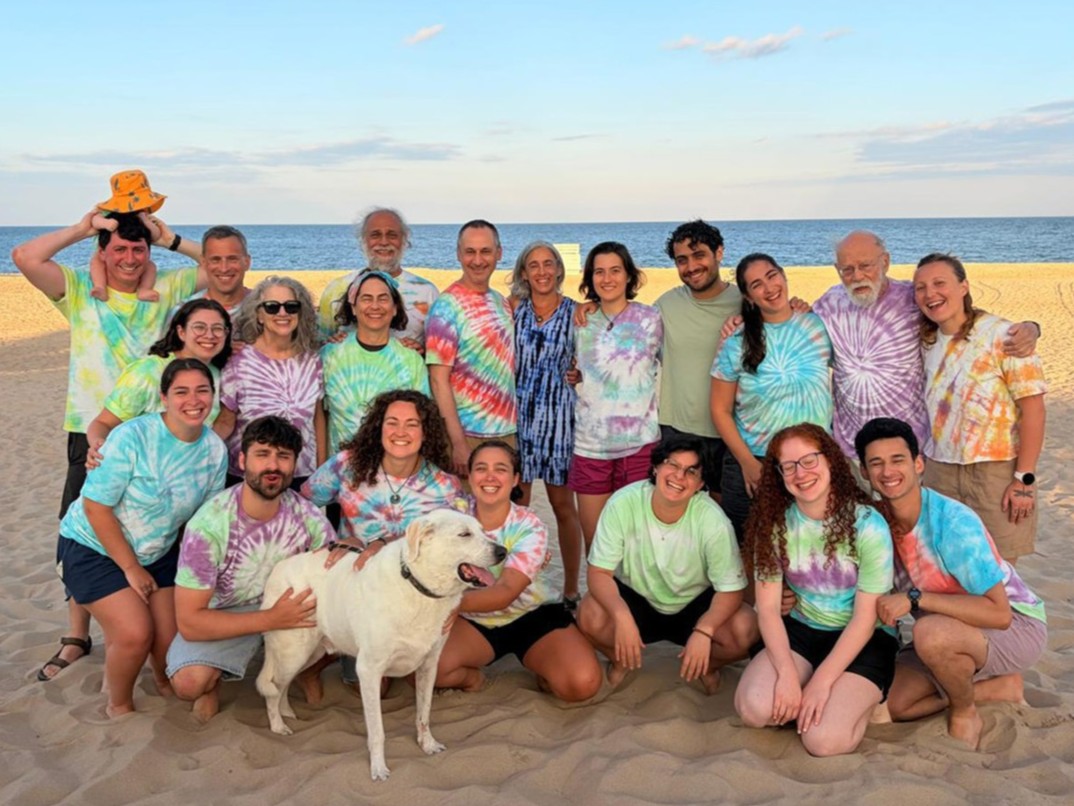
No one had to explain why security matters. Why Israel feels personal. Why the future of Jewish life is something worth worrying about. Why, even while building careers and raising families, they feel a responsibility to give their time, energy and resources to something bigger than themselves.

They didn’t have to explain why they were there because everyone else already understood. “It’s so easy to feel overwhelmed by everything happening in the world around us,” Alexa said. “Being with chevre (friends) reminds us we don’t ever need to face anything alone.”

For Gabrielle, that realization brought clarity. “I expected to feel small in that room. Instead I got clarity.” She came home with a better understanding of where she can make an impact, not everywhere, but somewhere meaningful. “I came home knowing where I can serve best rather than trying to serve everywhere.”

The Moment that Reframed Their Entire Perspective

One conversation in particular stayed with Gabrielle. Her caucus leader said something that reframed the way she was thinking about philanthropy:

“The only people giving to the Jewish community are the Jews.”

The idea, though simple, resonated deeply in a room full of people already asking themselves how much they should give, how much time they should devote, and how much responsibility they are willing to take on.

The conversation turned to giving beyond what feels comfortable. For Gabrielle, the discomfort was the point. Because leadership, she realized, isn’t necessarily about finding the comfortable thing you can do. Sometimes it is about deciding what you’re willing to sacrifice because you believe the community is worth it.

What Happens After the Cabinet Retreat?

The three days end, but the conversations, friendships, and questions don’t. If anything, they become more urgent, because eventually, every Jewish leader has to decide what kind of role they want to play in the future they’re helping create.

What kind of Jewish community do we want to leave for the people coming after us?

For Gabrielle, that question is at the heart of Cabinet.

“The next generation of leaders will not be produced by accident,” she emphasized. “We need to be gathered, trained, challenged, and connected to peers who are carrying the same weight. That is what builds the bench our community will need in ten and twenty years.”

And that work cannot wait.

“It matters that we are doing it now, in our thirties and forties, while we are raising the generation after us,” she said. “Our kids are watching how we respond to this moment.”

To join us in building that future or to learn more about Cabinet, please reach out to Jeremy Frisch, Federation’s Philanthropy Officer, Donor Engagement.

Related posts

Four Generations, One Roof

Four Generations, One Roof

Last week, I went to Bethany Beach with my family. For 30 years, we’ve held this tradition sacred, gathering the parents, kids, cousins, nieces, nephews, and significant others together for some memorable quality time. This year was especially meaningful as we had four generations together under one roof. What a gift it was lounging together with my dad and my grandson.

I like to think that familial ties are a central part of what animates our community as well. That Jewish peoplehood acts as a special source of gravity, drawing and holding people close by virtue of their Jewish identity. This is something that has held us together for thousands of years, through great struggles and great successes, and it’s something we want to continue nurturing across Jewish Greater Washington.

But I also know that a community is built on more than association. While family is enough to bond our crew at Bethany Beach, our community rests on several building blocks including faith, tradition, memory, language, experiences, aspirations, and mutual responsibility.

Importantly, the bonds of peoplehood free us from having to reach consensus. It enables and supports our diverse opinions and our individual evolving relationships to Judaism and Jewish life and adds to our collective vitality. At Federation, we work every day to proliferate Jewish learning and pride and build paths for people seeking to connect with others and with Jewish wisdom. We want to ensure that everyone can tap into the transformative sense of belonging that comes from being part of a diverse Jewish people.

But honoring our differences is only step one. Step two is working with and across our differences to shape the Jewish future. This is no easy feat at a time when convictions run deep. How do we articulate our values while leaving room for a broad range of Jewish expression? How do we stand for something in a topsy-turvy world while strengthening our ties?

Some days, I wake up ready to draw definitive lines in the sand and on other days, all I want to do is protect our ability to stay in conversation with one another. I’m convinced that finding the balance between conviction and peoplehood, fluidity and delineation, will be the work of our time.

I know many of you feel this tension too. We care about what is happening in our communities, our country, and the world, and sometimes that means we find each other on opposite sides of an issue. How we manage our response in these scenarios will have a profound impact on where we go from here.

So long as we remember our commitment to each other, our vast array of opinions and perspectives can only be a strength.

Related posts

Turning Gratitude Into Legacy

Turning Gratitude Into Legacy

The Summer I Connected with My Jewish Identity

When I look back at the arc of my life, I can trace the trajectory directly to a single summer when I was 17 years old.

Growing up in a Reform Jewish home in New Jersey, we celebrated a few holidays, I went to Sunday School, and I participated in my youth group, but being Jewish was not the engine driving my daily world. That shifted the summer I boarded a plane to Israel on a North American Federation for Temple Youth (NFTY) trip for six weeks, made possible by my Rabbi who helped me secure a scholarship from Jewish Federation of Greater MetroWest NJ.

I still remember the feeling of stepping off that flight into the Mediterranean heat. Out of nowhere, that classic teenage sense of independence collided with something vastly bigger than myself. A sudden, overwhelming realization that I belonged to a global family. I wasn’t just a teenager on summer vacation. I was part of a living history.

That single journey completely altered my path. It sparked a lifelong love for Israel and Zionism, inspired me to eventually buy a second home there, and set the entire course of my professional life in Jewish community work.

None of that happened by accident. Years before I stepped onto that plane, people I would never meet decided to invest in the Jewish future. They made sure a scholarship existed for a 17-year-old girl from New Jersey who didn’t even realize how much she needed it yet.

The Seeds Planted on Desert Soil

That summer shaped everything that followed. Fresh out of school, I took my first professional job at the United Jewish Appeal (UJA) in New York City (where one of my sons is currently working), launching my career in fundraising. Later, from 1988 to 1990, I worked right here as the Missions Coordinator for The Jewish Federation of Greater Washington. Having experienced the magic of an Israel trip firsthand, helping others embark on those same eye-opening journeys felt deeply full-circle.

Over the years, whether serving on the national Board of Directors for AIPAC or maintaining a home in Israel, my connection to our people has remained the heartbeat of my life.

Paying it Forward

What keeps me involved with The Jewish Federation of Greater Washington today is twofold: the remarkable dedication of the staff who steward this work every day, and a fundamental desire to pay my origin story forward. Because I was the beneficiary of a scholarship that changed my life, I want to make sure the next generation has those same opportunities to discover and deepen their Jewish identity.

When most people hear the word legacy, they think about looking backward, a summary of a life already lived. But as a mother, that’s not how I see it at all.

For me, legacy is entirely about what comes next.

It’s the same instinct that kicks in when we think about our children’s futures. We save, we plan, and we do everything in our power to ensure that when they step out into the world, the safety nets, opportunities, and communities they need will be waiting for them. We have an opportunity to make our own legacy—and for who better than our children?

Leaving a gift to the Jewish community in my estate plans is simply an extension of that same maternal care. Just as I think about my own children’s future, I feel a responsibility to invest in the community they will inherit years from now.

Join Us

Today, you can make that same lasting impact on our community by creating a Jewish legacy. August is National Make-A-Will Month, a timely reminder that taking a few moments to outline your wishes is a powerful way to protect what you love most and secure our shared future.

When I think about the adversity the Jewish people continue to face, I recognize the strength, persistence and fortitude that all comes from being in a community. Federation plays a significant role in helping sustain and strengthen our community.

By leaving a legacy gift with Federation, you can spark a young person’s journey, inspire a lifetime of Jewish commitment, and ensure that when the next 17-year-old gets on a plane to Israel, feeling invincible and curious, a vibrant, welcoming community is right there waiting for them when they return.

To learn more and receive guidance on leaving a legacy gift, visit shalomdc.org/legacy or contact Natalia Straus, Senior Director of Major and Legacy Giving.

Related posts

The Strength of Jewish Peoplehood

The Strength of Jewish Peoplehood

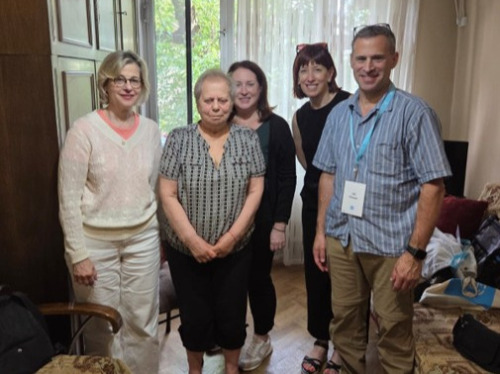
Earlier this month I traveled to Ukraine, Georgia, and Poland with a group of Federation executives to see firsthand the work our community makes possible through our partnership with JDC, The American Jewish Joint Distribution Committee, one of the leading Jewish humanitarian organizations. I am still reflecting on our time but wanted to share three things I learned:

There was a strong sense of optimism among the Ukrainians we met.

Although we only ventured as far as western Ukraine, which is quieter than other parts, the effects of the war were ever-present. We spoke with several families who had been uprooted several times in the last 15 years as the conflict has expanded, and others in the midst of rebuilding their lives.

And still, I was struck by how optimistic the community was about the future. Displaced or not, they had each other. The relationships they formed gave them a sense of purpose and a community to both sustain and rely upon.

The Jewish community in Georgia is an ancient Diaspora community, dating back 2,600 years to the Babylonian exile.

In Ukraine, I was inspired by people rebuilding Jewish life after displacement. In Georgia, I was equally inspired by a community that has preserved Jewish life for more than two millennia.

Though histories vary across countries, the story of Eastern European Jewry is one of extraordinary resilience alongside extraordinary tragedy. Through World War I, the Holocaust, decades of Soviet repression—when Jews were not allowed to practice openly—and countless other hurdles, these communities have had to swim against the current of history to hold onto their traditions, their identity, and one another. This has not been easy, and many Jewish communities in the region are much smaller than they once were. But there are signs of renewal, thanks to the efforts of young leaders on the ground, dedicated organizations like JDC, and communities like ours who care about investing in global Jewry.

JDC has been doing amazing work for a long time—thanks to partners like Federation.

I saw photos from 1919 of JDC feeding war refugees in Poland. And some from 1940 showing JDC workers providing basic goods and clothing to the Warsaw Ghetto (the organization even helped fund the 1943 Warsaw Ghetto Uprising). For over a century now the Jewish people have come together to care for the vulnerable, in response to and despite immense global challenges.

This work is still being done today while evolving to meet emerging needs. For instance, we visited one of JDC’s Hesed welfare centers in Ukraine, established after the fall of the Soviet Union to care for elderly and vulnerable Jews. There, we heard about how the local Jewish community is serving those in need while also expanding their mental health offerings, refugee services, early childhood programs, and more.

I am deeply grateful to all the JDC team members who welcomed us and to everyone who shared their stories. I also want to extend a heartfelt thank you to everyone who helps make the amazing work underway happen through their support of Federation.

We talk all the time about investing in Jewish life and making good on the belief that we are all responsible for one another. This trip allowed me to see this promise in action. My time confirmed that one of the Jewish people’s greatest strengths is our willingness to show up for each other—a tradition as vital today as it has ever been.

P.S. I only scratched the surface here. If you’d like to hear more about the remarkable people I met and see additional photos from the trip, I hope you’ll watch the recording of our webinar. And if these stories remind you, as they did me, of what’s possible when we show up for one another, I invite you to support Federation’s Annual Campaign. Your generosity helps make partnerships like this a reality.

Related posts

Public Investment Strengthens Community Security Across Greater Washington

Public Investment Strengthens Community Security Across Greater Washington

Keeping our Jewish community safe is one of The Jewish Federation of Greater Washington’s highest priorities. As antisemitism continues to rise, protecting Jewish life requires more than physical security—it requires trusted partnerships, coordinated planning, and a community-wide approach.

Through JShield, Federation’s community security initiative, we work every day to strengthen the safety and resilience of Jewish organizations across Greater Washington. By building strong relationships with local, state, and federal government agencies as well as law enforcement, we help secure the resources, expertise, and public investment our community needs to meet today’s evolving security challenges.

We’re grateful to share that this work recently received an important investment from the State of Maryland. Federation has been awarded nearly $180,000 through Maryland’s Protecting Against Hate Crimes (PAHC) grant program, building on $200,000 awarded in 2026.

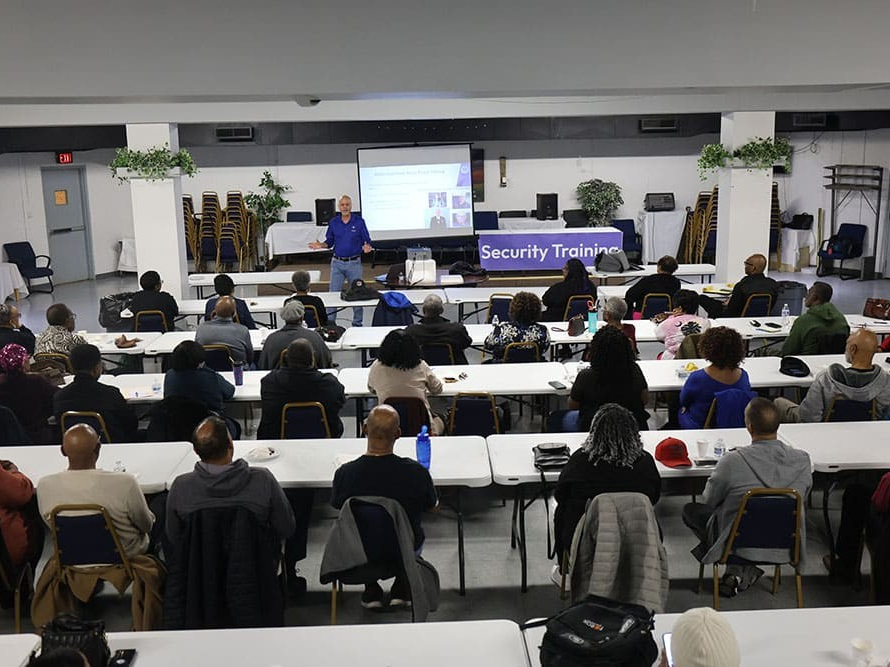
This funding helps ensure JShield’s community-wide security trainings and programs remain available free of charge to Jewish organizations across Greater Washington. In 2025 alone, JShield partnered with 134 organizations, delivered 88 security trainings to more than 2,350 participants, and conducted 261 one-on-one consultations to help organizations assess vulnerabilities, strengthen emergency procedures, and build a stronger culture of security.

Beyond delivering training, JShield helps organizations navigate the often-complex process of applying for government security grants, including the PAHC grant program, helping unlock critical public funding that strengthens security across our community.

This latest award will also support security infrastructure enhancements at Federation, JCRC of Greater Washington, Makom, and other Jewish organizations serving thousands of community members each year.

JShield’s impact extends far beyond any one institution. Federation convenes Jewish organizations, security professionals, law enforcement, and government partners to share information, identify trends, coordinate responses, and strengthen preparedness across our region. Together, we’re building a connected, resilient community where no organization has to navigate today’s security challenges alone.

Public investment like this doesn’t replace community philanthropy—it amplifies it. Here in Greater Washington, many Jewish organizations have doubled or even tripled their security budgets, forcing difficulty choices between investing in security and funding the programs that strengthen Jewish life.

Government funding helps offset those costs, while philanthropic support makes it possible for Federation to sustain and expand JShield’s work, respond to emerging threats, and provide expert security services at no cost to Jewish organizations. Together, these investments create a safer, more resilient Jewish community. In 2025 alone, JShield helped local Jewish institutions secure more than $5.25 million in federal and state security funding, and this latest Maryland PAHC award builds on that momentum.

Our goal is to raise $1 million to strengthen the safety and security of Jewish Greater Washington. To help us get there, a group of generous donors are currently matching the first $375,000 in gifts to JShield, doubling your impact. Every gift helps ensure Jewish organizations across Greater Washington continue to receive expert security training, grant assistance, emergency preparedness resources, and coordinated support, at no cost to those who need it most.

Make your gift today and help build a safer, more prepared Jewish community.

Related posts

The Roots That Hold Us

The Roots That Hold Us

The first time Danielle Frum entered a mikvah (ritual bath), she wasn’t alone. In her arms was her newborn daughter, Miranda. It was 1991, and as mother and daughter immersed together, it symbolized the beginning of Miranda’s Jewish life and the moment Danielle formally became Jewish herself.

After she and David Frum married in 1988, the two spent their weekends wandering Manhattan, slipping into historic synagogues throughout the city simply to experience the different services. Raised Anglican/Episcopalian, Danielle had never been especially religious, but took a strong interest in Judaism shortly after their marriage.

Choosing Judaism

“I was drawn to Judaism because of its focus on this life,” she says. “Its emphasis on living an ethical, kind, and communal life regardless of whether it led to some sort of heaven or afterlife very much appealed to me.”

When Miranda was born, both David and Danielle decided to build a Jewish home and raise Jewish children. In the years that followed her conversion to Judaism, they welcomed two more children. Nathaniel, now 32, and Beatrice, now 24.

Lessons in Generosity

For David, Jewish values had shaped his childhood. His father’s family had little money, but every Passover his grandmother cooked more food than her own family could eat. The extra meals were carefully packed and delivered to neighbors who needed them. Clothes and blankets were boxed up and shipped to Jewish communities she would never meet.

His mother’s parents, meanwhile, devoted themselves to nearly every communal institution in their small city, the synagogue, the library, the burial society, and local charities. “If you arrive in a new place,” they taught him, “find the local charities, Jewish and non-Jewish, and give whatever you can.”

Years later, that same instinct led David and Danielle to the Jewish Federation of Greater Washington, where they have faithfully supported the community for more than two decades.

A Love for Israel

At 22, Miranda moved to Tel Aviv. She was dazzled by Israel’s youthful energy, creativity, and sense of possibility. She spent three years building a life there before eventually returning home, carrying with her a lasting love for the country.

Watching Miranda discover Israel inspired Danielle in return. She created a website celebrating Israeli culture through its artisans, food, and everyday life, hoping to share a side of the country that people didn’t always see.

Carried by Community

Throughout their lives together, Jewish ritual marked moments of joy, holidays, the birth of their children. They never imagined that those same traditions would one day carry them through unimaginable loss.

In February 2024, Miranda passed away suddenly at the young age of 32. In those first unbearable weeks, grief made even the smallest decisions feel impossible. “As we staggered through those days after Miranda died,” Danielle says, “these rituals told us what to do when we felt we couldn’t act.”

From the careful dignity with which Miranda’s body was prepared, to the funeral, shiva (mourning period), and burial, every step was guided by customs that had comforted grieving families for generations. Later came the unveiling of her headstone. Each year, there is the ritual of lighting a yahrzeit (memorial) candle.

“I’m very grateful to be part of the Jewish community,” Danielle says.

Their grief unfolded against another season of heartbreak for the Jewish people. Only months earlier, Hamas’ October 7 attack had devastated Israel. Miranda had lived the kind of life that made those events feel deeply personal. She loved music festivals like Nova, the outdoor festival that was attacked on that fateful day. Friends she had known during her years in Tel Aviv were called into military service. Some never returned.

The Legacy We Leave

To honor Miranda’s memory, David and Danielle gave to causes supporting Israel during one of its darkest moments.

“When we mourn,” David reflects, “we truly discover what it means to be one Jewish people. I know my living children will carry that awareness with them through their lives, and bequeath that awareness to children of their own.”

Today, David and Danielle are among the newest members of Federation’s Roots Society, which recognizes more than 20 years of support.

Looking back, their philanthropy has always been an expression of the values that have guided them from the very beginning: caring for others, strengthening Jewish community, and ensuring that no one has to face life’s greatest joys or deepest sorrows alone.

The values that first drew Danielle to Judaism. The lessons David learned at his grandparents’ table. The traditions that carried them through the unimaginable loss of their daughter. Together, they tell one story of a family rooted in community, sustained by faith, and committed to helping future generations find that same sense of belonging.

For readers who wish to learn more about Miranda and the family’s journey through grief, Danielle shares their story in her memoir, Dispatches from Grief: A Mother’s Journey Through the Unthinkable.

Interested in learning more about Federation’s Roots Society? Reach out to Natalia Straus, Federation’s Senior Director of Legacy Giving.

Related posts

Get to Know Capital Camps

Get to Know Capital Camps

It's Summer Camp Season!

A summer away from home. A dining hall full of noise. A Shabbat filled with song and dance. A friendship that started in a bunk and is still going strong twenty years later.

Ask an American Jew what first made them feel “Jewish,” and there’s a decent chance the answer involves summer camp.

Jewish overnight camp is one of the key ways that Judaism becomes an immersive way of life. For families in the DMV, Capital Camps has been that introduction for nearly four decades.

What actually happens at Capital Camps?

The short answer: a lot.

Located in the Catoctin Mountains of Pennsylvania, just 75 miles from DC, Capital Camps is the premier Jewish community overnight camp in the region. A core partner of The Jewish Federation of Greater Washington, each summer, more than 900 campers and 180 staff come together across multiple village programs. Programming spans waterfront activities, a ropes course, theater & arts through the Habima program, a working farm, and Jewish life experiences that run through the entire summer. A 700-person dining hall serves kosher meals (meat, dairy, and pareve kitchens, if you were wondering), and staff provide daily opportunities for campers to connect with Jewish text, tradition, and community.
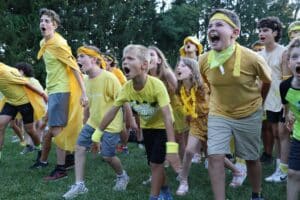
First-time campers enter through the Yalla program, a specially designed experience for children navigating camp for the very first time. Older campers transition into leadership programming that, for many, becomes their first tangible leadership experience: running a Shabbat, taking responsibility for a cabin, or mentoring a younger camper.

Capital Camps also works to ensure that different groups feel included and that they can enjoy everything the summer camp experience has to offer. The Atzma’im inclusion program ensures that children of any denominational affiliation, gender, race, sexual orientation, or socioeconomic status, including those with a range of intellectual, emotional, and physical abilities can fully participate in the camp experience. The campus is fully ADA compliant and support staff is available for medical and mental health services. Through annual partnerships with Friends of the IDF, Israeli campers who have lost someone through conflict are welcomed to camp, a reminder that the camp’s community extends well beyond its 75-mile radius.

How does the Foundation support camp?

Access to transformative Jewish experiences is one of the most powerful investments a community can make. Research shows that Jewish overnight camp creates lasting connection to Jewish identity, community, and leadership in ways that are difficult to replicate.

Study after study, from the Foundation for Jewish Camp to Brandeis University’s Cohen Center for Modern Jewish Studies, finds that Jewish camp alumni are more likely to marry Jewish partners, raise Jewish children, donate to Jewish causes, and remain engaged in Jewish communal life across the arc of their adulthood. The mechanism is straightforward: immersive, joyful, community-based experiences during formative years create an attachment to Jewish life that withstands the drift of adulthood.

We know this, and yet, cost remains one of the primary reasons families don’t send their children to Jewish overnight camp. If we can lower this barrier to access, we know we can create strong and vibrant future generations of Jews.

Scholarship funding exists to remove this exact barrier.

The Jewish Community Foundation of the Jewish Federation of Greater Washington is proud to support the expansion of access to transformative experiences like Capital Camps through strategic philanthropy and scholarship funding through both Donor Advised Funds and Legacy Gifts. Because one of the truths we keep returning to in this work is that belonging isn’t something you can teach in the abstract. It has to be lived. And the experiences that young people carry with them into adulthood, their sense of Jewish identity, their instinct toward community, their capacity for leadership, are often rooted in summers like this one.

Ready to learn more?

If you’re a donor thinking about where camp scholarship funding goes, it goes here: to a child who might not otherwise have access to the people, the places, and their connection to Jewry they just haven’t met yet.

The Catoctin Mountains are waiting!

Related posts