JShield Security Training: Stop the Bleed
I’ve been thinking a lot about how change happens. What experiences or events have a unique and significant impact on a person’s life? What are the drivers or enablers that can move a community forward? What is needed to shift a trajectory, to address a problem, or seize an opportunity?
I am thinking about this because we live in a moment when we, as a Jewish people, are facing a series of challenges (and opportunities) as our world changes in significant ways. We therefore need to consider our approach when it comes to our work to build a vibrant Jewish community in the DMV.
For the past many years, we have worked hard to identify new programs or strategies that would bring people in. We have sought ideas from the community and funded a variety of new initiatives. And many of these initiatives have been successful. We have partnered with incredible local agencies and synagogues to create new initiatives and bring ideas to life. This work has been eye-opening and worthwhile.
I also want to explore what it might look like for this next period of Jewish life, if we shift our focus from continuing to source new ideas to scaling the initiatives that we know for certain achieve the objectives we have in mind—the ones that over years of study and observation have proven successful in building connection, identity, and community.
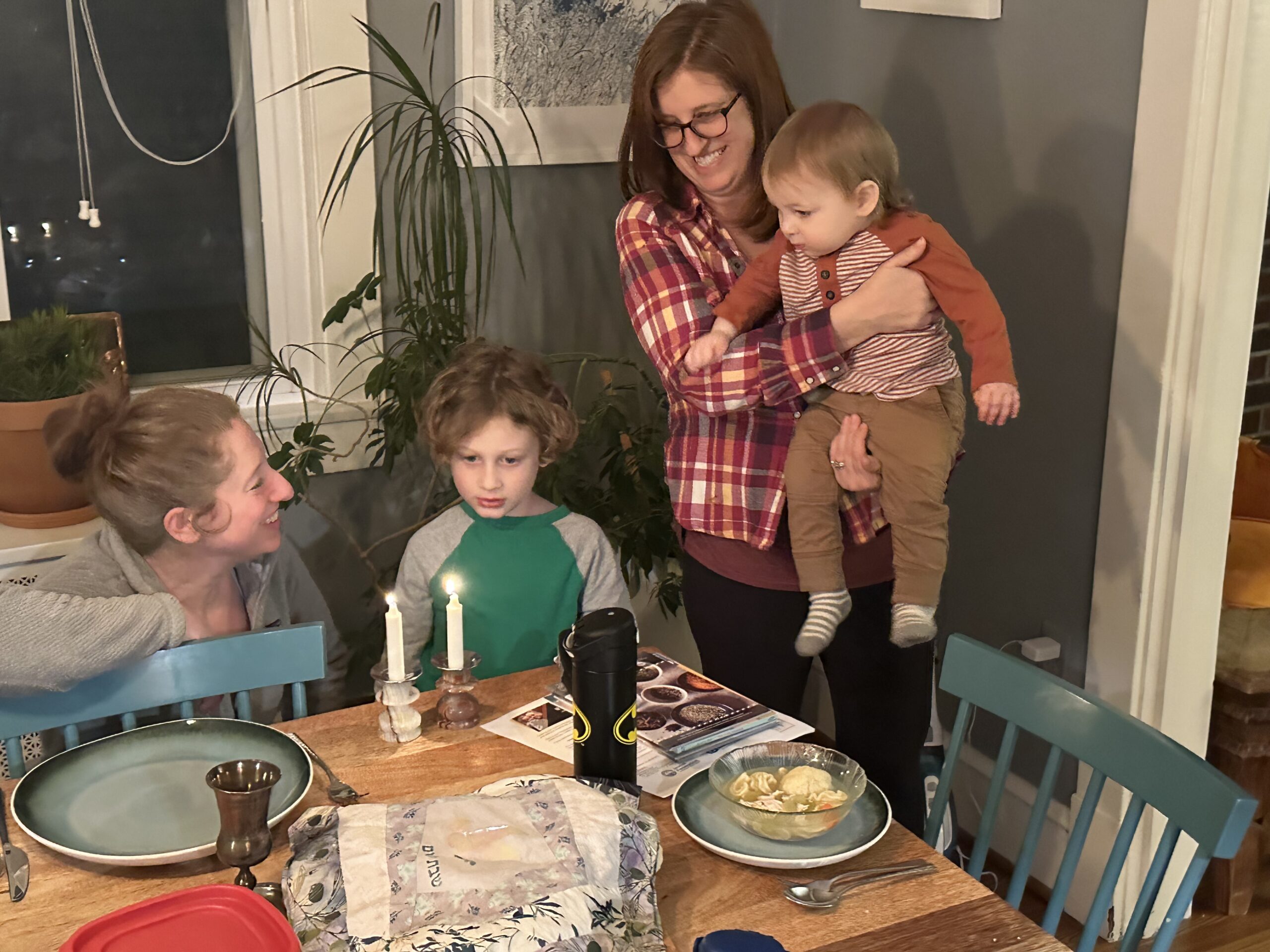
We know that Jewish overnight camp, youth groups, Jewish learning, immersive experiences, especially to Israel, Jewish day schools, and Shabbat dinners all achieve these goals. Moreover, and just as importantly, they are scalable. These may not be the only experiences that have such an impact, but channeling our energy and creativity into each of these six areas could yield tremendous results.
For example, there are currently 3,500 kids in Greater Washington who go to Jewish overnight camp. What impact might we have on the Jewish future if we doubled that number over the next ten years and another 3,500 children and teens experience the joy and community of camp? What if for the next decade, we focus on the proven wins in Jewish life—those things we know to be both high impact and scalable—and bring in many more people to these experiences?
We are currently debating and stress testing these questions internally at Federation and I want to share our thinking with you as part of that process. How does our list of impactful Jewish experiences strike you? Where do you see challenges with our approach? In what ways can the broader community contribute to Jewish engagement?
I look forward to hearing your thoughts. Through it all, know that our core objective remains the same: working together to build a community where everyone feels they belong, can connect deeply to others and the Jewish people, and inspired to shape our collective future.
More to come.
Recently, a security concern was identified and reported quickly thanks to the awareness and vigilance of a few community members. Because they trusted their instincts and spoke up, the situation was addressed promptly and did not escalate.
While the incident itself was resolved, it offers an important reminder: training matters—and so does taking action when something doesn’t feel right.
Every one of us has a role to play in maintaining safe, welcoming environments across our community and within our institutions. Sometimes that role looks like participating in a security training. Other times, it’s simply noticing what’s around you and trusting your intuition.
Small observations can matter more than we realize:
Individually, these details may seem minor. Together, they can provide critical information—but only if someone chooses to say something.
As we enter a new year, we know the Jewish community will continue to navigate complex and challenging moments. One of the ways we care for one another is by staying alert, informed, and prepared.
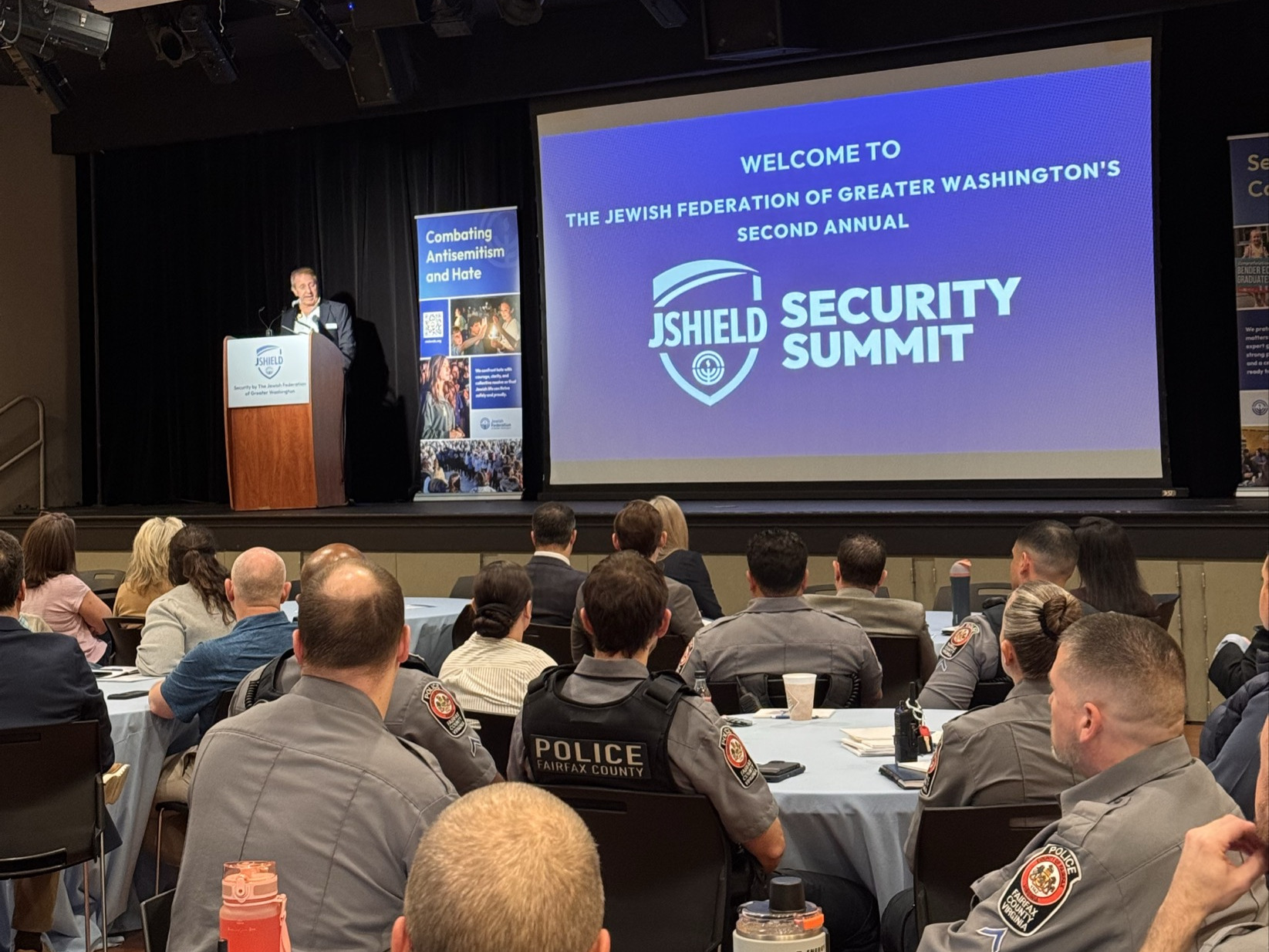
JShield supports this work by offering free security trainings for individuals and institutions across our community. These sessions help build confidence, sharpen awareness, and provide practical tools for navigating uncertain situations.
Just as importantly, we encourage everyone to:
Our strength as a community has always come from the way we look out for one another. This moment reinforces a simple but powerful truth: safety is a shared responsibility—a team effort. When we act together, we are more resilient.
Thank you for your continued partnership, your vigilance, and your commitment to keeping our community safe and welcoming.
When Omer returned to his classroom after October 7, he couldn’t breathe.
Five of his students were gone, killed in the attacks. Just stepping into the room triggered waves of panic, grief, and memory. He felt like he couldn’t go on.
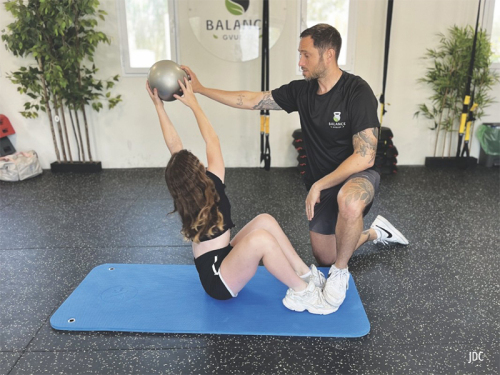
But through weekly sessions with a JDC counselor, Omer slowly rediscovered his footing. Today, he’s not just working—he’s leading. Omer now runs a therapeutic gym in a Gaza-border community, helping fellow survivors rebuild physically and emotionally. “I found a way to move forward,” he said. “And to help others do the same.”
This is what your dollars make possible.
In the wake of the Iron Swords War, thousands of Israelis were forced to evacuate their homes. Many lost not just their sense of safety, but their livelihoods. The trauma was deep, the economic toll was devastating, and the path to stability felt out of reach.
That’s why Federation responded swiftly, providing a $500,000 grant to JDC to launch “Getting Victims of War Back to Work”, Israel’s first trauma-informed employment recovery model. More than just getting back to work, it’s about dignity, healing, and long-term resilience—about helping people get back to life.
With your support, here’s what’s already happening:
This model is now informing national efforts to scale trauma-informed employment support.
Through this initiative, we’re supporting Israelis not just in healing, but in retraining and returning to work with purpose.
Beyond immediate relief, it’s recovery with resilience built in.
And this is exactly the kind of long-term, people-centered impact we’re working toward through Federation’s Israel strategy: investing in long-term recovery and deepening connection between our communities.
Photo: JDC
This summer, more than 1,300 Jewish community members from across Greater Washington participated in Federation’s Impact Index Pulse Survey, giving us a clearer picture of how Jewish life is experienced across our region. Through a 20-minute text-based survey, respondents shared their attitudes and behaviors across eight pillars of communal wellbeing: engagement, education, belonging, safety, activism, health, caring, and connection to Israel and global Jewry.
Conducting research like this is core to our role in the community. We invest in data projects like this to inform our strategies and investments, and to equip synagogues, schools, human service agencies, and community-building organizations with insights they need to strengthen Jewish life in alignment with their own missions.
While we are not a synagogue, this insight matters deeply for synagogue leaders to know that among 29% of individuals who are not currently engaged but want to be, affordability is real barrier. 78% of those individuals say they would participate more in synagogue life if membership were more affordable.
This finding is especially important for our human service agencies: only 44% of individuals who identified as financially vulnerable reported knowing where to find help in the Jewish community during a time of need—in comparison to 55% of more well-off individuals.
We do not exist in a vacuum. Our community is telling us clearly where the opportunities lie: deepening engagement, expanding belonging, strengthening care, and ensure that every Jew regardless of geography, background, or perspective has access to a vibrant Jewish life. The survey shows that 72% of Jewish adults in Greater Washington consider themselves engaged with Jewish life to some degree, and at the same time, 54% say they would like to be more engaged, including 62% of respondents under the age 35 who live in the inner core of Northern Virginia and D.C. proper.
Federation will continue to fund and lead studies like this because understanding our community is essential to strengthening it, and to stewarding our collective resources responsibly.
Sunday’s attack in Australia may have happened halfway around the world, but for many of us, it hit much closer to home.
That’s the nature of Jewish vulnerability today. A violent act against a Jewish community “over there” immediately reverberates here. Our sense of safety shifts. Our plans are second-guessed. Fear creeps in.
And that’s exactly why Federation’s security work through JShield isn’t reactive. It doesn’t ebb and flow with the headlines. And it certainly doesn’t start the night before an event.
Because by the time something happens—whether it’s in Sydney or Silver Spring—it’s already too late to start building the relationships, training, and infrastructure that real security depends on.
As soon as we learned of the attack in Australia, our first calls were to local law enforcement partners and the FBI.
We didn’t have to introduce ourselves. We didn’t need to explain why something happening halfway around the world matters here. These are relationships we’ve built steadily over years. When we call, they respond. And they did.
That kind of response isn’t automatic. It’s built on trust. And it’s something we help every institution cultivate—hyper-local connections, district commanders who know your name, first responders who’ve walked your halls. Because when something happens, you don’t want to meet them for the first time. You want to greet them like an old friend.
After the attack, our inboxes filled with last-minute security requests from organizations hosting Chanukah events that had been on the calendar for weeks.
It’s understandable. But it misses the point.
If you needed security last night, you needed it three weeks ago when the event was planned.
Security isn’t something you switch on out of fear. It’s something you build over time—through planning, training, and partnership. That’s what JShield is here to help our community do.
Last year, more than 30 Jewish institutions in our region received threatening letters, most vaguely referencing Gaza, some outright menacing. On their own, each one might have been brushed aside.
But thanks to the reporting we encourage through JShield, we saw the bigger picture. We connected the dots across states. We got the FBI involved.
And we got results. The suspect, who lives just outside Silver Spring, recently pled guilty to federal hate crime charges. That outcome didn’t just happen. It was made possible by a community that’s engaged, prepared, and connected.
Since JShield launched, we’ve helped bring in more than $5 million in federal security grants for local Jewish institutions. We’ve done hundreds of threat assessments. Helped write emergency protocols. Trained thousands of people on situational awareness and how to stay calm under pressure.
And we know those trainings stick. One teacher told us she starts every school day with a breathing exercise she learned from us. Not because she’s scared, but because it helps her and her students feel grounded.
That’s what we mean when we say training is like putting money in the bank. You don’t get to choose the emergency. But every bit of preparation makes you more ready for whatever comes.
If you’ve felt a little more anxious dropping your kids at school or wondered if your synagogue is doing enough to stay safe, you’re not alone. We’re hearing it across the community. And we feel it too.
But fear alone doesn’t keep us safe. Action does.
Right now, we have a critical opportunity. Thanks to a generous match, every dollar you give to support Federation’s security work through JShield will go even farther. That means more trainings, more assessments, and more direct support to institutions across Greater Washington.
Because cost should never be a barrier to security. That’s why every service JShield provides—from threat assessments to training—is offered free to the community, powered by Federation and donors like you.
Security doesn’t start with police. It starts with preparation, with connection, and with showing up for each other before something happens, not just after.
We can’t wait for the next headline to get ready. This is the moment to act.
Give now to protect Jewish life in Greater Washington. Let’s meet this moment—and this powerful matching opportunity—together.
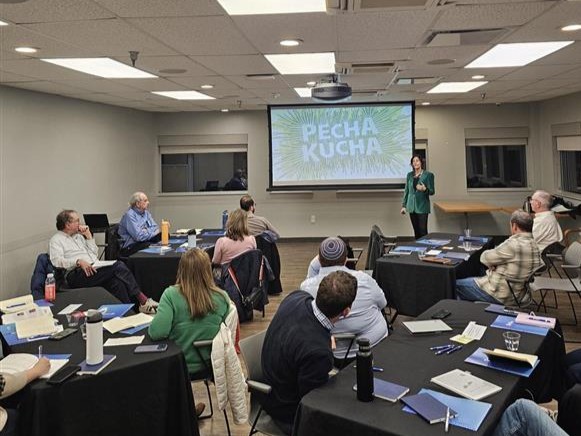
When Jen Kulkin stood up to speak, she had just 45 seconds. No slides, no long bio—just one image and a powerful prompt: Describe a time you felt a part of a community.
Her answer? A deeply personal story, told through a single photo. It was part of a rapid-fire activity called Pecha Kucha (Japanese for “chit chat”) that marked the opening night of Federation’s second Northern Virginia Leadership Cohort, held earlier this month at the Pozez JCC. One by one, each of the 17 new cohort members took their turn—revealing, in just under a minute, a glimpse into what “community” means to them.
Everyone’s story about community was different, yet the idea was the same: a place to belong, feel safe, and bond over shared experiences. That’s exactly what we’re aiming to create, and support, in Northern Virginia.
And that’s exactly the point.
Over the next few months, these leaders—representing Pozez JCC, JSSA, Temple Rodef Shalom, Rodef 2100, George Mason Hillel, Beth El Hebrew Congregation, Federation’s Network NoVA Alliance, Gesher, Agudas Achim, Olam Tikvah, AIPAC, Congregation Beth Emeth, and Capital Camps—will gather for four sessions led by master facilitator Rae Ringel. They’ll explore the real drivers of leadership: how to listen, build trust, inspire action, and approach communal challenges with creativity and collaboration.
But before any of that, they’ll get to know each other. Not through titles or résumés, but through lived experience and through moments like PechaKucha, where vulnerability becomes the starting point for connection.
Federation launched the Northern Virginia Leadership Cohort as part of our bold vision to ensure NoVA continues to grow as a vibrant hub of Jewish life—where leaders, donors, and community members feel connected, supported, and seen.
This cohort is a key investment in that future. By convening diverse leaders across institutions, we’re strengthening the web of relationships in Northern Virginia that makes Jewish community resilient and helping build the kind of trust and collaboration that can only be nurtured.
Because leadership isn’t just about strategy. It’s about showing up, listening deeply, and building something bigger together.
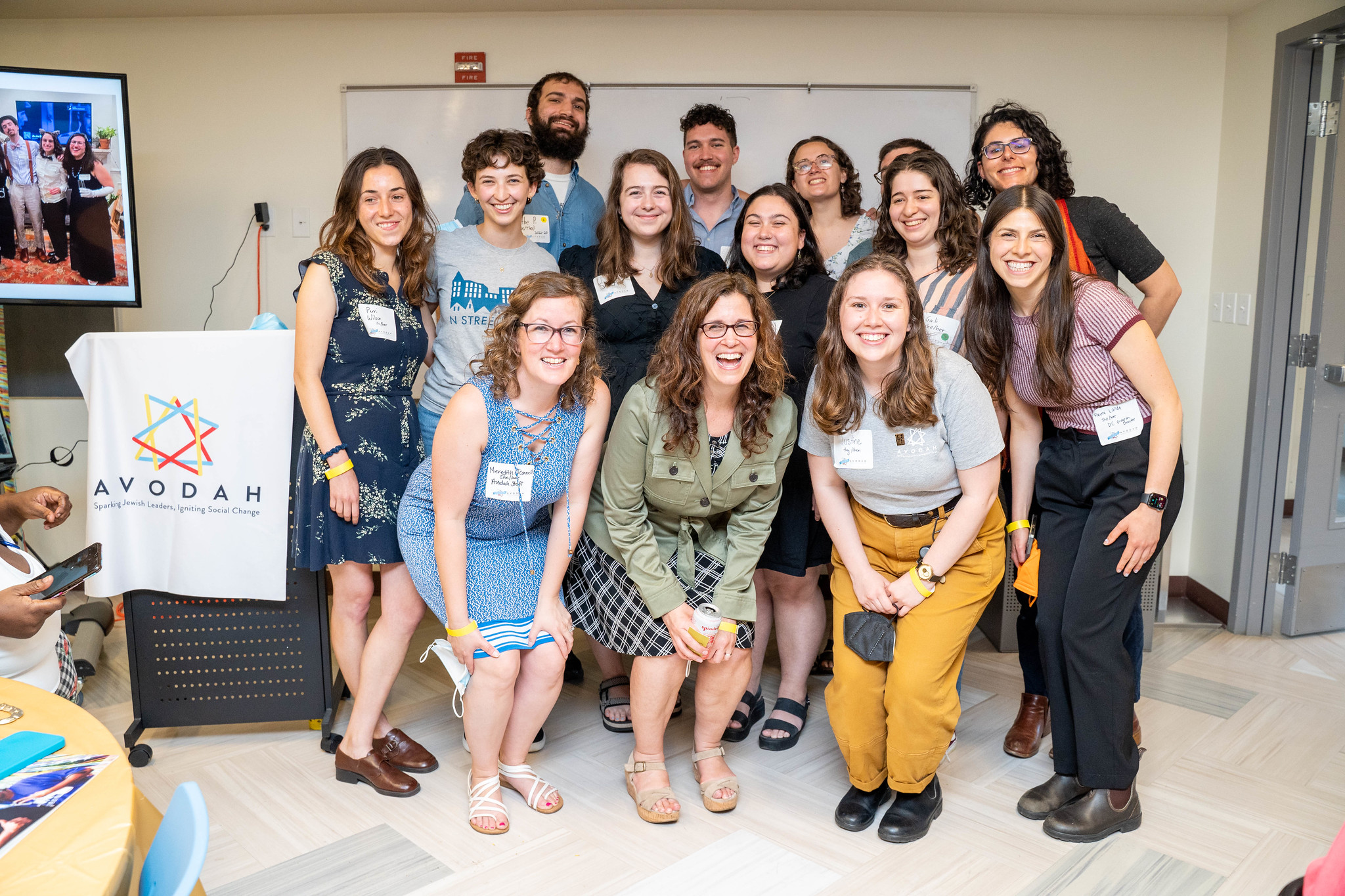
Cheryl Cook brings an unmistakable sense of joy into her work—and into any conversation about Avodah. As CEO, she meets young adults right as they’re deciding who they want to be in the world. “There’s a lot to do in our country,” she says. “There are a lot of challenges, always.” But for Cheryl, that reality isn’t discouraging. It’s motivating.
What excites her is watching young people step into purpose. “We reach people at the beginning of their career and help them find work with purpose.” Her energy makes it clear: this isn’t just a program. It’s a launchpad—for meaningful work, for Jewish community, and for the kind of leadership Federation aims to nurture across Greater Washington.
Cheryl’s take on Avodah’s impact echoes what we see across our partners: early, hands-on experiences shape the kind of Jewish leadership our community needs. “Avodah means work, or service, or holy work,” she says. “How you start your career often feeds what you do in your life.”
The outcomes are striking. 98.6% of participants stay involved in social justice work, a number Cheryl still delights in repeating. She shares the story of Aaron, who joined Avodah simply because he wanted to do something Jewish. His placement introduced him to immigration law; today he stands beside people facing detention and deportation. “I never would have done this work without Avodah,” he says.
For many Corps Members, Washington, DC isn’t just a placement site—it’s the place they’ve dreamed of living. Some come for politics, some for activism, some for the city’s energy. Cheryl sees how DC shapes them.
She recalls a participant on a homelessness street team who began carrying Narcan because of what she saw daily. Another said that protesting on the National Mall felt like stepping into history. Even when the federal government shut down this fall, the learning didn’t pause; the cohort explored parks, found hidden corners of the district, and quickly felt embraced. In Cheryl’s telling, DC is more than a backdrop. It’s a teacher.
If the service year is what placements do, the community is what helps them stay.
“Justice work is hard,” Cheryl says plainly. “It takes being in community, and getting the joy and sustenance of Jewish life—celebrating Shabbat, being together—to stay in this work.”
Avodah designs that community with intention: shared homes, shared meals, shared questions about who we are and who we want to become. Participants arrive for a year, but Cheryl knows the relationships will outlast the program.
For Federation, partners like Avodah strengthen a broader ecosystem of agencies working toward dignity, justice, and inclusion. Avodah’s impact extends far beyond its Corps Members.
Cheryl describes Avodah’s antisemitism trainings for social‑service partners—sessions that illuminate how antisemitism connects to other forms of hate. After one training, immigration advocates shared they had never connected the chant “Jews will not replace us” with anti‑immigration rhetoric. “We were able to connect the dots,” Cheryl says. The room shifted.
For her, helping secular partners understand Jewish identity within the broader landscape of equity and inclusion is both timely and hopeful.
When Cheryl talks about The Jewish Federation of Greater Washington, her gratitude is unmistakable. “DC is really exceptional at seeing us as a partner,” she says. “It makes us feel really valued and cared for by the Greater Washington Jewish community.”
She describes a partnership built on trust, storytelling, and shared purpose. Federation lifts Avodah’s work; Avodah lifts Federation’s impact. “How do we hold you up, how do you hold us up, how do we elevate our work together? It really works.”
Cheryl also names the joy of seeing Avodah alumni featured in Federation stories. “Thank you for holding up so many Avodahniks,” she says.
At the core of Cheryl’s leadership is a set of values that feel both timeless and urgently needed. She names b’tzelem Elohim—the dignity of every human being—as a guiding force, especially for Corps Members meeting people experiencing homelessness or poverty.
She also emphasizes holding complexity. “You don’t all have to be the same,” she says. “You can hold an array of difference and also see each other as full humans.” Her favorite teaching, inspired by Pirkei Avot, captures it simply: “When nobody else is being human, be human.”
Cheryl sees Avodah as a place where young adults connect what lights them up with what the world needs—and where Jewish community helps sustain them for the long haul. “I feel very humble and lucky to be in this role,” she says.
Through its partnership with The Jewish Federation of Greater Washington, Avodah helps strengthen Jewish life, develop emerging leaders, and shape a more just future for our region and beyond.