JFNA 2026 General Assembly
Thank goodness for basketball. And soccer. And aliens.
I can’t claim to be a Knicks fan, but I am a fan of joy and connection and that’s exactly what I’m seeing pour out of official and unofficial New Yorkers. What a pleasure it is to see people come together and bask in something shared. Witnessing New York City’s jubilation has made me happier and my team was out in round one of the playoffs.
Likewise, as a soccer fan, I am also very much enjoying the stories coming out of the World Cup. There has been a lot of heartwarming content about fans coming to the U.S. and delighting in the hospitality of everyday Americans (and our ice-cold sodas). We are enjoying each other’s company as fellow sports fans and that feels good.
From what I hear, a sense of large-scale connection is also an animating theme in Steven Spielberg’s latest movie Disclosure Day, which I’m hoping to see this weekend. It’s been a while since I’ve been to the movies but give me an intriguing premise, alien encounters, and a chance to meditate on our shared humanity and I’m there.
After all, our brains, and spirits, crave stories like these. Our desire to feel connected to each other and to something bigger than ourselves is hardwired. We don’t have to train or teach ourselves to seek this out. We want to belong. We want to celebrate and cheer and stand in awe in the middle of 5th Avenue. Watching the big game (or a UFO landing) is always better with a crowd.
What we do have to work at is acting on our instincts and lowering the barriers to connection. This is a major focus of our work at Federation. How do we build a regional Jewish infrastructure that can routinely spark and sustain meaningful relationships? How do we help people join and lead collective endeavors?
How do we ensure individual lives, experiences, and aspirations combine to form something larger, stronger, and more meaningful than any of us could create alone?
There’s a lot of darkness out there, but some of the highlights of the last couple weeks are reminding me that we have more in common than we think. So long as we work together, hatred and division don’t stand a chance against sympathetic joy, pride, amusement, and fellowship.
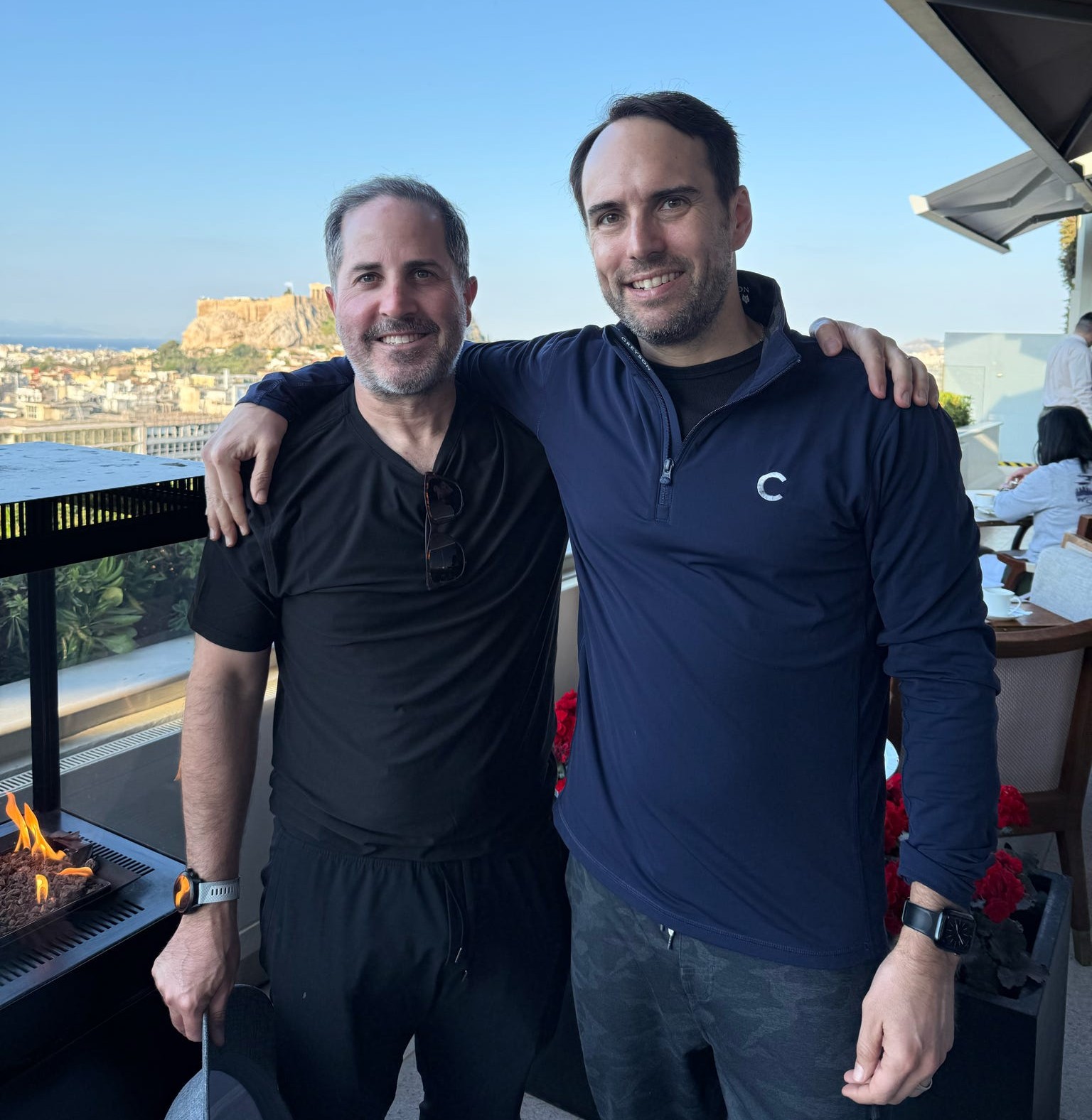
Standing in a synagogue in Thessaloniki, Greece, the weight of history hits you all at once.
Before World War II, this city was the cultural heart of Sephardic Jewish life, so vibrant it was called the “Jerusalem of the Balkans.” But during the Holocaust, the community was wiped out with horrifying speed. In less than six months, 96% of the Jewish population was murdered. Out of 50,000 people, fewer than 2,000 survived.
I was in Thessaloniki this past May on a study mission with Cabinet, the Jewish Federations of North America’s (JFNA) five-year leadership program for volunteer leaders aged 30-45.
I didn’t grow up in a Federation family. When my wife and I settled down to raise our kids, that was when we first sought out The Jewish Federation of Greater Washington. As a financial advisor, I was inspired by the generous giving of a few clients that donate directly from their retirement accounts to places they care about. I knew I wanted to be involved in philanthropy, and Federation felt like the right fit, because it allowed us to give broadly. It was comforting to know our dollars would act as a wide safety net, directly benefiting our community members who need services and support.
As our journey with Federation developed, I wanted to learn more, develop deeper friendships, and continue to grow a professional community of peers. That’s when I decided to join Cabinet. I knew this opportunity would be a key pathway for me to grow my impact and my connection to my Jewish community. What I didn’t know at the time was that it would also connect me to our broader Jewish family.
Cabinet missions shift between Israel and various diaspora communities like Hungary, Argentina, or Greece, pulling leaders out of their home communities to show them exactly where our collective dollars go globally. Traveling to Greece with our cohort this past May completely shifted my perspective, opening my eyes to a corner of the Jewish world I never would have experienced on my own.
While in Thessaloniki, our Cabinet cohort met a local family who beat those impossible wartime odds. The mother is a survivor, and her family only made it through because her father had immigrated from Germany. In a community where almost everyone spoke Ladino or Greek, no one spoke German. His ability to understand and translate became their only shield. To sit across from their descendants today, generations later, still living, practicing, and maintaining a Jewish life there, was a total “wow” moment.
In Athens, our cohort sat in a Jewish-owned coffee house and listened to a widowed mother talk about life post-October 7. She shared how her social circle has had to pull inward because the rise in visible antisemitism on the streets is impossible to ignore. You can’t walk through Athens right now and not be reminded that you are different. Yet, at the same time, the city has become a haven for Israelis migrating from the conflict.
Without the access and immersion provided by Cabinet, I wouldn’t have had these raw, firsthand conversations. I wouldn’t have seen how our giving acts as a vital lifeline for our global family.
At a time when our world and our own communities can feel incredibly fractured, seeing that global connection was good medicine. It was a powerful reminder that there are people around the world who see things exactly the way we do, who see us as part of their collective identity, and who are just happy we showed up.
When I first joined Cabinet, my kids were very young, and finding the time felt daunting. But my message to my peers in Greater Washington is simple: you have to challenge yourself. If your community and your identity matter to you, you have to actively create the time for it.
You don’t need an abundance of hours to get involved, but you do need to step up. Find your own pathway, define it, and do it. What you do will stay with you forever.
Learn more about how you can get involved in Federation here.
It was pouring. The kind of heavy, relentless DC rain that usually keeps everyone inside. But on that night, out at Metrobar, nobody seemed to care about getting soaked.
It was the launch party for The Jewish Federation of Greater Washington’s Next Gen rebrand in November 2021, and it was the first time in a year and a half, after the long, cooped-up isolation of the pandemic, that this community of 20, 30, and 40-somethings was finally coming together in person. Looking out at the crowd laughing and talking through the downpour, you could feel the sheer joy of people finally together again.
Watching them, I saw the future of our community taking shape in the rain. And for me, as I step into my new role as Federation’s Senior Director of Financial Resource Development (FRD), it remains a deeply personal touchstone.
My understanding of Jewish community was shaped long before I began my professional journey here, by my paternal grandfather, Murray Green. I grew up watching his deep involvement with Jewish communal organizations in New York. As a child, I remember going to the galas and functions where he was honored, watching a generation that took absolute, unconditional responsibility for building the institutional Jewish life we inherit today. The camps, the day schools, the very foundations of our community.
Today, we are navigating challenges he could have never foreseen back in the 1970s. We are managing a deeply polarized political landscape, a painful rise in antisemitism, and shrinking attention spans driven by social media.
Judaism has always been a place for robust debate, where we can argue passionately in one room and eat bagels together at kiddush in the next, but that civic fabric is eroding in American life at large. Federation is the place where the capital, the relationships, and the leadership come together to find solutions to these massive, modern challenges.
I began my work in non-profit fundraising 13 years ago, first at Achilles International in New York, followed by the Cystic Fibrosis Foundation in Bethesda. By my late 20s, I realized I was working constantly but lacking a community of my own.
I figured, why not mold my personal and professional worlds together?
That’s what brought me here six years ago, starting just six weeks before COVID-19 changed everything. Since then, Federation has been the backdrop of my entire life. Over these past pivotal years, I got engaged, married, survived the pandemic, went through the emotional rollercoaster of IVF, and brought two beautiful children into the world. Through every high and low, the staff and lay leaders here have had my back.
In fact, after my first child was born, I took a look at my baby registry out of pure curiosity. To my absolute amazement, Federation donors were the second-largest cohort of people who contributed. Today, every single time I pick up my diaper bag or wrap my kids in a blanket, I think of the specific donor who sent it to us.

Now, as I help lead our FRD team, my biggest priority is deepening the connections we’ve been building across every corner of our community. We have incredible younger adults eager to meet seasoned leaders, and we have senior leaders who want to mentor and pass down their philanthropic values.
My goal is to continue the work of weaving these generations together into one succinct tapestry of programming and relationships. To create a community where a young professional feels entirely comfortable making an 8 p.m. Sunday phone call to a seasoned mentor for advice, building organic, multi-generational networks that exist outside of organizational boxes.
When I need a total break from the fast-paced world of strategy and campaign goals, you can find me outside. My perfect, work-free Sunday is spent with my husband, our three-year-old, and our five-month-old, walking around the zoo, soaking in the greenery, or pushing the stroller on a run.
When I look at my two small children, I think constantly about continuity. They are the future, and they are the reason we do this.
Right now, there are over 400,000 Jewish people across the Greater Washington metro area, spanning from the vibrant tech hubs of Northern Virginia to the heart of the District. Yet, only a fraction of those households currently contribute to our annual campaign. Too often, people fall into the trap of thinking, “Someone else will take care of it,” or “My single donation doesn’t matter that much.”
But the truth is, it doesn’t work unless everyone participates.
If you care about the overarching continuity and safety of the entire Jewish ecosystem, and if you want to ensure there is a vibrant, connected community for the next 75 years, you can achieve it with Federation.
I want every single Jewish person in our region to know that if they pick up the phone, they can find a place where they truly belong.
We have the imagination, the capacity, and the heart to build that future together.
Rain or shine.

On Tuesday evening, Federation gathered for our Annual Meeting. What stayed with me most wasn’t any single speech or report, but the reminder of what makes Jewish Greater Washington so extraordinary: people who continue to show up for one another, invest in one another, and lead with purpose.
Throughout the evening, we returned to some of the questions many of us have been wrestling with since October 7. Who are we? What kind of future do we want to build? Those questions do not have simple answers, but remarkable people across our community are committed to helping answer them.
Several leaders reflected on how Federation helped shape their journeys, sharing that the people you learn with often become the people you lead with. That idea captures so much of what Federation strives to do. We bring people together, invest in their growth, and help them discover their capacity to lead.
I was grateful for the opportunity to recognize Immediate Past Board Chair Robin Hettleman Weinberg for her years of dedicated service and to welcome Jill Granader as our new Board Chair, alongside our 2026–27 Community Leadership Council, Board of Directors, and Jewish Community Foundation Trustees. Their dedication, vision, and willingness to serve give me tremendous confidence in the future of Jewish Greater Washington.
As I shared during the evening, no matter what challenges lie ahead, Federation’s core commitments remain unchanged. We are responsible for one another, and we are strongest when we face the future together.
In a world that often feels uncertain, there is comfort in knowing that thoughtful, caring, and deeply committed leaders are stepping forward. Federation has spent generations helping cultivate those leaders and strengthening the relationships that sustain our community.
If Tuesday night reminded me of anything, it is this: our future is in very good hands.
My lemon tree started blooming, which is exciting. I planted it a year ago and now it is officially on its way to producing fruit. I have learned, however, that it takes eight months after flowering for a lemon tree to produce a lemon. I have newfound respect for such a citrus.
I’m also waiting on an avocado tree to arrive. Though, I know that will likewise take some time to warm up and it could be months if not years before I see any avocados (for those keeping track, my pomegranate tree took six years to produce any pomegranates).
There’s an obvious metaphor here about the importance of planting for the future and looking forward to the fruits of one’s labor. But the small white lemon flowers currently gracing my backyard have me thinking less about legacy and more about faith. Perhaps it’s because I was recently introduced to a Rabbi Lord Jonathan Sacks, z”l, quote, “Faith is the belief in the power of possibility over the power of probability.”
Gardening is an enjoyable way to live in the realm of the probable. If I take care of my plants appropriately and combine the key ingredients of soil, water, sun, and nutrients, there is a good chance that they will grow and thrive and produce something beautiful (though never a given). My olive trees have yet to produce olives. But I’m pretty sure they will, and this is comforting.
It’s much harder, though, to have that same peace of mind when it comes to the possible—that which has a chance of occurring but only if dedicated people make it so.
There are a lot of things headed in the wrong direction. And as we ramp up to America’s semi-quincentennial and another election cycle, it all seems to be reaching a fever pitch. Finding our way forward as we build Jewish life in the context of uncertainty and political extremism will be hard and messy work, and success is certainly not guaranteed.
But for all the very real challenges facing the Jewish people, we have everything we need in Jewish Greater Washington to make the possible real. Our collective creativity, leadership, resources, and commitment have never been greater. Jewish history, in fact, is a compendium of the less likely thing happening, so it wouldn’t be out of character for us to believe in new possibilities and bring them to fruition.
In the next few years, we will wrestle with questions that cut to the core of who we are and what we aspire to be as individuals, citizens, a community, and the Jewish people. And while we need to be clear-eyed about what’s going on around us, it’s also part of our mandate to see things as they could be.
That’s a driving force for us at Federation, to support our community in grappling with and responding to what is unfolding while also working to realize our shared vision of the future. We must take the probable seriously, but it is equally important to feed and water the possible and, together, help it take root.
Shabbat Shalom, with a twist.
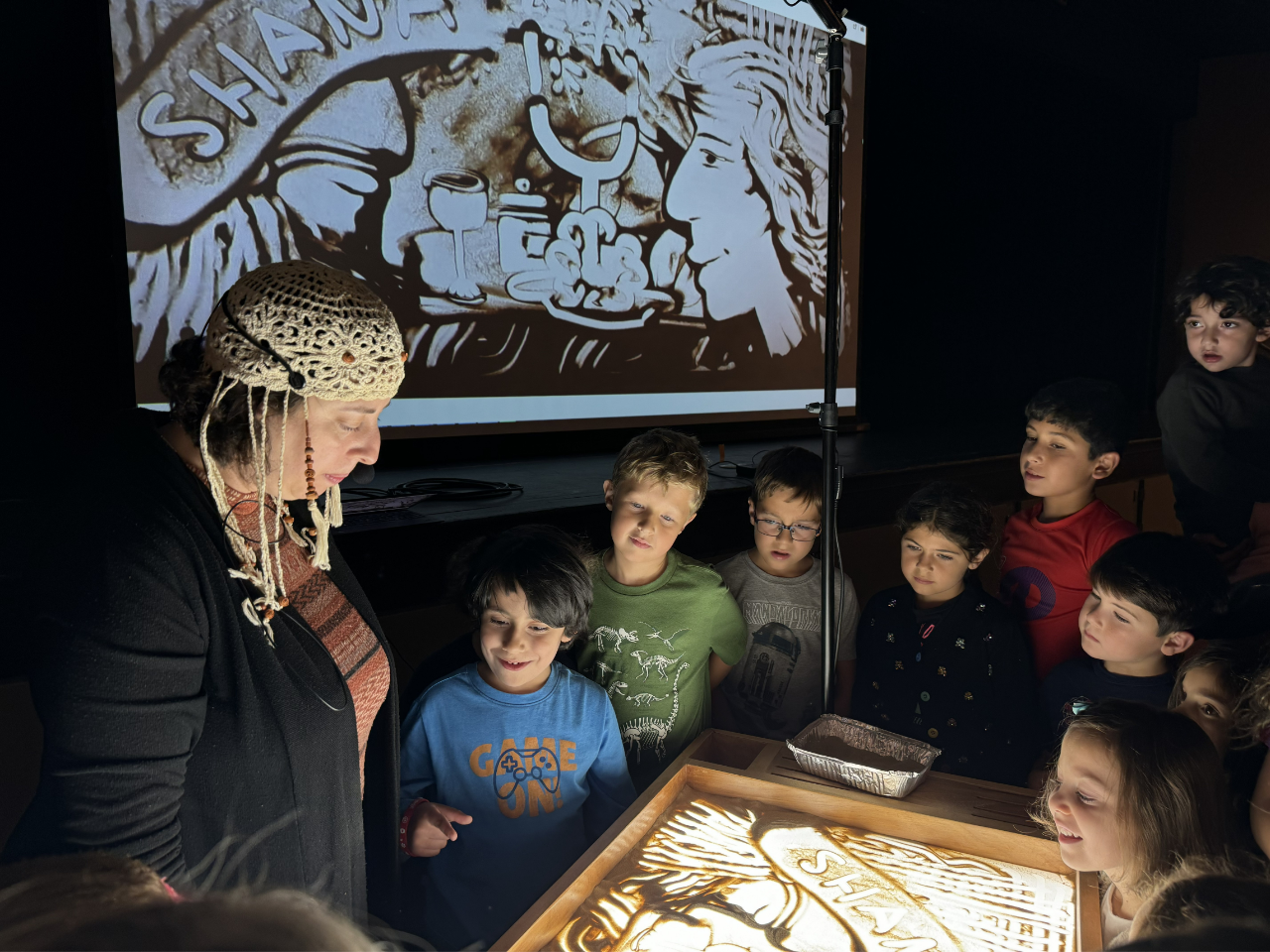
On any given day in Northern Virginia, there may be a young professionals happy hour in Arlington, a family challah bake in Fairfax, a food packing event in Alexandria, or an Israeli dance class in Reston.
The challenge isn’t whether Jewish life exists across Northern Virginia. It’s whether people know how to find it.
When someone decides they want to get more connected, if they’re new to the area, looking to meet other young families, searching for Jewish experiences for their children, or simply hoping to find community the next question is often:
“Where do I even start???”
Do you Google? Scroll Instagram? Check three different community websites? Or find out about something amazing an hour after it already happened?
Making Jewish Life Easier to Find
That’s the opportunity behind JLive, a new digital platform coming to Northern Virginia later this year through a partnership between the Jewish Federation of Greater Washington and the Pozez Jewish Community Center of Northern Virginia.
Launching first in Northern Virginia before a future rollout across Washington D.C. and Maryland, JLive is designed to make discovering and sharing Jewish programs, events, and experiences easier than ever before. From Shabbat dinners and cultural events to volunteer opportunities, family programs, and young adult gatherings, the platform will serve as a centralized hub for Jewish life across the region.
“Our community spans a wide geographic area, and JLive has the potential to make Jewish life feel more connected, accessible, and visible than ever before,” said Vanessa Sax, Federation’s Senior Director of Strategy and Community Building for Northern Virginia. “It’s not only about helping people find events, but also about helping people find one another and discover the incredible Jewish experiences already happening across Northern Virginia every day.”
For years, Pozez JCC Executive Director Jeff Dannick has been thinking deeply about how to make Jewish life easier to navigate and more accessible. While the region is home to a thriving Jewish ecosystem, many residents still experience Jewish life in silos, connected to one organization, neighborhood, or stage of life without visibility into the broader community around them.
JLive can help change that.
“One of my greatest hopes has always been to make Jewish life across Northern Virginia easier to access, easier to navigate, and easier to feel part of, no matter your zip code, background, or stage of life,” said Dannick. “Northern Virginia is home to a dynamic and growing Jewish community, and JLive will help shine a brighter light on all that’s already happening while creating new opportunities for connection and belonging.”
The initiative reflects Federation’s broader role as a connector, convener, and community builder across Greater Washington: investing in tools and partnerships that help lower barriers to participation, amplify the work of local organizations, and create more pathways into Jewish life.
“JLive is a powerful tool to amplify the incredible work happening across our community,” said Gil Preuss, Federation CEO. “Jeff’s leadership and vision have been instrumental in bringing this initiative forward, and we are proud to partner with the Pozez JCC to launch a platform that strengthens connections, lowers barriers to participation, and helps more people find meaningful pathways into Jewish community.”
There’s a whole community out there waiting to be discovered—opportunities to learn, try something new, meet new people, and build lasting friendships. Through initiatives like JLive, Federation is helping more people find their place within it.
See what’s happening in our community and how you can get involved through Federation’s Community Calendar.
How do we build a healthier Jewish community rooted in respect, trust, and constructive dialogue, when it feels like we can barely agree on anything?
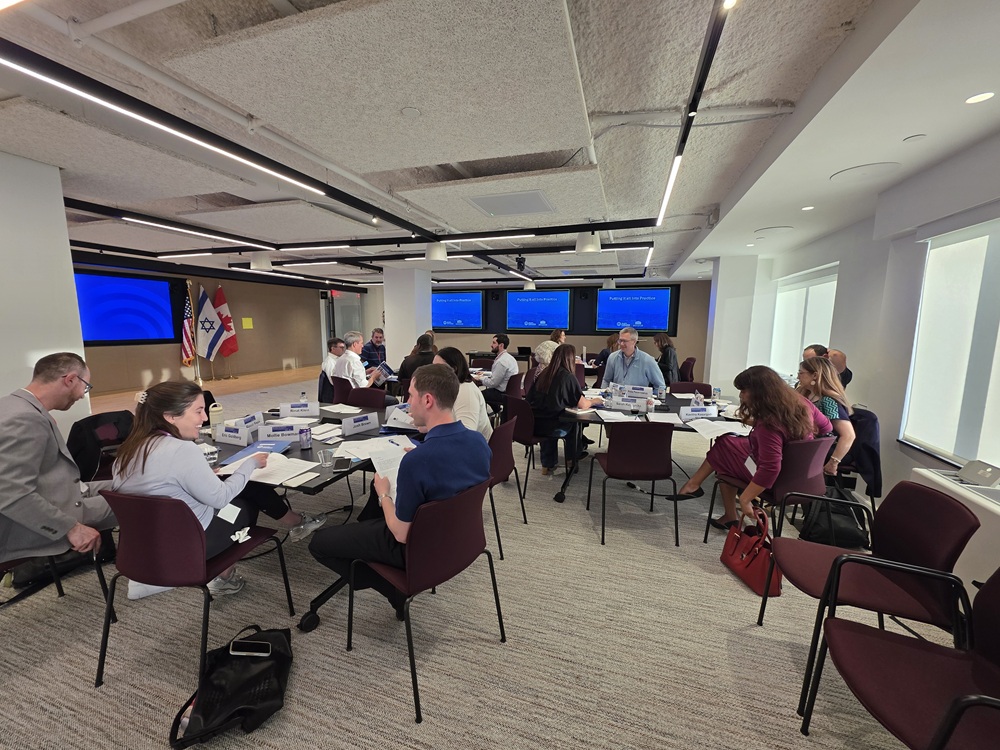
That’s the one million dollar question, and it’s exactly what brought 22 local leaders from throughout Greater Washington together over the last four months. From February through May, this group took part in the Courageous Leadership Fellowship, a partnership between Federation and the Shalom Hartman Institute, to sharpen their ability to lead with empathy, courage, and respect in a world that feels increasingly polarized.
Grounded in shared values of mutual understanding and encouraging belonging, participants explored what courageous leadership looks like in practice and left better equipped to lead meaningful change and foster constructive conversations across our community.
Instead of just talking about these ideas in theory, the sessions got down to the intricate reality of community work. Led by Hartman scholars Sara Labaton, Elana Stein Hain, and Masua Sagiv, the group explored various themes, including finding inner clarity, leadership in polarities, the challenges and importance of maintaining a big tent community, and finally the future through two lenses: repair and transformation. Through a “where do you stand” activity, they moved past case studies and tackled real communal dilemmas, followed by small group discussions.
By the time the fellowship wrapped up, these leaders walked away feeling far more confident in their ability to facilitate difficult dialogues and communal decision-making, and just as importantly, deeply connected to the leaders and institutions who are actively shaping the future of Jewish life across Greater Washington.
This work gets to the heart of one of Federation’s core commitments: creating a community where everyone feels like they belong, that they’re listened to, and that they can contribute to a vibrant Jewish future, not in spite of our differences, but with them.
A strong community doesn’t require us to always see eye-to-eye. It requires us to know how to talk to each other when we don’t. By investing in leaders and relationships across our communal landscape, Federation is helping cultivate the trust, respect, and connection our community needs to stick together and thrive.
Learn more about Federation’s work to build a strong, inclusive community here.