Theater J’s Tropical Secrets
A toddler paints a paper menorah in preschool. A congregation gathers for Shabbat morning services. Teenagers laugh together at a local leadership group. Seniors meet for lunch at the JCC. Students learn Hebrew after school.
These moments are what Jewish life looks like across Greater Washington on any given day.
Behind the scenes, long before anyone walks through the doors of a synagogue, preschool, JCC, or Jewish organization, community leaders are working tirelessly to help ensure those spaces remain safe, resilient, and prepared.
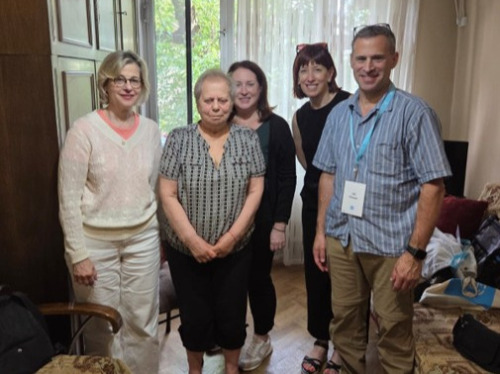
That’s why the Jewish Federation of Greater Washington is thrilled to welcome Laura Katzif as its full-time Community Security Advisor (CSA) serving Northern Virginia and DC.
For the past two years, Laura has supported JShield, Federation’s community security initiative, in a part-time capacity. Now, in this expanded role, she can continue to increase JShield’s capacity to help Jewish institutions strengthen their security, prepare for emergencies, and build lasting partnerships with local law enforcement.
We all know why this expansion matters right now. The need for robust security is a constant reality we live with as a Jewish community. In a climate of rising antisemitism, we’ve seen devastating reminders right in our own backyard and around the world.
Protecting our community requires much more than just reacting to crises. That’s where JShield’s real value comes in. We don’t believe in “touch-and-go” interventions where someone shows up, checks a box, and leaves. JShield meets our local organizations exactly where they are and helps them build a permanent, proactive culture of security. All free of charge, thanks to our donor community.
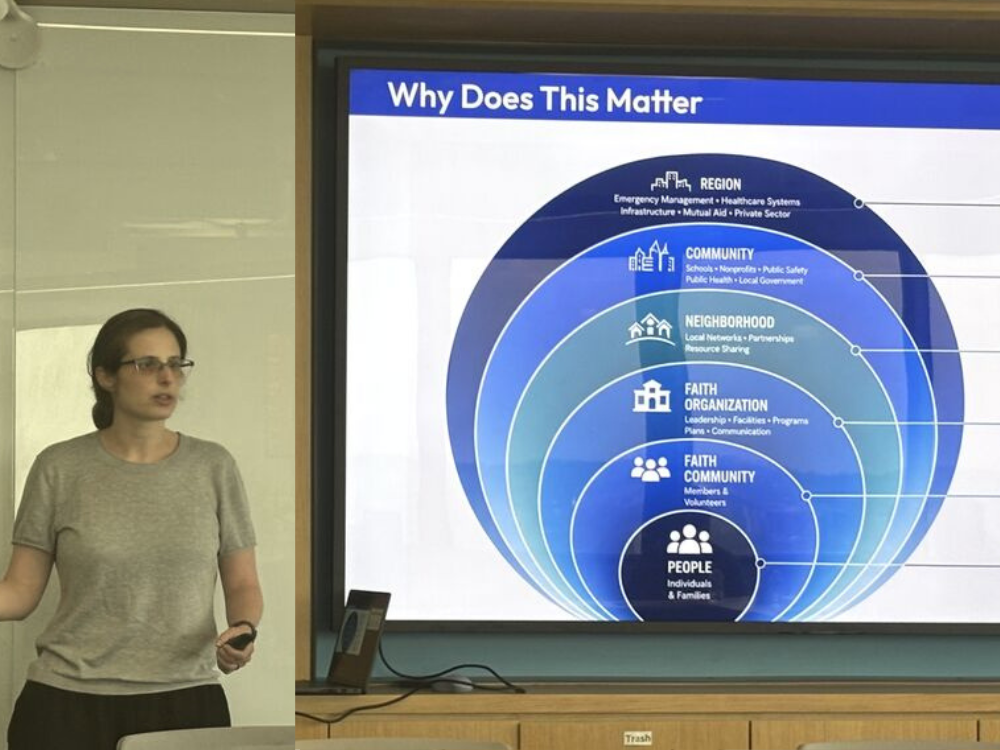
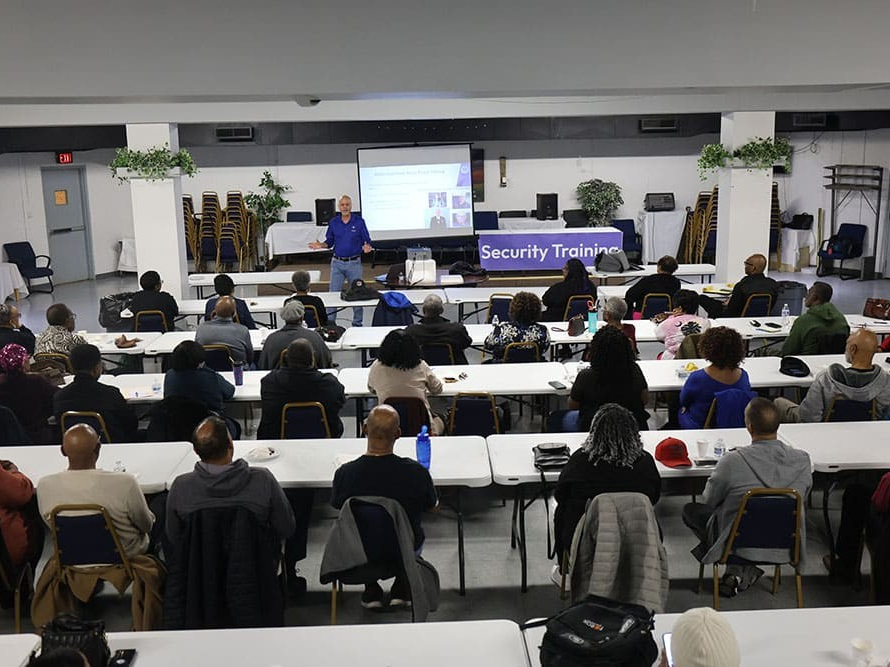
Laura brings this exact hands-on mission into her daily work as Community Security Advisor. She works directly with synagogues, schools, and communal spaces throughout Northern Virginia and DC, providing strategic guidance, conducting safety assessments, and delivering training tailored to each space. By also serving as a trusted, everyday liaison with local public safety partners, Laura is helping us build a deeply rooted ecosystem of preparedness and collective resilience.
Laura brings more than two decades of experience in corporate security, emergency management, crisis response, and business continuity to the role.
Before joining JShield, she served for six years as Director of Security at the Pozez Jewish Community Center of Northern Virginia, overseeing incident response, physical security systems, threat assessments, grant administration, security personnel, and community training. Her career has also included leadership roles with Georgetown University’s Office of Public Safety, the Federal Emergency Management Agency (FEMA), Fairfax County’s Health Department and Office of Emergency Management, and the World Bank Headquarters Security Office. She is also a certified firefighter-paramedic and an active member of both ASIS International and the Association of Threat Assessment Professionals.
But for Laura, security is about much more than emergency plans.
“I truly believe that faith organizations can act as anchors of neighborhoods by providing community gathering spaces, social services, childcare, education, and other vital resources,” she says. “The safer, more secure, and resilient they are, the more likely the community surrounding them is too. The faith community is interconnected, and whether some want to admit it or not, what affects one community affects everyone.”
That philosophy reflects JShield’s broader mission, helping Jewish organizations continue doing what they do best, bringing people together.
Building a culture of security isn’t about hardening our spaces or living in fear. It’s about protecting the vibrant community life happening inside them. It’s about making sure our children can learn without worry, our families can celebrate together with peace of mind, and our neighbors can gather freely.
Together, We’re Protecting What Matters Most
Security-focused giving through Federation helps keep Jewish life across Greater Washington safe and resilient. And thanks to a generous $250,000 match, gifts to JShield will unlock up to $750,000 in impact for our community.
Your support helps JShield continue providing the training, coordination, and resources that strengthen the security of Jewish institutions throughout our region.
Please consider making a gift to support this critical work.
I just finished Stained Glass by Flora Cassen, a book that explores antisemitism’s effect on Jewish identity. She puts into words what’s been on my mind lately, which is that this is a challenging time for many to navigate Jewish expression. At times, life as a Jew in the DMV feels pretty great. We have amazing institutions, myriad forms of programming across a variety of interests, and an actively engaged community. And yet, there’s another dynamic afoot. Something that causes us to question whether we should put on a Star of David, wear a shirt with Hebrew writing, or plan a Jewish event in public.
By way of a snapshot, in the same historical moment in which public schools in our area are designating days off for Rosh Hashanah and Yom Kippur, vandals are spray-painting swastikas on desks. What are we to make of such a juxtaposition?
I don’t want to minimize the way in which our community has become ingrained in the fabric and rhythms of the region and the country more broadly. As others have said, almost any generation in Jewish life would trade their circumstances for ours. What Cassen points out, however, is that we have a lingering sense of insecurity based on centuries of history and, with a rise in antisemitism, a new and justifiable sense of unease.
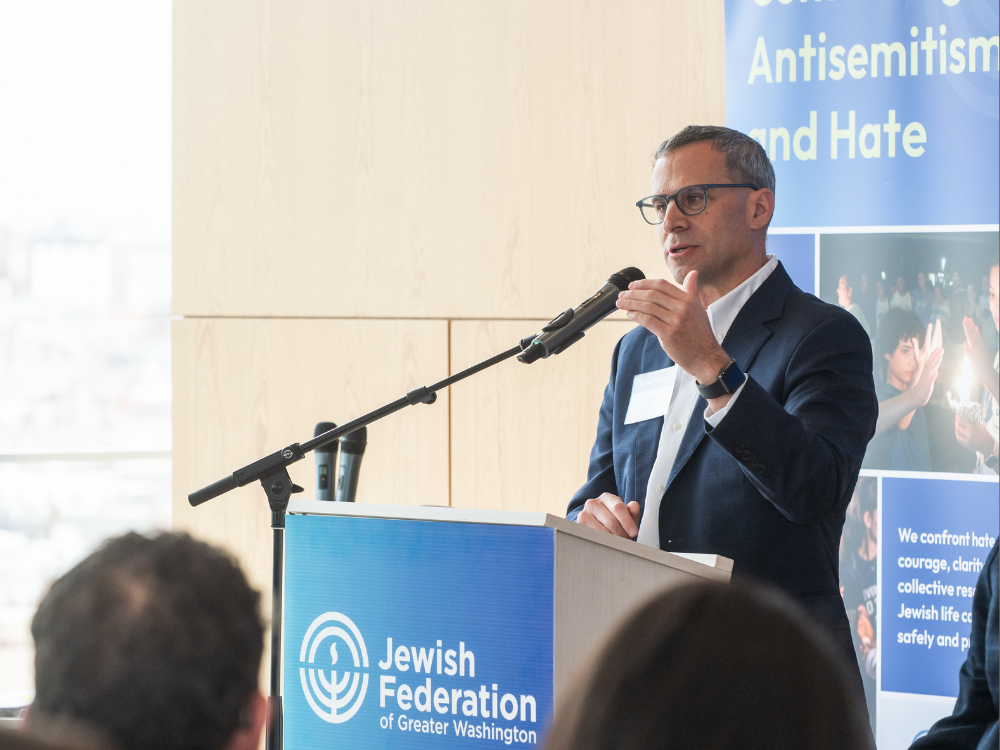
Our job as a Federation is to recognize and shape our reality to the best of our ability and to build, continuously, toward a better future. That means supporting our communal ecosystem to be able to double down on the good and push back against the bad. We are situated at the epicenter of Jewish life in Greater Washington and can partner with, convene, and mobilize individuals and agencies to help more people live proud Jewish lives, as publicly or privately as they choose, independent of any external factors.
This work includes tackling antisemitism for the sake of current and future generations, in addition to helping more people deepen their ties to the ongoing story of the Jewish people. We don’t have to classify this moment as positive or negative, golden or threatened. What matters is that we move forward as a community in pursuit of a future that we define for ourselves.
We are here to strengthen a Jewish ecosystem capable of spurring Jewish pride and connection while doing what we can to influence the landscape of Jewish life in America, no matter which way the winds might blow.
In Pirkei Avot, we’re taught: “It is not your duty to finish the work, but neither are you at liberty to neglect it.” In the Torah, we are commanded not to stand idly by when our neighbors are in need.
These Jewish values—responsibility, solidarity, and action—were loudly heard last week when hundreds of Jewish leaders and advocates gathered on Capitol Hill to advocate for the safety and security of our Jewish communities nationwide.
More than 400 leaders from 82 Jewish communities came to Washington, DC as part of The Jewish Federations of North America’s Security Fly-In. Representing Jewish Federations, synagogues, JCCs, schools, camps, Hillels, community relations councils, and security organizations, participants arrived carrying not only policy priorities, but deeply personal stories.
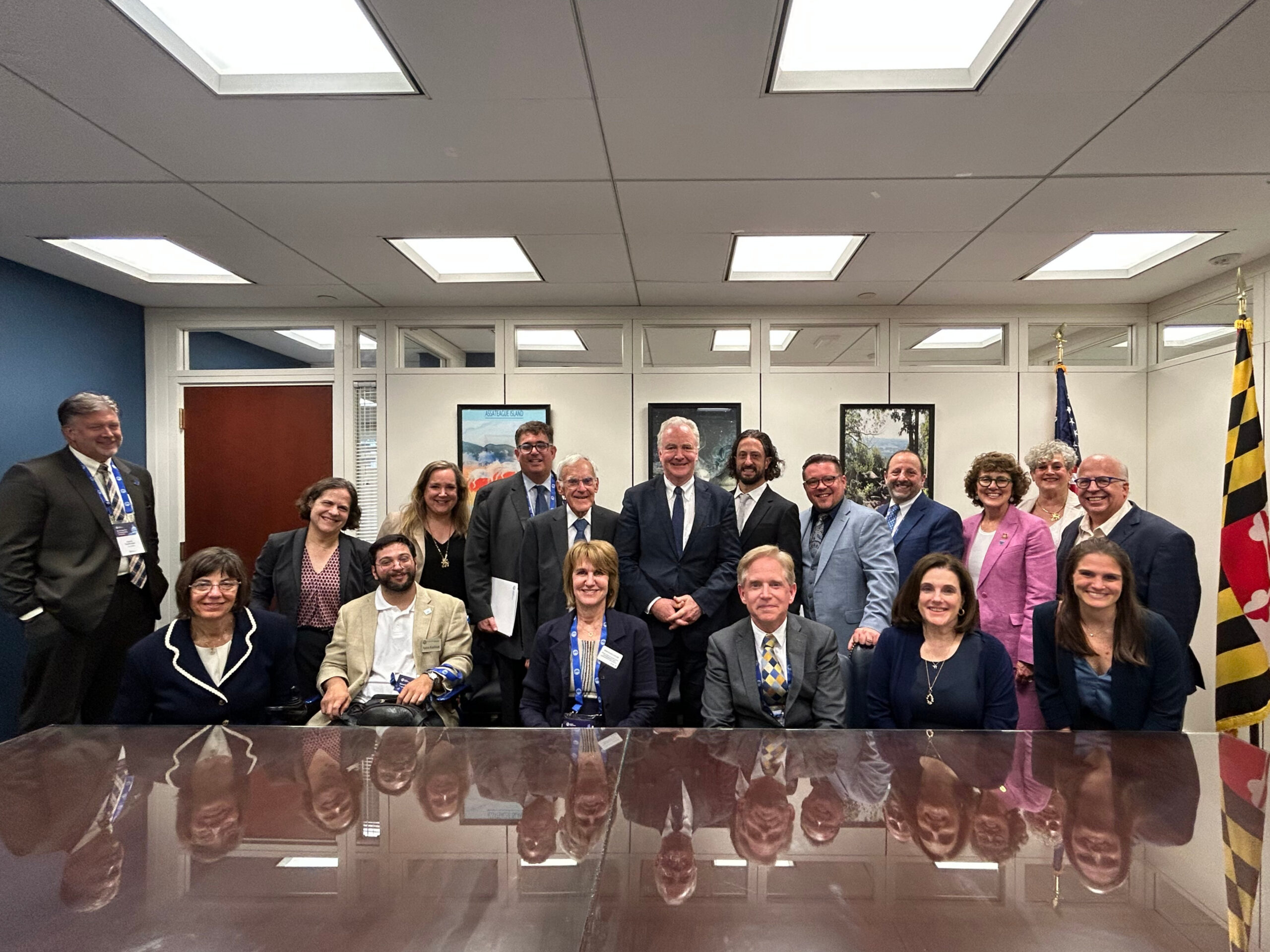
The Greater Washington delegation, organized by The Jewish Federation of Greater Washington alongside partners including Jewish Community Relations Council of Greater Washington, met with members of Congress and congressional staff from across our region, including Senator Mark Warner of Virginia and Senator Chris Van Hollen of Maryland.
Every Person Had a Story
Before those meetings began, something else happened in the room: people shared their fears, their exhaustion, and their determination.
Every person present had a story of how their community has had to grapple with rising antisemitism and security concerns.
A synagogue leader explaining the impossible budgeting decisions communities now face as security costs continue to rise. A parent describing that their five-year-old child knows not to enter their synagogue building if there’s no security on duty. A camp professional talking about the responsibility of creating joyful Jewish experiences while also preparing for emergency scenarios no one ever imagined would become routine.
Eddie Rubin, a parent at Temple Israel in West Bloomfield, Michigan where there was an antisemitic attack in March, shared: “I need people to understand what ‘inches away’ meant.” If the car packed with explosives made it just a few more inches, “That’s my kids classroom, where he’s sitting. Had [the attacker] been able to get out of that car, he would have been inside my kids’ classroom in seconds. And my kids would not be here today.”
The emotion in the room was palpable. Many spoke about how difficult it has become to accept heightened security as “the new normal.” Communities are doing everything possible to keep people safe, but funding has not kept pace with the growing threats facing Jewish institutions and other faith communities across the country.
And yet, amid the fear and frustration, there was also tremendous strength.
There was power in seeing hundreds of Jewish communal leaders from every corner of the country come together with one shared message: Jewish life must be protected, and our communities deserve to gather openly and safely.
Those personal stories became the heart of conversations on Capitol Hill. Our delegation urged lawmakers to strengthen federal support for nonprofit and faith-based security programs and to advance legislation like the bipartisan Jewish American Security Act, which seeks to expand resources that help protect vulnerable communities.
This advocacy effort comes at a time when antisemitism and threats against Jewish institutions have reached alarming levels. Across the country, Jewish communities are being forced to make impossible choices between funding critical programs and funding the security measures needed to protect them.
In Greater Washington, our community is working proactively to meet this growing need through initiatives like JShield, Federation’s community security initiative. By leveraging trusted partnerships, strong relationships with law enforcement, and a community-wide approach to safety, JShield is helping build a culture of security across our region—one where every institution and community member understands their role in keeping our community safe.
JShield provides one-on-one consultations, emergency preparation plans, security trainings, help securing nonprofit security grants, and more to hundreds of local Jewish institutions entirely free of charge, ensuring that cost is never a barrier to safety.
As we marked Jewish Heritage Month, the Security Fly-In served as a powerful reminder that Jewish identity is not only something we celebrate, it’s something we have to protect. Advocacy is one of the ways we do that. By showing up. By telling our stories. By refusing to stand idly by.
The work ahead is not finished. But last week, hundreds of voices came together to ensure that Congress heard clearly what our communities need: safety, partnership, and the ability to live Jewish life openly and without fear.