Need support? Call 703-J-CARING (703-522-7464)

Reconsidering the “Wicked” Child

Reconsidering the “Wicked” Child

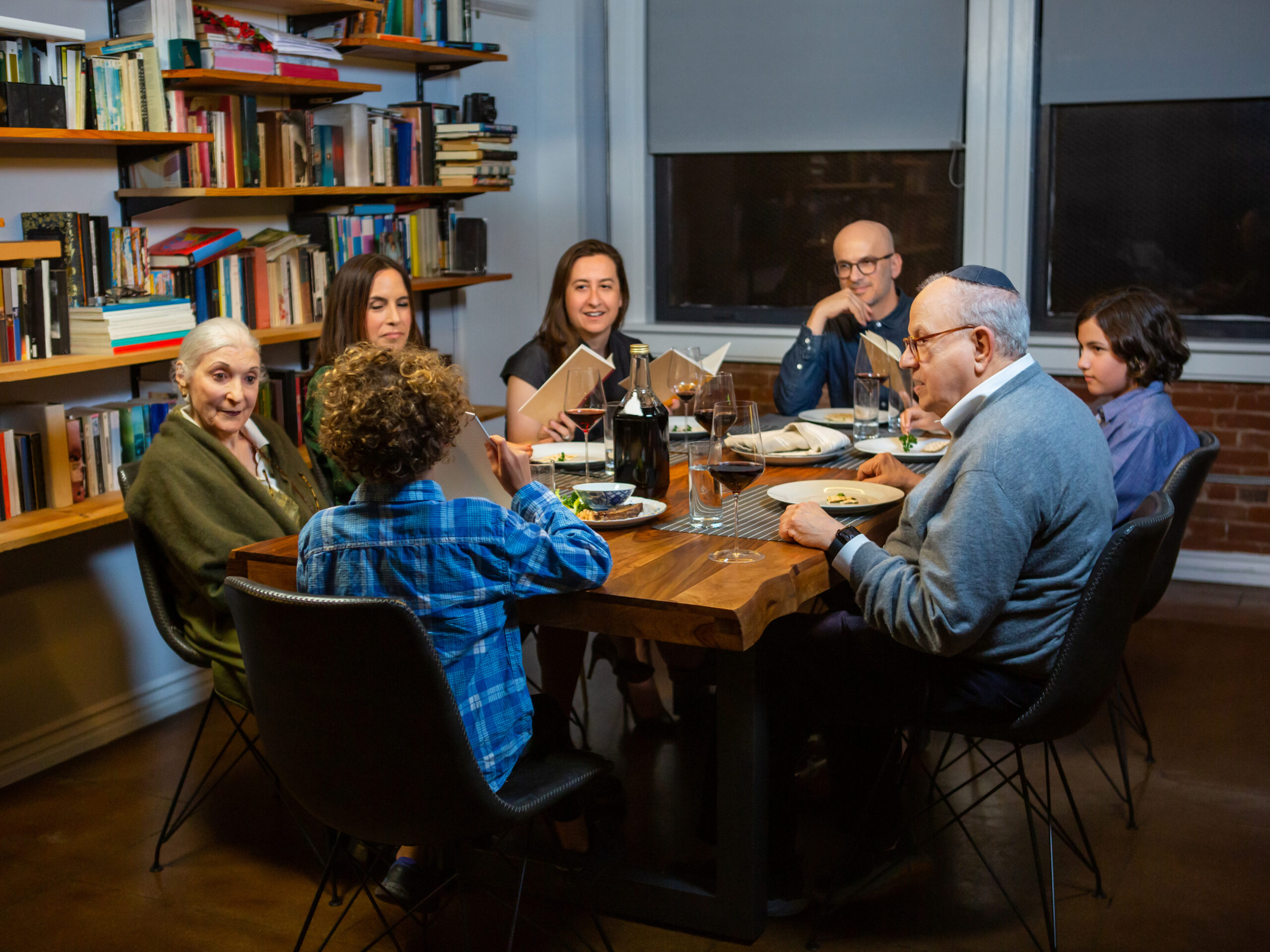
As we prepare for our family’s upcoming seder, I am thinking about not only the relatives and friends who will grace our table, but also those four allegorical children who are perennial guests: the chacham (wise) one, the rasha (wicked) one, the tam (simple) one, and the one who does know how to ask. It’s the rasha who I am most intrigued by this year. But I’d recast the moniker “wicked” child as the “skeptic” or “critic” or even “rebel.” As part of the Passover seder, we are instructed to entertain the questions of a child who doesn’t feel they are part of what’s taking place, and who may even choose to stand apart from it. “What does this service mean to you?” the critical child asks, and we answer the best we can. This always seemed like a sour note in the Passover program, but lately I’ve come to see the beauty in the exchange. How striking that one of our most sacred traditions insists we acknowledge skepticism.

Making Space for the Question

What if our role when it comes to the so-called rasha isn’t to scold them but to acknowledge and honor their questions? What if we came to see our cherished rituals—and indeed our people—as incomplete without those who criticize and doubt? We are not whole without those who push boundaries and challenge our assumptions and ingrained ways. How remarkable that our tradition does not cast aside this child, but rather provides them an invitation to our table year after year … and how remarkable that this child accepts the invitation and joins.

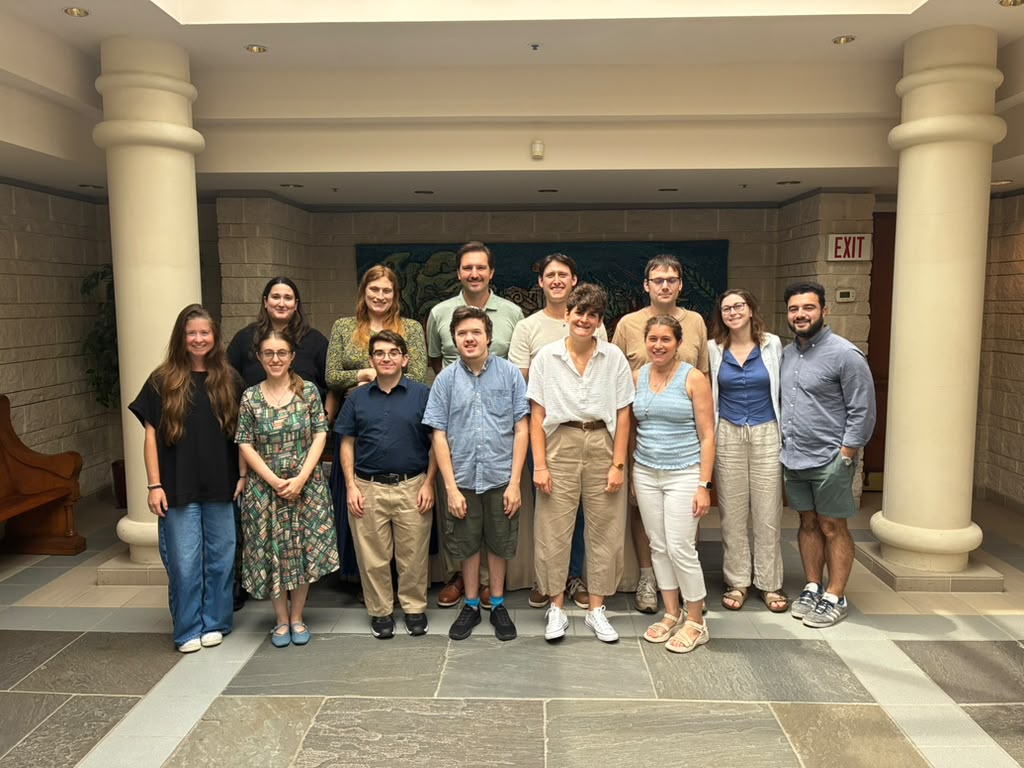
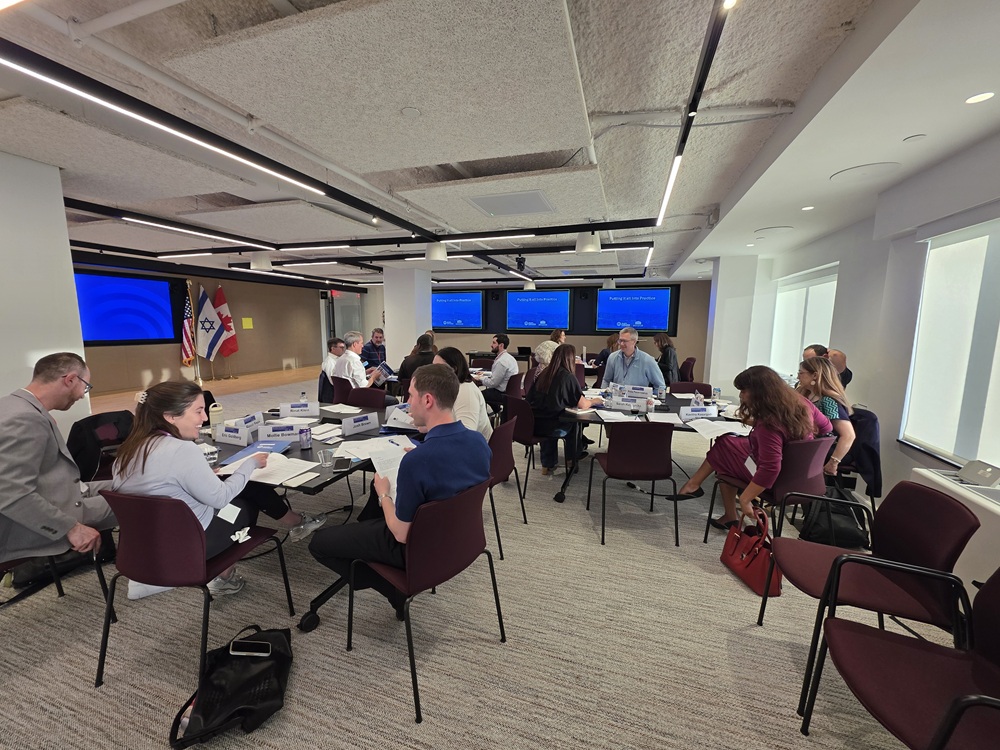
Federation’s flagship Jewish Community Leaders Program (JCLP) includes a visit to a megachurch in Maryland to learn about how they build communities of belonging. Our group was inspired to learn they didn’t define themselves by rigid red lines, while still holding a clear sense of their core values. Instead, they defined themselves by an ongoing relationship with a spiritual center. They considered anyone oriented toward a common set of principles as relevant and part of their flock. It’s got me wondering: in this post-October 7 landscape, how do we help shape our future by evolving our community’s relationship with boundaries? These are not easy questions, particularly in a moment when the need for clarity and certainty feels so real.

At Federation, we will continue engaging this question and find new ways to create space for the challenging voice, the uncomfortable question, the perspective that stretches our assumptions. After all, many of the shifts that now feel foundational—expanded roles for women, inclusion of LGBTQ Jews, the recognition of multiracial Jewish identity—were once at the edges of communal acceptance. They moved inward because passionate people pushed to widen the frame.

Our Community Leadership Council (CLC) has been using this year to listen to the broad voices of our community—nearly 200 people from 26 diverse groups—including those engaged in our traditional institutions, as well as people who have not affiliated, who have felt marginalized, or who have created their own communities to meet their unique needs. It’s critical to gather insights from all to help understand and shape our community priorities.

At the Same Table

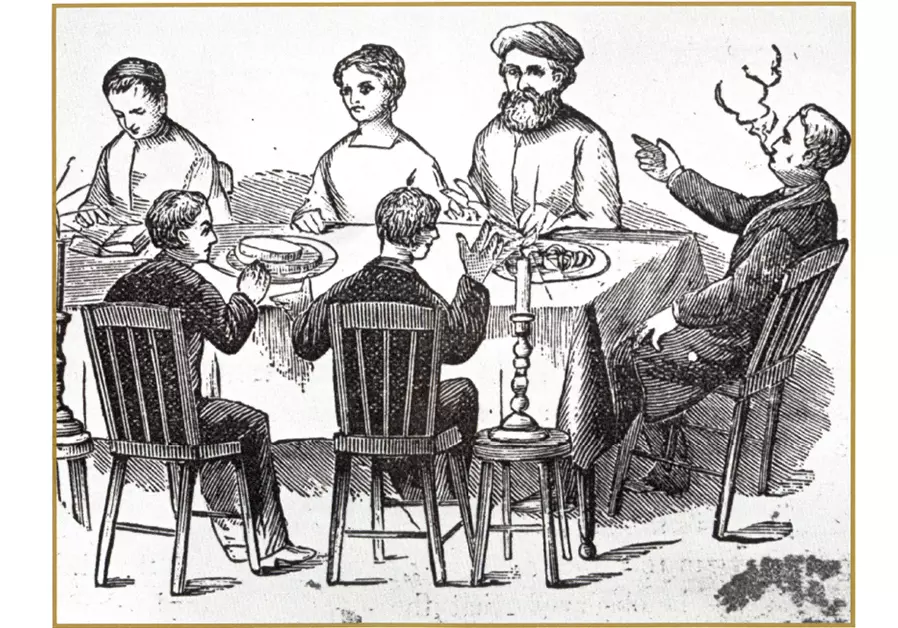
In describing the four children at the seder, Rabbi Jonathan Sacks noted, “there is a message of hope in this family portrait. Though they disagree, they sit around the same table, telling the same story. Though they differ, they stay together. They are part of a single family… The Jewish people is an extended family. We argue, we differ, there are times when we are deeply divided. Yet we are part of the same story. We share the same memories. At difficult times we can count on one another. We feel one another’s pain. Out of this multiplicity of voices comes something none of us could achieve alone.”

Bringing the entirety of our community together across differences is a bold move. It’s clear that has been our work all along. The goal has never been to embrace uniform views. On the contrary, the thing we’re meant to embrace is each other, in all our messy, diverse, and divine glory.

With wishes for a happy and meaningful Passover,

Elisa

Credit: Chicago Haggadah, 1879, a historic American Jewish Passover Haggadah published in Chicago. It is a notable example of early American Jewish print culture, reflecting the growing Jewish community in Chicago in the post-Civil War era. Who do you see as the rasha?
Related posts

When Antisemitism Takes Hold When Antisemitism Takes Hold
When Antisemitism Takes Hold
Antisemitism often emerges in times of strain, fueled by fear and exploited by bad actors. By confronting hatred directly and strengthening democratic institutions, Federation works to build resilience, foster connection, and ensure a more stable, inclusive community.
read more

Finding Comfort in Passover Traditions

Finding Comfort in Passover Traditions

In a time of uncertainty, the rituals of Passover offer something steady

My siblings and I held our Passover menu planning Zoom call earlier this week. I’m in charge of the brisket, among other things, and I’ll be making my mom’s recipe. No secret ingredients, no innovative twists. Just a tried-and true and beloved rendition. That, I suppose, is the unofficial theme of our Seder this year (though I may experiment with a new vegetarian soup).

Indeed, given all the volatility in the world, the thing I’m craving most from Passover is its sense of routine. For those of us who grew up with the holiday, the Passover Seder is, above all, familiar. How the Seder unfolds may vary from year to year, but the story, the food, the songs, and the traditions always combine to create a uniquely consistent touchpoint with family, Jewish identity, and peoplehood.

Passover also has a way of using the past to evoke new feelings of possibility. While the Haggadah stays consistent, the moment in which we live is continuously changing. In recounting our story, we may focus on new sections or have different reactions to readings or songs. We may uncover fresh sources of energy, clarity, and ingenuity, which we will need on the road ahead.

We have important work in front of us: to engage and connect with members of the Jewish community who are struggling right now, to be a steady partner for Israeli communities, to build strong, substantive, and joyful Jewish life, and to care for the people around us. And the first step to making it all happen starts by remembering who we are and the role we’re meant to play in the world.

I encourage you to gather some friends, invite someone new to the table, and connect once again to our story. In true Jewish fashion, it’s in connecting to our tradition and to each other that we’ll prepare ourselves to move forward.

Related posts

Support When it Matters Support When it Matters
Support When it Matters
After a direct Iranian missile strike on Beit Shemesh, Federation mobilized quickly—transforming the Zinman Community Center into a Family Support Hub providing emergency relief, psychological support, and moments of joy for impacted residents.
read more

Find Your Balance

Find Your Balance
A four-part immersive experience designed for growth-minded women seeking depth, balance, and connection. Each in-person session will take a deep dive into the inner architecture of Jewish wisdom, drawing on: Kabbalistic structures, guided breathwork and intentional motion. Aharona Gans has been practicing and teaching yoga and breathwork for over 20 years. Her approach weaves depth, clarity, and accessibility — creating space for participants to reconnect to balance, alignment, and inner strength.

The Future Is Human

The Future Is Human

AI may shape the future, but connection, curiosity, and community will always define us.

Our thoughts are with West Bloomfield’s Temple Israel community after yesterday’s attack. We are breathing a sigh of relief that everyone remained safe, including students and staff at the temple’s preschool. We are immensely grateful to the security guards, police officers, and firefighters who put themselves in harm’s way and responded to the situation swiftly and effectively.  

The incident is a sad reminder of how important robust security measures are today. Through JShield, The Jewish Federation of Greater Washington’s community security initiative, we are continuing to work closely with law enforcement and Jewish institutions across our region to keep our community safe.

I noticed recently that AI was incorporated into a software I use to log my expenses…and it was pretty great. The program automatically filled in blanks, predicted categories, and made the whole upload process easier. I also used it to analyze quantitative and qualitative data, and it brought out ideas and themes that I had not noticed before. I can see why these tools are catching on. And yet, the rise of AI is not affecting our strategy here at Federation.

Even at the dawn of this radical new leap, we believe the future is human. In fact, at a time when AI is transforming everything from our emails to our state policies, I can’t help but notice it’s our humanness that’s gaining cachet.

Perhaps that’s why some banks are now advertising “human help” to attract new customers. Why Hermès commissioned hand-drawn graphics for their website. Or why Apple hired artists to create their new logo out of glass and colored lights. There’s something beautiful and inherently valuable about knowing a real person was involved in the work.

Of course, as Jews, we have always been wonderfully human. For sure, we know how to gather and find purpose and meaning with and among each other. We also learn by relishing in each other’s individual and sometimes unpredictable perspectives. Our texts are contradictory, our debates unique and far reaching. Though the bots may soon be able to mimic our thought patterns, it will be our organic curiosity, creativity, and empathy that will keep us whole.

As Robert Putnam writes in Bowling Alone (not the first time I’ve mentioned this work and not the last), “The single most common finding from a half century’s research on the correlates of life satisfaction, not only in the United States but around the world, is that happiness is best predicted by the breadth and depth of one’s social connections.”

We must continue coming together, in-person, to learn, celebrate, discuss, mourn, serve, or simply be. Doing so will have the dual effect of benefiting us individually and strengthening our entire community. It’s also how we grow. Community manages to both support and sustain us while also putting us in contact with the people who can challenge our assumptions and push us beyond our would-be bubbles. Shabbat dinners, text studies, trips, lectures and so on, will be that much more important in an age of online silos.

To that end, I want to hear from you: where and how do you seek human connection? What are the elements in your life keeping you grounded and engaged with others?

I’m all for innovation. The Jewish community must embrace and leverage cutting edge tools to our advantage. But it’s not lost on me that the more advanced our world becomes, the more we hunger for ancient wisdom. What a phenomenal opportunity we have to subvert the forces that automate and isolate and instead foster the connection humanity craves.

Related posts

When Antisemitism Takes Hold When Antisemitism Takes Hold
When Antisemitism Takes Hold
Antisemitism often emerges in times of strain, fueled by fear and exploited by bad actors. By confronting hatred directly and strengthening democratic institutions, Federation works to build resilience, foster connection, and ensure a more stable, inclusive community.
read more

ReelAbilities Closing Day Film Screening: “Lights, Camera, Friendship on the Spectrum”

ReelAbilities Closing Day Film Screening: “Lights, Camera, Friendship on the Spectrum”
Join us for a special screening of “Lights, Camera, Friendship on the Spectrum”, an engaging new docuseries that follows a group of young adults on the autism spectrum as they step beyond their comfort zones, build meaningful friendships, and discover the power of creativity. Guided by entertainment industry professionals including Joey Travolta, Susan Clausen, and Jennifer Cook (“Love on the Spectrum”), participants take part in transformative workshops and real-world adventures that foster self-expression, confidence, and connection. Following the screening, stay for a conversation exploring how creative spaces such as film, theater, and the arts can foster confidence, meaningful connection, and a sense of belonging for individuals on the autism spectrum.

Neshome Lider: Songs of Resilience from the Holocaust

Neshome Lider: Songs of Resilience from the Holocaust
A Yom HaShoah & Garden of the Righteous Commemoration Honoring Geertruida “Truus” Wijsmuller This Yom HaShoah, join Adas Israel Congregation for an evening of music, memory, and moral courage. Neshome Lider is a moving musical journey of Yiddish songs written during the Holocaust, woven with story and reflection. Featuring Zalmen Mlotek, Rabbi Avram Mlotek, and Cantor Arianne Brown, the program reveals how song became an act of spiritual resistance, remembrance, and hope. We will also honor Truus Wijsmuller, whose courageous leadership in the Kindertransport helped rescue approximately 10,000 Jewish children from Nazi-occupied Europe. Joining us will be Isabel Bauer-Langsdorf, one of the children she saved, along with her daughter Julie Langsdorf, offering living testimony to the power of moral courage. An evening where music and memory meet in sacred tribute. Supported by the Jonah and Rita Schiffres Yiddish Fund.

Exhibit: Where the Light Falls with Montgomery Art Association

Exhibit: Where the Light Falls with Montgomery Art Association
Where the Light Falls is an exhibition that celebrates the way light shapes our world – from the warmth of a quiet morning to the bold contrast of sun and shadow, to the subtle radiance of color and reflection. Featuring artwork by members of the Montgomery Art Association, the exhibition invites viewers to linger with moments illuminated and to see the familiar anew. Each piece in the show captures a unique encounter with light – where it touches, transforms, surprises, or simply rests.

Disagreement Need Not Mean Distance

Disagreement Need Not Mean Distance

Strengthening Connection and Dialogue on Israel and Beyond

I’ve been thinking about Federation’s role in Jewish life. To be fair, I’m pretty much always thinking about this. But I’m looking at the swirl of everything going on in our world, and wondering what is it that we owe our community in this moment?

As the sociologist Robert Bellah might put it (a reference I’m borrowing from a recent meeting of our Governing Board), some communities find strength in internal alignment while others rely on a series of interconnected bridges to stay strong and cohesive. Our community is likely best defined as a combination of the two. We hold a common commitment to a strong and vibrant Jewish community while operating across a breadth of differences. We must therefore continue building durable throughways to ensure we stay connected to Jewish life and each other.

This, of course, includes our work to engage our community with Israel. Core to our strategy is the goal to engage the full range of our community with the full range of Israeli society according to our community members’ own interests. This year, we’ll be continuing to work with Jewish organizations across our community to build out opportunities for more people to learn about and connect with Israel.

Additionally, as I wrote this week in partnership with scholar Ted Sasson, The Jewish Federation of Greater Washington is a Zionist organization. And as such, we have a responsibility to live up to our definition of the term and show people that Zionism is “broad enough to accommodate a community of Jews who hold (or grapple with) attitudes about Israel that span the range from the right to the left.”

After all, the latest JFNA study found that a majority of American Jews are struggling with specific Israeli government policies, even as they continue to believe in a Jewish, democratic homeland and Israel’s right to exist. If we care about a vibrant Jewish community, we cannot ignore this. We owe it to those deeply troubled by Israel’s actions to continue engaging them and creating the conditions for open dialogue and authentic connections with Israel and Israelis.

On a local note, our latest pulse survey found that political and social disagreements are the number one driver of disengagement with Jewish life and community. After issues of safety and antisemitism, Jews in the DC area rank political polarization as one of the most critical issues facing Jewish Greater Washington. More and more, I see a core part of Federation’s role as not only mitigating this crisis but turning our unique communal makeup into a source of strength.

Disagreement need not mean distance. Uncertainty need not mean isolation. What’s going on in the world, and certainly in Israel, is complicated and, for many, deeply personal. What matters is not that we arrive at the same conclusions but that we feel comfortable and, better yet, moved to meet each other on those bridges and find a way forward together.

Related posts

Support When it Matters Support When it Matters
Support When it Matters
After a direct Iranian missile strike on Beit Shemesh, Federation mobilized quickly—transforming the Zinman Community Center into a Family Support Hub providing emergency relief, psychological support, and moments of joy for impacted residents.
read more

Good Deeds Day

Good Deeds Day
The Jewish Federation of Greater Washington is proud to present Good Deeds Day, in partnership with Jewish organizations throughout Greater Washington and the generous support of The Sara and Samuel J. Lessans Good Deeds Day Fund. Hosting a Good Deeds Day event or program? Submit it here. [tribe_events view="list" tag="good-deeds-day" tribe-bar="false"] ``