Need support? Call 703-J-CARING (703-522-7464)

Where Our Story Began

The Origins of Communal Responsibility in Jewish Washington

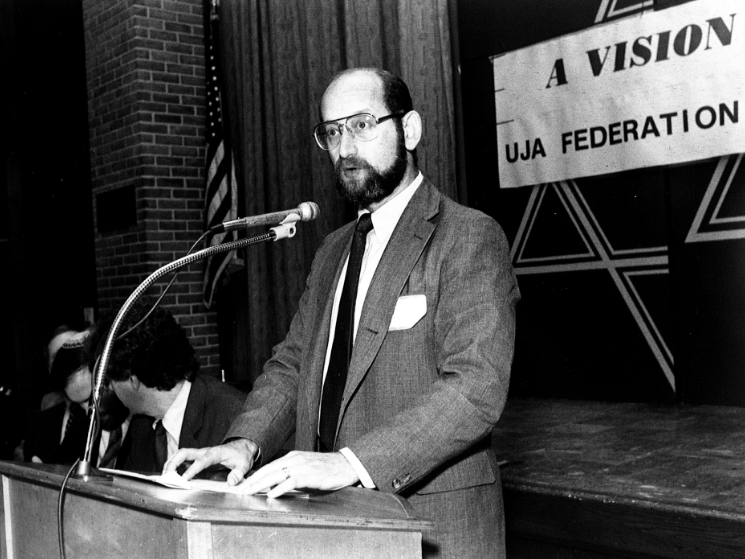
Last month, we stumbled onto something extraordinary: a set of original minutes from the very first meetings of the United Jewish Appeal in Washington. Hand-typed pages from 1948 and 1949 outlining early allocations, emergency support for Israel, and the names of families who stepped up to lead, many of whom are still shaping Jewish life in our region today.

A Time Capsule of Responsibility

Reading these documents feels like opening a time capsule. The issues were different, the world was different, but the heartbeat is the same: people coming together, pooling resources, and taking responsibility for one another.

Urgency, Action, and One Afternoon

One moment stands out. In April 1949, local leaders gathered at the Ambassador Hotel for what the minutes called a “special meeting.” The purpose?

“Obtain permission of the Executive Committee to borrow an additional half million dollars to advance the United Jewish Appeal… with regard to the deplorable condition of the new immigrants entering Israel.”

Half a million dollars, approved in one afternoon—a community stepping in without hesitation. You can almost feel the urgency in the room and the shared understanding that their choices mattered; that lives depended on them getting this right.

When Community Meant Everyone

Another set of minutes from late 1948 details the young community’s first major campaign: 16,163 contributors giving more than $2 million, an astonishing act of collective generosity. Their allocations spanned Israel, local agencies, national advocacy, and emerging Jewish institutions.

And even the follow-up work tells its own story. One line notes the need to “intensify collections” and clean up the outstanding gifts still considered “gettable.” It’s a reminder that closing gaps and meeting the moment has always been part of our work. It’s as true now, at year-end, as it was then.

They debated, they decided, and they built the foundation we’re still standing on today.

A Year-End Reminder of Who We Are

As we approach year-end, this history hits differently. It reminds us that our community has always risen to the moment—not because someone told us to, but because collective responsibility is who we are. We give, we show up, and we build together.

Every gift today continues a legacy of care, courage, and shared purpose.

And now, just as they stepped up then, we’re called to do the same. Two year-end matches are helping every gift go further to strengthen belonging, community life, and security across our region:

  • Jewish Life & Belonging (including Northern Virginia): Every dollar is matched 1:1 up to $750,000, supporting community-building, engagement, and especially the fast-growing needs in Northern Virginia.
  • Community Security: Every gift is matched at 50 cents on the dollar up to $1 million, helping protect our synagogues, schools, and gathering spaces with training, assessments, and critical security investments.
  • Together, these two opportunities can unlock nearly $1.5 million in additional support for Jewish Greater Washington, amplifying our shared legacy of responsibility and care.

Make a gift today to support belonging, security, and our nearly 100 years of communal investment.
Donate today

Related posts

The Legacy of Eddie Kaplan The Legacy of Eddie Kaplan
The Legacy of Eddie Kaplan
Eddie’s decades of leadership at Federation and the Jewish Community Foundation helped strengthen institutions, support community investments, and shape a thriving Greater Washington Jewish community rooted in care, vision, and lasting impact.
read more

Showing Up to Shape the Future

Showing Up to Shape the Future

How NEXUS is Meeting the Moment

More and more young adults aren’t waiting to be asked in. They’re showing up with questions, ideas, and a real desire to help shape a vibrant, inclusive Jewish future.

We’re also seeing this nationally: the latest Slingshot survey shows that Jewish young adults crave agency, community, and meaningful ways to live their Jewish values out loud.

That’s what NEXUS offers—a chance to explore identity, giving, and belonging in a way that’s personal, real, and rooted in what matters most.

More Than Belonging

If you’re in your 20s or 30s, you probably know the feeling: you care about Jewish life and want to live your values with intention, but it’s not always clear how to turn that into real impact. Where do you begin? What does it look like to shape the community when you’re still figuring out your own path?

That’s the space NEXUS fills. It offers a framework to explore personal values, community connection, and what meaningful participation looks like today.

Seeing the Bigger Picture

What makes NEXUS different is how it connects you to the full landscape of Jewish Greater Washington. At the center of that landscape is the work we do together through Federation to strengthen partnerships, power collective giving, and respond quickly when our community needs support.

When you plug into that ecosystem through NEXUS, your impact doesn’t stay in one corner. It ripples out.

NEXUS is the moment when people begin to see that bigger picture and understand the role they can play in it.

Where It Starts to Feel Real

One moment from a past cohort still stands out to me. Someone said, “I’m not sure I’m the kind of person who leads in the Jewish community.” Before I could respond, another person said, “You already do. You just needed a space to see it.”

That’s NEXUS in a single sentence.

This program creates space for meaningful conversations—about identity, belonging, philanthropy, and community responsibility—and gives participants tools to navigate them with empathy and authenticity. Not because we hand out answers, but because we build the conditions where people can explore them together.

Learning That Feels Real and Human

Throughout the experience, participants hear from people whose work embodies inclusive, values-driven impact. They see how belonging, purpose, and impact show up in real life—from organizations building accessible workplaces to those creating pathways for Jewish connection across the region.

It’s learning that feels grounded, practical, and genuinely connected to the needs of our community.

A Cohort That Becomes Community

Every NEXUS cohort becomes its own small ecosystem of support. People show up as individuals and quickly become a group that listens, challenges, questions, and encourages one another. Real friendships form. Real conversations happen. Real growth takes place.

By the end, participants don’t walk away with a formal roadmap. They walk away with something more lasting: a clearer sense of who they are, a better understanding of what they value, and a deeper confidence in the role they can play in shaping Jewish Greater Washington.

Stepping In—Together

NEXUS is one powerful doorway into that journey of connection and meaning—but across Next Gen, there are so many ways to step in, show up, and shape what comes next.

Explore Next Gen

Related posts

The Legacy of Eddie Kaplan The Legacy of Eddie Kaplan
The Legacy of Eddie Kaplan
Eddie’s decades of leadership at Federation and the Jewish Community Foundation helped strengthen institutions, support community investments, and shape a thriving Greater Washington Jewish community rooted in care, vision, and lasting impact.
read more

Northern Virginia Community Resetting the Table Workshop

Northern Virginia Community Resetting the Table Workshop
Strengthen our Northern Virginia Jewish leadership community. The NoVA Leadership Series brings Jewish leaders and professionals together to deepen relationships, gain practical leadership skills, and strengthen our collective capacity to meet the evolving needs of the Northern Virginia community. The second workshop in the series—offered in partnership with Resetting the Table—features a Speaking Across Conflict workshop that brings together lay leaders from NoVA for a dynamic afternoon of skill-building. Participants will have the opportunity to share their own views and experiences in a way that makes both differences and commonalities visible. In this interactive session, you will:
  • Deepen your listening skills to elevate conversations across our community
  • Gain practical tools to speak with confidence across differences
  • Offer feedback as we explore ways to share and utilize these skills more broadly
Featuring Dani Panitch, Resetting the Table’s Associate Facilitator & Trainer Dani Panitch Headshot Dani is a facilitator with a passion for leadership development, relational psychology, and productive conflict. As an Associate Facilitator and Trainer, Dani currently leads RTT trainings and workshops for professionals and communities nationwide. Since 2018, Dani has played several roles at RTT, most recently serving as the Senior Program Manager, building the systems that support RTT’s programs. Dani has worked at a variety of non-profit organizations and schools throughout New York City, including UJA-Federation, MDRC, and Quest2Learn, providing research, teaching and programmatic support. Dani holds a B.S. in Applied Psychology from NYU’s Steinhardt School of Culture, Education, and Human Development and is currently pursuing a Master’s in Marriage and Family Therapy at Iona University. During her time at NYU, Dani was awarded the Student Exemplar of Excellence Award for her campus bridge-building work, and she is a proud alumnus of RTT’s Campus Internship program. Your voice matters. This is a chance to strengthen how we listen, how we connect, and how we lead—together. This breakfast is part of Federation’s broader effort to cultivate a vibrant, connected, and empowered leadership network in NOVA. [jotform id="253294483969172" title="NoVA Community Resetting the Table Workshop 1.25.26"] Questions? Contact Melanie Schaeffer. Kosher food provided. *For security purposes, the location and street address will be emailed to each guest prior to the event, using the email address provided at registration. Learn more about security at Federation events. We’re committed to building an inclusive community. If you need accommodations to participate meaningfully, please contact us in advance.

Listening Across Difference at Pozez JCC

Listening Across Difference at Pozez JCC

When we make space to truly hear each other, something shifts.

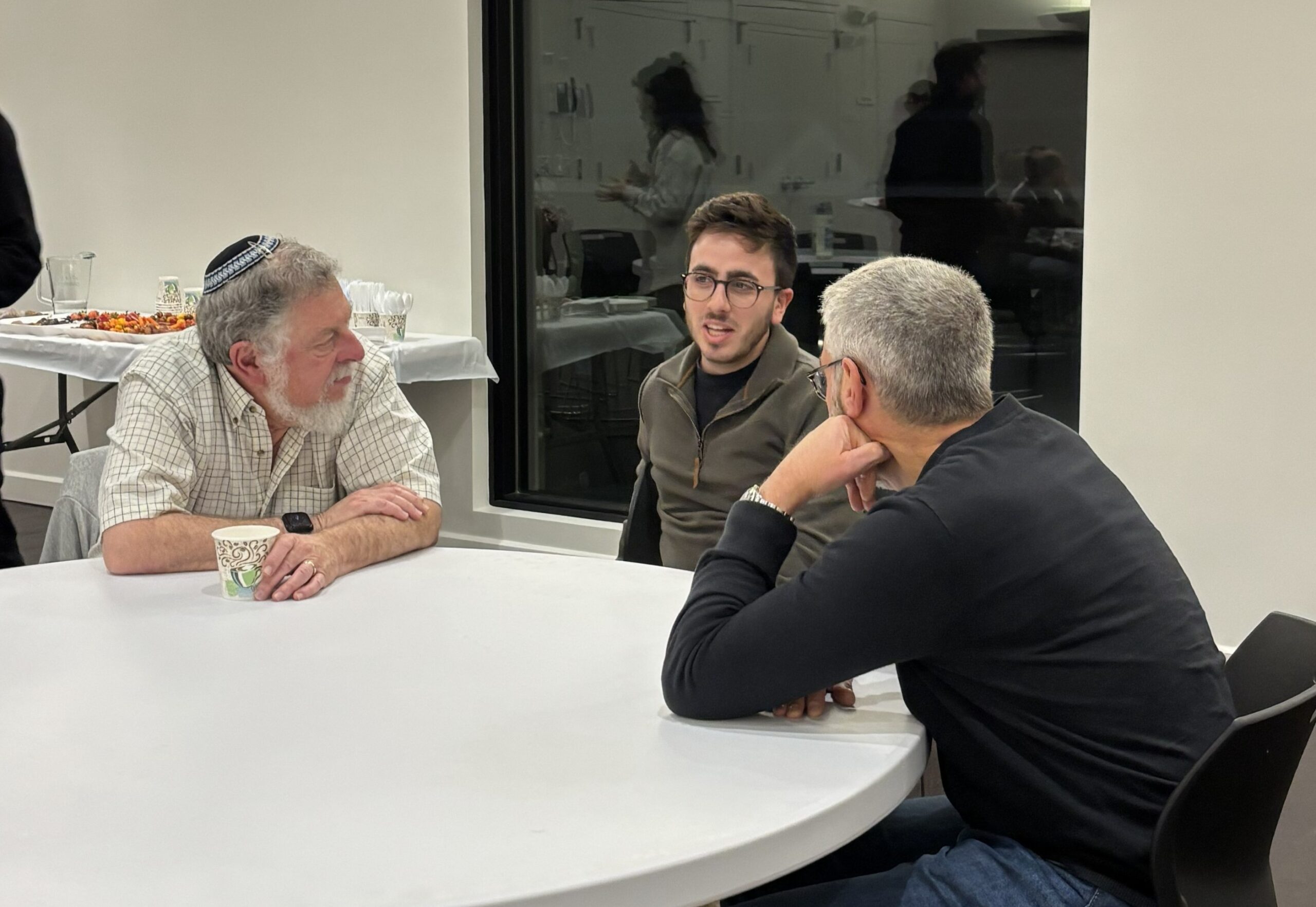
In a year when conversations about Israel often collapse under the weight of politics, pain, and fear, more than 30 community members came together at the Pozez JCC of Northern Virginia for something different: honest dialogue rooted in listening, not debate.

The evening was hosted in partnership with the Arava Institute for Environmental Studies and led by one of our community shlichim (Israeli emissaries), whose work bridges people, perspectives, and purpose across Greater Washington. Together, they created space not for agreement, but for connection.

Stories That Set the Tone

Arava alumni Brian Crann, Jawdat Kasab, and Arielle Ben-Hur opened the session by sharing their own experiences in dialogue at Kibbutz Ketura, where Palestinians, Israeli Jews, Israeli Arabs, and others from across the region live and learn together.

Their stories didn’t shy away from pain or complexity. They grounded the room in something real.

Listening, Not Convincing

Then came the heart of the evening: small groups gathered with one goal—listen to understand. No debating, no fixing, just sitting with each other’s stories.

It wasn’t always easy. But it was real.

As one participant put it, “Meaningful conversations like these are often part of the solution.”

What We Carried Forward

Before leaving, each person shared one word they were taking with them:

“Curiosity.” “Compassion.” “Understanding.”

And most of all—“Hope.”

Staying in the Room

It didn’t take a panel or a facilitator to make the evening powerful. It took people willing to show up, listen, and stay in it together. That’s what our shlichim are helping nurture—quietly, consistently—across Greater Washington.

Learn more about how the shlichim are helping to build these bridges across Greater Washington.

Meet our shlichim

Related posts

At the Threshold of Possibility

At the Threshold of Possibility

We’re standing at an inflection point, and what we choose to do next will shape our community’s future.

I want to put to words a couple things I’m feeling as we head into the end of the year.

The first is gratitude. Our community in Greater Washington is strong, passionate, caring, creative, and remarkably generous. Federation could not do the work we do to sustain and strengthen Jewish life without you. I have been repeatedly moved by the way this community has mobilized in the face of crisis, and continued the quiet, steady work of looking after one another and shaping a bright and vibrant future on our own terms. From the bottom of my heart, thank you and I cannot wait to continue our partnership.

The second thing I’m feeling is a bit harder to name but could perhaps be described as energized. A multitude of factors, ranging from longing for Jewish knowledge to a globalized feeling of uncertainty are inspiring people to want to connect with their Jewish identities and the Jewish community. As I referenced last week, a recent survey found that 60% of respondents within the DMV are interested in doing more within the Jewish community. People are looking to connect with Jewish content, Jewish practices, Jewish experiences, and with other members of the Jewish community.

Indeed, we have reached a consequential inflection point in Jewish life and we get to help determine what happens next. As Barry Shrage, former president of Combined Jewish Philanthropies in Boston (and my former boss and ongoing mentor) writes, “We are living through a hinge in history, a moment when the door to alternative futures is still open, the future is uncertain, and our actions can define our destiny.”

We have all the makings of a new Jewish awakening, but we need to help put the pieces together so that everyone coming to our door is met with the meaning, purpose, and belonging they seek. This will take a good deal of focused effort, and Federation is here to help drive it forward. In this new year, we are set to increase funding and work with our many partners across the region to expand programs to ensure everyone looking for connection finds a home within our community. This is vital work and even more so at this “hinge” moment when our collective efforts are guaranteed to echo.

It’s a weighty thing responding to a call for meaning. But it’s a privilege too. And we get there by working together to help more people access and explore the values, traditions, and relationships that enrich our lives and sustain our people.

As we move into the final weeks of the year, many in our community will step forward to support this work. I hope you’ll join them. A gift of any size helps ensure that everyone seeking connection, purpose, and belonging can find their place in Greater Washington. If this work inspires you, I invite you to help fuel the work ahead. A gift to our Annual Campaign strengthens the programs, partnerships, and pathways that welcome people into Jewish life and support them once they’re here.

Help our community step over the threshold of possibility. Please give today.

Related posts

The Legacy of Eddie Kaplan The Legacy of Eddie Kaplan
The Legacy of Eddie Kaplan
Eddie’s decades of leadership at Federation and the Jewish Community Foundation helped strengthen institutions, support community investments, and shape a thriving Greater Washington Jewish community rooted in care, vision, and lasting impact.
read more

Meeting Our Community’s Desire for Connection

Meeting Our Community’s Desire for Connection

Across every demographic, the desire for deeper Jewish life is clear. Let’s meet it—one invitation at a time.

I was reading through the results of our recent Impact Index Pulse Survey, a community-wide survey we helped launch earlier this year to better understand how people across our region are experiencing Jewish life—what’s working, what’s missing, and where we can lower barriers to connection. The survey asked 1,349 D.C.-area Jewish community members about their level of satisfaction with the Jewish community (54% satisfied, 15% unsatisfied, 31% neutral).

There is plenty to parse in the data, but one thing stood out to me: The key to increasing people’s engagement with Jewish life isn’t about creating desire but about creating opportunities and removing barriers standing in the way of greater participation.

The desire to become more involved in Jewish life cuts across denomination, age group, income level, region, synagogue affiliation, and length of residence. Roughly 50-60% of all demographic groups want more engagement. Even those whose engagement declined in the past year still reported wanting to be more involved in Jewish life. This is remarkable and instructive.

At Federation, we are proud to work closely with a network of partners who offer and facilitate meaningful Jewish experiences. But the work of building Jewish community rests not solely with institutions, but with each of us. Indeed, community is built from individual connections that help people feel seen and part of something. All of the grants and strategic approaches in the world will never replace the power of personal interactions.

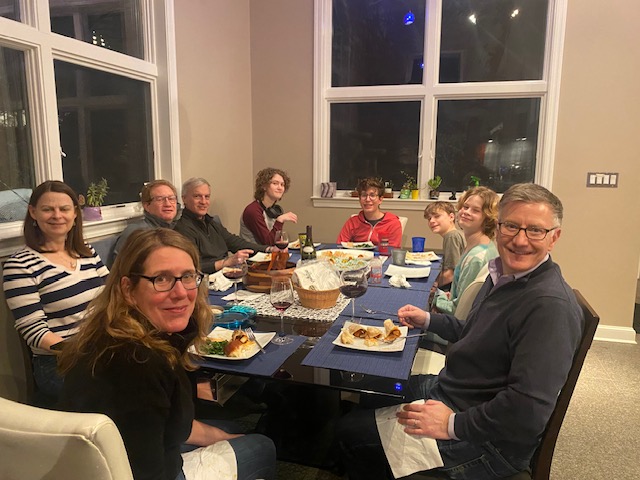
Enter Shabbat dinner. Whether you gather with family members, close friends, or new acquaintances, coming together for Shabbat dinner is one of the most powerful ways to kindle and strengthen Jewish life. Many of us know this to be true from our own encounters with Shabbat, and it is also borne out in the data. Among those who sometimes or regularly attend or host Shabbat dinners there is a greater level of engagement with and satisfaction in Jewish life as compared to those who rarely or never attend Shabbat dinners.

I can hear the data folks reminding me that “correlation is not causation,” but when it comes to Shabbat dinner, there is no downside. It is a positive indicator and effective gateway to greater engagement. It also enriches our own Jewish lives. We’re fortunate to work with so many organizations and community members who help people find their way to one another, at Shabbat tables and in countless other moments of connection.

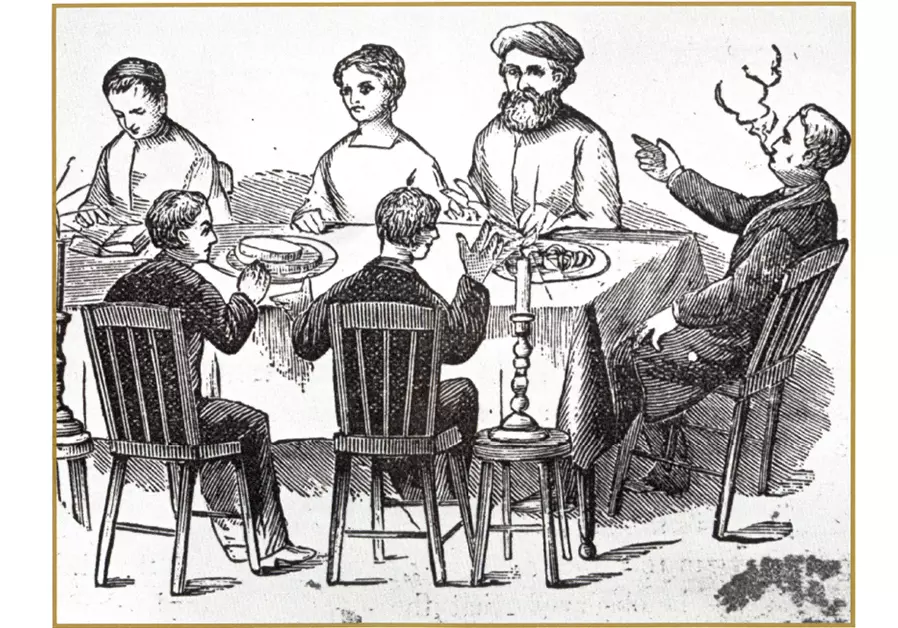
So, as the weather gets colder and we burrow inside, I want to encourage you to bring others along with you. Invite people over for Shabbat dinner. Welcome people you know and people you would like to get to know. Even if you’ve never hosted a Shabbat dinner before, give it a try. It does not need to be fancy or fit some image of what a Shabbat dinner is “supposed” to look like. There are many online resources standing by to provide you with tips and ideas. This is a resource guide from OneTable, one of our partner organizations, that helps those in their 20s and 30s host Shabbat dinners—but the information works for all ages.

The Impact Index clearly shows people want to be more engaged in Jewish life. The desire is there. We meet it by connecting with the people around us and basking together in Jewish ritual, joy, connection, and belonging.

Related posts

Jewish Talent Project: Building Better Workplaces, Together

Jewish Talent Project: Building Better Workplaces, Together

The Jewish Talent Project is underway, and the Leading Edge survey is the first step toward lasting change.

As Adam Levner shared when we introduced the Jewish Talent Project (JTP), the vision is bold: to make Greater Washington one of the best places in the country to work in Jewish communal life. Behind every meaningful connection or impactful program are professionals making it happen—and they deserve workplaces where they can thrive.

Since launching this fall, the Jewish Talent Project has begun building the tools and support Jewish organizations need to strengthen workplace culture, leadership, and staff retention across the region.

Now, JTP is rolling out The Leading Edge Employee Experience Survey.

This free, confidential survey offers Jewish organizations valuable insight into how staff experience their workplace—what’s working, where there’s room to grow, and how they compare to peers. It also opens the door to future JTP offerings and support.

Eligible organizations (3+ years old, 6+ employees) must register by December 12 to take part. Because when Jewish professionals thrive, the impact reaches every corner of our community.

Photo: leadingedge.org

Related posts

The Legacy of Eddie Kaplan The Legacy of Eddie Kaplan
The Legacy of Eddie Kaplan
Eddie’s decades of leadership at Federation and the Jewish Community Foundation helped strengthen institutions, support community investments, and shape a thriving Greater Washington Jewish community rooted in care, vision, and lasting impact.
read more

Embracing the Stronger Force That Binds Us

Embracing the Stronger Force That Binds Us

Why I’m Rethinking “Unity” and What We Need Instead

I’ve been wrestling with the word “unity.” It sounds nice enough but lately, when I hear different presenters call for unity among the Jewish people, I hesitate.

Is appealing to unity just a way of asking people to conform to the speaker’s preferred ideas and political positions? Is unity a code word for uniformity? Is it a convenient way to exclude ideas that may challenge the status quo? While we may be concerned with significant divisions within the Jewish community, it is not clear to me that calling for unity is the answer. Are we tempted into thinking the easiest way to stand as one would be to think and act alike?

I’ve set “unity” aside for now because our community is strong not in spite of our differences but because of them. The more we can shape a community that values and learns from a diversity of viewpoints and perspectives, the better off we’ll be. Still, proponents of unity have a point. We need a binding force, something that sustains us not simply as a group of individuals but as an enduring community.

There’s a term in chemistry (bear with me) called the “strong force.” The strong force is what holds an atom together, overcoming the lesser forces that would allow protons to repel each other and push apart. That’s how I see our community—spacious and gracious enough to account for differences but sturdy enough to hold our form. I believe that our strong force is the core idea of mutual responsibility, a feeling that we are all responsible one for another.

With a sense of mutual responsibility and a common fate, anything is possible. Once that’s in place, the rest is conversation. Disagreement, overlap, exploration are all okay because even if we ping off each other now and again, we are held by something stronger, a commitment to each other and our shared destiny.

We have a lot to navigate together in the coming months and years. Meeting the surge in interest in Jewish engagement, shaping a diverse and open community, connecting to Israel, and addressing antisemitism and our communal security stand out as priorities heading into 2026 (more on this soon). We have meaty, worthy, urgent goals to tackle, which will, without question, spark disagreements.

Rather than mute our differences, I say let’s turn the volume up on communal conversations embedded within a context and commitment to mutual responsibility. Diversity of thought is not a tax on unity. It’s a form of abundance. We can feel confident that even as we bounce ideas and questions, invitations and quandaries off each other, our communal bond will hold. There’s a stronger force at play.

Related posts

Building Belonging Through Care

Building Belonging Through Care

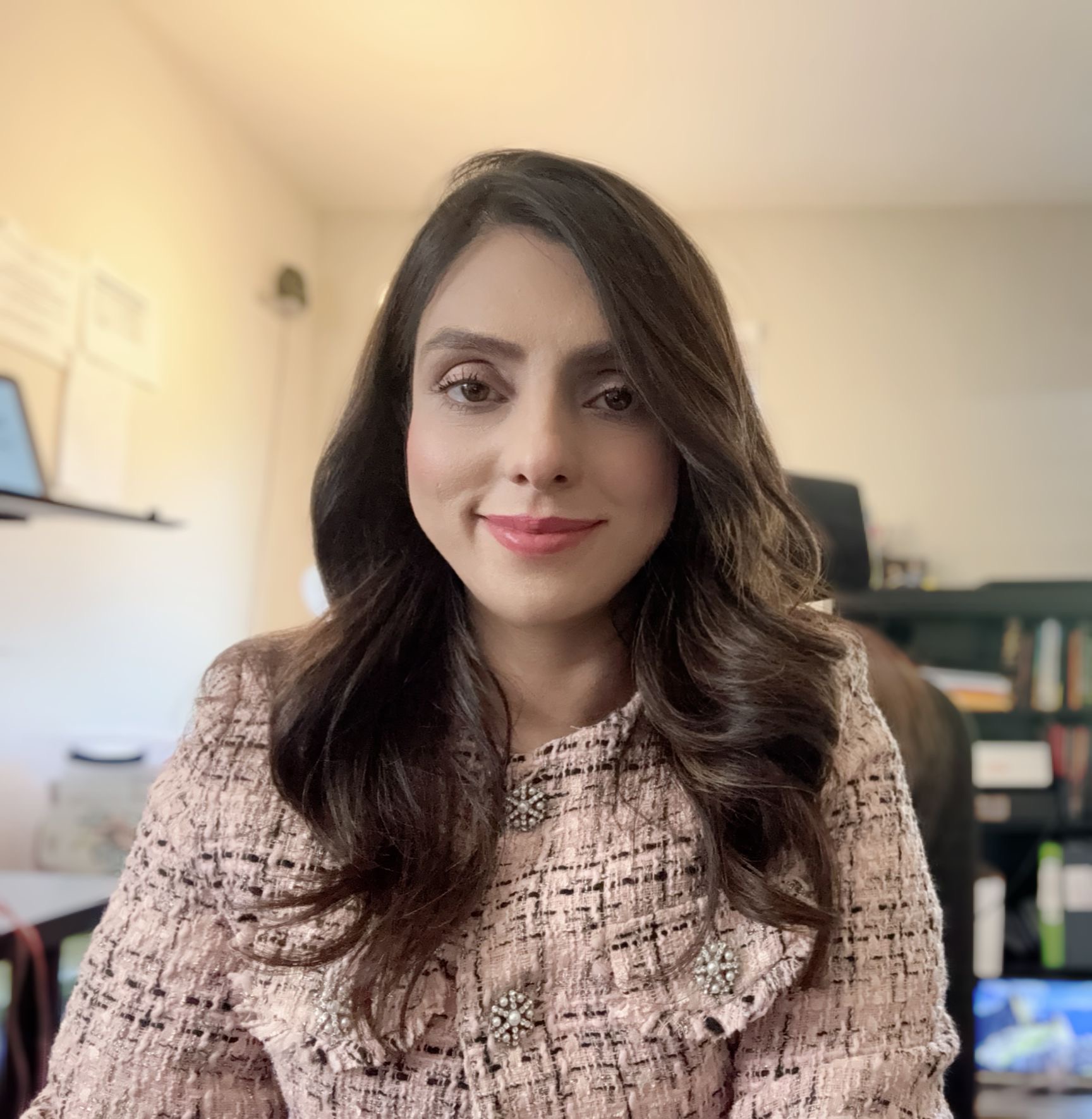
Building Belonging Through Care: Dr. Aiman Tohid and Makom’s New IDD Health Clinic

For Dr. Aiman Tohid, medicine is about more than just treatment—it’s about inclusion, empathy, and equity. As the Director of Makom’s new specialized health clinic for individuals with intellectual and developmental disabilities (IDD), she is helping build something rare: a space designed from the ground up for people who too often face barriers to care.

“This is one of a kind,” Aiman says. “Only a handful of clinics like this exist in the entire United States, and too often, people with IDD are denied care because providers aren’t trained to meet their needs. We wanted to change that.”

From Karachi to California to Montgomery County

Aiman’s journey began in Pakistan, where she attended Dow Medical College, then moved to the United States to complete her board exams and a preventive medicine residency at the University of Southern California’s Keck School of Medicine. After years on the West Coast, she and her husband moved east during the COVID pandemic to be closer to family and new opportunities.

Soon after arriving, she came across Makom. “I saw an opening online,”[at1]  she recalls with a laugh. “It wasn’t even the right fit for my background, but I applied anyway because I really wanted to be part of the organization.” When Makom’s leadership reviewed her résumé, they quickly realized her expertise aligned perfectly with their vision for a new clinic.

Building a First-of-Its-Kind Clinic

After three years of planning, Makom’s clinic officially opened to the broader community this fall. The clinic provides physical, occupational, and speech therapy; nutritional counseling; and behavioral and mental-health services. Initially created to serve individuals in Makom’s residential programs, it now welcomes clients across Maryland and DC, with plans to expand into Virginia once licensing is complete.

The clinic also partners with leading institutions, including Johns Hopkins, Georgetown, George Washington University, and the University of Maryland School of Dentistry, giving medical and dental students hands-on experience with IDD patients. These partnerships are reshaping how health professionals think about care for people with IDD. “We want to create a new generation of providers who are confident and compassionate in serving this population,” Aiman explains. “That’s how lasting change happens.”

A Mission That’s Personal

Aiman’s interest in IDD medicine grew gradually but deeply. During her rotations in mental health, she found herself drawn to working with patients with developmental disabilities. “I’ve always been interested in mental health,” she says. “And having close friends and family with similar diagnoses made it personal. Once I began working with this community, I knew it was where I was meant to be.”

That personal commitment extends to education. She shares a story from a conference that still motivates her: “A board-certified neurologist asked me if adults with developmental disabilities even exist,” she recalls. “That was shocking. People think of autism or Down syndrome as only affecting children. We need more awareness and empathy. This clinic helps open those doors.”

Partnering for Greater Impact

Aiman credits The Jewish Federation of Greater Washington for playing a vital role in Makom’s growth. “The space Federation helped make possible gave us room to build a real clinic,” she says. “The partnership also helps us spread the word. Federation’s name and network give people confidence in the work we’re doing.”

Although Aiman is not Jewish, she says her time at Makom has deepened her understanding of Jewish life and traditions. “As a Muslim, a lot of it feels familiar—the values, the sense of community, even some dietary practices,” she says. “Over the past three years, I’ve learned so much and feel connected in a very natural way.”

Finding Home in the Capital Region

Now five years into East Coast life, Aiman says the DC area has grown on her quickly. She loves the changing seasons—especially fall—and the accessibility of nearby cities and family. “It’s such a diverse community,” she says. “It’s a great place to raise kids, with strong schools, good universities, and people from all backgrounds.”

At home, she and her husband are busy raising three children, ages 11 months, 6, and 7. “Our youngest is a Makom baby,” she laughs. “They threw me a baby shower at work.”

Beyond the White Coat

When she’s not seeing patients or mentoring students, Aiman enjoys quieter moments with tea or coffee and a good book—or watching documentaries, especially about health, history, or inspiring real-life stories. She’s a city person at heart, loves South Asian food (“the spicier, the better”), and never turns down a trip to Europe.

In classic East Coast style, she prefers apple cider over pumpkin spice and calls herself an early bird, thanks to her children. “They start jumping at 6 a.m.,” she jokes. As for desserts, she’s firmly team vanilla, and when it comes to bagels, she keeps it simple: “Just a plain one, with coffee. I’m more about the coffee than the bagel.”

Her favorite DC landmark? “The Washington Monument,” she says without hesitation. “It reminds me how tall we can stand when we build together.”

The Jewish Federation of Greater Washington is proud to support partners like Makom that expand access, equity, and belonging—ensuring that everyone in our community can thrive.

Learn more about Makom and its groundbreaking clinic for individuals with intellectual and developmental disabilities at makomlife.org.


Related posts

The Legacy of Eddie Kaplan The Legacy of Eddie Kaplan
The Legacy of Eddie Kaplan
Eddie’s decades of leadership at Federation and the Jewish Community Foundation helped strengthen institutions, support community investments, and shape a thriving Greater Washington Jewish community rooted in care, vision, and lasting impact.
read more