Need support? Call 703-J-CARING (703-522-7464)

Honoring Survivors, Every Day
Honoring Survivors, Every Day

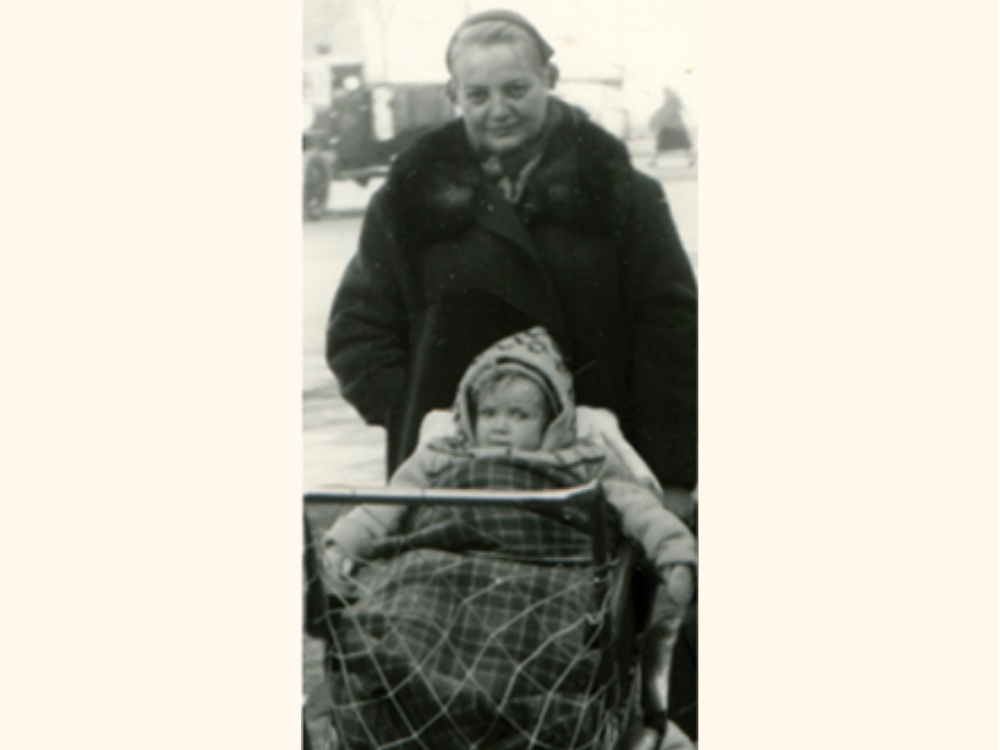
Shortly after the outbreak of World War II, two-year old Sonia* and her mother fled Belarus, which would soon fall to the Nazis. Her father, a Soviet army officer, was killed on the front line. After the war, Sonia’s family rebuilt what they could of their lives, with Sonia eventually pursuing a career as a teacher.

Life in the Soviet Union was far from easy, though. Finding consistent, well-paying work was a challenge, and Sonia and her daughter endured rampant antisemitism. Even in the late 1970s, her daughter was barred from attending university due to her Jewish identity. That’s why in 1980, they made the brave and difficult decision to emigrate to the United States.

For almost two decades, Sonia worked in a Russian-language daycare, providing care and comfort to the next generation, eventually retiring in Maryland. Yet as she’s gotten older, her day-to-day life has become more challenging. She has significant mobility issues, rarely leaving the house and accessing only the ground floor of her apartment. Her daughter and son-in-law help where they can, yet loneliness and isolation still set in.

That’s where Federation and our partner JSSA—the Jewish social service agency serving Greater Washington—comes in. Each year, JSSA helps hundreds of Holocaust survivors live their final years with dignity and safety. Federation support enables JSSA to provide homecare and home nursing, medical support, food programs, socialization activities, and more. As Holocaust survivors age and their needs become more complex and acute, this care is increasingly essential.

For Sonia, this assistance is deeply personal. With help from a homecare worker, she is able to remain in her own home and complete tasks that would otherwise be too daunting. Virtual exercise classes support her physical well-being, while online Russian-language classes on Jewish themes help her stay connected to her community and culture. These services do more than meet basic needs; they provide connection and stability.

Together, Federation and JSSA are dedicated to ensuring that no Jew feels alone, and that every survivor is met with the care and respect they deserve. We honor survivors by showing up for them now, in real and tangible ways. Through this partnership, we are turning memory into action—ensuring that “Never Again” is not only a promise for the future, but a responsibility we uphold every day.

*To protect her privacy, Sonia’s name has been changed.
Related posts

The Legacy of Eddie Kaplan The Legacy of Eddie Kaplan
The Legacy of Eddie Kaplan
Eddie’s decades of leadership at Federation and the Jewish Community Foundation helped strengthen institutions, support community investments, and shape a thriving Greater Washington Jewish community rooted in care, vision, and lasting impact.
read more

The Legacy of Eddie Kaplan

The Legacy of Eddie Kaplan

Edward (“Eddie”) H. Kaplan z”l helped shape Jewish life in Greater Washington through decades of committed leadership.

Eddie served as President of The Jewish Federation of Greater Washington from 1989–1991 and of what is now the Jewish Community Foundation from 1992–1995.

During his tenure, Eddie helped lead key changes at Federation, including the transition to its current name, reflecting a forward-looking approach to engaging the next generation.

Across more than thirty years on Federation’s Board and as a Foundation trustee, Eddie helped advance Federation’s role in strengthening the institutions that anchor Jewish life in our region today. He supported significant investments in the Greater Washington Jewish community and beyond, such as the Capital Camps and Retreat Center (CCRC).
 

A Commitment to Community

Eddie experienced firsthand the power of Federation and its partners to build Jewish life. Born and raised in the DC area, he grew up attending programs at the Bender JCC, then The Jewish Community Center of Greater Washington (JCCGW), and later served on its board. His family have been longtime members of the B’nai Israel Congregation in Maryland.
 

He gave his time, talent, and resources to organizations across our community, including the Bender JCC, Pozez JCC, JSSA, and Charles E. Smith Life Communities.
 

That leadership extended beyond Greater Washington, with national roles through Jewish Federations of North America (JFNA) and the American Jewish Joint Distribution Committee (JDC), reflecting a deep commitment to Jewish communities locally and around the world.
 

His contributions were recognized across the Jewish community, reflecting the breadth of his impact.
 

A Lasting Legacy

Known for his sharp wit and generous spirit, Eddie formed a clear view of what needed to be done and pursued it with determination, grounded in a deep sense of purpose. He gave his all to the work he believed in, bringing both vision and heart to everything he did.

His legacy lives on in stronger institutions, deeper connections, and a community built to endure. We carry that legacy forward with gratitude and extend our deepest sympathies to his family and friends. Those who wish may honor his impact on our community through a tribute gift.

Honor Eddie

Related posts

Holding Hope in a Time of War

Holding Hope in a Time of War

On Friday, February 27, just before Shabbat, Inbal called her family in Israel with a question that had become all too familiar: Are you prepared for every possible scenario?

They told her they had already been ready for weeks. In many ways, everyone felt that something was coming. And yet, as she would soon learn, nothing can truly prepare you for war.

Inbal is part of the Community Shlichim program, a partnership between The Jewish Federation of Greater Washington, The Jewish Agency for Israel (JAFI), local synagogues, and other partner organizations which brings Israeli emissaries to our region to deepen connection and bring Israeli life and perspective into our community. Originally from a small town in northern Israel, Inbal now finds herself navigating the distance between two realities—supporting the Greater Washington community while her own family lives through the unfolding crisis at home.

Here is her story:

When Sirens Began

The night of February 27 on the East Coast, Saturday morning in Israel, I received a news alert: sirens were sounding across Israel. I immediately called my father, sensing that this might be the beginning of a war with Iran. He told me that he was already on his way to his military base to report for reserve duty.

My thoughts then turned to my grandfather, who goes to synagogue early every Shabbat morning. That day, we could not reach him. He only realized what had begun when he returned home from prayer. Our whole family was tense, worried a siren might go off while he was still outside and unprepared.

That was Shabbat morning in Israel.

Between Fear and Joy

The war began during the holiday of Purim. Purim is meant to be one of the happiest holidays, a time to dress up, celebrate, laugh, and be together, filled with joy and light. And yet, in Israel, the transition between sadness and joy is something we know all too well, and sometimes the distance between them is only a matter of hours. In a strange and almost ironic way, 2,500 years after the story of Purim, it can feel as though we are witnessing another Purim story unfolding, another moment in which the Jewish people are called upon to stand strong.

Holding Two Realities

Since that morning, I have spoken with my family almost every day. My grandfather continues to go to synagogue, still without taking his phone. When sirens sound, he says they simply continue praying, even though the stress is very real. He maintains his routine because, as he explained to me, staying at home for so long is not healthy, neither mentally nor physically.

Many of my family members and friends have also been called for reserve duty, some for the seventh time since October 7. They are exhausted, and yet they tell me that they understand the importance of this moment. They hold on to the hope that after this round, there will finally be a few years of quiet.

Meanwhile, being here in Washington as an Israeli shlicha during a time like this is deeply complex. On the one hand, I feel a strong responsibility to be present with the community, to continue showing up, and to create connection and meaning around what is happening. On the other hand, there is a constant feeling of distance, and with it, the fear of being disconnected from everything unfolding back home.

A Community to be Proud Of

Nevertheless, I feel incredibly fortunate to be part of the Greater Washington Jewish community, a community that truly cares. Every day, people ask me how my family is doing. They check in. They engage in conversations about what is happening. This support helps me stay connected and grounded, while also allowing me to find a sense of balance.

Perhaps most unexpectedly, it is the young children in the community who help me the most in these moments. They bring me into their world of imagination, stories, and innocence, and for brief moments, they allow me to breathe.

Through this experience, I have come to understand that the message I bring here is my sense of responsibility. If the people in Israel can continue to demonstrate resilience, courage, and strength every single day, then I must carry and reflect that same resilience here as well. After all, the story of the Jewish people has always been one of resilience, of facing darkness and still choosing light.

With Hope for Spring

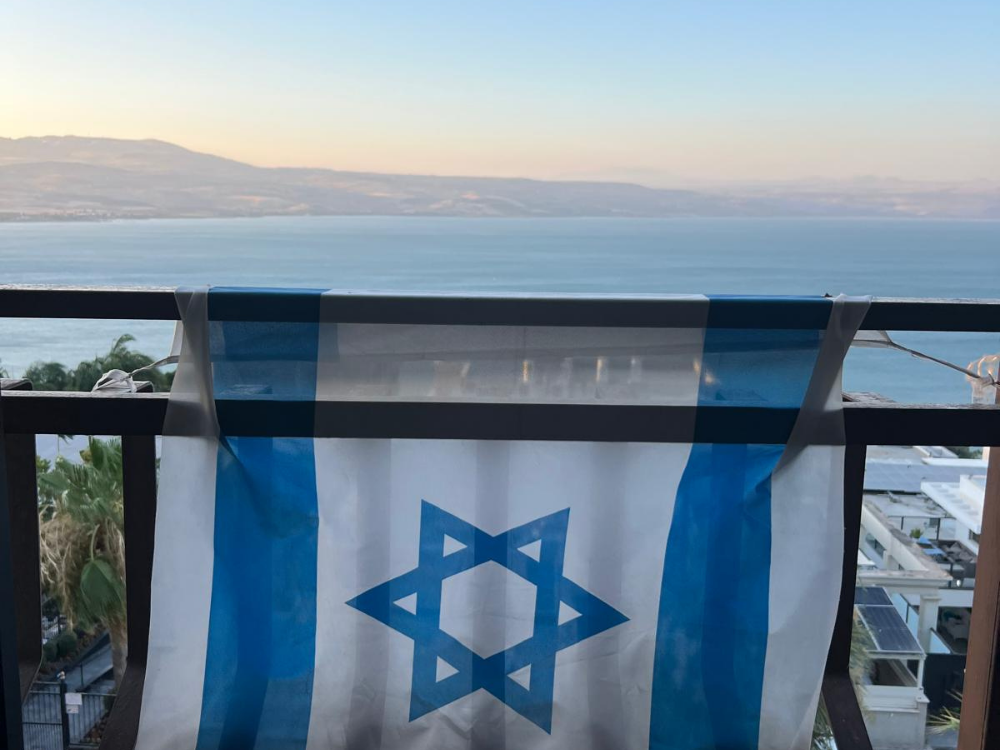
As the war enters its fifth week, we now find ourselves approaching Passover, the holiday of freedom and spring. Passover tells the story of leaving Egypt, of moving from slavery to freedom, and of becoming who we are meant to be. In this moment, I find myself hoping that this Passover will bring a sense of freedom for all of us—the freedom to live openly as who we are, proud of our Israeli and Jewish identities; to walk with our flag and our Star of David without fear; and to live without the routine of war, without constantly seeking the nearest shelter.

Passover also marks the arrival of spring, a season of renewal, when everything begins to grow again after the storms. There is something deeply powerful in that connection: just as strong trees withstand the storm, we see resilience, and like flowers that bloom in the fields, we see new beginnings. Perhaps that is the Jewish people’s story—to hold both, and to remember that if we want to see the rainbow, we must first be willing to stand in the rain.

Learn more about our Community Shlichim program.

Related posts

Support When it Matters

Support When it Matters

How Federation partnerships enabled rapid response in Beit Shemesh

On March 1, the city of Beit Shemesh, located in the hills near Jerusalem, was rocked by a direct strike from an Iranian missile. In the immediate aftermath, The Jewish Federation of Greater Washington mobilized our network of on-the-ground partners to rapidly assess urgent needs and direct emergency support where it would have the greatest impact. We quickly identified the Zinman Community Center as a critical anchor for relief and recovery.

The Zinman Community Center has been dedicated to serving the city’s most vulnerable residents for many years, including lower income elderly and young Ethiopian Israelis. Located just one block from the site of the missile strike, the Center was able to respond immediately—opening its doors to first responders and survivors within an hour of the attack.

In the wake of a missile strike, Israelis are often left navigating uncertainty: damaged or inhabitable homes, injured loved ones, and the ongoing stress and anxiety caused by further sirens and attacks. In those first critical hours, speed and coordination were essential to ensure there was a clear, trusted place to turn for support.

From community center to support hub

Because of its longstanding relationship with the Center, Federation was able to act quickly and decisively, recognizing that the Center was not only well-known within the community, but also strategically positioned to meet the moment. With Federation’s emergency funding, the Center became a Family Support Hub for the neighborhood. Staff and volunteers helped residents file government claims for damaged property, access other government and local benefits, and connect with social workers for psychological support.

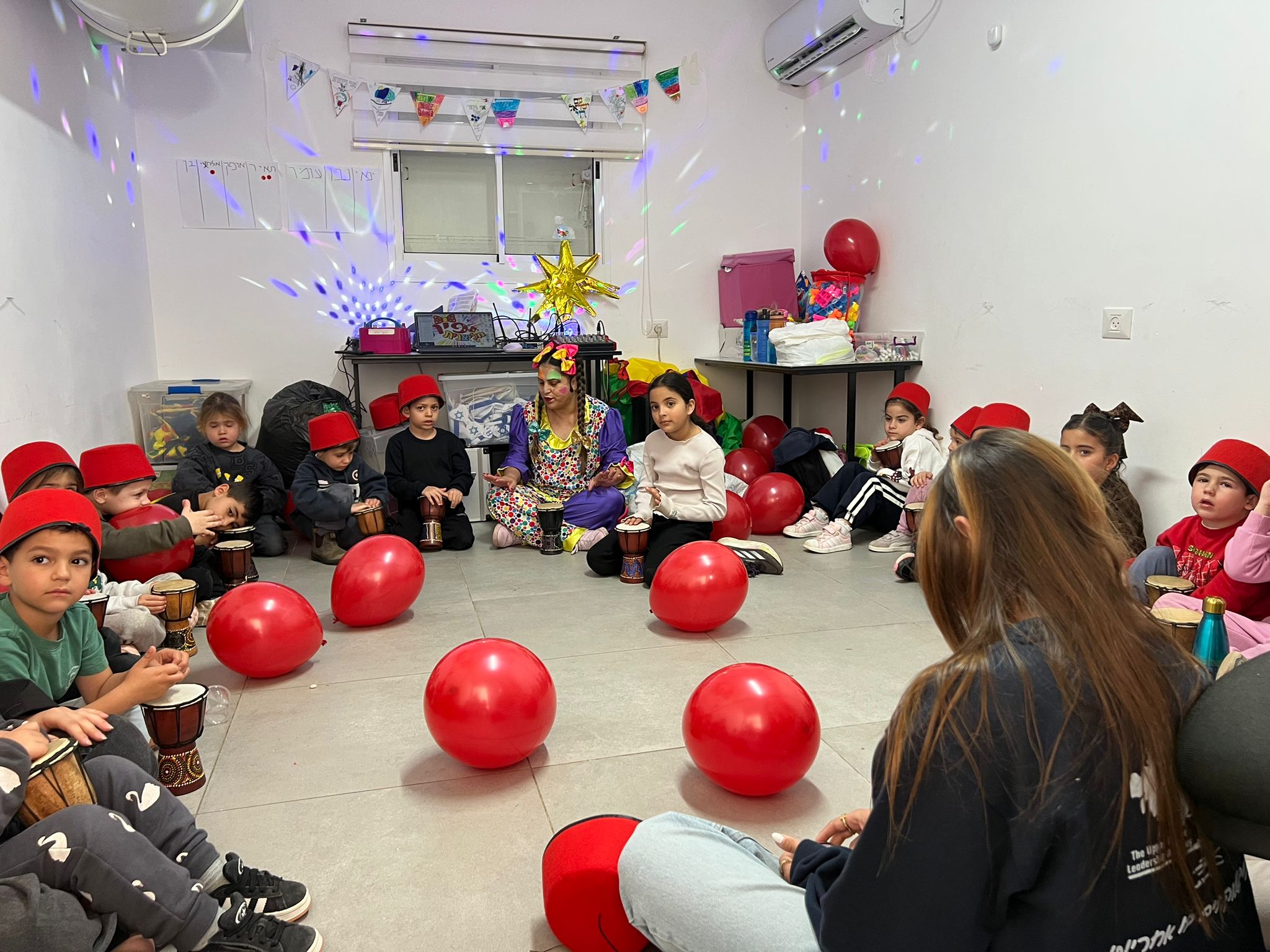
At the same time, Federation’s support made it possible for the Center to bring moments of normalcy and joy. Children and families were able to gather in the immediate days following the strike to celebrate Purim, enjoying a party outside and in the Center’s mamad (safe room) when needed. Volunteers assembled and delivered warm meals and activity kits to elderly Holocaust survivors who remained in the area. Every day, the Center helps hundreds of residents find connection, relief, and support from each other.

What made this possible

At a moment of crisis in Israel, Federation’s role is to act quickly and strategically—activating trusted local partners who are already embedded in their communities, so support reaches people quickly and where it matters most. Through its support for the Zinman Community Center, Federation is helping residents of Beit Shemesh recover, rebuild, and remain resilient in the face of immense challenges.

Learn more about how we are supporting partners in Israel during the current crisis.

Learn more

Related posts

Eight Weeks. 100 points. A Whole New Financial Future.

Eight Weeks. 100 points. A Whole New Financial Future.

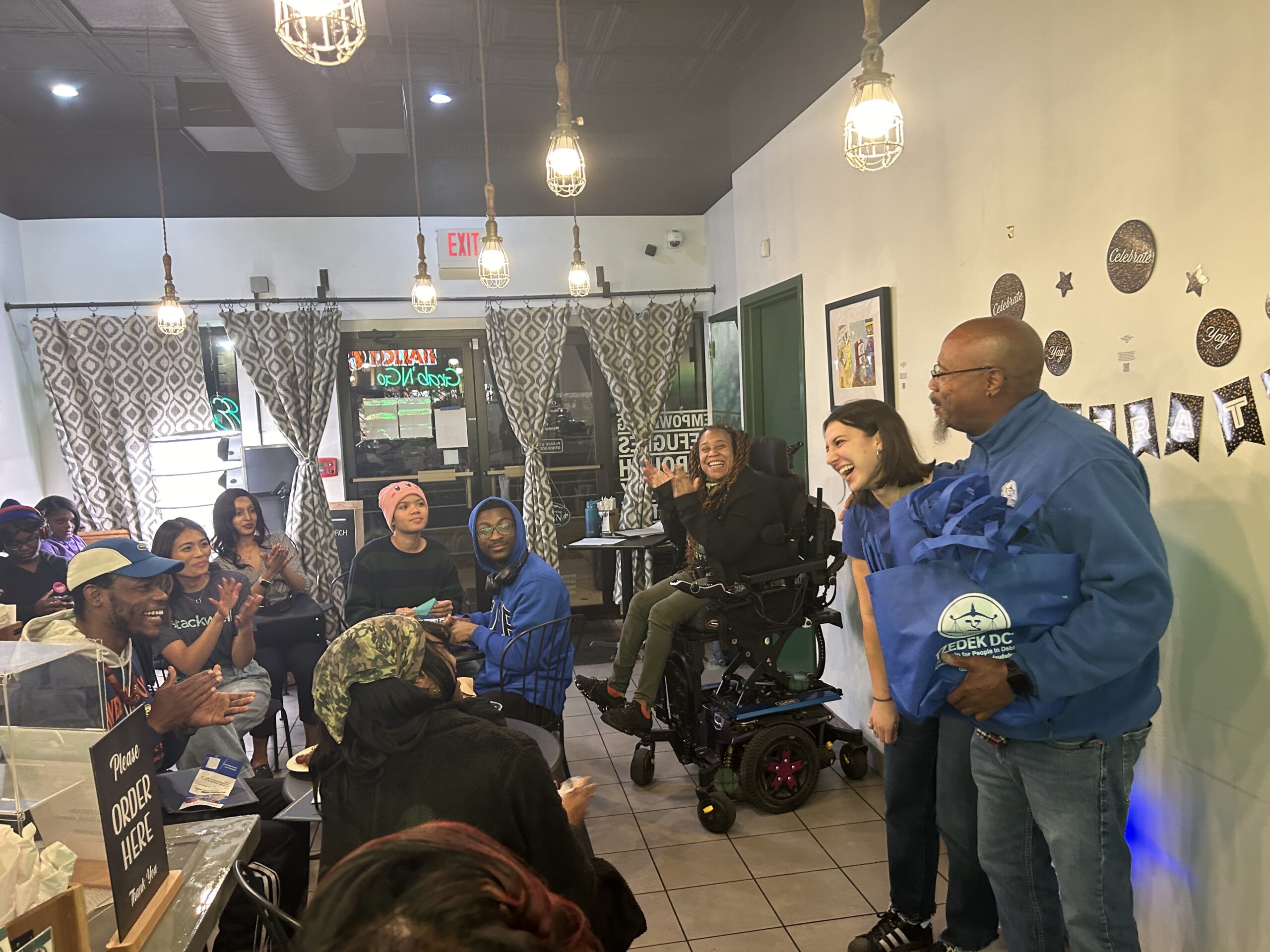
On any given weeknight in DC, a group of residents gathers around tables and notebooks at a Federation partner agency. They talk about credit scores, spending plans, debt that’s been sitting heavy for years, and long-term investing goals.

And then something shifts.

“After eight weeks, most participants made positive and tangible changes in their lives,” says Sophie Adler, Financial Empowerment Program Coordinator at Tzedek DC. “One participant increased their credit score by 100 points, and another paid down thousands of dollars of debt. But almost everyone, 98%, made a financial behavior change as a direct result of our program.”

Ninety-eight percent.

That kind of change doesn’t happen by accident. It happens when people are given practical tools, steady support, and a space to build confidence.

The Jewish Federation of Greater Washington is proud to help make that support possible by investing in partners like Tzedek DC.

From Portland to Purpose

Sophie grew up in Portland, Oregon, and came to DC through Avodah’s Jewish Service Corps, part of a Federation partner agency. She was looking for a way to pair Jewish community with hands-on social justice work—and found both at Tzedek DC, which works to alleviate debt and address economic injustice in DC. Its name inspired by the Jewish teaching Tzedek tzedek tirdof—“Justice, justice shall you pursue”.

What stood out for Sophie, though, wasn’t just the mission. It was the model.

“We don’t just offer direct services,” she explains. “We also work on policy and community education. You need all of it—reactive support for people in crisis and proactive, systemic change.”

Following her Avodah year, Sophie was hired to join the staff. Today, she serves as Financial Empowerment Program Coordinator, leading the eight-week program she helped launch during her Avodah service year.

That integrated approach reflects Federation’s belief that strengthening Jewish life and advancing economic justice go hand in hand. When Federation invests in partners like Tzedek DC, we help sustain both immediate support and long-term solutions.

Eight Weeks That Change Everything

When Sophie arrived, Tzedek DC was launching a pilot Financial Empowerment Program, an intensive, eight-week series offered free to DC residents.

Each week, participants dive into spending plans, short- and long-term financial goals, and building credit. They move beyond theory, through interactive workshops driven by the participants’ questions.

Alongside the workshops, participants can meet one-on-one with Tzedek DC’s financial counselors, pulling credit reports, identifying priorities, and setting repayment strategies. The workshops build knowledge. The counseling builds momentum.

The impact is tangible. One participant got her first credit card, and another opened a CD account. One participant worked hard at her long-term goal of becoming a homeowner and purchased her first home 15 months after graduating from the program.

But for Sophie, the most powerful shift isn’t numeric.

“It’s seeing participants’ confidence grow,” she says. “They’ll message me months later to celebrate a milestone. That pride, that sense of ‘I did this,’ that’s what stays with me.”

This is the kind of work Federation is proud to support: programs that help people build stability and long-term confidence.

Stronger Together

No organization can do this work alone.

“We constantly have people calling us with different needs that we might not always be able to provide,” Sophie shares. “Being able to rely on our community partners is so important.”

By investing across Greater Washington, we help create the connective tissue that allows agencies to share resources, refer clients, and respond more effectively when needs arise.

Beyond the Workshop

Outside the classroom, Sophie brings the same energy to community life. She’s been playing basketball since she was four, most recently in DC’s Volo leagues, and now organizes Tzedek DC’s annual March Madness bracket challenge.

She also helped launch the organization’s Racial Equity Book Club and co-organizes a book club with fellow Avodah alumni.

It’s not separate from her work. It’s an extension of it.

“I want a career rooted in community,” she says. “Grounded in lived experience. People-centered.”

That instinct, toward connection and shared responsibility, is at the heart of Federation’s work across Greater Washington.

Where Confidence Becomes Stability

Eight weeks may not seem like a long time.

But in that time, participants begin putting the lessons into action—creating spending plans, building credit, and setting long-term goals.

That’s why Federation invests in partners who pair practical tools with lasting solutions.

Because when one person gains stability, the ripple effect reaches far beyond a single balance sheet—strengthening families and the broader community.

Related posts

A Defining Year of Jewish Giving

A Defining Year of Jewish Giving

In a year that tested our resilience, the Greater Washington Jewish community responded with care, intention, and heart. 

Through The Jewish Federation of Greater Washington’s Annual Campaign and its Jewish Community Foundation, 6,600 donors came together, mobilizing $68.6M to strengthen Jewish life, respond to community needs, and support Jewish and broader community impact nationally, in Israel, and around the world.

Why People Gave

Some donors gave for the first time. Others gave more than ever before, deepening their commitment to Jewish life across the region. Some gave because their parents did. Others, as parents themselves, chose to model Jewish values through philanthropy, supporting security, education, belonging, and care for one another. Many gave to honor where they come from, to reflect what they believe, and to pass on those values to future generations. Others were moved by the moment, inspired by community, or motivated to invest in a Jewish future that is connected, resilient, and rooted in shared responsibility.

For all these reasons, donors turned to Federation and the Foundation to care for today’s needs and build a strong Jewish future. Together, we mobilize resources when it matters most and help donors invest strategically so Jewish life remains strong, safe, and connected.

The Shape of Philanthropy

$29.1M raised through Federation’s Annual Campaign
Flexible, mission-driven support across unrestricted, directed, and impact-focused giving, powering core priorities and enabling rapid response.

$1.7M unlocked in Matching Challenges
Matching opportunities activated targeted investments to strengthen Jewish life where it is growing and where it is most vulnerable.

$42.3M in new assets to the Foundation
Long-term, values-driven giving that helps build resources our community can rely on, now and for years to come, including:

  • $34M stewarded in Donor Advised Funds, providing families and individuals a personalized way to support the causes they care about most, with $19M granted last year to Federation and other nonprofits across the Jewish and broader community.
  • $1.5M invested in collaborative funds, bringing donors together to amplify their collective impact around shared priorities and passions
  • $6.8M in legacy giving vehicles, helping ensure sustained support for generations by supporting both Federation’s core work and the specific causes donors care about most

Building What Comes Next

As a community, we’re more than meeting the moment—we’re building what comes next. Over the past five years, total philanthropic support through Federation and the Foundation has grown by 41%, a testament to what’s possible when our community invests in a strong Jewish future.

Thank you for every gift, every act of generosity, and every moment of care. In a year that called on us to lead with heart and act with purpose, our community rose to the challenge.

We’re proud to be your trusted partner in this work. Together, we’re building a safer, more connected, more resilient Jewish Greater Washington for today and for generations to come.

And we’re just getting started.

Learn more about the difference you can make.

Explore more

Related posts

First to Go Out, Last to Return

First to Go Out, Last to Return

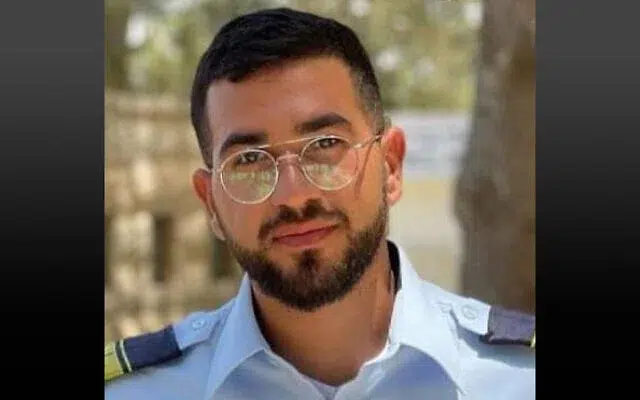
On October 7, 2023, Ran (Rani) Gvili, 24, was at his parents’ home in Meitar, in southern Israel, on medical leave from his service in an elite police unit. About two weeks earlier, he had injured his shoulder in an off-road motorcycle accident and was scheduled to undergo surgery just days later. As his family rushed into the shelter amid relentless sirens, Rani put on his police uniform and prepared to leave. His mother, Talik, asked him where he thought he was going. Rani replied simply: “Do you really think I’d stay home knowing my friends are fighting? No way.” (as reported by The Times of Israel)

Defender of Alumim

As chaos raged all around, without waiting to be called, Rani drove straight into the fighting. He first assisted survivors of the Nova Music Festival and then joined the heroic battle to defend the nearby Kibbutz Alumim. He neutralized dozens of terrorists and saved the lives of many residents, even as he sustained severe injuries to his arm and leg. Over time, he became known as “Rani, Defender of Alumim.” He fought relentlessly until he ran out of ammunition. It was later learned that he fell in battle and that his body was abducted to Gaza.

Bringing Rani Home

Last week, at long last, the circle was closed. After critical intelligence was received regarding his whereabouts, hundreds of soldiers, accompanied by dozens of forensic dental specialists, set out on a mission almost impossible to imagine: locating Rani’s body in a cemetery in Gaza. After approximately 48 hours of exhausting searches under extremely difficult conditions, the long-awaited answer came—Rani was found.

Dr. Assi Sharon, who took part in the mission alongside the forces in Gaza, described the emotional moment: “There wasn’t a dry eye. People were deeply moved, with a profound sense of reverence. We recited Kaddish, and there was a ceremony with the Chief of Staff—a very special moment. As I stood there, I realized I could finally remove the yellow ribbon, and I did.” (as reported by JFEED)

843 Days, 12 Hours, 5 Minutes, and 59 Seconds

With this, one of the most painful, yet also most inspiring, chapters in the history of the State of Israel and the Jewish people came to an end. After 843 days, 12 hours, 5 minutes, and 59 seconds, the clock at Hostages Square in Tel Aviv stopped. A shofar was sounded, and many recited the Shehecheyanu blessing, giving thanks for reaching this moment.

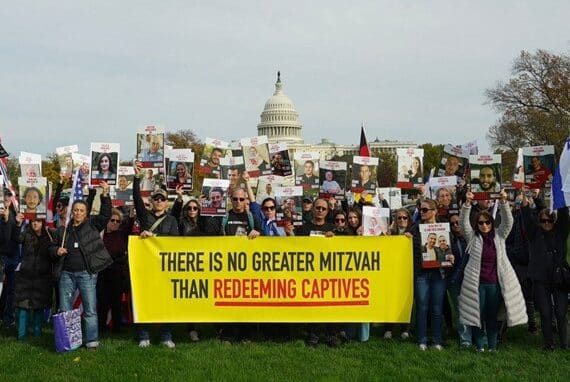
The mitzvah of redeeming captives, which Maimonides called the greatest commandment in Judaism, was fulfilled. The Israeli ethos—viewing the return of every soldier and civilian from enemy hands as a supreme moral obligation—was upheld. All 251 Israelis and foreign nationals abducted to Gaza on October 7, together with two Israeli civilians and two fallen soldiers previously held by Hamas, were returned.

The Power of Public Pressure

The sustained public effort to bring the hostages home was essential. Throughout this long—far too long—period, the Hostage Families Forum worked tirelessly to keep this issue at the forefront of the public agenda, most prominently in Israel and the United States.

One powerful testament to the impact of this cause can be found in the words of Alon Ohel, who returned from captivity after 738 days: “They opened a laptop and showed me a picture of someone holding a drawing of me, with a piano behind her. That’s when I understood that people I didn’t know were fighting for me. It gave me even more strength—if people who don’t know me are fighting for me, who am I to give up?”

A Shared Response, Across Oceans

With great pride and deep appreciation, it can be said that our community also took an active part in the collective endeavor to bring the hostages home, and in Israel’s broader recovery efforts. Shortly after October 7, Federation established the Israel Crisis Relief Fund and raised more than $15 million from the community for emergency assistance to Israel, nearly half a million dollars of which was transferred directed to the Hostage Families Forum. Beyond this, Federation supported the Hostage Families Forum in convening community events that brought people together with hostage family members and former captives, allowing them to share their personal stories and mobilize the broader community around the cause. The Community Shlichim—placed in synagogues and Jewish organizations across the community as part of a joint initiative of Federation and the Jewish Agency for Israel—led a wide range of activities focused on the hostages. These included creating dedicated spaces highlighting the hostages and their stories, and organizing events such as a community solidarity walk, an interactive cartoon exhibition addressing the hostage crisis and current Israeli issues, and many more.

“Thanks to Your Efforts…”

For all of this—and so much more—we extend our heartfelt thanks to everyone across our community who took part in advancing this most important cause.

As Matan Sivek, Founder of the Hostage Families Forum US, put it:

“The Jewish Federation of Greater Washington joined forces with hostage families from day one to ensure they get the financial and communal support they need. The DMV community advocated, marched, embraced, and was on the front line of ensuring the highest echelons don’t forget about the hostages. We are grateful for the leadership and partnership of Federation in this historic moment in Jewish history. Thanks to your efforts, they are back.”

Photo Captions: Ran (Rani) Gvili in uniform; Israel Defense Forces; Photo courtesy of IDF; Hostages Square clock at the moment of release; Photo: Avshalom Sassoni / Maariv; Alon Ohel, former hostage, after return; Photo: Eden Danielle Kleiban Pakter; Pozez JCC community walk for hostage awareness; Photo: Hostage Families Forum US, Leigh Vogel

Related posts

Your Dollars at Work: A Path Back to Purpose

Your Dollars at Work: A Path Back to Purpose

How your support is helping Israelis heal, retrain, and rebuild after war

When Omer returned to his classroom after October 7, he couldn’t breathe.

Five of his students were gone, killed in the attacks. Just stepping into the room triggered waves of panic, grief, and memory. He felt like he couldn’t go on.

But through weekly sessions with a JDC counselor, Omer slowly rediscovered his footing. Today, he’s not just working—he’s leading. Omer now runs a therapeutic gym in a Gaza-border community, helping fellow survivors rebuild physically and emotionally. “I found a way to move forward,” he said. “And to help others do the same.”

This is what your dollars make possible.

In the wake of the Iron Swords War, thousands of Israelis were forced to evacuate their homes. Many lost not just their sense of safety, but their livelihoods. The trauma was deep, the economic toll was devastating, and the path to stability felt out of reach.

That’s why Federation responded swiftly, providing a $500,000 grant to JDC to launch “Getting Victims of War Back to Work”, Israel’s first trauma-informed employment recovery model. More than just getting back to work, it’s about dignity, healing, and long-term resilience—about helping people get back to life.

With your support, here’s what’s already happening:

  • 890 Israelis have received hands-on vocational training, career guidance, and access to real employment opportunities
  • 131 participants have already been hired, earning more than 6% above minimum wage
  • 500 trauma survivors are in employment rehab, double the original 2025 goal
  • 40% of previously unemployed participants have found jobs; 100% of at-risk employees stayed employed
  • 18 locations now offer specialized career recovery support (up from 11)
  • 48 employers have been trained to support hires navigating trauma
  • And early evaluations show a 14% decrease in PTSD symptoms among participants

This model is now informing national efforts to scale trauma-informed employment support.

A Bold Investment in Israel’s Future Workforce

Through this initiative, we’re supporting Israelis not just in healing, but in retraining and returning to work with purpose.

Beyond immediate relief, it’s recovery with resilience built in.

And this is exactly the kind of long-term, people-centered impact we’re working toward through Federation’s Israel strategy: investing in long-term recovery and deepening connection between our communities.

Photo: JDC

Learn more

Related posts

Making Jewish Camp Magic, Thanks to One Happy Camper Grants

Making Jewish Camp Magic, Thanks to One Happy Camper Grants

There’s a kind of magic that only happens at Jewish summer camp and stays with kids long after summer.

Families tell us stories of a sunrise tefillah (prayer) that sparks growth, new friendships that feel like home, and a sense of belonging that can’t be taught. And for many, financial support like our One Happy Camper grant is what makes that magic possible.

“One word: HUGE.”

For this two-parent working household, balancing synagogue dues, religious school fees, and the rising costs of Jewish life made camp feel daunting. The help they received made a real difference.

It also made an impression: when their ninth grader recorded a school video about an inspirational moment, they chose sunrise tefillah (prayer) at camp.

“I can teach them all the Torah I want,” the parent said. “But it is camp that inspires my kids.” “If we hadn’t received support, I don’t know if he could have gone.”

“If we hadn’t received support, I don’t know if he could have gone.”

That’s what one parent told us after being unexpectedly fired from their job without severance—a shock that left them searching for employment for months.

In that moment, camp felt completely out of reach.

But with support from Federation, camp, and their synagogue, their son spent a month at Ramah Poconos—a month they described as “pivotal.” He came home more connected to his Jewish identity, more grounded, and surrounded by deep friendships that carried him through a hard year.

The parent is still unemployed and already worried about next summer. But their gratitude is unmistakable: “I am so grateful for the generosity of the Jewish community, and will likely have to count on more support next year.”

“Financial aid is truly transformative.”

For another family, camp would have remained just a dream without support.

For their daughter, a summer at Capital Camps meant:

  • her first taste of independence outside of home
  • lifelong friendships
  • belonging in a Jewish community
  • emotional and spiritual growth
  • discovering her strengths

As her parent put it: “Financial aid isn’t just a subsidy. It’s an investment in children, families, and the future of the Jewish community.”

“Camp would have been the first thing we had to cut.”

Another family shared that when the husband lost his job due to federal cuts, camp became the first thing they thought they’d have to remove from the budget.

But because of the grant they received, their children still experienced everything camp offers—confidence, leadership skills, connection, and identity-building.

“The support made it possible for our children to find a home within the Jewish community where they feel strongly connected and wish to give back.”

Making Jewish Camp Possible for Every Family

Jewish summer camp gives kids joy, independence, community, and identity.

It’s where friendships form in bunk beds, where confidence grows by the lake, and where Judaism becomes something kids feel proud of, not just something they learn.

And for so many families in our region, financial support is what makes that possible.

Make the magic of Jewish camp possible—whether for your family or another.

Apply for a One Happy Camper grant for up to $1,500 through December 31.

And if you’re in a position to give, your support can help another family send their child to camp. Donate today

One Happy Camper (OHC) is a need-blind first-time incentive grant sponsored by a partnership between Federation and Foundation for Jewish Camp. Federation supports over 220 first time campers attending 30+ camps across the country each year through OHC. Federation has distributed first-time incentive grants through One Happy Camper for over 15 years.

Since 2020, Federation also significantly allocates funds annually to 20+ camps for need-based financial aid scholarships for campers from Greater Washington.

Photo: Capital Camps & Retreat Center

Learn more

Related posts

Building Belonging Through Care

Building Belonging Through Care

Building Belonging Through Care: Dr. Aiman Tohid and Makom’s New IDD Health Clinic

For Dr. Aiman Tohid, medicine is about more than just treatment—it’s about inclusion, empathy, and equity. As the Director of Makom’s new specialized health clinic for individuals with intellectual and developmental disabilities (IDD), she is helping build something rare: a space designed from the ground up for people who too often face barriers to care.

“This is one of a kind,” Aiman says. “Only a handful of clinics like this exist in the entire United States, and too often, people with IDD are denied care because providers aren’t trained to meet their needs. We wanted to change that.”

From Karachi to California to Montgomery County

Aiman’s journey began in Pakistan, where she attended Dow Medical College, then moved to the United States to complete her board exams and a preventive medicine residency at the University of Southern California’s Keck School of Medicine. After years on the West Coast, she and her husband moved east during the COVID pandemic to be closer to family and new opportunities.

Soon after arriving, she came across Makom. “I saw an opening online,”[at1]  she recalls with a laugh. “It wasn’t even the right fit for my background, but I applied anyway because I really wanted to be part of the organization.” When Makom’s leadership reviewed her résumé, they quickly realized her expertise aligned perfectly with their vision for a new clinic.

Building a First-of-Its-Kind Clinic

After three years of planning, Makom’s clinic officially opened to the broader community this fall. The clinic provides physical, occupational, and speech therapy; nutritional counseling; and behavioral and mental-health services. Initially created to serve individuals in Makom’s residential programs, it now welcomes clients across Maryland and DC, with plans to expand into Virginia once licensing is complete.

The clinic also partners with leading institutions, including Johns Hopkins, Georgetown, George Washington University, and the University of Maryland School of Dentistry, giving medical and dental students hands-on experience with IDD patients. These partnerships are reshaping how health professionals think about care for people with IDD. “We want to create a new generation of providers who are confident and compassionate in serving this population,” Aiman explains. “That’s how lasting change happens.”

A Mission That’s Personal

Aiman’s interest in IDD medicine grew gradually but deeply. During her rotations in mental health, she found herself drawn to working with patients with developmental disabilities. “I’ve always been interested in mental health,” she says. “And having close friends and family with similar diagnoses made it personal. Once I began working with this community, I knew it was where I was meant to be.”

That personal commitment extends to education. She shares a story from a conference that still motivates her: “A board-certified neurologist asked me if adults with developmental disabilities even exist,” she recalls. “That was shocking. People think of autism or Down syndrome as only affecting children. We need more awareness and empathy. This clinic helps open those doors.”

Partnering for Greater Impact

Aiman credits The Jewish Federation of Greater Washington for playing a vital role in Makom’s growth. “The space Federation helped make possible gave us room to build a real clinic,” she says. “The partnership also helps us spread the word. Federation’s name and network give people confidence in the work we’re doing.”

Although Aiman is not Jewish, she says her time at Makom has deepened her understanding of Jewish life and traditions. “As a Muslim, a lot of it feels familiar—the values, the sense of community, even some dietary practices,” she says. “Over the past three years, I’ve learned so much and feel connected in a very natural way.”

Finding Home in the Capital Region

Now five years into East Coast life, Aiman says the DC area has grown on her quickly. She loves the changing seasons—especially fall—and the accessibility of nearby cities and family. “It’s such a diverse community,” she says. “It’s a great place to raise kids, with strong schools, good universities, and people from all backgrounds.”

At home, she and her husband are busy raising three children, ages 11 months, 6, and 7. “Our youngest is a Makom baby,” she laughs. “They threw me a baby shower at work.”

Beyond the White Coat

When she’s not seeing patients or mentoring students, Aiman enjoys quieter moments with tea or coffee and a good book—or watching documentaries, especially about health, history, or inspiring real-life stories. She’s a city person at heart, loves South Asian food (“the spicier, the better”), and never turns down a trip to Europe.

In classic East Coast style, she prefers apple cider over pumpkin spice and calls herself an early bird, thanks to her children. “They start jumping at 6 a.m.,” she jokes. As for desserts, she’s firmly team vanilla, and when it comes to bagels, she keeps it simple: “Just a plain one, with coffee. I’m more about the coffee than the bagel.”

Her favorite DC landmark? “The Washington Monument,” she says without hesitation. “It reminds me how tall we can stand when we build together.”

The Jewish Federation of Greater Washington is proud to support partners like Makom that expand access, equity, and belonging—ensuring that everyone in our community can thrive.

Learn more about Makom and its groundbreaking clinic for individuals with intellectual and developmental disabilities at makomlife.org.


Related posts