Need support? Call 703-J-CARING (703-522-7464)

Why Our Connection to Israel Matters More Than Ever

Why Our Connection to Israel Matters More Than Ever

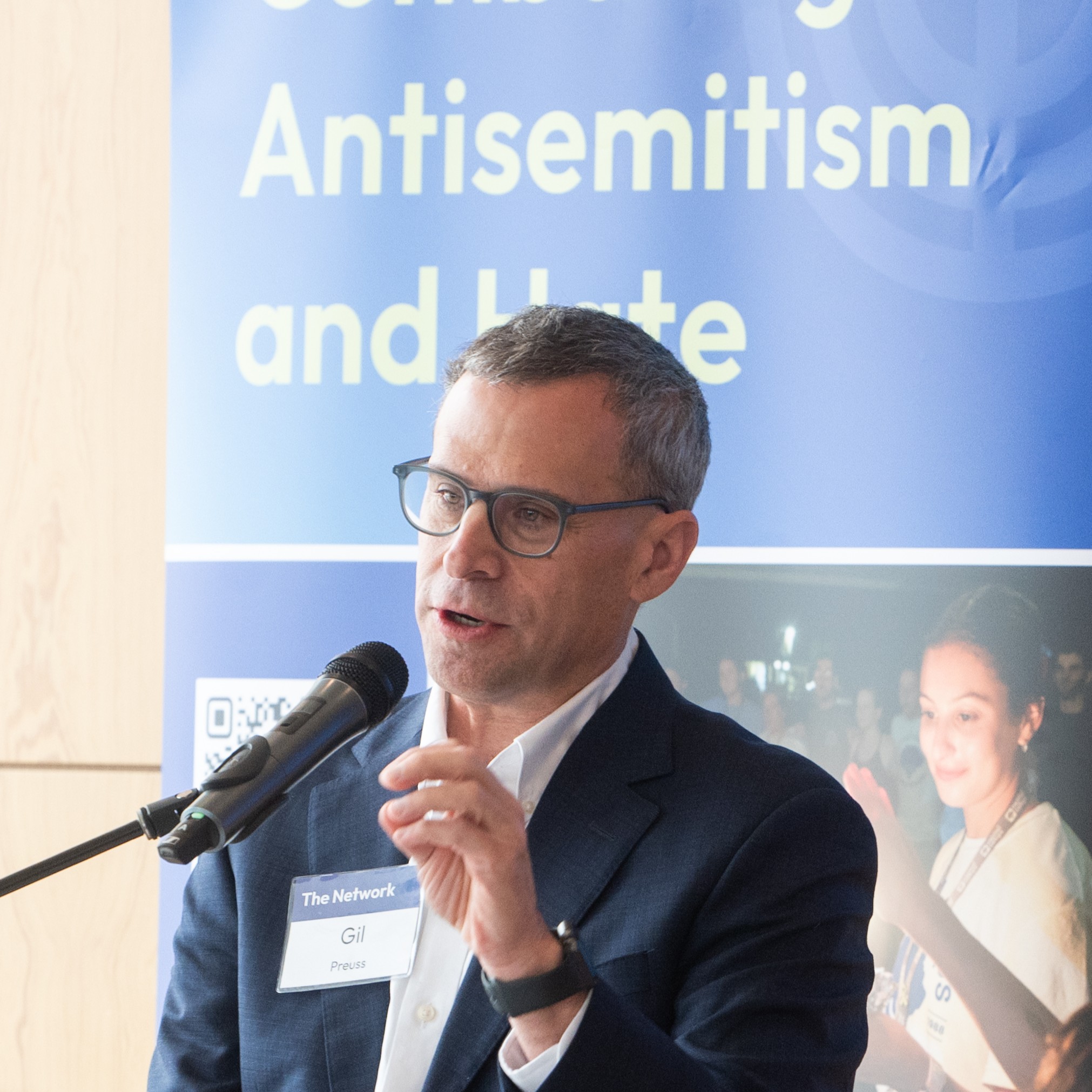
For me, working to facilitate greater connection between our community and Israel feels like second nature. Since joining the Jewish professional world, it’s been a given that helping more people form meaningful relationships with Israel would be a core part of my work. Indeed, it’s a pillar of what we do at Federation and near to my heart as someone who knows and loves Israel.

A Changing Relationship Across Generations

In the current social and political climate, I am also recognizing how important it is that we articulate why we do this work and how we go about it. The Washington Post recently found that 68% of American Jews over 65 feels emotionally connected to Israel. For those between ages 18 and 34, that number drops to 36%. Stats like these abound.

There are a variety of reasons for this drop that I will not address at the moment (though I will in future reflections), but it’s clear we need to do more to support all Jews, and particularly younger Jews, in accessing one of the premier benefits that comes with their identity. Staying in relationship with Israel, even when we disagree or face different challenges, allows us to deepen our own Jewish experience. I’ve been fortunate to accompany many people on their first visit to Israel. It never gets old seeing them discover how special it feels to be immersed in a country with a Jewish rhythm, a thriving culture, Hebrew as a national language, and a clear sense of Jewish agency. It is an unparalleled mix of comforting and empowering.

Making Space for Complexity and Difference

Importantly, any successful approach to Israel engagement must honor the diversity of perspectives that exist in our community. I’ve seen the way October 7th and its aftermath has awakened people’s interest in and affinity for Israel. I have also seen the way many among us are struggling to figure out their relationship with Israel in this moment—and witnessed that struggle enrich our community by helping us all wrestle with what we believe and who we want to be as a people. The pathway forward must make space for multiple avenues of exploration, learning, and questioning.

How Federation Is Deepening Connection

To that end, Federation is undertaking a new phase in our Israel engagement work. Our goal is to strengthen the connective tissue—the infrastructure, programming, and partnerships—that will bring Greater Washington and Israel closer, year after year, in ways that resonate with each individual and organization. And to do so in partnership with Jewish organizations, lay leaders, educators, clergy, professionals, and philanthropists. We’ll be focusing on deepening everyday connections and building on the partnerships that have been forming organically these past few years.

What This Looks Like in Practice

Take our relationship with Kibbutz Nir Oz for example. A group of local synagogues came together to turn an emergency fundraising effort after October 7 into a genuine exchange. Kibbutz members have come to visit Washington, including former hostage Gadi Mozes, and some members of our community have visited the kibbutz in Israel. We are now supporting local lay leaders who are leading the partnership to shape opportunities for our community members to volunteer at the kibbutz and visit other Federation partners in the area.

There’s more to come, and I will be sure to keep you updated. For now, I’ll leave you with the thought that articulating the meaning that comes from a personal connection to Israel is a precious and urgent imperative. It’s on those of us who know and bask in that meaning to help others find it too.

Learn about our Israel Strategy

Related posts

Find Your People with JLive Find Your People with JLive
Find Your People with JLive
Jewish life is thriving across Northern Virginia, but finding it can be challenging. Through a new partnership between the Jewish Federation of Greater Washington and the Pozez JCC, JLive will make it easier to discover events, programs, volunteer opportunities, and meaningful community connections.
read more

Your Dollars at Work: A Path Back to Purpose

Your Dollars at Work: A Path Back to Purpose

How your support is helping Israelis heal, retrain, and rebuild after war

When Omer returned to his classroom after October 7, he couldn’t breathe.

Five of his students were gone, killed in the attacks. Just stepping into the room triggered waves of panic, grief, and memory. He felt like he couldn’t go on.

But through weekly sessions with a JDC counselor, Omer slowly rediscovered his footing. Today, he’s not just working—he’s leading. Omer now runs a therapeutic gym in a Gaza-border community, helping fellow survivors rebuild physically and emotionally. “I found a way to move forward,” he said. “And to help others do the same.”

This is what your dollars make possible.

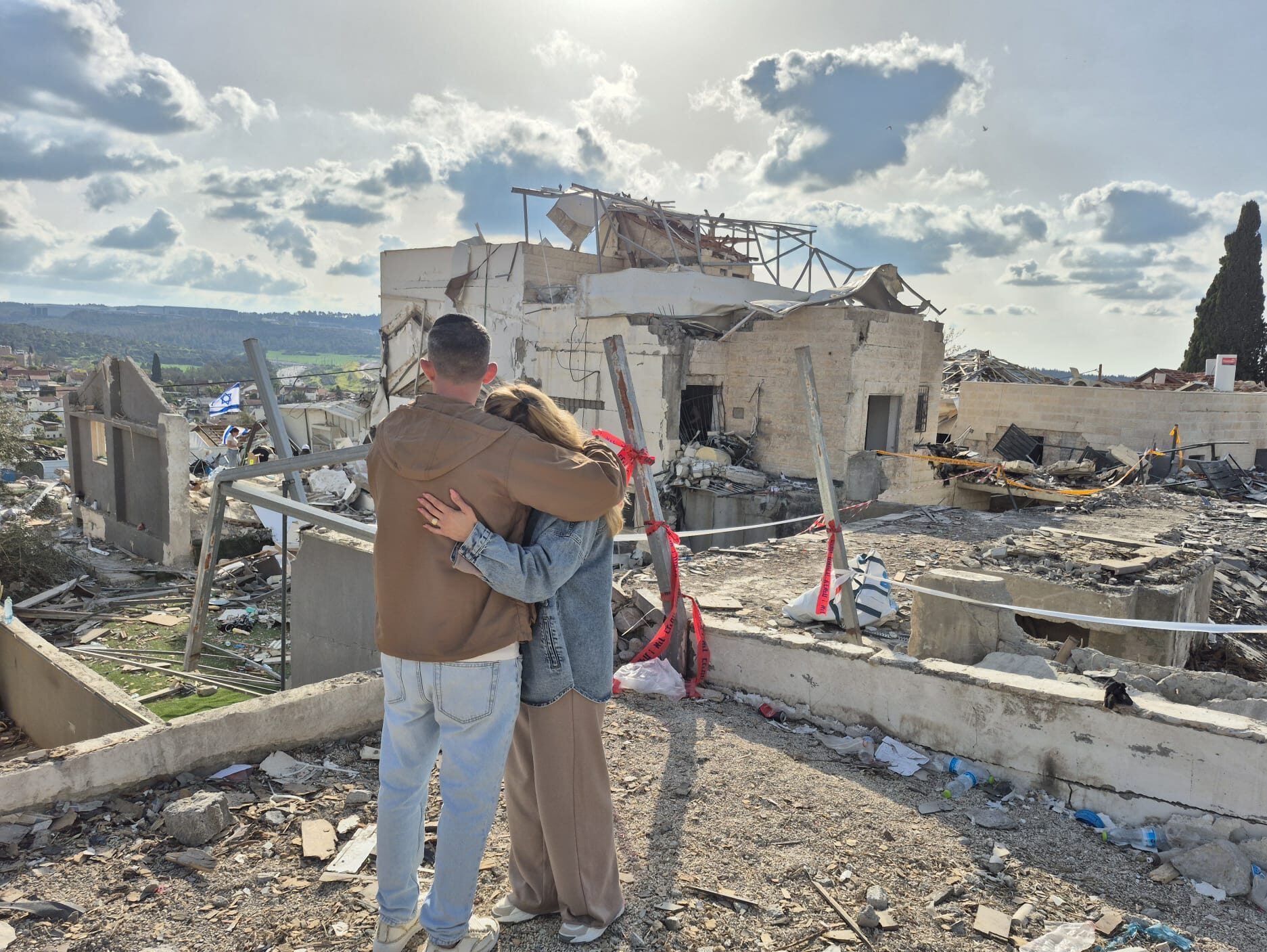
In the wake of the Iron Swords War, thousands of Israelis were forced to evacuate their homes. Many lost not just their sense of safety, but their livelihoods. The trauma was deep, the economic toll was devastating, and the path to stability felt out of reach.

That’s why Federation responded swiftly, providing a $500,000 grant to JDC to launch “Getting Victims of War Back to Work”, Israel’s first trauma-informed employment recovery model. More than just getting back to work, it’s about dignity, healing, and long-term resilience—about helping people get back to life.

With your support, here’s what’s already happening:

  • 890 Israelis have received hands-on vocational training, career guidance, and access to real employment opportunities
  • 131 participants have already been hired, earning more than 6% above minimum wage
  • 500 trauma survivors are in employment rehab, double the original 2025 goal
  • 40% of previously unemployed participants have found jobs; 100% of at-risk employees stayed employed
  • 18 locations now offer specialized career recovery support (up from 11)
  • 48 employers have been trained to support hires navigating trauma
  • And early evaluations show a 14% decrease in PTSD symptoms among participants

This model is now informing national efforts to scale trauma-informed employment support.

A Bold Investment in Israel’s Future Workforce

Through this initiative, we’re supporting Israelis not just in healing, but in retraining and returning to work with purpose.

Beyond immediate relief, it’s recovery with resilience built in.

And this is exactly the kind of long-term, people-centered impact we’re working toward through Federation’s Israel strategy: investing in long-term recovery and deepening connection between our communities.

Photo: JDC

Learn more

Related posts

Find Your People with JLive Find Your People with JLive
Find Your People with JLive
Jewish life is thriving across Northern Virginia, but finding it can be challenging. Through a new partnership between the Jewish Federation of Greater Washington and the Pozez JCC, JLive will make it easier to discover events, programs, volunteer opportunities, and meaningful community connections.
read more

Finding Our Voice in the Face of Antisemitism

Finding Our Voice in the Face of Antisemitism

“Verbal abuse becomes graffiti, becomes arson, becomes physical violence, becomes murder.” We know this continuum well. We have now watched every step play out with devastating consequences in Australia. How maddening that two thousand years after the first Chanukah, people are still seeking to murder us for being Jews.

When CNN called me for my thoughts on the attack, they could no doubt sense the aggravation in my voice. No one should have to wake up to stories about a mother and her 17-month-old diving for cover after checking out a Chanukah event full of music and bubbles. About the rabbi who lost his life two months after his son was born. About how Jews gathering to celebrate were gunned down. Again.

Across time. Across space. This has been our story to bear. It is time for a new one. Leaders on both sides of the aisle have spent the last several years dismissing antisemitism, explaining away antisemites, and letting hints of radicalization slide. But the hour for tolerating any kind of minimizing is over. 

It’s incumbent upon all political, civic, business, and religious leaders to challenge the hate directed at Jews and the Jewish people unequivocally, which includes condemning ardent and budding antisemites no matter their place in society or on the political spectrum.

Additionally, I’ve seen how it’s become normal, even chic, in certain circles to denigrate anything having to do with Israel. This too demands our pushback. Criticism is okay. Open debate is vital. But even as we strive for nuance, we must reject the vilification of Israel as a country, of Zionism as an idea, and, of the Jewish people as a whole.

As members of the Jewish community here in the nation’s capital, we have especially urgent roles to play in this effort. This is one of the most networked, most passionate communities around. It’s time to use our influence and find our voice so that we can be a collective thorn in antisemitism’s side.

We can all reach out to people we know in positions of power—federation, state, and local representatives, school board leaders, teachers, and so on. We can help raise the expectations for speech in the public square. Help emphasize that words have consequences. That a twisted comment becomes a belief system becomes a bullet.

It’s also important to remember that most people in our own social circles are well-meaning. Instead of jumping straight to condemnation in these cases, we can help by opposing problematic language and making generous offers of engagement and education.

I’m heartbroken. I’m devastated for the families of those killed and injured at Bondi, and, even now, we have a way forward.

We’ve known hate and we know how to overcome it. As the Maccabees would remind us, it starts with tapping into our agency and the strength of the Jewish people.  

Related posts

What This Moment Means and How We’re Responding

What This Moment Means and How We’re Responding

In the wake of the horrific terrorist attack in Australia, I want to speak directly to our community here at home.

Our hearts are with the victims, their families, and the Jewish community in Australia as they mourn and begin to heal. Violence against Jews anywhere reverberates everywhere, and moments like this understandably heighten concern within our own community.

Here in Greater Washington, the safety and security of Jewish life remains our highest priority. Through JShield, Federation’s community-wide security initiative, we are in close coordination with local and federal partners and with Jewish ​institutions across our region, supporting schools, synagogues, and organizations with threat monitoring, training, assessments, and grant support at no cost. You can learn more about how JShield works to keep our community safe at shalomdc.org/security.

If you see or experience something concerning, we encourage you to report it to JShield. Reporting helps identify patterns and supports coordination with our security partners.

Jewish life will continue. We will gather, celebrate, learn, and mark our holidays together, thoughtfully, responsibly, and with care for one another.

At the same time, this moment calls on all of us to be attentive to the language and actions we tolerate in our public spaces. Antisemitism, in any form, must be named and challenged, and Jewish communities must never be left to carry that burden alone.

Earlier today, I shared these concerns in a brief conversation on CNN about antisemitism and the responsibility to challenge it before it escalates. You can watch it clip below.

Thank you for the many ways you show up for one another and for our community, especially in difficult moments. We are grateful for your partnership and your trust, and we remain committed to keeping Jewish life in Greater Washington strong, safe, and connected.

This is a moment for shared responsibility. Take action by supporting JShield and strengthening Jewish community security.

Support community security

Related posts

Listening Across Difference at Pozez JCC

Listening Across Difference at Pozez JCC

When we make space to truly hear each other, something shifts.

In a year when conversations about Israel often collapse under the weight of politics, pain, and fear, more than 30 community members came together at the Pozez JCC of Northern Virginia for something different: honest dialogue rooted in listening, not debate.

The evening was hosted in partnership with the Arava Institute for Environmental Studies and led by one of our community shlichim (Israeli emissaries), whose work bridges people, perspectives, and purpose across Greater Washington. Together, they created space not for agreement, but for connection.

Stories That Set the Tone

Arava alumni Brian Crann, Jawdat Kasab, and Arielle Ben-Hur opened the session by sharing their own experiences in dialogue at Kibbutz Ketura, where Palestinians, Israeli Jews, Israeli Arabs, and others from across the region live and learn together.

Their stories didn’t shy away from pain or complexity. They grounded the room in something real.

Listening, Not Convincing

Then came the heart of the evening: small groups gathered with one goal—listen to understand. No debating, no fixing, just sitting with each other’s stories.

It wasn’t always easy. But it was real.

As one participant put it, “Meaningful conversations like these are often part of the solution.”

What We Carried Forward

Before leaving, each person shared one word they were taking with them:

“Curiosity.” “Compassion.” “Understanding.”

And most of all—“Hope.”

Staying in the Room

It didn’t take a panel or a facilitator to make the evening powerful. It took people willing to show up, listen, and stay in it together. That’s what our shlichim are helping nurture—quietly, consistently—across Greater Washington.

Learn more about how the shlichim are helping to build these bridges across Greater Washington.

Meet our shlichim

Related posts

Find Your People with JLive Find Your People with JLive
Find Your People with JLive
Jewish life is thriving across Northern Virginia, but finding it can be challenging. Through a new partnership between the Jewish Federation of Greater Washington and the Pozez JCC, JLive will make it easier to discover events, programs, volunteer opportunities, and meaningful community connections.
read more

Your Dollars at Work: Building Home Through Education in Israel

Your Dollars at Work: Building Home Through Education in Israel

This year, a new secondary school opened in the Galilee—the first in 47 years.

It was made possible by a partnership between the Rosh Pina, Mevu’ot Hermon, and Upper Galilee municipalities. But it didn’t happen in isolation. It’s part of something bigger: Homeward/Habaita, an ambitious, multi-partner initiative working to grow and strengthen communities in the Western Negev and Galilee through education.

With a $500,000 grant from our Israel Crisis Relief Allocations, that vision is becoming real.

In its first year alone, Homeward/Habaita:

  • Recruited 374 new teachers through the Educators’ Communities project
  • Reached 8,874 children and teens in the Western Negev through summer programs
  • Supported the launch of 52 new education initiatives by local educators
  • Helped 25 rural communities create new social and communal education frameworks
  • Benefited more than 36,000 students across 89 communities

Beyond temporary relief, these efforts foster long-term belonging. The kind of connection that makes staying feel possible and coming back feel worth it.

In Ma’ale Yosef, where northern moshavim were hit especially hard by the October 7 attacks, local leaders prioritized education as the first step toward returning home. “The establishment of the education systems within the communities for elementary school children and teens is the first thing we set out to do,” said Tal Ohana, demographic growth project manager for the region.

Natalie Simhon, education department director and president of Moshav Even Menahem, added: “We were disconnected from our homes, disconnected from the ability to be together—and when we create an informal solution, we build a community, we create a sense of belonging.”

This is what your support makes possible: investments in the educators, schools, and programs that hold communities together—especially when everything else feels uncertain.

We’re deeply proud to be in this work with trusted partners in Israel. And we’re grateful to stand with our community here in Greater Washington, who help make all of this happen.

This is just one of the several long-term investments we’re making across Israel. Our growing partnerships with Kinneret Valley Cluster (KVC) and Kibbutz Re’im will help us reach even more communities with this kind of bold, local leadership.

Learn more

Related posts

A Time to Sob, and a Time to Dance

A Time to Sob, and a Time to Dance

As we welcome home the living hostages, we ready ourselves for the work of healing

This has been an emotional week. Earlier today, I watched a clip of Rachel Goldberg-Polin, mother of Hersh Goldberg-Polin who was kidnapped and executed by Hamas, address a crowd of hopeful Israelis ahead of the hostage release. She summed up the moment beautifully by referencing Ecclesiastes. “There is a time to sob and a time to dance, and we must do both right now.”

It’s true, a lot must happen in this moment. This is a good time to breathe a sigh of relief and indulge in the joy of welcoming home the living hostages. It’s also a good time to ready ourselves for the work ahead as we set about to end one phase and begin another.

I am trying to remain optimistic that we are seeing the faint lights of a brighter future for both Israelis and Palestinians emerge. Still, what happens next is an open question. As of today, many hostage families are still waiting on the return of their loved ones’ remains. Israelis are continuing to navigate layers of trauma. And Palestinians are facing the immense task of rebuilding their lives under the cruel returned control of Hamas. Healing, addressing antisemitism and anti-Israel sentiment, and exploring new possibilities for the Middle East region are all on the table.

While we cannot control the future dynamics of the Middle East, Federation will be there for Israelis as they find their way back to a new normal. Later this month, Zohar Livne Mizrahi, Secretary General of Kibbutz Re’im—located beside the Nova music festival site—will visit our community. Federation is partnering with Kibbutz Re’im as its residents rebuild their homes and their lives after October 7.

For those interested in learning more, join us for a conversation with Zohar Livne Mizrahi on October 31, featuring stories of resilience and recovery, and an optional VR experience that brings survivor testimonies to life. You can learn more here.

We will keep you posted on additional ways to be involved in Israel’s recovery efforts. We also remain committed to helping Jewish community members form personal connections with Israel that transcend moments of crisis. Our friendship is about being there for each other in times of need and also about growing together in joy and possibility.

Finally, as we close out this roller coaster week, I want to acknowledge the work of the hostage families and their hardworking supporters, including those in our own community. Even in the throes of fear and grief, friends and family of the hostages pushed themselves to keep us all focused. Their tireless and courageous efforts helped bring the living hostages home. The hostage families are Jewish heroes. I am praying their tenacity becomes part of the Jewish inheritance and a precursor to more dancing.

Related posts

Talking Walls: Reflections on Connection, Art, and Homecoming 

Talking Walls: Reflections on Connection, Art, and Homecoming 

Nearly two months into my role as a Shlicha (Israeli emissary) of The Jewish Agency for Israel at The Jewish Federation of Greater Washington, I find myself asking the same question nearly every day: What is my mission here?

What does it truly mean to build a bridge between Israel and American Jewry?

Each day, I receive a different answer.

Creating “Talking Walls”

To mark two years since the October 7 massacre, I chose to curate an exhibition at the Federation offices showcasing powerful Israeli cartoons that reflect some of what we’ve experienced in Israel over the past two years.

Because sometimes, words just aren’t enough.

As I prepared the exhibition over the past two weeks, I kept hoping and praying that the final poster would be unnecessary. That it would be a waste of money.

Today, that wish came true.

The beautiful, foam-mounted poster—professionally printed and ready to hang—was covered this morning with a simple, printed A4 page:

“They’re coming home.” 

A Bridge Built of Art and Hope

This exhibition, Talking Walls: Israeli Caricatures Post October 7, brings together ten cartoons by Israeli artists—each capturing a moment, a feeling, or a truth from this complex time.

Originally shared on social media, these works move from virtual spaces into the physical world, offering an opportunity for our community to join the conversation. Together, they bridge two realms: the physical walls shattered on October 7, and the virtual walls built through online expression and solidarity.

Finding My Role

This is just the beginning. I’ll probably keep asking myself every day what my role here really is.

But I hope there will be more days like this—when the answer is clear, and for once, it comes with a big smile and a deep breath of fresh air.

This moment feels like an opportunity for all of us to pause, reflect on the last two years in Israel, and finally breathe a little easier as a bit of light begins to shine through.

It’s important for me, on this day, to remember all the people and heroes who made it possible to reach this moment. I honor and thank the soldiers and security forces who gave their lives, and everyone whose courage and determination helped make this day a reality.

We will not give up on any hostage and will continue to stand firm until every one of them returns home—to their families or to a dignified burial.

I hope this is the beginning of a greater change that will bring healing, recovery, and peace to Israel and the region.


Learn more about our community Shlichim and how they help build bridges between Israel and Greater Washington here.


Related posts

A Moment of Homecoming, Hope, and Healing

A Moment of Homecoming, Hope, and Healing

As hostages return home, we hold space for relief, grief, and the long road to renewal ahead.

This morning, Israel confirmed the release of all the remaining living hostages taken on October 7, 2023, as part of the ceasefire agreement. While we wait, with sorrow and hope, for the remains of the other hostages expected to be returned, we celebrate a moment we have prayed and hoped for: many who were taken so brutally by Hamas are finally home.

For families who have waited in fear and uncertainty for 737 days, this is a profound turning point. We exhale in relief, renew our commitment to the work ahead, and lean into hope for a Jewish future free from the darkness that has unfolded since that day in October.

We express deep gratitude for the Hostages and Missing Families Forum, whose tireless advocacy has inspired us all, and for the Nova Tribe, whose courage and creativity through the Nova Music Festival Exhibition this past summer helped our community remember and heal.

We welcome home those returning, and we stand with the families of the missing, still caught in agonizing limbo, and with the families waiting to receive the remains of their loved ones.

We can never fully comprehend what survivors and the families of those lost or held hostage have endured. The weight of their grief, fear, and trauma is beyond measure. Yet as a community, we share in the sacred work of carrying that burden together. May the memories of those we have lost be for a blessing.

This moment also brings immense sorrow as we mourn the loss of Roei Shalev, a survivor of the attack at the Nova Music Festival, who took his own life just days ago, two years after watching Hamas murder his girlfriend. His passing is a devastating reminder of the invisible wounds so many still carry—pain that is deep, relentless, and far from over.

In the tender days ahead, our purpose remains clear: to show up for one another, to support the families still waiting, and to remain steadfast in our commitment to Jewish life, the people of Israel, safety, and Jewish peoplehood here in Greater Washington and around the world. Today’s homecoming and the long work of recovery stand side by side.

Healing, both personal and collective, takes time, care, and each of us choosing compassion again and again. But there is nothing we can’t overcome when we show up for one another, hold each other close, and remind every person that they are not alone in their anguish or in their healing.

May this moment mark the beginning of a broader return—not only of the hostages, but of healing and renewal for us all.

With deep gratitude,

Robin Hettleman Weinberg
President, Jewish Federation of Greater Washington

Gil Preuss
CEO, Jewish Federation of Greater Washington

Related posts

“The Most Important Zionist Act of Our Time”

“The Most Important Zionist Act of Our Time”

Reflections on hearing from Kibbutz Nir Oz leaders, and what’s possible when our communities connect

Kibbutz Nir Oz was little-known outside certain circles before October 7, including within our local Jewish community. Now its name is a reminder of both unimaginable loss and extraordinary resilience.

Earlier this month, I had the privilege of attending a powerful event at the Bender JCC featuring three remarkable individuals with deep, personal ties to Kibbutz Nir Oz:

  • Gadi Moses, the oldest living hostage to return from captivity, spoke about his experience of 482 days in captivity.
  • Nir Metzger, whose father was murdered in captivity and whose mother was taken hostage and later released, spoke about the idyllic life on the kibbutz and how it was shattered in an instant on October 7.
  • Emi Palmor, former Director General of Israel’s Ministry of Justice and now leading Nir Oz’s rehabilitation efforts, spoke about the challenging yet hopeful process of rebuilding the kibbutz, describing it as “the most important Zionist act of our time.”

Their stories were different, but the message was clear: after unbearable loss, the focus is on moving forward and rebuilding. The clearest example came with Gadi’s release from captivity, when his first message was simple and powerful: ‘I will do everything I can to rebuild Nir Oz.’ I left thinking not only about the horror of that day, but about the resilience it takes to rebuild trust, community, and a true sense of belonging from the ground up.

This conversation was part of Kesher Nir Oz, a grassroots partnership between members of our community and the survivors and leaders of Kibbutz Nir Oz, launched by lay leaders from Congregation Beth El, B’nai Israel, and Ohr Kodesh. It is heartwarming to see such busy people dedicate so much time and energy to sustaining this relationship.

Through Federation’s Local Israel Engagement work, we aim to help nurture such efforts alongside community leaders, recognizing just how powerful these people-to-people ties can be. These relationships don’t just show support—they help stitch our people back together. And that work is far from over.

We were honored to help bring a delegation from Nir Oz to visit our community last year, and now our conversations with Kesher Nir Oz continues. The potential is tremendous, and the need for healing, presence, and partnership is urgent.

If you know of (or are part of) a similar initiative between a DMV-area congregation or organization and a community or project in Israel, I’d love to hear from you. Email me at udi.eitan@www.shalomdc.org.

Related posts

Find Your People with JLive Find Your People with JLive
Find Your People with JLive
Jewish life is thriving across Northern Virginia, but finding it can be challenging. Through a new partnership between the Jewish Federation of Greater Washington and the Pozez JCC, JLive will make it easier to discover events, programs, volunteer opportunities, and meaningful community connections.
read more