Need support? Call 703-J-CARING (703-522-7464)

Through Our Eyes: Jewish Teens Turn Identity into Art
Through Our Eyes: Jewish Teens Turn Identity into Art

Since October 7, Jewish teens around the world have been navigating a complex mix of emotions: grief, fear, pride, resilience. And increasingly, they’re not just processing these feelings quietly. They’re turning them into action.

A recent report from the Jewish Agency for Israel (JAFI) found that 74% of young Jews believe they can positively shape the future, a striking reflection of growing optimism and stronger connection to Jewish life.

In Greater Washington, a group of teens is doing exactly that.

Turning Emotion Into Expression

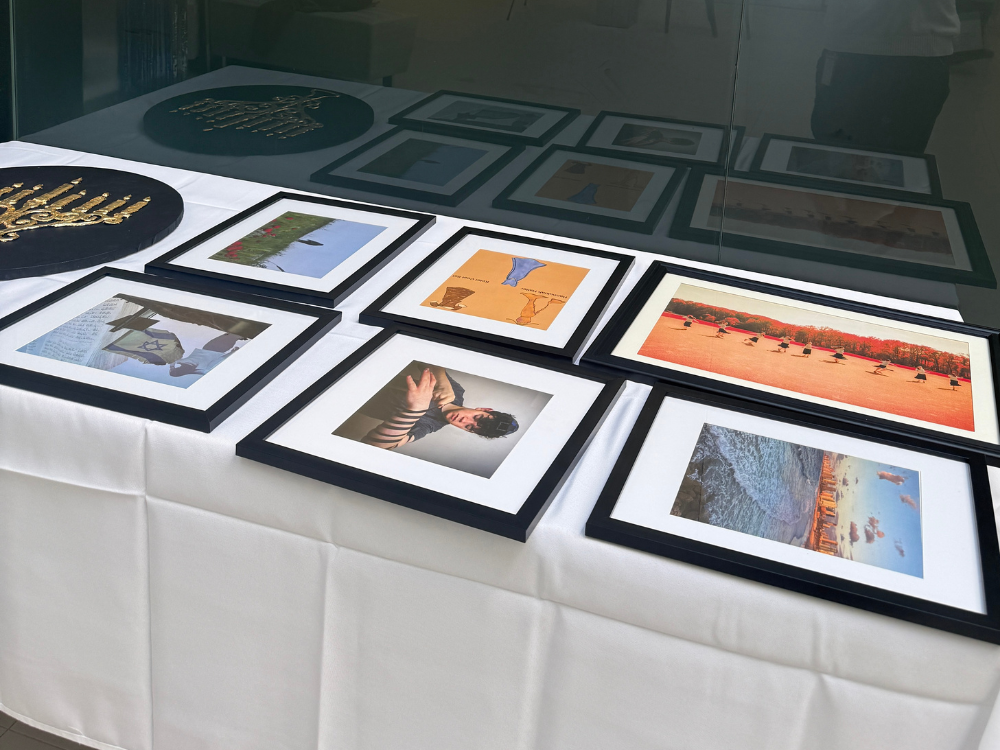
Through Our Eyes, an original art exhibit created by local teens Emma Libowitz, Ayelet Magder, Ofek Bar-Ori, Sophie Moyal, and Aviela Dennen, brings together the voices and experiences of Jewish teens in this moment. Through paintings, poetry, and mixed media, the exhibit offers a deeply personal look at what it means to be Jewish today, grounded not in headlines or politics, but in lived experience.

“At a time when antisemitism is often discussed in abstract or political terms, this exhibit restores humanity to the conversation,” said Ofek. “It allows [people] to see Jewish teens not as representatives of conflict, but as individuals with complex emotions, identities, and stories.”

For many of the teens, the exhibit is both a creative outlet and a communal space. “It acts as a space for teens to lean into their Jewish identities and express their thoughts and emotions, where they might not have otherwise had a place to do so,” Ayelet shared.

That sense of belonging, expression, and connection doesn’t happen in a vacuum.

Each of these teens is involved in Jewish life across the region: whether through the Bender JCC, camps like Ramah and Capital Camps, or other youth experiences that have helped shape their identities over time. These are the environments where Jewish teens build confidence, explore their values, and form the relationships that allow them to show up fully as themselves.

Investing in the Ecosystem

Federation plays a critical role in making those environments possible, supporting both teens and the professionals who guide and work alongside them.

By supporting camps, youth groups, JCCs, and other teen programming across Greater Washington, Federation invests in the spaces where identity is formed and strengthened. These investments don’t just power programs, they power identity, helping to cultivate a generation of young people who feel connected, confident, and empowered to express what being Jewish means to them.

As the exhibit travels to JCCs, synagogues, and schools across the region, it is creating new opportunities for connection, not just between teens, but across the broader community. “We hope the exhibit will help teens know that you’re not alone,” said Aviela. “That there are other teens going through the same things.”

And that expression matters now more than ever. “There has been a variety of reactions to October 7 within the Jewish community,” Emma shared. “Our experience as Jewish teens isn’t a monolith. Right now, we need the support and encouragement of adults to speak openly, voice our concerns, and reaffirm our communal values.”

The Through Our Eyes exhibit is modeling something powerful: that in the face of challenge, Jewish identity is not only something to hold onto. It’s something to build, express, and share.

Because when young people are given the tools, the space, and the support to explore who they are, they don’t just respond to the moment—they help shape what comes next.
Related posts

Making Space for Ourselves

Making Space for Ourselves

Over the past several weeks, I’ve spoken with donors, volunteer leaders, Federation staff, and colleagues across Jewish organizations, all seeking to understand how to make sense of this moment of division and conflict.

Each one of us can name the many divisions that exist within our country, our community, the Jewish people, and often within our own families. What struck me most, however, in my many conversations, were the fractures and struggles that exist within each one of us. Some feel uneasy about how national leaders address antisemitism on college campuses yet relieved the issue is finally receiving attention. They are grappling with the rise of antisemitism and anti-Israel sentiment and with the complexity of how best to respond.

Most commonly, however, the conversation evolves to questions about Israel, Hamas, Gaza, Palestinians, and the hostages. Many people deeply believe in the need for Israel to eliminate the threat posed by Hamas and to ensure the horrors of October 7 never happen again. They see the war as an existential one to Israel’s survival and by extension of the future of the Jewish people. For many, Israel is a cornerstone of Jewish identity and safety. Our fear is not only what happens on the ground, but also about what it means for Jewish life, security, and solidarity around the world.

And, at the same time, many of these same people are deeply struggling with what they read every day about the number of lives lost, the level of hunger that may exist in Gaza and a war with no end in sight, and the devastating possibility that the hostages will not return home. One person stated that they felt ashamed, both by the actions of the Israeli government and by the part of themselves that believes these actions may be necessary to ensure a safe and secure Jewish future. That tension stayed with me. For many, this moment is not about certainty, but about navigating conflicting truths: fearing what inaction might invite, while grieving what action demands.

Another person shared that they’ve been waiting, hoping that Israel’s actions might eventually bring about something redemptive. That we would be able to say, “This is why,” and find some clarity or affirmation in the face of so much pain and that the broader world would finally understand. But that moment hasn’t come. And for some, it’s beginning to feel like it may not. What once felt like hopeful anticipation has become another layer of grief and shame.

One of our greatest challenges, both in conversation and as a community, is resisting the impulse to expect ourselves or others to have clarity when there is none. These are morally complex times. The struggle many are experiencing is about identity. What does it mean to be Jewish, to live our values, when we are confronted with human suffering, fear, a longing for justice, and a sense of abandonment?

As the Jewish Federation, we strive to be both clear in our values and aspirations for a vibrant Jewish community while creating space for honest conversation that does not demand clarity or agreement. By recognizing that those with whom we are speaking may also be struggling within themselves, we can begin to soften the divides that exist between us and stay in relationship through the uncertainty and discomfort.

As we move forward, I continue to believe in the power of this community to show up for one another, hold space for complexity, and lead with compassion. Our perspectives may differ, but the emotions we carry can still connect us. In a moment that could pull us apart, our shared experience can hold us together.

Thank you for your partnership, your courage, and your commitment.

Related posts

Rooted in Israel, Reaching Across the DMV

Rooted in Israel, Reaching Across the DMV

Meet Hila, Federation’s Educational Engagement Shlicha

For Hila, Jewish identity has never fit neatly into one country—or one category.Born in Jerusalem, connected to Argentina, shaped by global service, and grounded in a personal, evolving expression of Jewish life, she’s here to help our community deepen its connection to Israel and to each other.Through Federation’s long-standing partnership with The Jewish Agency—which brings Israeli emissaries into Jewish communities around the world—Hila’s role is helping more people build personal, meaningful relationships with Israel and one another.

Her story spans continents and communities, and now, for the first time, it’s rooted right here in the U.S.

And while her presence feels new, Hila represents the next chapter in one of Federation’s longest-standing investments: bringing Israeli voices into our community to build relationships that deepen over time—not just through programs, but through people.

Listening First, Leading with Heart

Unlike most Shlichim, who serve a single synagogue or school, Hila’s work spans the entire DMV: supporting organizations without their own Shaliach, mentoring newer emissaries, and helping communities connect with Israel in ways that feel personal, relevant, and real.

She offers connection and context to spaces that might otherwise go without—opening the door to conversations that go deeper than the headlines.

“I came to listen, to learn, and to really experience this community one-on-one,” Hila shared. “I want to understand people’s values and connections—and help them feel a stronger relationship back to Israel.”

At a time when many in our community are seeking deeper, more personal ways to engage with Israel, Hila brings a presence rooted in empathy and experience.

A Journey Through Informal Education

Hila’s leadership began early, guiding her own troop in the Israeli Scouts as a teen. That experience sparked a lifelong belief in informal education as a tool for connection and change. She earned degrees in social work and leadership, later leading civic engagement work in Israel’s periphery.

Most recently, she and her wife, Chen Sara—also a Shlicha, now serving in Northern Virginia—ran the Jewish Agency’s TEN volunteer center in Cambodia, mentoring Jewish young adults through hands-on service and sustainable development.

Blending Traditions, Living Fully

Raised in a largely secular home, Hila became more connected to Jewish tradition after meeting Chen, who comes from a more observant family. Today, their practice blends ritual and culture—creating space for connection, reflection, and joy.

“I’m not religious,” she said. “But I believe deeply in cultural Judaism.”

As an openly LGBTQ+ professional, Hila brings her full self to her work. She’s helped organize municipal pride events in Israel and served on the board of the Be’er Sheva LGBTQ+ Center. Here in the U.S., she’s inspired by how seamlessly Jewish and queer identities coexist.

“It’s moving to see how Judaism and LGBTQ+ can go together here,” she said. “In Israel, that’s not always the case.”

From Siem Reap to the Capital Region

Outside of her work, Hila is a morning person, a yoga lover, and a lifelong basketball fan (she played as a kid!). She’s visited more than 30 countries, with South Africa topping the list. Chocolate ice cream is her go-to treat; sushi tops her food list.

After years spent bridging communities around the globe, Hila is ready to build something lasting here.

“Our goal is to truly feel at home—and to build relationships that are meaningful and strong,” she said.

Through Hila and the 2025-26 delegation of Shlichim, our community can find that same sense of belonging by connecting with Israel in ways that feel personal, lasting, and real.

Meet this year's Shlichim

Related posts

Making Room for Hope

Making Room for Hope

More than 700 days have passed since October 7—nearly two years since that horrific morning tore through Israeli life.

And for every one of those days, dozens of hostages have remained in Gaza, held by Hamas in conditions we can barely imagine. Today, that number stands at 48. It’s believed that 20 are still alive.

Among them is Alon Ohel.

A Glimpse of Life

Last week, for the first time since he was taken, we saw Alon.

In a Hamas video, another hostage—Guy Gilboa Dalal—is paraded through Gaza, pleading for his life. Alon appears beside him. A single, fleeting moment. A moment that marks the first visual proof Alon is still alive since October 7, 2023.

It means something. For his family, it means everything.

Until now, they had nothing. No photo. No message. Nothing since Alon disappeared from a shelter near Kibbutz Re’im, after escaping the Nova music festival massacre.

We now know from Hostage, a new book by survivor Eli Sharabi, who was held captive with Alon for months, that Alon was expected to be released in February. But the second-phase deal never came.

And so, seven months later, the agonizing wait continues.

This Sukkot, We Make Room for Them

As we look ahead to Sukkot, a time of shelter and solidarity, we’re preparing to turn our grief into action.

Together with the Hostages Families Forum, Adas Israel, and partners across Greater Washington, we will build a Sukkah of Hope in front of the White House.

A place to gather. To remember. To say out loud: they are still there. And we are still here.

Refusing to Look Away

Even in this unbearable reality, a single photo can mean everything.

It means someone is still alive.
It means their story is not over.
It means we still have time to bring them home.

And it means the world still needs to hold Hamas to account for these ongoing atrocities and the suffering inflicted on so many innocent lives.

We carry that truth into Sukkot, into the shelter we build, the space we hold, and the hope we refuse to let go of.

May this be the year they come home.
And may it also be the year of peace.

Related posts