Need support? Call 703-J-CARING (703-522-7464)

An Update on Our Response in Israel
An Update on Our Response in Israel

How we're meeting the moment.

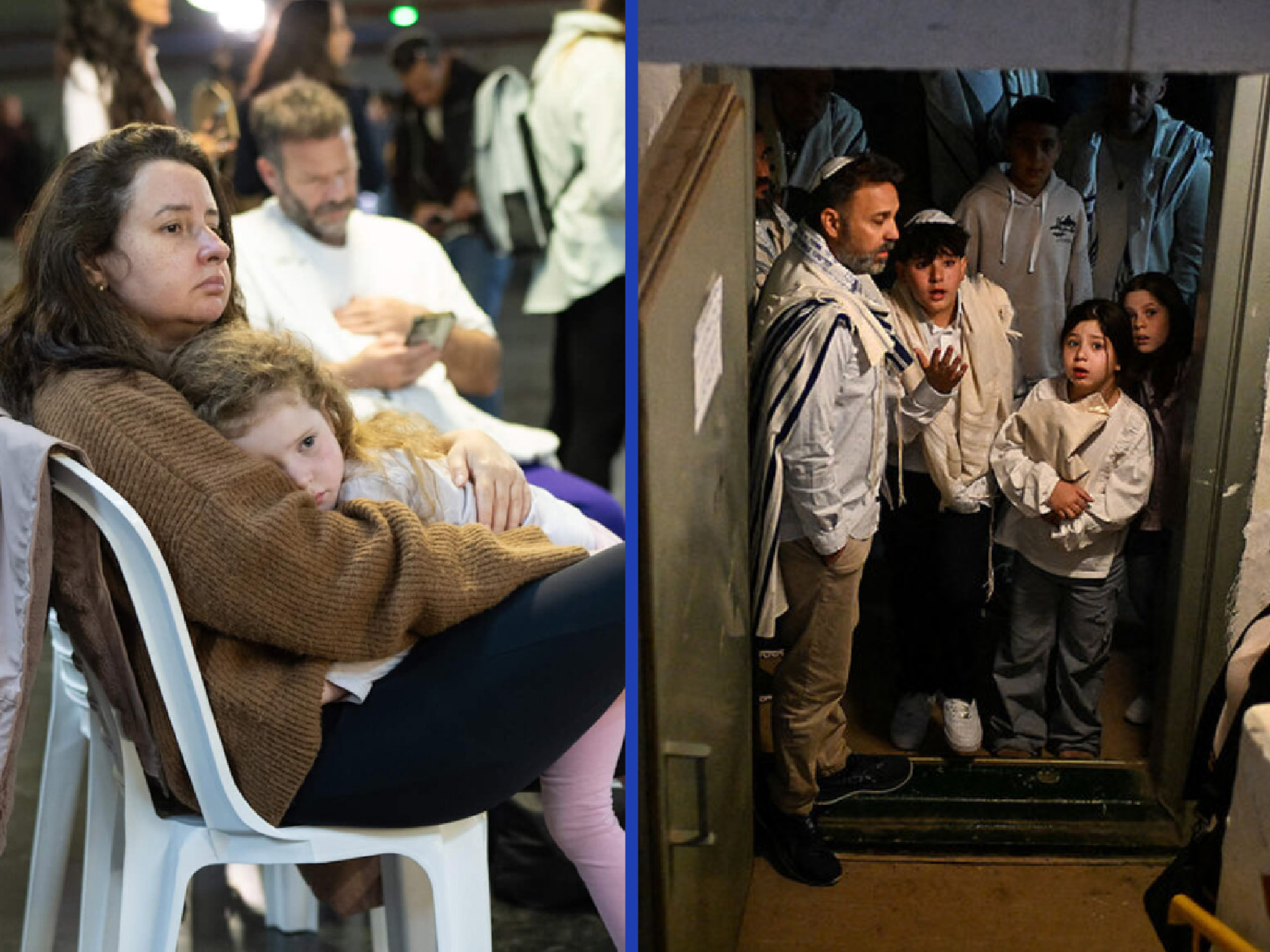
As the war with Iran continues to escalate across the region and families across Israel once again take shelter in safe rooms and bomb shelters, we stand firmly with the people of Israel. We mourn the victims of the recent Iranian ballistic missile strike in Beit Shemesh, in which at least nine civilians were killed and dozens were injured. We remain in close communication with partners there as more details emerge.

Immediate Action

Federation is allocating $250,000 to address the urgent needs in Israel. Funds will be directed to existing partners on the ground, including JDC and The Jewish Agency for Israel (JAFI), and based on evolving local needs in coordination with community partners.

Over the coming days and weeks, we will continue to evaluate developments carefully to mobilize our community to respond where support is needed most.

Security at Home

JShield, Federation’s community security initiative, remains in regular contact with law enforcement and community partners. While there are no known or anticipated security threats in Greater Washington at this time, we continue to reinforce vigilance and encourage all organizations to continue maintaining the security protocols already in place.

Community members who witness suspicious activity can report an incident here. In an emergency, call 911 immediately.

Organizational security-related questions may be directed to security@shalomdc.org.

Next Steps

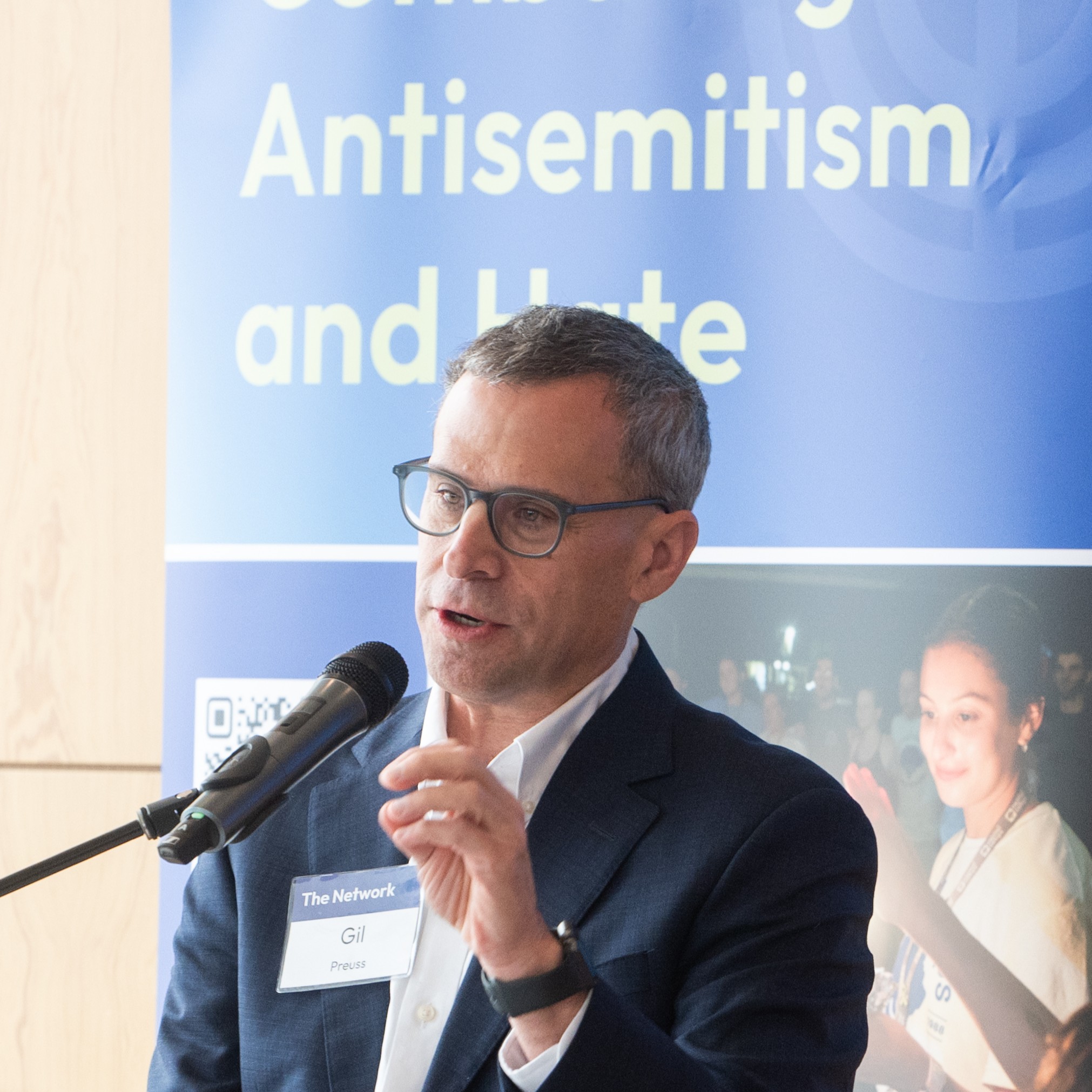
Watch a live, firsthand update from Israel. Federation’s Israel Office Director, Karen Katzman, joined Gil Preuss on Wednesday, March 4 on Zoom. Speaking directly from Israel, Karen shared what she is seeing on the ground and what we are hearing from partners across the region.

Read the latest Israel update. Special briefings from the Jewish Federations of North America (JFNA) are available on our news page.

Stay informed and engaged. We will continue to post verified briefings and share meaningful ways for our community to respond as the situation evolves.

Many have already asked how to help. Our current response is being mobilized through existing Federation resources and long-term investments stewarded by the Foundation, enabling swift and accountable action. Those who wish to contribute may do so here.

Learn more about or support our ongoing work in Israel.

Photo credit: L: Erik Marmor/Getty Image; R: Rami Slush/Reuters
Related posts

Support When it Matters Support When it Matters
Support When it Matters
After a direct Iranian missile strike on Beit Shemesh, Federation mobilized quickly—transforming the Zinman Community Center into a Family Support Hub providing emergency relief, psychological support, and moments of joy for impacted residents.
read more

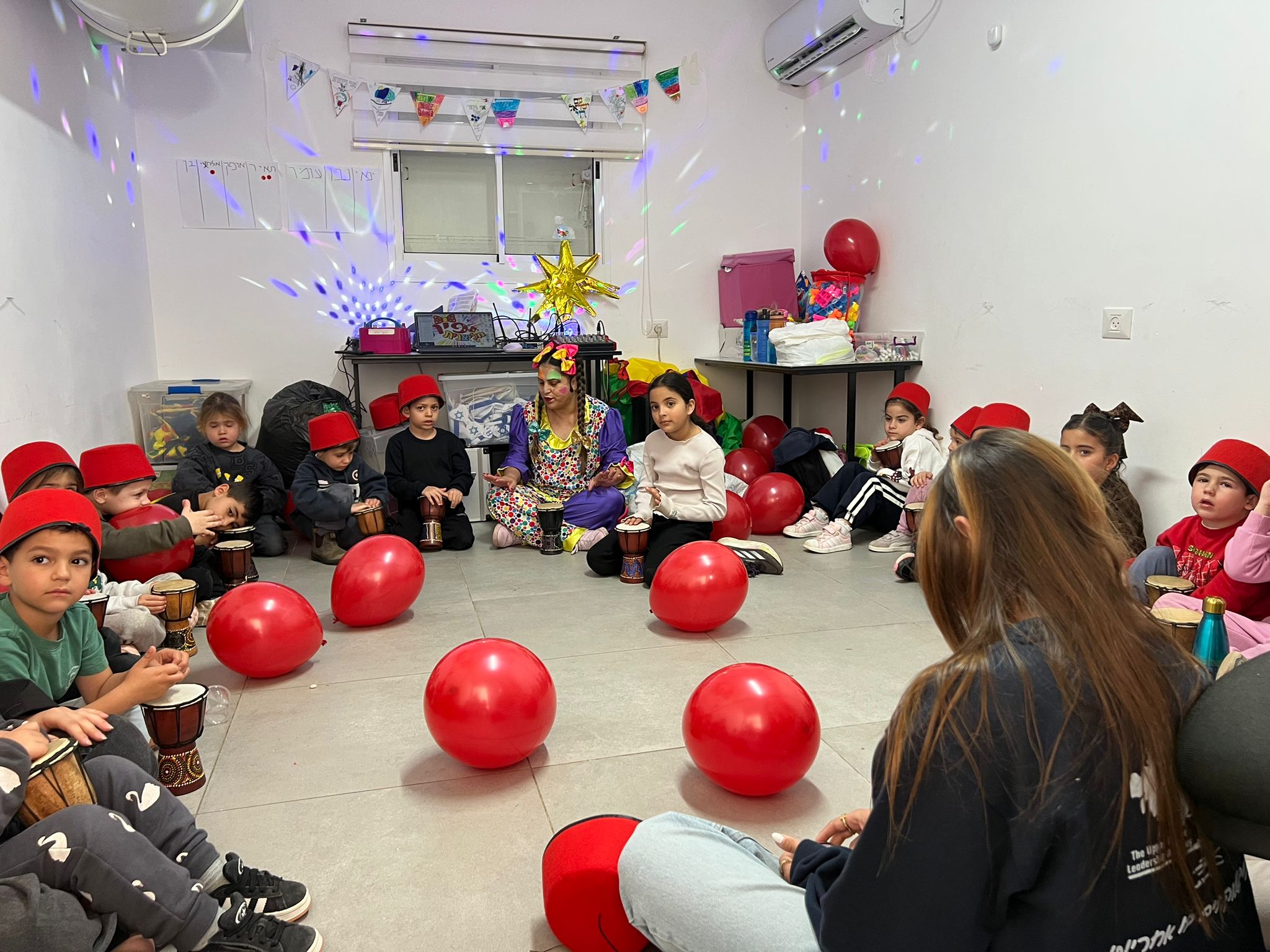
Purim Joy Means No One is Left Behind

Purim Joy Means No One is Left Behind

Purim typically conjures images of costumes and raucous merriment, and rightfully so. But the holiday also carries with it a special commandment, matanot la’evyonim, to give directly to those in need. Amid our revelry, we are called to ensure our joy is shared and that no one is left behind.

At Federation, this mitzvah animates our work throughout the year. We know that many people are struggling throughout the community and that Jewish poverty is real and often hidden. Families facing job loss, rising housing costs, medical bills, mental illness, or unexpected crises can quickly find themselves struggling to make ends meet. Last year, through our partnerships and targeted investments, Federation provided $1.85M in critical funds to our local agencies supporting many who are struggling and helps mobilize emergency cash assistance to help individuals and families cover rent, utilities, food, and other essential expenses. These efforts provide not only immediate relief, but also stability and dignity at moments of profound vulnerability. This is a core part of our work that we collectively do every day.

A critical entry point for this support is J-CARING, our community support hotline. With a single call, community members can be connected to financial assistance, mental health services, career counseling, and other vital resources. J-CARING ensures that when someone reaches out, they are met with compassion, discretion, and a clear path forward. You do not need to navigate hardship alone. If you or anyone you know could use some help, please call 703-J-CARING (703-522-7464).

As part of the global Jewish family, we also support Jews in Ukraine who remain affected by four years of war and counting. Our collective efforts have helped deliver cash assistance, humanitarian aid, medical care, and essential supplies, including dignity and hope. Likewise, in the wake of ongoing social and economic strain, individuals and families in Israel continue to face deep uncertainty. Through our trusted partners on the ground, we are providing services and aid to Israel’s most vulnerable.

Inherent in the story of Purim are several lessons that feel as relevant as ever: that circumstances can change in an instant, that collective action matters, that we are bound to one another’s fate. And, importantly, that joy is incomplete if it is not shared.

Please consider making a gift to Federation as we continue our collective work to ensure that those in need across the community have access to critical resources. Your support enables us to forge ahead in our efforts to respond swiftly to crises and sustain the systems of care that define us, among other components of our vital work. As we prepare to celebrate the victory of the Jewish people over those who would cause us harm, we are reminded that we must also care for those struggling within our own community. In true Purim fashion, we get to indulge both our exuberance and our generosity.

Related posts

The Legacy of Eddie Kaplan The Legacy of Eddie Kaplan
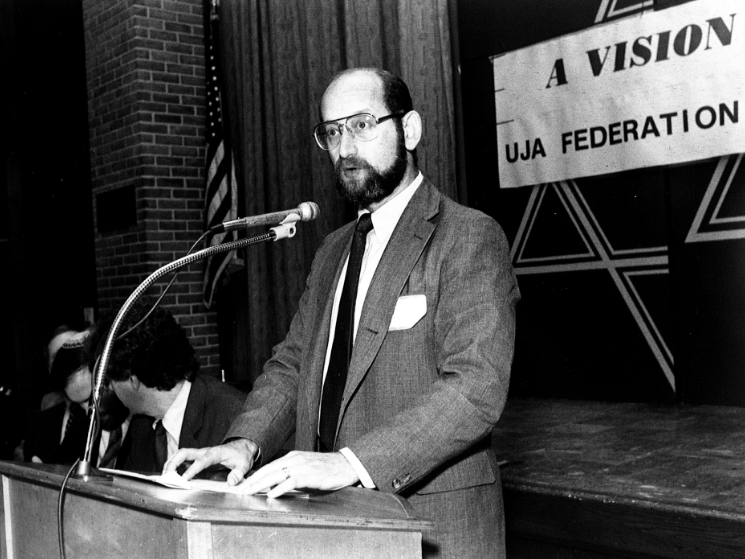
The Legacy of Eddie Kaplan
Eddie’s decades of leadership at Federation and the Jewish Community Foundation helped strengthen institutions, support community investments, and shape a thriving Greater Washington Jewish community rooted in care, vision, and lasting impact.
read more

Eight Weeks. 100 points. A Whole New Financial Future.

Eight Weeks. 100 points. A Whole New Financial Future.

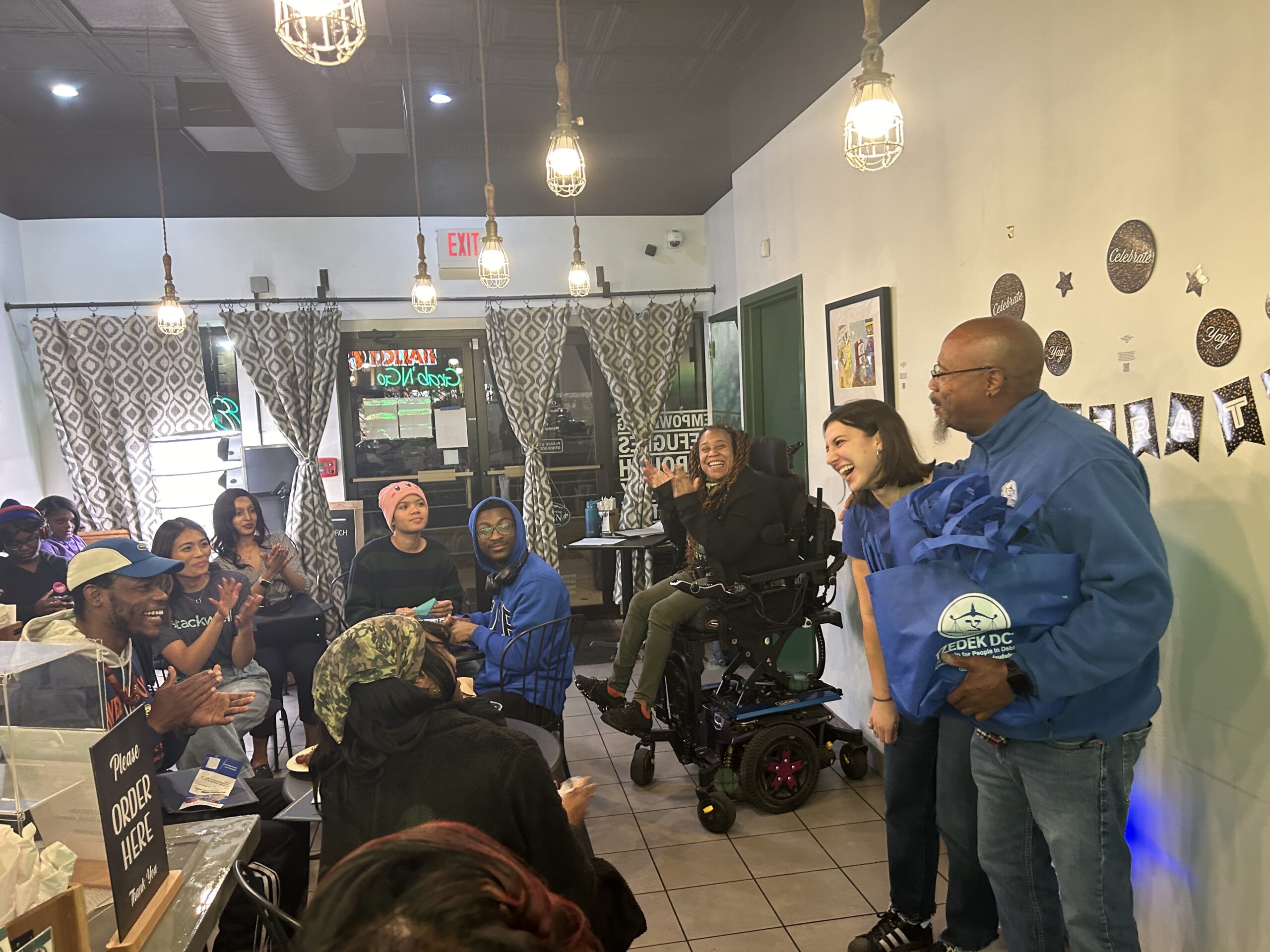
On any given weeknight in DC, a group of residents gathers around tables and notebooks at a Federation partner agency. They talk about credit scores, spending plans, debt that’s been sitting heavy for years, and long-term investing goals.

And then something shifts.

“After eight weeks, most participants made positive and tangible changes in their lives,” says Sophie Adler, Financial Empowerment Program Coordinator at Tzedek DC. “One participant increased their credit score by 100 points, and another paid down thousands of dollars of debt. But almost everyone, 98%, made a financial behavior change as a direct result of our program.”

Ninety-eight percent.

That kind of change doesn’t happen by accident. It happens when people are given practical tools, steady support, and a space to build confidence.

The Jewish Federation of Greater Washington is proud to help make that support possible by investing in partners like Tzedek DC.

From Portland to Purpose

Sophie grew up in Portland, Oregon, and came to DC through Avodah’s Jewish Service Corps, part of a Federation partner agency. She was looking for a way to pair Jewish community with hands-on social justice work—and found both at Tzedek DC, which works to alleviate debt and address economic injustice in DC. Its name inspired by the Jewish teaching Tzedek tzedek tirdof—“Justice, justice shall you pursue”.

What stood out for Sophie, though, wasn’t just the mission. It was the model.

“We don’t just offer direct services,” she explains. “We also work on policy and community education. You need all of it—reactive support for people in crisis and proactive, systemic change.”

Following her Avodah year, Sophie was hired to join the staff. Today, she serves as Financial Empowerment Program Coordinator, leading the eight-week program she helped launch during her Avodah service year.

That integrated approach reflects Federation’s belief that strengthening Jewish life and advancing economic justice go hand in hand. When Federation invests in partners like Tzedek DC, we help sustain both immediate support and long-term solutions.

Eight Weeks That Change Everything

When Sophie arrived, Tzedek DC was launching a pilot Financial Empowerment Program, an intensive, eight-week series offered free to DC residents.

Each week, participants dive into spending plans, short- and long-term financial goals, and building credit. They move beyond theory, through interactive workshops driven by the participants’ questions.

Alongside the workshops, participants can meet one-on-one with Tzedek DC’s financial counselors, pulling credit reports, identifying priorities, and setting repayment strategies. The workshops build knowledge. The counseling builds momentum.

The impact is tangible. One participant got her first credit card, and another opened a CD account. One participant worked hard at her long-term goal of becoming a homeowner and purchased her first home 15 months after graduating from the program.

But for Sophie, the most powerful shift isn’t numeric.

“It’s seeing participants’ confidence grow,” she says. “They’ll message me months later to celebrate a milestone. That pride, that sense of ‘I did this,’ that’s what stays with me.”

This is the kind of work Federation is proud to support: programs that help people build stability and long-term confidence.

Stronger Together

No organization can do this work alone.

“We constantly have people calling us with different needs that we might not always be able to provide,” Sophie shares. “Being able to rely on our community partners is so important.”

By investing across Greater Washington, we help create the connective tissue that allows agencies to share resources, refer clients, and respond more effectively when needs arise.

Beyond the Workshop

Outside the classroom, Sophie brings the same energy to community life. She’s been playing basketball since she was four, most recently in DC’s Volo leagues, and now organizes Tzedek DC’s annual March Madness bracket challenge.

She also helped launch the organization’s Racial Equity Book Club and co-organizes a book club with fellow Avodah alumni.

It’s not separate from her work. It’s an extension of it.

“I want a career rooted in community,” she says. “Grounded in lived experience. People-centered.”

That instinct, toward connection and shared responsibility, is at the heart of Federation’s work across Greater Washington.

Where Confidence Becomes Stability

Eight weeks may not seem like a long time.

But in that time, participants begin putting the lessons into action—creating spending plans, building credit, and setting long-term goals.

That’s why Federation invests in partners who pair practical tools with lasting solutions.

Because when one person gains stability, the ripple effect reaches far beyond a single balance sheet—strengthening families and the broader community.

Related posts

The Legacy of Eddie Kaplan The Legacy of Eddie Kaplan
The Legacy of Eddie Kaplan
Eddie’s decades of leadership at Federation and the Jewish Community Foundation helped strengthen institutions, support community investments, and shape a thriving Greater Washington Jewish community rooted in care, vision, and lasting impact.
read more

Disagreement Need Not Mean Distance

Disagreement Need Not Mean Distance

Strengthening Connection and Dialogue on Israel and Beyond

I’ve been thinking about Federation’s role in Jewish life. To be fair, I’m pretty much always thinking about this. But I’m looking at the swirl of everything going on in our world, and wondering what is it that we owe our community in this moment?

As the sociologist Robert Bellah might put it (a reference I’m borrowing from a recent meeting of our Governing Board), some communities find strength in internal alignment while others rely on a series of interconnected bridges to stay strong and cohesive. Our community is likely best defined as a combination of the two. We hold a common commitment to a strong and vibrant Jewish community while operating across a breadth of differences. We must therefore continue building durable throughways to ensure we stay connected to Jewish life and each other.

This, of course, includes our work to engage our community with Israel. Core to our strategy is the goal to engage the full range of our community with the full range of Israeli society according to our community members’ own interests. This year, we’ll be continuing to work with Jewish organizations across our community to build out opportunities for more people to learn about and connect with Israel.

Additionally, as I wrote this week in partnership with scholar Ted Sasson, The Jewish Federation of Greater Washington is a Zionist organization. And as such, we have a responsibility to live up to our definition of the term and show people that Zionism is “broad enough to accommodate a community of Jews who hold (or grapple with) attitudes about Israel that span the range from the right to the left.”

After all, the latest JFNA study found that a majority of American Jews are struggling with specific Israeli government policies, even as they continue to believe in a Jewish, democratic homeland and Israel’s right to exist. If we care about a vibrant Jewish community, we cannot ignore this. We owe it to those deeply troubled by Israel’s actions to continue engaging them and creating the conditions for open dialogue and authentic connections with Israel and Israelis.

On a local note, our latest pulse survey found that political and social disagreements are the number one driver of disengagement with Jewish life and community. After issues of safety and antisemitism, Jews in the DC area rank political polarization as one of the most critical issues facing Jewish Greater Washington. More and more, I see a core part of Federation’s role as not only mitigating this crisis but turning our unique communal makeup into a source of strength.

Disagreement need not mean distance. Uncertainty need not mean isolation. What’s going on in the world, and certainly in Israel, is complicated and, for many, deeply personal. What matters is not that we arrive at the same conclusions but that we feel comfortable and, better yet, moved to meet each other on those bridges and find a way forward together.

Related posts

Support When it Matters Support When it Matters
Support When it Matters
After a direct Iranian missile strike on Beit Shemesh, Federation mobilized quickly—transforming the Zinman Community Center into a Family Support Hub providing emergency relief, psychological support, and moments of joy for impacted residents.
read more

How should Jewish organizations respond to the growing criticism of Israel from inside our communities?

How should Jewish organizations respond to the growing criticism of Israel from inside our communities?

Gil Preuss, Chief Executive Officer

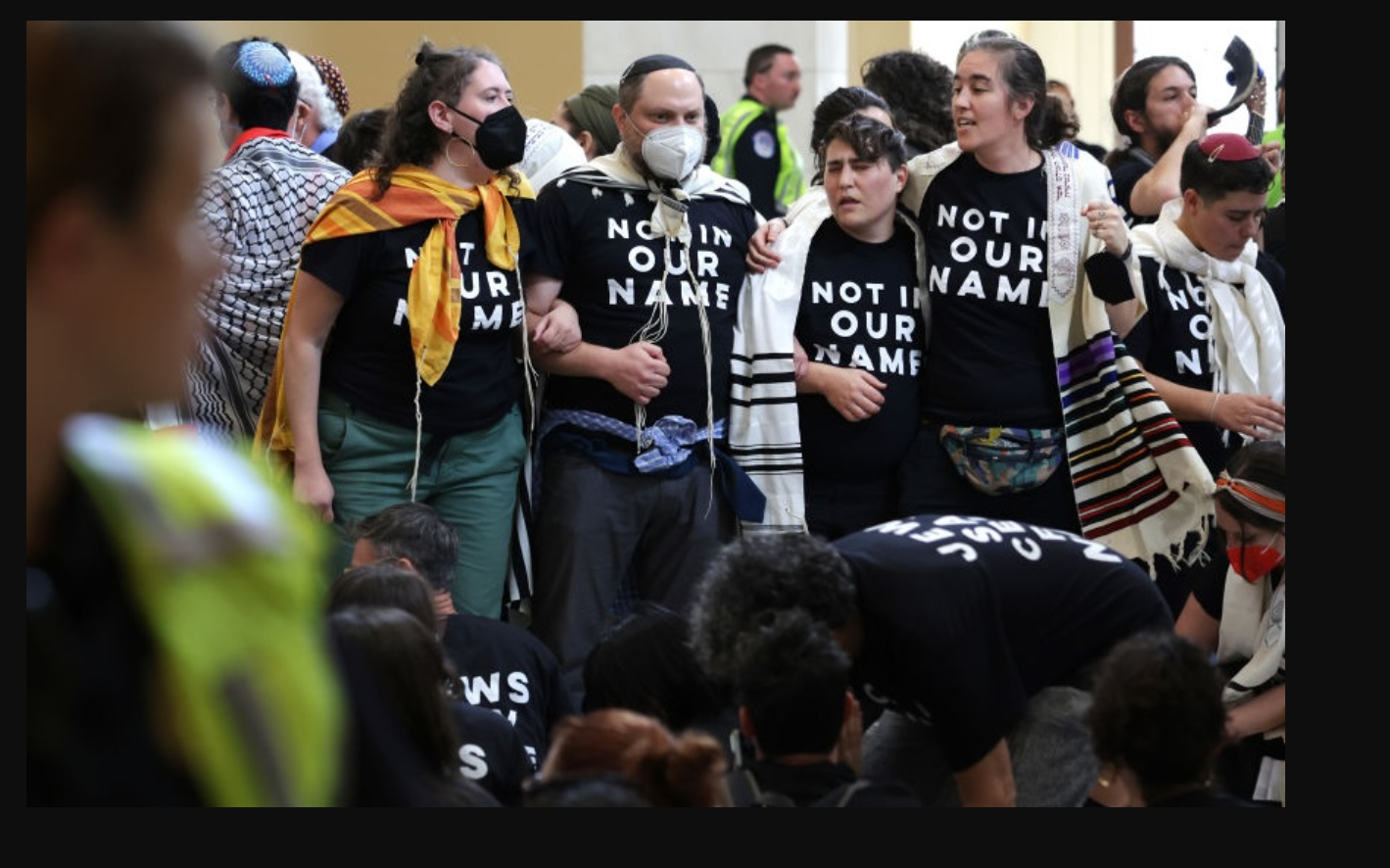
Surveys released last week by the Jewish Federations of North America and Combined Jewish Philanthropies of Greater Boston are among the first to report Jewish views about Israel since early in the Gaza war. They are also among the first in a very long time that ask Jewish respondents whether they identify as Zionists, and what they mean by the term. The findings have important implications for how Jewish communal institutions relate to Israel and the rapidly expanding spectrum of opinion inside the American Jewish community.

Photo Credit: Alex Wong/Getty Images

Read the full eJewishPhilanthropy (eJP) article

Related posts

Strengthening Jewish Life While Confronting Hate

Strengthening Jewish Life While Confronting Hate

Earlier this month, Bret Stephens delivered the State of World Jewry address at 92NY. His remarks caught people’s attention. Stephens argued the Jewish community should shift energy and resources away from fighting antisemitism and instead double down on investing in Jewish education and engagement. As he put it, “Jew hatred is the product of a psychological reflex, and that kind of reflex can never be educated out of existence, even if, for a time, it may be sublimated or shamed into quiescence.”

I agree and disagree with his main points (and find fault with some of the additional opinions he presented). I agree with Stephens that now is a moment for Jewish revival, that helping more people explore and connect with Jewish ideas, practices, and peoplehood will be what shapes a vibrant Jewish future. At Federation, we are committed to working across our community to invest in and scale substantive, meaningful Jewish experiences—like summer camp, trips to Israel, learning and discussion opportunities, day school, and more—so that anyone who is interested has the chance to dig in and discover the joy of Jewish life.

But it would be irresponsible to ignore the work of countering antisemitism. We can and should be leaders in holding individuals and institutions to account and helping people understand antisemitism as a serious issue. Our work to build relationships, alliances, and understanding is not futile. If there are things we can do to mitigate hateful behavior, we should do them.

Admittedly, we may not be able to change the minds of the Carlsons and the Owenses of the world. But we can help shape programming and guidelines for schools, educate and engage leaders, work with teenagers before they go to college, and build bridges with other minority and interfaith communities, among other efforts. Not only does this work help address antisemitism, but it may also change the lived experiences of many in the Jewish community.

Stephens muses, “There is nothing Jews can do to cure the Jew haters of their hate. They can hire their own psychiatrists.” And he may be right. We are not responsible for people’s hateful and misguided beliefs. But perhaps I have a bit more faith than Stephens in our ability to multitask. I am confident we can build vibrant Jewish life while protecting it and being there for the students and teachers and everyday people who are coming face to face with antisemitism on a regular basis.

As Jews, we don’t ignore, we tackle. Today, that means being part of the sacred, collective efforts to stop hate before it starts while simultaneously strengthening Jewish identity, pride, and joy for the future.

Related posts

Support When it Matters Support When it Matters
Support When it Matters
After a direct Iranian missile strike on Beit Shemesh, Federation mobilized quickly—transforming the Zinman Community Center into a Family Support Hub providing emergency relief, psychological support, and moments of joy for impacted residents.
read more

Where Jewish Belonging Takes Root, for Generations

Where Jewish Belonging Takes Root, for Generations

Through a new endowment with the Jewish Community Foundation of The Jewish Federation of Greater Washington, Rhea Schwartz is investing in Jewish summer camp—helping more children experience what shaped her so profoundly. Her support recognizes both the cost for families and the realities camps face in maintaining safe, welcoming facilities.

Jewish Life, Lived Every Day

Rhea Schwartz grew up in a home filled with Jewish life.

Raised in Brooklyn, her childhood was shaped by family, culture, and everyday experience. Yiddish filled the room, spoken by her grandparents, parents, and their friends. “My family wasn’t very religious,” she says, “but we were very Jewish.”

Where Belonging Took Shape

That feeling of belonging took its fullest shape at Jewish summer camp.

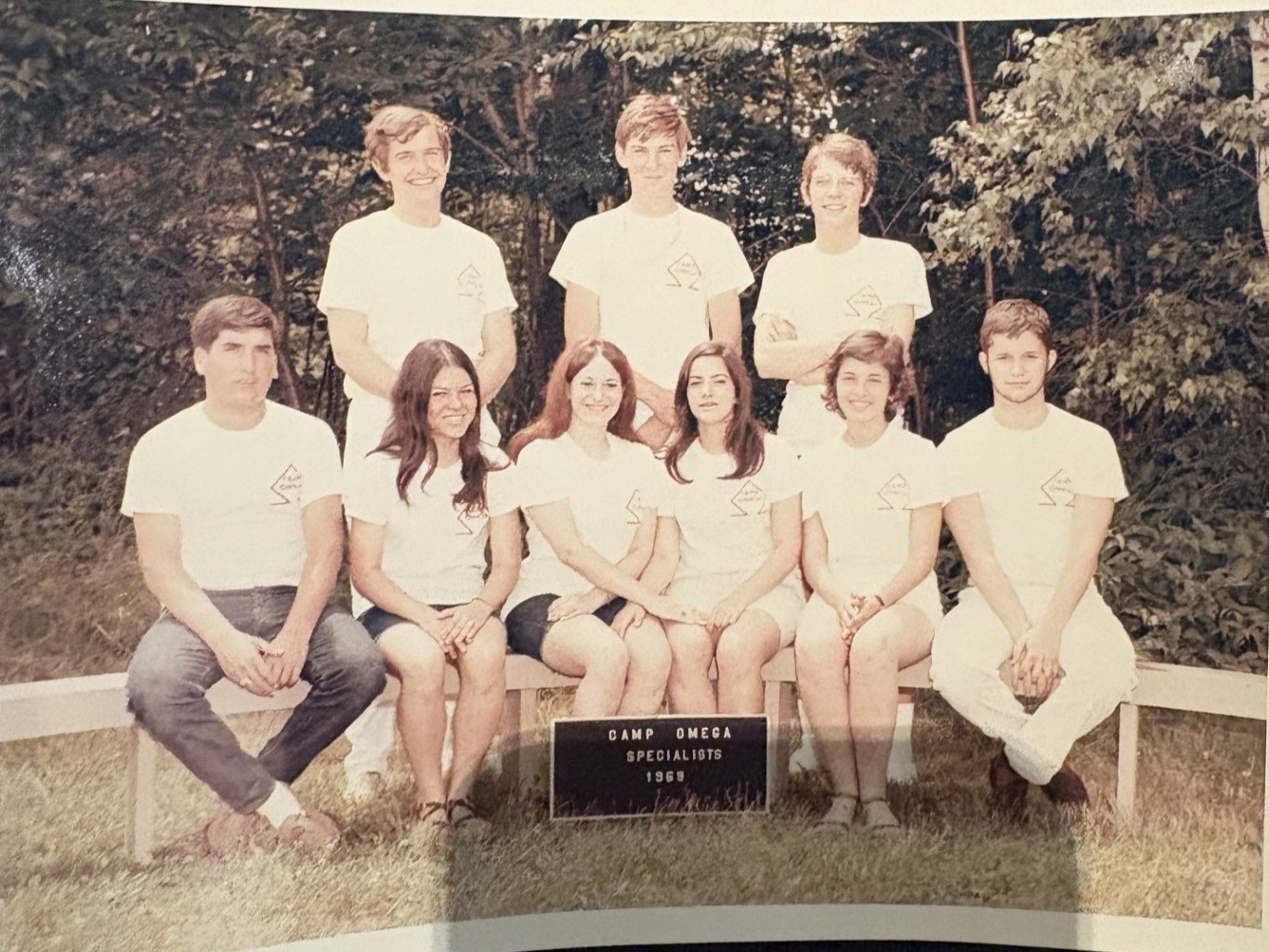
For ten summers, camp was where Rhea felt most at home—living in bunks, singing on Friday nights, and forming friendships that would last a lifetime. Several of those summers were spent at a small Jewish camp in the Catskills, owned and operated by her parents and their closest friends. It was an experience that shaped not only her childhood, but her understanding of what Jewish community can be.

The Power of Camp, Long After Summer Ends

Decades later, those connections endure. Long after the camp itself closed, former campers still find each other—organizing reunions, maintaining friendships, and staying connected through an active online community.

“That tells you how powerful camp can be,” Rhea reflects. “It creates Jewish family.”

How Community Is Sustained

After moving to Greater Washington for law school, Rhea became involved in the local Jewish community through the JCC, a place she believed was essential to Jewish life in the nation’s capital. Through that involvement, she came to better understand the broader Jewish communal landscape, including the role Federation plays in strengthening Jewish life across the region.

“I wasn’t raised as a Federation kid,” she says plainly. “But once I understood what Federation does, I wanted to learn more.”

That learning led her to years of involvement on Federation committees, deepening her understanding of communal responsibility. Her own lived experience—especially camp—ultimately shaped how she chose to give back.

Showing Up When It Matters Most

Rhea’s commitment to Jewish life didn’t begin with camp—and it doesn’t end there.

Earlier, in 2017, she and her late husband, Paul Martin Wolff, established the Rhea S. Schwartz and Paul Martin Wolff Emergency Fund through the Jewish Community Foundation of The Jewish Federation of Greater Washington, designed to ensure resources are available when unbudgeted local or global emergencies arise.

Since 2022, the fund has been activated to respond to urgent needs, including support for Jewish summer camps after fire-related damage and, more recently, assistance to the Capital Jewish Museum following last year’s antisemitic attack.

For Rhea, this kind of readiness reflects the same values she learned early on: that Jewish community means showing up for one another—both in moments of joy and in moments of need.

Ensuring Belonging for Generations to Come

With the Foundation, she found a partner who helped her turn a deeply personal chapter of her life into a lasting commitment, shaped by what mattered most to her: supporting both the children who attend camp and the camps that make those experiences possible.

For Rhea, the impact of camp goes far beyond summer fun.

“It’s like the first time I went to Israel,” she explains. “I remember thinking, I don’t have to be conscious of being Jewish.”

At camp, she says, children experience a rare kind of ease: being fully themselves without explanation. Whether it’s joyfully welcoming Shabbat, forming close friendships, or simply living Jewishly without standing out, camp offers a sense of comfort that’s hard to replicate elsewhere.

“Jewish camp removes the element of uncomfortableness,” she says. “You belong.”

Looking Ahead to What Comes Next

When asked whether she considers herself a philanthropist, Rhea hesitates. “Not really,” she says, smiling. “A do-gooder, maybe.”

What matters most to her is what comes next. The idea that children—perhaps for the first time—will experience Jewish summer camp because of her investment is deeply meaningful.

When asked how it would feel to hear stories of children attending Jewish summer camp for the first time because of her support, Rhea doesn’t hesitate. Her face lights up.

“I hope you’ll come back and tell me those stories,” she says. “That would be great.”

For Rhea Schwartz, camp was never just a place. It was where Jewish identity felt natural, joyful, and secure. And now, through her generosity, she’s helping ensure that same sense of belonging is passed on, one summer at a time.

Carrying What Matters Forward

Her story is one example of how Jewish experiences can inspire action that strengthens Jewish life across our region.

Thinking about how your giving can endure for generations?

Contact us

Related posts

The Legacy of Eddie Kaplan The Legacy of Eddie Kaplan
The Legacy of Eddie Kaplan
Eddie’s decades of leadership at Federation and the Jewish Community Foundation helped strengthen institutions, support community investments, and shape a thriving Greater Washington Jewish community rooted in care, vision, and lasting impact.
read more
When Antisemitism Takes Hold When Antisemitism Takes Hold
When Antisemitism Takes Hold
Antisemitism often emerges in times of strain, fueled by fear and exploited by bad actors. By confronting hatred directly and strengthening democratic institutions, Federation works to build resilience, foster connection, and ensure a more stable, inclusive community.
read more

Reclaiming Agency, Together

Reclaiming Agency, Together

I was in Israel last month on a unique trip. Throughout the time, I heard from Israelis and Palestinians across the political spectrum describe the same feeling: they want a better world for their families and yet feel a profound lack of agency in making it happen. They want progress but don’t feel like there is anything they can do to push back against the overwhelming forces shaping their reality. It struck me that many of us are feeling this way too.

Things feel challenging and worse yet, we feel powerless to change them. We open our news apps and read horror stories. But what are we to do about it? This is a question Jews have grappled with in every age. And the answer remains the same. It’s precisely when things feel the most uncertain and out of our control that we must focus on reclaiming and making use of our own agency.

The role of Federation in this moment is deeply connected to this idea. Part of our mission is to help create the conditions in which individuals and organizations can act with confidence and intention and amplify personal agency to even greater outcomes. How do we keep pushing forward as a community in difficult times? How can we bring people together to amplify impact? These questions are shaping our work today.

Of course, agency is tricky in that it’s layered. First, we must feel we have it. Then we must be motivated to use it. And finally, we must find ways to combine our efforts to create something even more powerful. What’s more, every step is as delicate as it is important. It doesn’t take much to sap our energy. Certainly, the entrenched challenges in the Middle East, the morphing global order, and scenes of violence in our country are enough to render anyone frozen.

I don’t fault anyone for choosing to focus on their immediate zone of responsibility. There is tremendous purpose to be found in looking after our loved ones and doing what we can to make it day to day. But if we are to shape history and build a society that reflects our values, a “beloved community” as Dr. Martin Luther King Jr. put it, then we must find it within ourselves to look beyond ourselves.

We must chip away at the overwhelm. For those who wielded a snow shovel last week will tell you, it’s amazing what you can accomplish with steady determination and the will to break through that which seems immovable. We may not be able to make sweeping policy changes, but we can, at any given moment, make a difference on an individual and even communal scale. We can connect with our neighbors, serve those in need, and work together to strengthen our community.

Related posts

The Legacy of Eddie Kaplan The Legacy of Eddie Kaplan
The Legacy of Eddie Kaplan
Eddie’s decades of leadership at Federation and the Jewish Community Foundation helped strengthen institutions, support community investments, and shape a thriving Greater Washington Jewish community rooted in care, vision, and lasting impact.
read more

How Do I Support My Disabled Child With Bar Mitzvah Prep?

How Do I Support My Disabled Child With Bar Mitzvah Prep?

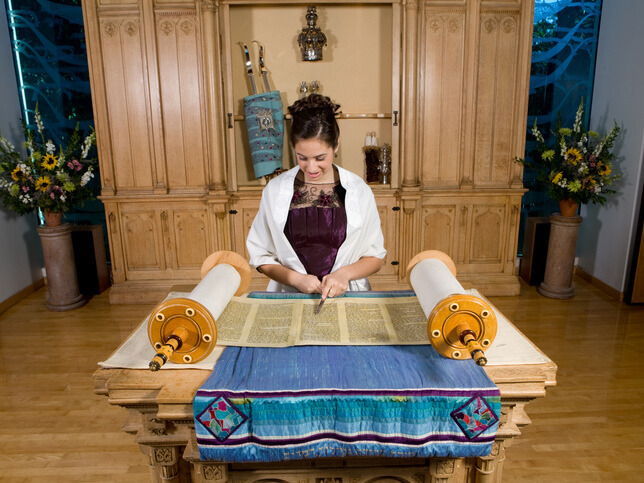
We often think about B’nai Mitzvah as being about the moment when a child gets up, blesses and reads from the Torah, chants haftorah, gives a D’var Torah, and maybe even leads some of the prayers in synagogue. Scenes in film and TV, and perhaps our own experience with family and friends, reinforce the idea that, to become B’nai Mitzvah, this is what one must do. For the parent of a child with learning disabilities or other needs that make following this scenario impossible, marking the milestone might seem inaccessible.

The good news is that, according to Jewish tradition, the only thing that someone has to do to become an adult in the Jewish community is to turn 13 (or, traditionally, 12 for girls). And so, there are many ways to mark this milestone according to the needs of your child.


Read the full post from PJ Library

Related posts

The Future Is Human The Future Is Human
The Future Is Human
As AI transforms everyday tools—from expense tracking to data analysis—it also reminds us of something essential: the enduring value of human connection. In a rapidly automated world, Jewish community, in-person gathering, and shared wisdom remain powerful forces for meaning and belonging.
read more

Thinking About What Truly Shapes Jewish Life

Thinking About What Truly Shapes Jewish Life

How we might build the next chapter of Jewish community together.

I’ve been thinking a lot about how change happens. What experiences or events have a unique and significant impact on a person’s life? What are the drivers or enablers that can move a community forward? What is needed to shift a trajectory, to address a problem, or seize an opportunity?

I am thinking about this because we live in a moment when we, as a Jewish people, are facing a series of challenges (and opportunities) as our world changes in significant ways. We therefore need to consider our approach when it comes to our work to build a vibrant Jewish community in the DMV.

For the past many years, we have worked hard to identify new programs or strategies that would bring people in. We have sought ideas from the community and funded a variety of new initiatives. And many of these initiatives have been successful. We have partnered with incredible local agencies and synagogues to create new initiatives and bring ideas to life. This work has been eye-opening and worthwhile.

I also want to explore what it might look like for this next period of Jewish life, if we shift our focus from continuing to source new ideas to scaling the initiatives that we know for certain achieve the objectives we have in mind—the ones that over years of study and observation have proven successful in building connection, identity, and community.

We know that Jewish overnight camp, youth groups, Jewish learning, immersive experiences, especially to Israel, Jewish day schools, and Shabbat dinners all achieve these goals. Moreover, and just as importantly, they are scalable. These may not be the only experiences that have such an impact, but channeling our energy and creativity into each of these six areas could yield tremendous results.

For example, there are currently 3,500 kids in Greater Washington who go to Jewish overnight camp. What impact might we have on the Jewish future if we doubled that number over the next ten years and another 3,500 children and teens experience the joy and community of camp? What if for the next decade, we focus on the proven wins in Jewish life—those things we know to be both high impact and scalable—and bring in many more people to these experiences?

We are currently debating and stress testing these questions internally at Federation and I want to share our thinking with you as part of that process. How does our list of impactful Jewish experiences strike you? Where do you see challenges with our approach? In what ways can the broader community contribute to Jewish engagement?

I look forward to hearing your thoughts. Through it all, know that our core objective remains the same: working together to build a community where everyone feels they belong, can connect deeply to others and the Jewish people, and inspired to shape our collective future.

More to come.

Related posts