Need support? Call 703-J-CARING (703-522-7464)

Holding Hope in a Time of War

Holding Hope in a Time of War

On Friday, February 27, just before Shabbat, Inbal called her family in Israel with a question that had become all too familiar: Are you prepared for every possible scenario?

They told her they had already been ready for weeks. In many ways, everyone felt that something was coming. And yet, as she would soon learn, nothing can truly prepare you for war.

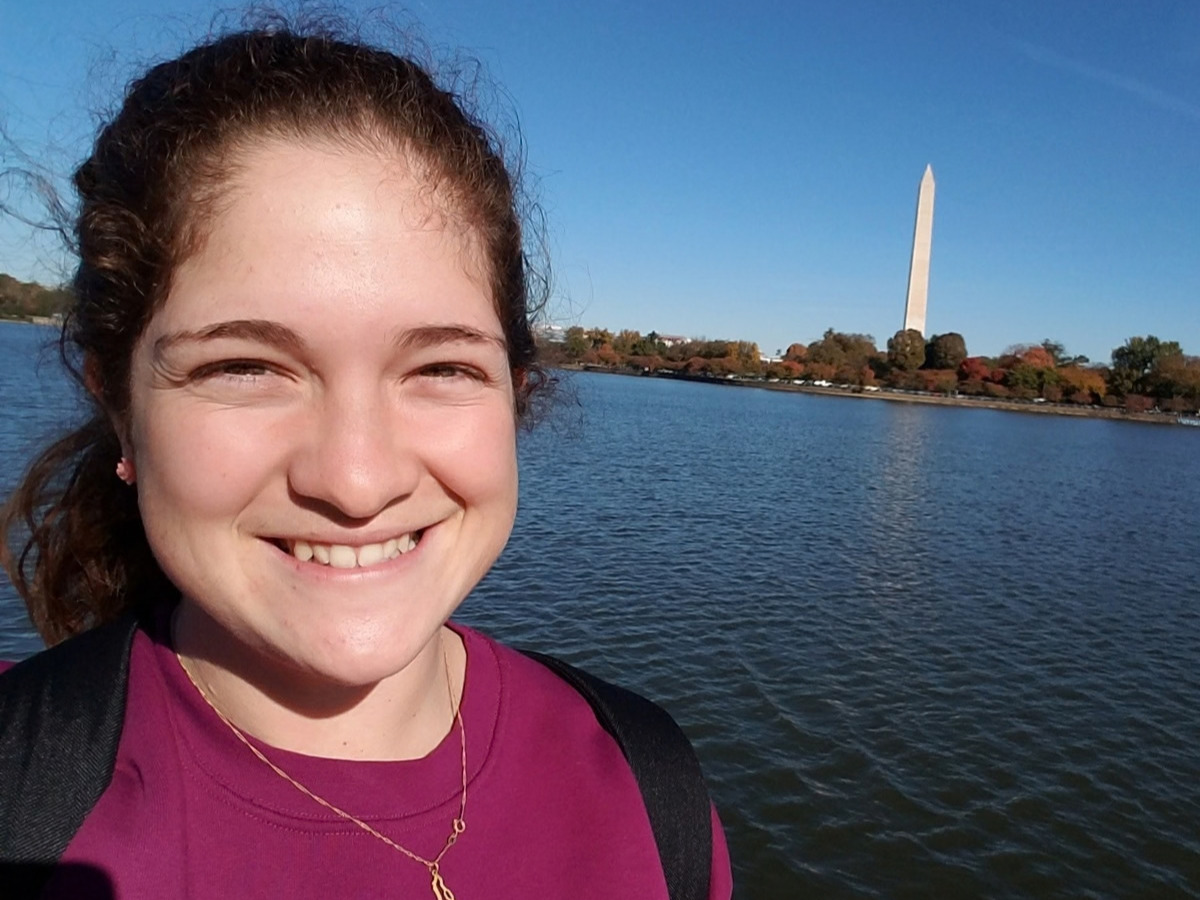
Inbal is part of the Community Shlichim program, a partnership between The Jewish Federation of Greater Washington, The Jewish Agency for Israel (JAFI), local synagogues, and other partner organizations which brings Israeli emissaries to our region to deepen connection and bring Israeli life and perspective into our community. Originally from a small town in northern Israel, Inbal now finds herself navigating the distance between two realities—supporting the Greater Washington community while her own family lives through the unfolding crisis at home.

Here is her story:

When Sirens Began

The night of February 27 on the East Coast, Saturday morning in Israel, I received a news alert: sirens were sounding across Israel. I immediately called my father, sensing that this might be the beginning of a war with Iran. He told me that he was already on his way to his military base to report for reserve duty.

My thoughts then turned to my grandfather, who goes to synagogue early every Shabbat morning. That day, we could not reach him. He only realized what had begun when he returned home from prayer. Our whole family was tense, worried a siren might go off while he was still outside and unprepared.

That was Shabbat morning in Israel.

Between Fear and Joy

The war began during the holiday of Purim. Purim is meant to be one of the happiest holidays, a time to dress up, celebrate, laugh, and be together, filled with joy and light. And yet, in Israel, the transition between sadness and joy is something we know all too well, and sometimes the distance between them is only a matter of hours. In a strange and almost ironic way, 2,500 years after the story of Purim, it can feel as though we are witnessing another Purim story unfolding, another moment in which the Jewish people are called upon to stand strong.

Holding Two Realities

Since that morning, I have spoken with my family almost every day. My grandfather continues to go to synagogue, still without taking his phone. When sirens sound, he says they simply continue praying, even though the stress is very real. He maintains his routine because, as he explained to me, staying at home for so long is not healthy, neither mentally nor physically.

Many of my family members and friends have also been called for reserve duty, some for the seventh time since October 7. They are exhausted, and yet they tell me that they understand the importance of this moment. They hold on to the hope that after this round, there will finally be a few years of quiet.

Meanwhile, being here in Washington as an Israeli shlicha during a time like this is deeply complex. On the one hand, I feel a strong responsibility to be present with the community, to continue showing up, and to create connection and meaning around what is happening. On the other hand, there is a constant feeling of distance, and with it, the fear of being disconnected from everything unfolding back home.

A Community to be Proud Of

Nevertheless, I feel incredibly fortunate to be part of the Greater Washington Jewish community, a community that truly cares. Every day, people ask me how my family is doing. They check in. They engage in conversations about what is happening. This support helps me stay connected and grounded, while also allowing me to find a sense of balance.

Perhaps most unexpectedly, it is the young children in the community who help me the most in these moments. They bring me into their world of imagination, stories, and innocence, and for brief moments, they allow me to breathe.

Through this experience, I have come to understand that the message I bring here is my sense of responsibility. If the people in Israel can continue to demonstrate resilience, courage, and strength every single day, then I must carry and reflect that same resilience here as well. After all, the story of the Jewish people has always been one of resilience, of facing darkness and still choosing light.

With Hope for Spring

As the war enters its fifth week, we now find ourselves approaching Passover, the holiday of freedom and spring. Passover tells the story of leaving Egypt, of moving from slavery to freedom, and of becoming who we are meant to be. In this moment, I find myself hoping that this Passover will bring a sense of freedom for all of us—the freedom to live openly as who we are, proud of our Israeli and Jewish identities; to walk with our flag and our Star of David without fear; and to live without the routine of war, without constantly seeking the nearest shelter.

Passover also marks the arrival of spring, a season of renewal, when everything begins to grow again after the storms. There is something deeply powerful in that connection: just as strong trees withstand the storm, we see resilience, and like flowers that bloom in the fields, we see new beginnings. Perhaps that is the Jewish people’s story—to hold both, and to remember that if we want to see the rainbow, we must first be willing to stand in the rain.

Learn more about our Community Shlichim program.

Related posts

The Legacy of Eddie Kaplan The Legacy of Eddie Kaplan
The Legacy of Eddie Kaplan
Eddie’s decades of leadership at Federation and the Jewish Community Foundation helped strengthen institutions, support community investments, and shape a thriving Greater Washington Jewish community rooted in care, vision, and lasting impact.
read more
Support When it Matters Support When it Matters
Support When it Matters
After a direct Iranian missile strike on Beit Shemesh, Federation mobilized quickly—transforming the Zinman Community Center into a Family Support Hub providing emergency relief, psychological support, and moments of joy for impacted residents.
read more

Finding Comfort in Passover Traditions

Finding Comfort in Passover Traditions

In a time of uncertainty, the rituals of Passover offer something steady

My siblings and I held our Passover menu planning Zoom call earlier this week. I’m in charge of the brisket, among other things, and I’ll be making my mom’s recipe. No secret ingredients, no innovative twists. Just a tried-and true and beloved rendition. That, I suppose, is the unofficial theme of our Seder this year (though I may experiment with a new vegetarian soup).

Indeed, given all the volatility in the world, the thing I’m craving most from Passover is its sense of routine. For those of us who grew up with the holiday, the Passover Seder is, above all, familiar. How the Seder unfolds may vary from year to year, but the story, the food, the songs, and the traditions always combine to create a uniquely consistent touchpoint with family, Jewish identity, and peoplehood.

Passover also has a way of using the past to evoke new feelings of possibility. While the Haggadah stays consistent, the moment in which we live is continuously changing. In recounting our story, we may focus on new sections or have different reactions to readings or songs. We may uncover fresh sources of energy, clarity, and ingenuity, which we will need on the road ahead.

We have important work in front of us: to engage and connect with members of the Jewish community who are struggling right now, to be a steady partner for Israeli communities, to build strong, substantive, and joyful Jewish life, and to care for the people around us. And the first step to making it all happen starts by remembering who we are and the role we’re meant to play in the world.

I encourage you to gather some friends, invite someone new to the table, and connect once again to our story. In true Jewish fashion, it’s in connecting to our tradition and to each other that we’ll prepare ourselves to move forward.

Related posts

Support When it Matters Support When it Matters
Support When it Matters
After a direct Iranian missile strike on Beit Shemesh, Federation mobilized quickly—transforming the Zinman Community Center into a Family Support Hub providing emergency relief, psychological support, and moments of joy for impacted residents.
read more

When Antisemitism Takes Hold

When Antisemitism Takes Hold

Antisemitism doesn’t emerge in a vacuum

One way that I have been thinking about antisemitism is as a kind of twisted and inexcusable stress response. In times of social or economic strain, people tend to go looking for explanations as to why things don’t work the way they want or why life feels harder. And far too often, they reach for the oldest hatred in the book as their answer. Comforted by conspiratorial thinking, they conclude it must be the Jews who are to blame.

This cycle can then be hastened by popular figures who step in and exploit people’s anxieties for their own goals. As Deborah Lipstadt explains, “[Bad actors] cannot create a fire where none exists, but they can add fuel to preexisting fires.” The more disconcerted people feel, the more they may turn to hating Jews, and the more wayward leaders will encourage those inclinations. Antisemitism and chaos are intertwined. Sadly, and to great harm, this has been the pattern for millennia.

What this means for us is that there is space to tackle the challenge from two sides: by pushing back against antisemitism explicitly and tending to the health of our democracy generally, both of which we are focused on at Federation.

Five years ago, we adopted a multi-pronged strategy to address antisemitism in our region. This includes providing funds to address antisemitism in public and private schools, developing teen leaders who can directly confront antisemitism, supporting local Hillels in their campus efforts, as well as providing critical resources to local agencies including the Jewish Community Relations Council (JCRC).

We are also working to strengthen the relationships that underpin a healthy democracy and break down conflict by facilitating conversation among community members of diverse perspectives; deepening Black–Jewish relations; and partnering with local agencies and institutions on civic engagement efforts; all of which contribute to a more connected, stable, and resilient community.

Ultimately, fighting against antisemitism is a form of fighting for our democracy just as fighting for democracy and strengthening civil institutions is a form of fighting antisemitism. As antisemitism metastasizes, everyone loses. When we replace mistrust with credibility and community, everyone wins. It’s our civic duty to call out antisemitism and disrupt its chaotic breeding ground.

At a time when so many people are losing faith in institutions, Federation can be a steady fixture. A shared space where our community can come practice listening to those who think differently, caring for the vulnerable, welcoming the stranger, and working together toward a shared vision for the future. If antisemitism is what seeps in when our social foundation starts to crack, we can help ensure its integrity.

Related posts

The Legacy of Eddie Kaplan The Legacy of Eddie Kaplan
The Legacy of Eddie Kaplan
Eddie’s decades of leadership at Federation and the Jewish Community Foundation helped strengthen institutions, support community investments, and shape a thriving Greater Washington Jewish community rooted in care, vision, and lasting impact.
read more

The Future Is Human

The Future Is Human

AI may shape the future, but connection, curiosity, and community will always define us.

Our thoughts are with West Bloomfield’s Temple Israel community after yesterday’s attack. We are breathing a sigh of relief that everyone remained safe, including students and staff at the temple’s preschool. We are immensely grateful to the security guards, police officers, and firefighters who put themselves in harm’s way and responded to the situation swiftly and effectively.  

The incident is a sad reminder of how important robust security measures are today. Through JShield, The Jewish Federation of Greater Washington’s community security initiative, we are continuing to work closely with law enforcement and Jewish institutions across our region to keep our community safe.

I noticed recently that AI was incorporated into a software I use to log my expenses…and it was pretty great. The program automatically filled in blanks, predicted categories, and made the whole upload process easier. I also used it to analyze quantitative and qualitative data, and it brought out ideas and themes that I had not noticed before. I can see why these tools are catching on. And yet, the rise of AI is not affecting our strategy here at Federation.

Even at the dawn of this radical new leap, we believe the future is human. In fact, at a time when AI is transforming everything from our emails to our state policies, I can’t help but notice it’s our humanness that’s gaining cachet.

Perhaps that’s why some banks are now advertising “human help” to attract new customers. Why Hermès commissioned hand-drawn graphics for their website. Or why Apple hired artists to create their new logo out of glass and colored lights. There’s something beautiful and inherently valuable about knowing a real person was involved in the work.

Of course, as Jews, we have always been wonderfully human. For sure, we know how to gather and find purpose and meaning with and among each other. We also learn by relishing in each other’s individual and sometimes unpredictable perspectives. Our texts are contradictory, our debates unique and far reaching. Though the bots may soon be able to mimic our thought patterns, it will be our organic curiosity, creativity, and empathy that will keep us whole.

As Robert Putnam writes in Bowling Alone (not the first time I’ve mentioned this work and not the last), “The single most common finding from a half century’s research on the correlates of life satisfaction, not only in the United States but around the world, is that happiness is best predicted by the breadth and depth of one’s social connections.”

We must continue coming together, in-person, to learn, celebrate, discuss, mourn, serve, or simply be. Doing so will have the dual effect of benefiting us individually and strengthening our entire community. It’s also how we grow. Community manages to both support and sustain us while also putting us in contact with the people who can challenge our assumptions and push us beyond our would-be bubbles. Shabbat dinners, text studies, trips, lectures and so on, will be that much more important in an age of online silos.

To that end, I want to hear from you: where and how do you seek human connection? What are the elements in your life keeping you grounded and engaged with others?

I’m all for innovation. The Jewish community must embrace and leverage cutting edge tools to our advantage. But it’s not lost on me that the more advanced our world becomes, the more we hunger for ancient wisdom. What a phenomenal opportunity we have to subvert the forces that automate and isolate and instead foster the connection humanity craves.

Related posts

The Legacy of Eddie Kaplan The Legacy of Eddie Kaplan
The Legacy of Eddie Kaplan
Eddie’s decades of leadership at Federation and the Jewish Community Foundation helped strengthen institutions, support community investments, and shape a thriving Greater Washington Jewish community rooted in care, vision, and lasting impact.
read more

Beit Shemesh, The City that Shaped Me

Beit Shemesh, The City that Shaped Me

Following a deadly Iranian missile strike in his hometown of Beit Shemesh, one Federation’s community shaliach (Israeli emissary), Yismaw, shares his personal perspective.

When I was three years old, my family and I made aliyah (immigrated) to Israel from Ethiopia. We settled in Beit Shemesh, a city about thirty minutes from Jerusalem, where I was raised.

To me, Beit Shemesh is much more than just the city where I grew up. It is the place that shaped me, where my childhood and teenage years unfolded, where I forged friendships and created countless memories. Beit Shemesh has always been and always will be my home—it is embedded deep in my heart.

That’s why when I first learned that there was a deadly attack on Beit Shemesh on March 1, the first full day of the war between Israel and Iran, my first instinct was to call my friends and family back home. Everyone is there: my grandfather, my family, my community. Thank God, everyone I called was okay. Sadly, the same can’t be said for many other families in my city.

Being so far away from home during moments like these is not simple. The distance feels heavy, the pull to home and the desire to be there stronger than ever. Yet at the same time, I feel grateful to be here, with my Greater Washington community. I have felt an outpouring of warmth and support from everyone I’ve spoken with. Each person reaching out, asking questions, and genuinely caring about the safety of my family and friends in Israel has created a sense of home for me here.

Thank you for holding my family, my city, and all of Israel in your thoughts and prayers. During this painful and complicated time, this support is what strengthens me.

To learn more about what Federation is doing to support Israel in this time of crisis, including in Beit Shemesh, see here.

Many have already asked how to help. Our current response is being mobilized through existing Federation resources and long-term investments stewarded by the Foundation, enabling swift and accountable action. Those who wish to contribute may do so here.

Related posts

Support When it Matters Support When it Matters
Support When it Matters
After a direct Iranian missile strike on Beit Shemesh, Federation mobilized quickly—transforming the Zinman Community Center into a Family Support Hub providing emergency relief, psychological support, and moments of joy for impacted residents.
read more

Meet Vanessa Sax

Meet Vanessa Sax

Bringing people and organizations together across Jewish Northern Virginia.

We’re excited to introduce Vanessa Sax, who joined The Jewish Federation of Greater Washington in December to focus on strategy and community building in Northern Virginia.

A former Northern Virginia resident herself, she’s excited to reconnect with the community she came to know well. In her role, she’ll work with partners across Northern Virginia’s Jewish community to strengthen relationships, expand leadership opportunities, and build on the strong momentum already underway across the region.

“As someone who lived in Northern Virginia for seven years, I understand firsthand the opportunities this community has to offer.” Vanessa shared, “My goal is to continue strengthening a sense of connection and belonging for Jews living in Northern Virginia, both in their micro-communities and across the broader Northern Virginia Jewish community.”

Vanessa brings a strong background in community building. She was the first employee of Sixth & I Historic Synagogue, helping establish it as a hub for arts, ideas, and Jewish life in Washington, DC. She later held a leadership role at Zuckerman Gravely Management, focusing on mentorship, professional development, and complex negotiations shaping several DC real estate markets.

Her work reflects a deep commitment to building relationships, strengthening community, and helping shape the next chapter of Jewish Northern Virginia.

Federation CEO Gil shared: “One of the key takeaways from our Community Pulse Survey was the desire for greater engagement in Jewish life and community in Northern Virginia. Through Vanessa’s vision and community-building skills, we can achieve exactly that.”

Curious about our ongoing work in Northern Virginia?

Learn more

Related posts

The Legacy of Eddie Kaplan The Legacy of Eddie Kaplan
The Legacy of Eddie Kaplan
Eddie’s decades of leadership at Federation and the Jewish Community Foundation helped strengthen institutions, support community investments, and shape a thriving Greater Washington Jewish community rooted in care, vision, and lasting impact.
read more
When Antisemitism Takes Hold When Antisemitism Takes Hold
When Antisemitism Takes Hold
Antisemitism often emerges in times of strain, fueled by fear and exploited by bad actors. By confronting hatred directly and strengthening democratic institutions, Federation works to build resilience, foster connection, and ensure a more stable, inclusive community.
read more

Building Jewish Community from Day One

Building Jewish Community from Day One

It takes a village to raise a child. For Jewish families, that village often takes shape through a vibrant Jewish community with places to celebrate holidays, meet other parents, and help children grow up surrounded by Jewish life.

For many parents, a sense of community begins to take shape in the early years—through the families they meet, the events they schlep their kids to, and the people who share those early milestones.

As part of its commitment to strengthening Jewish life across the region, The Jewish Federation of Greater Washington works with partners throughout the DMV to help make these connections possible.

Where Jewish Community Takes Shape

“Some of the first ways families connect to Jewish community happen during the early years,” said Dinah Zeltser, Associate Director of Community Impact, who leads the Families with Young Children work at Federation. “Sometimes it starts with something as simple as a PJ Library book arriving in the mail, a parent bringing their little one to Tot Shabbat for the first time, or a holiday gathering where parents suddenly realize they’re not the only ones trying to figure it all out.”

One way Federation supports these connections is by investing in programs and partnerships that help families engage with Jewish life from the earliest years.

Expanding Opportunities for Young Families

Through a new funding opportunity, Federation is inviting local organizations to create more programs for children ages 0–8 and their parents, strengthening early connections to Jewish life and community.

Programs may include family-centered holiday celebrations, parent gatherings, community programs that bring families together, or other experiences that help parents connect with one another and feel part of a Jewish community.

Federation welcomes both proven programs ready to grow, and new ideas that explore creative ways to engage families during these formative years.

“Early connections matter,” Zeltser said. “When families feel welcomed and supported early on, it can shape how they experience Jewish life for years to come.”

By investing in programs that reach families early, The Jewish Federation of Greater Washington aims to expand opportunities for parents and children across Greater Washington to connect with Jewish community and with one another.

Organizations interested in applying can review the full Request for Proposals below. Applications are due April 15, 2026, with funded programs beginning in August 2026. 

Learn more

Related posts

Federation Mobilizes Emergency Support for Communities in Israel

Federation Mobilizes Emergency Support for Communities in Israel

New allocations support medical care, trauma response, and community needs through trusted partners across the country.

On Monday, March 9, 2026, The Jewish Federation of Greater Washington’s Israel & Overseas Committee approved $125,000 in emergency allocations to partners in Israel to support urgent medical, humanitarian, and community needs following recent attacks.

In moments of crisis, Federation mobilizes the resources and relationships of our community to ensure help reaches those who need it most.

The allocations approved this week reflect urgent areas of need identified by Federation’s partners across Israel.

Emergency Allocations Supporting Communities Across Israel ($125,000)

Strengthening trauma capacity in northern Israel ($50,000): Federation funding will help expand emergency surgery capacity at Tzafon Medical Center (formerly known as Poriyah), which serves more than 300,000 residents in Israel’s north, where attacks have sharply increased demand for emergency care. The grant will fund the purchase of an additional anesthesia workstation for the hospital’s Trauma Unit.

Supporting vulnerable residents in the Kinneret Valley Cluster ($35,000): Communities in the Kinneret Valley Cluster—one of Federation’s partner regions in Israel, comprising 15 municipalities—remain under threat, with many residents without private shelters in a region where there is often only one minute to reach protection. Federation support will help the Cluster provide transportation to safe spaces during alerts, expand trauma response services, and deliver essential supplies during prolonged emergency conditions.

Standing with victims of terror ($25,000): After an attack, Israelis may be faced with the need to evacuate their homes, receive medical or psychological care, or confront a new reality of grief. Through the Jewish Agency for Israel’s Fund for Victims of Terror, families affected by these attacks receive immediate assistance, including emergency financial support, trauma care, and guidance in the difficult days following injury, displacement, or loss. Federation support helps ensure this rapid-response system is available when families need it most.

Providing community support in Beit Shemesh ($15,000): Following an Iranian missile strike that killed nine civilians and forced evacuations in Beit Shemesh, the Zinman Community Center became a gathering point for affected residents. Federation support is helping the center coordinate emergency programming and provide emotional support for evacuees and survivors.

Federation maintains long-standing relationships with these partners through decades of work with The Jewish Agency for Israel, our response following October 7, and our prior partnership with the city of Beit Shemesh. These connections allow our community to respond quickly and meaningfully when it matters most. They also reflect Federation’s broader Israel strategy: strengthening ties between Greater Washington and communities across Israel.

Our Israel Strategy

Related posts

Support When it Matters Support When it Matters
Support When it Matters
After a direct Iranian missile strike on Beit Shemesh, Federation mobilized quickly—transforming the Zinman Community Center into a Family Support Hub providing emergency relief, psychological support, and moments of joy for impacted residents.
read more

Looking beyond the headlines in Israel

Looking beyond the headlines in Israel

What our partners and relationships are helping us understand right now.

Once again, our hearts and minds are turned toward Israel as the conflict with Iran continues to unfold. In a briefing this week with Karen Katzman, director of our Israel office, we heard about what life is like in Israel right now. Karen described text messages warning of incoming missiles. Rushing to shelters. Looking after family. Even young kids are now well practiced as to what to do when a siren goes off.

It’s hard watching this from afar. It may also feel hard to figure out what to do. Do we respond based on what we see on the news or what shows up in our inbox? Where are needs most urgent? As we consider Federation’s response, I want to highlight some specific ways that we are thinking about this moment and what we can collectively do to help.

For many decades, since before the creation of the State of Israel, Federation has been working with global organizations to support the needs of Israel and Israelis through our partnership with JDC and the Jewish Agency (JAFI). They continue to be central to an effective response.

For example, the Jewish Agency’s Fund for Victims of Terror provides immediate cash assistance to people who have been displaced or whose family member was injured or killed by rocket attacks. The funds can be used for food, clothes, toothbrushes, diapers, and whatever else they need to get situated. JDC is likewise deploying emergency supplies, running a national mental health initiative, and supporting a network of caseworkers to continue caring for Israel’s vulnerable, among other rapid-response efforts. These are critical and ongoing programs that serve an important and unique role in times of crisis.

Beyond our traditional partners, Federation has also developed new relationships with Israeli communities and organizations since October 7. Take, for instance, Poriya Hospital in the north. Medical professionals are working 12-hour shifts to ensure full coverage. Meanwhile, schools and daycare centers are closed, which means doctors, nurses, and hospital staff need help with childcare. This isn’t something you would hear about on the news, but we know about this need because of the ongoing relationships we’ve established with our network over the past three years. (Federation, in fact, helped get onsite childcare up and running at the hospital following October 7 and the shelling from Hezbollah.)

Finally, we are working closely with local Washington-based synagogues and other organizations to understand their direct relationships in Israel and support them in making a difference. For example, one of our local synagogues is working with their sister congregation in Israel to ensure they can gather safely, with adequate access to shelter space during missile alerts.

Across all these mechanisms, Federation and the Greater Washington Jewish community is well positioned to understand the challenges Israelis are facing beyond the headlines. The relationships we have developed with Israeli leaders and organizations allow us to gain a clearer and more detailed picture of what’s happening on the ground. Together, this enables us to act swiftly, thoughtfully, and effectively to meet emerging needs.

I could go on but what I want you to know is that our community is making a difference. We are showing up for Israel and Israelis by responding to real needs in real time. And we are doing this all thanks to the tireless work of our partners in Israel and the incredible support of our community members. Ultimately, Federation is a conduit for your passion and commitment. Thank you for being there for Israel in this moment and for everything you do for the Jewish people.

Related posts

Support When it Matters Support When it Matters
Support When it Matters
After a direct Iranian missile strike on Beit Shemesh, Federation mobilized quickly—transforming the Zinman Community Center into a Family Support Hub providing emergency relief, psychological support, and moments of joy for impacted residents.
read more

Watch a Live Update from Israel

Watch a Live Update from Israel

A missile siren sounded just before Karen Katzman, Director of The Jewish Federation of Greater Washington’s Israel Office, joined our community for a live update from Israel

“Just about 20 minutes ago… I received a siren. Luckily, I have a safe room in my home and just had to go into it, which is just a few meters away from my office. Generally, if we get an alert like that, I have about 90 seconds to move to the shelter.”

Life Under Missile Alerts

Across Israel, families are living with repeated missile alerts. Schools are closed, businesses shuttered, and people are staying close to shelters. In the moments after a strike:

“You see the people emerging in the minutes after the attack… people coming out in shock, holding babies, helping elderly people leave their apartments, holding their dogs and pets. People were sobbing.”

In the midst of all this, Karen said something that stayed with many of us:

“It sounds maybe kind of cliché, but Israelis truly are resilient.

She also shared joyful moments she’s witnessing:

“Some of you may have seen on social media the clips of Israelis celebrating Purim in the shelters. I saw a clip today that there was even a wedding in an underground shelter in a garage.”

The Toll of Sustained Conflict

Karen spoke about the growing mental health strain:

“For many people, the sirens and the missile attacks are extremely triggering after everything they’ve experienced over the past year and a half.”

Communities are responding to missile strikes, displacement, and the growing emotional toll.

How Our Community Is Responding

Moments like these are why Federation exists: to bring our community together and respond when Jews in Israel need support.

Earlier this week, Federation allocated an initial $250,000 to begin addressing urgent needs.

The full scope of need is still coming into focus, and we are working closely with partners across Israel—from national organizations to municipalities, hospitals, and grassroots groups—to understand how our community can respond in the days and weeks ahead.

For those who want to help today, your gift strengthens our community’s ability to respond quickly and responsibly as needs emerge.

Support our work in Israel

Karen closed with a message to our community:

“It really means a lot to know that we’re not alone and that you’re thinking of us.”

Thank you for standing with Israel and for being part of a community that shows up when it matters most.

May the people of Israel continue to find strength in one another and know that our Jewish community in Greater Washington stands with them.

Watch the full conversation.

Related posts

Support When it Matters Support When it Matters
Support When it Matters
After a direct Iranian missile strike on Beit Shemesh, Federation mobilized quickly—transforming the Zinman Community Center into a Family Support Hub providing emergency relief, psychological support, and moments of joy for impacted residents.
read more