Need support? Call 703-J-CARING (703-522-7464)

Building Jewish Community Across Northern Virginia

Building Jewish Community Across Northern Virginia

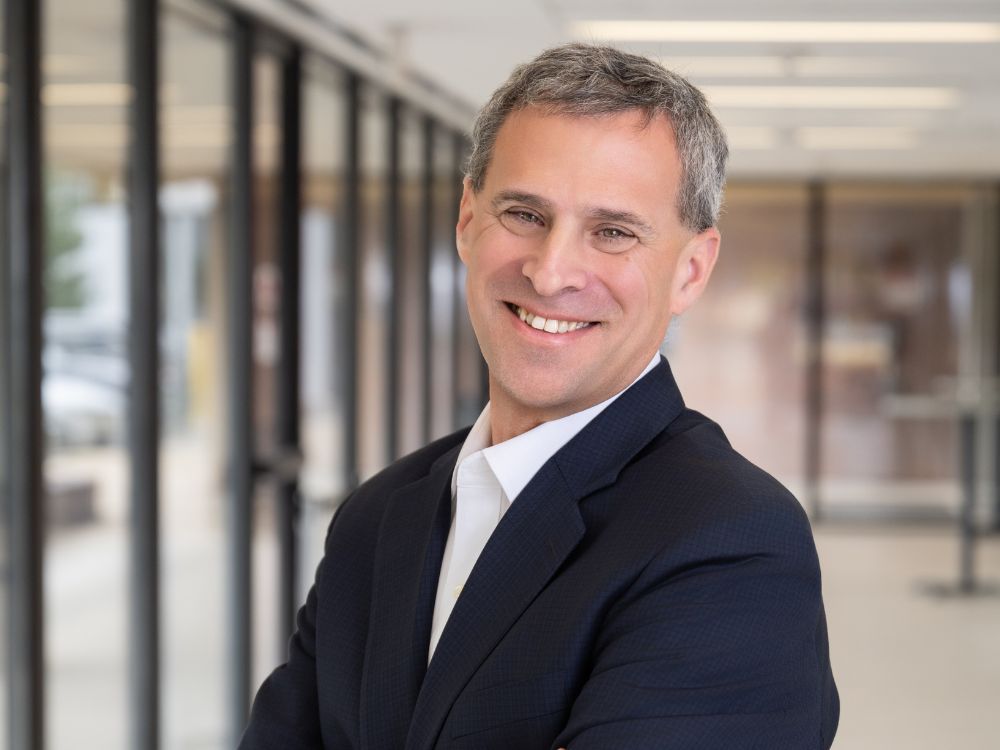
Meet Jordyn Barry!

At a cozy coffee shop near George Mason University, Jordyn Barry spends much of her day meeting Jewish students and others in their college age and stage—one latte, one story, one connection at a time.

As a new member of the George Mason Hillel team, Jordyn is helping expand Jewish community well beyond campus, ensuring Jewish students and young adults across Northern Virginia feel seen, supported, and connected.

“My favorite part of my job right now is sitting at a coffee shop and meeting three people in a row for coffee,” she says. “Just having different conversations, asking, ‘Tell me about yourself. What are you looking for?’ And if we can’t find it, let’s create it.”

Finding Jewish Life in Northern Virginia

Jordyn first came to the region in 2018 to work at the Pozez JCC of Northern Virginia. When the pandemic shifted everything, she leaned even more deeply into the community, working with teens at Temple Rodef Shalom and discovering what makes Jewish life in this area so special.

“It is so diverse and so spread out, and you can find your own place within it,” she explains. “There are all these little pockets of Jewish life, each a little different and unique.”

After time spent travelling, working at Jewish summer camp, reconnecting with family, and joining a JDC trip to Poland, Jordyn realized she belonged right back in Fairfax County.

“It truly showed that my calling is to be here,” she says. “I missed where I was.”

Now, she’s leading a new Hillel initiative that supports Jewish graduate students, law students, and those in their college age and stage studying at Northern Virginia Community College and beyond—creating Jewish spaces that meet people where they are.

“We understand not everyone is coming to campus on Friday nights,” she says. “We are creating community where they are, in ways that work for them.”

A Jewish Journey Rooted in Family and Curiosity

Jordyn’s passion for Jewish community comes from her family and a deep love of learning. Her father converted before she was born, and her parents emphasized “choice through knowledge,” encouraging both children to explore their heritage.

A family trip to Israel for her brother’s bar mitzvah helped everything click. “Everything I learned in religious school became real,” she says. Later, studying abroad and living on a kibbutz deepened her connection to Jewish history and daily life.

She went on to study religion and history at Muhlenberg College and earned a master’s in Jewish-Christian Relations from Seton Hall University.

“My grandfather is a Holocaust survivor,” she shares. “Creating Jewish community feels so important. I love doing it as my job and for myself.”

Creating Space—and Finding Her Own

Even after seven years in the region, Jordyn says she is still discovering what “Jewish home” means to her.

“I find my Jewish experience in different places,” she says. “Sometimes it is Shabbat with friends I met through the JCC, or just taking a moment outside on a Friday night after working at Hillel. There are options. Some of them I do not even know exist yet, and I work in this world.”

That sense of openness and curiosity drives her work, helping others explore what Jewish life can look like for them.

Outside the Coffee Shop

When she is not building community, you’ll likely find Jordyn exploring local trails with her dog or discovering the best new latte in town.

Her coffee order changes by café: a turmeric chai at Northside Social, or a date oat milk latte at Tatte.

Her bagel order is delightfully bold and a bit controversial: a cinnamon-raisin bagel with tuna and tomato or scallion cream cheese. “I get made fun of for it,” she laughs, “but there is something about the sweet and salty that I love.”

She’s loyal to coffee ice cream (with plenty of mix-ins), root for the Mets, and feels most at home near a lake in the mountains. Istanbul tops her list of favorite travels, with Thailand next on her bucket list.

Jordyn’s story is just one part of a growing, vibrant Jewish Northern Virginia.
Learn more

Related posts

Jewish Talent Project: Building Better Workplaces, Together

Jewish Talent Project: Building Better Workplaces, Together

The Jewish Talent Project is underway, and the Leading Edge survey is the first step toward lasting change.

As Adam Levner shared when we introduced the Jewish Talent Project (JTP), the vision is bold: to make Greater Washington one of the best places in the country to work in Jewish communal life. Behind every meaningful connection or impactful program are professionals making it happen—and they deserve workplaces where they can thrive.

Since launching this fall, the Jewish Talent Project has begun building the tools and support Jewish organizations need to strengthen workplace culture, leadership, and staff retention across the region.

Now, JTP is rolling out The Leading Edge Employee Experience Survey.

This free, confidential survey offers Jewish organizations valuable insight into how staff experience their workplace—what’s working, where there’s room to grow, and how they compare to peers. It also opens the door to future JTP offerings and support.

Eligible organizations (3+ years old, 6+ employees) must register by December 12 to take part. Because when Jewish professionals thrive, the impact reaches every corner of our community.

Photo: leadingedge.org

Related posts

Embracing the Stronger Force That Binds Us

Embracing the Stronger Force That Binds Us

Why I’m Rethinking “Unity” and What We Need Instead

I’ve been wrestling with the word “unity.” It sounds nice enough but lately, when I hear different presenters call for unity among the Jewish people, I hesitate.

Is appealing to unity just a way of asking people to conform to the speaker’s preferred ideas and political positions? Is unity a code word for uniformity? Is it a convenient way to exclude ideas that may challenge the status quo? While we may be concerned with significant divisions within the Jewish community, it is not clear to me that calling for unity is the answer. Are we tempted into thinking the easiest way to stand as one would be to think and act alike?

I’ve set “unity” aside for now because our community is strong not in spite of our differences but because of them. The more we can shape a community that values and learns from a diversity of viewpoints and perspectives, the better off we’ll be. Still, proponents of unity have a point. We need a binding force, something that sustains us not simply as a group of individuals but as an enduring community.

There’s a term in chemistry (bear with me) called the “strong force.” The strong force is what holds an atom together, overcoming the lesser forces that would allow protons to repel each other and push apart. That’s how I see our community—spacious and gracious enough to account for differences but sturdy enough to hold our form. I believe that our strong force is the core idea of mutual responsibility, a feeling that we are all responsible one for another.

With a sense of mutual responsibility and a common fate, anything is possible. Once that’s in place, the rest is conversation. Disagreement, overlap, exploration are all okay because even if we ping off each other now and again, we are held by something stronger, a commitment to each other and our shared destiny.

We have a lot to navigate together in the coming months and years. Meeting the surge in interest in Jewish engagement, shaping a diverse and open community, connecting to Israel, and addressing antisemitism and our communal security stand out as priorities heading into 2026 (more on this soon). We have meaty, worthy, urgent goals to tackle, which will, without question, spark disagreements.

Rather than mute our differences, I say let’s turn the volume up on communal conversations embedded within a context and commitment to mutual responsibility. Diversity of thought is not a tax on unity. It’s a form of abundance. We can feel confident that even as we bounce ideas and questions, invitations and quandaries off each other, our communal bond will hold. There’s a stronger force at play.

Related posts

Bracing for the Storm with $150K in Community Support

Bracing for the Storm with $150K in Community Support

Thanks to your support, we're allocating $150,000 in emergency funding to help community members facing financial hardship during the federal shutdown.

Tracking the impact of the federal government shutdown is like watching a storm roll in.

It’s already drizzling. As SNAP benefits expire and federal workers miss their first paychecks, the forecast is likely to worsen.

For many in our community, what started as financial uncertainty is becoming a true crisis.

To help address the rising tide of need, we’re allocating $150,000 to assist those affected by the shutdown.

These grants are part of our ongoing commitment to respond quickly and compassionately to community crises.

In coordination with local partner organizations, including JSSA (who runs our J-CARING hotline), we’re monitoring needs in real time to ensure help reaches those who need it most.

We’ve long been at-the-ready to respond to the needs of our community—the last few years have made us experts. From the pandemic to national protests, the war in Ukraine to October 7 and its aftermath, and now this shutdown, we’ve learned how to act swiftly and strategically when the need is urgent.

Today, we’re proud to help meet immediate needs while strengthening our community’s network of care for the future.

This work is only possible because of the trust and generosity of donors who give to our Annual Campaign, ensuring our community can weather the hardest days and prepare for the brightest ones.

It’s raining out. If you can help keep those around us dry, please donate today.

If you or someone you know needs support, call the J-CARING hotline or visit our Crisis Response resources page.

Related posts

Giving That Reflects Your Values, Even as the Tax Rules Change

Giving That Reflects Your Values, Even as the Tax Rules Change

How new tax laws create a unique window to give with greater impact and intention in 2025.

When the tax laws shift, people often ask: What does this mean for how I give?
But the real question is: What kind of impact do I want to make and how can I make it count right now?

If you’re thinking about how to give more intentionally, you’re not alone. Our Jewish Community Foundation works with community members every day to ensure their giving reflects their priorities and keeps making a difference, even as circumstances change.

What’s Changing and What it Means for You

A new law called the One Big Beautiful Bill Act (OBBBA) will change how charitable deductions work in 2025 and 2026. If you give regularly—or are thinking about how to give more intentionally—these changes could affect you.

In 2025: A Chance to Maximize Your Giving

The SALT (state and local tax) deduction cap temporarily increases from $10,000 to $40,000 (from 2025 to 2030). That means more people, especially homeowners, will be able to itemize deductions. Limits on charitable deductions coming in 2026 make 2025 a smart year to give.

Consider:

  • Making a larger gift than usual: bunch several years of charitable gifts in 2025
  • Opening or contributing to a Donor Advised Fund (DAF)
  • Donating appreciated stock or property
  • Accelerating a legacy gift or funding a named endowment: 2025 could be a smart year to fund a legacy gift or named endowment.

In 2026: New Charitable Deduction Limits

Two new rules may reduce how much you can deduct if you itemize:

  • A new floor: You can only deduct charitable gifts that exceed 0.5% of your income
  • A new ceiling: For those in the highest income brackets, the tax benefit of itemized deductions, including charitable gifts, is effectively capped at 35%

Some donors may choose to “bunch” their giving by consolidating multiple years of giving into 2025 to take advantage of more favorable deduction rules. One of the most effective ways to do this is by funding a Donor Advised Fund (DAF) now.

By contributing more to a DAF in 2025, you can maximize your deduction in a high-impact year while still supporting Federation and other causes you care about over time. It’s a smart way to align your giving with both tax efficiency and long-term impact.

The law also extends the 2017 tax rates, standard deduction levels, and estate and gift tax exemptions indefinitely, but these could change with future legislation.

If You Take the Standard Deduction

Even if you don’t itemize, in 2026, you’ll still be able to deduct:

  • Up to $1,000 (single filers)
  • Up to $2,000 (married couples)

For Those 70½+: A Powerful Giving Tool

If you’re 70½ or older, you can donate up to $108,000 in 2025 (indexed annually) directly from your IRA to a nonprofit like The Jewish Federation of Greater Washington (with that limit expected to rise in 2026). These Qualified Charitable Distributions (QCDs) reduce your taxable income and aren’t affected by the new deduction limits.

Note: QCDs can’t be used to fund DAFs, but they can go directly to support The Jewish Federation of Greater Washington or any qualifying nonprofit.

Your Partner in Purpose

Most people don’t give because of tax deductions. You give because you care—about Jewish life, about this community, about the future we’re building together.

Our Foundation is here to help you give in a way that’s aligned and intentional, even as the rules evolve. Whether you’re giving this year, advising others on giving, planning ahead, or thinking about a legacy, we’ll help you make sense of the options—and make the most of them.

Tax laws will likely keep evolving, and we’ll be here to help you adapt every step of the way.

Ready to take the first step? Let’s talk about your goals, your values, and how you want your giving to make a difference—this year and beyond.

For more information about how tax changes might affect you, join our Keys to Tax and Charitable Gift Planning Under the New Tax Law webinar on November 12.

This summary is for informational purposes only and does not constitute legal, tax, or financial advice. Please consult your professional advisor. 

Related posts

Learning Across Cities, Leading at Home 

Learning Across Cities, Leading at Home 

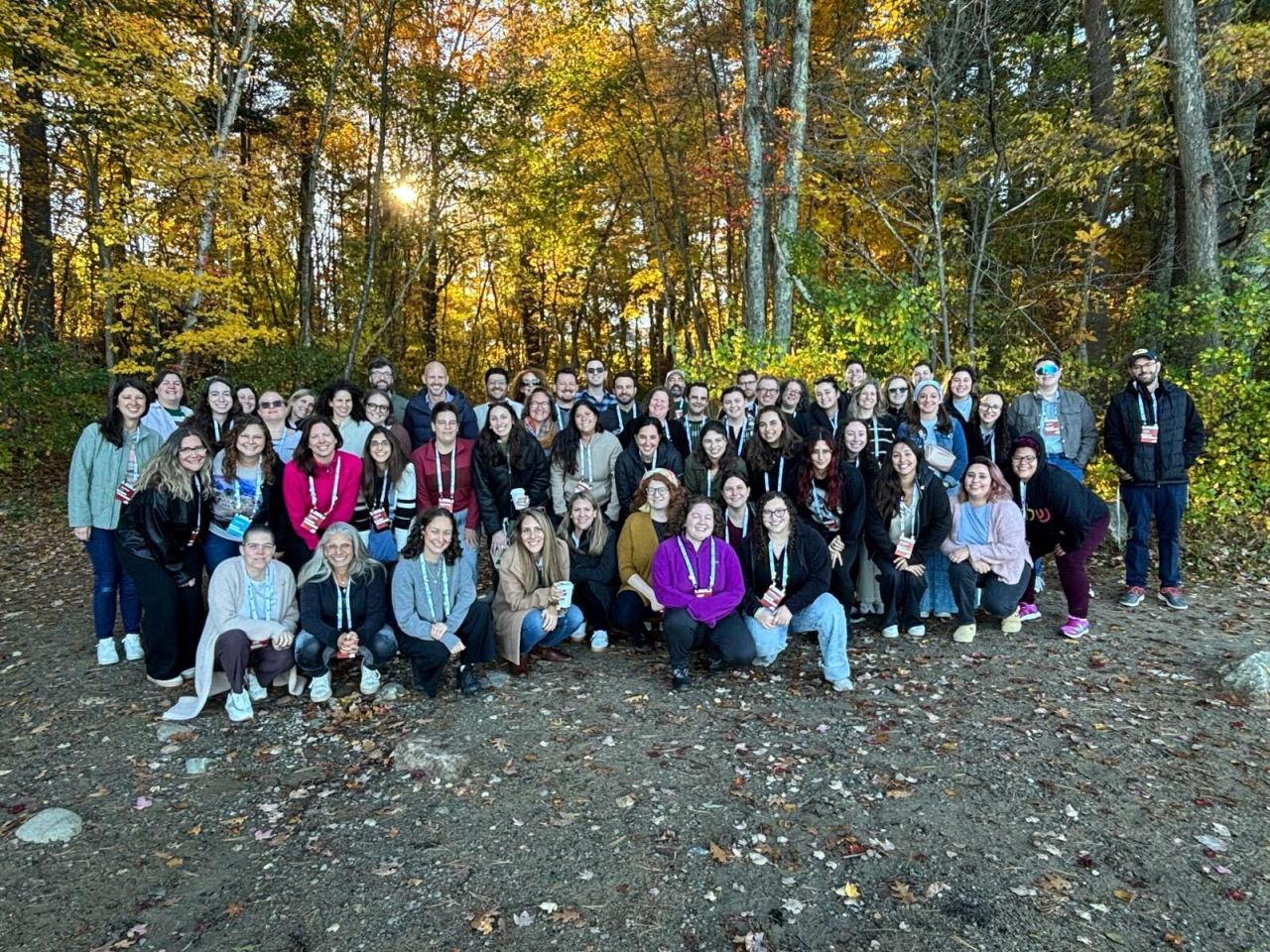
I stepped off the bus in Framingham, Massachusetts, hoping to find what I spend every day trying to build: real, meaningful Jewish community.

That’s what drew me to the M²: Institute for Experiential Jewish Education’s Kehillot Fellowship, which brings together Jewish professionals from Boston, Toronto, and Greater Washington to explore what it means to activate Jewish values in our work. As someone deeply rooted in relationship building and community outreach, I was excited for four days of learning, listening, and connection. And I left with exactly that, plus a deeper understanding of how shared values can transcend geography.

Through my role at The Jewish Federation of Greater Washington, I’ve come to know the people, rhythms, and nuances of Jewish life in Northern Virginia. But this fellowship pushed me to zoom out. I met peers from Boston and Toronto, learned about their successes and challenges, and saw my own community reflected in theirs. It reminded me that while each Jewish community is distinct, we’re all asking similar questions about belonging, resilience, and what Jewish life can look like in the future.

We also had the chance to explore “Jewish Boston”—from historic landmarks to Lehrhaus, a Jewish tavern and house of learning. We heard from visionary local leaders, each imagining bold, diverse futures for their community. Their ideas differed, but their goal was shared: vibrant, inclusive Jewish life.

That collective vision fuels my own work in Northern Virginia. This experience reminded me that leadership isn’t just about what we build locally—it’s about learning from others, asking big questions, and grounding our work in enduring values.

Federation’s investment in my participation was intentional: developing leaders who can strengthen Jewish life today and reimagine it for tomorrow. I’m grateful for the opportunity—and even more energized to bring what I’ve learned back home.

What I learned in Boston is already helping build something special in Northern Virginia.


Learn more

Related posts

Building Belonging Through Care

Building Belonging Through Care

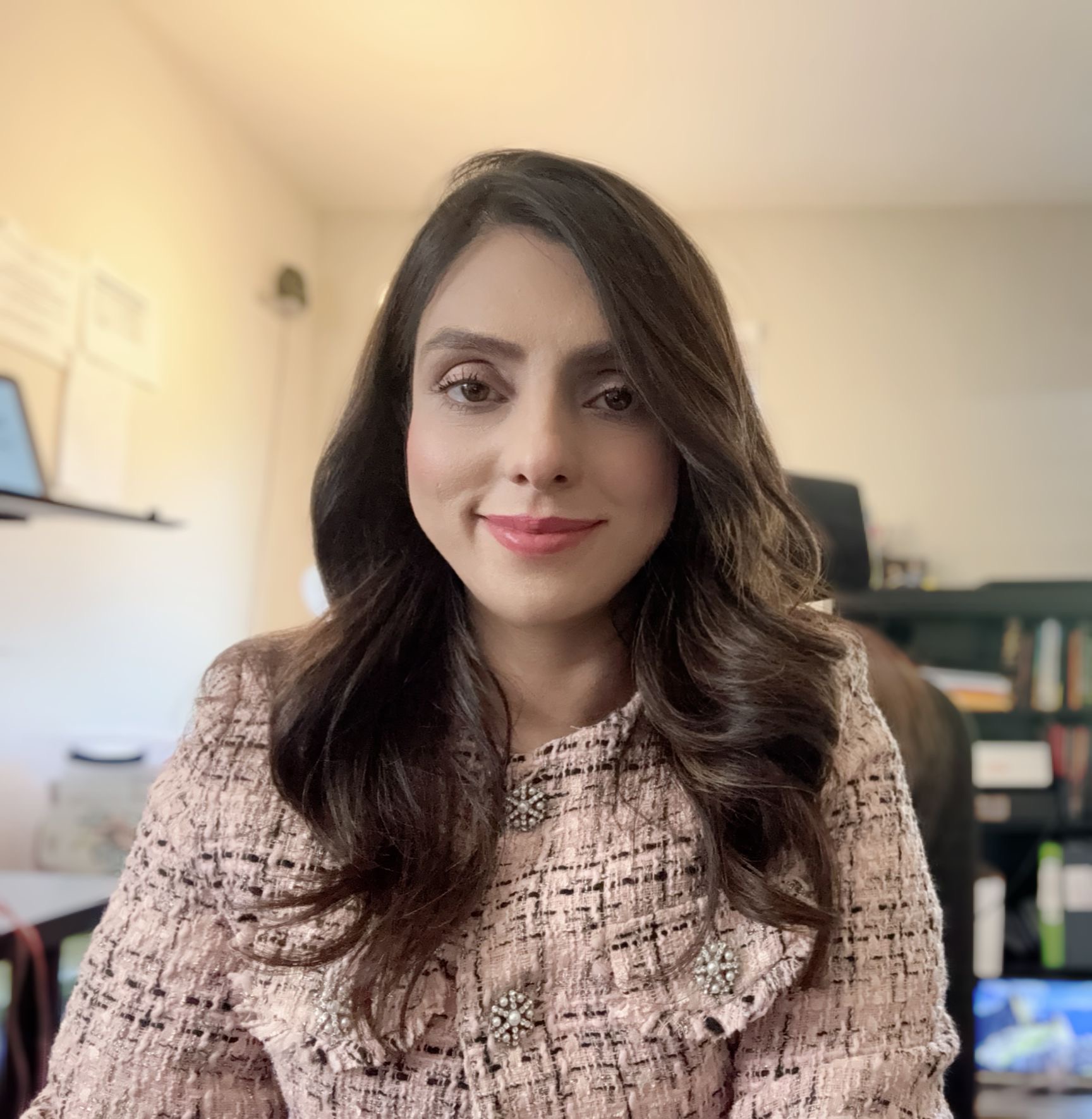
Building Belonging Through Care: Dr. Aiman Tohid and Makom’s New IDD Health Clinic

For Dr. Aiman Tohid, medicine is about more than just treatment—it’s about inclusion, empathy, and equity. As the Director of Makom’s new specialized health clinic for individuals with intellectual and developmental disabilities (IDD), she is helping build something rare: a space designed from the ground up for people who too often face barriers to care.

“This is one of a kind,” Aiman says. “Only a handful of clinics like this exist in the entire United States, and too often, people with IDD are denied care because providers aren’t trained to meet their needs. We wanted to change that.”

From Karachi to California to Montgomery County

Aiman’s journey began in Pakistan, where she attended Dow Medical College, then moved to the United States to complete her board exams and a preventive medicine residency at the University of Southern California’s Keck School of Medicine. After years on the West Coast, she and her husband moved east during the COVID pandemic to be closer to family and new opportunities.

Soon after arriving, she came across Makom. “I saw an opening online,”[at1]  she recalls with a laugh. “It wasn’t even the right fit for my background, but I applied anyway because I really wanted to be part of the organization.” When Makom’s leadership reviewed her résumé, they quickly realized her expertise aligned perfectly with their vision for a new clinic.

Building a First-of-Its-Kind Clinic

After three years of planning, Makom’s clinic officially opened to the broader community this fall. The clinic provides physical, occupational, and speech therapy; nutritional counseling; and behavioral and mental-health services. Initially created to serve individuals in Makom’s residential programs, it now welcomes clients across Maryland and DC, with plans to expand into Virginia once licensing is complete.

The clinic also partners with leading institutions, including Johns Hopkins, Georgetown, George Washington University, and the University of Maryland School of Dentistry, giving medical and dental students hands-on experience with IDD patients. These partnerships are reshaping how health professionals think about care for people with IDD. “We want to create a new generation of providers who are confident and compassionate in serving this population,” Aiman explains. “That’s how lasting change happens.”

A Mission That’s Personal

Aiman’s interest in IDD medicine grew gradually but deeply. During her rotations in mental health, she found herself drawn to working with patients with developmental disabilities. “I’ve always been interested in mental health,” she says. “And having close friends and family with similar diagnoses made it personal. Once I began working with this community, I knew it was where I was meant to be.”

That personal commitment extends to education. She shares a story from a conference that still motivates her: “A board-certified neurologist asked me if adults with developmental disabilities even exist,” she recalls. “That was shocking. People think of autism or Down syndrome as only affecting children. We need more awareness and empathy. This clinic helps open those doors.”

Partnering for Greater Impact

Aiman credits The Jewish Federation of Greater Washington for playing a vital role in Makom’s growth. “The space Federation helped make possible gave us room to build a real clinic,” she says. “The partnership also helps us spread the word. Federation’s name and network give people confidence in the work we’re doing.”

Although Aiman is not Jewish, she says her time at Makom has deepened her understanding of Jewish life and traditions. “As a Muslim, a lot of it feels familiar—the values, the sense of community, even some dietary practices,” she says. “Over the past three years, I’ve learned so much and feel connected in a very natural way.”

Finding Home in the Capital Region

Now five years into East Coast life, Aiman says the DC area has grown on her quickly. She loves the changing seasons—especially fall—and the accessibility of nearby cities and family. “It’s such a diverse community,” she says. “It’s a great place to raise kids, with strong schools, good universities, and people from all backgrounds.”

At home, she and her husband are busy raising three children, ages 11 months, 6, and 7. “Our youngest is a Makom baby,” she laughs. “They threw me a baby shower at work.”

Beyond the White Coat

When she’s not seeing patients or mentoring students, Aiman enjoys quieter moments with tea or coffee and a good book—or watching documentaries, especially about health, history, or inspiring real-life stories. She’s a city person at heart, loves South Asian food (“the spicier, the better”), and never turns down a trip to Europe.

In classic East Coast style, she prefers apple cider over pumpkin spice and calls herself an early bird, thanks to her children. “They start jumping at 6 a.m.,” she jokes. As for desserts, she’s firmly team vanilla, and when it comes to bagels, she keeps it simple: “Just a plain one, with coffee. I’m more about the coffee than the bagel.”

Her favorite DC landmark? “The Washington Monument,” she says without hesitation. “It reminds me how tall we can stand when we build together.”

The Jewish Federation of Greater Washington is proud to support partners like Makom that expand access, equity, and belonging—ensuring that everyone in our community can thrive.

Learn more about Makom and its groundbreaking clinic for individuals with intellectual and developmental disabilities at makomlife.org.


Related posts