Need support? Call 703-J-CARING (703-522-7464)

Turning Up Our Humanness
Turning Up Our Humanness

Last week, I wrote about how fed up I felt in the wake of the Bondi attack and how imperative it is that leaders take the threat of antisemitism seriously. My frustration holds as we continue to see leaders dismiss antisemitism as simply “free speech” or as reasonable debate. But today, I want to linger on a more life-affirming note.

I’ve been marveling at all the stories coming out recently about people who, without hesitation, have stood up to help others. The accounts are humbling, inspiring, and serve as testaments to the good inside us. There’s Ahmed el Ahmed who singlehandedly disarmed one of the Bondi shooters and in doing so saved lives, rebuked ISIS ideology, and offered the world a stunning example of heroism. There’s Boris and Sofia Gurman who also confronted one of the Bondi gunmen, giving their lives to save others just weeks before their 35th wedding anniversary. There’s Spencer Yang, a first-year student at Brown who was shot in the leg and still managed to take care of the guy next to him, keeping him conscious until help arrived. And so many more.

I am also, like many of you, thinking about Rob Reiner. My family and I love his movies. Watching The Princess Bride as a family is a core memory for me. Rob’s films always leave me feeling better about people. He had a knack for exploring and celebrating our common instincts and potential for love, including our tendency toward empathy, in ways both subtle and heartwarming. As one commenter wrote on Stephen King’s tribute to the filmmaker, “Rob Reiner’s humanness was turned up to 11.” (If you know, you know…).

This, to me, is the whole game, to find a way to crank up our humanness as high as it will go. In this age of isolation and online rage, there will be no greater power than our ability to tap into our uniquely messy, endearing, creative, loving human traits. There is no foe too great that cannot be bested with our humanity.

In these final days of 2025, I’m holding onto this thought and looking around at all the light piercing through the darkness. We can each of us make a difference in astounding ways (to this end, there’s still time to give to Federation’s Annual Campaign!). I may not have the courage of those heroes at Bondi or the artistic skill of a filmmaker, but I love my community and look forward to serving it alongside all of you in the year ahead. As Rob Reiner might say, storming the castle to build a better future is best done together.

Shabbat Shalom and wishes for a happy, safe, and healthy new year.
Related posts

Finding Our Voice in the Face of Antisemitism

Finding Our Voice in the Face of Antisemitism

“Verbal abuse becomes graffiti, becomes arson, becomes physical violence, becomes murder.” We know this continuum well. We have now watched every step play out with devastating consequences in Australia. How maddening that two thousand years after the first Chanukah, people are still seeking to murder us for being Jews.

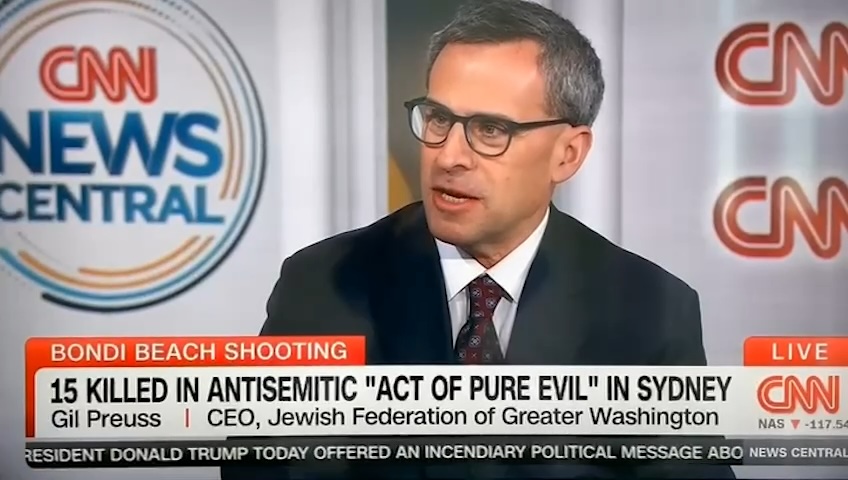
When CNN called me for my thoughts on the attack, they could no doubt sense the aggravation in my voice. No one should have to wake up to stories about a mother and her 17-month-old diving for cover after checking out a Chanukah event full of music and bubbles. About the rabbi who lost his life two months after his son was born. About how Jews gathering to celebrate were gunned down. Again.

Across time. Across space. This has been our story to bear. It is time for a new one. Leaders on both sides of the aisle have spent the last several years dismissing antisemitism, explaining away antisemites, and letting hints of radicalization slide. But the hour for tolerating any kind of minimizing is over. 

It’s incumbent upon all political, civic, business, and religious leaders to challenge the hate directed at Jews and the Jewish people unequivocally, which includes condemning ardent and budding antisemites no matter their place in society or on the political spectrum.

Additionally, I’ve seen how it’s become normal, even chic, in certain circles to denigrate anything having to do with Israel. This too demands our pushback. Criticism is okay. Open debate is vital. But even as we strive for nuance, we must reject the vilification of Israel as a country, of Zionism as an idea, and, of the Jewish people as a whole.

As members of the Jewish community here in the nation’s capital, we have especially urgent roles to play in this effort. This is one of the most networked, most passionate communities around. It’s time to use our influence and find our voice so that we can be a collective thorn in antisemitism’s side.

We can all reach out to people we know in positions of power—federation, state, and local representatives, school board leaders, teachers, and so on. We can help raise the expectations for speech in the public square. Help emphasize that words have consequences. That a twisted comment becomes a belief system becomes a bullet.

It’s also important to remember that most people in our own social circles are well-meaning. Instead of jumping straight to condemnation in these cases, we can help by opposing problematic language and making generous offers of engagement and education.

I’m heartbroken. I’m devastated for the families of those killed and injured at Bondi, and, even now, we have a way forward.

We’ve known hate and we know how to overcome it. As the Maccabees would remind us, it starts with tapping into our agency and the strength of the Jewish people.  

Related posts

Security Isn’t a Reaction—It’s a Relationship

Security Isn’t a Reaction—It’s a Relationship

Sunday’s attack in Australia may have happened halfway around the world, but for many of us, it hit much closer to home.

That’s the nature of Jewish vulnerability today. A violent act against a Jewish community “over there” immediately reverberates here. Our sense of safety shifts. Our plans are second-guessed. Fear creeps in.

And that’s exactly why Federation’s security work through JShield isn’t reactive. It doesn’t ebb and flow with the headlines. And it certainly doesn’t start the night before an event.

Because by the time something happens—whether it’s in Sydney or Silver Spring—it’s already too late to start building the relationships, training, and infrastructure that real security depends on.

What You Didn’t See Yesterday

As soon as we learned of the attack in Australia, our first calls were to local law enforcement partners and the FBI.

We didn’t have to introduce ourselves. We didn’t need to explain why something happening halfway around the world matters here. These are relationships we’ve built steadily over years. When we call, they respond. And they did.

That kind of response isn’t automatic. It’s built on trust. And it’s something we help every institution cultivate—hyper-local connections, district commanders who know your name, first responders who’ve walked your halls. Because when something happens, you don’t want to meet them for the first time. You want to greet them like an old friend.

From Panic to Planning

After the attack, our inboxes filled with last-minute security requests from organizations hosting Chanukah events that had been on the calendar for weeks.

It’s understandable. But it misses the point.

If you needed security last night, you needed it three weeks ago when the event was planned.

Security isn’t something you switch on out of fear. It’s something you build over time—through planning, training, and partnership. That’s what JShield is here to help our community do.

The Power of Community Reporting

Last year, more than 30 Jewish institutions in our region received threatening letters, most vaguely referencing Gaza, some outright menacing. On their own, each one might have been brushed aside.

But thanks to the reporting we encourage through JShield, we saw the bigger picture. We connected the dots across states. We got the FBI involved.

And we got results. The suspect, who lives just outside Silver Spring, recently pled guilty to federal hate crime charges. That outcome didn’t just happen. It was made possible by a community that’s engaged, prepared, and connected.

What Security Really Looks Like

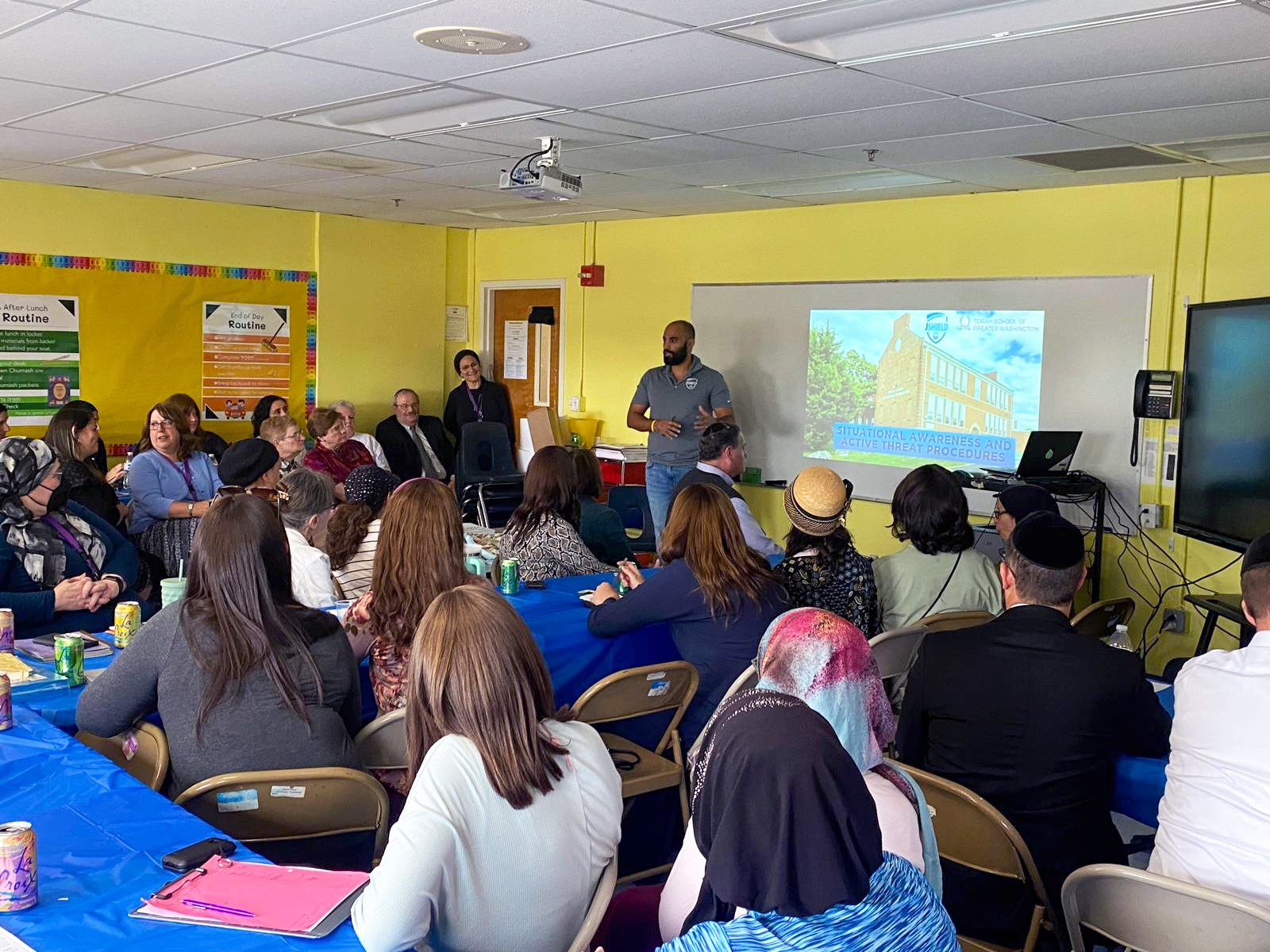
Since JShield launched, we’ve helped bring in more than $5 million in federal security grants for local Jewish institutions. We’ve done hundreds of threat assessments. Helped write emergency protocols. Trained thousands of people on situational awareness and how to stay calm under pressure.

And we know those trainings stick. One teacher told us she starts every school day with a breathing exercise she learned from us. Not because she’s scared, but because it helps her and her students feel grounded.

That’s what we mean when we say training is like putting money in the bank. You don’t get to choose the emergency. But every bit of preparation makes you more ready for whatever comes.

This Moment Is Personal. And It’s Urgent.

If you’ve felt a little more anxious dropping your kids at school or wondered if your synagogue is doing enough to stay safe, you’re not alone. We’re hearing it across the community. And we feel it too.

But fear alone doesn’t keep us safe. Action does.

Right now, we have a critical opportunity. Thanks to a generous match, every dollar you give to support Federation’s security work through JShield will go even farther. That means more trainings, more assessments, and more direct support to institutions across Greater Washington.

Because cost should never be a barrier to security. That’s why every service JShield provides—from threat assessments to training—is offered free to the community, powered by Federation and donors like you.

Security doesn’t start with police. It starts with preparation, with connection, and with showing up for each other before something happens, not just after.

We can’t wait for the next headline to get ready. This is the moment to act.

Give now to protect Jewish life in Greater Washington. Let’s meet this moment—and this powerful matching opportunity—together.

Support community security

Related posts

What This Moment Means and How We’re Responding

What This Moment Means and How We’re Responding

In the wake of the horrific terrorist attack in Australia, I want to speak directly to our community here at home.

Our hearts are with the victims, their families, and the Jewish community in Australia as they mourn and begin to heal. Violence against Jews anywhere reverberates everywhere, and moments like this understandably heighten concern within our own community.

Here in Greater Washington, the safety and security of Jewish life remains our highest priority. Through JShield, Federation’s community-wide security initiative, we are in close coordination with local and federal partners and with Jewish ​institutions across our region, supporting schools, synagogues, and organizations with threat monitoring, training, assessments, and grant support at no cost. You can learn more about how JShield works to keep our community safe at shalomdc.org/security.

If you see or experience something concerning, we encourage you to report it to JShield. Reporting helps identify patterns and supports coordination with our security partners.

Jewish life will continue. We will gather, celebrate, learn, and mark our holidays together, thoughtfully, responsibly, and with care for one another.

At the same time, this moment calls on all of us to be attentive to the language and actions we tolerate in our public spaces. Antisemitism, in any form, must be named and challenged, and Jewish communities must never be left to carry that burden alone.

Earlier today, I shared these concerns in a brief conversation on CNN about antisemitism and the responsibility to challenge it before it escalates. You can watch it clip below.

Thank you for the many ways you show up for one another and for our community, especially in difficult moments. We are grateful for your partnership and your trust, and we remain committed to keeping Jewish life in Greater Washington strong, safe, and connected.

This is a moment for shared responsibility. Take action by supporting JShield and strengthening Jewish community security.

Support community security

Related posts

Winter Luncheon Lecture

Winter Luncheon Lecture
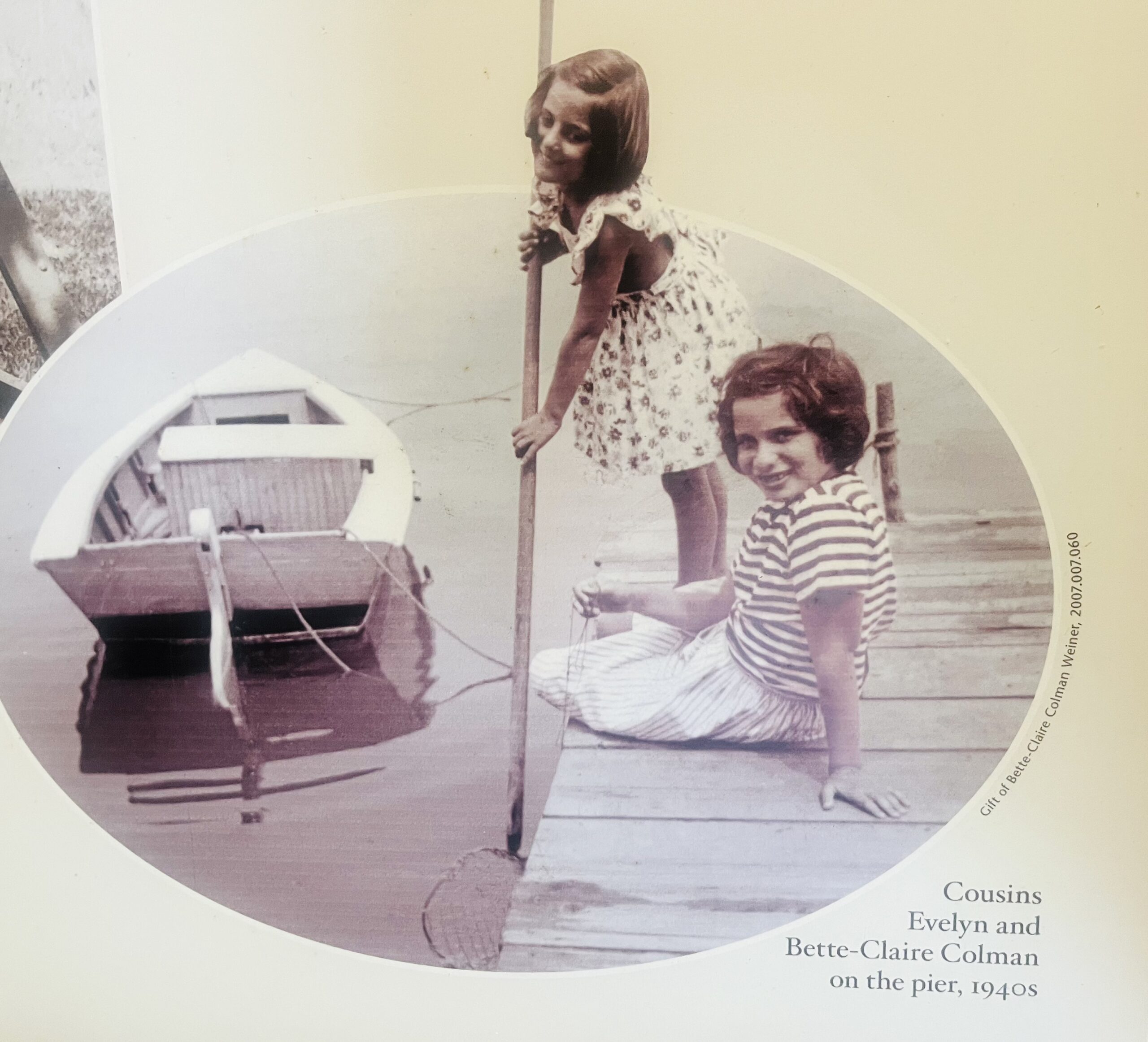
Good evening, I’m reaching out as the director of the Captain Avery museum. We were the Masonic Fishing Club in 1923, which started when a few Jewish families bought the property. There was antisemitism and segregation of the beaches in southern Maryland at that time, so the families purchased land so they could fish and go swimming without the stress of antisemitism. On January 14th, the Captain Avery museum has a winter lecture series about the Masonic fishing club, which was eventually called “Our Place” by the Jewish families who spent time there. The guest speaker is Paul Foer, who spent time at Our Place. January 14 Summers in the 60s, 70s and 80s In The Old Fishing Club and Our Place: What the Museum's Evolution (and mine as well) Teaches Us About the History of Shady Side and the Meaning of Historic Preservation Paul Foer, Representative of "Our Place", author, and local business entrepreneur

Embracing the Stronger Force That Binds Us

Embracing the Stronger Force That Binds Us

Why I’m Rethinking “Unity” and What We Need Instead

I’ve been wrestling with the word “unity.” It sounds nice enough but lately, when I hear different presenters call for unity among the Jewish people, I hesitate.

Is appealing to unity just a way of asking people to conform to the speaker’s preferred ideas and political positions? Is unity a code word for uniformity? Is it a convenient way to exclude ideas that may challenge the status quo? While we may be concerned with significant divisions within the Jewish community, it is not clear to me that calling for unity is the answer. Are we tempted into thinking the easiest way to stand as one would be to think and act alike?

I’ve set “unity” aside for now because our community is strong not in spite of our differences but because of them. The more we can shape a community that values and learns from a diversity of viewpoints and perspectives, the better off we’ll be. Still, proponents of unity have a point. We need a binding force, something that sustains us not simply as a group of individuals but as an enduring community.

There’s a term in chemistry (bear with me) called the “strong force.” The strong force is what holds an atom together, overcoming the lesser forces that would allow protons to repel each other and push apart. That’s how I see our community—spacious and gracious enough to account for differences but sturdy enough to hold our form. I believe that our strong force is the core idea of mutual responsibility, a feeling that we are all responsible one for another.

With a sense of mutual responsibility and a common fate, anything is possible. Once that’s in place, the rest is conversation. Disagreement, overlap, exploration are all okay because even if we ping off each other now and again, we are held by something stronger, a commitment to each other and our shared destiny.

We have a lot to navigate together in the coming months and years. Meeting the surge in interest in Jewish engagement, shaping a diverse and open community, connecting to Israel, and addressing antisemitism and our communal security stand out as priorities heading into 2026 (more on this soon). We have meaty, worthy, urgent goals to tackle, which will, without question, spark disagreements.

Rather than mute our differences, I say let’s turn the volume up on communal conversations embedded within a context and commitment to mutual responsibility. Diversity of thought is not a tax on unity. It’s a form of abundance. We can feel confident that even as we bounce ideas and questions, invitations and quandaries off each other, our communal bond will hold. There’s a stronger force at play.

Related posts

Peace of Mind Starts Here

Peace of Mind Starts Here

Jewish Federation of Greater Washington Announces Additional $376,200 in Security Allocations to Local Jewish Communal Organizations

In response to the alarming rise in antisemitic incidents and the growing need for enhanced protection across the region, the Jewish Federation of Greater Washington (JFGW) is distributing over $375,000 to support the urgent security needs of more than 30 Jewish organizations in the Greater Washington area. This allocation follows the July distribution of more than $460,000 for the same purpose.

These funds will enable organizations to increase security personnel and strengthen high-priority infrastructure, such as cameras and fences, amid an intensified threat environment, including the tragic attack at the Capital Jewish Museum in Washington earlier this year.

“Federation stands with our community in this moment of heightened anxiety and rising costs,” said Joel Frankel, Senior Director of Community Capacity Initiatives. “We know these funds won’t erase the threat we face, but they will ease the burden on Jewish communal institutions and give them greater freedom to focus on their mission—knowing we’re working together to safeguard Jewish life, learning, and connection in our region.”

These allocations are in addition to the nearly $170,000 Federation is distributing to local early childhood education facilities in partnership with The Tepper Foundation’s national Emergency Security Fund, awarded through Jewish Federations of North America.


Related posts

Holding on to Who We Are

Holding on to Who We Are

I am not exactly sure what got me started, but I’ve been working my way through a self-assigned reading list on antisemitism. I started with Anti-Judaism: The Western Tradition by David Nirenberg (a bit dense for extracurricular reading). Next up was People Love Dead Jews: Reports from a Haunted Present by Dara Horn (wonderfully written and thought provoking). And now I’m onto the newest publication, Antisemitism, an American Tradition by Pamela Nadell, a history professor at AU.

I am still wrapping my mind around the takeaways, but thus far I’ve been struck by a chapter from Horn’s work. She points out the story we all hear about Ellis Island registrars intentionally or inadvertently adjusting the names of Jewish immigrants as they made their way through a harried intake process is, in fact, a Jewish myth.

The truth, Horn explains, is that Jewish immigrants made deliberate choices to Americanize their own names soon after their arrival to avoid discrimination and improve their job prospects—an urgent consideration in turn-of-the-century America. Jewish immigrants needed to make a new life for themselves and their families, and they knew the better they were at publicly masking their Judaism, the easier it would be.

Thus began a delicate American Jewish tradition of maintaining our Jewish identities while doing what we could to fit in. Up until now, I thought this dance was a thing of the past. Obscuring names and associations and forgoing outward expressions of Jewish faith seemed to me like the stuff of history books. After all, I’ve grown up during an era of American Jewish flourishing. That we might be back here, putting a baseball cap over our kippahs or quietly removing Jewish indicators on our LinkedIn has caught me by surprise.

In 2023, Hillel found that 1 in 3 Jewish college students hid their identity after October 7. And last week, the Washington Post published results from a September poll that found in the past year, 42% of Jewish Americans avoided publicly wearing, carrying, or displaying anything that might help people identify them as Jewish. Discouragingly, younger Jews were more likely to say they avoided displaying Jewish symbols—53% of those under age 35—than older groups.

After my deep dive into antisemitism’s history, I have a much greater understanding of how deeply embedded antisemitism is in our societies, and therefore how hard it can be for a community to try and fit in and fight antisemitism simultaneously. Embracing and relishing our Jewish identity and being sober minded about the state of antisemitism in America, and indeed the world, all feel like nonnegotiables.

That’s why I’m resolved that we must not cede either goal. We can double down on our work to strengthen our Jewish identities even as we make real-world adjustments to account for our safety. Hate may force us to make compromises or short-term sacrifices, but it must not define who we are or diminish our commitment to Jewish life. We owe it to generations past and future to continue fighting antisemitism and the hatred that would see us limit our Jewish expression. The current growth in hate cannot continue. Confronting it must be a central priority for our Jewish community.

Related posts

The Golden Age of American Jewry Is Not Over: Defending Democracy in Turbulent Times

The Golden Age of American Jewry Is Not Over: Defending Democracy in Turbulent Times
Presented by Rabbi David Saperstein Director Emeritus, Religious Action Center of Reform Judaism American Jews have experienced unprecedented freedom and opportunity in this nation. Yet, today, we witness threats to the very democratic institutions that made this golden age possible, from intensifying political polarization and rising hate crimes, disproportionately affecting Jews, to the erosion of the rule of law and minority rights. Some say that Golden Age is over; some are committed to preserving it. Defending democracy is not merely a matter of self-interest but about fulfilling our deepest obligations to the principles ensuring that all minority communities can thrive in a pluralistic society, the principles that transformed America into a beacon of hope for all in our own land and for the oppressed worldwide. What should be our response to these challenges at this crossroads for our nation and our community? Register to receive the Zoom link to join us online.

10/14/25: Two Weeks Later—ADL D.C.’s October Webinar

10/14/25: Two Weeks Later—ADL D.C.’s October Webinar
October 28th marks two weeks since the ceasefire between Israel and Hamas was agreed to. The hostages have returned home and there is a hopeful peace. Now what? What does post 10/14 life look like in Israel? How has the ceasefire deal impacted the United States and the unprecedented antisemitism that followed the Isreal/Hamas war? Join ADL for an engaging panel featuring Tali, Senior Shlicha and Head of the Israeli Delegation to D.C., on behalf of The Jewish Federation of Greater Washington and The Jewish Agency for Israel, and Lauren from ADL. Tali will be sharing stories and perspectives from Israel, while Lauren will be bringing insights into what we are seeing in the U.S.