Need support? Call 703-J-CARING (703-522-7464)

Shaping Jewish Life on Our Own Terms
Shaping Jewish Life on Our Own Terms

Navigating pride, unease, and the responsibility to shape our future together.

I just finished Stained Glass by Flora Cassen, a book that explores antisemitism’s effect on Jewish identity. She puts into words what’s been on my mind lately, which is that this is a challenging time for many to navigate Jewish expression. At times, life as a Jew in the DMV feels pretty great. We have amazing institutions, myriad forms of programming across a variety of interests, and an actively engaged community. And yet, there’s another dynamic afoot. Something that causes us to question whether we should put on a Star of David, wear a shirt with Hebrew writing, or plan a Jewish event in public.

By way of a snapshot, in the same historical moment in which public schools in our area are designating days off for Rosh Hashanah and Yom Kippur, vandals are spray-painting swastikas on desks. What are we to make of such a juxtaposition?

I don’t want to minimize the way in which our community has become ingrained in the fabric and rhythms of the region and the country more broadly. As others have said, almost any generation in Jewish life would trade their circumstances for ours. What Cassen points out, however, is that we have a lingering sense of insecurity based on centuries of history and, with a rise in antisemitism, a new and justifiable sense of unease.

Our job as a Federation is to recognize and shape our reality to the best of our ability and to build, continuously, toward a better future. That means supporting our communal ecosystem to be able to double down on the good and push back against the bad. We are situated at the epicenter of Jewish life in Greater Washington and can partner with, convene, and mobilize individuals and agencies to help more people live proud Jewish lives, as publicly or privately as they choose, independent of any external factors.

This work includes tackling antisemitism for the sake of current and future generations, in addition to helping more people deepen their ties to the ongoing story of the Jewish people. We don’t have to classify this moment as positive or negative, golden or threatened. What matters is that we move forward as a community in pursuit of a future that we define for ourselves.

We are here to strengthen a Jewish ecosystem capable of spurring Jewish pride and connection while doing what we can to influence the landscape of Jewish life in America, no matter which way the winds might blow.
Related posts

Coming Together to Protect our Communities

Coming Together to Protect our Communities

In Pirkei Avot, we’re taught: “It is not your duty to finish the work, but neither are you at liberty to neglect it.” In the Torah, we are commanded not to stand idly by when our neighbors are in need.

These Jewish values—responsibility, solidarity, and action—were loudly heard last week when hundreds of Jewish leaders and advocates gathered on Capitol Hill to advocate for the safety and security of our Jewish communities nationwide.

More than 400 leaders from 82 Jewish communities came to Washington, DC as part of The Jewish Federations of North America’s Security Fly-In. Representing Jewish Federations, synagogues, JCCs, schools, camps, Hillels, community relations councils, and security organizations, participants arrived carrying not only policy priorities, but deeply personal stories.

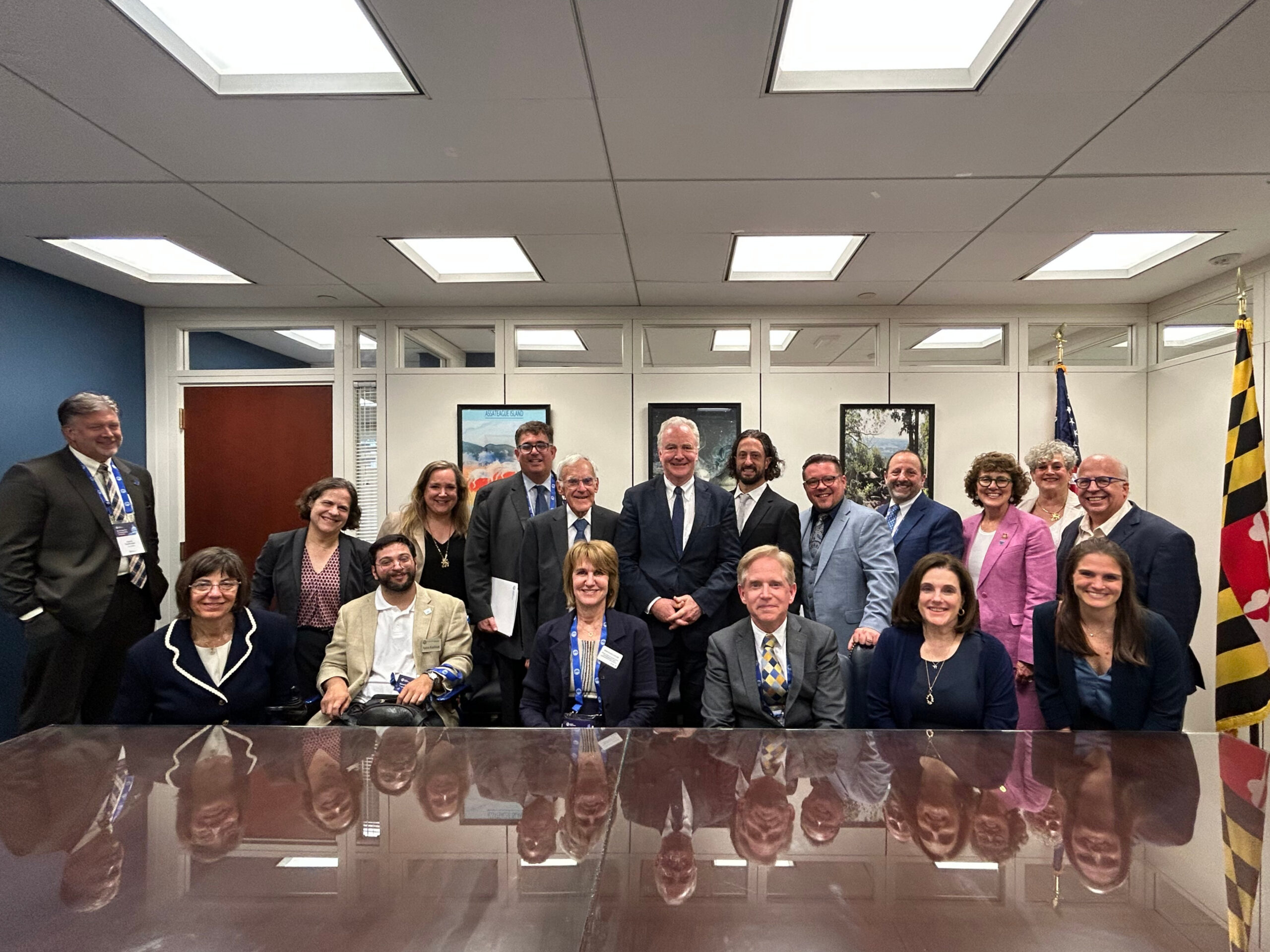
The Greater Washington delegation, organized by The Jewish Federation of Greater Washington alongside partners including Jewish Community Relations Council of Greater Washington, met with members of Congress and congressional staff from across our region, including Senator Mark Warner of Virginia and Senator Chris Van Hollen of Maryland.

Every Person Had a Story

Before those meetings began, something else happened in the room: people shared their fears, their exhaustion, and their determination.

Every person present had a story of how their community has had to grapple with rising antisemitism and security concerns.

A synagogue leader explaining the impossible budgeting decisions communities now face as security costs continue to rise. A parent describing that their five-year-old child knows not to enter their synagogue building if there’s no security on duty. A camp professional talking about the responsibility of creating joyful Jewish experiences while also preparing for emergency scenarios no one ever imagined would become routine.

Eddie Rubin, a parent at Temple Israel in West Bloomfield, Michigan where there was an antisemitic attack in March, shared: “I need people to understand what ‘inches away’ meant.” If the car packed with explosives made it just a few more inches, “That’s my kids classroom, where he’s sitting. Had [the attacker] been able to get out of that car, he would have been inside my kids’ classroom in seconds. And my kids would not be here today.”

The emotion in the room was palpable. Many spoke about how difficult it has become to accept heightened security as “the new normal.” Communities are doing everything possible to keep people safe, but funding has not kept pace with the growing threats facing Jewish institutions and other faith communities across the country.

Turning Personal Stories Into Advocacy

And yet, amid the fear and frustration, there was also tremendous strength.

There was power in seeing hundreds of Jewish communal leaders from every corner of the country come together with one shared message: Jewish life must be protected, and our communities deserve to gather openly and safely.

Those personal stories became the heart of conversations on Capitol Hill. Our delegation urged lawmakers to strengthen federal support for nonprofit and faith-based security programs and to advance legislation like the bipartisan Jewish American Security Act, which seeks to expand resources that help protect vulnerable communities.

This advocacy effort comes at a time when antisemitism and threats against Jewish institutions have reached alarming levels. Across the country, Jewish communities are being forced to make impossible choices between funding critical programs and funding the security measures needed to protect them.

In Greater Washington, our community is working proactively to meet this growing need through initiatives like JShield, Federation’s community security initiative. By leveraging trusted partnerships, strong relationships with law enforcement, and a community-wide approach to safety, JShield is helping build a culture of security across our region—one where every institution and community member understands their role in keeping our community safe.

JShield provides one-on-one consultations, emergency preparation plans, security trainings, help securing nonprofit security grants, and more to hundreds of local Jewish institutions entirely free of charge, ensuring that cost is never a barrier to safety.

Showing Up for Our Community

As we marked Jewish Heritage Month, the Security Fly-In served as a powerful reminder that Jewish identity is not only something we celebrate, it’s something we have to protect. Advocacy is one of the ways we do that. By showing up. By telling our stories. By refusing to stand idly by.

The work ahead is not finished. But last week, hundreds of voices came together to ensure that Congress heard clearly what our communities need: safety, partnership, and the ability to live Jewish life openly and without fear.

Related posts

Building a Community Where Differences Are the Glue, Not the Wedge

Building a Community Where Differences Are the Glue, Not the Wedge

How do we build a healthier Jewish community rooted in respect, trust, and constructive dialogue, when it feels like we can barely agree on anything?

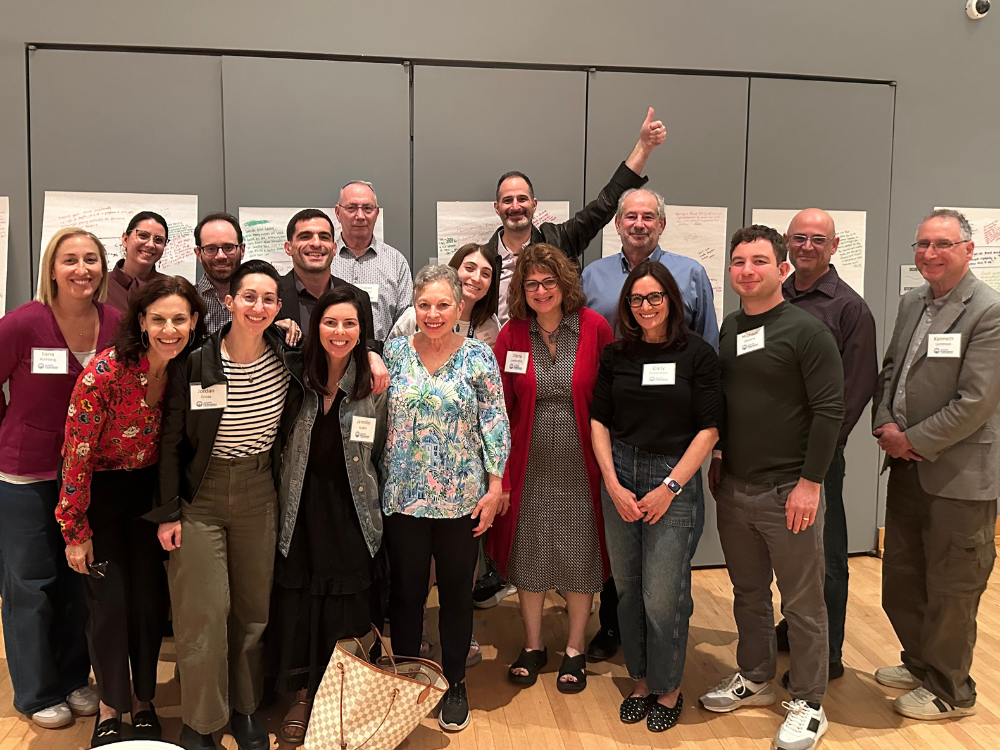
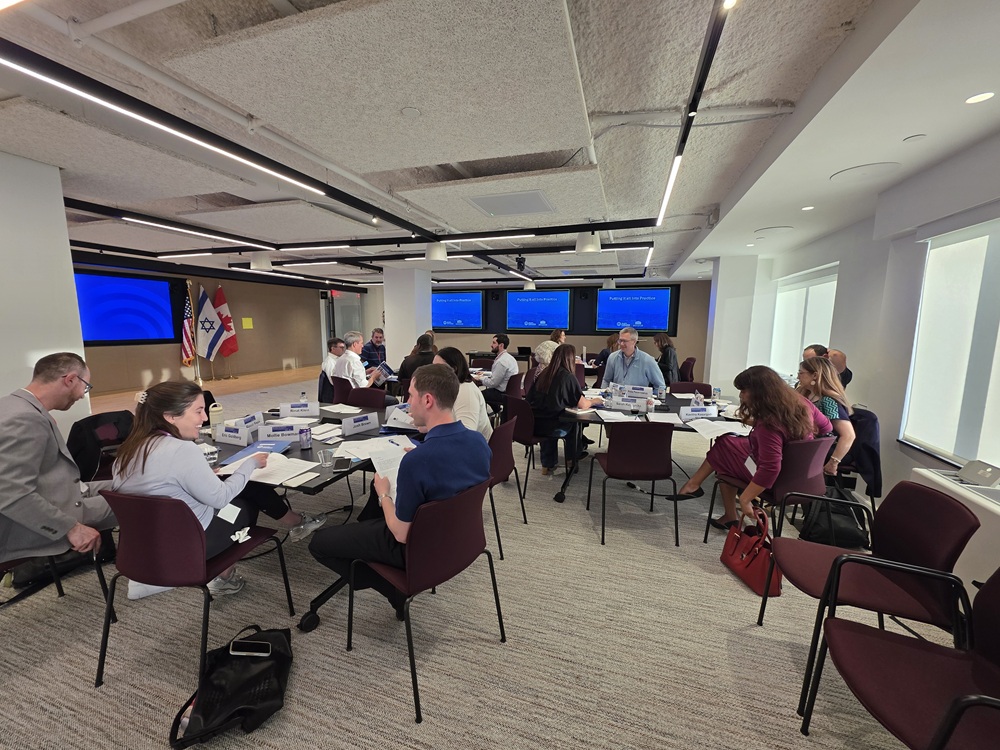
That’s the one million dollar question, and it’s exactly what brought 22 local leaders from throughout Greater Washington together over the last four months. From February through May, this group took part in the Courageous Leadership Fellowship, a partnership between Federation and the Shalom Hartman Institute, to sharpen their ability to lead with empathy, courage, and respect in a world that feels increasingly polarized.

Grounded in shared values of mutual understanding and encouraging belonging, participants explored what courageous leadership looks like in practice and left better equipped to lead meaningful change and foster constructive conversations across our community.

Instead of just talking about these ideas in theory, the sessions got down to the intricate reality of community work. Led by Hartman scholars Sara Labaton, Elana Stein Hain, and Masua Sagiv, the group explored various themes, including finding inner clarity, leadership in polarities, the challenges and importance of maintaining a big tent community, and finally the future through two lenses: repair and transformation. Through a “where do you stand” activity, they moved past case studies and tackled real communal dilemmas, followed by small group discussions.

By the time the fellowship wrapped up, these leaders walked away feeling far more confident in their ability to facilitate difficult dialogues and communal decision-making, and just as importantly, deeply connected to the leaders and institutions who are actively shaping the future of Jewish life across Greater Washington.

This work gets to the heart of one of Federation’s core commitments: creating a community where everyone feels like they belong, that they’re listened to, and that they can contribute to a vibrant Jewish future, not in spite of our differences, but with them.

A strong community doesn’t require us to always see eye-to-eye. It requires us to know how to talk to each other when we don’t. By investing in leaders and relationships across our communal landscape, Federation is helping cultivate the trust, respect, and connection our community needs to stick together and thrive.

Learn more about Federation’s work to build a strong, inclusive community here.

Related posts

Navigating Change Together

Navigating Change Together

How Jewish community helps ground us through life’s transitions.

A couple weeks ago, my wife and I set off on a drive up to Boston to see our daughter graduate from college and then a few days later over to Pittsburgh to see our son graduate with a Master’s degree. It won’t surprise you to hear that witnessing these two milestones got me thinking about life’s transitions and the swirl of excitement, loss, and uncertainty that frequently come with them.

As Bruce Feiler points out in his book, Life Is in the Transitions: Mastering Change at Any Age, we spend more of our lives in flux than we realize. Life events can be good or bad. They can be determined by a decision that we make on our own or something that happens to us. Major life events also typically last about five years, and much of our adult lives are spent in unsettled states. This isn’t necessarily a negative thing—change can indicate growth and evolution—but it is the reality of most of our lives.

This sense of unsettledness is pervasive for many of us today. The world is changing faster than any of us could have imagined. Deep assumptions about our security, identity, friends, work, etc. are being challenged. And that is beyond changes that may be happening in our personal lives. All of this can get to be overwhelming. But that sense of instability is lessened and, in some ways, even reversed when we find community.

Feiler argues that a well-constructed life is one guided by the ABC’s—agency, belonging, and cause. To thrive, we need to feel like we can impact the world around us; that we have people to lean on; and have a way to serve something greater than ourselves. These three factors keep us grounded through life’s twists and turns, and they are all on offer in our community.

That’s what I hope people who engage with Federation and our partners come to feel, that Jewish Greater Washington is a place where they can commune with the ABC’s, across every life stage and within the ongoing story of Jewish peoplehood.

Our work as a Federation, therefore, is to ensure our community remains host to a grand Jewish playground, where people can come learn about themselves and find people with whom to climb through good times and bad no matter what’s going on in their lives.

That’s what I see as the beauty of community building. In choosing to join forces on our quest for meaning, we vastly improve each other’s odds of success. By engaging in Jewish discovery and expression together, we multiply each other’s agency, deepen each other’s sense of belonging, and further each other’s ability to pursue what matters to us most.

P.S. happy to recommend Bruce Feiler’s thoughtful guest essay in today’s New York Times.

Related posts

A Vote of Confidence in Jewish Community

A Vote of Confidence in Jewish Community

Why connection, participation, and generosity all go hand in hand.

There’s a consensus brewing. Emerging across opinion pages, podcasts, and dinner tables is the idea that we’ve strayed too far from one another. The question driving many of our national and communal conversations is how do we renew our obligations to each other?

Just this week, I’ve listened to discussions about how generosity was meant to be one of liberalism’s founding principles. How our educational pursuits were meant to prepare us to be good citizens and servant leaders. How we were meant to talk to strangers. How we were never meant to bowl alone.

All these ideas are swirling within our Jewish community as well. For all our differences, the thing people want most is to connect—to feel like they belong and that the Jewish people would not be complete without them and what they have to offer. And, indeed, we are not. I believe wholeheartedly the Jewish community is incomplete without everyone at the table.

Which makes now a perfect moment to double down on the sacred, timeless work of community building. Next week is Giving Week and I am asking everyone who cares about the Jewish community and values the Jewish future to contribute. Your gift—of any amount—matters. Your participation matters. You matter.

Giving is a vote of confidence in our shared efforts to build a strong and joyful Jewish community, one that supports and brings together the full breath of Jewish life. It’s also what supports our work as a Federation to bolster a network of Jewish agencies and programs that care for people in need, engage people in every life stage in meaningful Jewish experiences, perpetuate and strengthen Jewish identity and peoplehood, and look after the safety of the Jewish people.

What’s more, the simple act of giving collectively, alongside so many others who care about Jewish life, makes its own powerful statement that we are here and that we believe in the promise of community and acting together to the benefit of others.

I lament the challenges and the tumult of our times. But I find incredible comfort and hope in the fact that our path to a brighter future involves so many beautiful things: connection, participation, curiosity, debate, and a love for Jewish wisdom and tradition.

It’s notable that in this era of hyper-individualism, people are hungry for mutual obligation. But that’s the punchline of responsibility and interdependence: it’s only in being tied to each other that we find the transcendence we seek. Obligations are on offer, I invite you to come claim them.

Related posts

What Our Community is Asking For

What Our Community is Asking For

Listening to Build a Stronger Jewish Community

As Federation begins to look ahead to the priorities that will guide our work in the coming months and years, we are taking stock of what we’re hearing from our community. In fact, our Community Leadership Council recently concluded a monthslong listening tour to surface views and insights from across the community.

What they found was a widespread desire for Jewish life to be more accessible, affordable, and easily navigable. Just as we saw in our 2025 Community Impact Survey, people across almost all demographic, geographic, and socio-economic backgrounds want to be more engaged in Jewish life and community, but many aren’t sure where to turn or feel discouraged by barriers to entry. This is a sentiment we take seriously at Federation and one that will inform our continued efforts to ensure anyone who is interested in Jewish life can easily find what they’re looking for.

One project that is already underway is our work to make Jewish day school more affordable by taking advantage of a new Federal Tax Credit Scholarship Program. We expect this program to complement and amplify Jewish day school’s current tuition assistance and fundraising efforts and provide opportunities for more students to pursue a Jewish education, which we know also has positive ripple effects on families looking to dive deeper into Jewish life.

Starting in January 2027, eligible taxpayers may receive a federal tax credit of up to $1,700 per year by contributing to an approved Scholarship Granting Organization (SGO). Unlike a taxable donation, a tax credit provides a 1:1 reduction in taxes owed. These SGOs, which will operate as independent 501(c)(3)s, will then distribute need-based scholarships to participating schools and eligible families, who can then use those funds toward tuition or other education-related expenses.

Federation is working in close partnership with local day schools to set up SGOs in our region to ensure our community can benefit from this new program. We are also working with other Jewish organizations, public school leaders, and community non-profits to help them understand the changes and opportunities that come with the legislation.

Our work in this arena is only one part of a broader agenda to make sure that all members of the Jewish community seeking to engage in Jewish life are able to do so. As we consider the future, we can’t let a lack of information or inability to pay keep anyone from participating.

There is a lot of coordination going on behind the scenes, bringing together schools, partners, and community leaders to tackle crucial communal issues. Ultimately, this is where Federation thrives, aligning efforts, building and strengthening infrastructure, and helping turn opportunity into access. We don’t consider any of our work finished—far from it—but we are confident that as we move forward with a clearer sense of what’s getting in the way, and what it will take to address it, we can do so with an ear to the ground and eye toward progress.

A special thank you to the inaugural members of the Community Leadership Council. More to come on their findings from the listening tour!

Related posts

Expanding Access to Jewish Education

Expanding Access to Jewish Education

A New Opportunity on the Horizon

For many families in our community, scholarship funding is what makes education at a Jewish day school possible. Across the region, our Jewish day schools are providing close to $25M in tuition assistance. Now, a new nationwide initiative has the potential to reshape how families access scholarship funds and afford that education.
 
The Federal Scholarship Tax Credit, set to take effect in 2027, creates a new opportunity to increase scholarship funding through a new donation mechanism. Through the program, eligible taxpayers can contribute to Scholarship Granting Organizations (SGOs) and receive a federal tax credit, generating new funding for scholarships. In turn, this helps schools reach and sustain more students over time—strengthening their long-term stability.

Expanding Access for Families

At its core, this effort is about expanding access—for families, for students, and for the future of Jewish education in our region.
 
“This opportunity has the potential to expand access to Jewish education, helping more families afford the education they want for their children while supporting the long-term strength of our school,” said Rabbi Mitchel Malkus, Ed.D., Head of School at Charles E. Smith Jewish Day School.

Preparing as a Community

While the opportunity is still ahead, the work to prepare is already underway.

The Jewish Federation of Greater Washington is leading a coordinated regional effort to set up local SGOs for our community, ensuring they’re built thoughtfully with the right structure and oversight needed to serve our community well.

By bringing together Jewish day schools and key partners for this process, Federation is helping to build the infrastructure, systems, and shared approach needed to implement the program effectively and responsibly.

“Regional coordination makes this easier for our community to understand,” said Rabbi Dr. Hillel Broder, Head of School at Melvin J. Berman Hebrew Academy. “Not everyone in our community has children in day school, but many care deeply about Jewish education. A coordinated approach helps make this opportunity easier to navigate.”

Building Thoughtfully, Together

Leaders across the region strongly believe in the importance of approaching this work collaboratively and thoughtfully.

“As the only Jewish day school in Northern Virginia, having a shared approach matters,” said Jodi Hirsch Rein, Incoming Head of School at Gesher Jewish Day School. “Preparing together allows us to navigate this opportunity thoughtfully and in alignment with our values.”
 
“At Milton, we see this as part of a broader commitment to access and excellence,” said Deborah Skolnick Einhorn, Head of School at Milton Gottesman Jewish Day School. “This opportunity has the potential to open more doors for students, and both the public/private school partnership and regional collaboration help ensure we can do so in a way that is both responsible and sustainable.”

Federation is ensuring that this opportunity is not only accessible but clear, coordinated, and built to last.

“Our role is to build the shared infrastructure that allows schools to participate effectively and transparently,” said Joel Frankel, Federation’s Senior Director of Community Capacity. “By coordinating governance and compliance across institutions, we can help ensure clarity and accountability, creating more opportunities for students and families across Greater Washington to benefit from Jewish day school education.”

Looking Ahead

In the months ahead, Federation and partner schools will continue working together to thoughtfully build and implement the program, so that families can understand how it works and can access its benefits as soon as the tax credit becomes available.

Learn more

Photo credit: Gesher Jewish Day School

Related posts

Building Jewish Leadership in Northern Virginia

Building Jewish Leadership in Northern Virginia

Northern Virginia is one of the fastest-growing centers of Jewish life in our region. With more than 120,000 Jewish residents, a rich and vibrant fabric of Jewish life is already taking shape. But for this community to truly thrive, leaders need to be connected, supported, and equipped to work together to tackle shared challenges. That’s where Federation’s experience in developing leaders and strengthening community-wide connections plays a critical role.

Bringing Leaders Together Across NoVA

In April, Federation marked the completion of its second Northern Virginia Leadership Cohort, bringing together 16 leaders from across the region, representing synagogues, Jewish communal organizations, social service agencies, campus groups, and other institutions serving Jewish life across NoVA. While these leaders come from different institutions and backgrounds, they share a common goal: strengthening Jewish life in Northern Virginia together.

Over the course of the program, participants built their leadership skills, deepened relationships, and explored new ways to collaborate across their organizations. But the true impact goes beyond any single session or workshop. The cohort was facilitated by executive leadership consultant Rae Ringel, whose approach helped participants translate these conversations into practical leadership strategies.

From Parallel Work to Shared Vision

Federation’s NoVA leadership initiative brings leaders together to help them move from parallel work to shared vision. By creating space for connection and coordination, the cohort helps leaders better understand one another’s challenges, identify opportunities for partnership, and align around the broader needs of the community.

“[The program] was really great and helped me better understand what I need to work on,” shared one participant. “It’s diverse enough that you have people from all parts of NoVA Jewish life.” Another noted, “It helped introduce me to other community leaders who are experiencing the same challenges and are already thinking about ways to resolve them.”

Looking Ahead: Sustaining Momentum

This year’s program built on previous momentum by bringing together participants from both the 2025 and 2026 leadership cohorts for a shared evening of connection and future visioning. In that room, leaders weren’t just reflecting, they were imagining what the future of Jewish life in Northern Virginia could look like.

That continuity is intentional. As Federation prepares to launch a third cohort this fall, participants from past cohorts will remain connected as an alumni network, continuing to collaborate, support one another, and help shape what comes next.

Through initiatives like the Northern Virginia Leadership Cohort, Federation is helping to cultivate a more connected, collaborative, and forward-looking network of leaders—ensuring that as Northern Virginia grows, it does so with the vision and coordination needed to support a thriving Jewish future.

Learn more about our work in Northern Virginia

Related posts

What We’re Hearing Across the Community and What It Means

What We’re Hearing Across the Community and What It Means

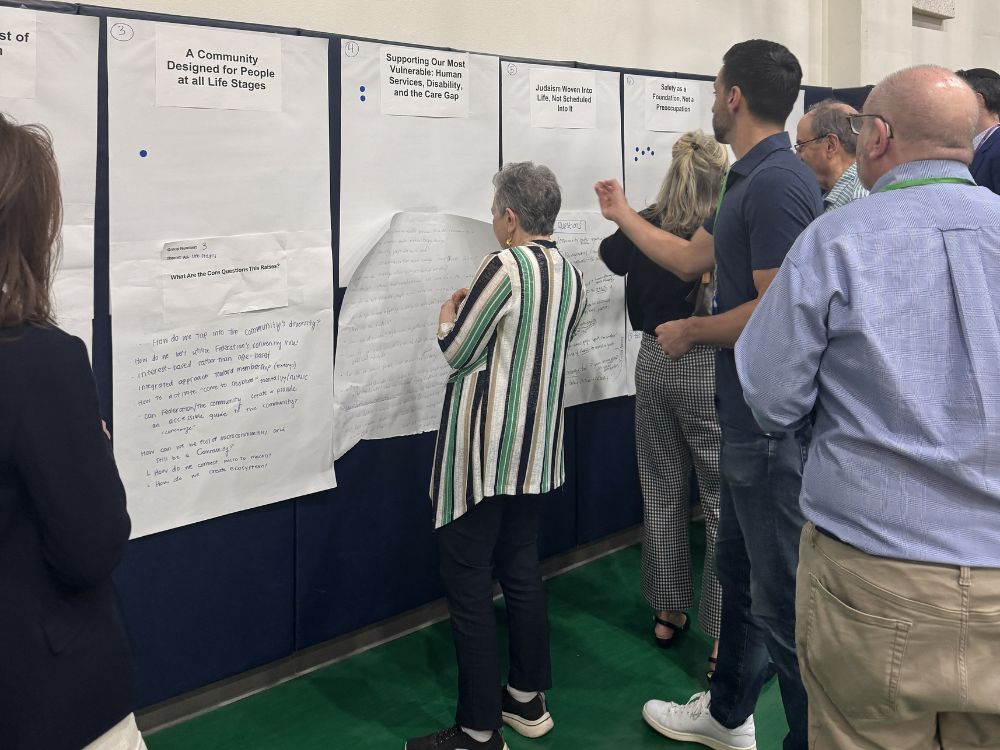
What does it actually feel like to find your way into Jewish life in our community?

Over the past few months, the Community Leadership Council (CLC) set out to hear directly from the full diversity of our Greater Washington Jewish community. Nearly 200 people across 26 groups shared their experiences, bringing forward a wide range of backgrounds, life stages, levels of engagement, and perspectives to ensure our work reflects what matters most to people and informs how we prioritize and invest.

Separately, more than 1,300 people participated in a community-wide survey, offering a broader view of how people are experiencing Jewish life today.

When you look at it all together, a picture starts to emerge. Not perfect or unanimous, but consistent in ways that matter.

People are looking to connect, participate, and feel like they belong.

The Role of Federation

These patterns clarify where Federation fits.

We do not run every program or guide every individual. Our role is to make the system work better—bringing organizations together, investing in what works, and making it easier to navigate Jewish life.

Much of this work happens behind the scenes: aligning organizations so experiences feel connected, expanding access, convening leaders to address shared challenges, and strengthening the system so it works better for the people it serves.

This is the difference between a collection of organizations and a connected community.

The CLC extends this work beyond the room. Leaders take these insights back into their organizations, and the findings will be shared more broadly so others across the community can engage with and respond to what we are learning.

What We’re Seeing Across the Community

Finding your way in isn’t always simple. For many, it starts with basic questions:

  • Where do I go?
  • Who is this for?
  • How do I begin?

With so many organizations and options, it can be hard to know where to start or how to move from one experience to the next.

Some of what we heard:

  • Cost shapes participation. From camps and schools to programs and events, cost plays a real role in how people engage. Sometimes it limits choice. Sometimes it limits participation altogether.

“Day school affordability is a huge issue. Jewish life is expensive.”

  • Belonging is not a given. Across identities, life stages, and levels of involvement, people are looking for spaces where they feel comfortable and seen. That’s true for those who are deeply connected, and for those still deciding if there is a place for them.

“We moved to the area and don’t have connections or a sense of belonging. I want to be invited to Shabbat dinners…”

  • There is a desire for everyday Jewish life. Our community shows up in meaningful ways during moments of need, and that continues. At the same time, many people are looking for something more consistent: experiences that are part of daily life and feel worth showing up for.

“I want a community that comes together for joyful reasons. Not just crisis gatherings.”

No Single Experience Tells the Whole Story

By listening closely to what people hope to see and build in our community, we begin to see the themes we share in common and better align our work with how people want to engage.

The CLC designed and led this effort, engaging people across the community, gathering input through both listening and survey data, and bringing those insights together to clarify what we’re hearing.

Why This Work Matters

If you’ve ever tried to find your way into Jewish life—whether you’re new, coming back, or looking for something different—this likely feels familiar. And there is something reassuring in knowing there is a community that cares and is working to make that experience better.

This work starts by paying attention to what people are actually experiencing and being honest about where things aren’t working. The Community Leadership Council helps identify patterns across those experiences and clarify where the community is asking for something different.

What Comes Next

“What we heard gives us a clearer sense of what the community wants and where it is asking for something different,” said Marla Schulman, Chair of the Community Leadership Council. “What we learned is the importance of continuing to engage voices across the community in building it.”

Those insights are now informing the next stage of our work, as Federation’s Board considers how they should shape our priorities and direction moving forward. And some of this work is already underway: expanding access, strengthening coordination across organizations, and making it easier to find and engage in Jewish life. Our goal is to make it finding your way in clearer, closer, and more within reach.

We’ll keep sharing what we’re learning, and how it’s shaping the work ahead.

Related posts

A Moment to Reimagine What’s Next

A Moment to Reimagine What’s Next

After years of crisis response, it’s time to imagine—and build—the Jewish future we want.

For the past several years, really ever since COVID, our communal agenda has been shaped in large part by external crises. There’s no shame in this. Federation, supported by a passionate Jewish community, is well suited to crisis response. We have the local and global infrastructure to reach people and deploy help, a core part of our role.

Through a pandemic, wars, antisemitic attacks, the devastation of October 7, economic uncertainty, and political and social upheaval, we, as a community, have been there to help the Jewish people and those in need locally and around the world.

Across our community and in conversation with others from around the country, I hear how eager people are to reclaim a sense of agency over the Jewish future. To not only fend off the destructive forces of the day, but to build something great. This isn’t to say that we should abandon our work to be there for the Jewish people and Israel in times of crisis, not at all. Without question, we will need to remain diligent in responding to a dysregulated world. But we can be serious about our dreams too.

As Rabbi Lord Jonathan Sacks used to say, “Jewish faith is written in the future tense.” We are in close contact with our past, but we are also a people of possibility. We would be doing the Jewish story a disservice if we did not make the most of the opportunities in front of us to strengthen Jewish identity, pride, joy, and connection. This is the spirit that defines our community, and one we will continue to harness in our work ahead.

Already, we are working to grow and scale the things we know have significant impact. Shabbat dinners (as I wrote about last week), Jewish summer camp, youth groups, Jewish day schools, Jewish learning, and immersive Jewish experiences, including trips to Israel and local retreats, have tremendous effects on someone’s identity. How can we expand these offerings and make them more accessible to more people? How can we be a home for people with diverse opinions? How do we use our resources and relationships to maximum effect for people across all age groups?

It feels strange in this time of absurd and heartbreaking headlines to be talking about agency. But it’s precisely in this moment when things feel most out of our control that we are called to wrestle it back. Like so many times throughout Jewish history, we can define for ourselves who we are and where we are going. Between our collective responsibility and capacity to strengthen Jewish life, and Federation’s relationships, resources, and talent for convening, the future is ours for the shaping.

Related posts