Need support? Call 703-J-CARING (703-522-7464)

Sara Brenner: Helping Us Rethink Jewish Giving
Sara Brenner: Helping Us Rethink Jewish Giving

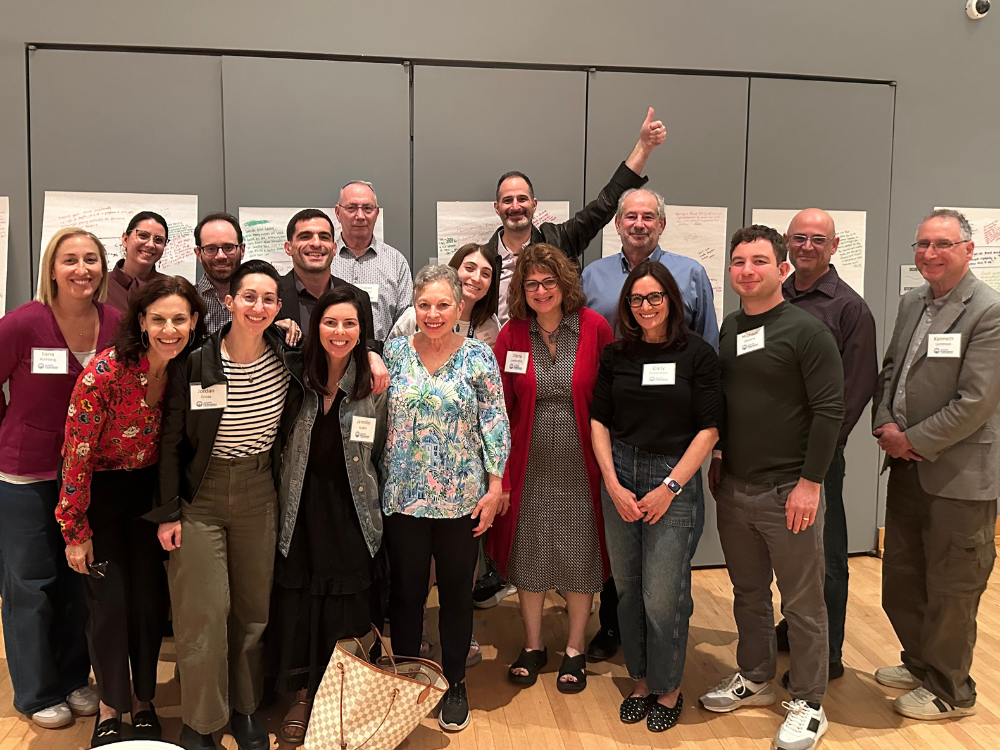
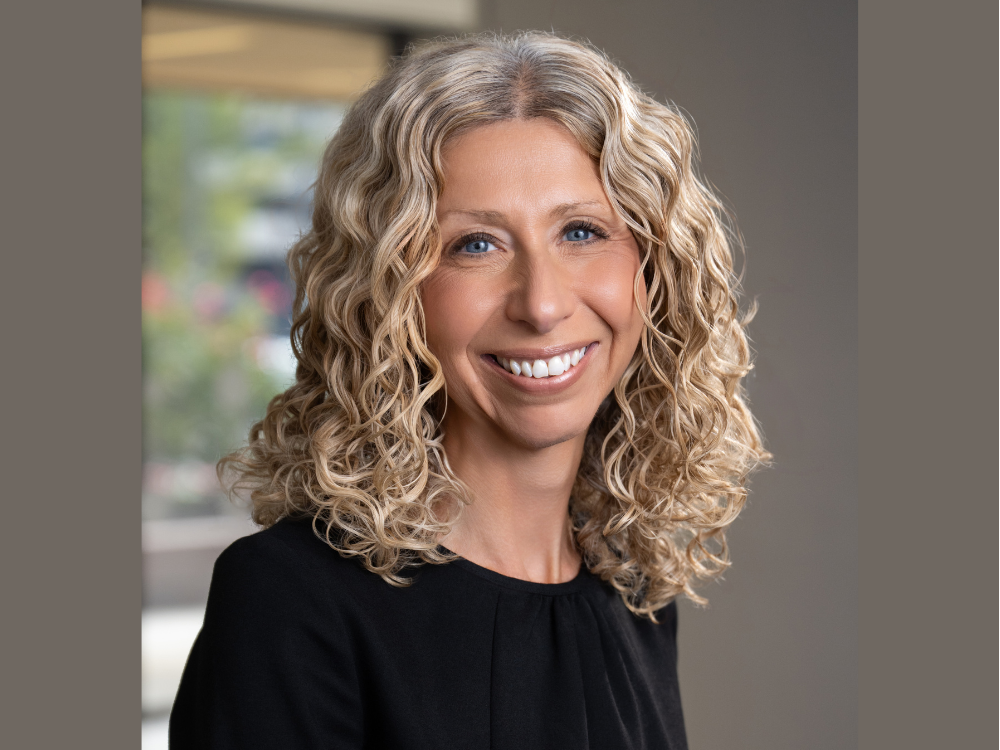
As Executive Director of the Jewish Community Foundation of Greater Washington, Sara Brenner is building a culture of giving that’s collective, values-driven, and deeply personal.

“I want this to be a place where people can realize their dreams and connect to their Judaism more deeply,” Sara says. “Our role is to help donors amplify their impact, deepen the connection between their Jewish values and philanthropy, and advance their goals with deeper purpose, in whatever ways feel most meaningful to them.”

A Jewish Journey of Learning and Connection

Sara grew up in a New Jersey town where Jews were few and far between. Her synagogue became her second home. “I started Hebrew school in kindergarten and went through 12th-grade confirmation. I loved it, it was just in my heart and in my soul.”

She was the friend who encouraged others not to drop out and who rallied them back when they left. Though she didn’t attend day school or Jewish summer camp, that community shaped her Jewish identity. A high school trip on March of the Living, and later a year studying abroad in Israel during the assassination of Prime Minister Yitzhak Rabin, deepened her connection.

“I had such a strong will to stay in Israel, even during that time,” she recalls. “It was a very difficult period, but it only strengthened my connection.”

Her lifelong love of Jewish learning led her to minor in Jewish Studies and, later, to weave her Jewish values into her professional life.

Bringing Her Values to Work

Before joining Federation, Sara spent more than 25 years helping communities across the country thrive—strengthening education, housing, workforce, and health systems, while advising philanthropists and community foundations on how to invest for long-term impact.

“I always felt my Judaism showed up in my work,” she explains. “Repairing the world is part of who I am.”

When the Jewish Federation of Greater Washington launched the Jewish Community Foundation, Sara saw a chance to bring her professional expertise home. “I had been helping community foundations across the country shift toward more impact-focused work. This was an opportunity to do that in a community I lived in and loved for more than 20 years.”

A New Model of Jewish Philanthropy

Under Sara’s leadership, the Foundation is creating more accessible, collaborative, and intergenerational ways to give. She is particularly proud of programs that help families explore their philanthropic goals together. “We’re creating opportunities for younger generations to be part of the conversation,” she explains. “People can give together, learn together, and amplify their impact together.”

Today, the Foundation supports several collaborative giving funds focused on shared priorities like Jewish education, disability and inclusion, women’s empowerment, and Jewish talent and leadership. “When we give collectively, we can do so much more,” Sara explains. “It’s how we move from fragmented giving to systemic change.”

For newer or younger donors, she’s made sure there are inclusive ways to participate. “You don’t need $10,000 to get started,” she says. “Kol Yahad, our Next Gen collaborative fund, let’s people give at lower levels and still be part of something powerful.”

Guiding with Compassion After October 7

The events of October 7 reshaped both Sara’s outlook and the Foundation’s role. “Israel became the focus of so much of our work. In the past two years, more than five million dollars went out through donor-advised funds for rebuilding and relief.”

But this moment isn’t just about emergency response.

“After October 7, many people wanted to re-engage (or engage for the first time) in their Judaism,” she says. “I find myself listening more, helping people reconnect to their Jewish identity, and guiding them to make meaning through their giving.”

Sara has also prioritized deepening relationships with allies outside the Jewish community. “Our integration with the broader world, not isolation, is vital,” she says. “I’ve doubled down on those relationships. It’s hard work, but it matters.”

Looking Ahead, Building Together

Nearly three decades after moving to DC, Sara continues to find inspiration in the diversity and vibrancy of Jewish life here. “This is such an incredible community,” she says. “The culture, the learning, the opportunities to connect, and the chance to be part of something that’s making a difference locally, nationally, and globally.”

Through the Jewish Community Foundation, she and her team are helping donors bring greater intention and clarity to their giving. “It’s not about changing what inspires you. It’s about helping you achieve your goals in the most thoughtful, effective way.”

Whether she’s guiding families through legacy giving, launching new collaborative funds, or welcoming first-time donors, Sara is helping build a Jewish future rooted in connection and purpose. “We’re here to help people bring their values to life. That’s how we strengthen our community. That’s how we build the future together.”

Outside the Office

Sara loves being near water, whether she’s swimming laps or vacationing in a place like St. Lucia, Hawaii, or Fiji. A black Russian bagel with light cream cheese and cucumbers is her go-to Sunday morning. Sushi is her favorite. Her mom’s chicken soup, minus the matzo balls, is magic. When she’s back in DC, you might find her at Planet Word, one of her favorite museums for its celebration of culture and language. And when pressed to pick chocolate or vanilla? “Twist,” she laughs. “Always twist.”

Learn more about the Jewish Community Foundation of Greater Washington and explore how your giving can make a lasting impact at jcfgw.org.
Related posts

Meet Joe Battle: Brewing Community at Café Sunflower

Meet Joe Battle: Brewing Community at Café Sunflower

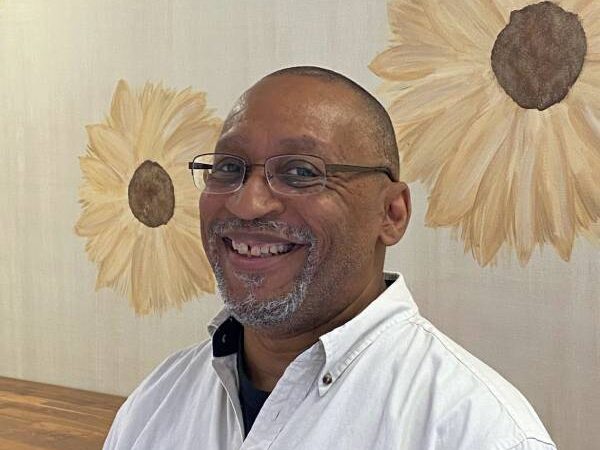
When you walk into Café Sunflower in Rockville, you’re likely to be greeted by the smell of freshly baked pastries, the hum of friendly conversation, and the easy, welcoming smile of Joe Battle, Café Manager and lifelong Washingtonian.

If you’re a regular, Joe and his team probably already know your name and your order. “We put a lot of time into learning everybody’s names,” Joe says, “and hopefully remembering what their orders are, too.” That personal connection is part of what makes the café feel less like a workplace and more like a neighborhood hub.

“I get to meet and learn from so many wonderful new customers,” Joe says. “But the best part of this job is working with our students.”

From Grocery Aisles to Inclusive Opportunity

Joe has been with Sunflower for a little over a year, but he is no stranger to the hospitality industry. Before joining Sunflower Bakery, Joe spent more than a decade managing grocery teams at Dawson’s Market in Rockville Town Square. When the market closed in 2023, a former colleague, then Café Manager Evelyn, called to offer him the job at Sunflower with perfect timing. “Two days after I found out I had no job, I got a job offer,” he laughed.

Evelyn knew Joe’s experience working with neurodiverse young adults would make him a natural fit at Café Sunflower, where inclusion is more than a value; it’s the mission. At Dawson’s, half of Joe’s grocery team was neurodiverse. “It was something I’d gotten used to over 12 years,” he explains. “Watching people go from not sure what they’re doing to being confident in what they’re doing, that’s what’s cool. Being part of that process is the most rewarding thing.”

Seeing Ability, Not Difference

Joe’s approach is refreshingly simple. “Everything you experience as a neurotypical person, they experience. Everything you care about, do, and like, they experience too. The only difference is that sometimes things need to be more direct, or you need to be more patient,” he says.

To Joe, working with neurodiverse colleagues isn’t about accommodation,; it’s about connection. He believes that investing in people of all abilities strengthens everyone. “Every kid is your kid,” Joe explains. “Eventually, they’ll be someone on the other side of the counter from you, someone helping you or needing your help. If you’re not invested in every kid in your community, you’re not even invested in yourself.”

A Partnership Built on Purpose

At Federation’s headquarters, Joe and his team serve hundreds of staff and visitors each week. He says the relationship between Sunflower Bakery and The Jewish Federation of Greater Washington is one rooted in shared respect.

“From Gil (Preuss) on down, everybody’s wonderful,” Joe says. “They understand our mission and walk in the door with it. People smile when they say ‘Federation,’ and we smile when we see our regulars. It’s a great partnership.”

Finding Common Ground and Shared Values

Raised Catholic in Washington, DC, Joe says his time at Café Sunflower has opened new windows into Jewish life and culture. “What resonates most is how much everything blends together,” he reflects. “They all come from the same beginning. We’re all walking the same road.”

He especially loves the symbolism of Rosh Hashanah. “For instance, the challah is round because you’ve come around to a new year. What a great way to symbolize that. I think that’s really cool,” he says.

Beyond the Café

When he’s not managing the café or working at Sunflower’s bake shop on Sundays, Joe’s passions include music, reading, and history documentaries. “I like learning why things happened, how things happened, and what else was going on at the same time,” he says. “It’s all about seeing how things interconnect.”

A lifelong Star Trek fan, Joe also finds wisdom in the show’s message of IDIC—“infinite diversity in infinite combinations.” “It reminds me that life is richer when we welcome differences,” he says. “You want people to be different, to learn from them, and for them to learn from you. It’s pretty cool, actually.”

And… If you ever catch him on the other side of the counter, he’ll likely order a Hazelnut latte with oat milk and a classic brownie.

Looking Ahead

As Café Sunflower continues to expand its programs, including its growing culinary department, Joe is excited to see what comes next. “We’re always looking to strengthen our relationships with our partners and our community,” he says. “Because the best way to get anywhere is to get there together.”

Learn more about Sunflower Bakery and Café Sunflower and how your support helps create pathways to employment for young adults with learning differences at www.shalomdc.org.

Related posts

L’Chaim: The Power of Showing Up Together

L’Chaim: The Power of Showing Up Together

When Women’s Philanthropy set out to create a signature gathering for the Lions of Judah community, the goal was simple but ambitious: to build something that felt both celebratory and essential. A space to honor stories. A moment to deepen connections. A tradition worth beginning.

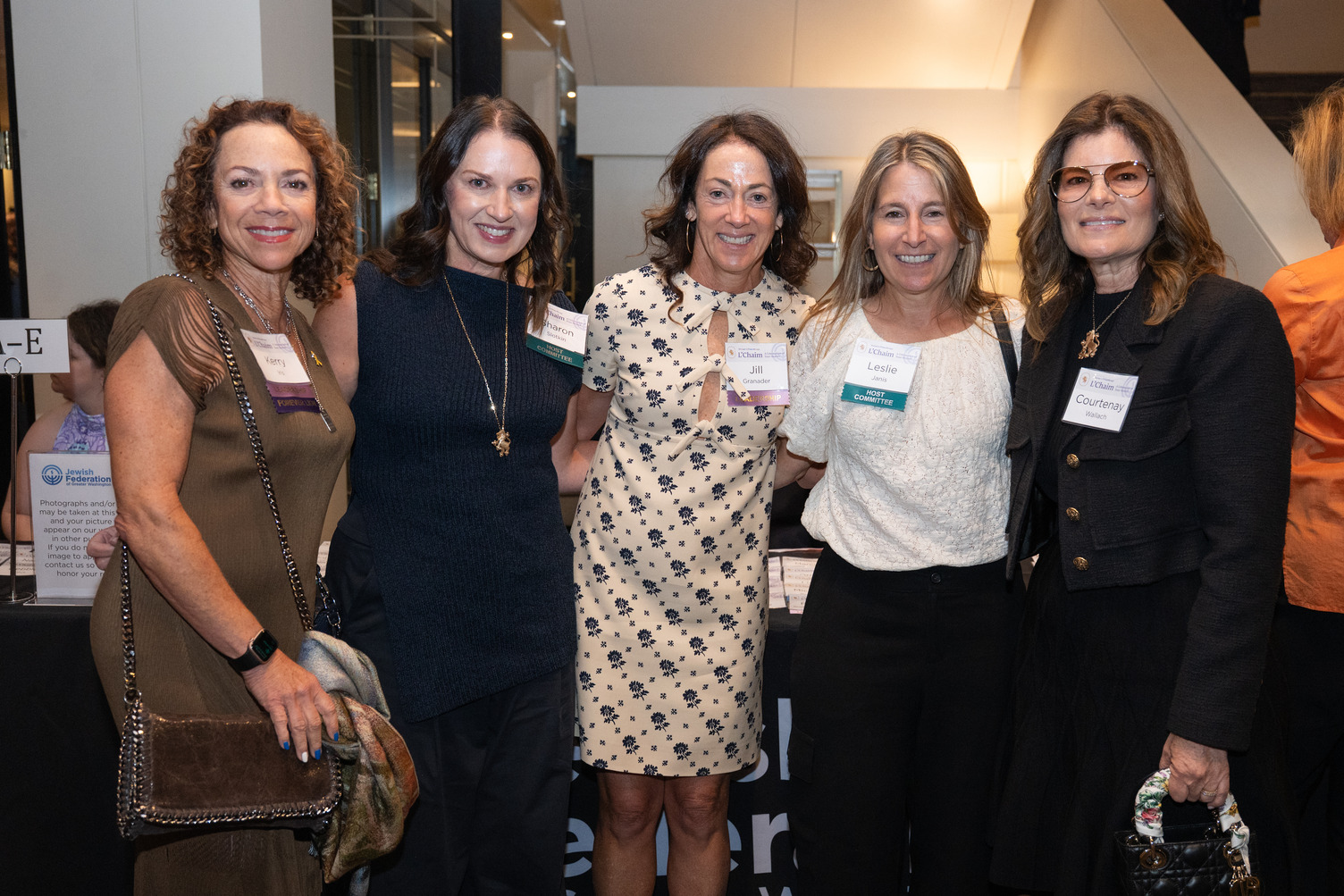
Held at the Four Seasons in Georgetown, this inaugural event on Monday, September 15, brought together more than 150 women for a morning of inspiration, reflection, and connection. More than a brunch, L’Chaim was a powerful reminder of what happens when women gather with intention. When leadership meets legacy. When stories are shared freely, and futures are shaped collectively.

From Welcome to Why

You could feel it immediately. It was a celebration of shared values, lived leadership, and the power of women’s philanthropy to shape our community.

Co-Chairs Yvonne Schlafstein Distenfeld and Irene Sherman set the tone: this wasn’t a day to sit back—it was a day to reflect, to honor, to energize.

Yvonne shared:

“There’s something truly powerful about bringing so many women together in one room—it’s inspiring every time. I’m in awe of the energy, strength, and spirit of being surrounded by such extraordinary women!”

Stories That Moved Us

Two individuals seated and engaged in conversation under purple and blue lighting, with a small table and flower bouquet between them, one holding a paper and the other gesturing. Wendy Sachs, our guest speaker, took the stage with a lens into her world and her work as director and producer of the documentary, October 8, and her view of what it means to be a woman showing up in today’s world. Her stories didn’t just highlight antisemitism, they challenged us to consider how we use our voices, our resources, our courage.

Her message resonated deeply with the room. One Lion said:

“Wendy Sachs was so eloquent and inspiring and I loved hearing her speak. I was impressed how she talked about her audience being a global one (which we certainly need).”

Another Lion added:

“Wasn’t Wendy Sachs amazing? She was just as engaging and interesting as she could be.”

A Story Close to Home

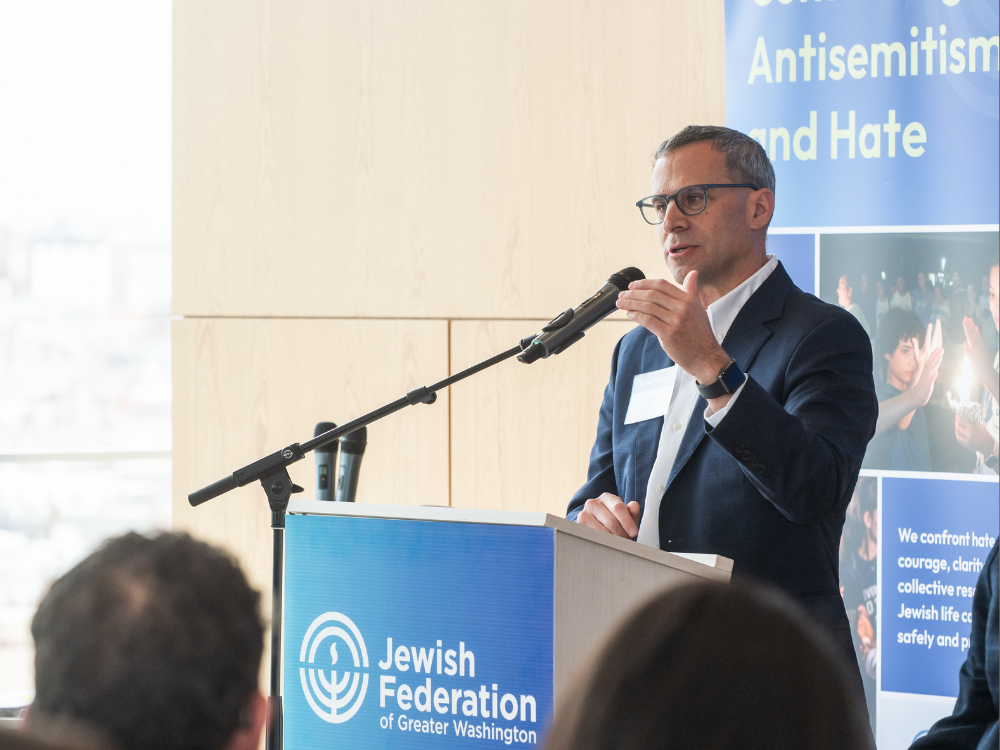
Speaker at a podium with a microphone, presenting in front of purple and gray curtains, with a sign reading "Jewish Federation of Greater Washington." Among the most moving moments of the morning came when Marianna Ashin, Lion of Judah Chair, stood to share her personal journey—from a young refugee arriving in the U.S. to a proud Jewish leader helping others write their own Federation stories.

Marianna spoke of leaving everything behind in 1989; her home, her extended family, and her familiar world in Kyiv. She recalled standing on a train platform with her parents and brother, holding only a pair of suitcases and an unwavering sense of Jewish identity.

“While we may have made a leap of faith by getting on that plane,” she said, “Federation was there to catch us when we landed at JFK.”

The room was quiet as she described how Federation gave her family not just resources, but dignity: language classes, job support, school supplies, summer camp. A kitchen full of groceries. A Jewish home in a new land.

“The Jewish Federation didn’t just help us get by. You helped us imagine what could come next, and gave us the tools to pursue.”

Her story reminded everyone in the room exactly why their giving matters.

“Without Jewish Federation. Without you. I am not here—standing in front of you. Sharing my story.”

The Strength in the Room

What made the morning unforgettable wasn’t just the speakers or the setting; it was the women who filled the room. Each one carrying a legacy of giving, each one committed to community.

“It was fun to connect with old friends and also meet new ones,” said one Lion. “What a spectacular event!”

Another reflected on what made the gathering so meaningful:

“I am so glad I came today! It was a beautiful event, and I learned so much from the stories that the women told.”

A Moment, A Movement

L’Chaim was about the quiet confidence that comes from standing shoulder to shoulder with women who believe in tikkun olam, repairing the world, and who act on that belief every day.

“This event was a huge success,” one Lion shared. “It has all the markings of a program to have every year before the holidays.”

Thank You

20250915_LionofJudahBrunch_4 To all who joined us, thank you. Your stories enriched the fabric of our community. And your leadership, quiet or bold, helps move Jewish Greater Washington forward.

We are grateful to our host committee, our Women’s Philanthropy leaders, our Co-Chairs, and all who brought their time, energy, and commitment to this celebration.

If you’d like to learn more about the Lions of Judah giving society, please contact Becca Ginns at becca.ginns@www.shalomdc.org or (301) 230-7236.

Related posts

Discovering What Motivates Us

Discovering What Motivates Us

Behind every connection to Federation is a story—a reason why.

In a recent conversation with my team, I asked a simple question: What motivates you?

The answers were honest and deeply personal. Some spoke about the impact of loss—like a family member killed on 9/11 or a battle with cancer. Others shared the grounding role of friendship, family, or the meaning they find in being a parent. For me, it was my own childhood diagnosis with type 1 diabetes—an experience that continues to shape how I approach challenges, relationships, and my commitment to community.

What struck us most was not just the variety of answers, but the openness with which they were shared. The conversation reminded us that motivation is rarely abstract. It’s lived. It’s personal. And it’s often tied to experiences that stay with us.

That same truth guides how we engage with our community. Just as each of us is motivated by different life experiences, so too are the individuals and families who give so generously to Federation. Some of you may be driven by urgent needs. Others by legacy. Still others by the vision of a vibrant Jewish future.

We can only discover these motivations if we take the time to ask—and then to listen.

I hope we hold fast to what’s at the core of this work—the work of strengthening our Jewish future: connecting with one another, honoring each person’s why, and building a stronger Jewish community—together.

So, we’ll leave you with the same question we asked ourselves:

What motivates you?

Related posts

The Future of Jewish Leadership Begins Here

The Future of Jewish Leadership Begins Here

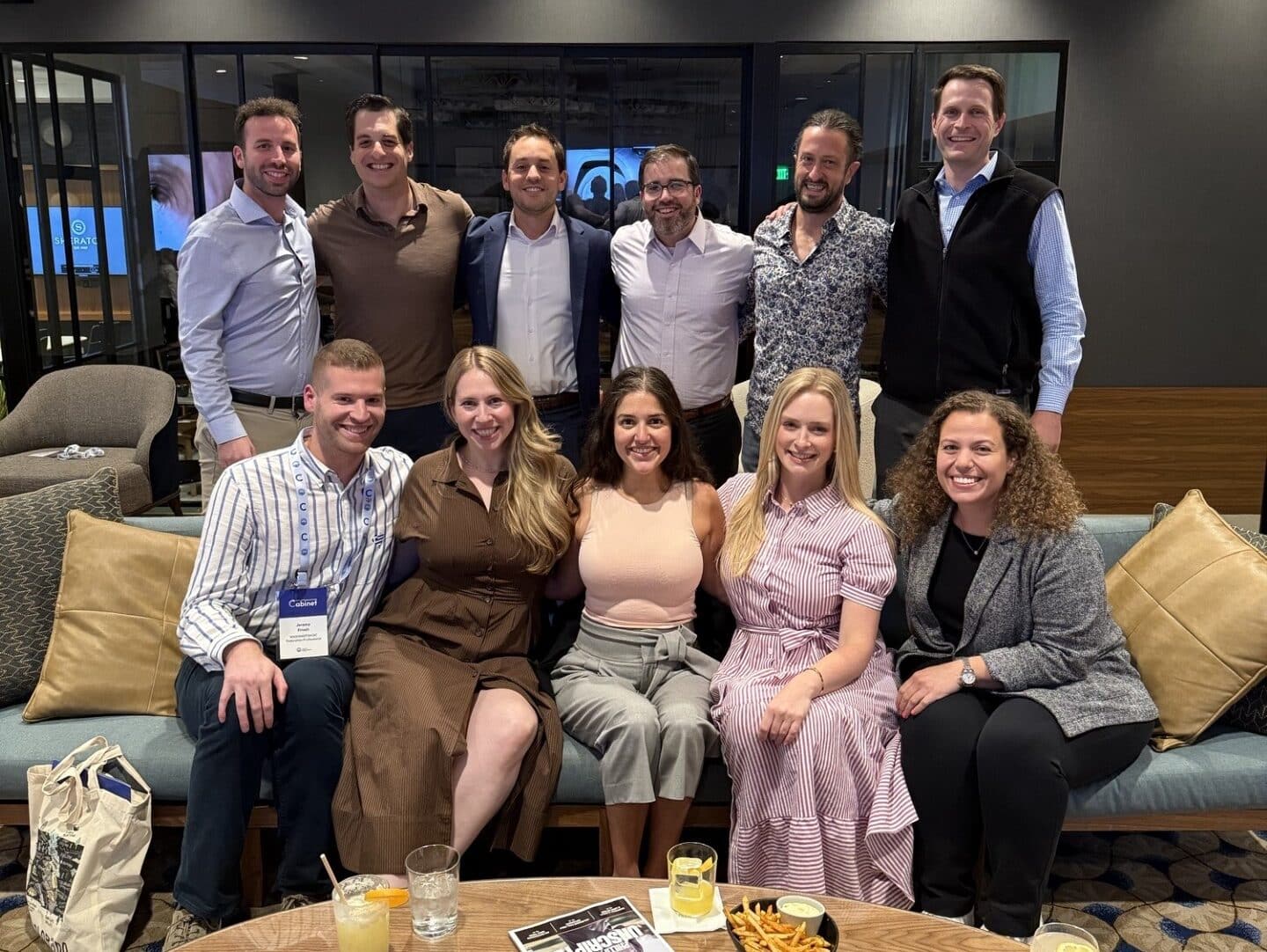
The future of Jewish leadership doesn’t start in boardrooms—it starts in moments of connection, clarity, and conviction. Earlier this month, thirteen young leaders from Greater Washington traveled to Denver to join more than 300 of their peers at the National Young Leadership Cabinet retreat. Over four days of learning and exchange, they discovered not just new ideas, but how deeply their local efforts are woven into a powerful collective shaping Jewish life across North America and beyond.

What Is Cabinet?

Cabinet, an initiative of Jewish Federations of North America (JFNA), identifies, trains, and inspires leaders ages 30–45 to strengthen Jewish life locally and globally. Many participants go on to serve in prominent roles—on Federation’s Board of Directors, including as President, and on the boards of other leading Jewish organizations.

When the Impact Gets Personal

For Alexa Brown, Cabinet co-chair for the Jewish Federation of Greater Washington, the retreat underscored how local work connects to a larger movement. “This experience helped me zoom out and see just how connected our work at home is to the broader Federation network,” she said.

That collective impact became especially personal for Alexa when she learned that Federation dollars are helping to rebuild Soroka Hospital in Be’er Sheva—where her grandmother is a patient. “Knowing that our community is directly supporting the hospital caring for her was incredibly emotional,” she reflected. “Hearing firsthand about the renovations left me overwhelmed with gratitude—not just for hospital staff, but for everyone in our Federation family who gives so generously.”

Finding Strength in Connection

For her co-chair, Britney Wambold, the most meaningful moments came from building deeper relationships. “Meeting in a more intimate setting and sharing our personal ‘why’ for being involved with Federation was incredibly powerful,” she said. “Their stories reminded me of the depth of passion in our community and inspired me to keep pushing forward in my own leadership journey.”

Both Alexa and Britney pointed to the energy that comes from being part of a national network. “There was an unspoken understanding among us—that we’re not just here to lead but to show up for one another,” Alexa shared. “It gave me peace knowing there’s a whole network of leaders who care deeply and have each other’s backs.” Britney agreed: “The retreat reminded me how impressive and diverse this group is, and how much we can learn from one another.”

From Retreat to Reality

For the Greater Washington delegation, Denver wasn’t just four days away—it was a chance to see the bigger picture, to feel the impact of global Jewish philanthropy in deeply personal ways, and bring home renewed energy for strengthening our community. Alexa and Britney returned new tools and ideas, and deeper pride in Federation’s work and in the generation of leaders shaping the Jewish future.

“I’m excited to see what this group of young leaders goes on to do here at home to strengthen our local Jewish community in the years to come,” reflected Jeremy Frisch, Federation’s Assistant Director for Donor Engagement, who also attended. “Watching them learn and grow leaves me feeling very hopeful about what that future looks like.”

And that’s the heart of Cabinet: cultivating leaders who will guide our community through real challenges and seize opportunities to enrich Jewish life across Greater Washington. Today’s investment develops the leaders our community will count on for decades to come.

To learn more about the National Young Leadership Cabinet or to get involved, contact Jeremy Frisch at jeremy.frisch@www.shalomdc.org.

Related posts

Marilyn & Ira Polon: Building a Legacy of Jewish Continuity

Marilyn & Ira Polon: Building a Legacy of Jewish Continuity

Leading by Example and Securing Our Future

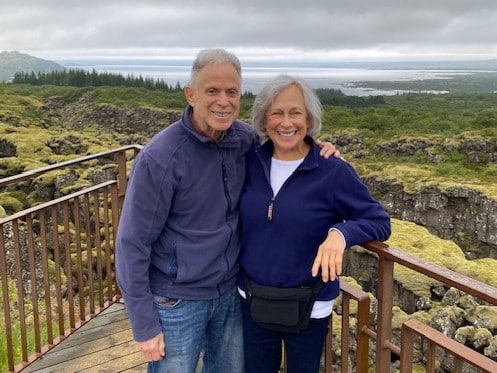
We recently sat down with Marilyn and Ira Polon to talk about their decades-long connection to The Jewish Federation of Greater Washington—a relationship built on community, shared values, and a lifetime of giving.

Their story began in 1971, when Ira had just completed two years of Army service and the young couple settled in Alexandria, Virginia. Not long after, a friend from Agudas Achim invited them to a Federation “Young Marrieds” event—a lively gathering that became their gateway into Greater Washington’s Jewish community. “It was such a wonderful way to meet other young Jewish couples and build connections,” Marilyn recalls.

From that first welcome, their involvement only deepened. Ira joined a Federation mission to Israel and later served on the Strategic Planning & Allocations (SP&A) Committee. “That experience gave us a deeper understanding of the community’s needs,” he says. “That’s when giving became a brand-new habit, one that felt good and meaningful. As our financial situation improved over the years, we were able to give more.” Today, their philanthropy focuses primarily on Jewish causes, especially since October 7. Marilyn adds with a smile, “And animals, too.” Ira now serves on Federation’s Board of Directors.

A Deepening Sense of Purpose

Over five decades, the Polons have watched Federation’s work evolve to meet the changing needs of the community. “The work has always been vital,” they reflect, “but it feels especially urgent now with the rise in antisemitism.”

They point to the Charles E. Smith Jewish Day School (JDS) as an example of how Federation-supported institutions shape identity. Both of their children, Sara and Jonathan, attended JDS, and the experience reinforced the importance of Jewish learning. “A Jewish education deepens understanding and connection to our traditions,” Marilyn says. “That sense of identity and joy is what sustains us, especially in challenging times.”

“It’s what makes us feel rooted and proud,” Ira adds.

Today, their connection to JDS continues through the next generation—their two grandchildren are current students, carrying forward the same values and traditions that shaped their parents.

Roots, Resilience, and Influence

Neither Marilyn nor Ira grew up in a “Federation family,” but both carried formative Jewish experiences into their marriage. Ira was raised in New York, where he attended Hebrew school and celebrated his Bar Mitzvah, but he describes his upbringing as “not very religious.” Marilyn grew up in Baltimore with a deeply observant father and Hebrew teachers who were Holocaust survivors.

Her father’s devotion was sometimes tempered by caution in the face of antisemitism. “He wore a hat instead of a kippah and didn’t put up a sukkah,” Marilyn remembers. “Antisemitism was present then, as it is now.”

When the couple married in December 1967, Ira was surprised when Marilyn announced they’d keep a kosher home and join the local synagogue. “Thanks to Marilyn,” he says, “my connection to Judaism is so much richer and deeper now.”

A Legacy for the Future

For Marilyn and Ira, philanthropy is about more than giving—it’s about ensuring the future of the Jewish people. “We care deeply about continuity,” they say. “We want to make sure more Jews have the opportunity to strengthen their identity and connection to our heritage.”

“We feel lucky to be able to give back,” Marilyn says. “It just feels good to do our part.”

Recently, they experienced a proud and moving moment when they learned that their children also give to Federation quietly, without ever mentioning it to their parents. For them, it was a powerful illustration of true altruism—a sign that the next generation had been inspired not by being told to give, but by witnessing their parents’ intentional actions over the years.

“That’s what legacy is all about,” they agreed—ensuring that the Jewish community they have helped strengthen will continue to thrive for generations. A legacy gift, they believe, is a mitzvah for the future of the Jewish community. It shows your loved ones what matters most to you and creates a plan to sustain it.

Join Marilyn and Ira in shaping the future of Jewish life in Greater Washington. Learn more about creating your own Jewish legacy at www.shalomdc.org/legacy.

Related posts

Where Inclusion Happens Every Day: The Blicher Family’s Summer at Camp 

Where Inclusion Happens Every Day: The Blicher Family’s Summer at Camp 

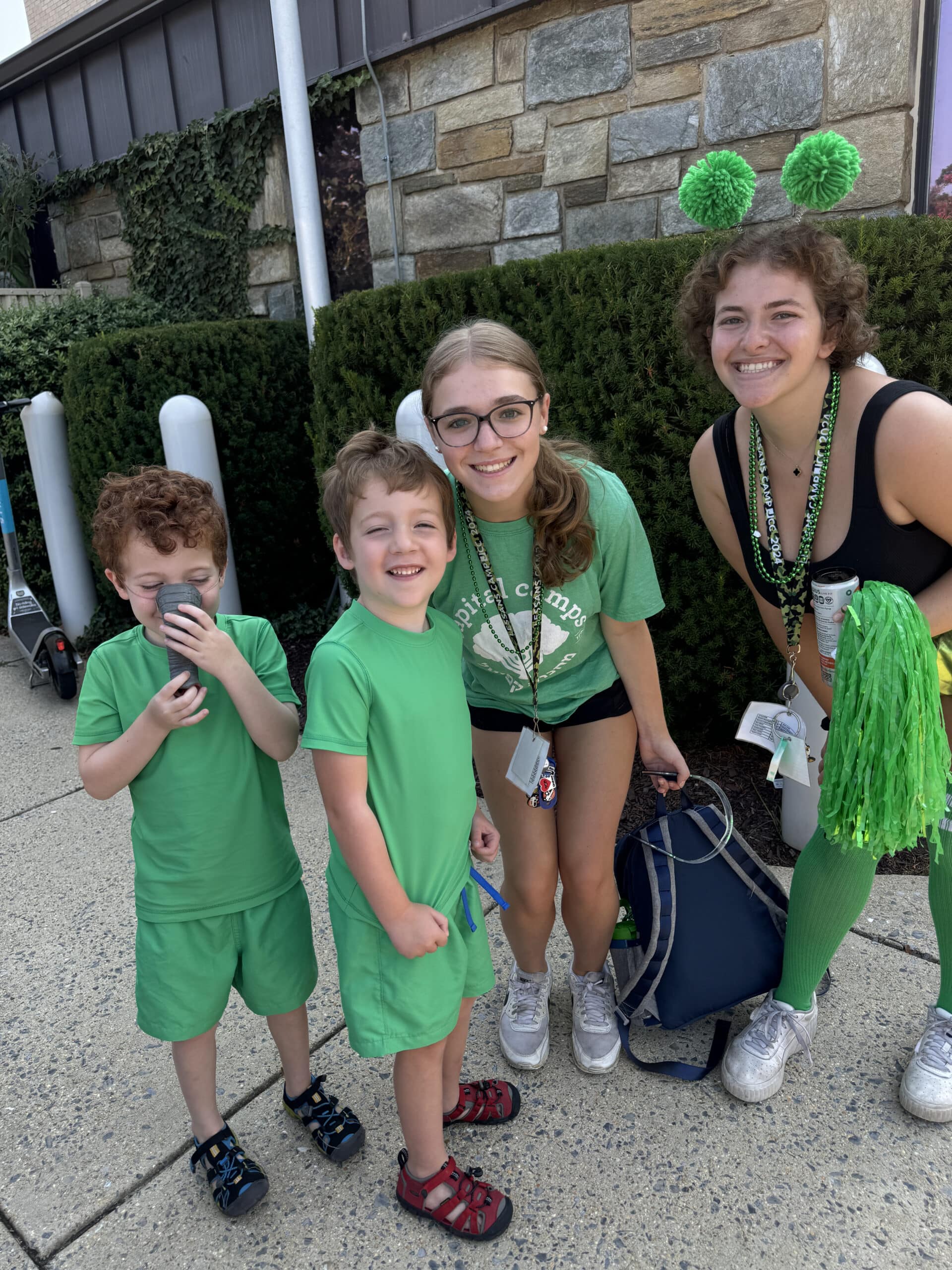
When Jamie Blicher drops off her 7-year-old twins, Ethan and Bennett, at Lessans Camp JCC each morning, she breathes a sigh of relief.  Many of the day-to-day stresses of raising twins with disabilities disappear, and her kids get to just be kids at a place where they are seen, valued, and fully included.

From swimming to arts and crafts, even the rock wall, they participate side-by-side, just like all the other 7-year-olds. The only difference is that they each have their own dedicated counselor, who is there to offer the additional support they need so they can thrive alongside their peers.

Inclusion isn’t just part of the mission statement for Lessans Camp JCC—it is truly at its core. Not only does the camp work to make sure that all activities are accessible to all of its campers, counselors, and staff, but it also looks at inclusion from a broader sense.  The camp is open to people of all backgrounds, nationalities, and faiths.

For Jamie, the difference is profound.

“Everywhere I go, I’m constantly looking for ramps, special doors, and other ways to make sure spaces are inclusive,” she says. “Here, I don’t have to worry about any of that. My kids feel like all the other kids. They feel important, they feel special—and they’re not defined by their disabilities here.”

This is the Blicher family’s third summer at Lessans Camp JCC, a program of the Bender JCC, one of The Jewish Federation of Greater Washington’s core partners. Our funding plays a critical role in making this experience possible—helping to cover the cost of dedicated counselors so that children like Ethan and Bennett can participate fully in camp life.

Jamie says that support is life-changing.

“Medical bills are incredibly expensive … The fact that camp is funded for them to have their own counselors takes such a weight off our shoulders. Having something this inclusive and affordable is such a gift!”

Through the partnership between The Jewish Federation and the Bender JCC, Lessans Camp JCC isn’t just a place for sports, games, crafts, and songs—it’s a place where inclusion is in action every single day. It’s a place where children form strong Jewish identities, build friendships, and feel truly at home.

As Jamie puts it, “Here, my kids aren’t defined by what they can’t do—they’re celebrated for everything they can.”

This impact is made possible through the generosity of our community. Your support of Federation ensures that Ethan, Bennett, and every camper can join every activity, every friendship, and every joyful moment of Jewish summer camp.

Related posts

To-Do: 1. Meet Natalia 2. Leave a Legacy 

To-Do: 1. Meet Natalia 2. Leave a Legacy 

How Natalia Straus is helping Greater Washington’s Jewish community plan for the future—with heart, humor, and purpose.

Natalia Straus has always been a planner.

“As a kid, I’d write a to-do list that started with ‘write a to-do list,’” she laughs. “My family still teases me that I can’t get through breakfast without saying, ‘Let’s make a list.’”

That love of structure—and her deep sense of purpose—make Natalia the perfect person to lead legacy giving at The Jewish Federation of Greater Washington.

A Natural Fit for the Future

Now serving as Federation’s Senior Director of Legacy Giving, Natalia is revitalizing a community-driven legacy program in partnership with the Jewish Community Foundation.

Her goal? To make it easier—and more meaningful—for community members to plan for the future and leave a lasting impact on Jewish life in Greater Washington.

“Legacy giving is about intention,” she says. “It’s asking: What values do I want to carry forward? What kind of world do I want to help build—even after I’m gone?”

And there’s no better time to start. August is National Make-A-Will Month—a timely reminder that creating or updating your will is one of the simplest, most powerful ways to secure your future impact.

Legacy gifts—like naming Federation in your will, trust, or retirement plan—are simple to set up and have a lasting effect. These gifts sustain the programs, services, and values that shape Jewish life: from youth education and senior care to Jewish identity, emergency response, and beyond.

Two Decades of Legacy Leadership

Natalia got her start in legacy giving at the Osher Marin JCC through Federation’s “Leave a Jewish Legacy” initiative. Since then, she’s helped organizations from Spirit Rock Meditation Center to California State Parks Foundation build and strengthen their legacy programs.

She recalls one moment that solidified her passion: a longtime donor reached out to confirm their gift shortly before passing. “They told me it brought them peace,” she remembers. “That conversation reminded me—this work isn’t about paperwork. It’s about people, their stories, and their hopes.”

A Personal and Professional Passion

For Natalia, planning a legacy isn’t just a job—it’s how she moves through the world.

“Creating a plan is one of the most generous things you can do. For your family. For your community. For yourself. It’s an act of hope.”

That same outlook shaped her leadership in Federation’s Women’s Philanthropy program over the past three and a half years. “It’s been an incredible experience building this community,” she says. “I’m proud to leave it in the hands of amazing leaders like Becca Ginns, Jordan Kaufman, and our Women’s Philanthropy chairs and changemakers.”

Ready to Write Your Next Chapter?
Your legacy is already in the making. Let’s make sure it tells the story you want to be remembered by.

Reach out to Natalia at natalia.straus@www.shalomdc.org or 301.230.7279

Related posts

The Fund for Women and Girls Enters a New Era

The Fund for Women and Girls Enters a New Era

Despite the vital role women and girls play in building strong, resilient communities, philanthropic funding continues to fall dramatically short. Organizations serving women and girls received only 2.2%^  of total charitable dollars in 2020.

The Fund for Women and Girls exists to help close that critical gap.

Powered by The Jewish Community Foundation of the Jewish Federation of Greater Washington, the Fund channels collective giving into multi-year, trust-based partnerships to transform conditions for women and girls here in Greater Washington and in Israel.

The Fund for Women and Girls is more than a force for change—it’s showing how Jewish philanthropy can come together to make a lasting impact.

Over the last 18 months, the Fund has supported Israeli women and girls through three rounds of grants and multiple learning sessions. Now, we’re entering a new phase of growth—with a goal of raising $1 million this summer, and ultimately $3 million, to ensure we can continue driving change where it’s needed most.

We’re proud to share that momentum is already building.  To date, we’ve secured more than $500,000 in multi-year commitments, with $140,000 already transferred to the Fund. We invite you to join us—at any level—as continue to expand the Fund’s reach.

“Now is the moment to invest in women and girls—because when they thrive, whole communities rise,” explains Dr. Jannah Yutkovitz, Senior Director of Philanthropic Impact at the Jewish Community Foundation. “Supporting a fund of this nature helps fuel solutions that are bold and urgently needed. Through developing long-term partnerships with organizations on the ground, we’re not just supporting solutions—we’re investing in resilience and have the opportunity to make a generational impact.”

To help propel this growth, Carol and Gary Berman have made an exceptional three-year, $300,000 commitment to the Fund to honor the extraordinary leadership of their daughter-in-law Emily Berman, a founding member of the Fund’s steering committee.

“Women and girls are in the forefront of being there to provide what’s necessary and critical for those in need. In the case of Israel, they are also holding the families together through war and the tragic losses as a result of war. As a family, we recognize the importance of women’s voices and actions, as well as the remarkable contributions they make to our world. We feel very grateful to be able to support this fund,” Carol and Gary shared.

Carol and Gary are inviting nine additional individuals to match their commitment and join them in a small minyan of major donors who will seed the Fund with $3 million over the next three years. To learn more, please reach out to sara.brenner@www.shalomdc.org..

The Fund for Women and Girls reflects what’s possible when community comes together with shared purpose and deep commitment. It was created in response to a clear and urgent gap—and it continues to grow as more people recognize the power of long-term, collective investment in women and girls.

As the Fund looks ahead, our focus remains the same: to shift conditions, elevate voices, and invest in meaningful change—locally and in Israel.

^Jewish Funders Network “The Complete Guide to Promote Gender Equity through Strategic Philanthropy” (2025)

Related posts

What They Carried In. What They Left Behind.

What They Carried In. What They Left Behind.

On July 1, during Federation Day at the Nova Music Festival Exhibition in Gallery Place, Jackson Siegal of In-Rel Properties showed up with purpose.

He didn’t come alone. He brought his team: five maintenance men, straight from the job site, pockets full of screwdrivers and flashlights.

At the security checkpoint, they handed over their tools. A small, routine act. But upstairs, those everyday objects stood in quiet, haunting contrast to what lay on the tables.

Phones. Backpacks. Jewelry. Sandals. Not items people forgot, but belongings of those who were hunted, kidnapped, and murdered on October 7. Artifacts recovered from the site of the massacre.

Jackson’s team moved through the exhibit slowly, together. At the table of artifacts, a volunteer who had helped clean and catalog each item spoke with quiet steadiness, explaining what had happened on October 7. She had washed away the blood so the victims’ families wouldn’t have to see it. But she left the dust on the shoes. Just as they were found.

Dust from the earth where people danced, where thousands fled, where hundreds were murdered.

At one point, Jackson and the volunteer slipped into Hebrew. One of the younger workers leaned in to translate into Spanish for an older teammate. No one asked him to. He just did.

That kind of instinct—across languages, generations, and lived experience—is exactly what Federation Day was made to hold. A moment to show up. To witness. To carry memory together.

Jackson, who recently joined Federation’s Real Estate Network, didn’t say much. But the way he moved through the exhibit—asking questions, staying present—set the tone for his team.

Moments like this have defined the exhibit since it opened here in Greater Washington. Earlier in the run, a survivor spotted something he never expected: his hat.

Not just any hat. The one his friends always borrowed for pictures. The one that made people smile. The one everyone said made him look like Bruno Mars.

He left it there. Because it wasn’t just his anymore. It was part of the story now.

Something shifted for Jackson’s team, too. They didn’t just visit. They paid attention. They stayed with it.

They arrived with the tools of their trade. They left with something harder to name—but just as real. A story to carry. A truth to hold.

This is what it means to show up for one another. This is how memory becomes action.

Bringing the exhibit to Washington made space for moments like this—quiet, human, unforgettable. The kind that help us hold the truth and carry it forward, together.

Related posts