Need support? Call 703-J-CARING (703-522-7464)

Building Jewish Community from Day One
Building Jewish Community from Day One

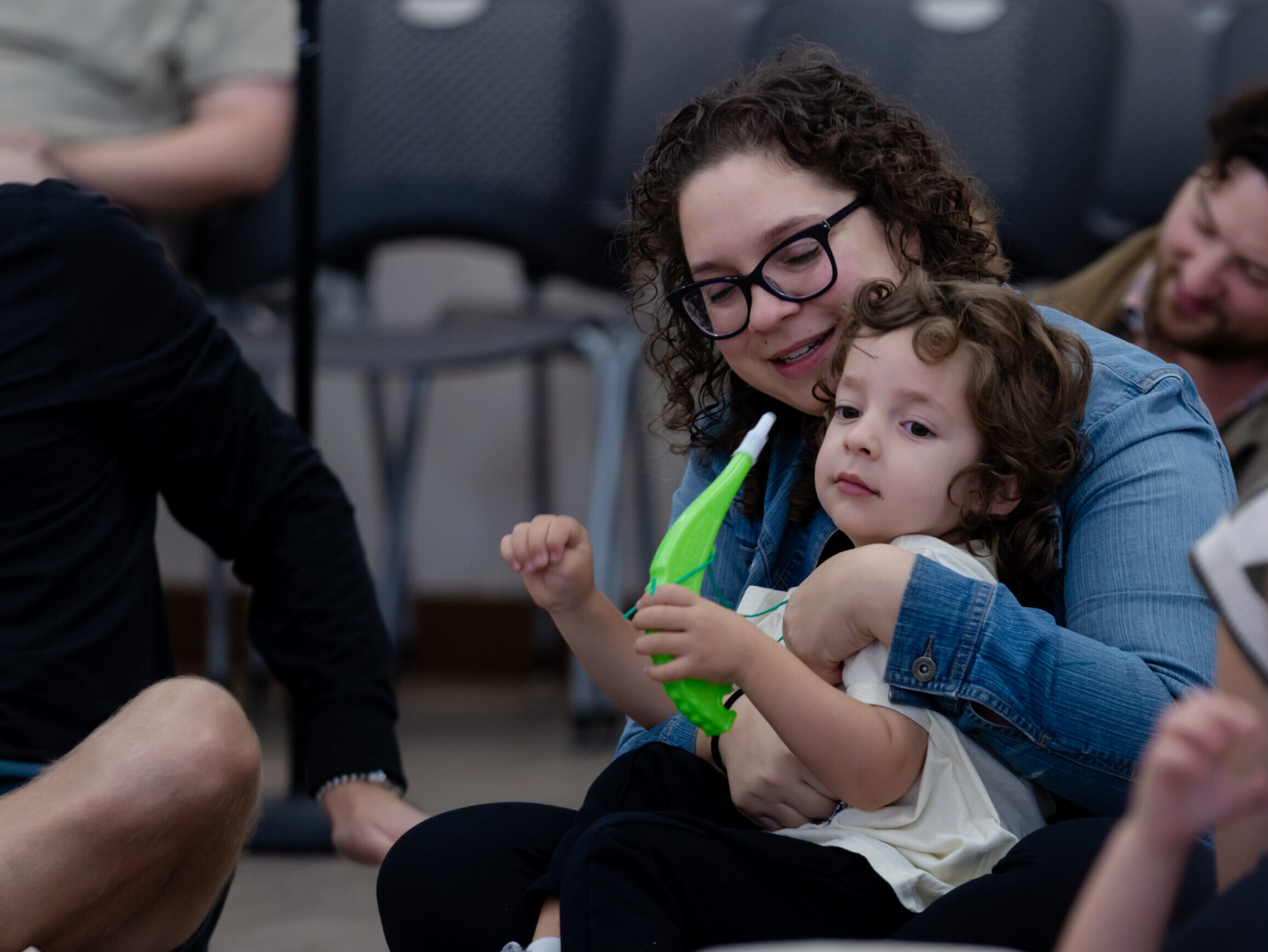
It takes a village to raise a child. For Jewish families, that village often takes shape through a vibrant Jewish community with places to celebrate holidays, meet other parents, and help children grow up surrounded by Jewish life.

For many parents, a sense of community begins to take shape in the early years—through the families they meet, the events they schlep their kids to, and the people who share those early milestones.

As part of its commitment to strengthening Jewish life across the region, The Jewish Federation of Greater Washington works with partners throughout the DMV to help make these connections possible.

Where Jewish Community Takes Shape

“Some of the first ways families connect to Jewish community happen during the early years,” said Dinah Zeltser, Associate Director of Community Impact, who leads the Families with Young Children work at Federation. “Sometimes it starts with something as simple as a PJ Library book arriving in the mail, a parent bringing their little one to Tot Shabbat for the first time, or a holiday gathering where parents suddenly realize they’re not the only ones trying to figure it all out.”

One way Federation supports these connections is by investing in programs and partnerships that help families engage with Jewish life from the earliest years.

Expanding Opportunities for Young Families

Through a new funding opportunity, Federation is inviting local organizations to create more programs for children ages 0–8 and their parents, strengthening early connections to Jewish life and community.

Programs may include family-centered holiday celebrations, parent gatherings, community programs that bring families together, or other experiences that help parents connect with one another and feel part of a Jewish community.

Federation welcomes both proven programs ready to grow, and new ideas that explore creative ways to engage families during these formative years.

“Early connections matter,” Zeltser said. “When families feel welcomed and supported early on, it can shape how they experience Jewish life for years to come.”

By investing in programs that reach families early, The Jewish Federation of Greater Washington aims to expand opportunities for parents and children across Greater Washington to connect with Jewish community and with one another.

Organizations interested in applying can review the full Request for Proposals below. Applications are due April 15, 2026, with funded programs beginning in August 2026. 
Learn more

Related posts

Find Your People with JLive Find Your People with JLive
Find Your People with JLive
Jewish life is thriving across Northern Virginia, but finding it can be challenging. Through a new partnership between the Jewish Federation of Greater Washington and the Pozez JCC, JLive will make it easier to discover events, programs, volunteer opportunities, and meaningful community connections.
read more

Federation Mobilizes Emergency Support for Communities in Israel

Federation Mobilizes Emergency Support for Communities in Israel

New allocations support medical care, trauma response, and community needs through trusted partners across the country.

On Monday, March 9, 2026, The Jewish Federation of Greater Washington’s Israel & Overseas Committee approved $125,000 in emergency allocations to partners in Israel to support urgent medical, humanitarian, and community needs following recent attacks.

In moments of crisis, Federation mobilizes the resources and relationships of our community to ensure help reaches those who need it most.

The allocations approved this week reflect urgent areas of need identified by Federation’s partners across Israel.

Emergency Allocations Supporting Communities Across Israel ($125,000)

Strengthening trauma capacity in northern Israel ($50,000): Federation funding will help expand emergency surgery capacity at Tzafon Medical Center (formerly known as Poriyah), which serves more than 300,000 residents in Israel’s north, where attacks have sharply increased demand for emergency care. The grant will fund the purchase of an additional anesthesia workstation for the hospital’s Trauma Unit.

Supporting vulnerable residents in the Kinneret Valley Cluster ($35,000): Communities in the Kinneret Valley Cluster—one of Federation’s partner regions in Israel, comprising 15 municipalities—remain under threat, with many residents without private shelters in a region where there is often only one minute to reach protection. Federation support will help the Cluster provide transportation to safe spaces during alerts, expand trauma response services, and deliver essential supplies during prolonged emergency conditions.

Standing with victims of terror ($25,000): After an attack, Israelis may be faced with the need to evacuate their homes, receive medical or psychological care, or confront a new reality of grief. Through the Jewish Agency for Israel’s Fund for Victims of Terror, families affected by these attacks receive immediate assistance, including emergency financial support, trauma care, and guidance in the difficult days following injury, displacement, or loss. Federation support helps ensure this rapid-response system is available when families need it most.

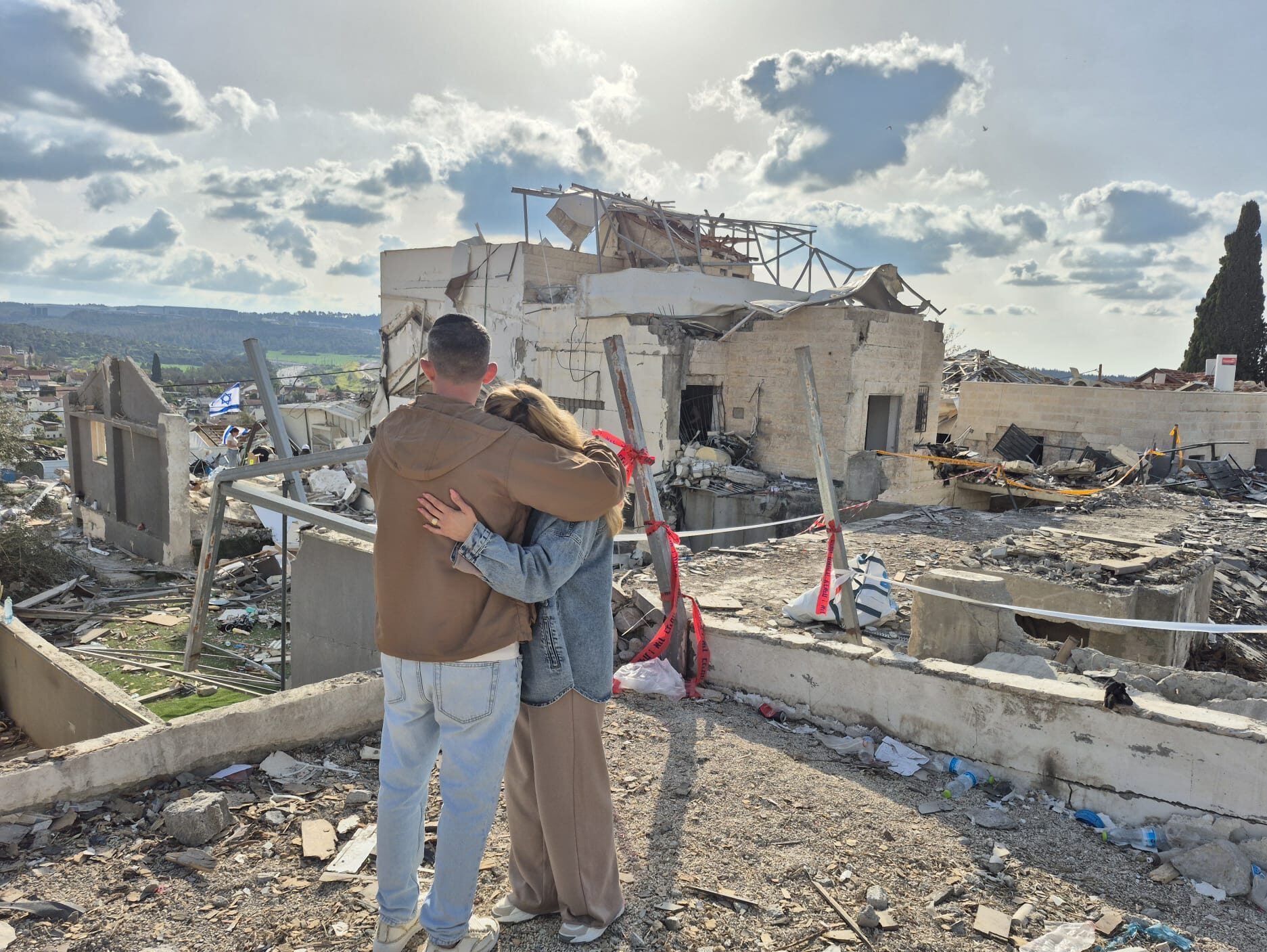
Providing community support in Beit Shemesh ($15,000): Following an Iranian missile strike that killed nine civilians and forced evacuations in Beit Shemesh, the Zinman Community Center became a gathering point for affected residents. Federation support is helping the center coordinate emergency programming and provide emotional support for evacuees and survivors.

Federation maintains long-standing relationships with these partners through decades of work with The Jewish Agency for Israel, our response following October 7, and our prior partnership with the city of Beit Shemesh. These connections allow our community to respond quickly and meaningfully when it matters most. They also reflect Federation’s broader Israel strategy: strengthening ties between Greater Washington and communities across Israel.

Our Israel Strategy

Related posts

Find Your People with JLive Find Your People with JLive
Find Your People with JLive
Jewish life is thriving across Northern Virginia, but finding it can be challenging. Through a new partnership between the Jewish Federation of Greater Washington and the Pozez JCC, JLive will make it easier to discover events, programs, volunteer opportunities, and meaningful community connections.
read more

Eight Weeks. 100 points. A Whole New Financial Future.

Eight Weeks. 100 points. A Whole New Financial Future.

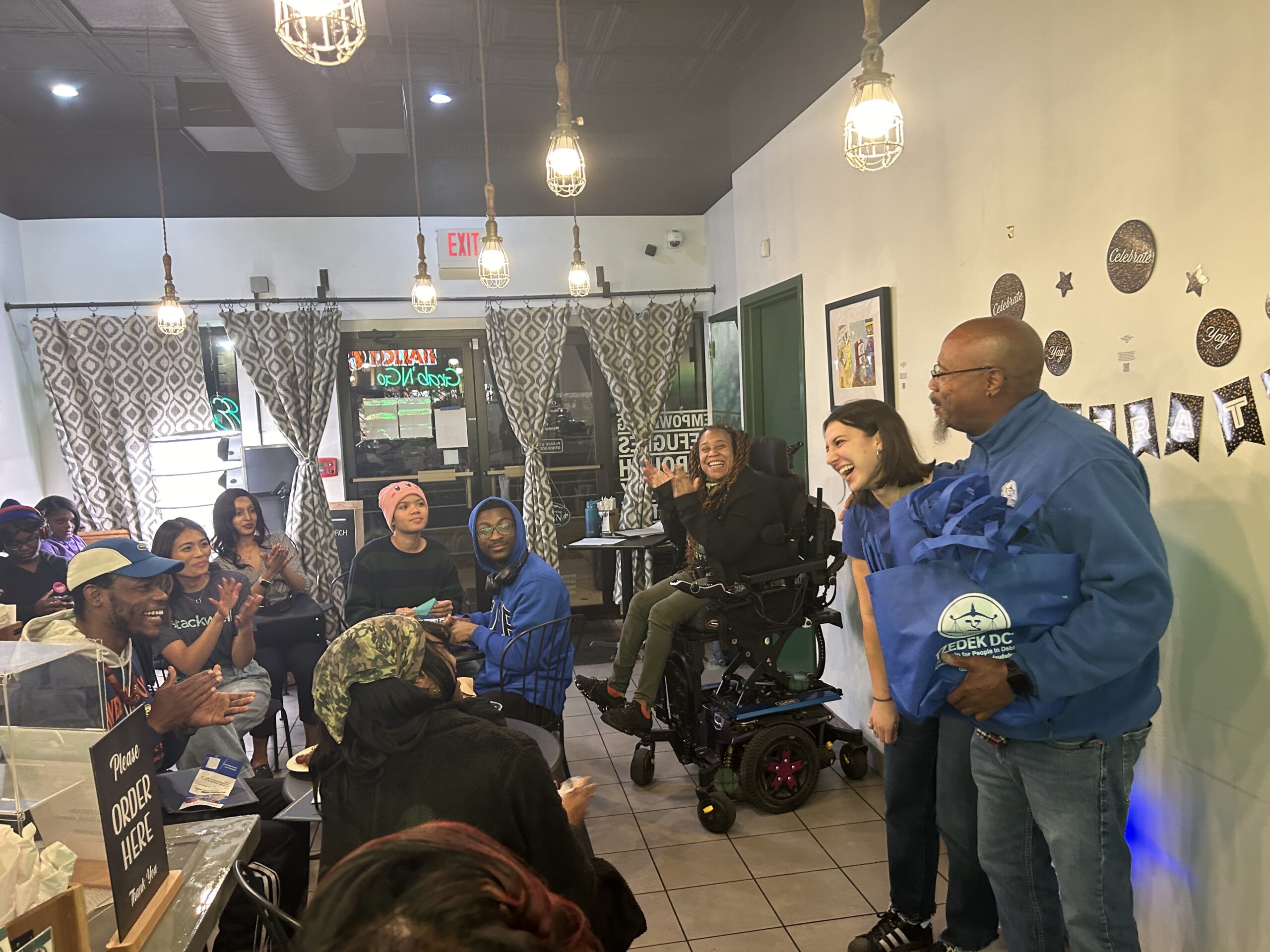
On any given weeknight in DC, a group of residents gathers around tables and notebooks at a Federation partner agency. They talk about credit scores, spending plans, debt that’s been sitting heavy for years, and long-term investing goals.

And then something shifts.

“After eight weeks, most participants made positive and tangible changes in their lives,” says Sophie Adler, Financial Empowerment Program Coordinator at Tzedek DC. “One participant increased their credit score by 100 points, and another paid down thousands of dollars of debt. But almost everyone, 98%, made a financial behavior change as a direct result of our program.”

Ninety-eight percent.

That kind of change doesn’t happen by accident. It happens when people are given practical tools, steady support, and a space to build confidence.

The Jewish Federation of Greater Washington is proud to help make that support possible by investing in partners like Tzedek DC.

From Portland to Purpose

Sophie grew up in Portland, Oregon, and came to DC through Avodah’s Jewish Service Corps, part of a Federation partner agency. She was looking for a way to pair Jewish community with hands-on social justice work—and found both at Tzedek DC, which works to alleviate debt and address economic injustice in DC. Its name inspired by the Jewish teaching Tzedek tzedek tirdof—“Justice, justice shall you pursue”.

What stood out for Sophie, though, wasn’t just the mission. It was the model.

“We don’t just offer direct services,” she explains. “We also work on policy and community education. You need all of it—reactive support for people in crisis and proactive, systemic change.”

Following her Avodah year, Sophie was hired to join the staff. Today, she serves as Financial Empowerment Program Coordinator, leading the eight-week program she helped launch during her Avodah service year.

That integrated approach reflects Federation’s belief that strengthening Jewish life and advancing economic justice go hand in hand. When Federation invests in partners like Tzedek DC, we help sustain both immediate support and long-term solutions.

Eight Weeks That Change Everything

When Sophie arrived, Tzedek DC was launching a pilot Financial Empowerment Program, an intensive, eight-week series offered free to DC residents.

Each week, participants dive into spending plans, short- and long-term financial goals, and building credit. They move beyond theory, through interactive workshops driven by the participants’ questions.

Alongside the workshops, participants can meet one-on-one with Tzedek DC’s financial counselors, pulling credit reports, identifying priorities, and setting repayment strategies. The workshops build knowledge. The counseling builds momentum.

The impact is tangible. One participant got her first credit card, and another opened a CD account. One participant worked hard at her long-term goal of becoming a homeowner and purchased her first home 15 months after graduating from the program.

But for Sophie, the most powerful shift isn’t numeric.

“It’s seeing participants’ confidence grow,” she says. “They’ll message me months later to celebrate a milestone. That pride, that sense of ‘I did this,’ that’s what stays with me.”

This is the kind of work Federation is proud to support: programs that help people build stability and long-term confidence.

Stronger Together

No organization can do this work alone.

“We constantly have people calling us with different needs that we might not always be able to provide,” Sophie shares. “Being able to rely on our community partners is so important.”

By investing across Greater Washington, we help create the connective tissue that allows agencies to share resources, refer clients, and respond more effectively when needs arise.

Beyond the Workshop

Outside the classroom, Sophie brings the same energy to community life. She’s been playing basketball since she was four, most recently in DC’s Volo leagues, and now organizes Tzedek DC’s annual March Madness bracket challenge.

She also helped launch the organization’s Racial Equity Book Club and co-organizes a book club with fellow Avodah alumni.

It’s not separate from her work. It’s an extension of it.

“I want a career rooted in community,” she says. “Grounded in lived experience. People-centered.”

That instinct, toward connection and shared responsibility, is at the heart of Federation’s work across Greater Washington.

Where Confidence Becomes Stability

Eight weeks may not seem like a long time.

But in that time, participants begin putting the lessons into action—creating spending plans, building credit, and setting long-term goals.

That’s why Federation invests in partners who pair practical tools with lasting solutions.

Because when one person gains stability, the ripple effect reaches far beyond a single balance sheet—strengthening families and the broader community.

Related posts

Our Future Is in Good Hands Our Future Is in Good Hands
Our Future Is in Good Hands
Federation’s Annual Meeting offered a powerful reminder of what makes Jewish Greater Washington extraordinary: people who invest in one another, lead with purpose, and help build a strong future through service, leadership, and community responsibility.
read more

From Fragmentation to Framework: A Regional Leadership Conversation

From Fragmentation to Framework: A Regional Leadership Conversation

How We Hold Complexity Shapes What Community Feels Like

Across our community, leaders are navigating real tensions: belonging and boundaries, safety and responsibility, clarity and pluralism. These aren’t abstract debates. They shape what Jewish life feels like in our synagogues, agencies, schools, and communal spaces every single day.

How leaders hold that complexity determines whether our community feels safe or splintered, principled or reactive, connected or alone.

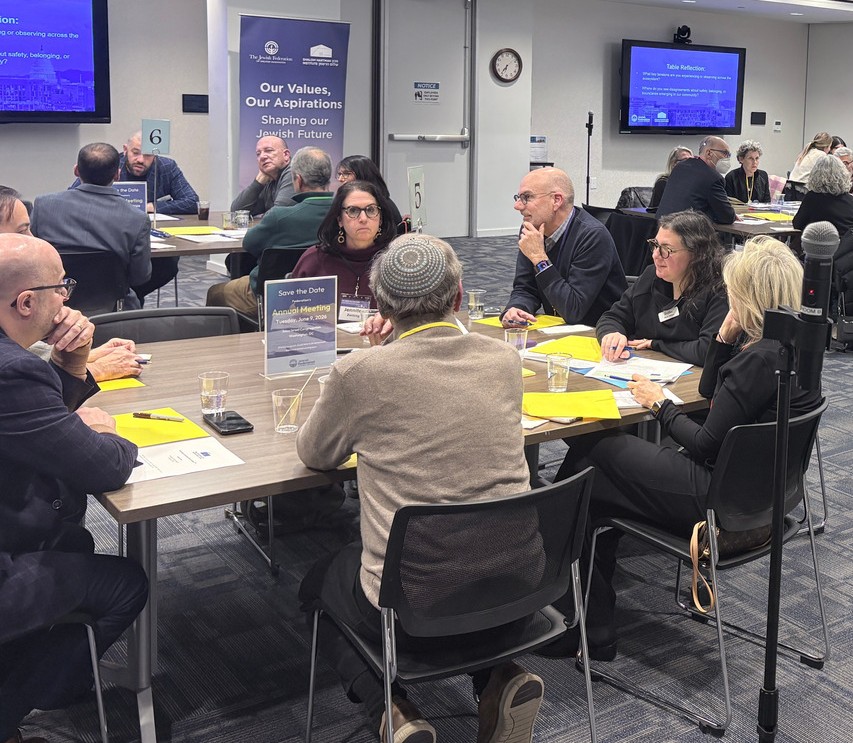
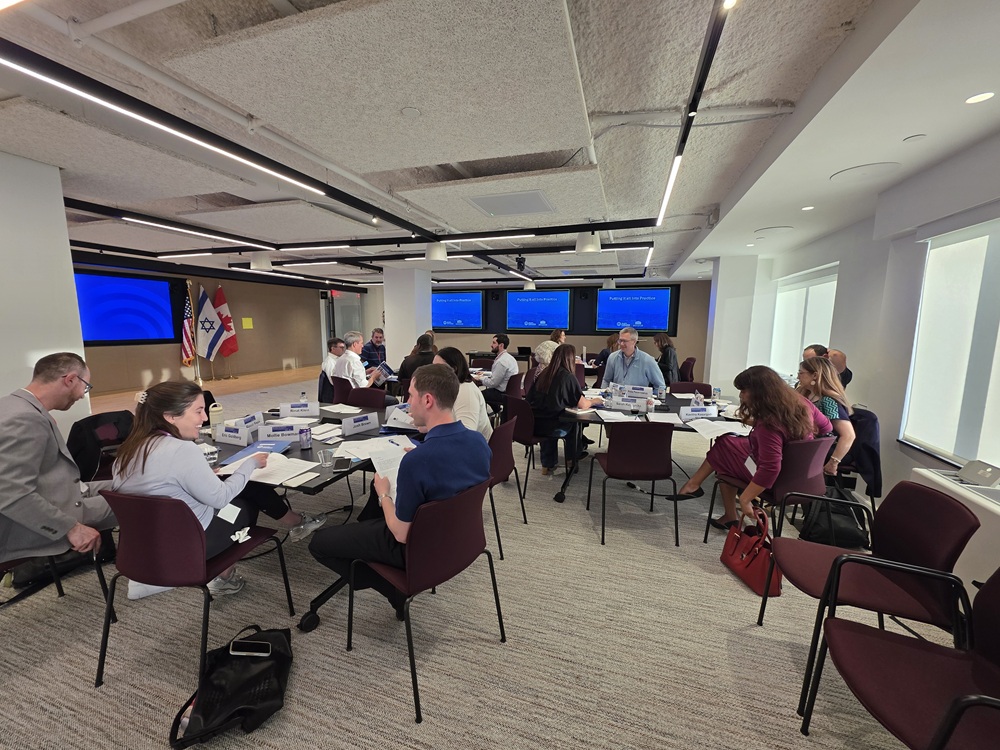
That’s why The Jewish Federation of Greater Washington continues to partner with the Shalom Hartman Institute as part of a sustained investment in Jewish leadership. Together, we equip leaders across our region with the shared language and frameworks needed to navigate complex communal challenges. Earlier this month, that partnership convened senior and emerging leaders for a candid conversation about what this moment requires of a vibrant Jewish community.

More than 60 leaders participated across the full spectrum of Jewish Greater Washington: congregational rabbis, synagogue presidents, agency executives, foundation trustees, long-time board members, and rising lay leaders. They represented institutions across denominations, missions, and generations—many of whom do not typically sit at the same tables.

Bringing this breadth of leadership into one room reflects Federation’s unique role and its investment in the relationships and common language leaders need to respond to difference with intention instead of reaction.

Shared Language in a Strained Moment

Our community includes many organizations, identities, ideologies, and expressions of Jewish belonging. Honoring that breadth and creating space where it can exist in conversation rather than collision is central to our mission as a community builder.

The goal was not uniformity, but shared understanding.

To anchor the conversation, we drew on the “Our Fragile Tents” framework developed and presented by Yehuda Kurtzer, President of the Shalom Hartman Institute. The framework offered language to help leaders name the fractures, fears, and ideological divides shaping Jewish life today, allowing the conversation to go deeper, faster.

Leaders began at tables, speaking openly about the tensions inside their own institutions. Several distinctions proved especially clarifying: the difference between communities of kinship and communities of consent; the ways participation, interest, and national identity shape expectations; and the recognition that not every community can or should operate by the same norms.

Leaders spoke candidly about what they are holding:

“Understanding the boundaries necessary in my community that may not be necessary in the larger Jewish community was eye-opening.”

“The varying definitions of community and the norms that guide them will directly shape how I lead.”

As leaders explored one another’s reflections, it became clear that no single institution is holding this moment alone.

No one left with every tension resolved. Agreement was never the objective. The goal was building the relationships and shared understanding that allow our community to move through strain without fracturing.

Strengthening the Ecosystem

The conversation underscored how much this moment requires coordination and clarity across our community. No single synagogue, agency, or leadership body can bring this breadth of voices together across ideologies and generations.

By convening leaders in serious dialogue, Federation strengthens the relationships that help our community stay steady under pressure. Without shared language and cross-institutional relationships, leaders are left to navigate strain in isolation. Bringing institutions together ensures those tensions are held collectively rather than alone.

When leaders share common language and trust one another, institutions are better positioned to respond with clarity rather than escalation, with steadiness rather than isolation. The experience of Jewish life across our region—how safe it feels, how welcoming it feels, how principled it feels—is shaped by those choices.

A vibrant Jewish community depends on leaders who can hold complexity with clarity, speak honestly across difference, and remain committed to the whole, especially when it’s hard.

Strengthening that leadership capacity is central to Federation’s mission and essential to the long-term resilience of Jewish life in Greater Washington.

This convening was one step. Federation is now reviewing and synthesizing the reflections shared that evening to guide our next steps, so leaders across our community are better equipped for what this moment demands.


About the Partnership

For eight years, Federation’s partnership with the Shalom Hartman Institute has been rooted in a shared commitment to strengthening Jewish leadership and deepening relationships across our diverse community. Together, we have built a space for learning, reflection, and growth—a place where leaders wrestle with big questions, develop the clarity and courage needed to navigate complex times, and explore how to hold our community’s multitude of perspectives when the stakes feel high while communicating across differences in service of a stronger, more connected Greater Washington Jewish community.

Federation’s leadership programs help emerging and seasoned leaders alike grow their skills, deepen Jewish learning, and lead with purpose.

Explore more

Related posts

Our Future Is in Good Hands Our Future Is in Good Hands
Our Future Is in Good Hands
Federation’s Annual Meeting offered a powerful reminder of what makes Jewish Greater Washington extraordinary: people who invest in one another, lead with purpose, and help build a strong future through service, leadership, and community responsibility.
read more

Disability Inclusion Is a Journey: Partnering to Expand Access and Belonging at the Capital Jewish Museum

Disability Inclusion Is a Journey: Partnering to Expand Access and Belonging at the Capital Jewish Museum

Strengthening Access Across Our Community

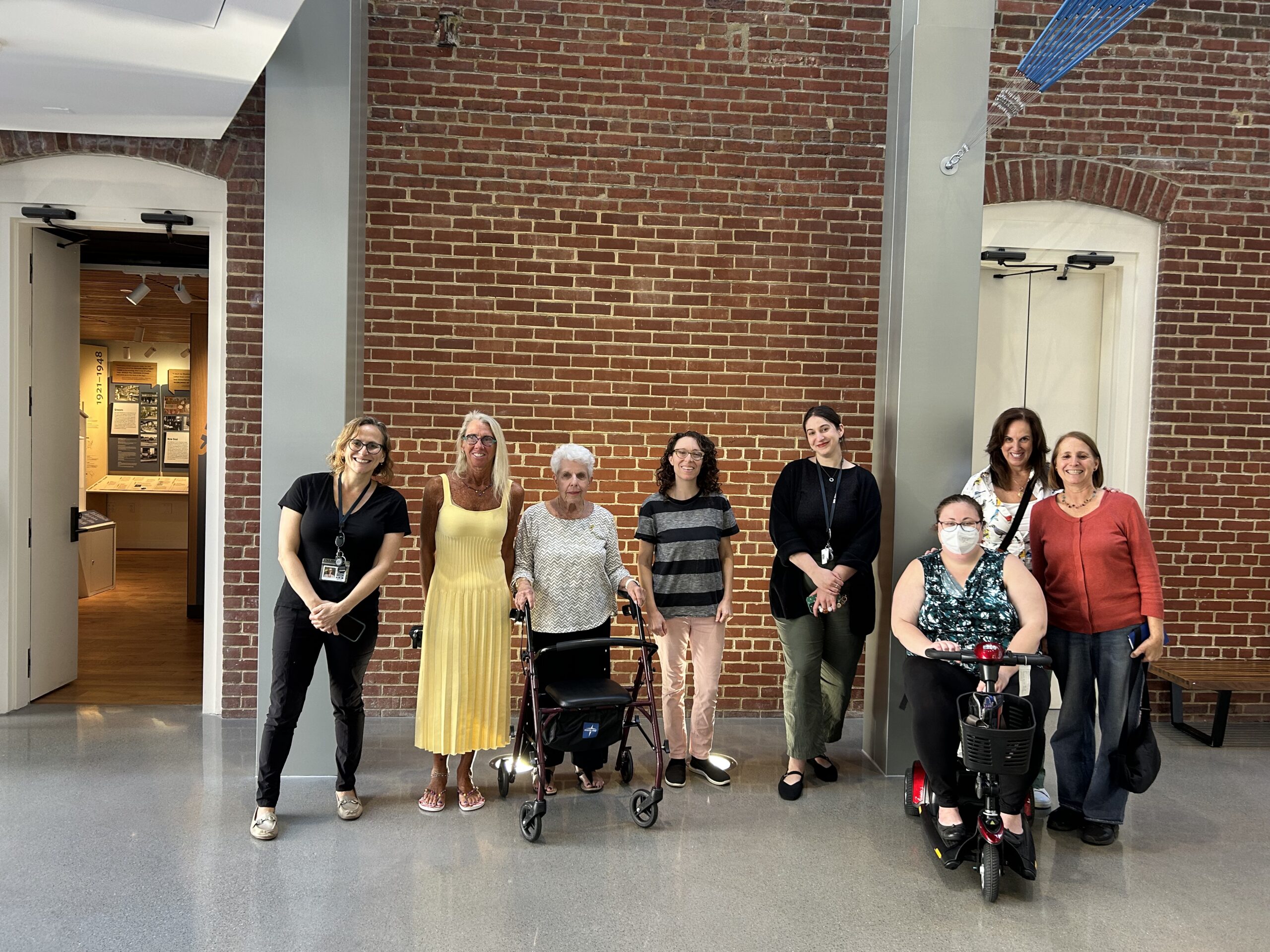
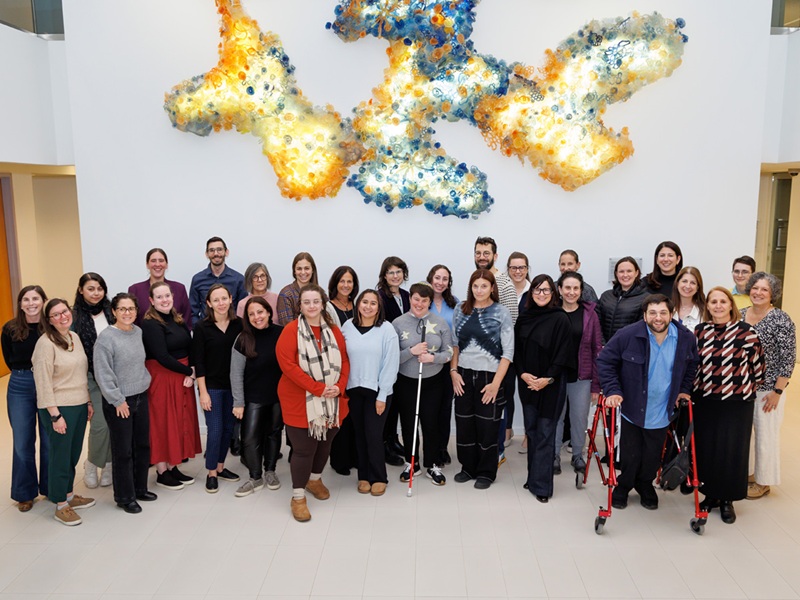
Inclusion is a journey shaped by curiosity, reflection, and a commitment to creating spaces where everyone belongs. On September 12, 2025, the Federation’s Disability Inclusion Advisory Group visited the Capital Jewish Museum as part of our ongoing work to strengthen access and belonging across Jewish institutions in Greater Washington. We left inspired by the museum’s openness, intentionality, and genuine desire to learn and grow.

The Capital Jewish Museum explores the Jewish experience in Washington from 1790 through today, tracing stories of community, civic engagement, and cultural life across generations. As a museum dedicated to preserving and interpreting Jewish history in the nation’s capital, its commitment to accessibility ensures that these stories are available to all who wish to engage with them.

The advisory group includes professional and lay leaders with expertise in disability advocacy, education, and policy, alongside individuals with lived experience as people with disabilities or as family members of individuals with disabilities. This diversity of perspective strengthens our work and informed a meaningful conversation with the museum’s leadership.

A Shared Commitment to Inclusion

From the start, it was clear that inclusion is a priority for the museum. The invitation to engage in a thoughtful, respectful dialogue was a powerful signal. It showed that the museum is not only thinking about accessibility but is also eager to listen, ask questions, and plan for the future in partnership with the community.

We were encouraged by the many ways the museum is already working to make its space more welcoming. From physical access features to warm and responsive staff, the museum has already built a strong foundation for accessibility. What stood out most, though, was the museum’s willingness to explore what more could be done, not out of obligation, but out of a sincere commitment to inclusion as a core value.

Practical Steps Toward Greater Accessibility

Our group shared observations and ideas not as critiques, but as contributions to a shared vision. For example, we discussed how staff training can be a powerful tool in fostering inclusion. When staff are equipped to ask thoughtful questions and offer support—whether helping someone navigate the space, understand an exhibit, or find a place to rest—the visitor experience shifts from good to exceptional.

We also talked about communication and how small adjustments can make a big impact. Adding a clearly labeled accessibility section to the museum’s website, for instance, would make it easier for visitors to plan ahead and request accommodations. We are grateful that the museum has already taken this recommendation to heart by launching an accessibility page and is committed to continuing to build it out over time. Clear, consistent signage throughout the building can also help visitors navigate the space with confidence.

For Deaf and hard of hearing visitors, the museum is already thinking creatively about how to improve access. We explored ideas like increasing caption visibility on videos, offering digital check-in options, and even partnering with services that provide on-demand ASL interpretation. These are exciting possibilities that reflect the museum’s forward-thinking approach.

Mobility access was another area where thoughtful enhancements could build on existing strengths. From seating options to restroom access, the museum is clearly considering the needs of a wide range of visitors. We appreciated the attention to detail and shared ideas for how to continue building on that strong foundation.

For visitors who are blind or have low vision, the museum’s highly visual nature presents both a challenge and an opportunity. We discussed the potential for docent-led tours with verbal descriptions, audio guides, and tactile elements that could expand access and bring exhibits to life in new ways.

Inclusion Is Ongoing Work

Disability inclusion is not something that happens overnight. It’s a process of learning, evolving, and building relationships. The Capital Jewish Museum is walking that path with intention and heart, and Federation is proud to partner in strengthening inclusion across our community.

We look forward to continuing this partnership and supporting the museum as it explores new ways to ensure that every visitor feels seen, heard, and valued. And we invite other organizations who are on their own inclusion journeys to connect with the Federation’s Disability Inclusion Advisory Group. We welcome opportunities to collaborate and strengthen inclusion across our community.

Discover how Federation is strengthening access and belonging across Jewish life in Greater Washington.

See our Belonging and Inclusion work

Related posts

Find Your People with JLive Find Your People with JLive
Find Your People with JLive
Jewish life is thriving across Northern Virginia, but finding it can be challenging. Through a new partnership between the Jewish Federation of Greater Washington and the Pozez JCC, JLive will make it easier to discover events, programs, volunteer opportunities, and meaningful community connections.
read more

From Intention to Action: What JDAIM Is Teaching Our Community About Inclusion

From Intention to Action: What JDAIM Is Teaching Our Community About Inclusion

Jewish Disability Awareness, Acceptance, and Inclusion Month (JDAIM) invites us each year to ask a hard but necessary question: who feels fully welcomed into Jewish communal life and who still encounters barriers, even when our intentions are good?

When values outpace systems

In recent years, our community has begun to confront an uncomfortable truth., While many Jewish organizations deeply value inclusion, good intentions alone are not enough to create access, especially for young adults with disabilities. Inclusion requires skills, systems, and sustained commitment.

Learning what inclusion requires

That realization came into focus in 2023, when we partnered with Matan, a national leader in disability inclusion in Jewish life, to conduct a communitywide assessment. Matan works with Jewish organizations across North America to build the tools and confidence needed to create truly inclusive communities. One finding stood out clearly: Jewish professionals wanted to be inclusive of people with disabilities, particularly young adults, but many did not know how to translate that desire into practice.

That insight became a turning point.

Turning learning into action

In response, we launched the Lieberman Fellowship for Jewish Organizations Serving Young Adults, a yearlong cohort learning experience (2024–2025) led by Matan. The fellowship focused on moving organizations from intention to implementation, helping teams rethink policies, practices, and culture through an inclusion lens. At the conclusion of the learning year, participating organizations, along with one additional congregation, received grants to turn learning into action through concrete inclusion projects.

This JDAIM, we pause to take stock of progress at the projects’ midpoint. What we found was encouraging—not because the work was finished, but because it is becoming more thoughtful, more systematic, and more honest.

What’s changing across our community

Across the region, organizations are shifting away from ad hoc accommodations toward intentional, systems-based approaches to access. Some are redesigning how people request accommodations or improving digital and physical accessibility. Others are investing in staff training, inclusive employment pathways, peer support, or relationship-centered spaces like Shabbat tables and social programming. Again and again, we are seeing that small but deliberate changes—clear communication, accessible tools, sensory supports—can dramatically expand participation and belonging.

That progress has not come without challenges. Many teams underestimated how long it would take to coordinate across departments and partners. Staff transitions and technology limitations slowed timelines. In some cases, organizations intentionally slowed decision-making to ensure solutions would be sustainable and meaningful rather than rushed. These challenges are real, but they also reflect a growing sophistication in how our community understands inclusion: not as a quick fix, but as long-term work that must be built to last.

Inclusion, in action

Each organization is approaching inclusion differently, shaped by its mission, audience, and capacity. Together, these efforts reflect a shared shift toward more intentional and sustainable access.

Inclusive employment and workforce pathways

  • Adas Israel is piloting a supported employment program for young adults with intellectual and developmental disabilities, envisioning a multi-year pathway to meaningful, paid work and vocational growth.

Accessible spaces, programs, and experiences

  • Bender JCC is investing in accessible fitness equipment and assistive listening devices, alongside hosting sensory-friendly cultural programming.
  • Edlavitch DCJCC repaired hazardous entryways and launched a visibility campaign highlighting accessibility across programs.

Digital communications access

  • GatherDC transformed its community calendar to include accessibility information, mobile usability, and screen-reader tools, changing how thousands of young adults find Jewish experiences.

Peer support, community design, and belonging

  • B’nai Israel Congregation is pairing a young adult inclusion peer program with accessible communication training for staff and lay leaders.
  • OneTable supported hosts creating intentionally inclusive Shabbat tables, including spaces centered for autistic and Deaf/ASL communities.

Data-informed systems and long-term engagement

  • Pozez JCC is building data-informed systems to track and strengthen engagement of neurodiverse young adults over time.

Training, capacity-building, and organizational practice

  • Mem Global distributed social inclusion kits, launched accessibility microgrants, and is preparing to hire a Camper Care Director to support emotional and behavioral needs at immersive experiences.
  • Sixth & I is preparing comprehensive social inclusion trainings for staff and volunteers serving young adults in less-structured Jewish spaces.
  • Temple Rodef Shalom standardized its accommodation request process, shifting from informal responses to clear, transparent, and equitable access systems.

The lesson we’re carrying forward

Perhaps the most important lesson emerging from this work: inclusion is grounded in relationships, strengthened through training, and sustained by systems, not by individuals alone. When access is embedded into how organizations operate, it becomes part of communal life.

Beyond JDAIM

This JDAIM, we are not just raising awareness. We are witnessing growth—imperfect, iterative, and deeply committed. Our community is learning what it truly means to create Jewish spaces where young adults with disabilities are not merely accommodated, but genuinely welcomed, supported, and able to belong.

Learn more

Related posts

Find Your People with JLive Find Your People with JLive
Find Your People with JLive
Jewish life is thriving across Northern Virginia, but finding it can be challenging. Through a new partnership between the Jewish Federation of Greater Washington and the Pozez JCC, JLive will make it easier to discover events, programs, volunteer opportunities, and meaningful community connections.
read more

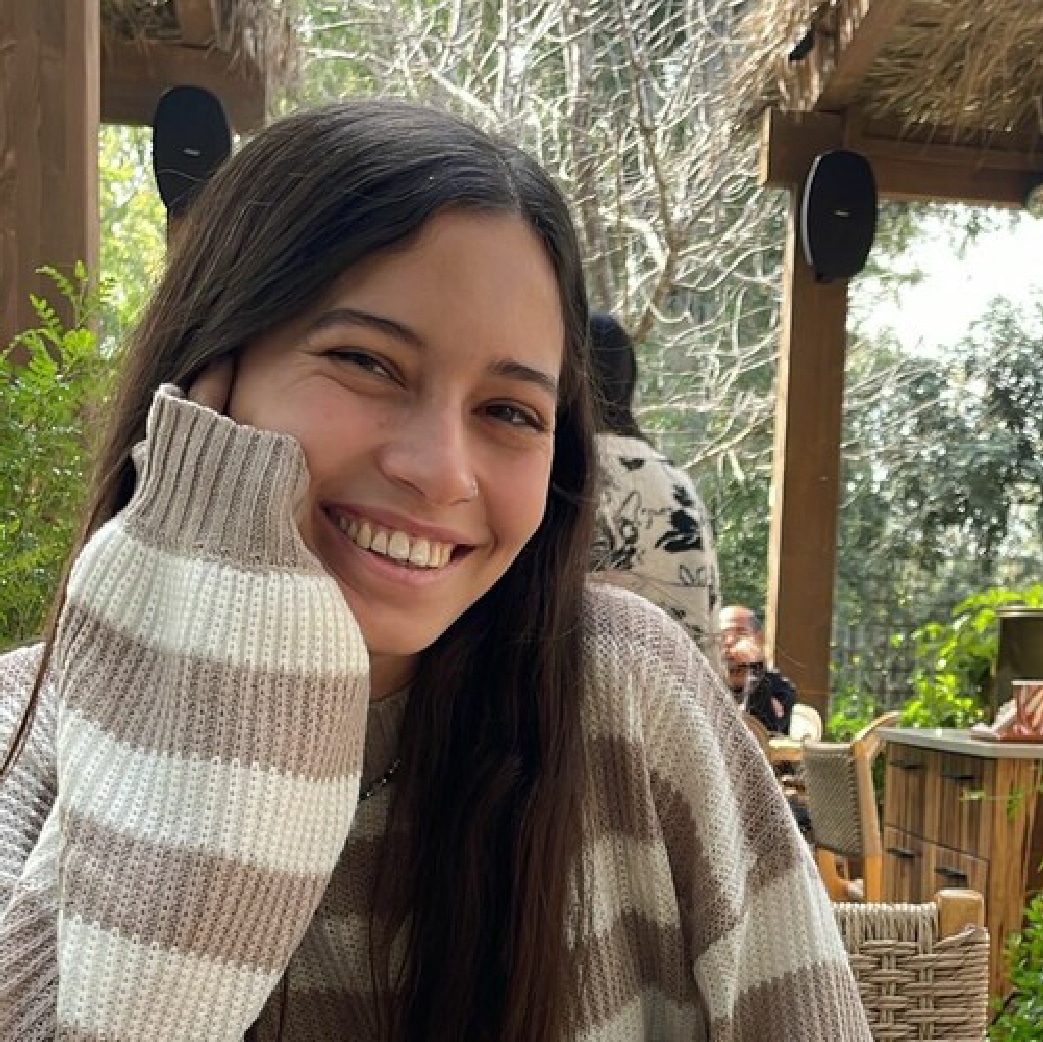
Finding Light: Ori’s Journey as a Shlicha in Greater Washington

Finding Light: Ori’s Journey as a Shlicha in Greater Washington

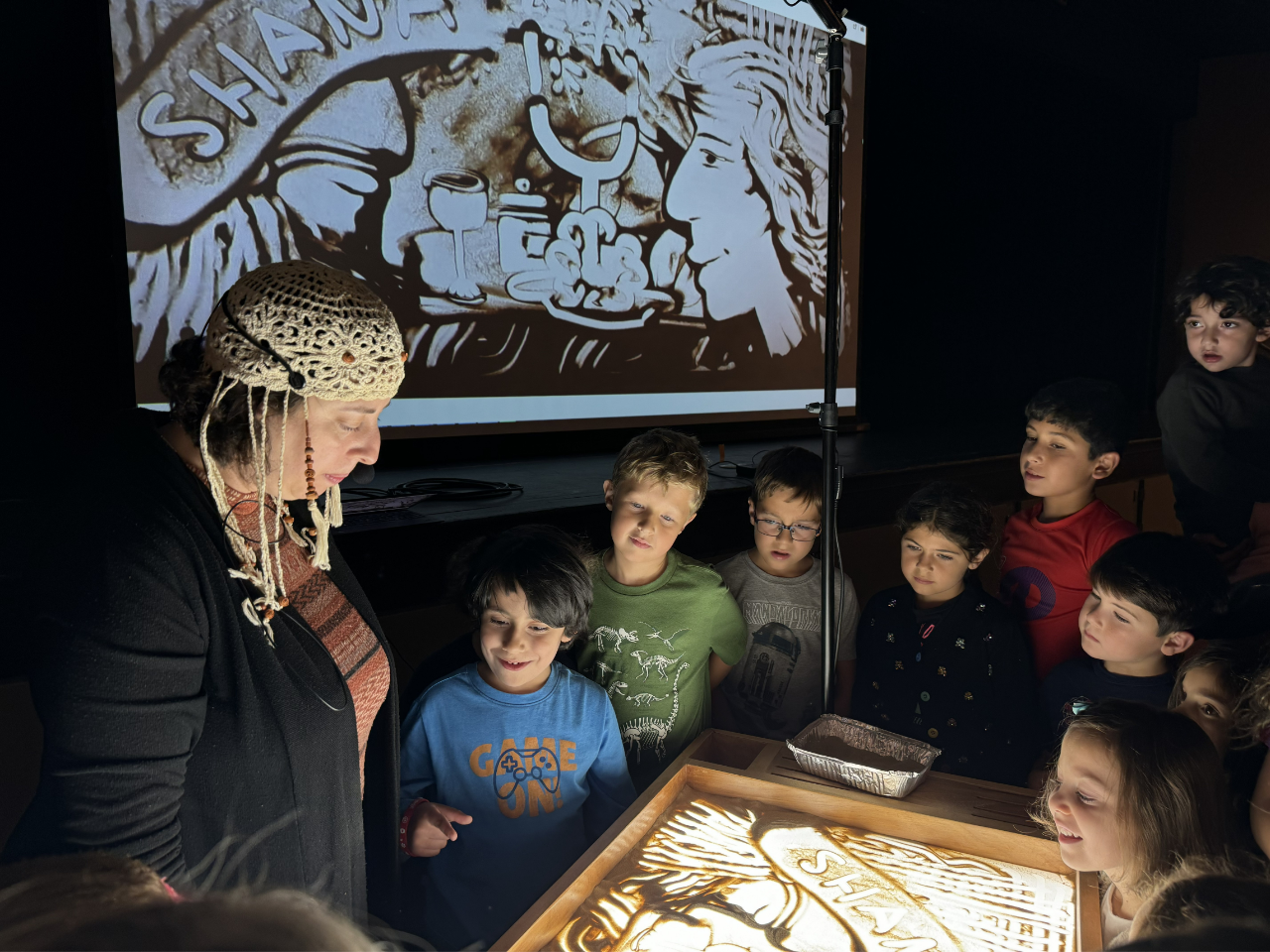
Ori is 23, and she carries something most adults twice her age still struggle to hold: the responsibility of representing Israel with honesty, heart, and humility—especially to kids. She’s one of 11 community shlichim (Israeli emissaries) bringing Israel to life across Greater Washington through Federation’s Shlichim Program.

Growing up in Moshavat Kinneret, a small community in northern Israel, Ori was surrounded by family, a strong sense of responsibility, and a beloved boxer dog she still misses. Before coming to Greater Washington, Ori spent two summers at a Jewish camp in upstate New York.

Teaching Israel in a Complicated Moment

Now living in Greater Washington, Ori spends her days with children, parents, and educators—teaching Hebrew, leading workshops, and helping our community deepen its connection to Israeli life and culture. But talking about Israel isn’t as simple as it used to be. She says it’s gotten harder in the last few years. Kids are asking deeper questions. There’s no single story to tell.

“I’m not saying Israel is perfect,” she says. “Like anything else, there are things that are good and things that are bad. I want to show them both sides.” Ori doesn’t pretend otherwise. She listens, brings her own questions, and creates space for kids to talk about Israel with curiosity, honesty, and care.

Pride Without Pretending

Ori loves teaching about Israel’s creativity—from everyday inventions to world-changing breakthroughs, like cherry tomatoes. “The best invention,” she says, laughing.

Through Made in Israel, an interactive Hands-on Israel workshop she leads, participants explore the Israeli innovations they’ve heard of and many they haven’t. They learn about the brilliant minds behind these inventions through games and challenges that spark curiosity and pride. Ori’s goal is more than just facts. She shows people that Israel is a place of ideas, impact, and imagination.

Teaching Joy, Too

For Ori, representing Israel isn’t only about navigating complexity—it’s also about sharing joy. She brings Israeli traditions into American Jewish life in ways that feel lasting and personal. “We’re not sitting sad and miserable in Israel—we’re happy,” she says. “We’re living.” That’s what she wants kids to see: that Israel is a home, full of celebration, tradition, and joy.

Ori’s work is part of a larger effort to build people-to-people connection through immersive, everyday experiences. Through Federation’s Shlichim Program, Israeli emissaries like Ori help bring Israel to life in schools, synagogues, JCCs, and more—creating personal, lasting moments of understanding and connection across Greater Washington.

Bringing Community with Her

Ori often talks about the community she grew up in—a kibbutz where kids moved freely, everyone knew each other, and life felt safe and shared. “It’s a very community-like place,” she says. “It’s a safe space… I really, really love it.” That sense of belonging is something she carries with her. And through her teaching, she hopes to help create more of that feeling for the children and families she meets here.

Leaving Something Behind

One of the biggest surprises for Ori has been seeing what Jewish life looks like outside of Israel. She didn’t know what to expect. But she’s found deep relationships, strong communities, and new ways of expressing Jewish identity that continue to shape her own perspective. Ori wants to bring more of Israel into Jewish spaces here, and she hopes the connections she’s made will last long after she leaves.

“I don’t want to just be a shlicha who came and left,” she says. “I want to leave something behind.”

Looking Ahead

When she thinks about the future of Jewish life in the U.S., Ori doesn’t hesitate. She hopes people feel safe being openly Jewish. She hopes for greater unity, more listening, and a community that remains a source of strength, even in uncertain times. Until then, she’s teaching, learning, and building relationships—one day, one conversation at a time.

Continue the Conversation at RE:Israel

Ori’s story reflects the honest, values-driven work of Israel education today—work that feels more urgent than ever. In the wake of October 7, educators, parents, and communal leaders are grappling with big, essential questions:

  • How do we teach and talk about Israel with clarity and care?
  • How do we support young people in holding complexity without letting go of connection?
  • And how do we reframe Israel education for this new era, with tools that are honest, nuanced, and real?

These conversations will take center stage on Tuesday, February 24, at RE:Israel: Reflect. Reframe. Reconnect., a half-day learning experience for educators, communal professionals, lay leaders, and parents seeking thoughtful, practical engagement with Israel education in this moment.

Related posts

Find Your People with JLive Find Your People with JLive
Find Your People with JLive
Jewish life is thriving across Northern Virginia, but finding it can be challenging. Through a new partnership between the Jewish Federation of Greater Washington and the Pozez JCC, JLive will make it easier to discover events, programs, volunteer opportunities, and meaningful community connections.
read more

Helping Our Community Access NSGP Security Funding

Helping Our Community Access NSGP Security Funding

More than $300 million in federal security funding is available this year to help protect Jewish institutions. Accessing that funding, however, is competitive, technical, and time-sensitive.

That’s where JShield comes in.

Funding Helps—But Access Isn’t Automatic

Federal security grants can make a real difference, but only if institutions are able to secure them. The process is competitive and complex, and without support, too many opportunities are left on the table.

This year, lawmakers have proposed allocating approximately $300 million to the Nonprofit Security Grant Program (NSGP), a $25 million increase over last year. It’s an important step but accessing that funding still isn’t simple or guaranteed. Applying requires time, technical expertise, and careful coordination—resources many organizations don’t have while also running programs, supporting families, and serving their communities.

Where Federation Leads

Through JShield, The Jewish Federation of Greater Washington helps local Jewish institutions do this work with clarity and confidence. The support is practical and hands-on: advising organizations, preparing grant applications, and guiding them through a process that can otherwise feel overwhelming. This support is provided at no cost to institutions.

In 2025 alone, this work helped bring more than $5.25 M in security funding into our community. That funding helps institutions access resources they might otherwise miss and strengthens the safety of Jewish life across our region.

Security Is Ongoing Work

There is no finish line when it comes to security. It’s not a single grant or a one-time investment. It’s ongoing work that requires expertise, coordination, and strong relationships.

Through JShield, and with direct support from community donors, we help Jewish institutions prepare, apply, and stay focused on serving their communities.

Meet JShield

Related posts

Find Your People with JLive Find Your People with JLive
Find Your People with JLive
Jewish life is thriving across Northern Virginia, but finding it can be challenging. Through a new partnership between the Jewish Federation of Greater Washington and the Pozez JCC, JLive will make it easier to discover events, programs, volunteer opportunities, and meaningful community connections.
read more

Your Support in Action: Expanding Hospice Care in Northern Virginia

Your Support in Action: Expanding Hospice Care in Northern Virginia

Expanding access to compassionate hospice care in Northern Virginia

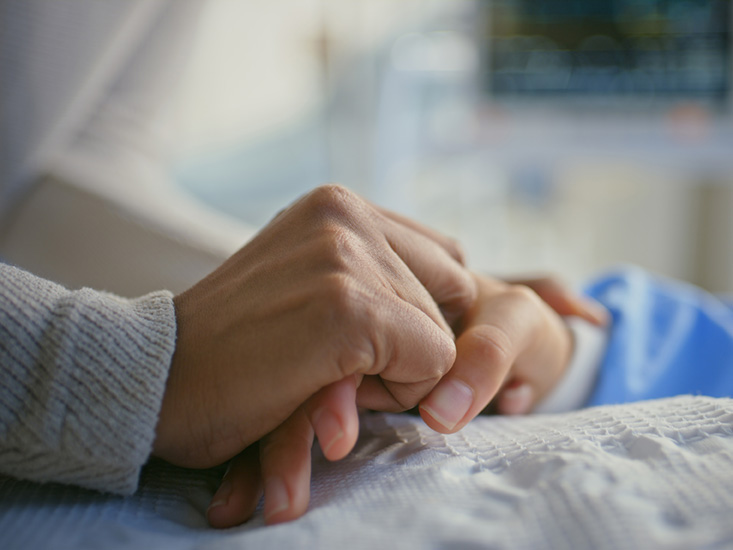
We are excited and proud to share that JSSA, a longtime Federation partner, is expanding its hospice services to Northern Virginia—an important step in ensuring individuals and families in our region have access to high-quality, community-based end-of-life care when it matters most.

How this expansion came together

As part of our ongoing work to strengthen vibrant Jewish life in Northern Virginia, The Jewish Federation of Greater Washington supported early feasibility work for this expansion, alongside additional donor support from the community. We continue to work closely with partners to ensure evolving needs across Northern Virginia are being addressed.

Building on decades of trusted service

For more than 40 years, JSSA has been a trusted provider of hospice care in Montgomery County, supporting patients and families with expert clinical care alongside emotional and spiritual support. This expansion builds on JSSA’s more than 45 years of serving Northern Virginia through mental health services, aging-in-place programs, and its Holocaust Survivor Program.

Care that centers dignity and family

JSSA’s interdisciplinary hospice team of physicians, nurses, social workers, chaplains, and trained volunteers provides care wherever patients call home. Their model includes smaller nurse caseloads and more frequent visits during patients’ final days, contributing to a higher-quality end-of-life experience for patients and families.

Families consistently share the impact of this care. As one son recently wrote:

“The genuine care and concern for my mom demonstrated by every member of the team was amazing. Their only goal was her comfort and quality of life. My family will always be grateful to JSSA.”

Serving families across Northern Virginia

Hospice services will initially focus on Fairfax, Arlington, and Alexandria, with the ability to respond to needs beyond this initial focus area.

To learn more about JSSA’s hospice services in Northern Virginia, call 703-896-7900.

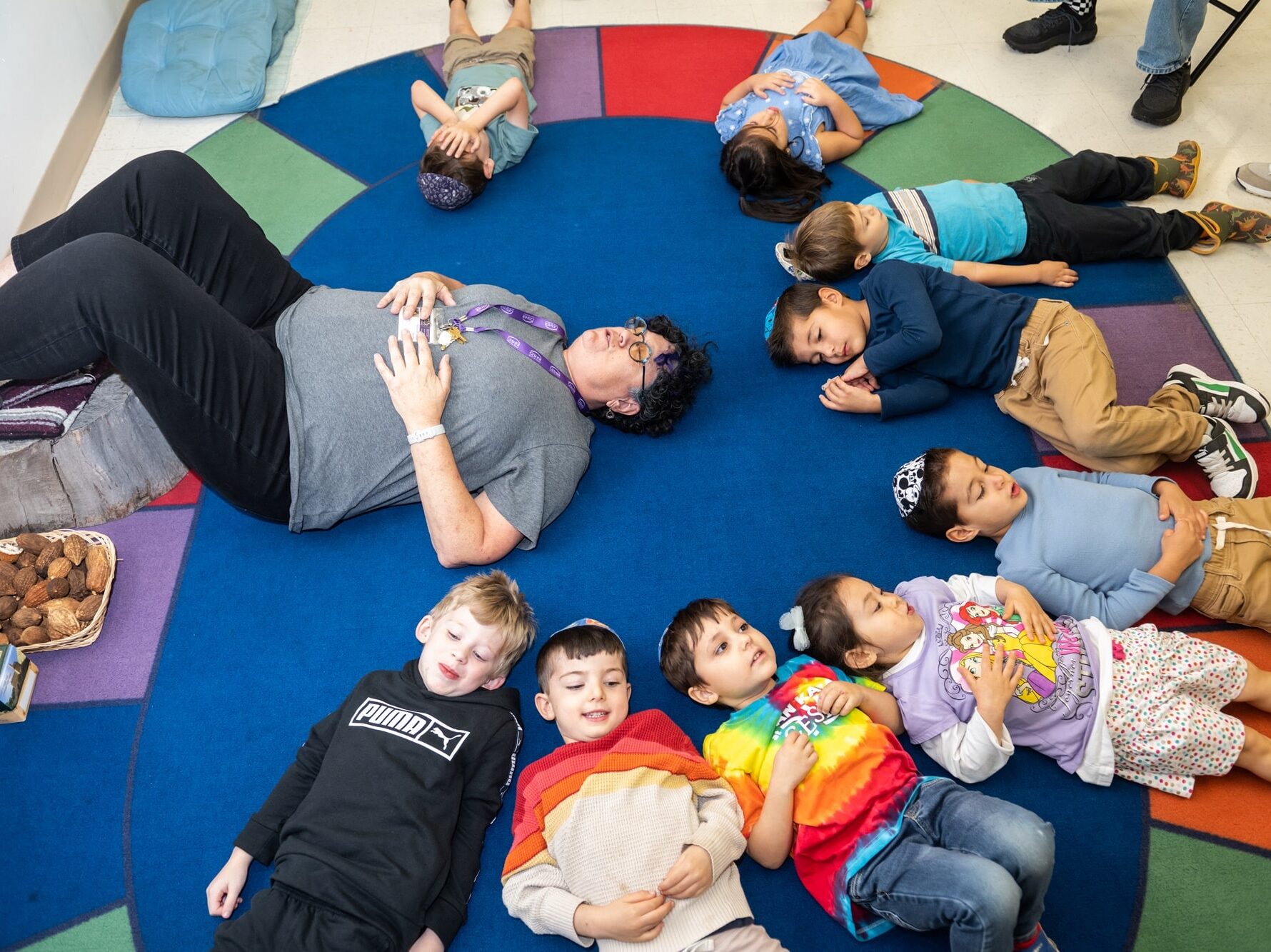
A group of children laying on a rug on the floor in a circle with teacher.

Strengthening Vibrant Jewish Life in NoVA

As one of the fastest-growing Jewish communities in Greater Washington, Northern Virginia is home to individuals and families at every stage of life. We partner across the region to strengthen community infrastructure, deepen connections, and expand access to services that support vibrant Jewish life.

Learn more

Related posts

Find Your People with JLive Find Your People with JLive
Find Your People with JLive
Jewish life is thriving across Northern Virginia, but finding it can be challenging. Through a new partnership between the Jewish Federation of Greater Washington and the Pozez JCC, JLive will make it easier to discover events, programs, volunteer opportunities, and meaningful community connections.
read more

Bringing Israel Closer to Home

Bringing Israel Closer to Home

How Hands-On Israel builds personal connection through people, culture, and conversation

Across Greater Washington, Israeli shlichim (emissaries) are part of everyday Jewish life—showing up in synagogues, schools, JCCs, and community spaces. They share stories, lead conversations, and build relationships that help make Israel feel present and personal.

Hands-On Israel (HOI) is one of the primary ways this connection happens. Led by Federation’s community shlichim who live and work in Greater Washington, HOI offers interactive workshops grounded in conversation and personal experience.

Creating Space for Real Conversation

Hands-On Israel creates space for people to engage with Israel through lived experience and open dialogue. Workshops focus on story, discussion, and shared reflection—helping participants connect in ways that feel grounded, human, and approachable.

Designed for Different Starting Points

HOI is built with the understanding that people come with different levels of familiarity, curiosity, and questions about Israel. Sessions are designed with that in mind, offering context and conversation without assuming prior knowledge or a shared point of view.

Reaching Communities Across the Region

Workshops take place across Washington, DC, Maryland, and Northern Virginia, in partnership with synagogues, schools, JCCs, and community organizations.

Last year, the shlichim hosted 20+ Hands-On Israel workshops across Greater Washington. In the past five months alone, HOI has engaged approximately 150 participants through six workshops, with six additional sessions already scheduled. Several organizations that hosted workshops last year have invited HOI back to experience new offerings, and across settings, participants have asked for sessions to continue.

“After each of the classes, I received requests from our adult learners to please bring them back! Both Maya’s and Tamar’s presentations were thoughtful, engaging, exciting, interactive, and checked all of the boxes.”

A Steady, Long-Term Approach

Hands-On Israel reflects how we approach Israel engagement in Greater Washington: through relationships, conversation, and ongoing connection over time.
This work is part of The Jewish Federation of Greater Washington’s long-term commitment to building meaningful, people-centered connections to Israel across our community.

Learn More About Hands-On Israel

Interested in bringing a Hands-On Israel workshop? Sessions can be tailored to different audiences, ages, and interests, with themes ranging from Israeli culture and identity to facilitated conversation and pre-Israel trip preparation.

Explore workshops

Related posts

Find Your People with JLive Find Your People with JLive
Find Your People with JLive
Jewish life is thriving across Northern Virginia, but finding it can be challenging. Through a new partnership between the Jewish Federation of Greater Washington and the Pozez JCC, JLive will make it easier to discover events, programs, volunteer opportunities, and meaningful community connections.
read more