Need support? Call 703-J-CARING (703-522-7464)

Listening With Open Curiosity

Listening With Open Curiosity

What the Community Leadership Council Is Building Next

In a time when conversations often feel like battlegrounds, The Jewish Federation of Greater Washington is charting a different course: creating space for humility, respect, and the quiet power of listening.

The Community Leadership Council (CLC)—a group of 100+ community builders from across Greater Washington—is at the heart of that shift. And now they’re launching a bold Listening Campaign. The goal? Not to agree on everything. But to understand each other more fully and build real trust, even when we don’t land in the same place.

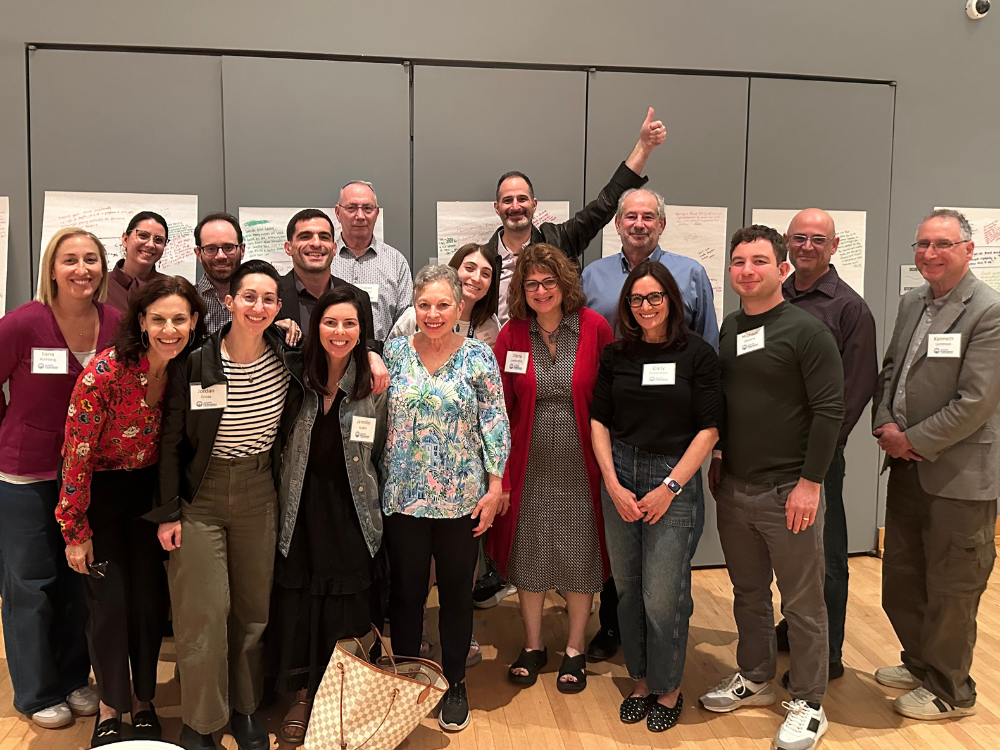
Who’s in the room

The CLC isn’t just another leadership committee. It’s part of a new model for how Jewish Greater Washington shows up, listens in, and makes decisions together.

Its members span more than 100 organizations: synagogues, schools, service agencies, and grassroots groups. They come from different generations, professions, political beliefs, and religious identities. Some are longtime Federation partners, others are new to this work.

They were brought together to reflect a broader range of voices. And now, they’re listening—with purpose and intention—not just as individuals, but as a new kind of leadership collective committed to understanding and learning together.

By design, CLC members wear two hats: the “community member” hat, representing their own lived experiences, and the “community leader” hat, bringing in and analyzing the voices of an even wider circle. The goal? To surface critical issues and insights that Federation and other organizations can address in the years ahead.

Listening is harder than it sounds

Most of us think we’re pretty good listeners. We nod, we wait our turn, we make eye contact. But real listening—the kind that helps people feel heard and seen—is a lot trickier than it looks.

And when the topic touches on deeply held values—identity, politics, Israel—it’s even harder to stay open. But that’s exactly when it matters most.

That kind of listening takes more than good intentions. It’s a skill, one that can be practiced, honed, and strengthened over time.

Practicing the hard stuff

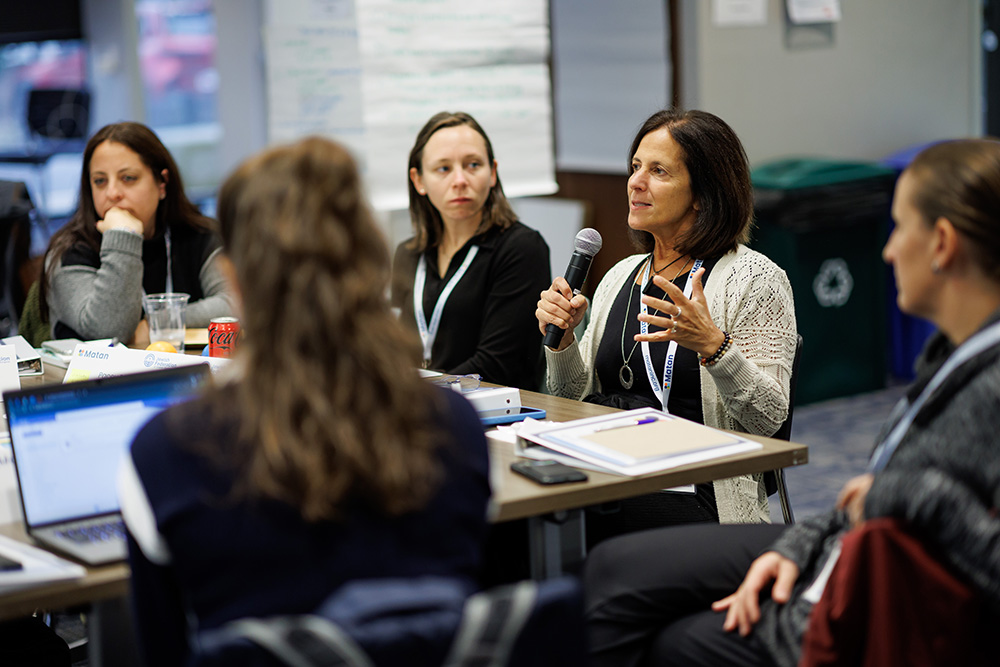
That’s what CLC members set out to do this fall by joining workshops with two organizations that specialize in the art of tough conversations: Resetting the Table and For the Sake of Argument.

These weren’t lectures—they were labs.

  • Resetting the Table’s Speaking Across Conflict training focused on real tools for navigating charged conversations, especially around Israel and the current political climate in the U.S.
  • For the Sake of Argument used a curriculum built on stories designed to provoke disagreement—on issues central to Israel and Jewish life—then helped participants stay curious, reflective, and in relationship.

For many, the most eye-opening lesson wasn’t just how to listen. It was realizing how much difference exists even among people who think they’re aligned.

When it gets real

“One of the most surprising takeaways was how much difference there is even among people who think they’re on the same page,” said one participant. “It reminded me how important it is to keep asking, not assuming.”

Another brought the experience home. At a recent Shabbat dinner, when the conversation got tense, she didn’t change the subject or shut it down. She stayed curious. She listened. And the conversation stayed open.

As Lisa Silver-Kopit put it: “In such a charged moment, it’s a relief to have tools that help us talk and listen with respect. These skills don’t make disagreement go away, but they make it possible to stay in relationship even when we see things differently.”

What’s next and how you can be part of it

Between now and the end of February, the CLC is hosting listening gatherings across Greater Washington.

These aren’t forums or focus groups. They’re small, meaningful conversations about what matters to you. What’s working. What’s missing. What makes you feel connected—or left out. What kind of Jewish community you want to build next.

And the insights shared won’t disappear into a spreadsheet. They’ll directly inform how Federation—and our entire ecosystem of Jewish life—moves forward.

Want in? Interested in joining a listening group or bringing a few people together to host your own? Let us know!

We’re building something new together. A more open, connected, and resilient Jewish Greater Washington. That can’t happen from the top down or from behind a podium.

It starts with listening. And it starts with you.

As Marla Schulman, Chair of the 2025-2026 Inaugural Community Leadership Council put it:

“This campaign is about discovering the community we all want to build together. When we really listen to each other, we learn that we don’t have to agree on everything to care about each other. And we find the common ground to move us forward. That’s where real connection begins.”
Related posts

Living the Lower School — CESJDS JK-5 Open House

Come learn more about the Lower School experiences at the Charles E. Smith Jewish Day School. This is an opportunity to see the joyous Jewish community that is being nurtured at CESJDS for our students in Junior Kindergarten through 5th Grade. You will have the chance to experience a meaningful community gathering for Whole School Kabbalat Shabbat, hear from current parents, visit engaging classes taught by our dynamic educators, learn about leadership from our 5th graders, and have the chance to ask questions with Head of School, Rabbi Mitchel Malkus.

What Gives You Hope?

Some may find this surprising, but Yom Kippur is the Jewish holiday that leaves me feeling the most hopeful. I think it’s that the process of reflection and atonement always seems to end on a high note. I don’t know anyone who doesn’t close out Yom Kippur vowing to do more to live up to their values. That we conclude this solemn beat in the Jewish calendar eager to be more present, more loving, and more patient is incredibly moving.

This year, I’m getting a jump on things because I’m already in a hopeful mood. I say this even as our community, and our country, continue to grapple with significant challenges. Lately, I have been thinking about how tempting it’s become to give into division. We think differently about Jewish identity, Israel, partisan politics, philanthropic priorities, and so much more. And the siren call to reject the people who disagree with us has been growing louder.

But here’s where that hope comes in: I believe that as a Jewish community we can handle almost any issue that arises. We have repeatedly proven this capacity over millennia. That’s what makes Yom Kippur—and Jewish tradition more broadly—so compelling. We are called not only to take responsibility for our individual actions and inactions but also those of our community and the Jewish people. We are asked to embrace our collective responsibilities as we work to strengthen the Jewish future and serve as a force for good in the world.

No doubt the coming year will continue to challenge us in ways large and small. We may struggle with significant questions that define what it means to be a vibrant Jewish community. We may even debate core ideas of what it means to be Jewish or live a Jewish life. And throughout these struggles, we may find ourselves lingering in discomfort as we engage with differing perspectives and work together towards shared goals. But even as we do this work, I am confident our wisdom and our bonds will hold. The Jewish people are built for these times. Our community is built for these times. I am more hopeful than ever that we will not only navigate what’s ahead but blaze a trail toward something brighter.

And now, I want to ask: What gives YOU hope? If you have a minute ahead of the holiday, drop me a line and let me know where you see glimmers of good.

Related posts

The Future Is Built on Belonging

The Future Is Built on Belonging

There’s a tendency we have as humans to make our groups exclusive. Sociologists have long observed our inclination to use stricter and stricter criteria to create fewer and fewer insiders. You need only look at social media or partisan politics to confirm the phenomenon is alive and well.

Indeed, in our hyper-polarized world, it’s tempting to put the line between “us” and “them” in bold, especially when it feels like our individual and collective identities are on the line. It’s certainly easier and more comfortable to write people off than engage with them.

But shutting people out has never led to progress. In fact, insisting on lines of division is often the first step toward violence and hate. We don’t yet know the motive behind the assassination of Charlie Kirk, but we know for certain someone chose murder over conversation.

Given an increasingly tense social dynamic, I find myself once again rooting for our community to take a countercultural path. Rather than narrow our boundaries, we can do the unlikely thing and uphold an open tent.

Don’t get me wrong—a tent needs a perimeter. The question of who is “in” and who is “out” is an important one and part of our community’s ongoing discussions. But if we are to achieve our goals and build the vibrant future we seek, then the defining feature of our communal tent must be its open flaps, tied back to welcome people in.

I wrote last week about how there are people in our community who are wrestling with where they stand on Israel and Gaza. There is another layer to this. Because in addition to feeling conflicted, there are also many who feel excluded and that their viewpoints are unwelcome. I have heard this both from people who hold conservative views and from people who hold liberal views. I have heard this from people whose Jewish values lead them to focus primarily if not exclusively on the care and wellbeing of the Jewish people and those whose Jewish values lead them to focus primarily on the broader society. We may differ in our perspectives, but we share a desire to feel like we belong.

Of course, an open tent may be a simple image but maintaining one is complex work. To be a welcoming community is to invite friction. We might accidentally bump into each other, perhaps spill a drink, misunderstand one another because of all the noise. But the messiness is worth it. Because it’s also the path to connection, understanding, imagination, and growth. To borrow a line from Franklin Foer, “American Jews are really good imagineers.” We don’t accept the dynamics of the day. We forge our own path and can serve as a model to the rest of the country of how to resist the urge to exclude and instead recognize one another’s worth.

I know that beliefs in our community run deep—I love this about us. I hope everyone feels comfortable sharing their thoughts, questions, and quandaries. I also hope that as we look to 5786, we take that extra step and make space for someone who thinks differently about what it means to be Jewish today. After all, the future is not built from consensus. It’s built from belonging and the creativity it inspires.

Related posts