Need support? Call 703-J-CARING (703-522-7464)

Sara Brenner: Helping Us Rethink Jewish Giving

Sara Brenner: Helping Us Rethink Jewish Giving

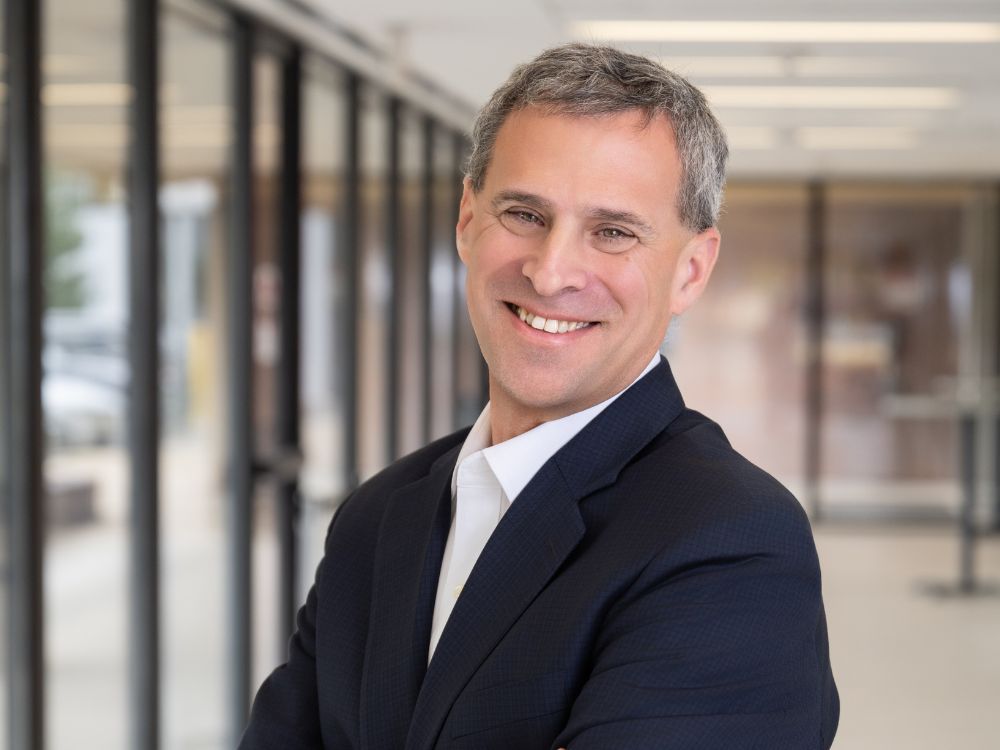
As Executive Director of the Jewish Community Foundation of Greater Washington, Sara Brenner is building a culture of giving that’s collective, values-driven, and deeply personal.

“I want this to be a place where people can realize their dreams and connect to their Judaism more deeply,” Sara says. “Our role is to help donors amplify their impact, deepen the connection between their Jewish values and philanthropy, and advance their goals with deeper purpose, in whatever ways feel most meaningful to them.”

A Jewish Journey of Learning and Connection

Sara grew up in a New Jersey town where Jews were few and far between. Her synagogue became her second home. “I started Hebrew school in kindergarten and went through 12th-grade confirmation. I loved it, it was just in my heart and in my soul.”

She was the friend who encouraged others not to drop out and who rallied them back when they left. Though she didn’t attend day school or Jewish summer camp, that community shaped her Jewish identity. A high school trip on March of the Living, and later a year studying abroad in Israel during the assassination of Prime Minister Yitzhak Rabin, deepened her connection.

“I had such a strong will to stay in Israel, even during that time,” she recalls. “It was a very difficult period, but it only strengthened my connection.”

Her lifelong love of Jewish learning led her to minor in Jewish Studies and, later, to weave her Jewish values into her professional life.

Bringing Her Values to Work

Before joining Federation, Sara spent more than 25 years helping communities across the country thrive—strengthening education, housing, workforce, and health systems, while advising philanthropists and community foundations on how to invest for long-term impact.

“I always felt my Judaism showed up in my work,” she explains. “Repairing the world is part of who I am.”

When the Jewish Federation of Greater Washington launched the Jewish Community Foundation, Sara saw a chance to bring her professional expertise home. “I had been helping community foundations across the country shift toward more impact-focused work. This was an opportunity to do that in a community I lived in and loved for more than 20 years.”

A New Model of Jewish Philanthropy

Under Sara’s leadership, the Foundation is creating more accessible, collaborative, and intergenerational ways to give. She is particularly proud of programs that help families explore their philanthropic goals together. “We’re creating opportunities for younger generations to be part of the conversation,” she explains. “People can give together, learn together, and amplify their impact together.”

Today, the Foundation supports several collaborative giving funds focused on shared priorities like Jewish education, disability and inclusion, women’s empowerment, and Jewish talent and leadership. “When we give collectively, we can do so much more,” Sara explains. “It’s how we move from fragmented giving to systemic change.”

For newer or younger donors, she’s made sure there are inclusive ways to participate. “You don’t need $10,000 to get started,” she says. “Kol Yahad, our Next Gen collaborative fund, let’s people give at lower levels and still be part of something powerful.”

Guiding with Compassion After October 7

The events of October 7 reshaped both Sara’s outlook and the Foundation’s role. “Israel became the focus of so much of our work. In the past two years, more than five million dollars went out through donor-advised funds for rebuilding and relief.”

But this moment isn’t just about emergency response.

“After October 7, many people wanted to re-engage (or engage for the first time) in their Judaism,” she says. “I find myself listening more, helping people reconnect to their Jewish identity, and guiding them to make meaning through their giving.”

Sara has also prioritized deepening relationships with allies outside the Jewish community. “Our integration with the broader world, not isolation, is vital,” she says. “I’ve doubled down on those relationships. It’s hard work, but it matters.”

Looking Ahead, Building Together

Nearly three decades after moving to DC, Sara continues to find inspiration in the diversity and vibrancy of Jewish life here. “This is such an incredible community,” she says. “The culture, the learning, the opportunities to connect, and the chance to be part of something that’s making a difference locally, nationally, and globally.”

Through the Jewish Community Foundation, she and her team are helping donors bring greater intention and clarity to their giving. “It’s not about changing what inspires you. It’s about helping you achieve your goals in the most thoughtful, effective way.”

Whether she’s guiding families through legacy giving, launching new collaborative funds, or welcoming first-time donors, Sara is helping build a Jewish future rooted in connection and purpose. “We’re here to help people bring their values to life. That’s how we strengthen our community. That’s how we build the future together.”

Outside the Office

Sara loves being near water, whether she’s swimming laps or vacationing in a place like St. Lucia, Hawaii, or Fiji. A black Russian bagel with light cream cheese and cucumbers is her go-to Sunday morning. Sushi is her favorite. Her mom’s chicken soup, minus the matzo balls, is magic. When she’s back in DC, you might find her at Planet Word, one of her favorite museums for its celebration of culture and language. And when pressed to pick chocolate or vanilla? “Twist,” she laughs. “Always twist.”

Learn more about the Jewish Community Foundation of Greater Washington and explore how your giving can make a lasting impact at jcfgw.org.

Related posts

The Start of Something Meaningful

The Start of Something Meaningful

Three gatherings. One powerful sense of connection.

This past Sunday, living rooms across Greater Washington filled with laughter, stories, and something deeper: a sense of belonging. More than 50 women gathered in DC, Maryland, and Virginia for Women’s Philanthropy Community Gatherings that sparked real conversation, connection, and community.

Many came with their mothers, or talked about them. Stories of Federation through generations echoed across the rooms: memories of parents hosting events, shaping Jewish life, and quietly passing the baton.

Each gathering also featured one of our Community Shlichim, who bringing personal stories, powerful perspective, and a tangible reminder that our connection to Israel is rooted in people, not just headlines.

Each gathering felt different—different homes, conversations, energy—but all left women feeling the same thing: connected.

In Maryland, women came together for an afternoon that felt deeply grounded and generous. One participant shared a personal reflection on recent loss and how this community has held her. The conversation that followed was honest and warm. Another spoke about Jewish identity and teen engagement, sharing insight that felt timely and real.“Very relatable and poignant to the moment we’re in,” one attendee said. “I wouldn’t have changed a thing.”

In Virginia, the tone was joyful and full of small, meaningful moments, including one surprise reconnection between two women who hadn’t seen each other since Jewish day school in North Carolina back in 2005. The event felt like both a reunion and a doorway into something new.

And in DC, the gathering sparked conversations that felt alive with possibility. Women asked thoughtful questions, explored shared values, and reflected on how they want to show up—for themselves, for each other, and for Jewish life.

These weren’t just welcomes. They were starting points for friendship, for purpose, for whatever comes next.

Inspired to get involved? Explore how you can connect, lead, and grow with Women’s Philanthropy here.

Related posts

Together, Rising to the Moment 

Together, Rising to the Moment 

Federation and JCRC Advance Jewish Life in Greater Washington

In a year marked by rising antisemitism, contested narratives in classrooms, and growing pressures on civic spaces, the Jewish Community Relations Council (JCRC) of Greater Washington has been a steady force—speaking up, showing up, and strengthening the public voice of Jewish Greater Washington.

Across DC, Maryland, and Virginia, the JCRC represents more than 100 synagogues, agencies, and organizations. They advocate for a strong U.S.–Israel relationship, protect the safety and rights of Jewish institutions, challenge misinformation in schools, and build meaningful partnerships across faith and civic lines.

As Federation drives long-term investment in Jewish life across Greater Washington, the JCRC leads our community’s advocacy in the public sphere. Together, we’re advancing a shared commitment to safety, resilience, and the values that sustain Jewish life—through distinct roles, and with deeply aligned purpose.

On Wednesday, October 29 at 6:00 PM in Rockville, the JCRC will host its Annual Gala, honoring:

  • Eva Davis (Distinguished Service Award)
  • June and David Trone (Breslau–Goldman Award)
  • Behn Dayanim (Sara and Samuel Lessans Community Leadership Award)

Co-chaired by Eilleen Filler‑Corn and Bambi Kramer, the evening will spotlight leaders who model what it means to act with courage, clarity, and commitment, especially in moments that demand all three.

This is a moment for all of us to show up for the people and partnerships strengthening Jewish life and a chance to recognize the leadership guiding us through challenge and change. We’re honored to stand with the JCRC in this work, and to celebrate the impact we’re making together toward a shared vision of Jewish Greater Washington that is strong, secure, and deeply connected.

Related posts

What Gives You Hope?

Some may find this surprising, but Yom Kippur is the Jewish holiday that leaves me feeling the most hopeful. I think it’s that the process of reflection and atonement always seems to end on a high note. I don’t know anyone who doesn’t close out Yom Kippur vowing to do more to live up to their values. That we conclude this solemn beat in the Jewish calendar eager to be more present, more loving, and more patient is incredibly moving.

This year, I’m getting a jump on things because I’m already in a hopeful mood. I say this even as our community, and our country, continue to grapple with significant challenges. Lately, I have been thinking about how tempting it’s become to give into division. We think differently about Jewish identity, Israel, partisan politics, philanthropic priorities, and so much more. And the siren call to reject the people who disagree with us has been growing louder.

But here’s where that hope comes in: I believe that as a Jewish community we can handle almost any issue that arises. We have repeatedly proven this capacity over millennia. That’s what makes Yom Kippur—and Jewish tradition more broadly—so compelling. We are called not only to take responsibility for our individual actions and inactions but also those of our community and the Jewish people. We are asked to embrace our collective responsibilities as we work to strengthen the Jewish future and serve as a force for good in the world.

No doubt the coming year will continue to challenge us in ways large and small. We may struggle with significant questions that define what it means to be a vibrant Jewish community. We may even debate core ideas of what it means to be Jewish or live a Jewish life. And throughout these struggles, we may find ourselves lingering in discomfort as we engage with differing perspectives and work together towards shared goals. But even as we do this work, I am confident our wisdom and our bonds will hold. The Jewish people are built for these times. Our community is built for these times. I am more hopeful than ever that we will not only navigate what’s ahead but blaze a trail toward something brighter.

And now, I want to ask: What gives YOU hope? If you have a minute ahead of the holiday, drop me a line and let me know where you see glimmers of good.

Related posts

L’Chaim: The Power of Showing Up Together

L’Chaim: The Power of Showing Up Together

When Women’s Philanthropy set out to create a signature gathering for the Lions of Judah community, the goal was simple but ambitious: to build something that felt both celebratory and essential. A space to honor stories. A moment to deepen connections. A tradition worth beginning.

Held at the Four Seasons in Georgetown, this inaugural event on Monday, September 15, brought together more than 150 women for a morning of inspiration, reflection, and connection. More than a brunch, L’Chaim was a powerful reminder of what happens when women gather with intention. When leadership meets legacy. When stories are shared freely, and futures are shaped collectively.

From Welcome to Why

You could feel it immediately. It was a celebration of shared values, lived leadership, and the power of women’s philanthropy to shape our community.

Co-Chairs Yvonne Schlafstein Distenfeld and Irene Sherman set the tone: this wasn’t a day to sit back—it was a day to reflect, to honor, to energize.

Yvonne shared:

“There’s something truly powerful about bringing so many women together in one room—it’s inspiring every time. I’m in awe of the energy, strength, and spirit of being surrounded by such extraordinary women!”

Stories That Moved Us

Two individuals seated and engaged in conversation under purple and blue lighting, with a small table and flower bouquet between them, one holding a paper and the other gesturing. Wendy Sachs, our guest speaker, took the stage with a lens into her world and her work as director and producer of the documentary, October 8, and her view of what it means to be a woman showing up in today’s world. Her stories didn’t just highlight antisemitism, they challenged us to consider how we use our voices, our resources, our courage.

Her message resonated deeply with the room. One Lion said:

“Wendy Sachs was so eloquent and inspiring and I loved hearing her speak. I was impressed how she talked about her audience being a global one (which we certainly need).”

Another Lion added:

“Wasn’t Wendy Sachs amazing? She was just as engaging and interesting as she could be.”

A Story Close to Home

Speaker at a podium with a microphone, presenting in front of purple and gray curtains, with a sign reading "Jewish Federation of Greater Washington." Among the most moving moments of the morning came when Marianna Ashin, Lion of Judah Chair, stood to share her personal journey—from a young refugee arriving in the U.S. to a proud Jewish leader helping others write their own Federation stories.

Marianna spoke of leaving everything behind in 1989; her home, her extended family, and her familiar world in Kyiv. She recalled standing on a train platform with her parents and brother, holding only a pair of suitcases and an unwavering sense of Jewish identity.

“While we may have made a leap of faith by getting on that plane,” she said, “Federation was there to catch us when we landed at JFK.”

The room was quiet as she described how Federation gave her family not just resources, but dignity: language classes, job support, school supplies, summer camp. A kitchen full of groceries. A Jewish home in a new land.

“The Jewish Federation didn’t just help us get by. You helped us imagine what could come next, and gave us the tools to pursue.”

Her story reminded everyone in the room exactly why their giving matters.

“Without Jewish Federation. Without you. I am not here—standing in front of you. Sharing my story.”

The Strength in the Room

What made the morning unforgettable wasn’t just the speakers or the setting; it was the women who filled the room. Each one carrying a legacy of giving, each one committed to community.

“It was fun to connect with old friends and also meet new ones,” said one Lion. “What a spectacular event!”

Another reflected on what made the gathering so meaningful:

“I am so glad I came today! It was a beautiful event, and I learned so much from the stories that the women told.”

A Moment, A Movement

L’Chaim was about the quiet confidence that comes from standing shoulder to shoulder with women who believe in tikkun olam, repairing the world, and who act on that belief every day.

“This event was a huge success,” one Lion shared. “It has all the markings of a program to have every year before the holidays.”

Thank You

20250915_LionofJudahBrunch_4 To all who joined us, thank you. Your stories enriched the fabric of our community. And your leadership, quiet or bold, helps move Jewish Greater Washington forward.

We are grateful to our host committee, our Women’s Philanthropy leaders, our Co-Chairs, and all who brought their time, energy, and commitment to this celebration.

If you’d like to learn more about the Lions of Judah giving society, please contact Becca Ginns at becca.ginns@www.shalomdc.org or (301) 230-7236.

Related posts

A Morning of Leadership and Connection in Northern Virginia

A Morning of Leadership and Connection in Northern Virginia

What began as a bold idea—to bring together leaders from across Northern Virginia’s vast Jewish landscape for a morning of connection and shared purpose—came to life on Sunday, September 7.

Hosted by The Jewish Federation of Greater Washington at Gesher Jewish Day School in Fairfax, the Northern Virginia Leadership Breakfast welcomed nearly 40 lay and professional leaders from synagogues and partner agencies across the region. Over coffee and conversation, participants built new relationships, deepened existing ones, and explored what it takes to lead effectively in a rapidly evolving and increasingly interconnected Jewish community.

At the center of the morning was a dynamic workshop led by Miriam Stein, Founder and Chief Strategist at Saddlerock Strategies, designed to strengthen relationships and build greater cohesion among our boards. With thanks to longtime leaders from across Northern Virginia who facilitated at each table, the sessions sparked candid, peer-led conversations about how to apply these insights to strengthen boards, build trust, and lead with intention.

“We’re spread out across the region, and it’s easy to feel like we’re working in silos,” said Ilana Rothberg, a member of the Board of Trustees at Gesher Jewish Day School. “Coming together helps us get to know one another, share ideas, support each other, and remember that we’re all working toward the same goal: a vibrant Northern Virginia Jewish community.”

Northern Virginia is the fastest-growing Jewish community in the Greater Washington area—and Federation is committed to helping it thrive. Through targeted investments, leadership development, and community-building initiatives like this one, Federation is working alongside partners to ensure the region’s Jewish institutions and leaders are prepared to meet current needs and shape a strong Jewish future.

“This is a growing and flourishing region,” said Ari Brickman, Federation’s Senior Director of Community Change Initiatives. “We want to ensure that Northern Virginia has the strongest leaders and the strongest institutions—and that we’re true partners in that work.”

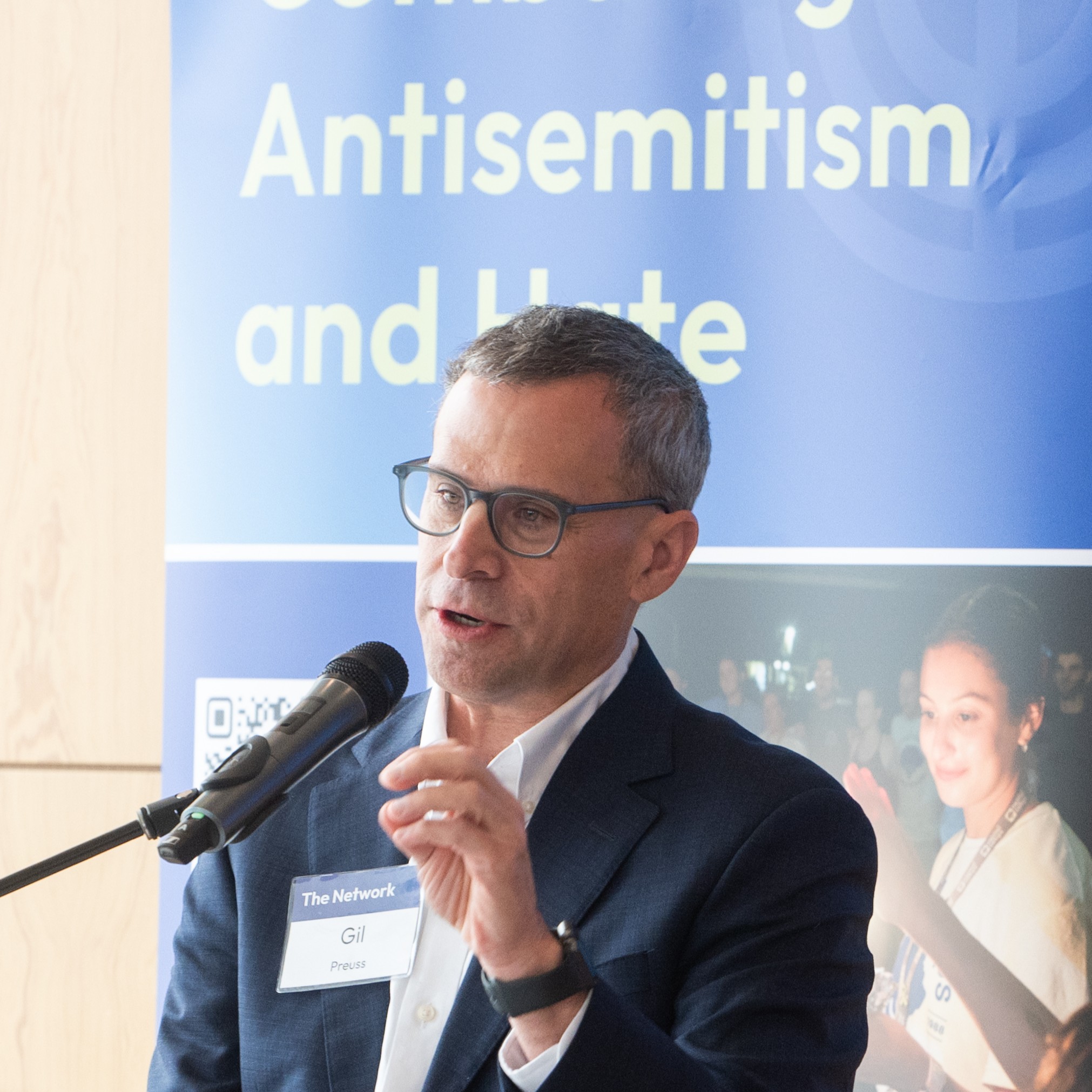
Federation CEO Gil Preuss echoed that commitment: “We see this as a beginning. The strength of a Jewish community is really dependent on the strength of its leadership. What began as an idea is now a foundation we can grow from—together.”

More than a leadership breakfast, this was a clear step toward something bigger: a more connected, empowered, and vibrant Jewish community in Northern Virginia.

Related posts

The Future Is Built on Belonging

The Future Is Built on Belonging

There’s a tendency we have as humans to make our groups exclusive. Sociologists have long observed our inclination to use stricter and stricter criteria to create fewer and fewer insiders. You need only look at social media or partisan politics to confirm the phenomenon is alive and well.

Indeed, in our hyper-polarized world, it’s tempting to put the line between “us” and “them” in bold, especially when it feels like our individual and collective identities are on the line. It’s certainly easier and more comfortable to write people off than engage with them.

But shutting people out has never led to progress. In fact, insisting on lines of division is often the first step toward violence and hate. We don’t yet know the motive behind the assassination of Charlie Kirk, but we know for certain someone chose murder over conversation.

Given an increasingly tense social dynamic, I find myself once again rooting for our community to take a countercultural path. Rather than narrow our boundaries, we can do the unlikely thing and uphold an open tent.

Don’t get me wrong—a tent needs a perimeter. The question of who is “in” and who is “out” is an important one and part of our community’s ongoing discussions. But if we are to achieve our goals and build the vibrant future we seek, then the defining feature of our communal tent must be its open flaps, tied back to welcome people in.

I wrote last week about how there are people in our community who are wrestling with where they stand on Israel and Gaza. There is another layer to this. Because in addition to feeling conflicted, there are also many who feel excluded and that their viewpoints are unwelcome. I have heard this both from people who hold conservative views and from people who hold liberal views. I have heard this from people whose Jewish values lead them to focus primarily if not exclusively on the care and wellbeing of the Jewish people and those whose Jewish values lead them to focus primarily on the broader society. We may differ in our perspectives, but we share a desire to feel like we belong.

Of course, an open tent may be a simple image but maintaining one is complex work. To be a welcoming community is to invite friction. We might accidentally bump into each other, perhaps spill a drink, misunderstand one another because of all the noise. But the messiness is worth it. Because it’s also the path to connection, understanding, imagination, and growth. To borrow a line from Franklin Foer, “American Jews are really good imagineers.” We don’t accept the dynamics of the day. We forge our own path and can serve as a model to the rest of the country of how to resist the urge to exclude and instead recognize one another’s worth.

I know that beliefs in our community run deep—I love this about us. I hope everyone feels comfortable sharing their thoughts, questions, and quandaries. I also hope that as we look to 5786, we take that extra step and make space for someone who thinks differently about what it means to be Jewish today. After all, the future is not built from consensus. It’s built from belonging and the creativity it inspires.

Related posts

Making Space for Ourselves

Making Space for Ourselves

Over the past several weeks, I’ve spoken with donors, volunteer leaders, Federation staff, and colleagues across Jewish organizations, all seeking to understand how to make sense of this moment of division and conflict.

Each one of us can name the many divisions that exist within our country, our community, the Jewish people, and often within our own families. What struck me most, however, in my many conversations, were the fractures and struggles that exist within each one of us. Some feel uneasy about how national leaders address antisemitism on college campuses yet relieved the issue is finally receiving attention. They are grappling with the rise of antisemitism and anti-Israel sentiment and with the complexity of how best to respond.

Most commonly, however, the conversation evolves to questions about Israel, Hamas, Gaza, Palestinians, and the hostages. Many people deeply believe in the need for Israel to eliminate the threat posed by Hamas and to ensure the horrors of October 7 never happen again. They see the war as an existential one to Israel’s survival and by extension of the future of the Jewish people. For many, Israel is a cornerstone of Jewish identity and safety. Our fear is not only what happens on the ground, but also about what it means for Jewish life, security, and solidarity around the world.

And, at the same time, many of these same people are deeply struggling with what they read every day about the number of lives lost, the level of hunger that may exist in Gaza and a war with no end in sight, and the devastating possibility that the hostages will not return home. One person stated that they felt ashamed, both by the actions of the Israeli government and by the part of themselves that believes these actions may be necessary to ensure a safe and secure Jewish future. That tension stayed with me. For many, this moment is not about certainty, but about navigating conflicting truths: fearing what inaction might invite, while grieving what action demands.

Another person shared that they’ve been waiting, hoping that Israel’s actions might eventually bring about something redemptive. That we would be able to say, “This is why,” and find some clarity or affirmation in the face of so much pain and that the broader world would finally understand. But that moment hasn’t come. And for some, it’s beginning to feel like it may not. What once felt like hopeful anticipation has become another layer of grief and shame.

One of our greatest challenges, both in conversation and as a community, is resisting the impulse to expect ourselves or others to have clarity when there is none. These are morally complex times. The struggle many are experiencing is about identity. What does it mean to be Jewish, to live our values, when we are confronted with human suffering, fear, a longing for justice, and a sense of abandonment?

As the Jewish Federation, we strive to be both clear in our values and aspirations for a vibrant Jewish community while creating space for honest conversation that does not demand clarity or agreement. By recognizing that those with whom we are speaking may also be struggling within themselves, we can begin to soften the divides that exist between us and stay in relationship through the uncertainty and discomfort.

As we move forward, I continue to believe in the power of this community to show up for one another, hold space for complexity, and lead with compassion. Our perspectives may differ, but the emotions we carry can still connect us. In a moment that could pull us apart, our shared experience can hold us together.

Thank you for your partnership, your courage, and your commitment.

Related posts

From Intention to Action: What the Foundation Makes Possible

From Intention to Action: What the Foundation Makes Possible

This month, we’ve been spotlighting legacy giving through stories like Marilyn & Ira Polon’s commitment to Jewish continuity and Natalia’s work guiding individuals and families as they imagine how their values can live on for generations. These aren’t just stories of gifts. They are stories of promises: that Jewish life will remain strong long after we’re gone.

But those commitments don’t just sit in a vault—they take shape through The Jewish Community Foundation of The Jewish Federation of Greater Washington. The Foundation is Federation’s philanthropic arm, providing the expertise, heart, and reach that allow donors to bring their visions for positive change to life—intentionally, personally, responsibly, and with lasting impact. Through the Foundation, donors give Jewishly, practice effective philanthropy, and work together to build a more connected, inclusive, and enduring future.

And legacy is just one part of the story.

Endowments: Building a Thriving Community for Generations

Some donors want their commitments to last beyond their lifetime. Through the Foundation, those commitments become endowments—long-term funds that not only preserve their gift but also actively strengthen the health of our community. Endowments help create the conditions for a community that is safe and deeply connected, proud of its identity and heritage, grounded in Jewish meaning, and committed to building a better world for the future.

Donor-Advised Funds (DAFs): Flexible and Meaningful Giving

A donor-advised fund at the Foundation gives donors the freedom to do all their giving in one place—flexible, tax-smart, and handled with care and transparency. With a DAF, you can support Jewish education, urgent relief in Israel, your local JCC, your synagogue, a hospital, an arts program—or all of them. With the convenience and flexibility to give across causes and communities, whenever and however you choose, it’s giving made simple, while keeping your values at the center.

Collaborative Funds: Creating Opportunities, Changing Conditions

And sometimes, a donor feels compelled to act on a cause so personal it can’t be carried alone: mental health, women and girls, Jewish learning, community security. Collaborative funds are created when donors with shared commitments come together through the Foundation. These funds don’t just respond to problems; they create opportunities to strengthen Jewish life in unique ways, while also tackling some of the most complex challenges our community faces. By pooling vision and resources through the Foundation, donors can change the conditions that shape our future and open the door to a more vibrant, resilient community. Each fund is driven by donors’ deeply personal intentions and made stronger through the power of collective action.

What Sets the Foundation Apart

What makes the Foundation unique is that every gift is both personal and communal. Because it is part of The Jewish Federation of Greater Washington—an institution trusted for generations—donors know their giving is grounded is anchored in Jewish values and connected to something larger. Unlike other financial institutions, fees at the Foundation support Jewish programming at the Foundation and Federation that strengthens the fabric of Jewish life locally, nationally, and globally. Donors also gain access to philanthropic learning, expert advisement, and the ability to make their giving visibly Jewish, even when supporting a secular nonprofit. Together, donors experience philanthropy that is both effective and deeply meaningful.

What Every Gift Has in Common

Whether through an endowment, a DAF, or a collaborative fund, every gift at the Foundation begins with a donor’s intention. Federation helps inspire these commitments. The Foundation ensures they are honored with care—and, grounded in an institution donors know and trust, they are brought to life in the most impactful, personal, and deeply Jewish way possible.

Related posts

Discovering What Motivates Us

Discovering What Motivates Us

Behind every connection to Federation is a story—a reason why.

In a recent conversation with my team, I asked a simple question: What motivates you?

The answers were honest and deeply personal. Some spoke about the impact of loss—like a family member killed on 9/11 or a battle with cancer. Others shared the grounding role of friendship, family, or the meaning they find in being a parent. For me, it was my own childhood diagnosis with type 1 diabetes—an experience that continues to shape how I approach challenges, relationships, and my commitment to community.

What struck us most was not just the variety of answers, but the openness with which they were shared. The conversation reminded us that motivation is rarely abstract. It’s lived. It’s personal. And it’s often tied to experiences that stay with us.

That same truth guides how we engage with our community. Just as each of us is motivated by different life experiences, so too are the individuals and families who give so generously to Federation. Some of you may be driven by urgent needs. Others by legacy. Still others by the vision of a vibrant Jewish future.

We can only discover these motivations if we take the time to ask—and then to listen.

I hope we hold fast to what’s at the core of this work—the work of strengthening our Jewish future: connecting with one another, honoring each person’s why, and building a stronger Jewish community—together.

So, we’ll leave you with the same question we asked ourselves:

What motivates you?

Related posts