Need support? Call 703-J-CARING (703-522-7464)

From the USSR to American Campuses: The Roots of Today’s Antizionist Discourse

From the USSR to American Campuses: The Roots of Today’s Antizionist Discourse
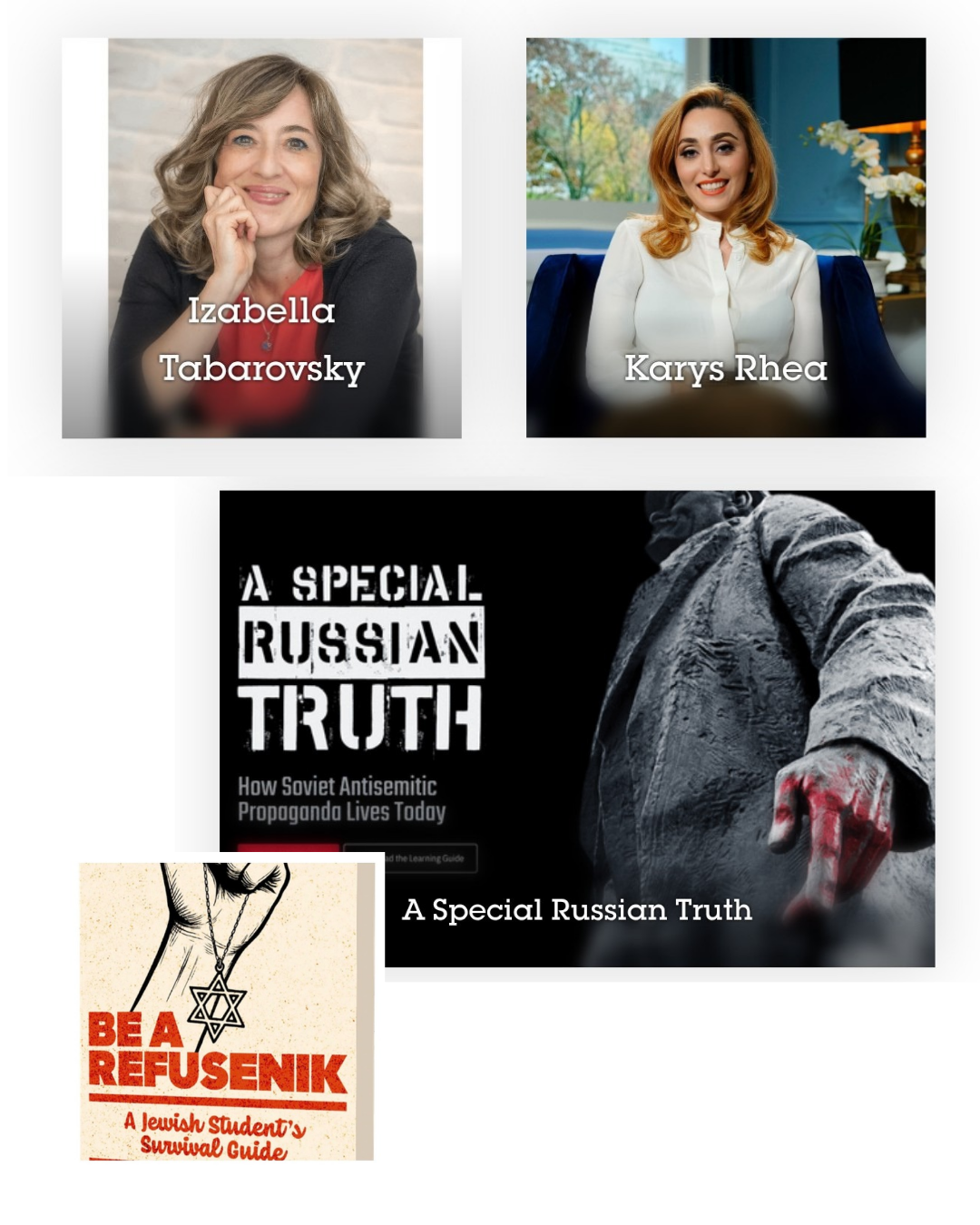
Join us for an eye-opening program exploring how Soviet antizionist ideas continue to shape the language and dynamics of anti-Israel discourse today. The evening will begin with a short documentary, A Special Russian Truth, which traces the origins of today’s anti-Israel rhetoric to a decades-long Soviet campaign of antisemitic propaganda developed by the KGB and disseminated worldwide.

Building Jewish Community Across Northern Virginia

Building Jewish Community Across Northern Virginia

Meet Jordyn Barry!

At a cozy coffee shop near George Mason University, Jordyn Barry spends much of her day meeting Jewish students and others in their college age and stage—one latte, one story, one connection at a time.

As a new member of the George Mason Hillel team, Jordyn is helping expand Jewish community well beyond campus, ensuring Jewish students and young adults across Northern Virginia feel seen, supported, and connected.

“My favorite part of my job right now is sitting at a coffee shop and meeting three people in a row for coffee,” she says. “Just having different conversations, asking, ‘Tell me about yourself. What are you looking for?’ And if we can’t find it, let’s create it.”

Finding Jewish Life in Northern Virginia

Jordyn first came to the region in 2018 to work at the Pozez JCC of Northern Virginia. When the pandemic shifted everything, she leaned even more deeply into the community, working with teens at Temple Rodef Shalom and discovering what makes Jewish life in this area so special.

“It is so diverse and so spread out, and you can find your own place within it,” she explains. “There are all these little pockets of Jewish life, each a little different and unique.”

After time spent travelling, working at Jewish summer camp, reconnecting with family, and joining a JDC trip to Poland, Jordyn realized she belonged right back in Fairfax County.

“It truly showed that my calling is to be here,” she says. “I missed where I was.”

Now, she’s leading a new Hillel initiative that supports Jewish graduate students, law students, and those in their college age and stage studying at Northern Virginia Community College and beyond—creating Jewish spaces that meet people where they are.

“We understand not everyone is coming to campus on Friday nights,” she says. “We are creating community where they are, in ways that work for them.”

A Jewish Journey Rooted in Family and Curiosity

Jordyn’s passion for Jewish community comes from her family and a deep love of learning. Her father converted before she was born, and her parents emphasized “choice through knowledge,” encouraging both children to explore their heritage.

A family trip to Israel for her brother’s bar mitzvah helped everything click. “Everything I learned in religious school became real,” she says. Later, studying abroad and living on a kibbutz deepened her connection to Jewish history and daily life.

She went on to study religion and history at Muhlenberg College and earned a master’s in Jewish-Christian Relations from Seton Hall University.

“My grandfather is a Holocaust survivor,” she shares. “Creating Jewish community feels so important. I love doing it as my job and for myself.”

Creating Space—and Finding Her Own

Even after seven years in the region, Jordyn says she is still discovering what “Jewish home” means to her.

“I find my Jewish experience in different places,” she says. “Sometimes it is Shabbat with friends I met through the JCC, or just taking a moment outside on a Friday night after working at Hillel. There are options. Some of them I do not even know exist yet, and I work in this world.”

That sense of openness and curiosity drives her work, helping others explore what Jewish life can look like for them.

Outside the Coffee Shop

When she is not building community, you’ll likely find Jordyn exploring local trails with her dog or discovering the best new latte in town.

Her coffee order changes by café: a turmeric chai at Northside Social, or a date oat milk latte at Tatte.

Her bagel order is delightfully bold and a bit controversial: a cinnamon-raisin bagel with tuna and tomato or scallion cream cheese. “I get made fun of for it,” she laughs, “but there is something about the sweet and salty that I love.”

She’s loyal to coffee ice cream (with plenty of mix-ins), root for the Mets, and feels most at home near a lake in the mountains. Istanbul tops her list of favorite travels, with Thailand next on her bucket list.

Jordyn’s story is just one part of a growing, vibrant Jewish Northern Virginia.
Learn more

Related posts

Holding on to Who We Are

Holding on to Who We Are

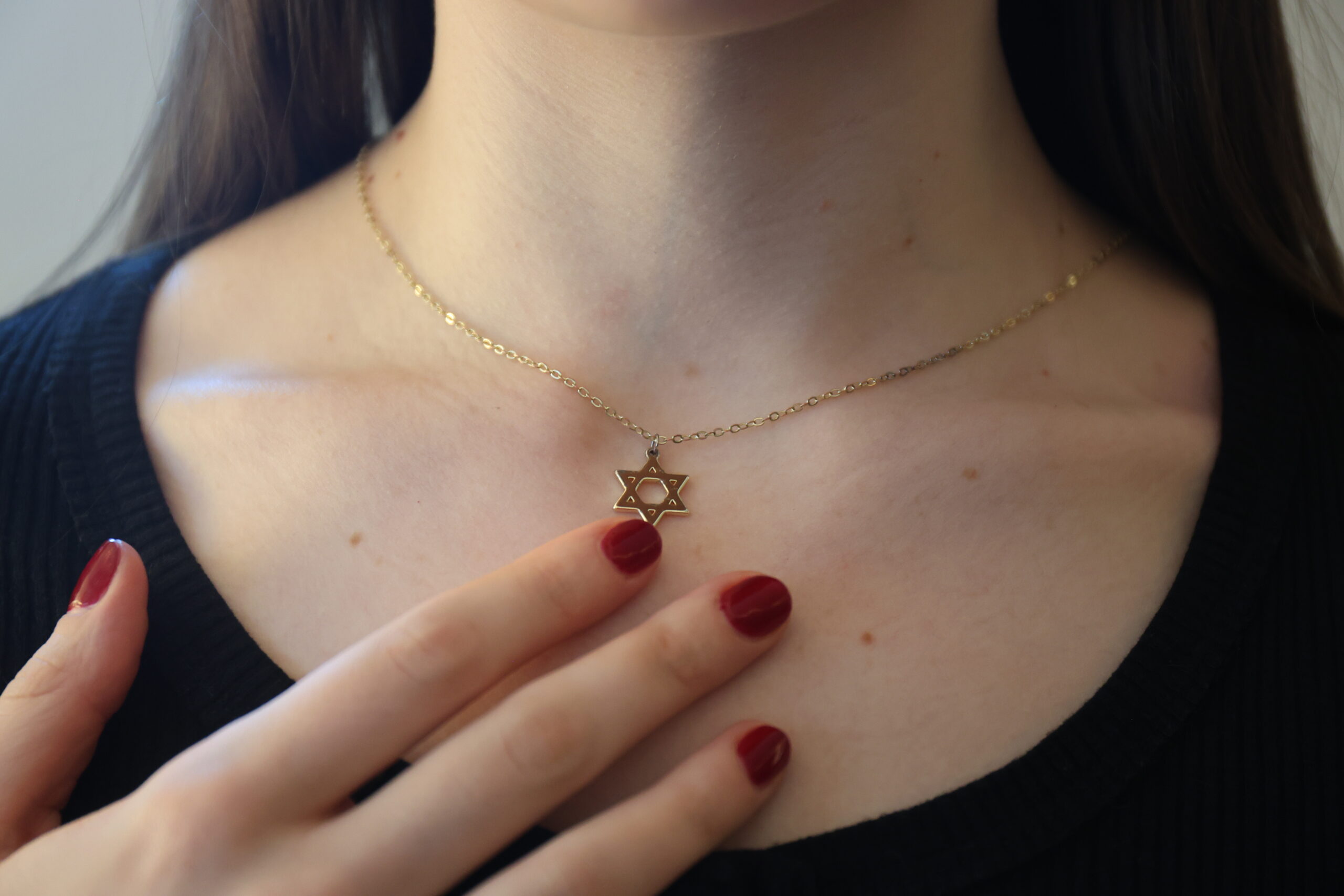
I am not exactly sure what got me started, but I’ve been working my way through a self-assigned reading list on antisemitism. I started with Anti-Judaism: The Western Tradition by David Nirenberg (a bit dense for extracurricular reading). Next up was People Love Dead Jews: Reports from a Haunted Present by Dara Horn (wonderfully written and thought provoking). And now I’m onto the newest publication, Antisemitism, an American Tradition by Pamela Nadell, a history professor at AU.

I am still wrapping my mind around the takeaways, but thus far I’ve been struck by a chapter from Horn’s work. She points out the story we all hear about Ellis Island registrars intentionally or inadvertently adjusting the names of Jewish immigrants as they made their way through a harried intake process is, in fact, a Jewish myth.

The truth, Horn explains, is that Jewish immigrants made deliberate choices to Americanize their own names soon after their arrival to avoid discrimination and improve their job prospects—an urgent consideration in turn-of-the-century America. Jewish immigrants needed to make a new life for themselves and their families, and they knew the better they were at publicly masking their Judaism, the easier it would be.

Thus began a delicate American Jewish tradition of maintaining our Jewish identities while doing what we could to fit in. Up until now, I thought this dance was a thing of the past. Obscuring names and associations and forgoing outward expressions of Jewish faith seemed to me like the stuff of history books. After all, I’ve grown up during an era of American Jewish flourishing. That we might be back here, putting a baseball cap over our kippahs or quietly removing Jewish indicators on our LinkedIn has caught me by surprise.

In 2023, Hillel found that 1 in 3 Jewish college students hid their identity after October 7. And last week, the Washington Post published results from a September poll that found in the past year, 42% of Jewish Americans avoided publicly wearing, carrying, or displaying anything that might help people identify them as Jewish. Discouragingly, younger Jews were more likely to say they avoided displaying Jewish symbols—53% of those under age 35—than older groups.

After my deep dive into antisemitism’s history, I have a much greater understanding of how deeply embedded antisemitism is in our societies, and therefore how hard it can be for a community to try and fit in and fight antisemitism simultaneously. Embracing and relishing our Jewish identity and being sober minded about the state of antisemitism in America, and indeed the world, all feel like nonnegotiables.

That’s why I’m resolved that we must not cede either goal. We can double down on our work to strengthen our Jewish identities even as we make real-world adjustments to account for our safety. Hate may force us to make compromises or short-term sacrifices, but it must not define who we are or diminish our commitment to Jewish life. We owe it to generations past and future to continue fighting antisemitism and the hatred that would see us limit our Jewish expression. The current growth in hate cannot continue. Confronting it must be a central priority for our Jewish community.

Related posts

Finding Light in Poland: A Journey of Remembrance and Renewal

Finding Light in Poland: A Journey of Remembrance and Renewal

It’s hard to describe the emotional whiplash of the past few months. We’ve witnessed horrifying acts of antisemitic violence both here at home—including the attacks in Boulder and at the Capital Jewish Museum—and abroad. The fear and pain reverberating through our community are real and raw.

I’ve found myself thinking often of Sara Milgrim z”l  and Yaron Lischinsky  z”l , and all those still recovering from the Boulder firebombing. May their memories be a blessing.

Just days before the D.C. shooting, I returned from a week-long journey to Poland organized by our partner, the American Joint Distribution Committee (JDC), and 3GNY. The trip brought together third-generation descendants of Holocaust survivors and others with a familial lineage to Poland and the Holocaust, to connect with Jewish life today in Poland.

My great-grandparents were born and raised in Poland. They fled in the late 1920s and early 1930s to escape pogroms, antisemitism, and poverty, eventually landing in Cuba. They left behind their parents, siblings, and entire communities, most of whom perished in the Holocaust.

Our group visited Kraków, Warsaw, and Łódź. We walked through ghettos and cemeteries, and we spent a powerful, heart-wrenching day at Auschwitz. We listened to one another’s family stories—tales of survival and resistance, loss and love. It was heavy. And yet, it was also deeply connective.

Amid the grief, we encountered something remarkable: life. Resilience. A Jewish community in Poland that, while small, is vibrant, proud, and growing.

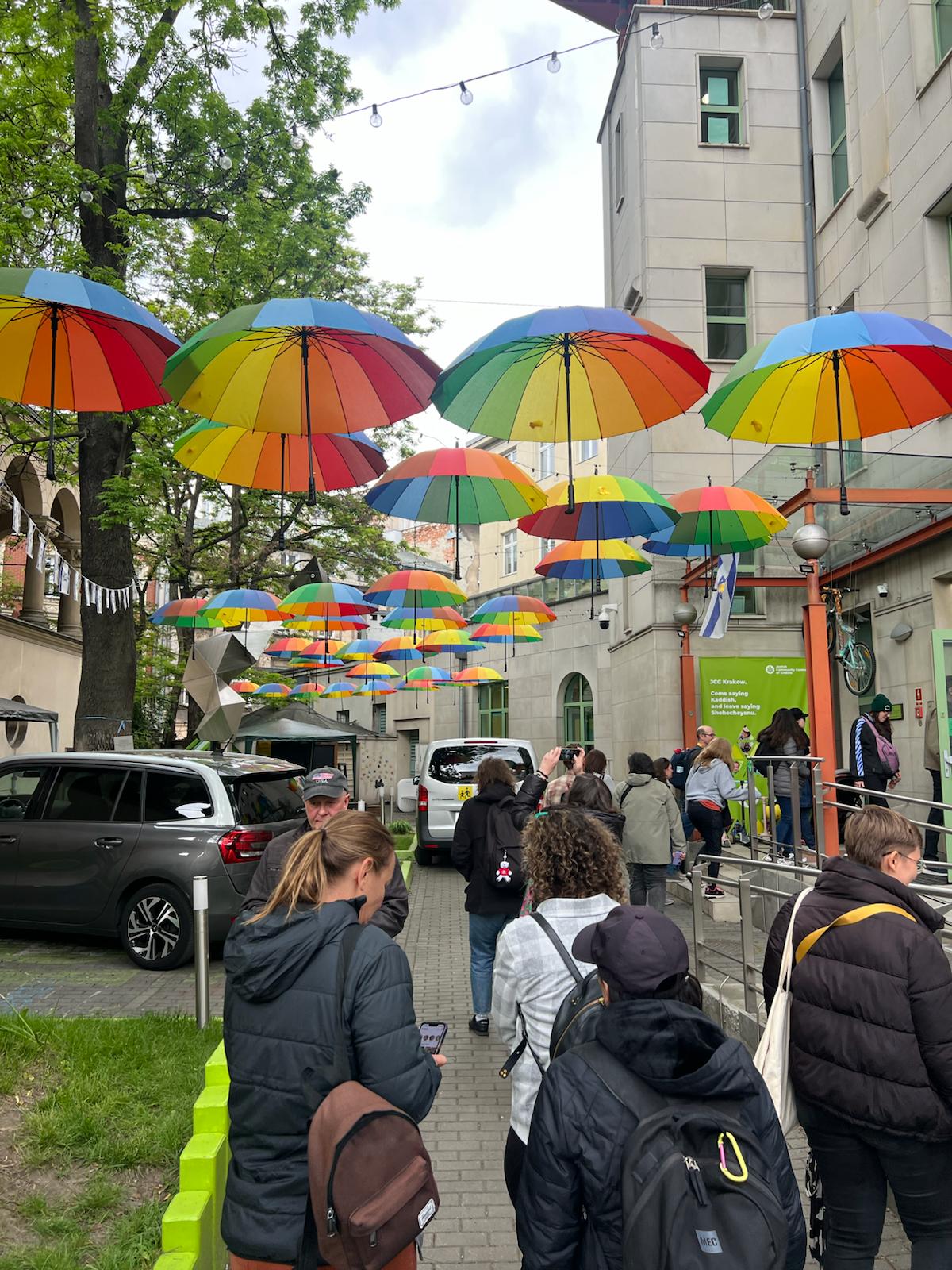
At JCC Krakow, we saw firsthand how Federation support is making a difference. The center is a hub of Jewish life—hosting Shabbat dinners, running a preschool and day camp, and helping Ukrainian refugees, Jewish and non-Jewish alike. We visited their distribution center, which continues to offer food, clothing, toiletries, and toys to those in need.

We also met young adults from Hillel International Krakow. Many didn’t grow up Jewish; some only recently discovered their Jewish heritage. Yet they’ve chosen to build community, connect with Jewish identity, and take part in Jewish life. Today, more than 200 young people are active in Hillel Krakow. That choice—to embrace a Jewish identity in Poland, of all places—is deeply moving.

In Warsaw, the POLIN Museum blew me away. It traces a thousand years of Jewish life in Poland—from vibrant shtetls to intellectual movements, to the devastation of the Holocaust and the rebirth that followed. It’s one of the most thoughtful and comprehensive museums I’ve ever visited.

This trip was a rollercoaster of emotions—grief, pride, hope, disbelief. But I came home feeling something I never expected: optimism. Against all odds, Jewish life in Poland is not only persisting—it is reemerging.

One person said to our group, “There’s something inherently Jewish about Poland. Polish history wouldn’t be Polish history without Jewish history.” I agree. And I’d add: Jewish history wouldn’t be complete without Poland—the good, the bad, and the unimaginable.

This experience gave me more than memories. It renewed my sense of purpose. At a time when antisemitism is rising, I’m more committed than ever to standing up for our community. But I’m also determined to celebrate us—to lift up the vibrant, diverse, and global Jewish life that continues to thrive.

Together, let’s remember. Let’s rebuild. Let’s keep showing up for one another—in grief, in strength, and in joy.

Related posts

Impact in Action: Voices from Israel, Powered by Hillel

Impact in Action: Voices from Israel, Powered by Hillel
This immersive Impact in Action experience, developed in partnership with Hillel International, showcases the real lives shaped by your generosity. You’ll hear from students living in Israel as they share personal reflections on everyday life before and after October 7. The evening will feature a meaningful conversation about current challenges facing our community and college campuses, along with opportunities for connection and understanding. It will also explore how your donations create and strengthen our local community’s connection with Israel and Israelis. Open to all donors who have given to Federation in 2024 and 2025

Impact in Action

Impact in Action

Sometimes, it takes stepping into a space to truly understand what our donations make possible.

I invite you to do just that through our Impact in Action series: immersive experiences that offer a firsthand look at the real lives touched by your generosity—how your philanthropy becomes belonging, community, and joy.

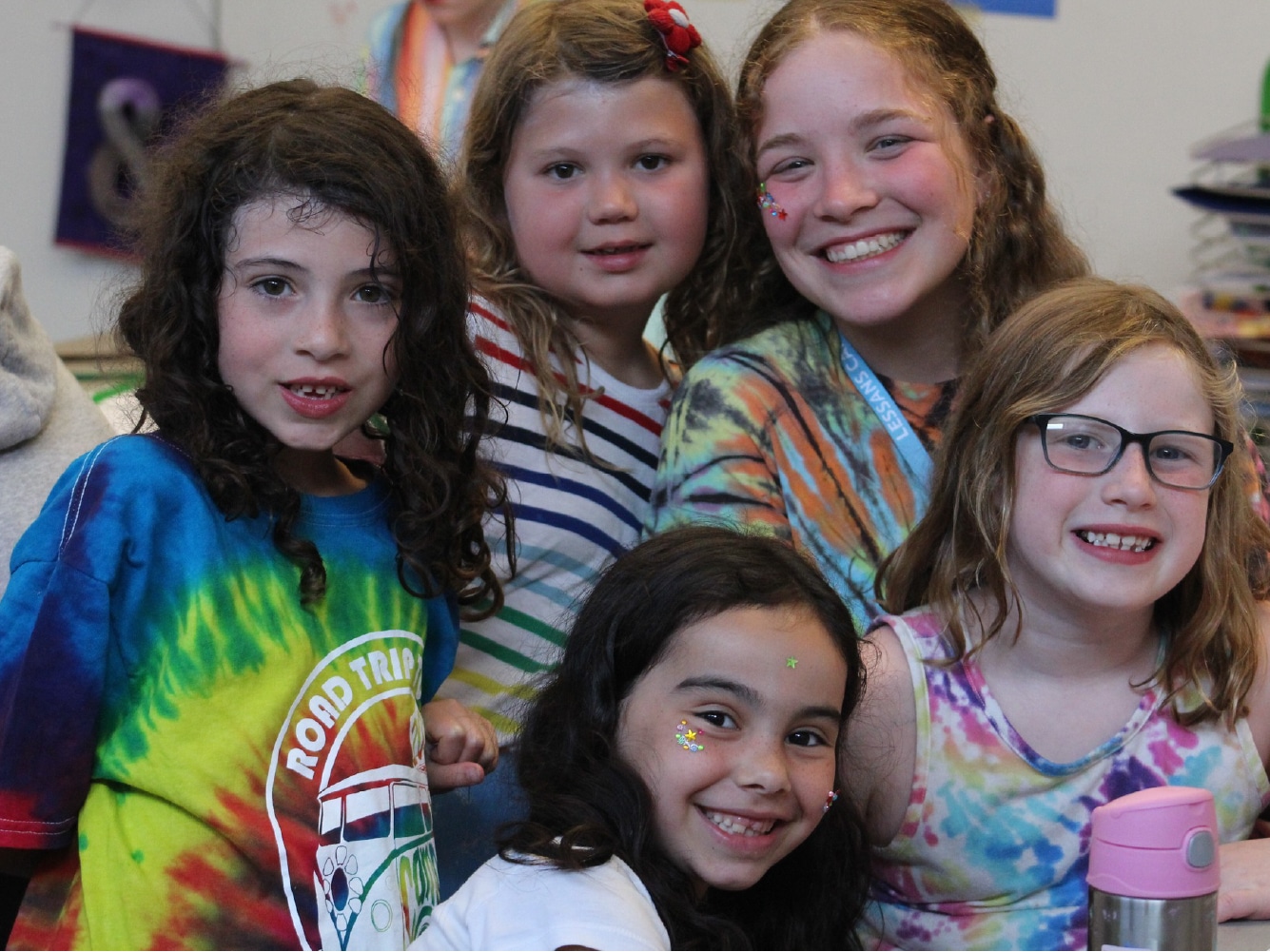
On July 23, we will experience the definition of Jewish joy – camp. Together, we will be visiting one of the many Jewish summer camps that Federation supports – where children of all abilities are embraced, celebrated, and empowered to embrace Jewish identity and have the time of their lives. You’ll hear from staff, meet campers, and see what it means to build a Jewish future rooted in inclusion and love. Register today.

On September 3 (save the date!), we’ll explore how your donations create and strengthen our local community’s connection with Israel and Israelis. We’ll be joined by a delegation from Hillel Israel to build bridges, dialogue and understanding.

And in November, we’ll come together with one of our partner agencies to prepare meals by the thousands for individuals and families experiencing food insecurity and homelessness. It’s sacred work—hands-on, heart-forward, and grounded in our deepest values.

These are more than just experiences; these are invitations to witness your impact. Come see what we’re building—and feel the difference you make.

Your generosity makes all of this possible. And when we show up to see it in action, our commitment deepens.

Related posts