Need support? Call 703-J-CARING (703-522-7464)

Together, Rising to the Moment 
Together, Rising to the Moment 

Federation and JCRC Advance Jewish Life in Greater Washington

In a year marked by rising antisemitism, contested narratives in classrooms, and growing pressures on civic spaces, the Jewish Community Relations Council (JCRC) of Greater Washington has been a steady force—speaking up, showing up, and strengthening the public voice of Jewish Greater Washington.

Across DC, Maryland, and Virginia, the JCRC represents more than 100 synagogues, agencies, and organizations. They advocate for a strong U.S.–Israel relationship, protect the safety and rights of Jewish institutions, challenge misinformation in schools, and build meaningful partnerships across faith and civic lines.

As Federation drives long-term investment in Jewish life across Greater Washington, the JCRC leads our community’s advocacy in the public sphere. Together, we’re advancing a shared commitment to safety, resilience, and the values that sustain Jewish life—through distinct roles, and with deeply aligned purpose.

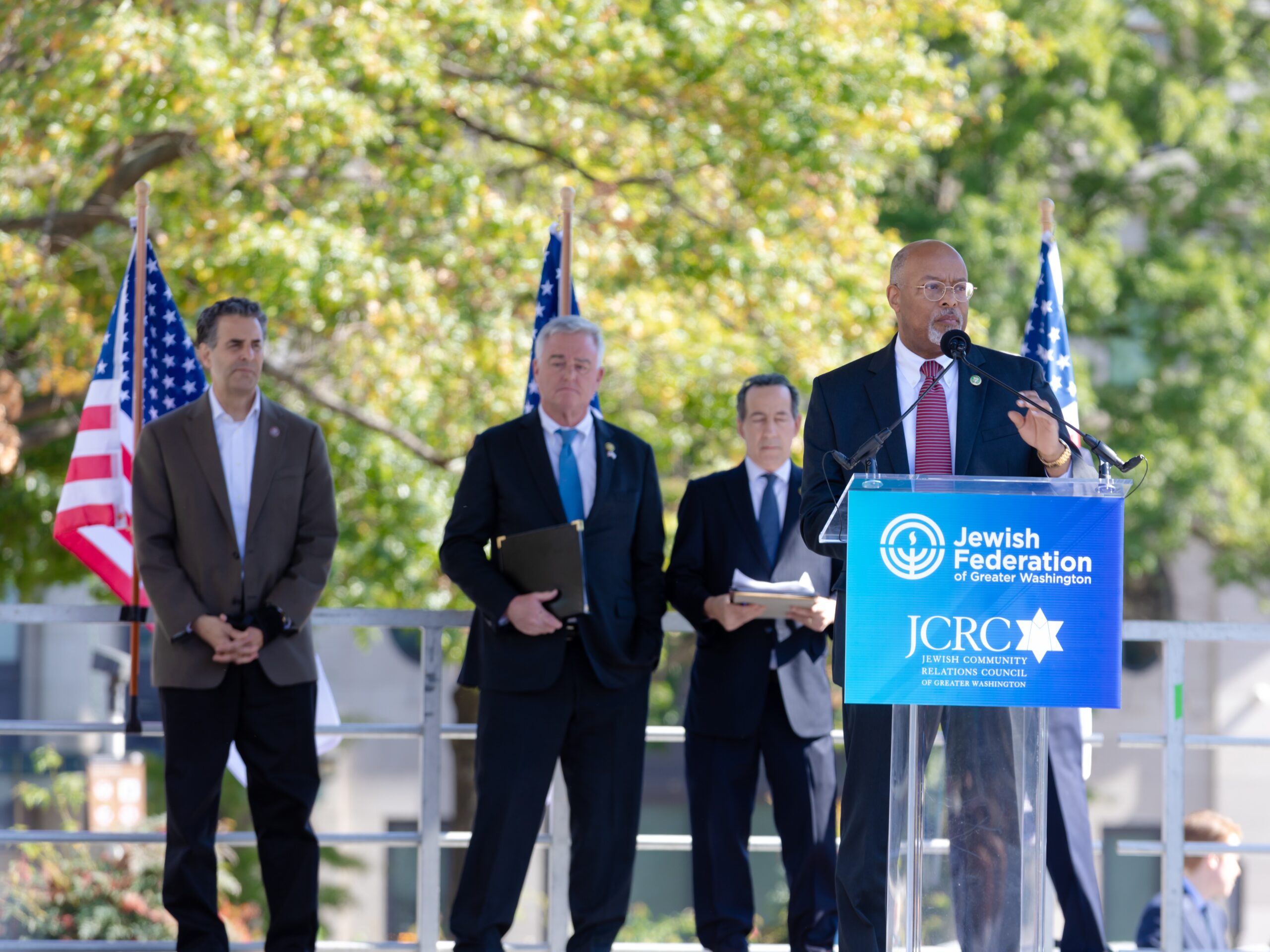
On Wednesday, October 29 at 6:00 PM in Rockville, the JCRC will host its Annual Gala, honoring:

  • Eva Davis (Distinguished Service Award)
  • June and David Trone (Breslau–Goldman Award)
  • Behn Dayanim (Sara and Samuel Lessans Community Leadership Award)

Co-chaired by Eilleen Filler‑Corn and Bambi Kramer, the evening will spotlight leaders who model what it means to act with courage, clarity, and commitment, especially in moments that demand all three.

This is a moment for all of us to show up for the people and partnerships strengthening Jewish life and a chance to recognize the leadership guiding us through challenge and change. We’re honored to stand with the JCRC in this work, and to celebrate the impact we’re making together toward a shared vision of Jewish Greater Washington that is strong, secure, and deeply connected.
Related posts

A Moment of Homecoming, Hope, and Healing

A Moment of Homecoming, Hope, and Healing

As hostages return home, we hold space for relief, grief, and the long road to renewal ahead.

This morning, Israel confirmed the release of all the remaining living hostages taken on October 7, 2023, as part of the ceasefire agreement. While we wait, with sorrow and hope, for the remains of the other hostages expected to be returned, we celebrate a moment we have prayed and hoped for: many who were taken so brutally by Hamas are finally home.

For families who have waited in fear and uncertainty for 737 days, this is a profound turning point. We exhale in relief, renew our commitment to the work ahead, and lean into hope for a Jewish future free from the darkness that has unfolded since that day in October.

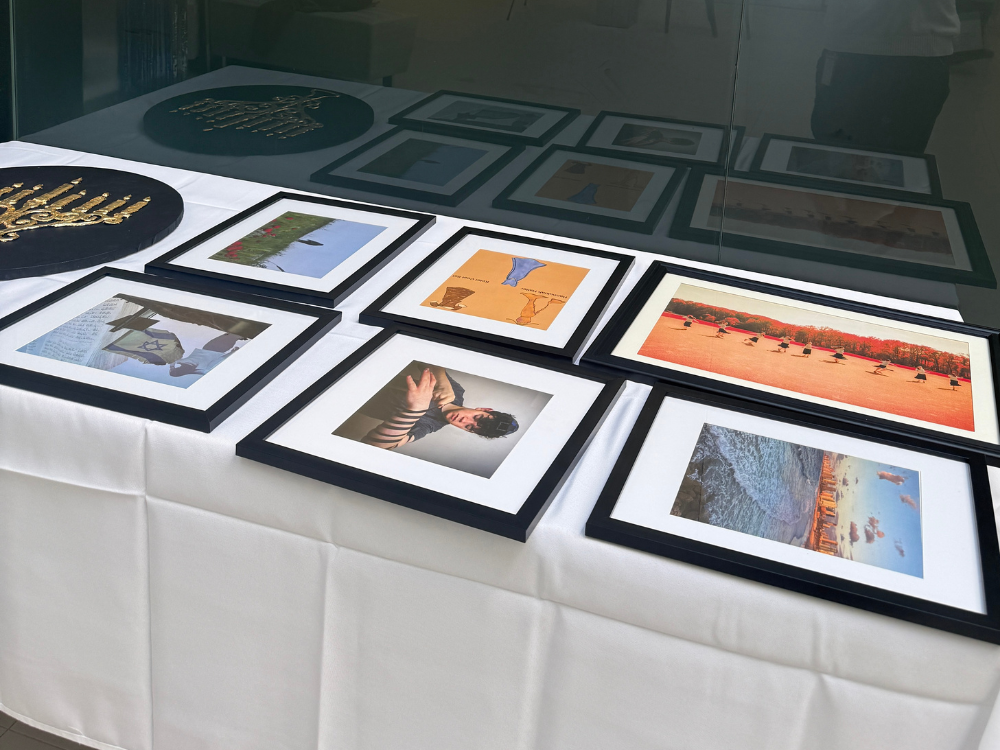
We express deep gratitude for the Hostages and Missing Families Forum, whose tireless advocacy has inspired us all, and for the Nova Tribe, whose courage and creativity through the Nova Music Festival Exhibition this past summer helped our community remember and heal.

We welcome home those returning, and we stand with the families of the missing, still caught in agonizing limbo, and with the families waiting to receive the remains of their loved ones.

We can never fully comprehend what survivors and the families of those lost or held hostage have endured. The weight of their grief, fear, and trauma is beyond measure. Yet as a community, we share in the sacred work of carrying that burden together. May the memories of those we have lost be for a blessing.

This moment also brings immense sorrow as we mourn the loss of Roei Shalev, a survivor of the attack at the Nova Music Festival, who took his own life just days ago, two years after watching Hamas murder his girlfriend. His passing is a devastating reminder of the invisible wounds so many still carry—pain that is deep, relentless, and far from over.

In the tender days ahead, our purpose remains clear: to show up for one another, to support the families still waiting, and to remain steadfast in our commitment to Jewish life, the people of Israel, safety, and Jewish peoplehood here in Greater Washington and around the world. Today’s homecoming and the long work of recovery stand side by side.

Healing, both personal and collective, takes time, care, and each of us choosing compassion again and again. But there is nothing we can’t overcome when we show up for one another, hold each other close, and remind every person that they are not alone in their anguish or in their healing.

May this moment mark the beginning of a broader return—not only of the hostages, but of healing and renewal for us all.

With deep gratitude,

Robin Hettleman Weinberg
President, Jewish Federation of Greater Washington

Gil Preuss
CEO, Jewish Federation of Greater Washington

Related posts

“Antisemitism: An American Tradition” with Pamela S. Nadell

“Antisemitism: An American Tradition” with Pamela S. Nadell
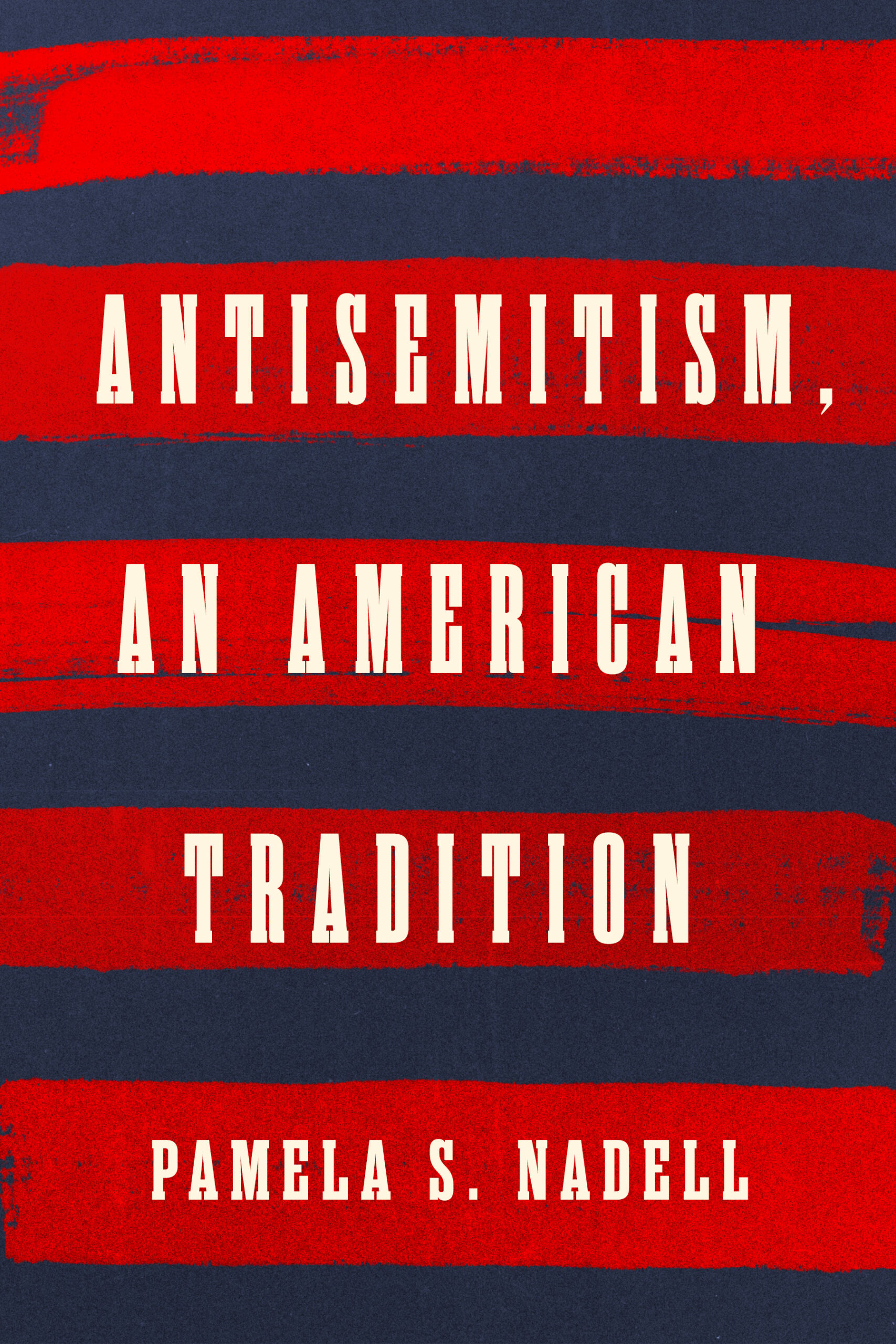
Award-winning historian and American University Professor Dr. Pamela Nadell returns to Washington Hebrew to discuss her timely new book, Antisemitism, an American Tradition. Set to be published on October 14, Nadell’s book explores the deep roots of antisemitism in the U.S. — from colonial times to the present — and the powerful ways American Jews have resisted this hatred and bigotry. A dessert reception follows the event.

Making Space for Ourselves

Making Space for Ourselves

Over the past several weeks, I’ve spoken with donors, volunteer leaders, Federation staff, and colleagues across Jewish organizations, all seeking to understand how to make sense of this moment of division and conflict.

Each one of us can name the many divisions that exist within our country, our community, the Jewish people, and often within our own families. What struck me most, however, in my many conversations, were the fractures and struggles that exist within each one of us. Some feel uneasy about how national leaders address antisemitism on college campuses yet relieved the issue is finally receiving attention. They are grappling with the rise of antisemitism and anti-Israel sentiment and with the complexity of how best to respond.

Most commonly, however, the conversation evolves to questions about Israel, Hamas, Gaza, Palestinians, and the hostages. Many people deeply believe in the need for Israel to eliminate the threat posed by Hamas and to ensure the horrors of October 7 never happen again. They see the war as an existential one to Israel’s survival and by extension of the future of the Jewish people. For many, Israel is a cornerstone of Jewish identity and safety. Our fear is not only what happens on the ground, but also about what it means for Jewish life, security, and solidarity around the world.

And, at the same time, many of these same people are deeply struggling with what they read every day about the number of lives lost, the level of hunger that may exist in Gaza and a war with no end in sight, and the devastating possibility that the hostages will not return home. One person stated that they felt ashamed, both by the actions of the Israeli government and by the part of themselves that believes these actions may be necessary to ensure a safe and secure Jewish future. That tension stayed with me. For many, this moment is not about certainty, but about navigating conflicting truths: fearing what inaction might invite, while grieving what action demands.

Another person shared that they’ve been waiting, hoping that Israel’s actions might eventually bring about something redemptive. That we would be able to say, “This is why,” and find some clarity or affirmation in the face of so much pain and that the broader world would finally understand. But that moment hasn’t come. And for some, it’s beginning to feel like it may not. What once felt like hopeful anticipation has become another layer of grief and shame.

One of our greatest challenges, both in conversation and as a community, is resisting the impulse to expect ourselves or others to have clarity when there is none. These are morally complex times. The struggle many are experiencing is about identity. What does it mean to be Jewish, to live our values, when we are confronted with human suffering, fear, a longing for justice, and a sense of abandonment?

As the Jewish Federation, we strive to be both clear in our values and aspirations for a vibrant Jewish community while creating space for honest conversation that does not demand clarity or agreement. By recognizing that those with whom we are speaking may also be struggling within themselves, we can begin to soften the divides that exist between us and stay in relationship through the uncertainty and discomfort.

As we move forward, I continue to believe in the power of this community to show up for one another, hold space for complexity, and lead with compassion. Our perspectives may differ, but the emotions we carry can still connect us. In a moment that could pull us apart, our shared experience can hold us together.

Thank you for your partnership, your courage, and your commitment.

Related posts

Making Room for Hope

Making Room for Hope

More than 700 days have passed since October 7—nearly two years since that horrific morning tore through Israeli life.

And for every one of those days, dozens of hostages have remained in Gaza, held by Hamas in conditions we can barely imagine. Today, that number stands at 48. It’s believed that 20 are still alive.

Among them is Alon Ohel.

A Glimpse of Life

Last week, for the first time since he was taken, we saw Alon.

In a Hamas video, another hostage—Guy Gilboa Dalal—is paraded through Gaza, pleading for his life. Alon appears beside him. A single, fleeting moment. A moment that marks the first visual proof Alon is still alive since October 7, 2023.

It means something. For his family, it means everything.

Until now, they had nothing. No photo. No message. Nothing since Alon disappeared from a shelter near Kibbutz Re’im, after escaping the Nova music festival massacre.

We now know from Hostage, a new book by survivor Eli Sharabi, who was held captive with Alon for months, that Alon was expected to be released in February. But the second-phase deal never came.

And so, seven months later, the agonizing wait continues.

This Sukkot, We Make Room for Them

As we look ahead to Sukkot, a time of shelter and solidarity, we’re preparing to turn our grief into action.

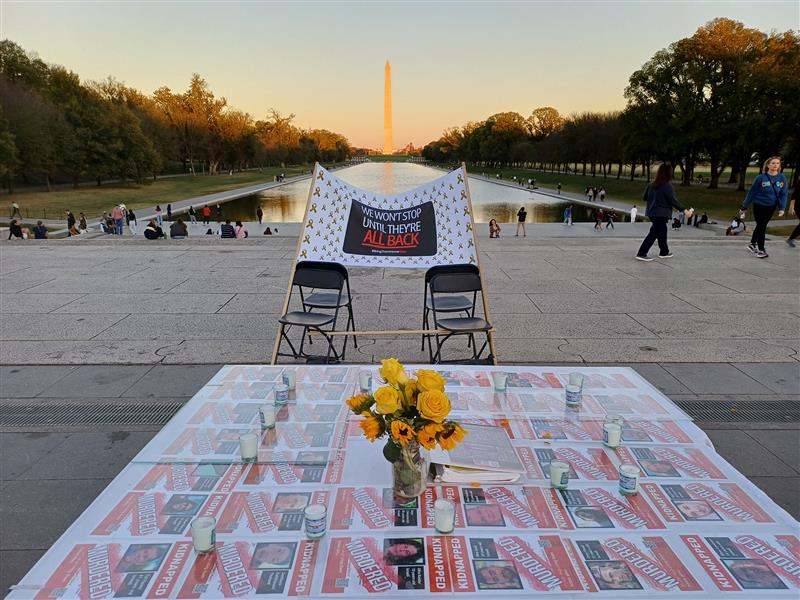
Together with the Hostages Families Forum, Adas Israel, and partners across Greater Washington, we will build a Sukkah of Hope in front of the White House.

A place to gather. To remember. To say out loud: they are still there. And we are still here.

Refusing to Look Away

Even in this unbearable reality, a single photo can mean everything.

It means someone is still alive.
It means their story is not over.
It means we still have time to bring them home.

And it means the world still needs to hold Hamas to account for these ongoing atrocities and the suffering inflicted on so many innocent lives.

We carry that truth into Sukkot, into the shelter we build, the space we hold, and the hope we refuse to let go of.

May this be the year they come home.
And may it also be the year of peace.

Related posts

When Hate Shows Up in the Classroom, Federation Shows Up for Teachers

When Hate Shows Up in the Classroom, Federation Shows Up for Teachers

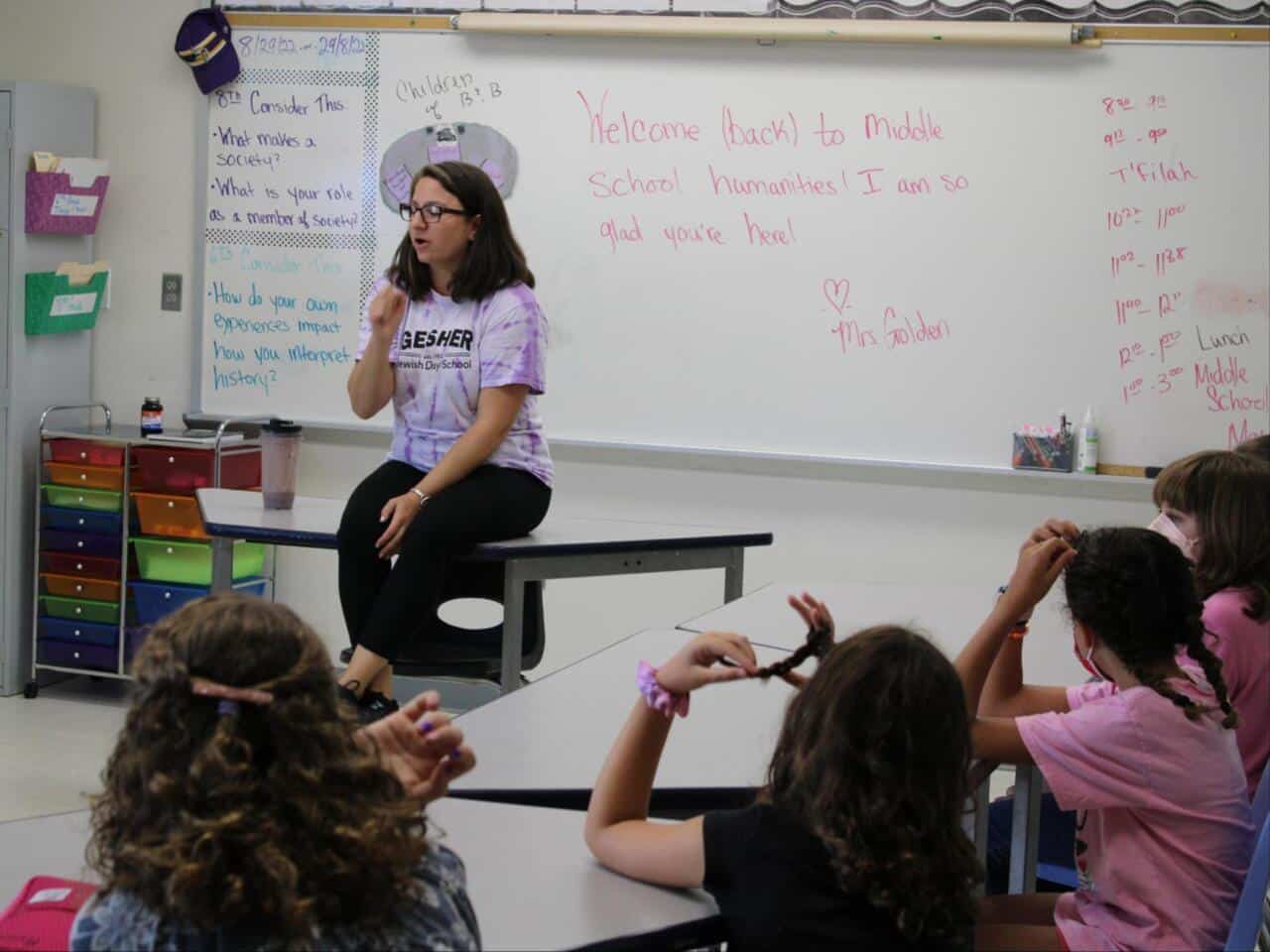
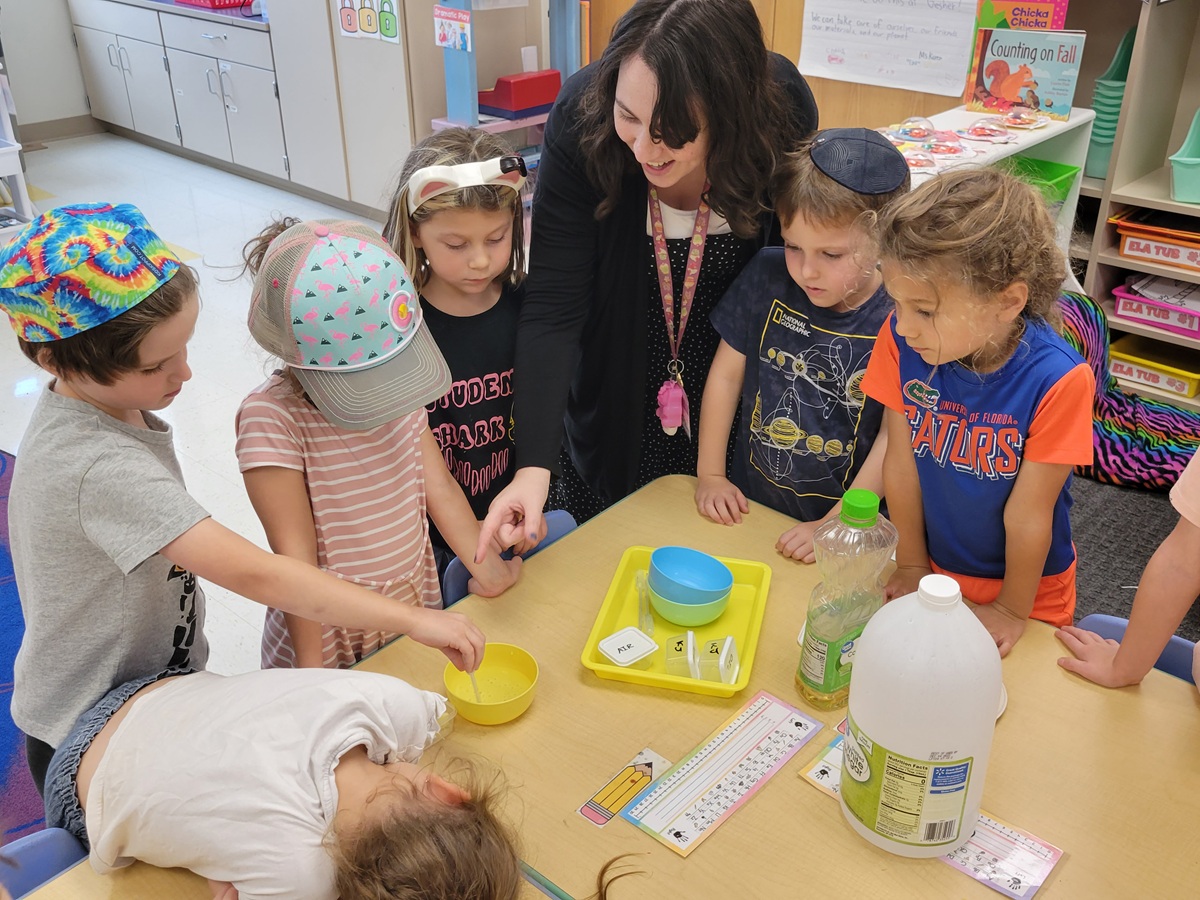
In classrooms across Greater Washington, antisemitism isn’t abstract. It shows up in hallway slurs, social media posts, and in the hard questions students bring to class. Teachers are on the front lines of these conversations—often without the necessary tools to respond.

This is more than a challenge; it’s a turning point. If we want to shape Jewish life and protect our community, we have to start where prejudice takes root: in education. This summer, The Jewish Federation of Greater Washington helped bring Facing History and Ourselves (FHAO) back to DC for its first in-person Holocaust education seminar since before the pandemic.

Responding to an Urgent Need

At the University of the District of Columbia, more than 20 middle and high school educators from public, private, and Jewish day schools came together for four days of intensive learning. Using FHAO’s Holocaust and Human Behavior curriculum, they examined how propaganda spreads, how restrictions accumulate, and how silence allows hate to grow—lessons with chilling relevance for today’s classrooms.

They also practiced strategies to create trust and build classroom environments where difficult questions aren’t avoided but explored. “If teachers don’t believe they can do it, they won’t,” explained Jeremy Nesoff, FHAO’s Senior Director for District Partnerships. “Our goal is to give them the confidence, strategies, and resources to guide their students toward empathy and responsibility.”

Impact That Multiplies

Each teacher reaches dozens of students every year. Multiply that across a classroom, a school, a district—and one Federation investment this summer could change how thousands of young people learn to recognize and confront antisemitism. The impact doesn’t stop in one room; it spreads into every hallway and community those students touch.

For the teachers, the effect was immediate:

“The work that’s being done here will transform not only my community but all of our schools across the country.”

“This seminar allowed me to grapple with my own understandings and will allow me to grow as an educator and an individual.”

According to survey responses, every participant left better prepared to address antisemitism; 95% said the experience deepened their commitment to teaching; and all reported greater confidence in responding to antisemitism in their schools.

A Catalyst for Change

This summer seminar was more than just bringing FHAO back to DC—it created momentum for what comes next, laying the groundwork for district-wide training in Loudoun County and sparking conversations with DC Public Schools. FHAO is also exploring expansion into Prince George’s, Anne Arundel, and Prince William counties. “Working with knowledgeable expert partners, like Federation, who are plugged into the community is such a key for us,” said Nesoff. “Federation helped us open doors.”

Joel Frankel, Federation’s Senior Director of Community Capacity, added:

“Our funding for FHAO is one example of how we’re supporting parents and students in the fight against antisemitism in schools. Next year, we plan to bring together all our partners in this space—including FHAO, Jewish Community Relations Council (JCRC), American Jewish Committee (AJC), and Anti-Defamation League (ADL)—to build on the relationships they’ve developed over time.”

Preparing Students for More Than Academics

Students in the DMV are returning to more than math and reading. They’re also navigating questions of belonging, justice, and identity. Thanks to your support, nearly two dozen teachers now have resources like FHAO’s Back to School Toolkit to create classrooms where every student feels safe to learn and engage.

In a moment when antisemitism feels more present than ever, we’re ensuring teachers—and the thousands of students they reach—are ready not just to teach but to help young people think critically and stand up to hate.

Related posts

JShield Trainings Strengthen Our Community Partners

JShield Trainings Strengthen Our Community Partners

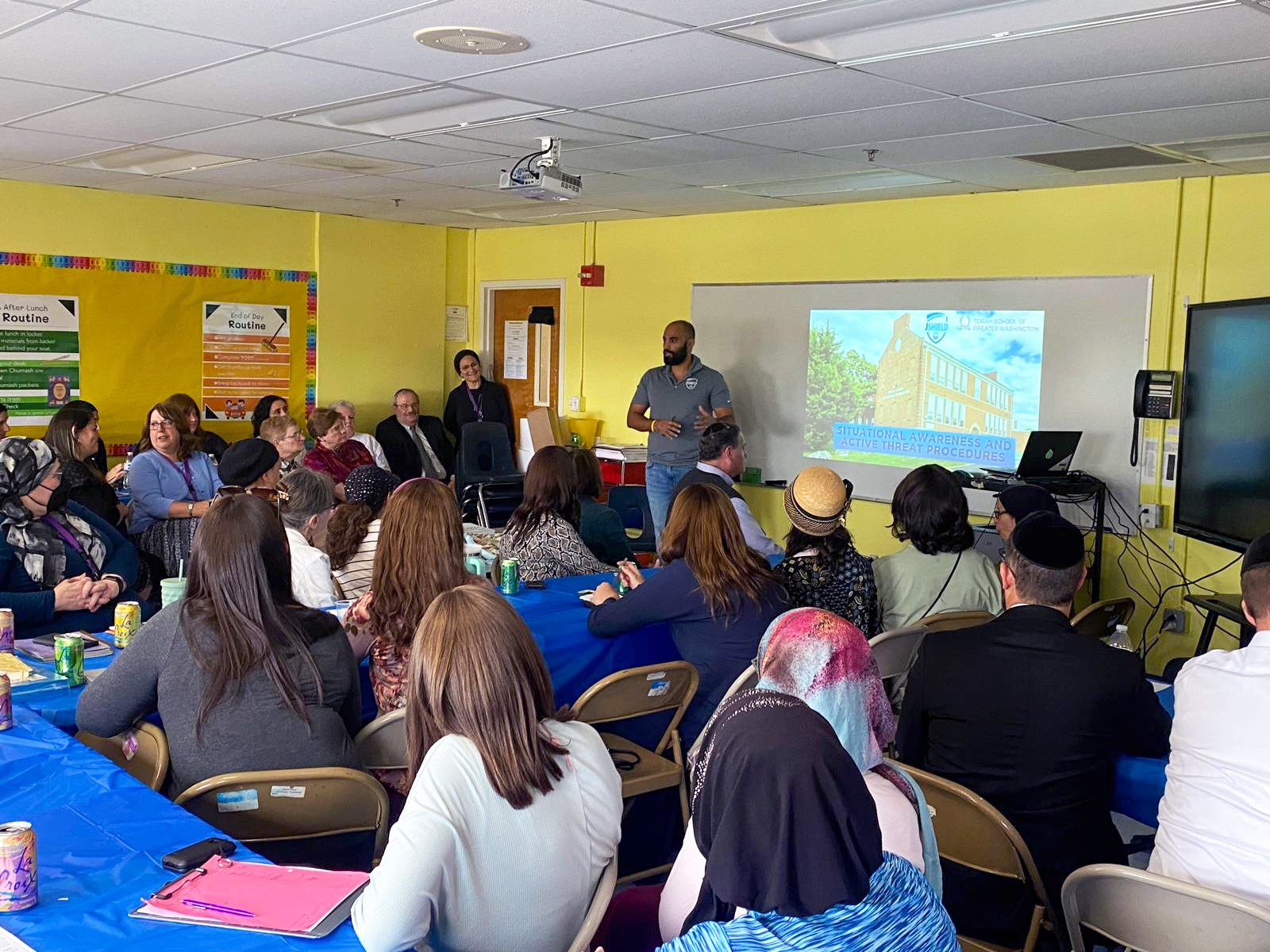
For Taylor M, a congregation administrator in Ashburn, the start of the school year and High Holidays once felt overwhelming. “These sessions are basically a checklist of the best ways to keep people safe during this time when they have other things on their mind,” Taylor shared.

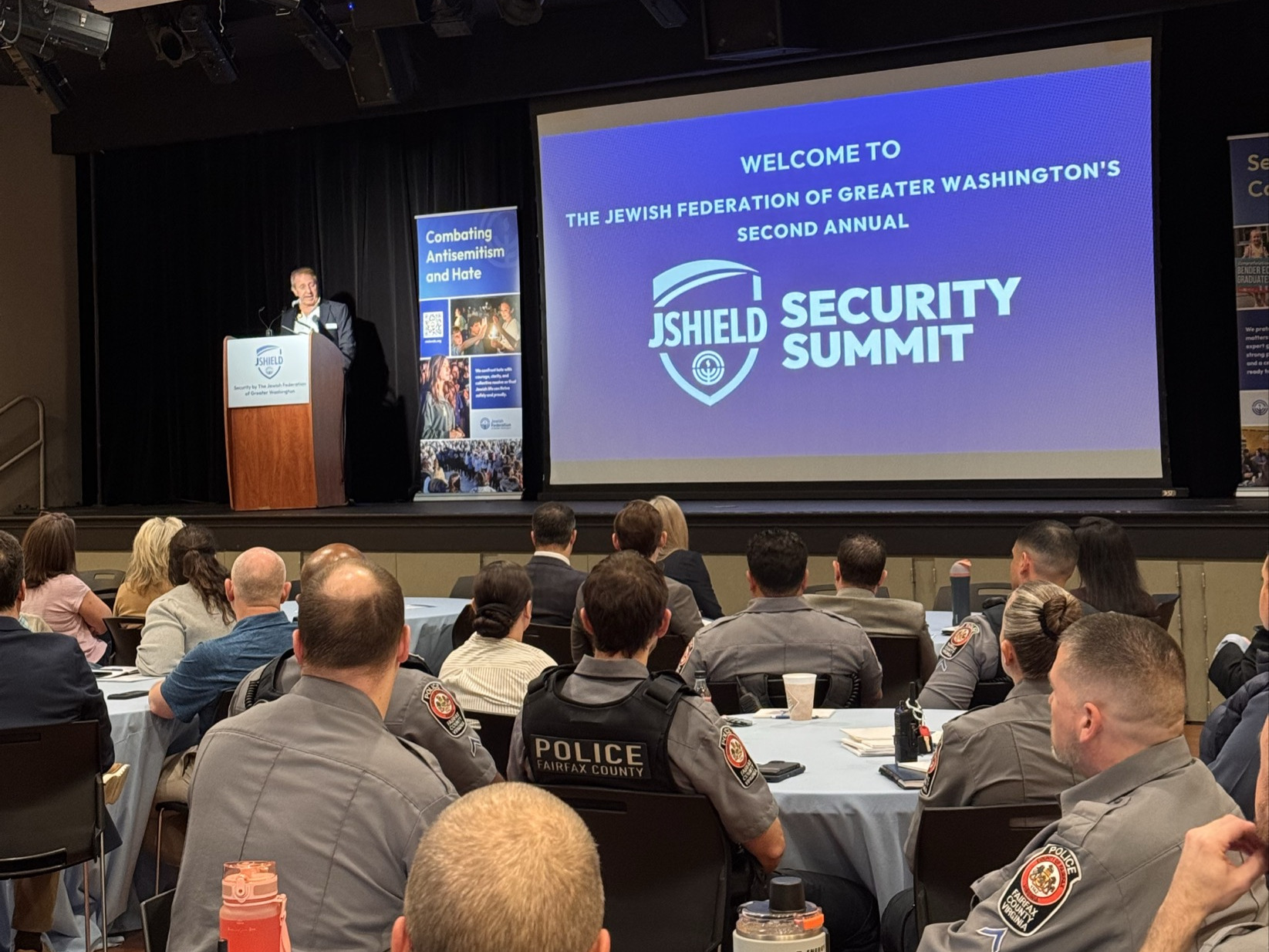
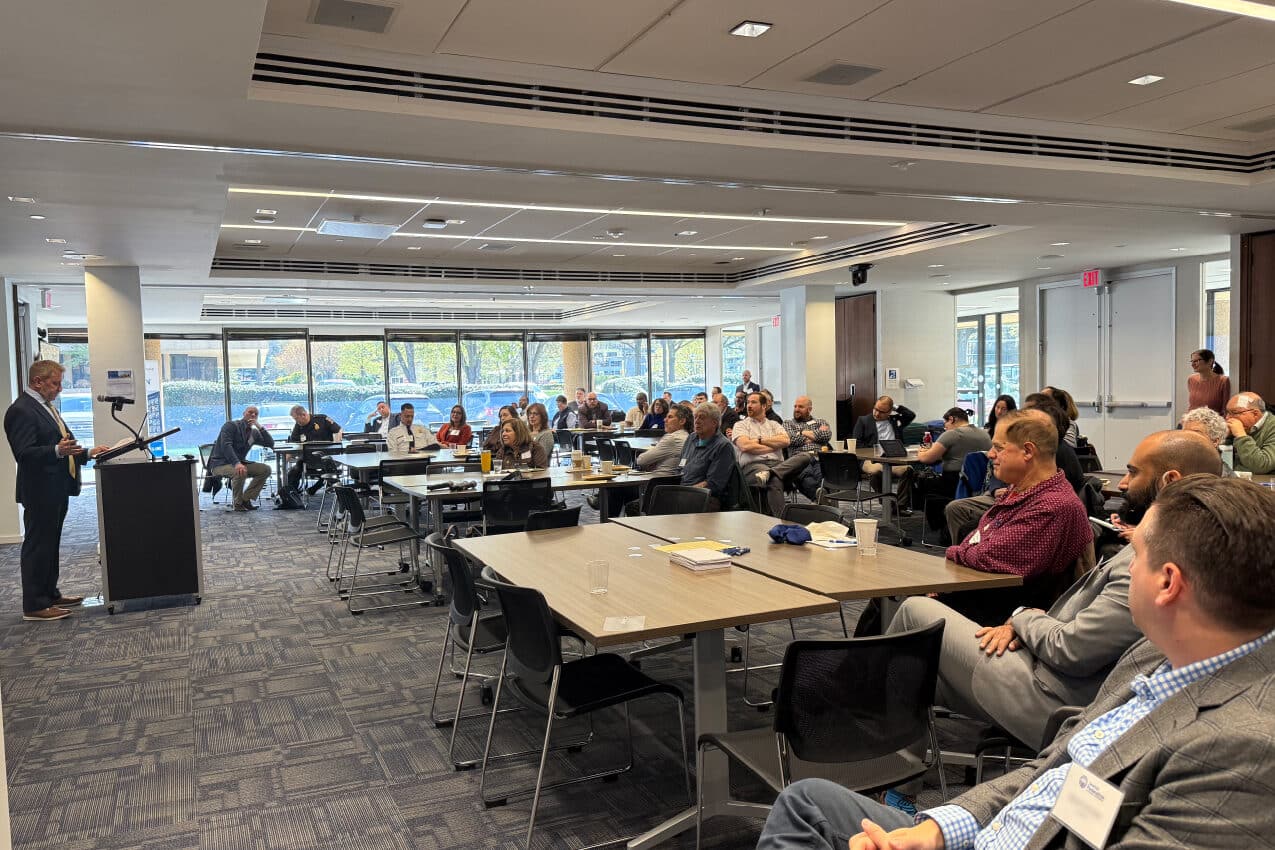
This past Sunday in Fairfax, Taylor joined dozens of others in person and online from across Northern Virginia (and even as far as Blacksburg!) for one of JShield’s annual security trainings.

Northern Virginia is one of the fastest-growing centers of Jewish life in Greater Washington. But with congregations and schools spread across a vast geography, keeping everyone connected and secure comes with unique challenges. JShield’s presence in Northern Virginia brings tailored support, with a dedicated Community Security Advisor, meeting leaders where they are, ensuring no one face security concerns alone.

The back-to-school and High Holiday seasons are among the busiest for Jewish institutions across our community. These annual JShield trainings are just one of the ways JShield shows up as a thought partner, trusted resource, and expert guide—helping make even the most overwhelming scenarios feel manageable.

As Bob Green, Security Committee Member at Temple Beth Torah in Chantilly, explained:

“JShield has already vetted the tools and resources, and I can leverage them instead of starting from scratch. It’s a centralized repository of truth.”

Empowering Leaders Through Expertise

Taylor had no background in security or grants. But with JShield’s guidance, she successfully completed a Nonprofit Security Grant application. “I probably would not have lasted in my job as long as I have without JShield,” she said. Over time, repeated trainings became part of her preparation routine—especially before the High Holidays.

Together, We Are Prepared

For our community, safety is not a one-day effort. JShield’s year-round work gives leaders in Greater Washington the confidence to open their doors without hesitation, knowing they have the training, expertise, and community behind them. In an era of rising antisemitism, that shared strength makes all the difference.

Join JShield for the Final Back-to-School and High Holidays Training Session

Our final training of the season will be held on Thursday, September 7, in Washington, DC. This session will equip you with practical tools and peace of mind—so that you and your organization can face the future with strength and confidence.

Can’t make it to this final training, but have questions for our security experts? JShield is here 365 days a year.

Related posts

Prepared, Not Scared: Why JShield Trainings Matter More

Prepared, Not Scared: Why JShield Trainings Matter More

As the Jewish community of Greater Washington prepares for the High Holidays and the start of a new school year, safety and security remain a top priority. That’s why JShield—The Jewish Federation of Greater Washington’s security initiative—is once again offering community-wide trainings designed to empower participants, strengthen institutional readiness, and foster a shared sense of responsibility.

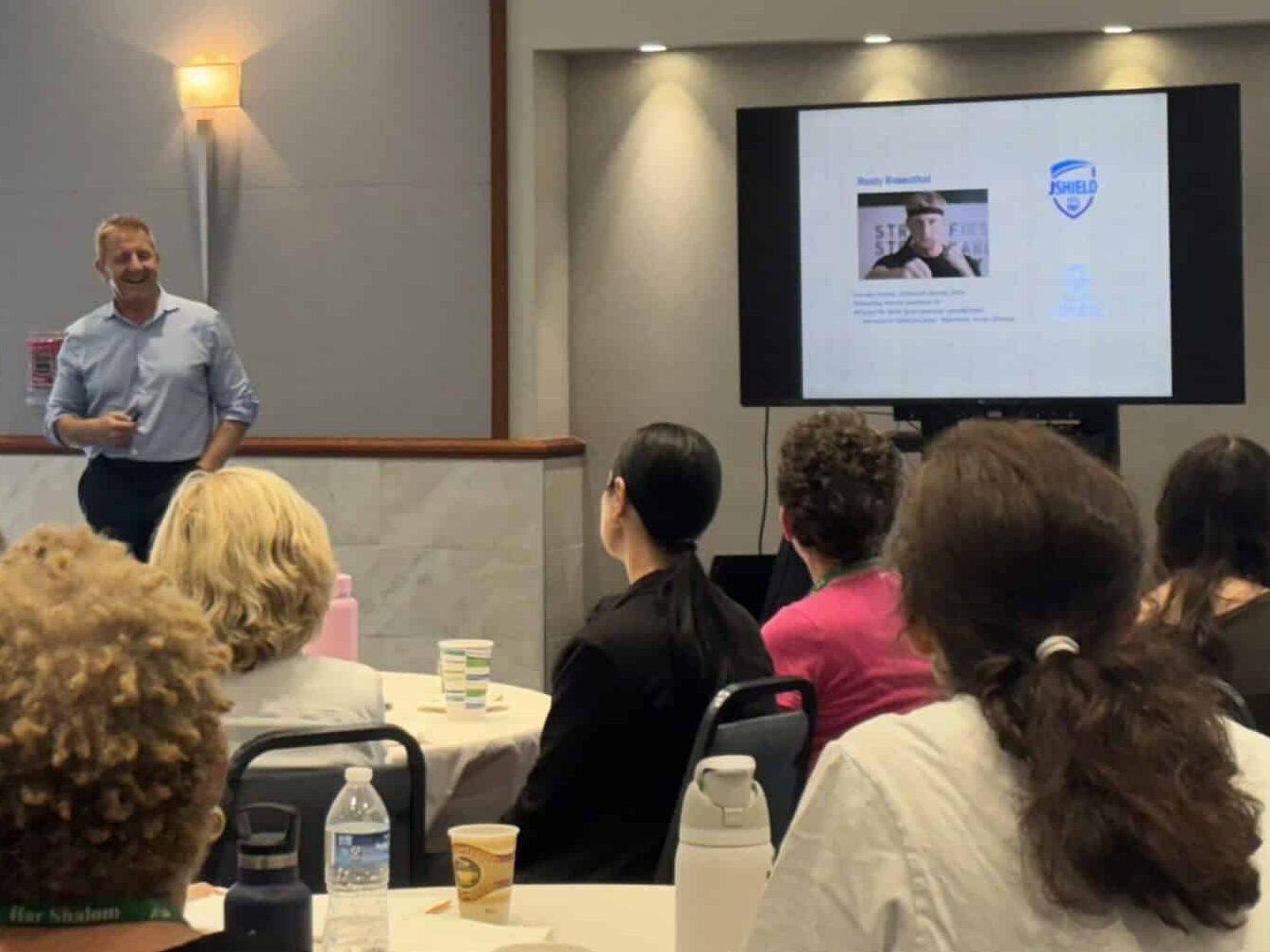
“The main reason we do the trainings around the High Holidays is because we’re aware that there are people who may be coming to synagogues or other institutions for the only time this year,” said Rusty Rosenthal, Federation’s Director of Security. “We re-emphasize situational awareness, active threat training, and the basics of how to report incidents.”

This year, the trainings will take place on:

  • Sunday, August 17
    6:00 PM
    Fairfax, VA
  • Sunday, August 24
    6:00 PM
    North Bethesda, MD
  • Sunday, September 7
    6:00 PM
    Washington, DC

Straying one step ahead

Each year, JShield develops its content to reflect the most current intelligence and incident reporting. The sessions are designed to highlight not only trends from the past year, but also practical steps that community members can take to feel more prepared and less vulnerable.

“The goal is to take this training so that you leave with a feeling of empowerment—so that we’re not helpless and we’re not just victims of our circumstances,” said Rosenthal. “It’s imperative that we take ownership and take responsibility for our own security.”

What sets these seasonal briefings apart is their broader reach. While JShield works year-round with executive directors, heads of school, and security personnel, the High Holidays are designed to welcome everyone—especially those who might not be affiliated with a specific institution.

“By engaging with institutions, we’re not necessarily engaging with the entire Jewish community of Greater Washington,” Rosenthal explained. “That’s why we host these sessions. We want to make sure everyone has access.”

JShield encourages institutions to share these opportunities widely. For those already coordinating private trainings for their schools or synagogues, these community-wide sessions offer an accessible alternative for anyone unable to attend a site-specific program.

Staying vigilant as antisemitism rises

Planning ahead is key. “You can’t put together a security plan three days before an event,” Rosenthal emphasized. “We always recommend involving JShield and your local law enforcement early so appropriate preparations can be made.”

While the threat environment remains elevated, JShield’s message is one of vigilance—not fear. “Absent any new information, there are no directed, targeted threats we’re aware of. Institutions should remain open and celebrate collectively,” Rosenthal said. “But we must do so with awareness.”

The trainings are open to everyone in the community. The deadline to register for each session is one week prior. The first training on August 17 will also be available virtually. To learn more and to register, visit our website.

Related posts

When Antisemitism Takes Hold When Antisemitism Takes Hold
When Antisemitism Takes Hold
Antisemitism often emerges in times of strain, fueled by fear and exploited by bad actors. By confronting hatred directly and strengthening democratic institutions, Federation works to build resilience, foster connection, and ensure a more stable, inclusive community.
read more

Finding Light in Poland: A Journey of Remembrance and Renewal

Finding Light in Poland: A Journey of Remembrance and Renewal

It’s hard to describe the emotional whiplash of the past few months. We’ve witnessed horrifying acts of antisemitic violence both here at home—including the attacks in Boulder and at the Capital Jewish Museum—and abroad. The fear and pain reverberating through our community are real and raw.

I’ve found myself thinking often of Sara Milgrim z”l  and Yaron Lischinsky  z”l , and all those still recovering from the Boulder firebombing. May their memories be a blessing.

Just days before the D.C. shooting, I returned from a week-long journey to Poland organized by our partner, the American Joint Distribution Committee (JDC), and 3GNY. The trip brought together third-generation descendants of Holocaust survivors and others with a familial lineage to Poland and the Holocaust, to connect with Jewish life today in Poland.

My great-grandparents were born and raised in Poland. They fled in the late 1920s and early 1930s to escape pogroms, antisemitism, and poverty, eventually landing in Cuba. They left behind their parents, siblings, and entire communities, most of whom perished in the Holocaust.

Our group visited Kraków, Warsaw, and Łódź. We walked through ghettos and cemeteries, and we spent a powerful, heart-wrenching day at Auschwitz. We listened to one another’s family stories—tales of survival and resistance, loss and love. It was heavy. And yet, it was also deeply connective.

Amid the grief, we encountered something remarkable: life. Resilience. A Jewish community in Poland that, while small, is vibrant, proud, and growing.

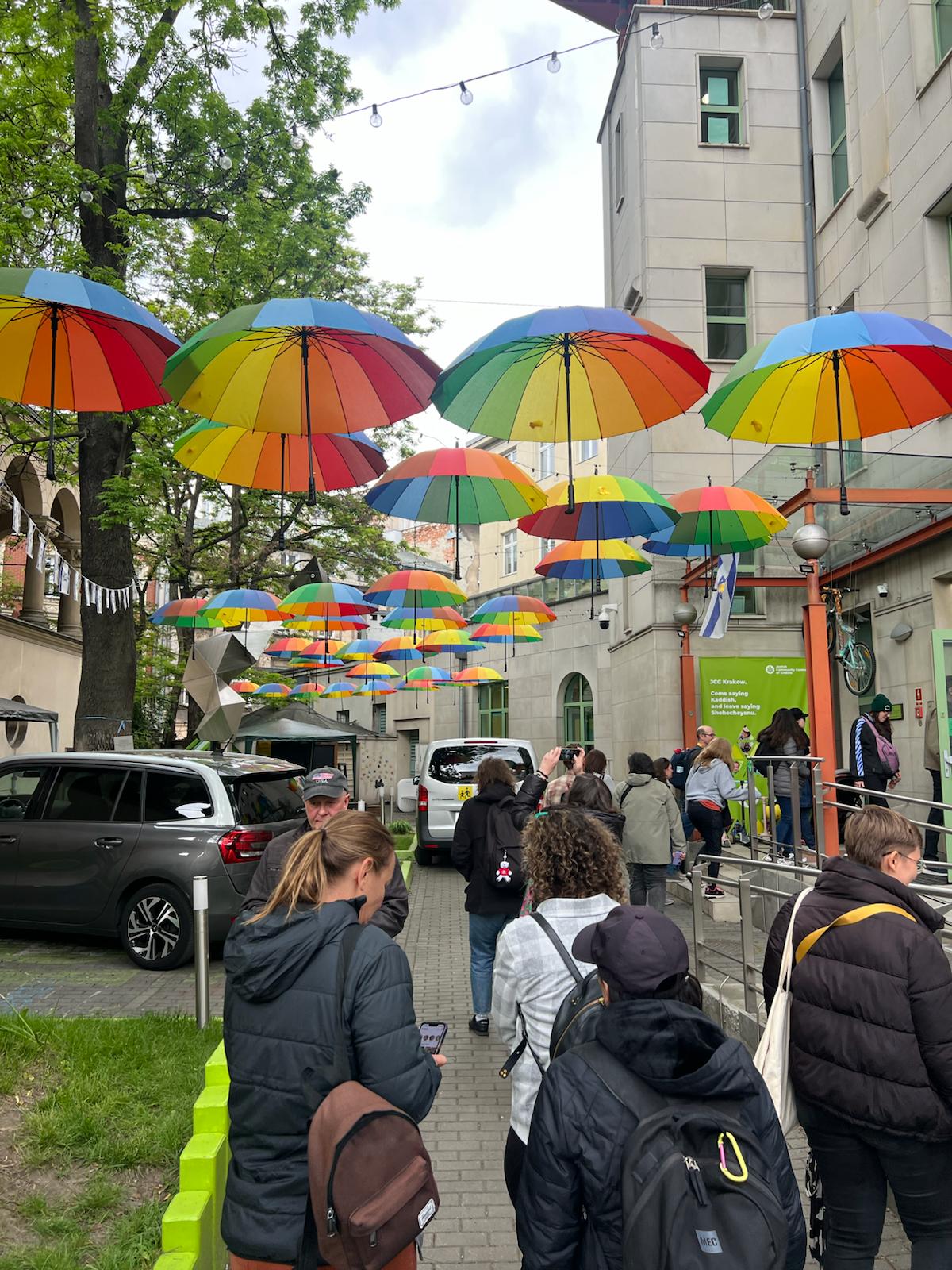
At JCC Krakow, we saw firsthand how Federation support is making a difference. The center is a hub of Jewish life—hosting Shabbat dinners, running a preschool and day camp, and helping Ukrainian refugees, Jewish and non-Jewish alike. We visited their distribution center, which continues to offer food, clothing, toiletries, and toys to those in need.

We also met young adults from Hillel International Krakow. Many didn’t grow up Jewish; some only recently discovered their Jewish heritage. Yet they’ve chosen to build community, connect with Jewish identity, and take part in Jewish life. Today, more than 200 young people are active in Hillel Krakow. That choice—to embrace a Jewish identity in Poland, of all places—is deeply moving.

In Warsaw, the POLIN Museum blew me away. It traces a thousand years of Jewish life in Poland—from vibrant shtetls to intellectual movements, to the devastation of the Holocaust and the rebirth that followed. It’s one of the most thoughtful and comprehensive museums I’ve ever visited.

This trip was a rollercoaster of emotions—grief, pride, hope, disbelief. But I came home feeling something I never expected: optimism. Against all odds, Jewish life in Poland is not only persisting—it is reemerging.

One person said to our group, “There’s something inherently Jewish about Poland. Polish history wouldn’t be Polish history without Jewish history.” I agree. And I’d add: Jewish history wouldn’t be complete without Poland—the good, the bad, and the unimaginable.

This experience gave me more than memories. It renewed my sense of purpose. At a time when antisemitism is rising, I’m more committed than ever to standing up for our community. But I’m also determined to celebrate us—to lift up the vibrant, diverse, and global Jewish life that continues to thrive.

Together, let’s remember. Let’s rebuild. Let’s keep showing up for one another—in grief, in strength, and in joy.

Related posts

From Anxiety to Action: Strengthening Jewish Security in DC

From Anxiety to Action: Strengthening Jewish Security in DC

A DC museum’s security costs rose significantly overnight. Families are rethinking whether it is safe for their children to attend Jewish day school or preschool. This is the reality facing Jewish institutions in our nation’s capital.

To meet this urgent challenge, we are allocating $462,750 in security funding for 50 local Jewish organizations. These grants will provide short-term support by hiring additional security personnel, upgrading security infrastructure, and helping people feel safe while living a fully and openly Jewish life.

“This is not just about numbers; it’s about peace of mind,” said Joel Frankel, our senior director of community capacity initiatives. “We understand the anxiety surrounding security costs at this moment. Our goal is to ease some of that burden and help organizations focus on what they do best—serving our community.”

Safety has long been a priority—but now, it’s an urgent concern.

Before distributing the funds, we also took this opportunity to survey local partners to better understand their most pressing concerns. The findings paint a sobering picture:

  • Surging Security Costs: Some organizations have doubled or even tripled their security budgets following the deadly shooting in May.
  • Community Anxiety: Families hesitate to attend services or send children to Jewish schools without visible security. One synagogue put it simply: “No one should fear to congregate as Jews in 2025.”
  • Painful Trade-Offs: Many organizations now face difficult choices, cutting programs or asking members to pay security fees—sometimes up to $180 per household.
  • Critical Infrastructure Gaps: From impact-resistant windows to emergency communication systems, many institutions lack essential security features.
    “Security is a community-wide effort,” said Rusty Rosenthal, executive director of community security at JShield, our security initiative. “The more we understand the specific needs of our local Jewish community, the better we can serve them and advocate for their needs.”

This funding is part of our larger commitment to keeping Jewish Greater Washington open, vibrant, and resilient in the face of rising threats.

To learn more about Federation’s security efforts, visit: https://www.shalomdc.org/jshield-security/.

Related posts