Three Years After October 7, There is Still Work to Do
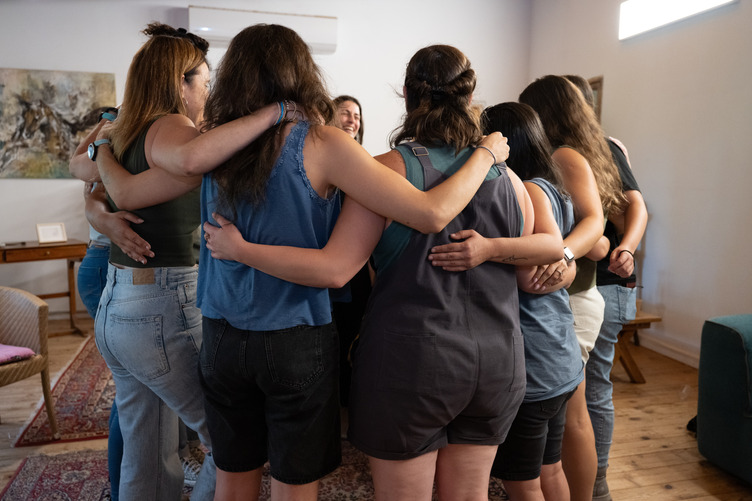
Three years later, what does it mean to keep showing up?
It’s natural to look backward.
To remember where we were when the terrible news began to come in from Israel on October 7, 2023. To think of the lives lost and the lives forever changed by that day. To feel again the uncertainty of those first hours, when no one knew what would happen next.
But three years later, it’s also worth looking forward.
What does it mean to keep showing up after the first shock has passed? What does support look like when an emergency becomes a long-term reality? And what will it take for communities, families and individuals to begin rebuilding, not simply what was lost, but what comes next?
Those questions have shaped The Jewish Federation of Greater Washington’s response ever since.
Because while October 7 was one day, its impact didn’t end that night, the next day, or the next week. The war and fighting that followed created new and evolving needs across Israel. Three years later, families are still displaced. Communities face prolonged uncertainty. Trauma continues as new waves of violence reopen old wounds. Businesses and local economies need help recovering. And new needs emerge as the crisis continues.
Over the past three years, Federation has responded not with a single effort, but with an evolving commitment to the people and communities of Israel. Through 14 rounds of funding, more than 60 grants and $15.4 million provided in crisis relief, Federation has supported 42 organizations across the country, adapting its response as needs changed.
That commitment comes from something deeper than crisis response. It comes from the belief that Jewish communities around the world are connected, and when one part of our community is hurting, we have a responsibility to stand with one another.
This is what Jewish peoplehood means at Federation. It means standing with Israel, being present in moments of profound need, and taking pride in the strength and resilience of the Jewish people. Even though we are thousands of miles apart, we are bound by a shared sense of belonging and care for one another.
Showing up means asking, again and again, what people need now. That question has never been only, How do we respond to this crisis? It has also been, How do we help people continue living?
Helping People Through the Immediate Crisis
In the days after October 7, moving forward meant something very simple. Getting through the day. People needed medical care. Families who had been forced from their homes needed somewhere to turn. Federation directed funding where the needs were most urgent, including $1.2 million for emergency medical care, supporting efforts such as Sheba Medical Center’s rapid mobilization of medical teams and preparation for mass casualties, along with $500,000 for victims of terror and their families, and $550,000 to support evacuees and displaced families.
For people living through an unfolding emergency, this kind of support can mean something as fundamental as knowing that someone is there. As the weeks turned into months, what people needed changed, and the need for support continued to grow.
Helping People Cope
Some of the most lasting effects of October 7 were not immediately visible. For families who lost loved ones, there was grief. For survivors of the attack, there was trauma. For children and parents whose lives had been uprooted, there was the challenge of finding some sense of normalcy again. And there is no single path to healing.
Federation allocated $3.7 million to trauma response, supporting 13 organizations with different approaches to reaching survivors, reservists, young people and families. Some trained mental health professionals to respond to widespread trauma, while others provided direct therapeutic care to those who needed it.
Helping People Rebuild
In northern Israel, communities have faced prolonged uncertainty and disruption amid fighting along Israel’s northern border. Families are still displaced. Daily life was put on hold. The question of when it would be possible to return, and what returning would look like, became part of everyday life. To support these communities, Federation allocated $4.3 million in aid to northern Israel, the largest share of its crisis funding.
People needed to work, businesses needed to recover, and communities needed to regain their footing. That included communities like Kibbutz Re’im, near the Gaza border, where Federation first invested $250,000 to address immediate security needs and later committed another $500,000 as part of a longer-term partnership supporting the community’s recovery and future. Federation also directed $2.5 million toward economic development, supporting efforts such as the Jewish Federations of North America’s (JFNA’s) Israel Emergency Loan Fund, which helps small businesses keep their doors open, employees paid, and communities stable during uncertain times.
But rebuilding is not a single grant or moment in time. Through our partnerships with Kibbutz Re’im and the Kinneret Valley Cluster in northern Israel, Federation is staying alongside communities that will be rebuilding for years to come.
These investments represent different answers to the same question: What does someone need in order to take the next step?
The answers are deeply personal, often complicated, and constantly changing. Our role is to keep listening and respond to what people need now.
Three Years Later, There is Still a Next Step
Fourteen rounds of funding tell a story of response becoming recovery. But behind those numbers are people. A family trying to rebuild a routine. A community waiting to feel settled again. A business owner trying to reopen. A child working through something no child should have to experience. A person learning how to live with loss.
And, alongside them, organizations working every day to help.
Three years after October 7, remembering remains essential, but so does looking forward. Rebuilding after a crisis does not happen in a single moment, but through thousands of acts of care, support and persistence, often long after the world has moved on to the next headline.
For our Federation, the work of responding to October 7 has meant being there for the immediate emergency, committing to communities for the long term, and continuing to ask what people and communities will need for the road ahead.
Today, as we commemorate three years since the horrific attacks that shook our world, the question is no longer only what happened on October 7.
It is what happens next.
And how, together, we can help communities in Israel move forward with hope.
Your support helps Federation keep showing up for people and communities in Israel, today and for the long road ahead.