Ella A., Senior Shlicha and Head of the Israeli Delegation to DC
Everything felt so completely new.
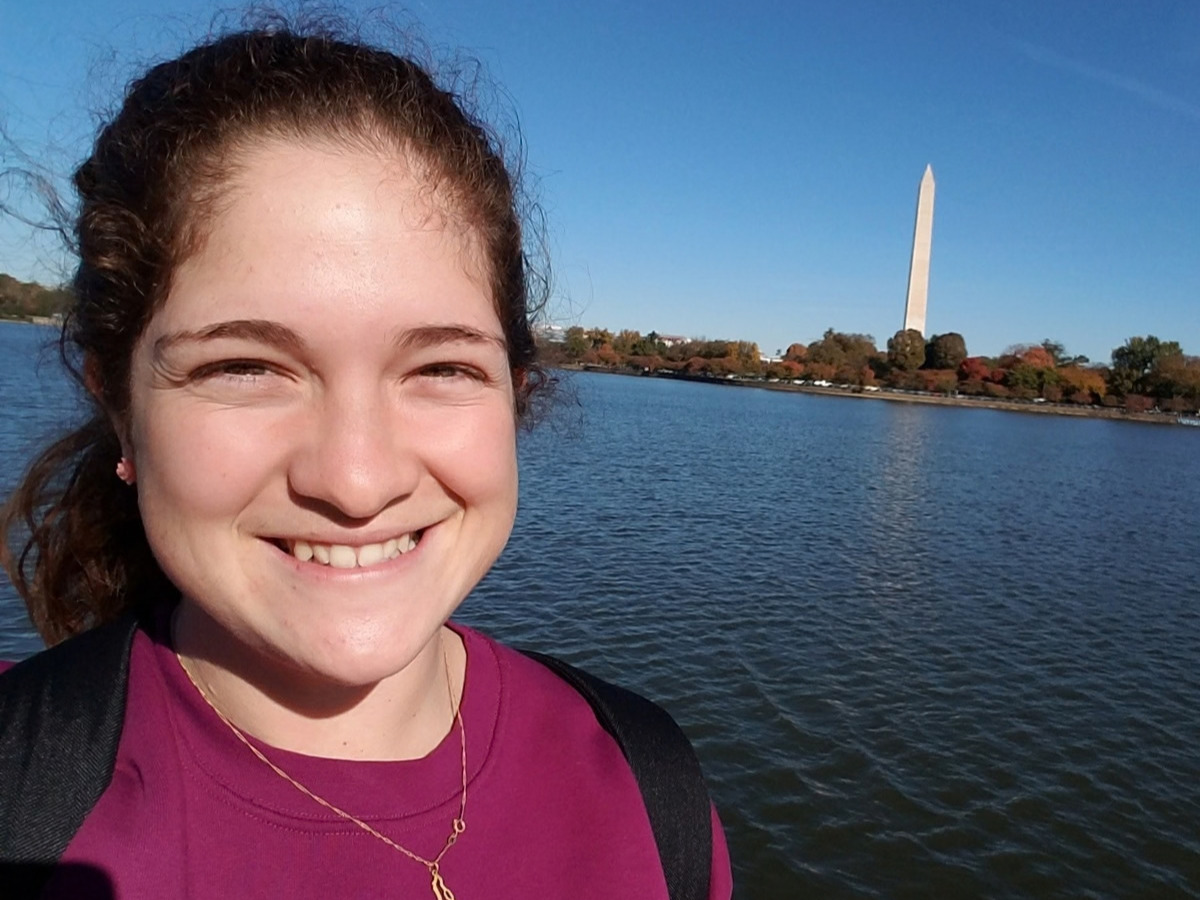
When I first landed in Greater Washington ten years ago, that was the only way I could describe it. It was my very first time ever setting foot in the United States, and on a purely physical level, my brain couldn’t process what was happening. I walked out of the airport in August into sweltering heat, looked up, and saw it rain. Coming from Israel, where summer is completely, predictably dry, standing in ninety-degree weather while water poured from the sky felt like stepping onto another planet.
I remember that first Shabbat so clearly. Fresh out of the IDF Education Corps, my uniform barely packed away, I walked into an entirely unfamiliar world of American synagogue life and vibrant liberal Judaism. Everything was culturally complex and utterly fascinating. I came with an educator’s fire, convinced my goal was simple: to evoke emotion around Israel. I was completely okay with anger or frustration, too, as long as there was a heartbeat. What took me by surprise back then was how deeply people wanted to speak Hebrew with me, stumbling over words with a genuine hunger that touched me then, and honestly still touches me today.
Ten years later, I walked off a plane and into this community once again. But the person writing this today feels worlds away from that wide-eyed young woman standing in the August rain.
Ten Years Can Change Everything
A decade carries immense weight. In those ten years, my life changed completely. I got married, became a mom to two incredible kids, and built a home back in Israel. Professionally, I stepped into global Jewish education, as the Educational Director and Manager for the Shlichut program worldwide. Returning now as both a mother and a seasoned professional, I see families, children, and a community I care about deeply through an entirely new lens.
And let’s be honest. The community itself is walking through a very different reality today than in 2016.
Between political polarization, rising antisemitism, and the heavy, lingering trauma of war, we have all been through the wringer. The warm, generous heart of Greater Washington is still here, but the air in the room feels different. Talking about Israel today often feels like handling a hot potato. It’s on everyone’s minds constantly, burning hot, but people are often anxious or hesitant to touch it. In a world dominated by quick soundbites and algorithms, we are constantly surrounded by sharp exclamation points and very few curious question marks.
Yet, wrestling with complexity is in our DNA as Jews. It’s who we are. And when the noise of the world tries to force us into rigid boxes, authentic, human connection becomes our sanctuary.
Living Bridges in a Fragmented World
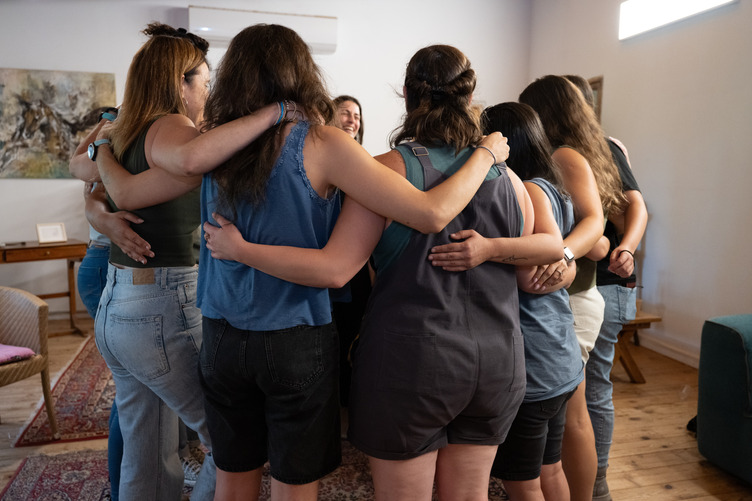
Since October 7, that truth has hit me on a deeply personal level. Shlichut (emissary work) was never meant to be a lecture or a series of polished talking points. It is a living, breathing, two-way street. In the darkest days after the attack, I watched our emissaries across the globe stand as human bridges. They were carrying unbearable heartbreak, some grieving murdered friends, others waiting on agonizing news of hostage family members, one young woman who was supposed to be at the Nova music festival and had only flown out the day before. Yet, they showed up every single day to share their raw, vulnerable truths. In return, this community wrapped them in love, holding space for their broken hearts. That mutual embrace proved to me why we do this: news headlines don’t heal people, but real relationships do.
Stepping into leadership as the head of Greater Washington’s mishlachat (delegation) program, right as it hits its own 10-year milestone, feels like coming full circle in a way that gives me goosebumps. I keep returning to the cantor’s prayer from the High Holidays: Hineni he’ani mima’as (Here I stand, impoverished in deeds). It is that quiet, overwhelming feeling of asking yourself, Who am I to carry this weight? Yet, I step into it with immense devotion, reverence, and gratitude for the trust you’ve placed in me.
My goal for our team of shlichim is to unlock the door for real, honest conversation. My role is to be a problem solver and a catalyst, helping our partner organizations thrive, guiding our shlichim to succeed, and advancing Federation’s mission on the ground. I hope people leave our conversations feeling energized, knowing that whatever challenge or vision they bring to the table, we can tackle it together, not just in words, but through meaningful action.
Anchored in Hope
At my core, as an educator and a mother, I am stubborn about hope.
Hope isn’t a passive wish. Instead, it’s the active belief that a better tomorrow is worth fighting for. I see it in my children every morning, I see it in the Mishlachat delegation serving this community, and I see it in the way people here continue to show up for one another.
Ultimately, my hope is anchored in the conviction that October 7 does not define us. It is an immense tragedy, one that we must study, learn from, and forever remember, but the Jewish people, the State of Israel, and Zionism hold a history, memory, and purpose that existed long before us and will endure long after us.
We are defined by our enduring strength, our continuity, and the way our communities show up for one another, not by the catastrophes along the way. In that shared resilience, hope isn’t just an idea, it is a lived reality.
As our Mishlachat program marks its 10-year milestone, we are already looking ahead, envisioning what our presence will mean as we approach Israel’s 80th anniversary in two years, its 90th in a decade, and far into the future. We cannot predict every curve in the road, but we can decide how we walk it together.
My door is wide open. Let’s dream big, ask the hard questions, and build this next chapter together.
Your support helps ensure our community can continue building meaningful relationships with Israel through authentic experiences, personal connections, and lifelong learning.
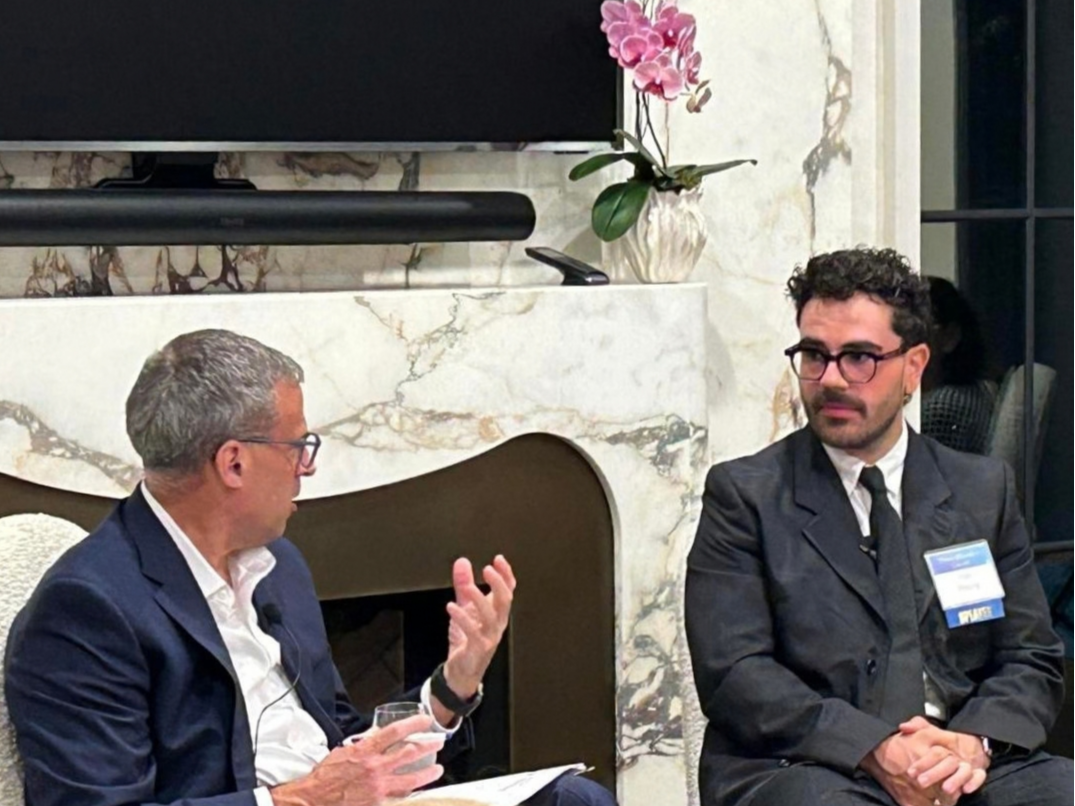
Three years after October 7, Hen Mazzig reflects on grief, Jewish identity, antisemitism, and the importance of making room for one another across different experiences and perspectives.
As the October 7 anniversary returns, how can the Jewish community channel grief and passion into a future shaped by both vigilance and love? Drawing on Rav Joseph Soloveitchik’s Kol Dodi Dofek, this reflection explores the tension between self-protection and moral aspiration.
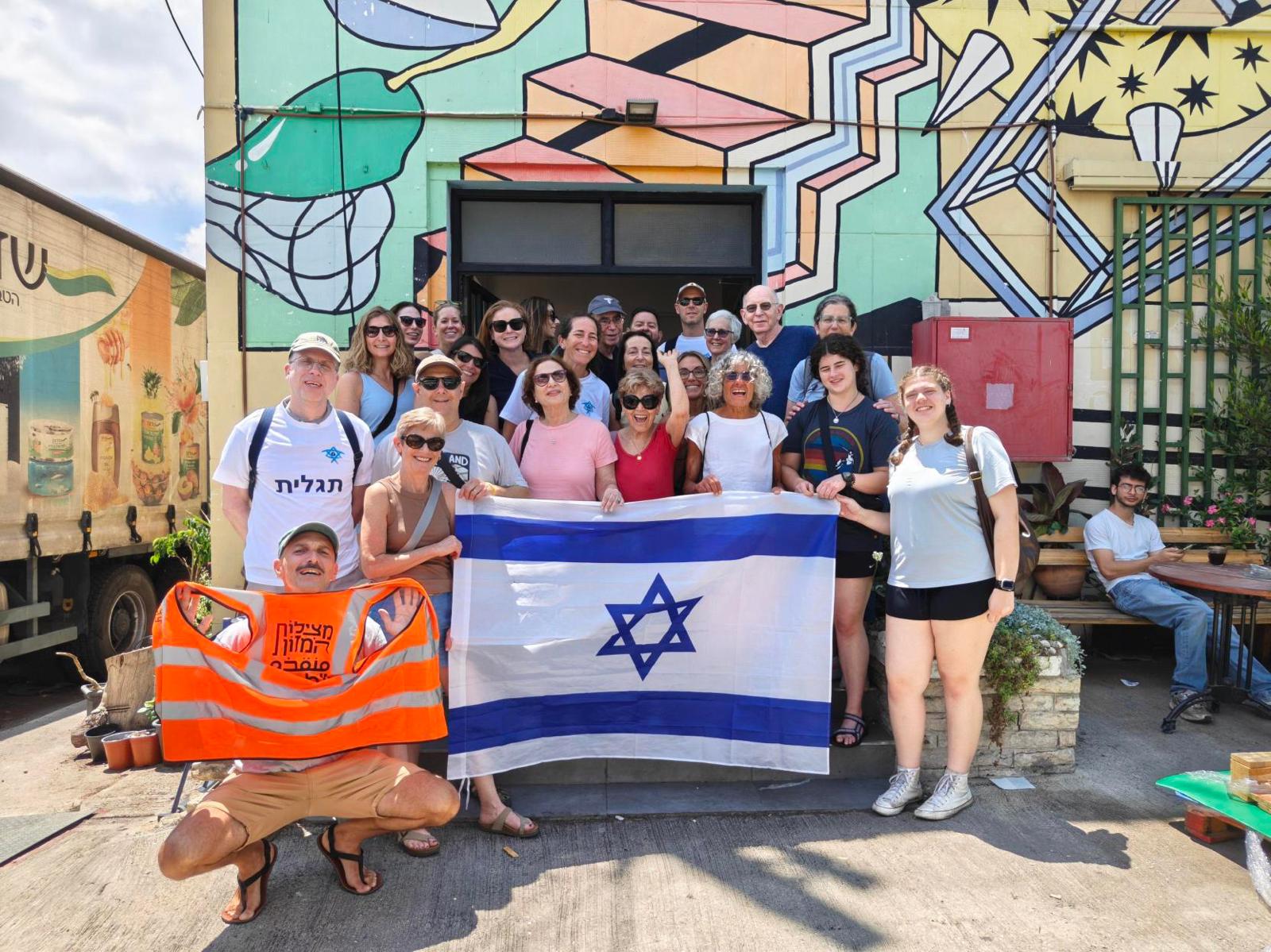
More than 25 members of Greater Washington’s Jewish community traveled to Israel for an eight-day volunteer mission, deepening a growing partnership with Kibbutz Nir Oz through service, solidarity, and personal connections.
Growing up, I never thought I’d work for a Jewish Federation. As a teen and young adult, I was heavily involved in Jewish life and in Zionist youth groups, but the Federation system hadn’t factored into my career plans. I surprised my younger self therefore when after some time in academia, I applied for a job at the Jewish Federation of Cleveland in 2002.
The person interviewing me asked why it was I had chosen to take this step. I replied that if you want to create change, you must go to an organization that has the capacity to create change.
A couple decades later, I believe this more than ever. A Jewish Federation’s capacity to spur impact for and on behalf of a Jewish community is unparalleled. This is because the Federation structure allows us to operate on three levels at once: engaging individuals, partnering with organizations, and sparking community-wide action.
It’s for this reason (among many others) that whenever someone suggests a century-old system couldn’t possibly serve the needs of the future, I always push back. Federation is a legacy institution precisely because of our ability to evolve to meet the shifting challenges and opportunities we face. As Shira Hutt and Mimi Kravetz of the Jewish Federations of North America wrote last week, the Federation model isn’t static and never has been.
Of course, having the capacity to effect change doesn’t mean anything unless we put it to work. At Federation, we get to inspire, engage, and mobilize people to generate the resources and ideas that will help sustain Jewish life. Many organizations can raise funds, but only Federation can bring significant resources, a network of partnerships, talented staff and lay leadership, and the broader community together to tackle shared goals. We get to ask hard questions. Try new things. And work on the frontier of what’s next.
That’s another thing I love about the role of Federation—we are relied upon to serve as both leader and supporter. We have a clear vision for the future of Jewish life and take seriously our work to use our bully pulpit and to represent the needs and interests of Jewish Greater Washington. But it means just as much to us to operate in the spaces where we don’t have all the answers. Elevating important issues and bringing people together to have important conversations and express and exchange ideas is also a critical part of our work.
I was an enthusiastic job candidate back in the day, and my enthusiasm for what our community can accomplish has only grown. Especially now, as historic challenges mount, we must leverage the full extent of our capacity to create change. We have so much going for us as a community. It’s our job to convert that potential into forward motion for the sake of today and tomorrow.
Three years after October 7, Hen Mazzig reflects on grief, Jewish identity, antisemitism, and the importance of making room for one another across different experiences and perspectives.
Ten years after first arriving in Greater Washington, a returning educator reflects on Shlichut, Jewish connection, the impact of October 7, and the power of authentic relationships to build hope and resilience.
Three years after October 7, Federation continues to stand with communities across Israel, evolving from emergency relief to trauma support, economic recovery and long-term rebuilding—helping families, individuals and communities take the next step toward resilience and hope.
What 300 Jewish Leaders Can Teach Us About Showing Up in a Difficult Moment
September 9, 2026
The Jewish Federation of Greater Washington
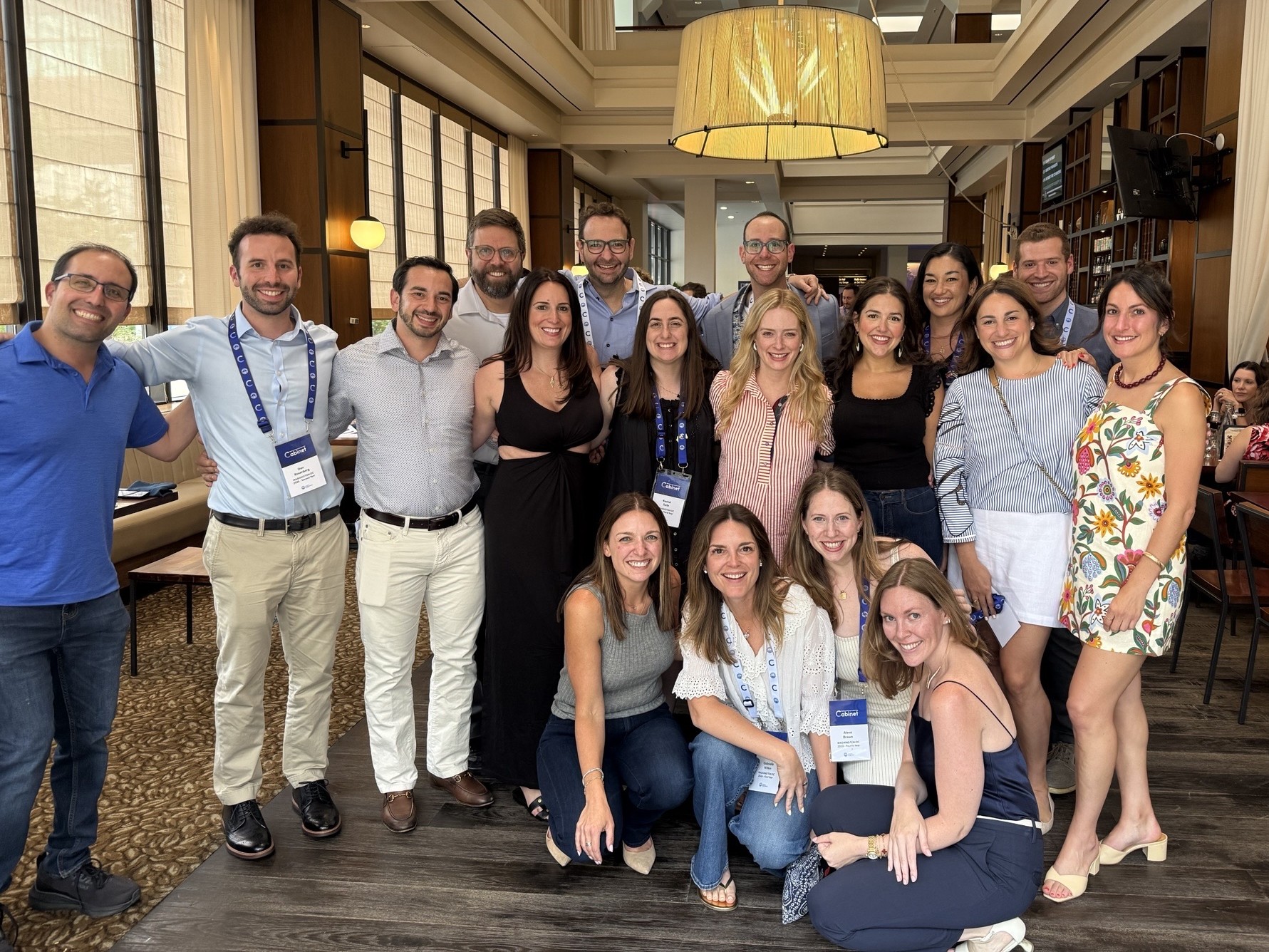
The room was full of 300 Jewish leaders from different cities. Different careers. Different Jewish experiences. Different ideas about what comes next. And yet, as Cabinet members from Greater Washington looked around the room in Minneapolis, one thing kept becoming clear.
They weren’t as “different” as they might have imagined.
“We all have the same concerns,” said The Jewish Federation of Greater Washington Cabinet member Dana Klein. “It doesn’t matter which community we come from, what we do for work, if we have kids or not. We are all invested and concerned about the same issues facing our community. And that is very powerful.”
They came to talk about philanthropy, security, Israel, and global Jewry. They heard from Minneapolis Mayor Jacob Frey and Rabbi Arianna Gordon of Temple Israel in West Bloomfield. They wrestled with how to talk across differences, how to serve their communities and how to become better leaders. But underneath all of it was a more personal question.
What does it mean to be a Jewish leader right now?
Turning Challenges into Leadership
Antisemitism is rising. Security has become something Jewish communities have to think about in their own neighborhoods. Families are making decisions about how visible they want to be. And more than one Cabinet member spoke about the feeling of watching everything unfold and wondering what, exactly, you are supposed to do about it.
Gabrielle Witkin put it plainly. “This is a hard moment to be Jewish,” she said. “And hard moments are exactly when leaders get made or lost.”
Gabrielle is a Jew by choice, and that choice comes with a responsibility she takes seriously. “I want a world where every Jew can live a safe, vibrant Jewish life. I want to leave this world better than I found it for my children.”
That desire to do something, rather than simply watch, is part of what brings people to Cabinet.
For Dana, Federation has made being an active part of the Jewish community a priority. “At a time when our community is constantly at risk, locally and abroad, giving back and making ourselves stronger has never been more important,” she said.
And there is a recognition that, as difficult as this moment is, Jewish communities have something powerful to draw on. Each other.
They attended the Retreat hoping to learn, enhance their leadership skills, and grow their network. That was one of the most meaningful parts of the Retreat for Britney Wambold, Cabinet Co-Chair, who sits on Federation’s Next Gen Board. She has met people through Cabinet from different cities, careers, Jewish backgrounds and phases of life. “Everyone is driven, cares deeply about making an impact, and shares a commitment to philanthropy and the Jewish community,” she said.
“I knew I would meet some nice people, but I was not expecting to make lifelong friends,” Dana added.
Britney knows that feeling well. “There is also something really special about knowing you have so many people in your corner,” she said. “Cabinet is full of people who genuinely want to see each other succeed and support one another throughout life.”
Alexa Brown, Cabinet Advisor, has watched that happen over four retreats. “What makes Cabinet different is how personal it is,” she said. “You walk away with some of your closest friends.”
At Cabinet Everyone Just Gets It
Three hundred people, and no one had to explain why they were there. That may have been the most powerful feeling in the room.
No one had to explain why security matters. Why Israel feels personal. Why the future of Jewish life is something worth worrying about. Why, even while building careers and raising families, they feel a responsibility to give their time, energy and resources to something bigger than themselves.
They didn’t have to explain why they were there because everyone else already understood. “It’s so easy to feel overwhelmed by everything happening in the world around us,” Alexa said. “Being with chevre (friends) reminds us we don’t ever need to face anything alone.”
For Gabrielle, that realization brought clarity. “I expected to feel small in that room. Instead I got clarity.” She came home with a better understanding of where she can make an impact, not everywhere, but somewhere meaningful. “I came home knowing where I can serve best rather than trying to serve everywhere.”
The Moment that Reframed Their Entire Perspective
One conversation in particular stayed with Gabrielle. Her caucus leader said something that reframed the way she was thinking about philanthropy:
“The only people giving to the Jewish community are the Jews.”
The idea, though simple, resonated deeply in a room full of people already asking themselves how much they should give, how much time they should devote, and how much responsibility they are willing to take on.
The conversation turned to giving beyond what feels comfortable. For Gabrielle, the discomfort was the point. Because leadership, she realized, isn’t necessarily about finding the comfortable thing you can do. Sometimes it is about deciding what you’re willing to sacrifice because you believe the community is worth it.
What Happens After the Cabinet Retreat?
The three days end, but the conversations, friendships, and questions don’t. If anything, they become more urgent, because eventually, every Jewish leader has to decide what kind of role they want to play in the future they’re helping create.
What kind of Jewish community do we want to leave for the people coming after us?
For Gabrielle, that question is at the heart of Cabinet.
“The next generation of leaders will not be produced by accident,” she emphasized. “We need to be gathered, trained, challenged, and connected to peers who are carrying the same weight. That is what builds the bench our community will need in ten and twenty years.”
And that work cannot wait.
“It matters that we are doing it now, in our thirties and forties, while we are raising the generation after us,” she said. “Our kids are watching how we respond to this moment.”
To join us in building that future or to learn more about Cabinet, please reach out to Jeremy Frisch, Federation’s Philanthropy Officer, Donor Engagement.
Three years after October 7, Hen Mazzig reflects on grief, Jewish identity, antisemitism, and the importance of making room for one another across different experiences and perspectives.
Ten years after first arriving in Greater Washington, a returning educator reflects on Shlichut, Jewish connection, the impact of October 7, and the power of authentic relationships to build hope and resilience.
As the October 7 anniversary returns, how can the Jewish community channel grief and passion into a future shaped by both vigilance and love? Drawing on Rav Joseph Soloveitchik’s Kol Dodi Dofek, this reflection explores the tension between self-protection and moral aspiration.
The Jewish Community Foundation of The Jewish Federation of Greater Washington
It's Summer Camp Season!
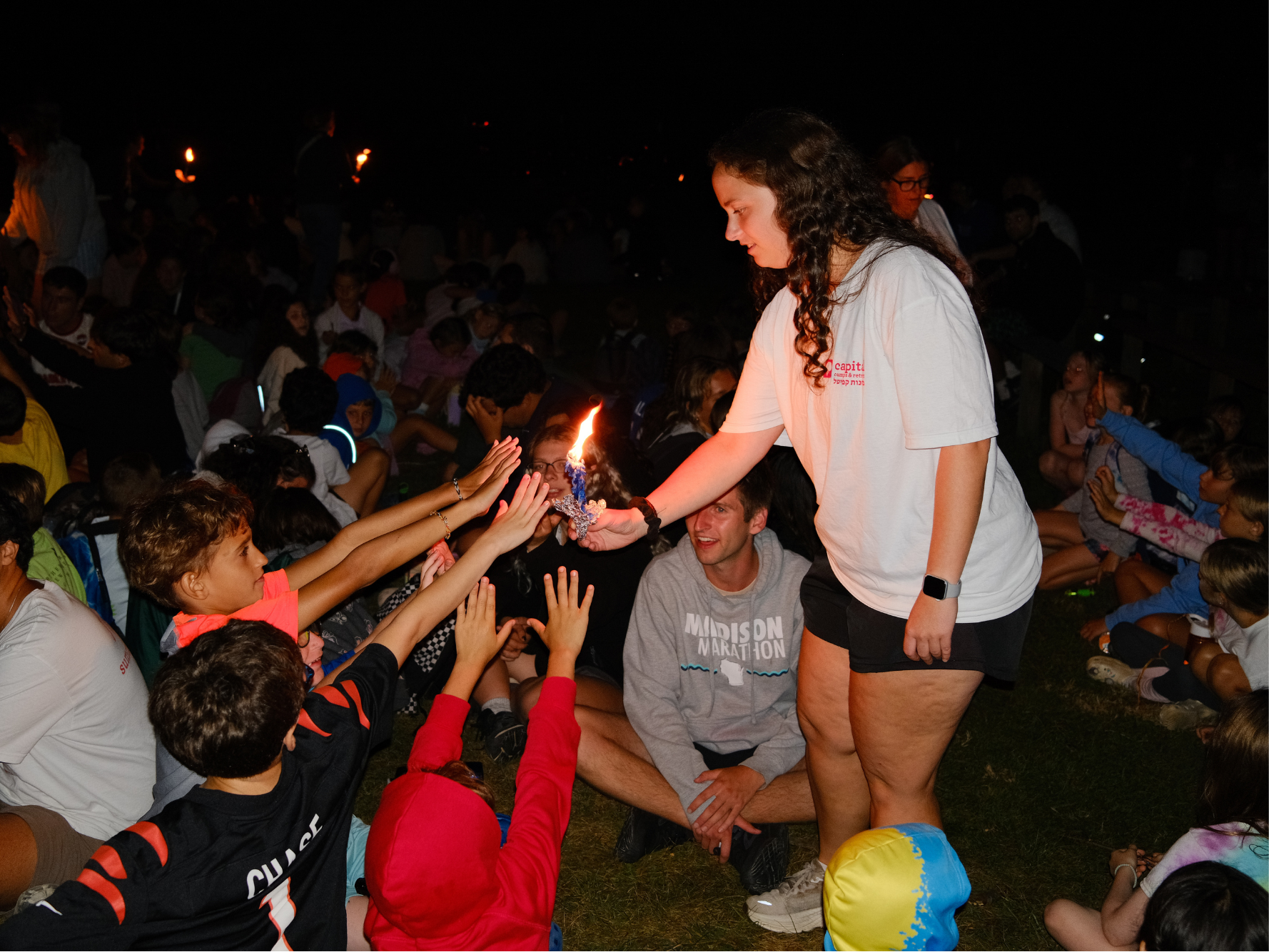
A summer away from home. A dining hall full of noise. A Shabbat filled with song and dance. A friendship that started in a bunk and is still going strong twenty years later.
Ask an American Jew what first made them feel “Jewish,” and there’s a decent chance the answer involves summer camp.
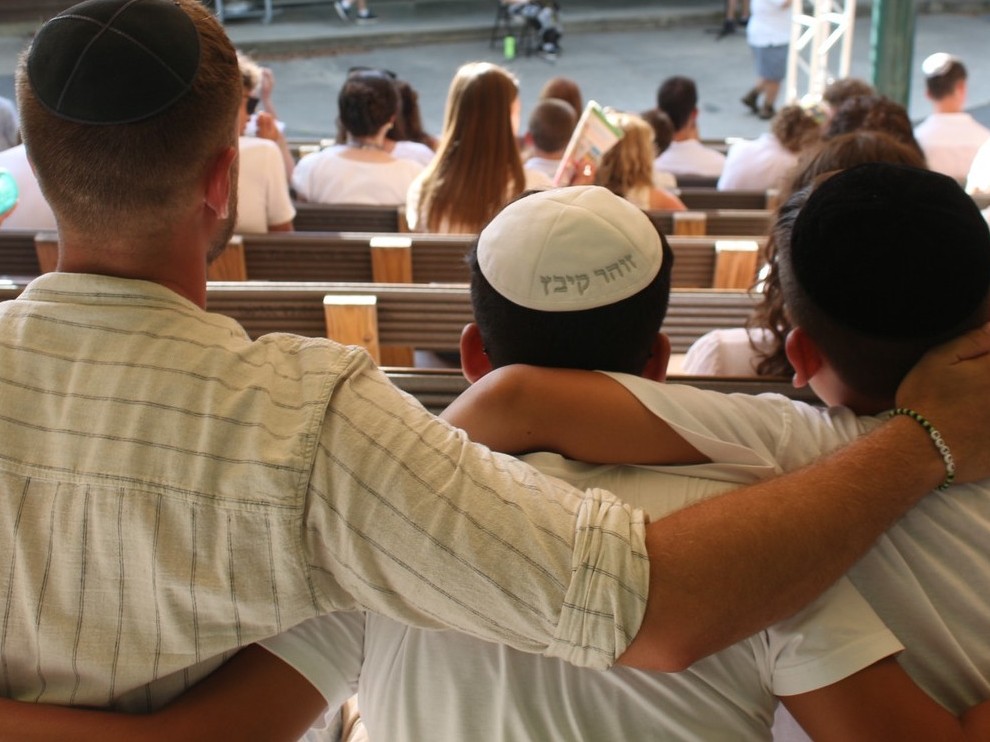
Jewish overnight camp is one of the key ways that Judaism becomes an immersive way of life. For families in the DMV, Capital Camps has been that introduction for nearly four decades.
What actually happens at Capital Camps?
The short answer: a lot.
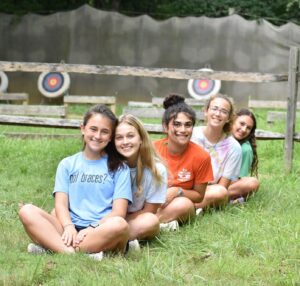
Located in the Catoctin Mountains of Pennsylvania, just 75 miles from DC, Capital Camps is the premier Jewish community overnight camp in the region. A core partner of The Jewish Federation of Greater Washington, each summer, more than 900 campers and 180 staff come together across multiple village programs. Programming spans waterfront activities, a ropes course, theater & arts through the Habima program, a working farm, and Jewish life experiences that run through the entire summer. A 700-person dining hall serves kosher meals (meat, dairy, and pareve kitchens, if you were wondering), and staff provide daily opportunities for campers to connect with Jewish text, tradition, and community.
First-time campers enter through the Yalla program, a specially designed experience for children navigating camp for the very first time. Older campers transition into leadership programming that, for many, becomes their first tangible leadership experience: running a Shabbat, taking responsibility for a cabin, or mentoring a younger camper.
Capital Camps also works to ensure that different groups feel included and that they can enjoy everything the summer camp experience has to offer. The Atzma’im inclusion program ensures that children of any denominational affiliation, gender, race, sexual orientation, or socioeconomic status, including those with a range of intellectual, emotional, and physical abilities can fully participate in the camp experience. The campus is fully ADA compliant and support staff is available for medical and mental health services. Through annual partnerships with Friends of the IDF, Israeli campers who have lost someone through conflict are welcomed to camp, a reminder that the camp’s community extends well beyond its 75-mile radius.
How does the Foundation support camp?
Access to transformative Jewish experiences is one of the most powerful investments a community can make. Research shows that Jewish overnight camp creates lasting connection to Jewish identity, community, and leadership in ways that are difficult to replicate.
Study after study, from the Foundation for Jewish Camp to Brandeis University’s Cohen Center for Modern Jewish Studies, finds that Jewish camp alumni are more likely to marry Jewish partners, raise Jewish children, donate to Jewish causes, and remain engaged in Jewish communal life across the arc of their adulthood. The mechanism is straightforward: immersive, joyful, community-based experiences during formative years create an attachment to Jewish life that withstands the drift of adulthood.
We know this, and yet, cost remains one of the primary reasons families don’t send their children to Jewish overnight camp. If we can lower this barrier to access, we know we can create strong and vibrant future generations of Jews.
Scholarship funding exists to remove this exact barrier.
The Jewish Community Foundation of the Jewish Federation of Greater Washington is proud to support the expansion of access to transformative experiences like Capital Camps through strategic philanthropy and scholarship funding through both Donor Advised Funds and Legacy Gifts. Because one of the truths we keep returning to in this work is that belonging isn’t something you can teach in the abstract. It has to be lived. And the experiences that young people carry with them into adulthood, their sense of Jewish identity, their instinct toward community, their capacity for leadership, are often rooted in summers like this one.
Ready to learn more?
If you’re a donor thinking about where camp scholarship funding goes, it goes here: to a child who might not otherwise have access to the people, the places, and their connection to Jewry they just haven’t met yet.
Three years after October 7, Hen Mazzig reflects on grief, Jewish identity, antisemitism, and the importance of making room for one another across different experiences and perspectives.
Ten years after first arriving in Greater Washington, a returning educator reflects on Shlichut, Jewish connection, the impact of October 7, and the power of authentic relationships to build hope and resilience.
As the October 7 anniversary returns, how can the Jewish community channel grief and passion into a future shaped by both vigilance and love? Drawing on Rav Joseph Soloveitchik’s Kol Dodi Dofek, this reflection explores the tension between self-protection and moral aspiration.
I’ve spent a lifetime experiencing the incredible, vibrant diversity of the Jewish world. I grew up Conservative in Toronto, navigated Reform spaces in Anaheim after my family moved there when I was nine, engaged with Chabad, and even spent time backpacking through Israel, staying on my family’s kibbutz.
Moving around as much as I have, I’ve seen just about every model of Jewish community layout imaginable, from tiny, 20-family pockets with a traveling rabbi to massive communities where people only show up for the High Holidays. Experiencing that full spectrum also gave me a deeper understanding about what makes a Jewish community thrive.
When my family and I moved to Alexandria right before the pandemic, we knew it was time to finally put down deep roots and find a true home in our local community. I jumped into leadership, eventually chairing several committees at Beth El Hebrew Congregation. But while I loved my synagogue, I couldn’t shake a familiar feeling: NoVA’s Jewish community was missing out on key opportunities to come together.
The structures we’ve inherited naturally build walls between community leaders throughout our region. But the reality is, leaders across our different NoVA organizations actually want to work together. At our core, we are facing the same challenges and chasing the same goals. We are more alike than we realize and are stronger and more effective together. We just needed the space, the trust, and the opportunity to do it.
That opportunity came for me when I learned about Federation’s Northern Virginia Leadership Cohort from Carly Rubenstein, Board President at Beth El. She told me it was something I’d find fascinating and impactful for my work in the community. I didn’t know a single other person who had signed up for it, but I decided to take the leap.
Professional-Grade Tools for Community Transformation
I recently took six months off from the corporate world to dedicate myself fully to volunteering as a leader in Jewish communal work, so I wasn’t looking for a casual networking mixer. I wanted something substantial. To my surprise, the caliber of this Federation program ranked right up there with the absolute best professional development trainings I’ve ever done in the corporate sector.
Led by renowned leadership consultant Rae Ringel, the program is entirely about giving you tools, learning by doing, and doing in a group of leaders who have the same mission and values. Through a dynamic mix of in-person and virtual sessions, Rae guided us through “connection modalities” that taught us how to surface differing perspectives, navigate difficult conversations, and truly articulate both our personal stories and our organizations’ missions.
For me, the most tangible takeaway was learning structured, innovative frameworks to pull apart larger, sometimes overwhelming community challenges into manageable, actionable pieces, building the concrete skills to execute your vision.
The Power of Coalition: “Shipbuilding” in NoVA
What surprised me most, though, was the sheer willingness of everyone in the room to work together.
There is a distinct difference between standard corporate or nonprofit experience and Jewish nonprofit experience. To me, the main difference is “shipbuilding,” learning how to build lasting coalitions across different denominations, synagogues, and grassroots organizations in a casual, high-trust environment.
The Jewish Federation of Greater Washington understands this, explicitly designing the program to facilitate these deep connections by assigning us to smaller “coffee groups,” which became the foundation for real collaboration.
Just this week I was texting with another participant from my cohort. We recreate those coffee groups all the time. We are constantly leaning on one another, bouncing ideas off each other, and using the exact problem-solving structures we learned together to figure out how to best serve Jewish NoVA.
By bringing together leaders from across the Jewish communal space in NoVA, Federation is actively weaving a powerful network of friends and collaborators. The cohort has allowed lay leaders and professionals across the region to realize we are not facing our challenges alone.
Now’s The Time: Join the Third NoVA Leadership Cohort
If you are reading this and feeling even a little bit intrigued, my advice to you is simple: don’t be afraid to give it a shot.
Whether you are a seasoned board member, a dedicated committee chair, an engaged volunteer, or someone who hasn’t held a formal leadership role yet but has a passionate desire to grow, this cohort will give you the tools to decide how you want to be involved and the lifelong network to back you up.
Federation is launching the third Northern Virginia Leadership Cohort this fall. From August 2026 through May 2027, a new group of 16–20 lay leaders will come together for a kickoff event, a closing celebration, and 8 monthly sessions (alternating between in-person and Zoom) led once again by Rae Ringel. To learn more and nominate a talented and dedicated individual with a desire to grow in their Jewish leadership journey (including yourself), please see here.
We need a diverse set of organizations, ages, and perspectives to make a truly strong, vibrant, and unified NoVA Jewish community a reality.
Take it from me—it is entirely worth the investment.
Ten years after first arriving in Greater Washington, a returning educator reflects on Shlichut, Jewish connection, the impact of October 7, and the power of authentic relationships to build hope and resilience.
Three years after October 7, Federation continues to stand with communities across Israel, evolving from emergency relief to trauma support, economic recovery and long-term rebuilding—helping families, individuals and communities take the next step toward resilience and hope.
More than 25 members of Greater Washington’s Jewish community traveled to Israel for an eight-day volunteer mission, deepening a growing partnership with Kibbutz Nir Oz through service, solidarity, and personal connections.
Jewish summer camp is where children build lifelong friendships, grow their independence, develop leadership skills, and strengthen their connection to Jewish life. For many, camp becomes one of the most formative Jewish experiences of their childhood—shaping identity, confidence, and belonging long after summer ends.
Today, families are navigating rising antisemitism, economic uncertainty, and the need for safe, affirming spaces where their children can feel secure, proud, and connected to their Jewish identity. For many, camp can feel out of reach without support.
That’s why Federation invests in two key pathways that make Jewish camp possible for families across Greater Washington: One Happy Camper grants for first-time campers and need-based financial aid for families facing financial barriers.
This summer, those grants will help hundreds of children attend more than 40 Jewish overnight camps across the country, opening the door to a first camp experience that many families might not otherwise be able to afford. And through our need-based financial aid program, campers will attend more than 20 camps nationwide with the support they need to participate fully in Jewish camp life.
As one parent shared, “Camp has always been a high expense, but without the scholarship, it would have been the first thing we would have been forced to remove to save money. Camp is where our children develop leadership skills, a sense of confidence, form lasting connections and relationships, and it helps ground them in their identity.”
Another wrote, “I have lost my job twice this year. I’m also a single parent, but Jewish camp is my top priority. I am grateful beyond words for the financial assistance.”
These stories remind us that financial aid is about much more than covering tuition. It is about ensuring access to safe, joyful, and deeply formative Jewish spaces. It is about helping children build community, develop pride in their Jewish identity, and feel connected to something larger than themselves.
As we look ahead to another summer of campfires, song sessions, Shabbat celebrations, and lifelong memories, we are grateful to the donors who make these opportunities possible.
Together, we are lowering barriers, opening doors, and investing in the next generation of Jewish life.
Want to help more children experience the magic of Jewish camp? Your gift helps ensure that financial circumstances never stand in the way of a transformative Jewish summer.
Ten years after first arriving in Greater Washington, a returning educator reflects on Shlichut, Jewish connection, the impact of October 7, and the power of authentic relationships to build hope and resilience.
A Jewish Federation’s capacity to spur impact for and on behalf of a Jewish community is unparalleled. By engaging individuals, partnering with organizations, and sparking community-wide action, Federation can convert community potential into forward motion.
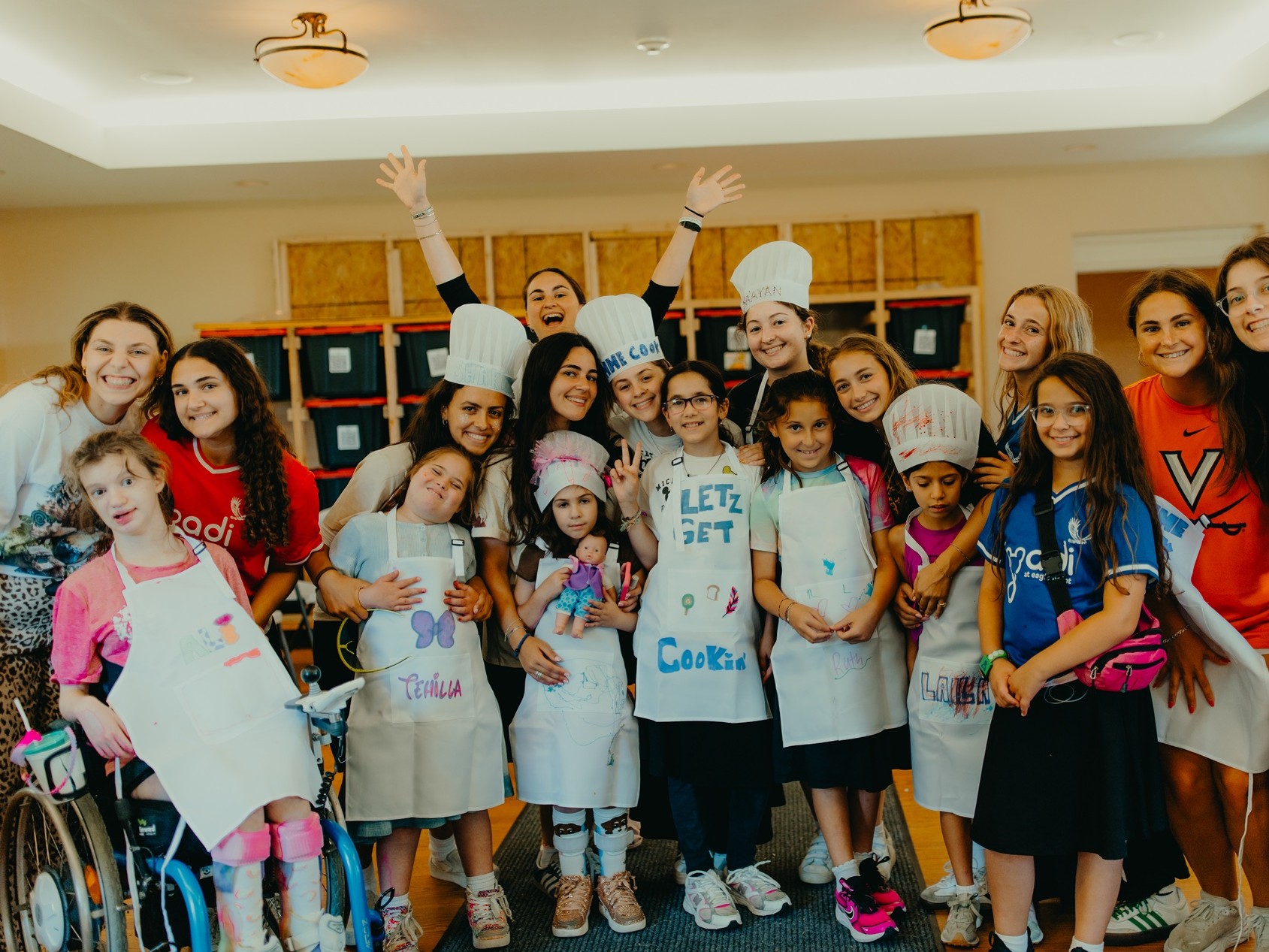
For Roey, imadi opened the door to a Jewish summer camp experience that once felt out of reach. With personalized support for his health needs, he discovered new adventures, friendships, independence, and the joy of saying, “I did this at camp.”
The Jewish Connections I Never Expected to Find in Greece
June 17, 2026
Aaron Feldman, National Young Leadership Cabinet Member
The Jewish Connections I Never Expected to Find in Greece
Standing in a synagogue in Thessaloniki, Greece, the weight of history hits you all at once.
Before World War II, this city was the cultural heart of Sephardic Jewish life, so vibrant it was called the “Jerusalem of the Balkans.” But during the Holocaust, the community was wiped out with horrifying speed. In less than six months, 96% of the Jewish population was murdered. Out of 50,000 people, fewer than 2,000 survived.
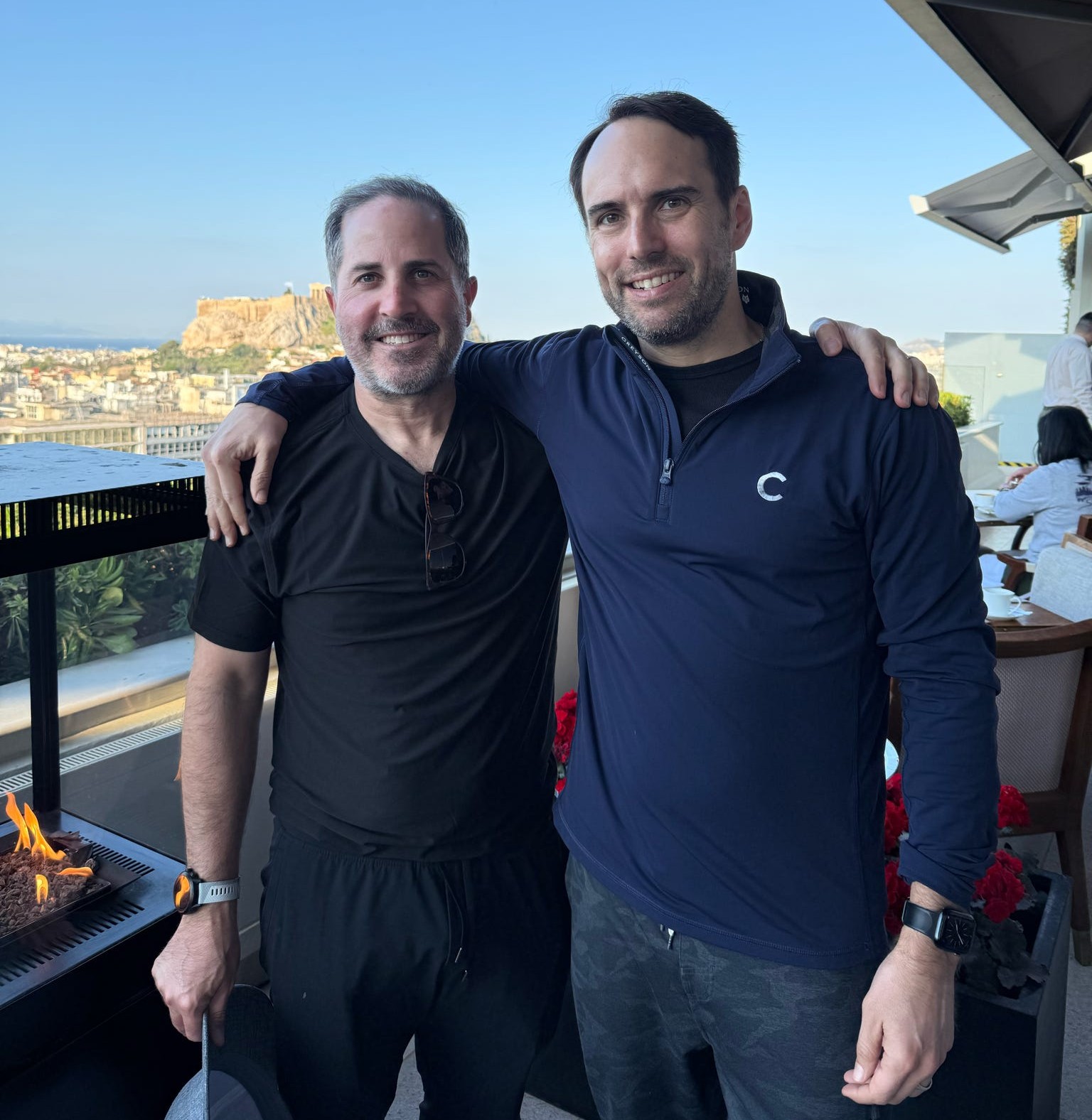
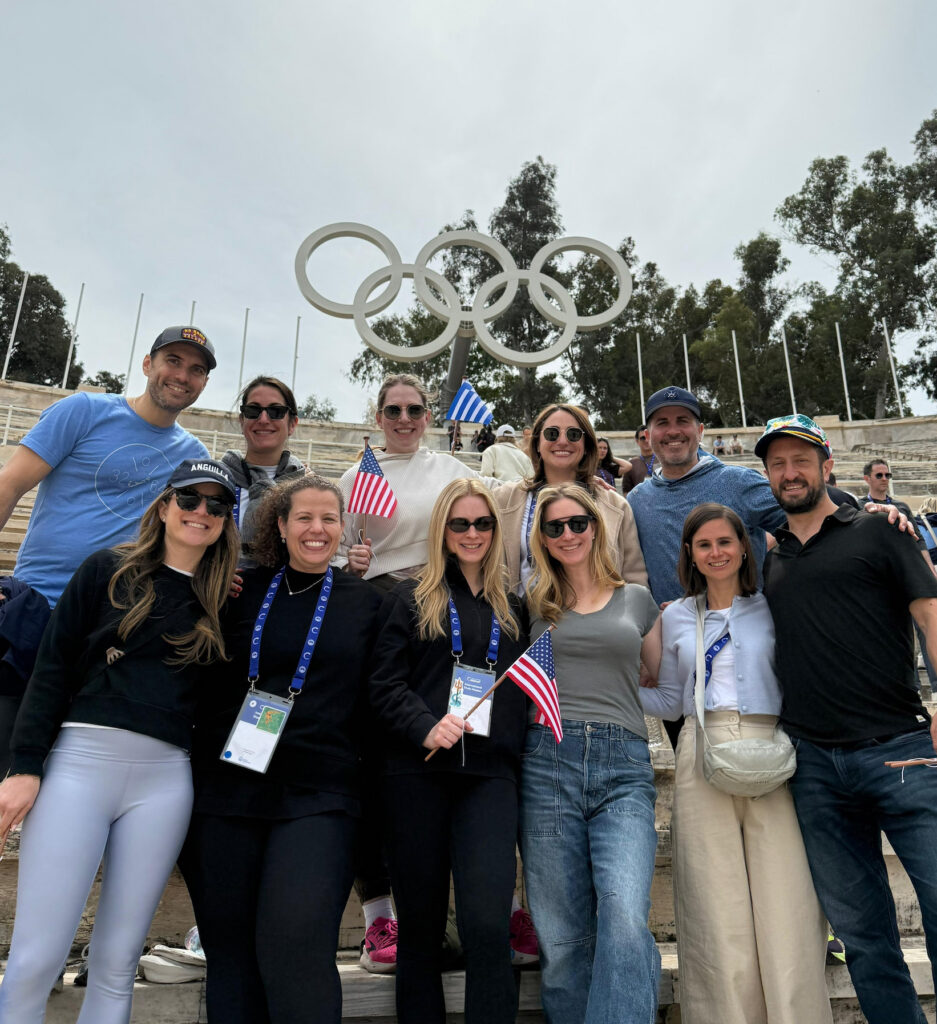
I was in Thessaloniki this past May on a study mission with Cabinet, the Jewish Federations of North America’s (JFNA) five-year leadership program for volunteer leaders aged 30-45.
Finding the Path to Jewish Leadership with Federation
I didn’t grow up in a Federation family. When my wife and I settled down to raise our kids, that was when we first sought out The Jewish Federation of Greater Washington. As a financial advisor, I was inspired by the generous giving of a few clients that donate directly from their retirement accounts to places they care about. I knew I wanted to be involved in philanthropy, and Federation felt like the right fit, because it allowed us to give broadly. It was comforting to know our dollars would act as a wide safety net, directly benefiting our community members who need services and support.
As our journey with Federation developed, I wanted to learn more, develop deeper friendships, and continue to grow a professional community of peers. That’s when I decided to join Cabinet. I knew this opportunity would be a key pathway for me to grow my impact and my connection to my Jewish community. What I didn’t know at the time was that it would also connect me to our broader Jewish family.
How Cabinet Connected Me Beyond Greater Washington
Cabinet missions shift between Israel and various diaspora communities like Hungary, Argentina, or Greece, pulling leaders out of their home communities to show them exactly where our collective dollars go globally. Traveling to Greece with our cohort this past May completely shifted my perspective, opening my eyes to a corner of the Jewish world I never would have experienced on my own.
While in Thessaloniki, our Cabinet cohort met a local family who beat those impossible wartime odds. The mother is a survivor, and her family only made it through because her father had immigrated from Germany. In a community where almost everyone spoke Ladino or Greek, no one spoke German. His ability to understand and translate became their only shield. To sit across from their descendants today, generations later, still living, practicing, and maintaining a Jewish life there, was a total “wow” moment.
A World Away, Yet Family
In Athens, our cohort sat in a Jewish-owned coffee house and listened to a widowed mother talk about life post-October 7. She shared how her social circle has had to pull inward because the rise in visible antisemitism on the streets is impossible to ignore. You can’t walk through Athens right now and not be reminded that you are different. Yet, at the same time, the city has become a haven for Israelis migrating from the conflict.
Without the access and immersion provided by Cabinet, I wouldn’t have had these raw, firsthand conversations. I wouldn’t have seen how our giving acts as a vital lifeline for our global family.
At a time when our world and our own communities can feel incredibly fractured, seeing that global connection was good medicine. It was a powerful reminder that there are people around the world who see things exactly the way we do, who see us as part of their collective identity, and who are just happy we showed up.
Finding Your Pathway
When I first joined Cabinet, my kids were very young, and finding the time felt daunting. But my message to my peers in Greater Washington is simple: you have to challenge yourself. If your community and your identity matter to you, you have to actively create the time for it.
You don’t need an abundance of hours to get involved, but you do need to step up. Find your own pathway, define it, and do it. What you do will stay with you forever.
Learn more about how you can get involved in Federation here.
Three years after October 7, Hen Mazzig reflects on grief, Jewish identity, antisemitism, and the importance of making room for one another across different experiences and perspectives.
Ten years after first arriving in Greater Washington, a returning educator reflects on Shlichut, Jewish connection, the impact of October 7, and the power of authentic relationships to build hope and resilience.
Three years after October 7, Federation continues to stand with communities across Israel, evolving from emergency relief to trauma support, economic recovery and long-term rebuilding—helping families, individuals and communities take the next step toward resilience and hope.
Sarah Green, Senior Director, Financial and Resource Development
It was pouring. The kind of heavy, relentless DC rain that usually keeps everyone inside. But on that night, out at Metrobar, nobody seemed to care about getting soaked.
It was the launch party for The Jewish Federation of Greater Washington’s Next Gen rebrand in November 2021, and it was the first time in a year and a half, after the long, cooped-up isolation of the pandemic, that this community of 20, 30, and 40-somethings was finally coming together in person. Looking out at the crowd laughing and talking through the downpour, you could feel the sheer joy of people finally together again.
Watching them, I saw the future of our community taking shape in the rain. And for me, as I step into my new role as Federation’s Senior Director of Financial Resource Development (FRD), it remains a deeply personal touchstone.
Inheriting a 50-Year Legacy
My understanding of Jewish community was shaped long before I began my professional journey here, by my paternal grandfather, Murray Green. I grew up watching his deep involvement with Jewish communal organizations in New York. As a child, I remember going to the galas and functions where he was honored, watching a generation that took absolute, unconditional responsibility for building the institutional Jewish life we inherit today. The camps, the day schools, the very foundations of our community.
Today, we are navigating challenges he could have never foreseen back in the 1970s. We are managing a deeply polarized political landscape, a painful rise in antisemitism, and shrinking attention spans driven by social media.
Judaism has always been a place for robust debate, where we can argue passionately in one room and eat bagels together at kiddush in the next, but that civic fabric is eroding in American life at large. Federation is the place where the capital, the relationships, and the leadership come together to find solutions to these massive, modern challenges.
Where the Personal Meets the Professional
I began my work in non-profit fundraising 13 years ago, first at Achilles International in New York, followed by the Cystic Fibrosis Foundation in Bethesda. By my late 20s, I realized I was working constantly but lacking a community of my own.
I figured, why not mold my personal and professional worlds together?
That’s what brought me here six years ago, starting just six weeks before COVID-19 changed everything. Since then, Federation has been the backdrop of my entire life. Over these past pivotal years, I got engaged, married, survived the pandemic, went through the emotional rollercoaster of IVF, and brought two beautiful children into the world. Through every high and low, the staff and lay leaders here have had my back.
In fact, after my first child was born, I took a look at my baby registry out of pure curiosity. To my absolute amazement, Federation donors were the second-largest cohort of people who contributed. Today, every single time I pick up my diaper bag or wrap my kids in a blanket, I think of the specific donor who sent it to us.
Deepening Connection Every Day
That is the beauty of this work. It’s all about the long arc of relationships. We aren’t just looking for a transactional gift right now. We are investing in 40-year relationships, walking alongside people from the very beginning of their leadership journeys.
Now, as I help lead our FRD team, my biggest priority is deepening the connections we’ve been building across every corner of our community. We have incredible younger adults eager to meet seasoned leaders, and we have senior leaders who want to mentor and pass down their philanthropic values.
My goal is to continue the work of weaving these generations together into one succinct tapestry of programming and relationships. To create a community where a young professional feels entirely comfortable making an 8 p.m. Sunday phone call to a seasoned mentor for advice, building organic, multi-generational networks that exist outside of organizational boxes.
The Power of Showing Up
When I need a total break from the fast-paced world of strategy and campaign goals, you can find me outside. My perfect, work-free Sunday is spent with my husband, our three-year-old, and our five-month-old, walking around the zoo, soaking in the greenery, or pushing the stroller on a run.
When I look at my two small children, I think constantly about continuity. They are the future, and they are the reason we do this.
Right now, there are over 400,000 Jewish people across the Greater Washington metro area, spanning from the vibrant tech hubs of Northern Virginia to the heart of the District. Yet, only a fraction of those households currently contribute to our annual campaign. Too often, people fall into the trap of thinking, “Someone else will take care of it,” or “My single donation doesn’t matter that much.”
But the truth is, it doesn’t work unless everyone participates.
If you care about the overarching continuity and safety of the entire Jewish ecosystem, and if you want to ensure there is a vibrant, connected community for the next 75 years, you can achieve it with Federation.
I want every single Jewish person in our region to know that if they pick up the phone, they can find a place where they truly belong.
We have the imagination, the capacity, and the heart to build that future together.
Three years after October 7, Hen Mazzig reflects on grief, Jewish identity, antisemitism, and the importance of making room for one another across different experiences and perspectives.
Ten years after first arriving in Greater Washington, a returning educator reflects on Shlichut, Jewish connection, the impact of October 7, and the power of authentic relationships to build hope and resilience.
Three years after October 7, Federation continues to stand with communities across Israel, evolving from emergency relief to trauma support, economic recovery and long-term rebuilding—helping families, individuals and communities take the next step toward resilience and hope.
What gives me confidence in the future of Jewish Greater Washington.
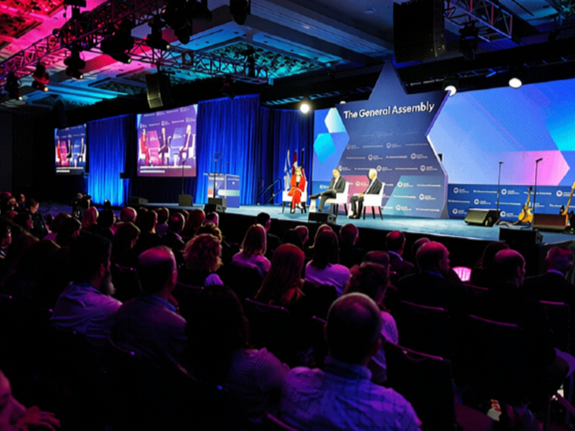
On Tuesday evening, Federation gathered for our Annual Meeting. What stayed with me most wasn’t any single speech or report, but the reminder of what makes Jewish Greater Washington so extraordinary: people who continue to show up for one another, invest in one another, and lead with purpose.
Throughout the evening, we returned to some of the questions many of us have been wrestling with since October 7. Who are we? What kind of future do we want to build? Those questions do not have simple answers, but remarkable people across our community are committed to helping answer them.
Several leaders reflected on how Federation helped shape their journeys, sharing that the people you learn with often become the people you lead with. That idea captures so much of what Federation strives to do. We bring people together, invest in their growth, and help them discover their capacity to lead.
I was grateful for the opportunity to recognize Immediate Past Board Chair Robin Hettleman Weinberg for her years of dedicated service and to welcome Jill Granader as our new Board Chair, alongside our 2026–27 Community Leadership Council, Board of Directors, and Jewish Community Foundation Trustees. Their dedication, vision, and willingness to serve give me tremendous confidence in the future of Jewish Greater Washington.
As I shared during the evening, no matter what challenges lie ahead, Federation’s core commitments remain unchanged. We are responsible for one another, and we are strongest when we face the future together.
In a world that often feels uncertain, there is comfort in knowing that thoughtful, caring, and deeply committed leaders are stepping forward. Federation has spent generations helping cultivate those leaders and strengthening the relationships that sustain our community.
If Tuesday night reminded me of anything, it is this: our future is in very good hands.
Ten years after first arriving in Greater Washington, a returning educator reflects on Shlichut, Jewish connection, the impact of October 7, and the power of authentic relationships to build hope and resilience.
Three years after October 7, Federation continues to stand with communities across Israel, evolving from emergency relief to trauma support, economic recovery and long-term rebuilding—helping families, individuals and communities take the next step toward resilience and hope.
More than 25 members of Greater Washington’s Jewish community traveled to Israel for an eight-day volunteer mission, deepening a growing partnership with Kibbutz Nir Oz through service, solidarity, and personal connections.


 Three hundred people, and no one had to explain why they were there. That may have been the most powerful feeling in the room.

 Located in the Catoctin Mountains of Pennsylvania, just 75 miles from DC, Capital Camps is the premier Jewish community overnight camp in the region. A core partner of
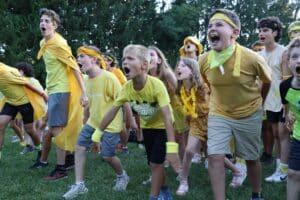 We know this, and yet, cost remains one of the primary reasons families don’t send their children to Jewish overnight camp. If we can lower this barrier to access, we know we can create strong and vibrant future generations of Jews.